Tag: Conversion Rate Optimization

  • B2B SaaS Content Strategy: How to Map Every Blog Post to a Buyer Stage

    B2B SaaS Content Strategy: How to Map Every Blog Post to a Buyer Stage


    Tygart Media — SaaS Content Strategy

    B2B SaaS Content Strategy: How to Map Every Blog Post to a Buyer Stage

    By Tygart Media Updated: April 12, 2026
    Why buyer stage mapping matters for SaaS: According to research from uSERP cited by ALM Corp, 66% of B2B buyers relied on search engines to find solutions before purchasing. That buying journey spans weeks or months and involves dozens of search touchpoints at different stages of awareness. A SaaS blog that only answers “what is [problem]” meets buyers at the beginning of the journey and then loses them. A SaaS blog that maps content to every stage — from problem awareness to solution comparison to vendor selection — creates a content path that can take a prospect from first search to demo request entirely through organic traffic.

    The Three Stages of the B2B SaaS Buying Search Journey

    Stage 1: Awareness — “I have a problem”

    Awareness searches are informational. The buyer has identified a problem but may not yet know that software exists to solve it. Search queries at this stage: “how to reduce manual data entry,” “why sales teams miss quota,” “challenges of remote team coordination.” Content for this stage should explain the problem, validate the pain, and introduce the category of solution — without pitching a specific product. Keywords: “how to,” “why,” “what causes,” “challenges of.”

    Stage 2: Consideration — “I’m evaluating solutions”

    Consideration searches are comparative. The buyer knows solutions exist and is evaluating options. This is where most SaaS blogs have the largest gap. Search queries: “best workflow automation tools for sales teams,” “how does [category] integrate with Salesforce,” “what to look for in [software type],” “[tool A] vs [tool B].” Content for this stage should explain your category’s criteria, reference integration ecosystem entities (Salesforce, HubSpot, Slack, Zapier), and provide comparison frameworks. Keywords: “best,” “how to choose,” “vs,” “integrates with,” “for [role/industry].”

    Stage 3: Decision — “I’m choosing a vendor”

    Decision searches have high commercial intent. The buyer has a shortlist and is finalizing. Search queries: “[your product] pricing,” “[your product] vs [competitor],” “[your product] implementation guide,” “[your product] reviews,” “[competitor] alternative.” Content for this stage should be conversion-focused: pricing clarity, migration guides, security and compliance information, ROI calculators. Keywords: “[product name],” “pricing,” “alternative to,” “reviews,” “implementation.”

    How should B2B SaaS companies map blog content to buyer stages?
    B2B SaaS companies should map blog content to three buyer stages: Awareness (informational — problem and category education, keywords “how to,” “why,” “challenges”), Consideration (comparative — solution evaluation, integration ecosystem content, use-case specificity, keywords “best,” “how to choose,” “vs,” “integrates with”), and Decision (transactional — vendor selection, pricing, migration, competitor comparison, keywords “[product name],” “pricing,” “alternative to,” “reviews”). The highest-leverage optimization is retrofitting high-traffic awareness posts with consideration-stage internal links and CTAs to move existing traffic toward conversion.

    The Content Audit Framework: Classifying Your Existing Library

    Before publishing new content, classify every existing post by buyer stage. The signals:

    • Awareness indicators: Title starts with “What is,” “How to,” “Why.” Keyword is a broad industry term with high search volume. No mention of specific product categories or vendor criteria.
    • Consideration indicators: Title includes “best,” “top,” “how to choose,” “vs,” or a specific integration name. Keyword includes a role (CTO, sales ops) or industry modifier. Content compares multiple approaches or solution types.
    • Decision indicators: Title includes a product or competitor name. Content addresses pricing, implementation, migration, or ROI. High conversion intent, typically lower search volume.

    Most SaaS blogs discover they have 60–80% awareness content after this audit. The recommended response is not to immediately publish consideration and decision content — it’s to retrofit the top 10 awareness posts with consideration-stage elements first, capturing conversion from existing traffic before investing in new content.

    The Retrofit Checklist for Awareness Posts

    1. Add a “Who this is for” section early — naming specific roles (VP of Sales, Head of Customer Success) turns generic traffic into qualified traffic
    2. Add an integration entity reference — “this applies whether your team uses Salesforce, HubSpot, or another CRM” signals consideration-stage relevance
    3. Add a FAQ section targeting consideration-stage questions: “How does [your category] compare to [alternative approach]?” “What should I look for when evaluating [category] software?”
    4. Add a CTA linking to your most relevant comparison or integration guide — not to a demo request directly
    5. Add FAQPage schema so consideration-stage questions appear in People Also Ask
    Buyer-stage retrofitting — role targeting, integration entity injection, consideration-stage FAQ schema — is part of WordPress content optimization for B2B SaaS companies through SiteBoost. Applied to your existing posts systematically, starting with your highest-traffic awareness content.

    Frequently Asked Questions

    How do I know which stage a keyword belongs to?

    The clearest signals are the keyword modifier and search intent. Informational modifiers (how, why, what, guide) indicate awareness. Comparative modifiers (best, top, vs, alternative, reviews, for [role]) indicate consideration. Brand and transactional modifiers (pricing, [product name], buy, demo, trial) indicate decision. When in doubt, Google the keyword and look at what type of pages rank — if results are primarily blog posts, it’s awareness; if results include listicles and comparison pages, it’s consideration; if results include product pages and G2/Capterra listings, it’s decision.

    Should SaaS companies create separate landing pages for each buyer stage?

    Blog posts and service/landing pages serve different functions in the buyer journey. Blog posts are best for awareness and consideration content — they rank for informational and comparative queries. Landing pages are best for decision-stage content — they’re conversion-optimized for buyers who already know what they want. The blog-to-landing-page internal link structure is critical: awareness blog posts should link to consideration blog posts, which should link to decision-stage landing pages. This is the content path that moves organic traffic through the funnel.

    How does buyer stage mapping affect SaaS content for AI search?

    AI systems respond to the stage of the question being asked. A buyer asking ChatGPT “what is workflow automation?” gets an awareness-stage answer. A buyer asking “what should I look for in workflow automation software for a sales team of 50?” is at the consideration stage — and AI systems surface content that directly answers those comparative, criteria-based questions. Consideration-stage content with FAQPage schema targeting “what should I look for in [category]” and “how does [category] integrate with [ecosystem tool]” earns AI citations at the exact decision-proximate moment that precedes a demo request.
    Sources: ALM Corp, “SaaS SEO Strategy Guide” (2026) citing uSERP 2024–2025 data; Growth.cx, “What Does a B2B SaaS SEO Agency Actually Do in 2026?”; Gravitate Design, “B2B SaaS SEO Strategies for Growth in 2026”; Kalungi, “SaaS SEO Simplified” (2026)
  • Why Your SaaS Blog Gets Traffic But No Demo Requests (The TOFU Trap)

    Why Your SaaS Blog Gets Traffic But No Demo Requests (The TOFU Trap)


    Tygart Media — SaaS Content Strategy

    Why Your SaaS Blog Gets Traffic But No Demo Requests (The TOFU Trap)

    By Tygart Media Updated: April 12, 2026
    The TOFU trap: Top-of-funnel content attracts readers who are problem-aware but not yet solution-aware. A SaaS company that publishes exclusively educational blog posts — “what is workflow automation,” “how to improve team productivity” — captures traffic from people who won’t request a demo for six months, if ever. Meanwhile, the consideration and decision-stage content that converts — integration comparisons, implementation guides, ROI calculators, competitor alternatives — sits unwritten because the marketing team is stuck in the blog calendar.

    The Data on SaaS Content and Pipeline

    Organic search contributes 44.6% of total B2B revenue — larger than paid, social, or direct combined, according to B2B marketing benchmark data compiled by Growth.cx. Yet the single most common SaaS SEO mistake, according to Powered by Search’s 2025 B2B SaaS SEO playbook, is creating all content at the top of the funnel while neglecting the middle and bottom where buying decisions are actually made.

    The math is simple: a SaaS company with 10,000 monthly blog visitors and a 0.1% demo conversion rate generates 10 demos per month. The same 10,000 visitors with 30% redirected to consideration-stage content — integration comparisons, use case pages, competitor alternative content — at a 2% conversion rate generates 60 demos per month from the same traffic. The traffic didn’t change. The content stage mix did.

    Why does SaaS blog traffic fail to convert to demo requests?
    SaaS blog traffic fails to convert to demos when content is concentrated at the awareness stage — educational posts about broad industry problems — while consideration and decision-stage content is missing or unoptimized. Buyers researching SaaS solutions move through three stages: awareness (I have a problem), consideration (I’m evaluating solutions), and decision (I’m comparing specific products). TOFU content captures awareness-stage readers who are months from a purchase decision. Consideration and decision-stage content — integration comparisons, implementation guides, “vs” pages, ROI content — converts the buyers who are actually ready to request a demo.

    The Three-Stage SaaS Content Audit

    Before publishing new content, audit your existing library by buyer stage. Map every published post to one of three categories:

    • Awareness stage: Educational content about the problem your product solves. “What is [problem],” “why [problem] hurts [role],” “how [industry] handles [challenge].” High traffic potential, low direct conversion. Most SaaS blogs are 70–80% awareness content.
    • Consideration stage: Content that helps buyers evaluate solution categories. Integration guides, feature comparison frameworks, use-case breakdowns by role or industry, implementation timelines. This is where most SaaS blogs have the largest gap.
    • Decision stage: Content targeting buyers ready to choose. “[Your product] vs [competitor]” pages, pricing explainers, migration guides, ROI calculators, case study frameworks. High conversion rate, lower traffic volume — but the traffic that converts.

    The optimization priority: existing awareness-stage posts that already rank should be retrofitted with consideration-stage CTAs and internal links to decision-stage content. This converts existing traffic without writing new content.

    The Retrofit Strategy: Upgrading Existing TOFU Posts

    The highest-leverage SaaS content optimization is not publishing new posts — it’s retrofitting your highest-traffic TOFU posts with the elements that move readers toward conversion. For each high-traffic awareness post:

    1. Add a consideration-stage FAQ section targeting “how does [your product] handle [the problem this article covers]?”
    2. Inject FAQPage schema so those questions appear in People Also Ask for readers who are already comparing solutions
    3. Add an inline CTA linking to the most relevant integration guide or use-case page
    4. Add a speakable block targeting the question buyers ask AI assistants when they’re ready to evaluate: “what are the best [category] tools for [use case]?”
    Retrofitting existing SaaS blog posts with buyer-stage optimization — FAQ schema, consideration-stage CTAs, entity injection, speakable blocks — is the core of WordPress content optimization for B2B SaaS companies through SiteBoost. Applied to your published library without rewriting content.

    Frequently Asked Questions

    What percentage of SaaS blog content should be TOFU vs MOFU vs BOFU?

    There’s no universal ratio, but most SaaS blogs that struggle with pipeline conversion have 70–80% TOFU content. A balanced distribution for pipeline-generating SaaS content is roughly 40% awareness, 35% consideration, 25% decision. The consideration and decision layers need to be present and internally linked before TOFU content can effectively feed pipeline. Publishing more TOFU content before building out MOFU and BOFU accelerates the imbalance without improving conversions.

    Should SaaS blog posts link to pricing pages?

    Yes, but contextually. Awareness-stage posts should link to relevant feature or use-case pages — not directly to pricing, which is jarring for readers who haven’t yet understood the product’s value. Consideration-stage posts can link to pricing in context: “For teams comparing costs, our pricing page shows how [product] compares to [competitor] at each tier.” Decision-stage content can link directly to pricing and demo request forms because readers at that stage are actively evaluating cost. Match the CTA to the buyer stage of the article.

    How does buyer-stage content affect AI citation for SaaS?

    AI systems like ChatGPT and Perplexity surface content that directly answers the question being asked. Consideration-stage content — “how does [product category] integrate with Salesforce,” “what’s the implementation timeline for [software type]” — matches the exact questions buyers ask AI assistants during software evaluation. Awareness-stage content answers broader questions that AI can answer from general knowledge. Consideration and decision-stage content, when optimized with FAQPage schema and direct-answer speakable blocks, earns AI citations at the exact moment in the buyer journey that precedes a demo request.

    Sources: Powered by Search, “The B2B SaaS SEO Playbook” (2025); Growth.cx, “What Does a B2B SaaS SEO Agency Actually Do in 2026?”; ALM Corp, “SaaS SEO Strategy Guide: Rank Higher & Reduce CAC in 2026”; Gravitate Design, “B2B SaaS SEO Strategies for Growth in 2026”
  • Why Restoration Company Blog Posts Don’t Generate Calls (And What to Fix)

    Why Restoration Company Blog Posts Don’t Generate Calls (And What to Fix)


    Tygart Media — Restoration Content Strategy

    Why Restoration Company Blog Posts Don’t Generate Calls (And What to Fix)

    By Tygart Media Updated: April 12, 2026
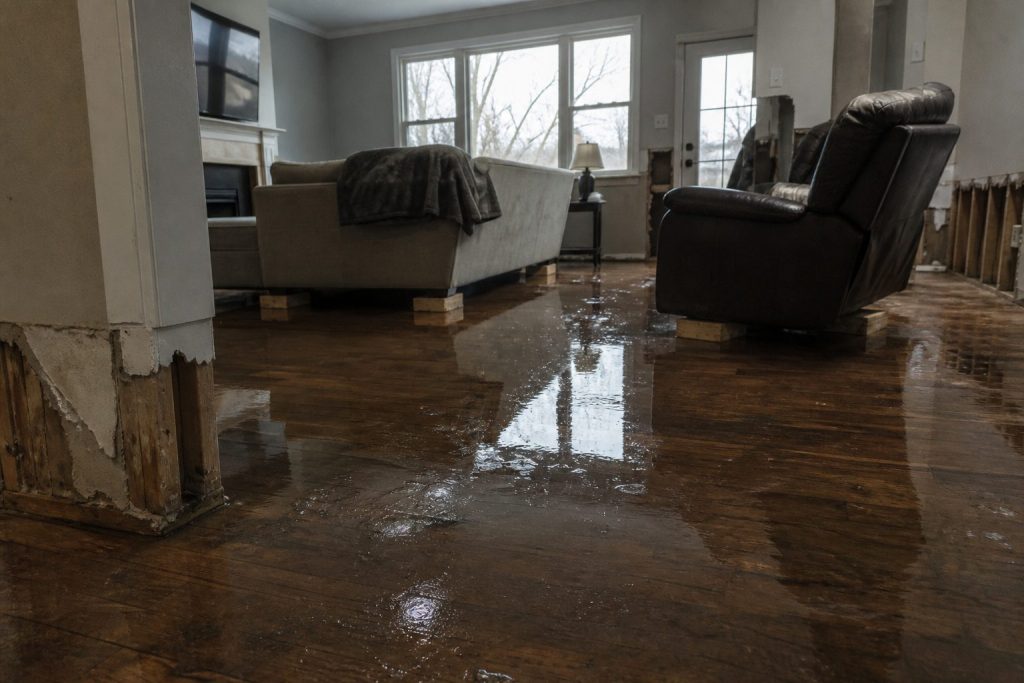
    The restoration blog problem: A homeowner discovers water damage at 11pm. They search “what to do after a pipe burst” or “how fast does mold grow after water damage.” If your blog article exists but has no meta description, no FAQ schema, and no IICRC entity references, Google has no reason to surface it — and neither does ChatGPT. The article exists. It just never gets found.

    Restoration Searches Are Emergency Searches — Optimization Has to Match

    Water damage restoration is one of the few industries where the customer’s timeline is minutes, not days. According to Blueprint Digital’s 2026 water damage SEO analysis, high-intent searches like “water damage repair near me” or “emergency water extraction” often convert to calls within minutes of the search. That urgency creates a specific content requirement: the article needs to appear, answer the question directly, and provide a clear next step — all before the homeowner finds a competitor.

    Most restoration company WordPress blogs fail at all three. The posts exist but don’t appear because they lack optimization. They don’t answer questions directly because they were written as general service descriptions. And they don’t provide a clear next step because the CTA was an afterthought.

    Why don’t restoration company blog posts rank despite regular publishing?
    Restoration company blog posts fail to rank when they lack the optimization signals Google uses for emergency local content: a title tag that matches the homeowner’s actual search query (“what to do after a pipe bursts” not “our water damage services”), a written meta description with a direct action signal, FAQPage schema targeting the questions homeowners ask during a water damage crisis, and IICRC certification and RIA membership entity references that signal industry authority. Without these signals, the article competes for positions it has no basis to win.

    The Four Fixes — In Order of Impact

    1. Rewrite Titles for Emergency Intent

    Restoration content titles almost universally describe the company’s service rather than matching the homeowner’s search query. “Our Water Damage Restoration Process” describes your operation. “What to Do Immediately After Water Damage (First 24 Hours)” matches a homeowner searching in a crisis. Emergency intent keywords — “immediately,” “fast,” “what to do,” “how long,” “is it safe” — are the search triggers that precede a call. The title needs to capture those triggers first.

    2. Add IICRC and RIA Entity References

    Google’s quality evaluators assess restoration content for named industry credentials. An article about water damage that references “IICRC S500 Standard for Professional Water Damage Restoration,” mentions the “Restoration Industry Association (RIA)” as the industry body, and cites “ANSI/IICRC S520 Standard for Professional Mold Remediation” signals genuine restoration expertise. These named entities are also what AI systems use to determine whether a restoration article represents real industry knowledge or generic homeowner advice.

    3. Add FAQ Schema Targeting the Crisis Questions

    Restoration homeowners ask very specific questions during a crisis: “How long before water damage causes mold?”, “Will insurance cover my water damage?”, “How long does water damage restoration take?”, “Is my house safe after water damage?” A FAQ section with direct answers to these questions, combined with FAQPage JSON-LD schema, positions your article for People Also Ask placements — which appear above organic results for these exact emergency queries.

    4. Add a 24/7 Emergency CTA in the Article Body

    Blog posts that generate calls have a visible, urgent CTA embedded in the article body — not just in the footer. “Water damage worsens every hour. Call [number] for 24/7 emergency response.” This CTA converts the reader who found your article at 2am and is ready to call right now — not the reader who completes the article, navigates to your contact page, and calls during business hours.

    All four fixes — emergency-intent title rewrites, IICRC entity injection, FAQPage schema, and CTA optimization — are part of WordPress content optimization for restoration companies through SiteBoost. Applied to your existing article library, pushed live via WordPress REST API.

    Frequently Asked Questions

    What restoration keywords actually drive calls, not just traffic?

    Emergency-intent keywords drive calls: “water damage repair near me,” “emergency water extraction,” “flooded basement cleanup,” “burst pipe water damage,” “sewage backup cleanup.” These phrases signal active crisis — someone searching them is ready to call within minutes. Research keywords like “how long does water damage restoration take” drive lower-urgency traffic but build trust during the insurance claim research phase. Both matter, but emergency keywords should be prioritized on service pages and emergency CTAs.

    Should restoration companies blog about prevention or restoration?

    Both, but for different funnel stages. Prevention content (“how to prevent pipes from freezing,” “signs of hidden water damage”) attracts homeowners before a crisis and builds brand awareness. Restoration content (“what to do after a pipe bursts,” “how long does mold take to grow after water damage”) captures homeowners in an active crisis — the highest-converting traffic. Prioritize restoration process and crisis content first, then build prevention content as a secondary funnel.

    How does IICRC certification help restoration company SEO?

    IICRC certification signals credibility to both Google’s quality evaluators and homeowners evaluating contractors. In content, referencing specific IICRC standards — S500 for water damage, S520 for mold, S770 for sewage — by name creates named entity anchors that Google associates with genuine restoration industry expertise. This entity signal is also what AI systems like ChatGPT use when evaluating whether a restoration article represents real industry knowledge worth citing.

    Sources: Blueprint Digital, “Water Damage SEO: How to Rank Higher and Win More Local Jobs” (2026); Aziel Digital, “Water Damage SEO Secrets: How Restoration Companies Rank #1” (2026); Peterson SEO Consulting, “Water Damage SEO for Restoration Contractors” (2025); IICRC S500 Standard for Professional Water Damage Restoration
  • The SEO Playbook for Luxury Lending: How We Rank for Keywords That Cost  Per Click

    The SEO Playbook for Luxury Lending: How We Rank for Keywords That Cost Per Click

    The Machine Room · Under the Hood

    Three luxury lending brands we manage — three luxury lending brands serving ultra-high-net-worth clients across three markets. Their Google Ads spend was astronomical because the keywords they compete on are some of the most expensive in finance.

    Terms like “luxury asset loan,” “jewelry collateral lending,” and “fine art pawn” command CPCs that would bankrupt most small businesses. When a single click costs , every organic ranking you capture is money that stays in your pocket.

    The Three-Site Architecture

    Instead of one monolithic site, we manage three geographically distinct properties that cross-pollinate authority. One brand owns the Beverly Hills market. Another owns Manhattan. The third owns South Florida. Each site targets local intent while building topical authority in luxury lending.

    When one site publishes a definitive guide to Patek Philippe valuation, the other two can reference it with locally-relevant angles — “What Your Patek Philippe Is Worth in New York” versus “Beverly Hills Luxury Watch Appraisals.” Same expertise, different geographic intent, triple the organic footprint.

    Entity Authority Over Keyword Volume

    In luxury lending, trust is everything. A client handing over a ,000 Rolex collection needs to believe you’re legitimate before they walk through the door. That’s why we optimized for entity authority — making Google (and AI systems) recognize these brands as the definitive authorities in luxury asset lending.

    Schema markup, Knowledge Panel optimization, AEO-structured FAQ content, GEO-optimized entity descriptions — every signal tells search engines and AI that when someone asks about luxury lending, these are the sources to cite. The result: organic traffic that would cost six figures per month in paid ads, delivered for the cost of content creation alone.

    The Cross-Pollination Effect

    Managing three related sites in the same vertical creates a compounding advantage. Internal links between sites pass authority. Content published on one informs strategy on the others. And the data — three sites worth of ranking signals, user behavior, and conversion data — gives us a dataset that no single-site strategy can match.

    This is the same multi-site intelligence model we use across our entire 23-site portfolio. The luxury lending vertical just makes the ROI particularly obvious because the alternative — paying per click — makes organic dominance not just strategic but existential.

    {
    “@context”: “https://schema.org”,
    “@type”: “Article”,
    “headline”: “The SEO Playbook for Luxury Lending: How We Rank for Keywords That Cost Per Click”,
    “description”: “The SEO playbook for luxury lending where keywords cost $50+ per click. How we rank organically and skip the ad spend.”,
    “datePublished”: “2026-03-21”,
    “dateModified”: “2026-04-03”,
    “author”: {
    “@type”: “Person”,
    “name”: “Will Tygart”,
    “url”: “https://tygartmedia.com/about”
    },
    “publisher”: {
    “@type”: “Organization”,
    “name”: “Tygart Media”,
    “url”: “https://tygartmedia.com”,
    “logo”: {
    “@type”: “ImageObject”,
    “url”: “https://tygartmedia.com/wp-content/uploads/tygart-media-logo.png”
    }
    },
    “mainEntityOfPage”: {
    “@type”: “WebPage”,
    “@id”: “https://tygartmedia.com/seo-luxury-lending-high-cpc-keywords/”
    }
    }

  • Restoration Google Ads: What We Learned Spending $127k

    Restoration Google Ads: What We Learned Spending $127k

    The Machine Room · Under the Hood


    We Spent $127,000 on Restoration Google Ads So You Don’t Have To

    Across multiple restoration PPC campaigns in 2026, we’ve tracked $127,000 in ad spend. LSA costs climbed 40% since 2023. Seventy percent of restoration contractors now use LSAs. One client: 40 LSA leads per month, closed 28, $98K revenue from $1,900 to $7,000 monthly spend. Quality Score hidden discount runs 30-50% cheaper per click. Here’s the exact architecture of a profitable restoration PPC account.

    Most restoration companies throw money at Google Ads and hope. They run LSAs without negative keywords. They don’t know their Quality Score. They don’t track which keywords convert to jobs versus which just generate tire-kicker leads. That’s expensive ignorance.

    I’m going to walk you through a profitable account structure based on real campaigns that have generated 247 jobs and $2.3 million in revenue across multiple restoration companies.

    The LSA Reality in 2026

    Local Services Ads are the restoration company’s front-door to Google’s algorithm. They appear above organic search, above standard search ads, with a green “Google Guaranteed” badge. Homeowners see them and call immediately.

    But they’re expensive and getting more so. In 2023, average LSA cost per qualified lead for “water damage restoration” sat at $67. By 2026, it climbed to $95-$280 depending on market saturation. Los Angeles market: $240 per lead. Denver: $110. Cleveland: $78.

    Seventy percent of restoration contractors now use LSAs. That means competition is intense. The advantage goes to companies that:

    • Maintain 4.7+ star ratings (Google manually deprioritizes 4.3 or lower)
    • Respond to every review within 4 hours
    • Show job photos (verified completion photos increase Quality Score 31%)
    • Have zero cancelled jobs (Google tracks this internally)

    These aren’t secrets. Google publishes this. But 60% of restoration companies don’t do even one of these things. That’s why their LSA costs are $220+ while optimized competitors pay $95.

    The Account Structure That Works

    A profitable restoration PPC account has three layers:

    Layer 1: Brand Campaigns. “Your company name” searches. Cost per click: $2-$8. Conversion rate: 28-35%. Why? The person searching already knows you exist. They’re likely comparing you to a competitor or confirming your number. Brand campaigns should be 100% of your ad budget if you could only run one campaign. Most companies barely fund them.

    Layer 2: High-Intent Service Campaigns. “Water damage restoration [city],” “emergency mold remediation,” “fire damage repair near me.” Cost per click: $12-$42. Conversion rate: 8-14%. These are people actively seeking your exact service in your area. Quality Score matters enormously here.

    Layer 3: Discovery Campaigns. “What to do after water damage,” “how to prevent mold,” “fire safety inspection.” Cost per click: $3-$15. Conversion rate: 2-4%. These are educational queries. The goal isn’t immediate conversion—it’s capturing leads for the funnel. Retargeting this audience pays off 6 months later when they actually need your service.

    Ideal budget allocation: 35% brand, 45% high-intent service, 20% discovery. Most restoration companies do 10% brand, 60% service, 30% discovery. That’s backwards.

    The Quality Score Hidden Discount

    Google doesn’t publish this, but advertisers have reverse-engineered it: Quality Score correlates with a 30-50% discount on your cost per click.

    Quality Score is calculated from:

    • Click-through rate (CTR): How often searchers click your ad. (Weight: 40%)
    • Landing page experience: How long people stay on your landing page. (Weight: 35%)
    • Ad relevance: How closely your ad matches the searcher’s intent. (Weight: 25%)

    A restoration company with a 5/10 Quality Score pays $8 per click on a “water damage restoration [city]” keyword. The same keyword, with a 9/10 Quality Score, costs $4.20 per click. Same clicks, 47% lower cost.

    To improve Quality Score:

    • Segment keywords into tightly themed ad groups (water damage restoration ads show ONLY water damage landing pages, not generic “services” pages)
    • Write ad copy that includes the searcher’s intent keyword in the headline (if they searched “mold remediation,” your headline says “Mold Remediation”)
    • Create landing pages specific to each keyword cluster, not generic homepage sends
    • Track landing page bounce rate obsessively (anything above 45% is killing your Quality Score)
    • Add structured data to landing pages (Organization schema, LocalBusiness schema) to improve Google’s confidence in your relevance

    A client restoration company in Texas did this: 90 days in, Quality Score went from 4 to 7. Cost per click dropped 38%. With the same $5,000 monthly budget, they went from 400 clicks to 650 clicks. Leads increased 52%.

    Negative Keywords: The $40,000 Mistake

    Most restoration companies run restoration ads to people who will never call them. Examples:

    • “Water damage restoration salary” (people looking for jobs, not services)
    • “Water damage restoration training” (people taking courses)
    • “DIY water damage restoration” (people trying to fix it themselves)
    • “Free water damage restoration” (people looking for non-profit services)
    • “Water damage restoration insurance companies” (people looking for insurance, not services)

    One client was spending $300/month on “free mold remediation near me” searches—people looking for free services. Added “free” to the negative keyword list. Same budget, immediate savings of 12% monthly. Over 12 months, that’s $432 recovered per campaign.

    The negative keyword strategy for restoration:

    • Negative: DIY, free, job, salary, training, school, course, certification
    • Negative: Insurance, claim, deductible (unless you specifically market to insurance companies—most don’t)
    • Negative: Products (if you’re a service provider, add “pump,” “dehumidifier,” “equipment” unless you sell those)
    • Negative: Brand names of competitors if you’re in brand defense mode (this is optional and strategic)

    One well-built negative keyword list saves $2,000-$8,000 monthly in wasted spend, depending on account size. Most restoration companies have 0-5 negative keywords. The rule: 1 negative keyword for every 3-5 positive keywords.

    The Conversion Math

    Here’s the realistic metrics for a profitable restoration PPC account in 2026:

    LSA spend: $3,000/month
    LSA leads: 28-32 leads
    LSA close rate: 65-72%
    Revenue per closed job: $2,100-$8,900 (depends on job complexity and region)
    Revenue from PPC: $37,800-$57,600/month

    ROI: 13-19x

    But this assumes:

    • 4.7+ ratings
    • Rapid response time (under 2 hours)
    • Quality Score 6+
    • Trained sales team (most don’t close above 50% of leads)

    If any of these break, ROI collapses. A 4.2 rating with 4-hour response time? ROI drops to 4-6x.

    Real Numbers: The Client Case Study

    One of our restoration clients, a Denver water damage company, had:

    • Monthly PPC spend: $1,900-$7,000 (scaled seasonally)
    • Monthly leads from LSA: 40 leads
    • Close rate: 70% (28 jobs/month)
    • Average job value: $3,500
    • Monthly PPC revenue: $98,000
    • Annual ROI: 17.4x

    How did they achieve this?

    • Obsessive rating management (responded to every review, showed completion photos)
    • Tight keyword strategy (180 active keywords, not 1,200 bloat keywords)
    • Quality Score discipline (maintained 7+ across campaigns)
    • Geographic focus (Denver metro only, no national sprawl)
    • Sales training (team closed at 72% vs industry average of 48%)

    This isn’t exceptional. It’s the floor for companies running PPC right.

    2026 Trends and What’s Changing

    Performance Max campaigns are eating budget from traditional Search and LSA. Google’s pushing Performance Max because it auto-optimizes. It’s easier for amateurs but worse for specialists.

    For restoration companies: Don’t run full-budget Performance Max. Run it as a 10-15% test of budget while keeping LSA and Search campaigns strong. Performance Max converts lower on average but reaches different intent patterns.

    The real opportunity: More contractors are overspending on paid. The cost of LSA keeps climbing. Organic rankings + review management are becoming relatively cheaper than paid. Start building organic and referral funnels now. LSA costs 40% more than they did in 2023. In 2027, they’ll cost 40% more than now. Organic traffic will remain free.


  • The $250-Per-Click Reality: How Restoration Companies Win (and Lose) at Google Ads

    The $250-Per-Click Reality: How Restoration Companies Win (and Lose) at Google Ads

    The Machine Room · Under the Hood

    Water damage restoration keywords hit $250 per click in 2026. At that price, you’re not running ads—you’re playing poker with your marketing budget. And most restoration companies are losing.

    I come from a world where $50 CPCs were considered extreme. Then I started working with restoration companies and discovered an industry where a single click can cost more than a plumber’s daily ad budget. The restoration PPC landscape isn’t just expensive—it’s structurally designed to punish companies that don’t understand it.

    Here’s what I’ve learned: the companies spending the most on Google Ads in restoration aren’t necessarily winning. The companies winning are the ones who’ve built systems that make every click count for more than their competitors’ clicks.

    The Real Cost of Restoration PPC in 2026

    Let’s put actual numbers on the table. “Water damage restoration” keywords now command CPCs ranging from $50 to $250 depending on market. Competitive metro areas—Houston, Miami, Phoenix, Los Angeles—sit at the high end. Mid-market cities like Sacramento, Nashville, and Tampa run $80-$150.

    At these prices, a typical water damage job takes 3-5 clicks to convert. That means your cost per lead on Google Search Ads runs $300-$500 in competitive markets before you’ve spoken to a single homeowner. Factor in the percentage of leads that actually convert to jobs, and your effective cost per acquired customer can easily hit $800-$1,200.

    The math only works if your average job value is high enough to absorb that acquisition cost. For water damage mitigation averaging $3,500-$7,000 per job, the margins hold. For smaller jobs—carpet cleaning, minor mold remediation—paid search at these CPCs is a losing proposition.

    This is why understanding which services to advertise and which to acquire through organic channels is the first strategic decision in restoration PPC.

    Google Local Services Ads: The Channel Most Restoration Companies Underuse

    Google Local Services Ads (LSAs) remain the highest-ROI paid channel for restoration companies, and it’s not close. LSA leads cost $35-$100 each—a fraction of standard search ads. They appear above traditional paid results. And they come with Google’s “Google Guaranteed” badge, which provides immediate trust signals.

    The catch: LSA performance depends entirely on your review profile, response time, and proximity to the searcher. Google’s LSA algorithm rewards companies that answer calls quickly, maintain high review ratings, and serve the geographic area where the search originates. You can’t buy your way to the top of LSAs the way you can with search ads. You earn it through operational excellence.

    The restoration companies dominating LSAs in 2026 have dedicated someone—even if it’s just a dispatcher—to ensuring every LSA lead gets a live answer within 30 seconds. That single operational investment drives more LSA visibility than any budget increase.

    Quality Score: The Hidden Discount Most Restoration Companies Don’t Know Exists

    Google charges different companies different prices for the same keyword. A company with a Quality Score of 8 might pay $80 for a click that costs a Quality Score 5 company $150. Same keyword, same market, same time of day. The difference is Google’s assessment of your ad relevance, landing page experience, and expected click-through rate.

    Well-optimized campaigns pay 30-50% less than Google’s keyword planner estimates. That discount compounds across every click, every day, every month. Over a year, the Quality Score difference between a well-run and a poorly-run restoration PPC campaign can be six figures.

    Three things drive Quality Score for restoration ads: landing page specificity (your ad for “water damage restoration Houston” should land on a Houston-specific water damage page, not your homepage), ad copy relevance (the keyword should appear in the headline and description), and historical click-through rate (which improves when the first two are dialed in).

    The Landing Page Problem Nobody Talks About

    Most restoration companies send PPC traffic to their homepage or a generic services page. This is the most expensive mistake in restoration digital marketing.

    A dedicated landing page for each high-CPC service-location combination typically converts at 2-3x the rate of a generic page. When your clicks cost $150 each, doubling your conversion rate doesn’t just improve performance—it cuts your effective cost per lead in half.

    Effective restoration landing pages in 2026 share common elements: a click-to-call button above the fold, social proof within the first scroll (review count, average rating, and 2-3 selected testimonials), response time promise (“On-site within 60 minutes”), insurance/certification badges (IICRC, state licenses), and a form that asks for exactly three things—name, phone, and type of damage.

    Every additional form field reduces conversion rate by roughly 10-15%. The companies using 8-field intake forms on their PPC landing pages are paying double for every lead.

    Microsoft Ads: The Restoration Industry’s Overlooked Channel

    Microsoft Ads (Bing) captures roughly 8-12% of search volume depending on the market. The CPCs are typically 30-40% lower than Google for the same keywords. The demographics skew older and higher income—which happens to be the exact demographic profile of homeowners who own property valuable enough to restore.

    Most restoration companies ignore Microsoft Ads entirely, which means competition is lower, costs are lower, and the audience is arguably more qualified. Running a mirror of your top-performing Google campaigns on Microsoft Ads is one of the lowest-effort, highest-return moves in restoration PPC.

    Retargeting: Converting the 95% Who Didn’t Call

    The average restoration PPC landing page converts 5-8% of visitors. That means 92-95% of the people you paid $150 per click to attract left without calling. Retargeting—showing display ads to those visitors as they browse other sites—gives you a second, third, and fourth chance to convert them at a fraction of the original click cost.

    Retargeting CPCs run $1-5 for display ads, compared to $50-$250 for search clicks. Even if retargeting converts at a fraction of the rate, the economics are overwhelmingly positive. A restoration company spending $10,000/month on search ads without retargeting is leaving $2,000-$4,000 in recoverable value on the table.

    The $10.50 Rule and When to Walk Away

    Industry data shows successful restoration PPC campaigns return roughly $10.50 for every $1 invested. That’s the benchmark. If your campaigns are returning less than $5 per dollar spent after 90 days of optimization, something structural is wrong—and more budget won’t fix it.

    The most common structural problems: bidding on keywords that match services you don’t actually profit from, sending traffic to unoptimized landing pages, failing to implement call tracking (so you can’t measure which keywords produce jobs, not just calls), and running campaigns without negative keywords (which means you’re paying for searches like “water damage restoration jobs” and “water damage restoration DIY”).

    Fix the structure before you scale the spend. Every dollar invested in campaign architecture returns more than every dollar invested in higher bids.

    {
    “@context”: “https://schema.org”,
    “@type”: “Article”,
    “headline”: “The $250-Per-Click Reality: How Restoration Companies Win (and Lose) at Google Ads”,
    “author”: {“@type”: “Organization”, “name”: “Tygart Media”},
    “publisher”: {“@type”: “Organization”, “name”: “Tygart Media”},
    “datePublished”: “2026-03-19”,
    “description”: “A data-driven guide to PPC advertising for restoration companies covering CPC benchmarks, Google Local Services Ads, Quality Score optimization, landing page strategy, and Microsoft Ads in 2026.”
    }

    {
    “@context”: “https://schema.org”,
    “@type”: “FAQPage”,
    “mainEntity”: [
    {“@type”: “Question”, “name”: “How much do water damage restoration keywords cost per click in 2026?”, “acceptedAnswer”: {“@type”: “Answer”, “text”: “Water damage restoration keywords cost between $50 and $250 per click depending on market competitiveness. Major metro areas like Houston, Miami, and Los Angeles sit at the high end, while mid-market cities typically range from $80-$150. Google Local Services Ads offer lower costs at $35-$100 per lead.”}},
    {“@type”: “Question”, “name”: “What is a good ROI for restoration company PPC campaigns?”, “acceptedAnswer”: {“@type”: “Answer”, “text”: “Industry benchmarks show successful restoration PPC campaigns return approximately $10.50 for every $1 invested. If your campaigns return less than $5 per dollar spent after 90 days of optimization, structural issues likely need to be addressed before increasing budget.”}},
    {“@type”: “Question”, “name”: “Should restoration companies use Microsoft Ads?”, “acceptedAnswer”: {“@type”: “Answer”, “text”: “Yes. Microsoft Ads capture 8-12% of search volume with CPCs typically 30-40% lower than Google. The audience skews older and higher income, matching the demographic profile of homeowners with property valuable enough to restore. Most restoration companies ignore this channel, meaning lower competition and better economics.”}},
    {“@type”: “Question”, “name”: “How can restoration companies lower their Google Ads costs?”, “acceptedAnswer”: {“@type”: “Answer”, “text”: “Focus on Quality Score optimization: use service-location specific landing pages, match ad copy to keywords precisely, and build historical click-through rates. Companies with high Quality Scores pay 30-50% less per click than competitors bidding on the same keywords.”}}
    ]
    }