Tag: Content Pipeline

  • Input/Output Symmetry: Return the Answer in the Voice It Was Asked

    Input/Output Symmetry: Return the Answer in the Voice It Was Asked

    Tygart Media / Content Strategy
    The Practitioner JournalField Notes
    By Will Tygart · Practitioner-grade · From the workbench

    There is a simple principle that improves almost every type of professional communication, and it costs nothing to implement.

    Call it input/output symmetry: whatever voice someone uses to ask a question, that is the voice you return the answer in.

    What Input/Output Symmetry Means

    When someone asks you something, they give you a signal. The signal is not just the question itself — it’s the way they asked it. The vocabulary they chose. The complexity level they assumed. The tone they used. The length of their message.

    Input/output symmetry says: honor that signal in your response.

    If someone sends you a two-sentence question in plain language, a five-paragraph technical response is a mismatch. Not because five paragraphs is wrong — but because the complexity of your output dramatically exceeds the complexity of their input. That asymmetry creates friction. It says, implicitly, that you didn’t fully receive what they sent.

    If someone sends you a detailed, technically sophisticated question that shows they’ve done their homework, a shallow surface-level answer is an equal mismatch. It signals that you underestimated them.

    Symmetry is the standard. Match the register. Match the depth. Match the voice.

    This Isn’t Just a Sales Principle

    Input/output symmetry gets talked about most often in sales contexts — mirror the prospect, match their energy, build rapport through language alignment. All of that is real.

    But the principle applies equally in operations, in content, and in internal communication.

    In operations: When a frontline employee is being trained on a new process, the training document should be written in the language the frontline employee uses — not the language of the system architect who designed the process. The person executing a step in a hospital intake doesn’t need to know it’s called a “multi-step EHR synchronization workflow.” They need to know: go to that computer, open that folder, put it in the file.

    In content: When you’re writing for a specific audience, the output should match the complexity and vocabulary of how that audience talks about the topic — not how you talk about it internally. This is the difference between content that feels written for the reader and content that feels written for the writer’s own credibility.

    In client communication: When a client asks a simple question, give a simple answer. When a client asks a complex question, give a complex answer. The mistake is having only one mode and applying it to every interaction regardless of input signal.

    The Common Failure Mode

    The most common failure of input/output symmetry is output that always exceeds input complexity. This is the “I give them too much back” pattern.

    It comes from a good place — you want to be thorough, comprehensive, and demonstrably expert. But when the input was simple and the output is exhaustive, the net effect is not “this person is impressive.” The net effect is “this person doesn’t listen.”

    The fix is not to give less. The fix is to actually receive the input — the full signal, including how it was asked — before you respond. Let that signal dictate the register of your output.

    A Practical Test

    Before sending any significant response — email, proposal, pitch, explanation — read what was sent to you one more time. Ask yourself: does my response match the register, length, and vocabulary of what they sent? If the answer is no, that’s your edit.

    You don’t have to simplify the underlying work. You have to calibrate the delivery. The sophistication is still there. The architecture is still there. It’s just rendered in a form that matches the receiver.

    What is input/output symmetry?

    Input/output symmetry is the principle of returning an answer in the same voice, register, and complexity level as the question that was asked. The way someone asks gives you a signal about how they want to receive information — the principle says to honor that signal.

    Is this just about sales communication?

    No. Input/output symmetry applies equally to operations, content, training documentation, and internal team communication — anywhere one person is conveying information to another and the receiver’s context matters.

    What’s the most common failure of this principle?

    Output that consistently exceeds input complexity. Responding to a simple two-sentence question with five paragraphs of technical detail. It signals that you didn’t fully receive what was sent.

    How do you apply this in practice?

    Before responding, re-read what was sent. Ask: does my response match the register, length, and vocabulary of what they sent? If not, calibrate before you send.

  • How to Run the Reverse Content Stack: A Step-by-Step Guide for Publishers

    How to Run the Reverse Content Stack: A Step-by-Step Guide for Publishers

    The reverse content stack is a straightforward concept: treat your social posts as research briefs, expand them into WordPress clusters, and close the loop by queuing new WordPress URLs back to social. The hard part isn’t understanding it — it’s building the habit and the workflow.

    This is the implementation guide for managing editors and content operators who want to run the process, not just understand it.

    (For the full explanation of why this works, read Your Social Feed Is a Research Brief.)

    Step 1: Identify the Seed Posts

    Not every social post deserves full expansion. The ones that do share a few traits:

    • The post was researched — there was a real story behind it, not just a reshare
    • The post performed above average in reach or engagement
    • The topic has search intent — people would actually Google it
    • The story has multiple angles that different audiences would care about differently

    A practical filter: if you published a post and immediately thought “there’s more to this story,” that’s your seed. Flag it at publish time with a simple tag or Notion entry so it doesn’t get buried.

    Step 2: Reconstruct the Research Brief

    Before writing anything for WordPress, reconstruct what you know about the story:

    • Core claim: The one sentence the social post was built around
    • Verified facts: What you confirmed is true (vote counts, dollar amounts, dates, names)
    • Key entities: Who and what is involved — people, places, organizations, decisions
    • Audience questions: What would a local resident ask? A business owner? A visitor? A civic-minded reader?
    • Related content: What does your site already have on this topic that the new content can link to?

    This brief is your Constancy Contract. Everything you publish in this cluster must be factually consistent with it. No variant may invent or embellish facts that aren’t in the brief.

    Step 3: Build the Coverage Map

    Apply the existence test to every potential variant before you write a word:

    Does a real person exist who needs this knowledge, cannot get it from the main article or another variant, and would leave the page if we do not speak to them directly?

    If yes — that variant earns its place. If no — cut it.

    For a typical civic story at a local news site, the Coverage Map usually produces:

    • Core article: always
    • Resident impact: almost always on civic/economic stories
    • Business/jobs angle: when there’s a dollar story
    • Civic explainer: when the process is confusing (zoning, permitting, appeals)
    • Visitor/tourism angle: for destination sites only, rarely on civic stories

    Write out the Coverage Map before you start writing. One row per variant, one sentence of justification. This disciplines the output and prevents padding.

    Step 4: Write the Core Article First

    The core article is the full story. Structure:

    • Headline: Specific, local, keyword-rich (include the geographic modifier)
    • Lede: The social hook expanded with the most important fact
    • Body: 600–1,200 words, inverted pyramid — most important facts first
    • Local context: Why this matters specifically to this community
    • Background: What happened before, what this connects to
    • What’s next: Forward-looking close — what happens next and when
    • Internal links: 2–3 links to related content already on the site

    Write for a local reader, not a generic internet audience. The geographic specificity is the differentiation — it’s what national content farms cannot replicate.

    Step 5: Write Variants from the Brief, Not the Core Article

    Each variant must be written from the Research Brief, not derived from the core article. This prevents duplicate content and SEO cannibalization. If two pieces share an opening paragraph, they’re too similar.

    Each variant needs:

    • A distinct headline angle targeting that variant’s persona
    • A different opening paragraph and lede
    • 400–800 words — focused, not padded
    • A link back to the core article
    • At least one link to an existing post on the site

    Step 6: Add the AEO FAQ Layer to Every Piece

    Every article in the cluster gets a FAQ section at the bottom. These aren’t afterthoughts — they’re the featured snippet and voice search layer. Write questions as people actually speak them:

    • “What is [topic] in [location]?”
    • “When did [event] happen?”
    • “Who decided [decision] and why?”
    • “How does this affect [local area]?”

    Format: H3 for the question, 2–4 sentences for the answer. Factually dense. No filler. Minimum four pairs per article.

    Step 7: Publish in Order and Capture the URLs

    Publish the core article first so variants can link to it. Then publish variants. Capture every post ID and permalink in a simple table:

    • Core article: [title] | [URL] | draft
    • Variant 1: [title] | [URL] | draft
    • Etc.

    You’ll need these URLs for Step 9.

    Step 8: Run the Post-Publish Stack

    After publishing, each post needs at minimum:

    • SEO pass: Title tag, meta description, heading structure, slug
    • Schema injection: Article + FAQPage on all posts; SpeakableSpecification on the core article
    • Interlink: Connect new posts to existing content clusters on the site

    AEO and GEO optimization can follow as a second pass if bandwidth is tight at publish time.

    Step 9: Close the Loop — Queue Back to Social

    This is the recursive step that most publishers skip. For each new WordPress URL, generate a distinct social teaser — not a repost of the original, but a new angle drawn from the depth the article contains:

    • A specific fact from the variant that the original post didn’t mention
    • A question raised by the civic explainer
    • A forward-looking hook from the “what’s next” section

    Queue these to your social scheduler (Metricool, Buffer, whatever you use) staggered 5–10 days out from the original post. The new social posts point back to the WordPress content, which builds the site’s authority. Over time, that authority starts showing up in the research phase of new stories — and the loop feeds itself.

    The Discipline That Makes It Work

    The reverse content stack is not a technology problem. It’s a discipline problem. The technology (WordPress, a social scheduler, a search tool) already exists. The habit that has to be built is simple: before you move on from a story, ask whether you cracked it open.

    Social post published → WordPress expansion started → FAQ layer added → URLs queued back to social. That’s the whole checklist. Run it consistently and the compounding starts.

    Frequently Asked Questions

    How long does a reverse content stack expansion take?

    A single social post expansion — core article plus two variants plus FAQ layers — takes a trained writer or AI-assisted workflow roughly 60–90 minutes for a civic story with moderate research depth. Simple event announcements can be expanded in 30 minutes. The investment pays back in compounding search traffic and topical authority over 3–6 months.

    Should I expand every social post I publish?

    No. Focus on posts where the story has genuine depth, search intent, and multiple distinct audiences. A quick event reminder doesn’t need three variants. A major zoning decision, a new business opening with an interesting backstory, a civic controversy — those earn full expansion. A practical filter: if you thought “there’s more to this story” when you posted it, it’s a candidate.

    What if I don’t have the resources for multiple variants?

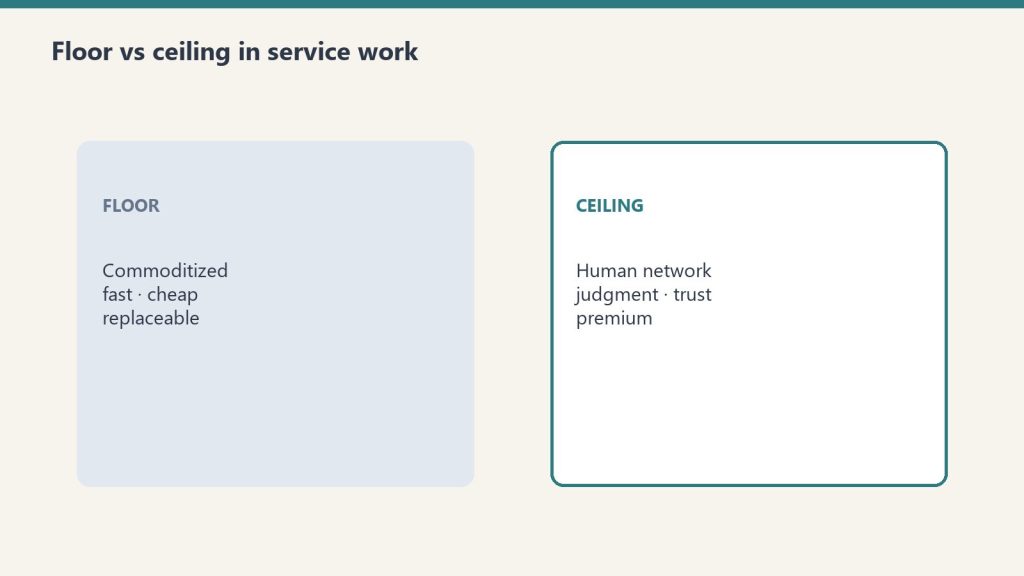
    Start with one. Publish the core article with a FAQ layer. That alone is dramatically more valuable than leaving the research in a social caption. Add variants as your workflow scales. The floor for the reverse stack is: one article + one FAQ layer + the URLs queued back to social. Everything above that is upside.

    How does the recursive loop actually start?

    It starts when you have enough published depth that search engines and AI systems have something to index and cite. This typically becomes noticeable after 3–6 months of consistent expansion. Once your site appears in AI-generated answers for local topics, your own content starts appearing in the research phase of new stories — and the loop is live.

  • How We Built a Complete AI Music Album in Two Sessions: The Red Dirt Sakura Story

    How We Built a Complete AI Music Album in Two Sessions: The Red Dirt Sakura Story

    The Lab · Tygart Media
    Experiment Nº 795 · Methodology Notes
    METHODS · OBSERVATIONS · RESULTS


    What if you could build a complete music album — concept, lyrics, artwork, production notes, and a full listening experience — without a recording studio, without a label, and without months of planning? That’s exactly what we did with Red Dirt Sakura, an 8-track country-soul album written and produced by a fictional Japanese-American artist named Yuki Hayashi. Here’s how we built it, what broke, what we fixed, and why this system is repeatable.

    What Is Red Dirt Sakura?

    Red Dirt Sakura is a concept album exploring what happens when Japanese-American identity collides with American country music. Each of the 8 tracks blends traditional Japanese melodic structure with outlaw country instrumentation — steel guitar, banjo, fiddle — sung in both English and Japanese. The album lives entirely on tygartmedia.com, built and published using a three-model AI pipeline.

    The Three-Model Pipeline: How It Works

    Every track on the album was processed through a sequential three-model workflow. No single model did everything — each one handled what it does best.

    Model 1 — Gemini 2.0 Flash (Audio Analysis): Each MP3 was uploaded directly to Gemini for deep audio analysis. Gemini doesn’t just transcribe — it reads the emotional arc of the music, identifies instrumentation, characterizes the tempo shifts, and analyzes how the sonic elements interact. For a track like “The Road Home / 家路,” Gemini identified the specific interplay between the steel guitar’s melancholy sweep and the banjo’s hopeful pulse — details a human reviewer might take hours to articulate.

    Model 2 — Imagen 4 (Artwork Generation): Gemini’s analysis fed directly into Imagen 4 prompts. The artwork for each track was generated from scratch — no stock photos, no licensed images. The key was specificity: “worn cowboy boots beside a shamisen resting on a Japanese farmhouse porch at golden hour, warm amber light, dust motes in the air” produces something entirely different from “country music with Japanese influence.” We learned this the hard way — more on that below.

    Model 3 — Claude (Assembly, Optimization, and Publish): Claude took the Gemini analysis, the Imagen artwork, the lyrics, and the production notes, then assembled and published each listening page via the WordPress REST API. This included the HTML layout, CSS template system, SEO optimization, schema markup, and internal link structure.

    What We Built: The Full Album Architecture

    The album isn’t just 8 MP3 files sitting in a folder. Every track has its own listening page with a full visual identity — hero artwork, a narrative about the song’s meaning, the lyrics in both English and Japanese, production notes, and navigation linking every page to the full station hub. The architecture looks like this:

    • Station Hub/music/red-dirt-sakura/ — the album home with all 8 track cards
    • 8 Listening Pages — one per track, each with unique artwork and full song narrative
    • Consistent CSS Template — the lr- class system applied uniformly across all pages
    • Parent-Child Hierarchy — all pages properly nested in WordPress for clean URL structure

    The QA Lessons: What Broke and What We Fixed

    Building a content system at this scale surfaces edge cases that only exist at scale. Here are the failures we hit and how we solved them.

    Imagen Model String Deprecation

    The Imagen 4 model string documented in various API references — imagen-4.0-generate-preview-06-06 — returns a 404. The working model string is imagen-4.0-generate-001. This is not documented prominently anywhere. We hit this on the first artwork generation attempt and traced it through the API error response. Future sessions: use imagen-4.0-generate-001 for Imagen 4 via Vertex AI.

    Prompt Specificity and Baked-In Text Artifacts

    Generic Imagen prompts that describe mood or theme rather than concrete visual scenes sometimes produce images with Stable Diffusion-style watermarks or text artifacts baked directly into the pixel data. The fix is scene-level specificity: describe exactly what objects are in frame, where the light is coming from, what surfaces look like, and what the emotional weight of the composition should be — without using any words that could be interpreted as text to render. The addWatermark: false parameter in the API payload is also required.

    WordPress Theme CSS Specificity

    Tygart Media’s WordPress theme applies color: rgb(232, 232, 226) — a light off-white — to the .entry-content wrapper. This overrides any custom color applied to child elements unless the child uses !important. Custom colors like #C8B99A (a warm tan) read as darker than the theme default on a dark background, making text effectively invisible. Every custom inline color declaration in the album pages required !important to render correctly. This is now documented and the lr- template system includes it.

    URL Architecture and Broken Nav Links

    When a URL structure changes mid-build, every internal nav link needs to be audited. The old station URL (/music/japanese-country-station/) was referenced by Song 7’s navigation links after we renamed the station to Red Dirt Sakura. We created a JavaScript + meta-refresh redirect from the old URL to the new one, and audited all 8 listening pages for broken references. If you’re building a multi-page content system, establish your final URL structure before page 1 goes live.

    Template Consistency at Scale

    The CSS template system (lr-wrap, lr-hero, lr-story, lr-section-label, etc.) was essential for maintaining visual consistency across 8 pages built across two separate sessions. Without this system, each page would have required individual visual QA. With it, fixing one global issue (like color specificity) required updating the template definition, not 8 individual pages.

    The Content Engine: Why This Post Exists

    The album itself is the first layer. But a music album with no audience is a tree falling in an empty forest. The content engine built around it is what makes it a business asset.

    Every listening page is an SEO-optimized content node targeting specific long-tail queries: Japanese country music, country music with Japanese influence, bilingual Americana, AI-generated music albums. The station hub is the pillar page. This case study is the authority anchor — it explains the system, demonstrates expertise, and creates a link target that the individual listening pages can reference.

    From this architecture, the next layer is social: one piece of social content per track, each linking to its listening page, with the case study as the ultimate destination for anyone who wants to understand the “how.” Eight tracks means eight distinct social narratives — the loneliness of “Whiskey and Wabi-Sabi,” the homecoming of “The Road Home / 家路,” the defiant energy of “Outlaw Sakura.” Each one is a separate door into the same content house.

    What This Proves About AI Content Systems

    The Red Dirt Sakura project demonstrates something important: AI models aren’t just content generators — they’re a production pipeline when orchestrated correctly. The value isn’t in any single output. It’s in the system that connects audio analysis, visual generation, content assembly, SEO optimization, and publication into a single repeatable workflow.

    The system is already proven. Album 2 could start tomorrow with the same pipeline, the same template system, and the documented fixes already applied. That’s what a content engine actually means: not just content, but a machine that produces it reliably.

    Frequently Asked Questions

    What AI models were used to build Red Dirt Sakura?

    The album was built using three models in sequence: Gemini 2.0 Flash for audio analysis, Google Imagen 4 (via Vertex AI) for artwork generation, and Claude Sonnet 4.6 for content assembly, SEO optimization, and WordPress publishing via REST API.

    How long did it take to build an 8-track AI music album?

    The entire album — concept, lyrics, production, artwork, listening pages, and publication — was completed across two working sessions. The pipeline handles each track in sequence, so speed scales with the number of tracks rather than the complexity of any single one.

    What is the Imagen 4 model string for Vertex AI?

    The working model string for Imagen 4 via Google Vertex AI is imagen-4.0-generate-001. Preview strings listed in older documentation are deprecated and return 404 errors.

    Can this AI music pipeline be used for other albums or artists?

    Yes. The pipeline is artist-agnostic and genre-agnostic. The CSS template system, WordPress page hierarchy, and three-model workflow can be applied to any music project with minor customization of the visual style and narrative voice.

    What is Red Dirt Sakura?

    Red Dirt Sakura is a concept album by the fictional Japanese-American artist Yuki Hayashi, blending American outlaw country with traditional Japanese musical elements and sung in both English and Japanese. The album lives on tygartmedia.com and was produced entirely using AI tools.

    Where can I listen to the Red Dirt Sakura album?

    All 8 tracks are available on the Red Dirt Sakura station hub on tygartmedia.com. Each track has its own dedicated listening page with artwork, lyrics, and production notes.

    Ready to Hear It?

    The full album is live. Eight tracks, eight stories, two languages. Start with the station hub and follow the trail.

    Listen to Red Dirt Sakura →


  • Content Velocity Engine — Publishing at Scale

    Content Velocity Engine — Publishing at Scale

    Futuristic content engine combining industrial printing press aesthetics with holographic content sheets flying at high velocity
  • P2 Spoke2 Machine First Engine — Content Architecture Visuals Visual

    P2 Spoke2 Machine First Engine — Content Architecture Visuals Visual

    Machine-First Engine: Building Content as Canon
    Machine-First Engine: Building Content as Canon

    About This Image

    This image is part of the Content Architecture Visuals collection in the Tygart Media visual library. Every image produced by Tygart Media is AI-generated using Google Vertex AI (Imagen), converted to WebP format, and injected with full IPTC/XMP metadata before publication.

    Technical Details

    • Format: WEBP
    • Collection: Content Architecture Visuals
    • Media ID: 422
    • Pipeline: Vertex AI Imagen → WebP → IPTC/XMP → WordPress

    Image Licensing

    All images in the Tygart Media visual library are produced in-house using AI image generation and are owned by Tygart Media.

  • Adaptive Variant Pipeline — Article Hero Images Visual

    Adaptive Variant Pipeline — Article Hero Images Visual

    Adaptive Variant Pipeline
    Adaptive Variant Pipeline

    About This Image

    This image is part of the Article Hero Images collection in the Tygart Media visual library. Every image produced by Tygart Media is AI-generated using Google Vertex AI (Imagen), converted to WebP format, and injected with full IPTC/XMP metadata before publication.

    Technical Details

    • Format: WEBP
    • Collection: Article Hero Images
    • Media ID: 368
    • Pipeline: Vertex AI Imagen → WebP → IPTC/XMP → WordPress

    Image Licensing

    All images in the Tygart Media visual library are produced in-house using AI image generation and are owned by Tygart Media.

  • Cloudflare EmDash: Why We’re Not Leaving WordPress Yet

    Cloudflare EmDash: Why We’re Not Leaving WordPress Yet

    Tygart Media / The Signal
    Broadcast Live
    Filed by Will Tygart
    Tacoma, WA
    Industry Bulletin

    Cloudflare dropped EmDash on April 1, 2026 — and no, it’s not an April Fools joke. It’s a fully open-source CMS written in TypeScript, running on serverless infrastructure, with every plugin sandboxed in its own isolated environment. They’re calling it the “spiritual successor to WordPress.”

    We manage 27+ WordPress sites across a dozen verticals. We’ve built an entire AI-native operating system on top of WordPress REST APIs. So when someone announces a WordPress replacement with a built-in MCP server, we pay attention.

    Here’s our honest take.

    What EmDash Gets Right

    Plugin isolation is overdue. Patchstack reported that 96% of WordPress vulnerabilities come from plugins. That’s because WordPress plugins run in the same execution context as core — they get unrestricted access to the database and filesystem. EmDash puts each plugin in its own sandbox using Cloudflare’s Dynamic Workers, and plugins must declare exactly what capabilities they need. This is how it should have always worked.

    Scale-to-zero economics make sense. EmDash only bills for CPU time when it’s actually processing requests. For agencies managing dozens of sites where many receive intermittent traffic, this could dramatically reduce hosting costs. No more paying for idle servers.

    Native MCP server is forward-thinking. Every EmDash instance ships with a Model Context Protocol server built in. That means AI agents can create content, manage schemas, and operate the CMS without custom integrations. They also include Agent Skills — structured documentation that tells an AI exactly how to work with the platform.

    x402 payment support is smart. EmDash supports HTTP-native payments via the x402 standard. An AI agent hits a page, gets a 402 response, pays, and accesses the content. No checkout flow, no subscription — just protocol-level monetization. This is the right direction for an agent-driven web.

    MIT licensing opens the door. Unlike WordPress’s GPL, EmDash uses MIT licensing. Plugin developers can choose any license they want. This eliminates one of the biggest friction points in the WordPress ecosystem — the licensing debates that have fueled years of conflict, most recently the WP Engine-Automattic dispute.

    Why We’re Staying on WordPress

    We already solved the plugin security problem. Our architecture doesn’t depend on WordPress plugins for critical functions. We connect to WordPress from inside a GCP VPC via REST API — Claude orchestrates, GCP executes, and WordPress serves as the database and rendering layer. Plugins don’t touch our operational pipeline. EmDash’s sandboxed plugin model solves a problem we’ve already engineered around.

    27+ sites don’t migrate overnight. We have thousands of published posts, established taxonomies, internal linking architectures, and SEO equity across every site. EmDash offers WXR import and an exporter plugin, but migration at our scale isn’t a file import — it’s a months-long project involving URL redirects, schema validation, taxonomy mapping, and traffic monitoring. The ROI doesn’t exist today.

    WordPress REST API is our operating layer. Every content pipeline, taxonomy fix, SEO refresh, schema injection, and interlinking pass runs through the WordPress REST API. We’ve built 40+ Claude skills that talk directly to WordPress endpoints. EmDash would require rebuilding every one of those integrations from scratch.

    v0.1.0 isn’t production-ready. EmDash has zero ecosystem — no plugin marketplace, no theme library, no community of developers stress-testing edge cases. WordPress has 23 years of battle-tested infrastructure and the largest CMS community on earth. We don’t run client sites on preview software.

    The MCP advantage isn’t exclusive. WordPress already has REST API endpoints that our agents use. We’ve built our own MCP-style orchestration layer using Claude + GCP. A built-in MCP server is convenient, but it’s not a switching cost — it’s a feature we can replicate.

    When EmDash Becomes Interesting

    EmDash becomes a real consideration when three things happen: a stable 1.0 release with production guarantees, a meaningful plugin ecosystem that covers essential functionality (forms, analytics, caching, SEO), and proven migration tooling that handles large multi-site operations without breaking URL structures or losing SEO equity.

    Until then, it’s a research signal. A very good one — Cloudflare clearly understands where the web is going and built the right primitives. But architecture doesn’t ship client sites. Ecosystem does.

    The Takeaway for Other Agencies

    If you’re an agency considering your CMS strategy, EmDash is worth watching but not worth chasing. The lesson from EmDash isn’t “leave WordPress” — it’s “stop depending on WordPress plugins for critical infrastructure.” Build your operations layer outside WordPress. Connect via API. Treat WordPress as a database and rendering engine, not as your application platform.

    That’s what we’ve done, and it’s why a new CMS launch — no matter how architecturally sound — doesn’t threaten our stack. It validates our approach.

    Frequently Asked Questions

    What is Cloudflare EmDash?

    EmDash is a new open-source CMS from Cloudflare, built in TypeScript and designed to run on serverless infrastructure. It isolates plugins in sandboxed environments, supports AI agent interaction via a built-in MCP server, and includes native HTTP-native payment support through the x402 standard.

    Is EmDash better than WordPress?

    Architecturally, EmDash addresses real WordPress weaknesses — particularly plugin security and serverless scaling. But WordPress has 23 years of ecosystem, tens of thousands of plugins, and the largest CMS community in the world. EmDash is at v0.1.0 with no production track record. Architecture alone doesn’t make a platform better; ecosystem maturity matters.

    Should my agency switch from WordPress to EmDash?

    Not today. If you’re running production sites with established SEO equity, taxonomies, and content pipelines, migration risk outweighs any current EmDash advantage. Revisit when EmDash reaches a stable 1.0 release with proven migration tooling and a meaningful plugin ecosystem.

    How does EmDash handle plugin security differently?

    WordPress plugins run in the same execution context as core code with full database and filesystem access. EmDash isolates each plugin in its own sandbox and requires plugins to declare exactly which capabilities they need upfront — similar to OAuth scoped permissions. A plugin can only perform the actions it explicitly declares.

    What should agencies do about WordPress security instead?

    Minimize plugin dependency. Connect to WordPress via REST API from external infrastructure rather than running critical operations through plugins. Treat WordPress as a content database and rendering engine, not as your application platform. This approach neutralizes the plugin vulnerability surface that EmDash was designed to solve.


  • Split Brain Architecture: How One Person Manages 27 WordPress Sites Without an Agency

    Split Brain Architecture: How One Person Manages 27 WordPress Sites Without an Agency

    The Lab · Tygart Media
    Experiment Nº 684 · Methodology Notes
    METHODS · OBSERVATIONS · RESULTS

    The question I get most often from restoration contractors who’ve seen what we build is some version of: how is this possible with one person?

    Twenty-seven WordPress sites. Hundreds of articles published monthly. Featured images generated and uploaded at scale. Social media content drafted across a dozen brands. SEO, schema, internal linking, taxonomy — all of it maintained, all of it moving.

    The answer is an architecture I’ve come to call Split Brain. It’s not a software product. It’s a division of cognitive labor between two types of intelligence — one optimized for live strategic thinking, one optimized for high-volume execution — and getting that division right is what makes the whole system possible.

    The Two Brains

    The Split Brain architecture has two sides.

    The first side is Claude — Anthropic’s AI — running in a live conversational session. This is where strategy happens. Where a new content angle gets developed, interrogated, and refined. Where a client site gets analyzed and a priority sequence gets built. Where the judgment calls live: what to write, why, for whom, in what order, with what framing. Claude is the thinking partner, the editorial director, the strategist who can hold the full context of a client’s competitive situation and make nuanced recommendations in real time.

    The second side is Google Cloud Platform — specifically Vertex AI running Gemini models, backed by Cloud Run services, Cloud Storage, and BigQuery. This is where execution happens at volume. Bulk article generation. Batch API calls that cut cost in half for non-time-sensitive work. Image generation through Vertex AI’s Imagen. Automated publishing pipelines that can push fifty articles to a WordPress site while I’m working on something else entirely.

    Building Something Like This?

    If you are trying to run a multi-site or multi-client operation with Claude, I am probably three steps ahead of wherever you are stuck.

    Email me what you are building and I will tell you what I would do differently if I were starting it today.

    Email Will → will@tygartmedia.com

    The two sides don’t do the same things. That’s the whole point.

    Why Splitting the Work Matters

    The instinct when you first encounter powerful AI tools is to use one thing for everything. Pick a model, run everything through it, see what happens.

    This produces mediocre results at high cost. The same model that’s excellent for developing a nuanced content strategy is overkill for generating fifty FAQ schema blocks. The same model that’s fast and cheap for taxonomy cleanup is inadequate for long-form strategic analysis. Using a single tool indiscriminately means you’re either overpaying for bulk work or under-resourcing the work that actually requires judgment.

    The Split Brain architecture routes work to the right tool for the job:

    • Haiku (fast, cheap, reliable): taxonomy assignment, meta description generation, schema markup, social media volume, AEO FAQ blocks — anything where the pattern is clear and the output is structured
    • Sonnet (balanced): content briefs, GEO optimization, article expansion, flagship social posts — work that requires more nuance than pure pattern-matching but doesn’t need the full strategic layer
    • Opus / Claude live session: long-form strategy, client analysis, editorial decisions, anything where the output depends on holding complex context and making judgment calls
    • Batch API: any job over twenty articles that isn’t time-sensitive — fifty percent cost reduction, same quality, runs in the background

    The model routing isn’t arbitrary. It was validated empirically across dozens of content sprints before it became the default. The wrong routing is expensive, slow, or both.

    WordPress as the Database Layer

    Most WordPress management tools treat the CMS as a front-end interface — you log in, click around, make changes manually. That mental model caps your throughput at whatever a human can do through a browser in a workday.

    In the Split Brain architecture, WordPress is a database. Every site exposes a REST API. Every content operation — publishing, updating, taxonomy assignment, schema injection, internal link modification — happens programmatically via direct API calls, not through the admin UI.

    This changes the throughput ceiling entirely. Publishing twenty articles through the WordPress admin takes most of a day. Publishing twenty articles via the REST API, with all metadata, categories, tags, schema, and featured images attached, takes minutes. The human time is in the strategy and quality review — not in the clicking.

    Twenty-seven sites across different hosting environments required solving the routing problem: some sites on WP Engine behind Cloudflare, one on SiteGround with strict IP rules, several on GCP Compute Engine. The solution is a Cloud Run proxy that handles authentication and routing for the entire network, with a dedicated publisher service for the one site that blocks all external traffic. The infrastructure complexity is solved once and then invisible.

    Notion as the Human Layer

    A system that runs at this velocity generates a lot of state: what was published where, what’s scheduled, what’s in draft, what tasks are pending, which sites have been audited recently, which content clusters are complete and which have gaps.

    Notion is where all of that state lives in human-readable form. Not as a project management tool in the traditional sense — as an operating system. Six relational databases covering entities, contacts, revenue pipeline, actions, content pipeline, and a knowledge lab. Automated agents that triage new tasks, flag stale work, surface content gaps, and compile weekly briefings without being asked.

    The architecture means I’m never managing the system — the system manages itself, and I review what it surfaces. The weekly synthesizer produces an executive briefing every Sunday. The triage agent routes new items to priority queues automatically. The content guardian flags anything that’s close to a publish deadline and not yet in scheduled state.

    Human attention goes to decisions, not to administration.

    What This Looks Like in Practice

    A typical content sprint for a client site starts with a live Claude session: what does this site need, in what order, targeting which keywords, with what persona in mind. That session produces a structured brief — JSON, not prose — that seeds everything downstream.

    The brief goes to GCP. Gemini generates the articles. Imagen generates the featured images. The batch publisher pushes everything to WordPress with full metadata attached. The social layer picks up the published URLs and drafts platform-specific posts for each piece. The internal link scanner identifies connections to existing content and queues a linking pass.

    My involvement during execution is monitoring, not doing. The doing is automated. The judgment — what to build, why, and whether the output clears the quality bar — stays with the human layer.

    This is what makes the throughput possible. Not working harder or faster. Designing the system so that the parts that require human judgment get human judgment, and the parts that don’t get automated at whatever volume the infrastructure supports.

    The Honest Constraints

    The Split Brain architecture is not a magic box. It has real constraints worth naming.

    Quality gates are essential. High-volume automated content production without rigorous pre-publish review produces high-volume errors. Every content sprint runs through a quality gate that checks for unsourced statistical claims, fabricated numbers, and anything that reads like the model invented a fact. This is non-negotiable — the efficiency gains from automation are worthless if they introduce errors that damage a client’s credibility.

    Architecture decisions made early are expensive to change later. The taxonomy structure, the internal link architecture, the schema conventions — getting these right before publishing at scale is substantially easier than retrofitting them across hundreds of existing posts. The speed advantage of the system only compounds if the foundation is solid.

    And the system requires maintenance. Models improve. APIs change. Hosting environments add new restrictions. What works today for routing traffic to a specific site may need adjustment next quarter. The infrastructure overhead is real, even if it’s substantially lower than managing a human team of equivalent output.

    None of these constraints make the architecture less viable. They make it more important to design it deliberately — to understand what the system is doing, why each component is there, and what would break if any piece of it changed.

    That’s the Split Brain. Two kinds of intelligence, clearly divided, doing the work each is actually suited for.


    Tygart Media is built on this architecture. If you’re a service business thinking about what an AI-native content operation could look like for your vertical, the conversation starts with understanding what requires judgment and what doesn’t.

    {
    “@context”: “https://schema.org”,
    “@type”: “Article”,
    “headline”: “Split Brain Architecture: How One Person Manages 27 WordPress Sites Without an Agency”,
    “description”: “Claude for live strategy. GCP and Gemini for bulk execution. Notion as the operating layer. Here is the exact architecture behind managing 27 WordPress sites as”,
    “datePublished”: “2026-04-02”,
    “dateModified”: “2026-04-03”,
    “author”: {
    “@type”: “Person”,
    “name”: “Will Tygart”,
    “url”: “https://tygartmedia.com/about”
    },
    “publisher”: {
    “@type”: “Organization”,
    “name”: “Tygart Media”,
    “url”: “https://tygartmedia.com”,
    “logo”: {
    “@type”: “ImageObject”,
    “url”: “https://tygartmedia.com/wp-content/uploads/tygart-media-logo.png”
    }
    },
    “mainEntityOfPage”: {
    “@type”: “WebPage”,
    “@id”: “https://tygartmedia.com/split-brain-architecture-ai-content-operations/”
    }
    }

    For operators ready to build

    You just read the playbook. We build it.

    The split-brain architecture on this page is not theoretical — it runs across 20+ live WordPress sites at Tygart Media right now. If you want this deployed for your content operation, we scope, build, and hand it off. Most engagements run 4-6 weeks.

    Talk to Will about your setup →

  • AI Music Pipeline: 20 Songs in One Session with Claude

    AI Music Pipeline: 20 Songs in One Session with Claude

    The Lab · Tygart Media
    Experiment Nº 603 · Methodology Notes
    METHODS · OBSERVATIONS · RESULTS

    I wanted to test a question that’s been nagging me since I started building autonomous AI pipelines: how far can you push a creative workflow before the quality falls off a cliff?

    The answer, it turns out, is further than I expected — but the cliff is real, and knowing where it is matters more than the output itself.

    The Experiment: Zero Human Edits, 20 Songs, 19 Genres

    The setup was straightforward in concept and absurdly complex in execution. I gave Claude one instruction: generate original songs using Producer.ai, analyze each one with Gemini 2.0 Flash, create custom artwork with Imagen 4, build a listening page with a custom audio player, publish it to this site, update the music hub, log everything to Notion, and then loop back and do it again.

    The constraint that made it real: Claude had to honestly assess quality after every batch and stop when diminishing returns hit. No padding the catalog with filler. No claiming mediocre output was good. The stakes had to be real or the whole experiment was theater.

    Over the course of one extended session, the pipeline produced 20 original tracks spanning 19 distinct genres — from heavy metal to bossa nova, punk rock to Celtic folk, ambient electronic to gospel soul.

    How the Pipeline Actually Works

    Each song passes through a 7-stage autonomous pipeline with zero human intervention between stages:

    1. Prompt Engineering — Claude crafts a genre-specific prompt designed to push Producer.ai toward authentic instrumentation and songwriting conventions for that genre, not generic “make a song in X style” requests.
    2. Generation — Producer.ai generates the track. Claude navigates the interface via browser automation, waits for generation to complete, then extracts the audio URL from the page metadata.
    3. Audio Conversion — The raw m4a file is downloaded and converted to MP3 at 192kbps for the full version, plus a trimmed 90-second version at 128kbps for AI analysis.
    4. Gemini 2.0 Flash Analysis — The trimmed audio is sent to Google’s Gemini 2.0 Flash model via Vertex AI. Gemini listens to the actual audio and returns a structured analysis: song description, artwork prompt suggestion, narrative story, and thematic elements.
    5. Imagen 4 Artwork — Gemini’s artwork prompt feeds into Google’s Imagen 4 model, which generates a 1:1 album cover. Each cover is genre-matched — moody neon for synthwave, weathered wood textures for Appalachian folk, stained glass for gospel soul.
    6. WordPress Publishing — The MP3 and artwork upload to WordPress. Claude builds a complete listening page with a custom HTML/CSS/JS audio player, genre-specific accent colors, lyrics or composition notes, and the AI-generated story. The page publishes as a child of the music hub.
    7. Hub Update & Logging — The music hub grid gets a new card with the artwork, title, and genre badge. Everything logs to Notion for the operational record.

    The entire stack runs on Google Cloud — Vertex AI for Gemini and Imagen 4, authenticated via service account JWT tokens. WordPress sits on a GCP Compute Engine instance. The only external dependency is Producer.ai for the actual audio generation.

    The 20-Song Catalog

    You can listen to every track on the Tygart Media Music Hub. Here’s the full catalog with genre and a quick take on each:

    # Title Genre Assessment
    1 Anvil and Ember Blues Rock Strong opener — gritty, authentic tone
    2 Neon Cathedral Synthwave / Darkwave Atmospheric, genre-accurate production
    3 Velvet Frequency Trip-Hop Moody, textured, held together well
    4 Hollow Bones Appalachian Folk Top 3 — haunting, genuine folk storytelling
    5 Glass Lighthouse Dream Pop / Indie Pop Shimmery, the lightest track in the catalog
    6 Meridian Line Orchestral Hip-Hop Surprisingly cohesive genre fusion
    7 Salt and Ceremony Gospel Soul Warm, emotionally grounded
    8 Tide and Timber Roots Reggae Laid-back, authentic reggae rhythm
    9 Paper Lanterns Bossa Nova Gentle, genuine Brazilian feel
    10 Burnt Bridges, Better Views Punk Rock Top 3 — raw energy, real punk attitude
    11 Signal Drift Ambient Electronic Spacious instrumental, no lyrics needed
    12 Gravel and Grace Modern Country Solid modern Nashville sound
    13 Velvet Hours Neo-Soul R&B Vocal instrumental — texture over lyrics
    14 The Keeper’s Lantern Celtic Folk Top 3 — strong closer, unique sonic palette

    Plus 6 earlier experimental tracks (Iron Heart variations, Iron and Salt, The Velvet Pour, Rusted Pocketknife) that preceded the formal pipeline and are also on the hub.

    Where Quality Held Up — and Where It Didn’t

    The pipeline performed best on genres with strong structural conventions. Blues rock, punk, folk, country, and Celtic music all have well-defined instrumentation and songwriting patterns that Producer.ai could lock into. The AI wasn’t inventing a genre — it was executing within one, and the results were genuinely listenable.

    The weakest output came from genres that rely on subtlety and human nuance. The neo-soul track (Velvet Hours) ended up as a vocal instrumental — beautiful textures, but no real lyrical content. It felt more like a mood than a song. The synthwave track was competent but slightly generic — it hit every synth cliché without adding anything distinctive.

    The biggest surprise was Meridian Line (Orchestral Hip-Hop). Fusing a full orchestral arrangement with hip-hop production is hard for human producers. The AI pulled it off with more coherence than I expected.

    The Honest Assessment: Why I Stopped at 20

    After 14 songs in the formal pipeline (plus the 6 experimental tracks), I evaluated what genres remained untapped. The answer was ska, reggaeton, polka, zydeco — genres that would have been novelty picks, not genuine catalog additions. Each of the 19 genres I covered brought a distinctly different sonic palette, vocal style, and emotional register. Song 20 was the right place to stop because Song 21 would have been padding.

    This is the part that matters for anyone building autonomous creative systems: the quality curve isn’t linear. You don’t get steadily worse output. You get strong results across a wide range, and then you hit a wall where the remaining options are either redundant (too similar to something you already made) or contrived (genres you’re forcing because they’re different, not because they’re good).

    Knowing where that wall is — and having the system honestly report it — is the difference between a useful pipeline and a content mill.

    What This Means for AI-Driven Creative Work

    This experiment wasn’t about proving AI can replace musicians. It can’t. Every track in this catalog is a competent execution of genre conventions — but none of them have the idiosyncratic human choices that make music genuinely memorable. No AI song here will be someone’s favorite song.

    What the experiment does prove is that the full creative pipeline — from ideation through production, analysis, visual design, web publishing, and catalog management — can run autonomously at a quality level that’s functional and honest about its limitations.

    The tech stack that made this possible:

    • Claude — Pipeline orchestration, prompt engineering, quality assessment, web publishing, and the decision to stop
    • Producer.ai — Audio generation from text prompts
    • Gemini 2.0 Flash — Audio analysis (it actually listened to the MP3 and described what it heard)
    • Imagen 4 — Album artwork generation from Gemini’s descriptions
    • Google Cloud Vertex AI — API backbone for both Gemini and Imagen 4
    • WordPress REST API — Direct publishing with custom HTML listening pages
    • Notion API — Operational logging for every song

    Total cost for the entire 20-song catalog: a few dollars in Vertex AI API calls. Zero human edits to the published output.

    Listen for Yourself

    The full catalog is live on the Tygart Media Music Hub. Every track has its own listening page with a custom audio player, AI-generated artwork, the story behind the song, and lyrics (or composition notes for instrumentals). Pick a genre you like and judge for yourself whether the pipeline cleared the bar.

    The honest answer is: it cleared it more often than it didn’t. And knowing exactly where it didn’t is the most valuable part of the whole experiment.