• Long-form Position
• Practitioner-grade
I sponsor a golf league.
Not a tour. Not a country club event. A B2B networking league built around the property damage restoration industry — contractors, adjusters, vendors, consultants, equipment suppliers, TPAs. Seventeen chapters across the country, each running events in their local market, each building the same thing: a room full of people who do business together, on a golf course, without their phones in their hands for four hours.
I didn’t build it. I didn’t found it. I didn’t hire the chapter ambassadors or negotiate the venues or design the scoring format. Those people did the work of building the organization. What I did was recognize what I was looking at and invest accordingly.
That distinction — sponsor versus owner — is the entire strategic point. And it’s almost never discussed in the literature about B2B networking, which tends to assume that to benefit from a network you need to run it.
You don’t. In some situations, you get more from being the most committed non-founder in the room than you would from being the founder. This is one of those situations, and understanding why requires understanding what a sponsored network actually provides versus what organizational ownership provides.
What the Owner Has That the Sponsor Doesn’t
The organization’s founder has control. They set the membership criteria, the chapter structure, the event format, the brand standards. They make the decisions about which markets to enter, which sponsors to accept, which directions to grow. They bear the operational overhead — the logistics, the coordination, the member management, the chapters that underperform and need attention.
Control is valuable. Operational overhead is expensive. For a solo operator running an AI-native content agency, the overhead of running a 17-chapter national networking organization is not compatible with the overhead of running 27 client WordPress sites, building content infrastructure, managing a GCP stack, and doing the writing. The person who built RGL made it their primary vehicle. I couldn’t make it mine without sacrificing what I’ve built elsewhere.
So I don’t have control. What do I have instead?
What the Committed Sponsor Has That the Owner Doesn’t
Credibility without burden. Trust without administration. Presence in every chapter market without the cost of maintaining a presence in every chapter market.
When a restoration contractor in Phoenix meets me at an RGL event, the context of that meeting is: I’m the person who invested in this thing they’re already part of, in their market, because I believe in what it’s doing. That’s a fundamentally different first impression than cold outreach. It’s even different from a vendor booth at a trade show, where the context is: I paid to have access to this audience.
Sponsorship inside a trust network signals alignment, not just interest. The people in the room are already there because they chose to participate in something that requires showing up — physically, repeatedly, over time. A sponsor who shares that belief system is perceived as one of them, not as someone who bought access to them.
The second thing the committed sponsor has: distributed presence. Seventeen chapters run events throughout the year in seventeen markets. Every event is an opportunity for Tygart Media to be in the room — not because I’m traveling to seventeen markets, but because the sponsorship means my name and my work are part of the organization’s identity in each of them. The chapter ambassador in Charlotte is introducing me as a sponsor before I’ve ever been to Charlotte. That’s distribution I couldn’t buy with advertising and couldn’t build with cold outreach.
The Trust Infrastructure That Golf Specifically Builds
The vehicle matters. RGL is a golf league, not a trade association or a conference or a LinkedIn group, and the choice of golf is not arbitrary. Golf creates something that almost no other B2B networking format creates: four uninterrupted hours of low-stakes, relationship-building conversation between people who are ostensibly there for something other than business.
The property manager and the restoration contractor are walking the same fairway, waiting for the same slow group ahead, talking about whatever comes up. The insurance adjuster and the equipment rep are sharing a cart for two hours. None of this is structured. None of it is a pitch. The relationship that forms is peer-level because golf is a peer-level environment — everyone is equally subject to the wind, the rough, and the occasional shank.
Compare this to the environments where most B2B relationships in the restoration industry form: trade show floors (loud, transactional, everyone scanning badges), vendor lunch programs (one party is clearly the host with an agenda), referral calls (cold or at best lukewarm, purpose-driven from the first sentence), and job sites (one party has positional authority over the other). None of these formats produce the kind of trust that golf produces, because none of them have four hours and no agenda.
The research on this is consistent: golf relationships convert to business relationships at higher rates than almost any other networking format, particularly in industries where trust determines who gets the call — construction, financial services, professional services, and the trades broadly. In restoration specifically, where a property manager is handing over a damaged building to someone they need to trust not to make it worse, the relationship quality matters enormously. A contractor who the PM has played golf with three times is not the same as a contractor who submitted the lowest bid on a cold RFP.
Chapters as Distribution Nodes
Here is the math that the second brain has been working on since I started taking the RGL sponsorship seriously.
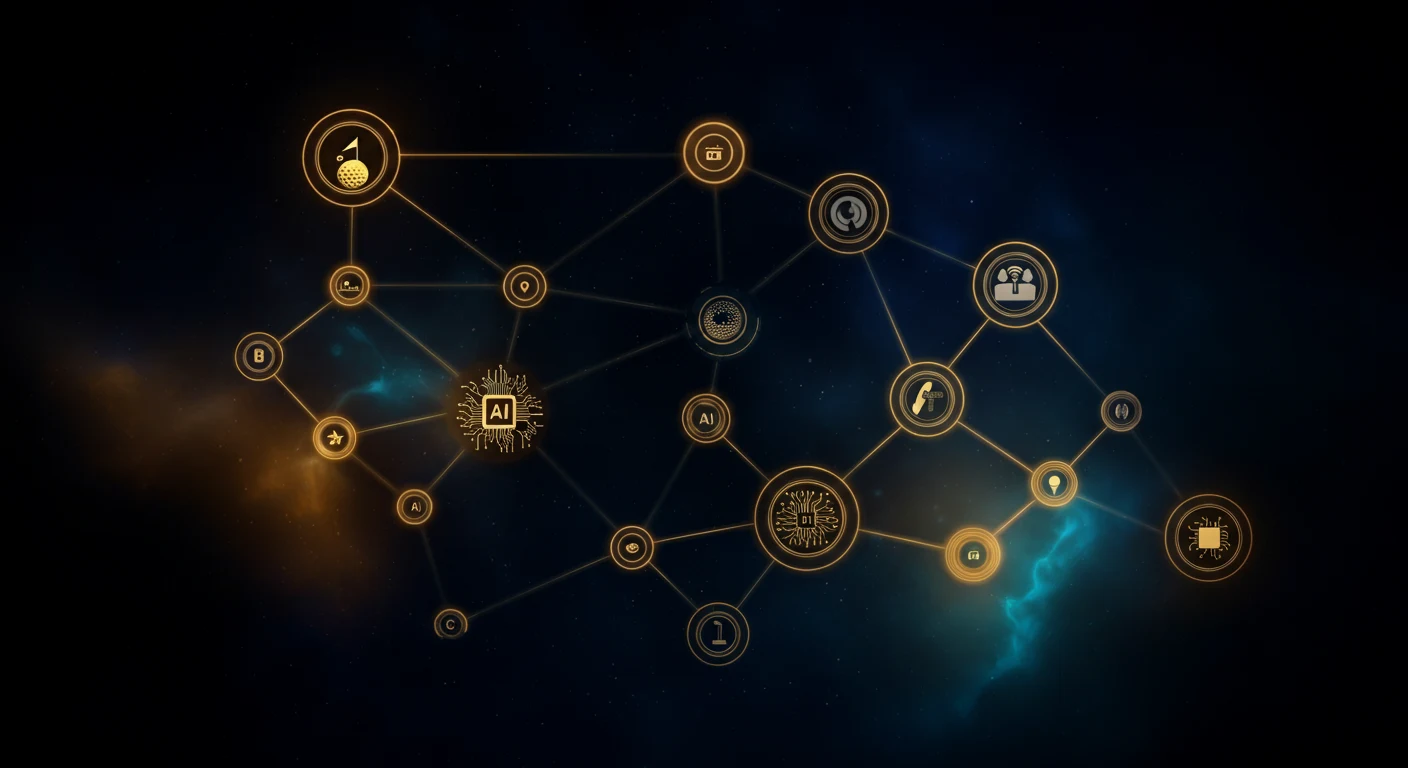
Each chapter is a node in a trust network that contains: restoration contractors, insurance adjusters, insurance agents, public adjusters, equipment suppliers, specialty subcontractors, TPAs, and property managers. These are exactly the people who need what Tygart Media builds — SEO-optimized WordPress infrastructure, AI-native content pipelines, local search visibility.
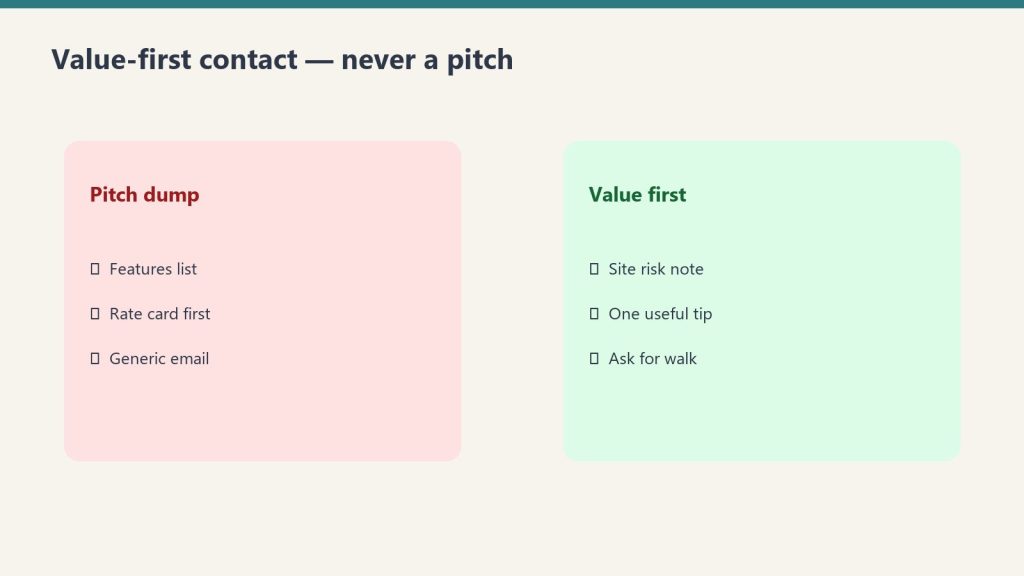
A cold outreach to a restoration contractor in Phoenix gets a response rate consistent with cold outreach to anyone: under 5% on a good day, often much less. An introduction at an RGL Phoenix event — “this is Will, he’s the guy who sponsors the league, he runs digital for restoration companies” — gets a response rate consistent with a warm referral from a trusted peer. The same information, the same product, the same price, presented in two different relationship contexts, produces dramatically different conversion.
The compounding effect: each contractor client who comes through an RGL chapter introduction has a vendor ecosystem behind them. The plumber they call for every water damage job. The roofer they sub to after fire losses. The HVAC contractor they recommend when the remediation is done. Every one of those vendors needs the same thing — local SEO, a website that works, someone who understands their industry because they’re already inside it. The restoration company owner introduces you because you’re their person. You’re not pitching a cold vendor. You’re getting handed the relationship.
Seventeen chapters, running multiple events per year each. The math isn’t complicated. The question is whether the distribution infrastructure is being used strategically or just passively.
Network-Led Sales vs. Cold Outreach: The Structural Difference
Cold outreach is a numbers game. You contact enough people, a percentage respond, a percentage of those convert. The ratio is predictable and it’s low. The cost per acquisition is high because the conversion rate at the top of the funnel is low. This is the model most agencies run on because it’s scalable and doesn’t require the patience or investment that network-led growth requires.
Network-led sales is an entirely different model. The funnel starts not at outreach but at relationship. The relationship precedes the sales conversation. When the sales conversation happens — if it needs to happen at all — the context is already favorable. The prospect already knows who you are and why you’re credible. The objection is not “I don’t know you” but “is this the right time” — a much more solvable problem.
The tradeoff is time and investment. Network-led growth requires consistent presence over time, investment in the network’s success (not just personal extraction from it), and patience for the trust to compound before the pipeline materializes. For someone who wants clients this quarter, it’s too slow. For someone building a durable operation over years, it’s the only model that actually compounds.
The RGL sponsorship is a three-year investment that is still in early returns. The relationships built in year one convert in year two or three. The contractor who saw my name at six events and then had a conversation over drinks at the seventh is not comparing me to a cold outreach from a competitor — I’m already the default. The comparison set is empty.
What the Sponsorship Requires to Work
Passive sponsorship — writing a check and putting your logo on the website — produces brand awareness among people who are passively aware of the organization. That has some value and not much.
Active sponsorship — showing up, contributing, becoming genuinely part of the community — produces something different. The sponsorship that builds real pipeline requires the same thing the best sales relationships have always required: genuine investment in the other party’s success before asking for anything.
For RGL, that means showing up at chapter events when possible. Contributing content that serves the membership — articles, resources, frameworks that help restoration companies build better operations — not content that promotes your services. Introducing members to each other when you see an opportunity. Being the person in the network who gives more than they take, for long enough that the network comes to see you that way.
This is not a counterintuitive strategy. It’s the oldest sales strategy there is. What makes it work in a sponsored network specifically is that the organization does the community-building work for you. You don’t have to gather the room — the league gathers the room. You show up in the room that already exists and you add value. The infrastructure belongs to someone else. The trust you build inside it belongs to you.
Frequently Asked Questions
How do you measure ROI on a sponsorship like this?
The direct measure is client relationships that originated through RGL introductions. The indirect measure is harder but more important: the inbound reputation that makes cold outreach unnecessary for a growing percentage of new business. Sponsorship ROI is measured in years, not quarters. The mistake is applying quarterly conversion metrics to a relationship investment that operates on a different timeline.
What’s the difference between sponsoring a network and advertising to it?
Advertising is transactional — you pay for access to an audience and they see your message with the full awareness that you paid for the access. Sponsorship of a trust network is relational — you invest in the community’s infrastructure and are perceived as a member of it, not a vendor pitching at it. The same people receive both messages differently. The conversion dynamic is not comparable.
Does this strategy require significant travel and in-person time?
In-person presence amplifies it significantly but isn’t the only input. The content contribution — articles, frameworks, resources that RGL members find genuinely useful — builds presence in every chapter market without travel. The person who shows up at events AND provides consistent value between events compounds faster than someone doing either alone.
Can this model be replicated in other industries?
Yes, with one prerequisite: the network has to actually exist and have genuine trust value. A manufactured networking organization, or one where membership is purely transactional, doesn’t produce the same effect. The RGL works because the golf format builds real relationships and the industry focus means every room is full of people who actually do business together. The model transfers to any field where a genuine trust network exists and where sponsorship access is available — which is most industries, because most genuine trust networks are underwritten.
Sponsored Network Pipeline Cluster
- Golf as B2B Trust Infrastructure: Why Four Hours on a Course Builds What Meetings Can’t
- Using Network Chapters as Distribution Nodes: The Math Behind Sponsored Network Pipeline
- Network-Led Sales vs. Cold Outreach: The Structural Difference
Related: CRM Community Framework — building community from your existing database without a network to plug into.