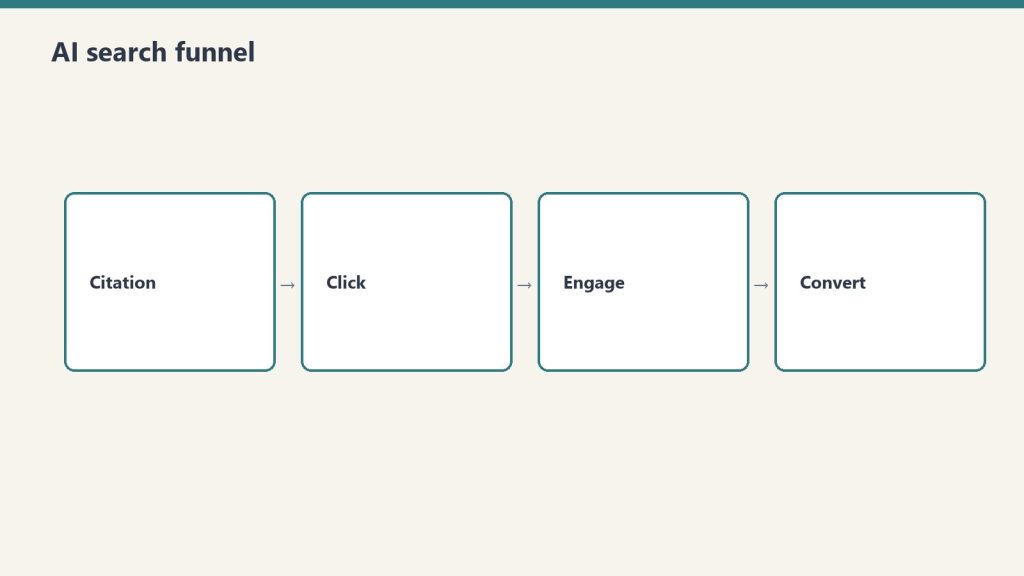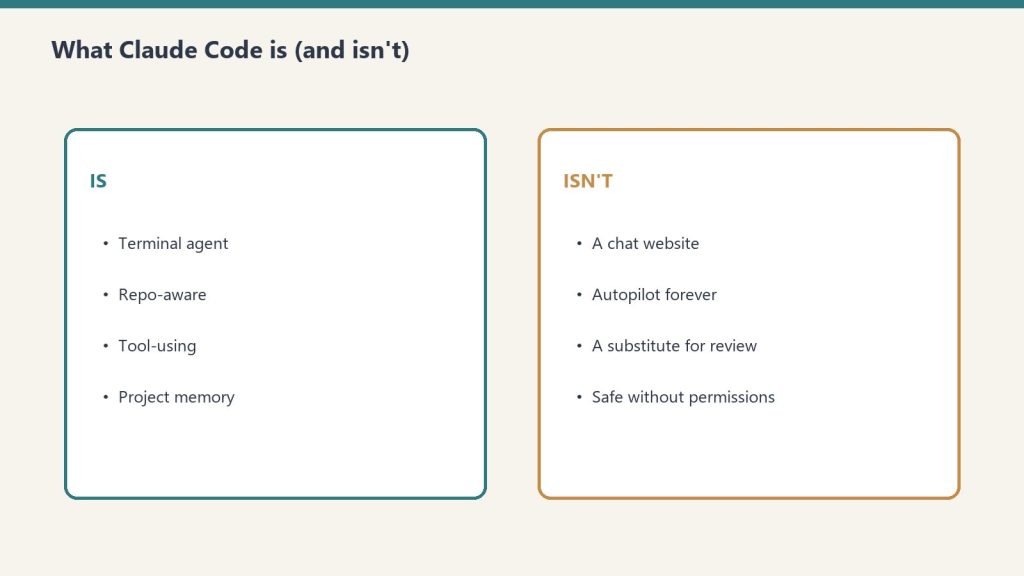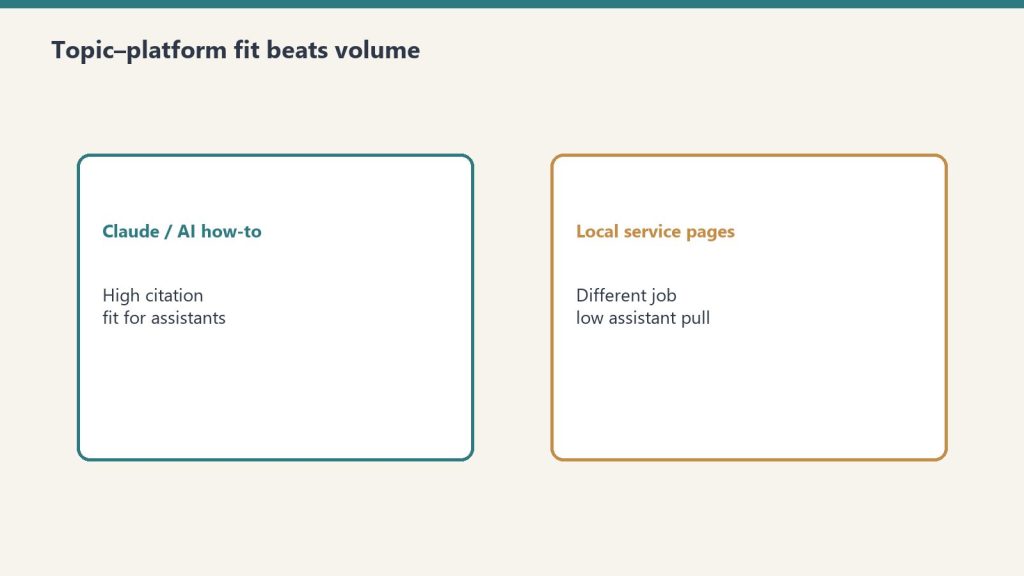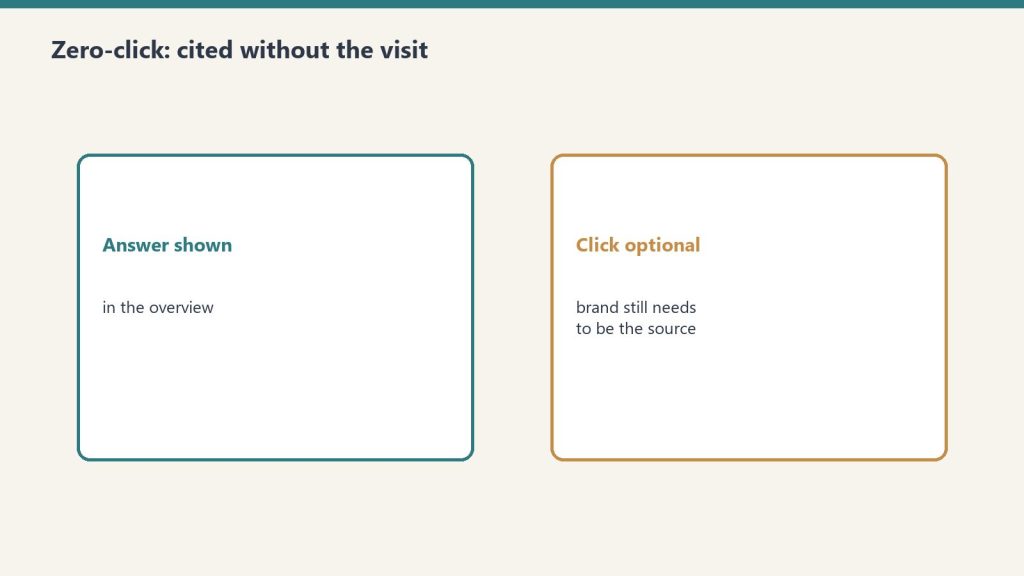
Tag: AI Visibility

  • How Real Estate Agents Get Found in AI Search Before Buyers Contact Anyone

    How Real Estate Agents Get Found in AI Search Before Buyers Contact Anyone


    Tygart Media — Real Estate Content Strategy

    How Real Estate Agents Get Found in AI Search Before Buyers Contact Anyone

    By Tygart Media Updated: April 12, 2026
    The AI pre-search reality for real estate: Gartner projects up to 25% of traditional search volume will migrate to AI tools by the end of 2026. In real estate, this means buyers and sellers are asking ChatGPT, Perplexity, and Google AI Overviews questions like “What’s the best neighborhood in [city] for families with young kids and walkable schools?” and “How competitive is the [city] real estate market for buyers right now?” — before they open a browser tab, before they visit Zillow, and before they contact an agent. The agent whose content is cited in those answers enters the consideration set at the very beginning of the buyer’s journey.

    Why AI Citation Matters More Than Position 1 for Real Estate

    Traditional real estate SEO chased position 1 rankings for local keywords. AI citation operates differently: it targets the research-phase questions that precede any specific property or agent search. A buyer who asks ChatGPT “what is [neighborhood] like for a family moving from out of state” is not yet searching for a property. They’re building a mental model of the market. The agent cited as the authoritative source on that neighborhood during this phase establishes credibility before any competitor has been considered.

    According to Digital Agent Club’s 2026 real estate digital marketing analysis, AI search queries in real estate are “full-sentence questions people actually ask out loud” — specifically neighborhood character, school quality, market competitiveness, and commute viability. These are exactly the questions that well-optimized neighborhood guides and market reports are built to answer.

    How do real estate agents get cited in ChatGPT and Perplexity for neighborhood and market questions?
    Real estate agents earn AI citations for neighborhood and market queries when their WordPress content combines: ranking in the top 20 organic results for the query (the access prerequisite), named geographic entity references that AI systems can verify (school district names, transit corridors, MLS board as data source, NAR terminology for market conditions), direct-answer speakable blocks targeting neighborhood character questions (“what is [neighborhood] known for” and “what are the schools like in [neighborhood]”), and FAQPage JSON-LD schema making Q&A pairs machine-parseable. National portals have generic neighborhood pages. Local agents have genuine local knowledge encoded in entity-rich, schema-structured content — which is exactly what AI systems prefer to cite.

    The Four Real Estate Content Types That Earn AI Citations

    1. Neighborhood Character Guides

    The most AI-citable real estate content directly answers “what is [neighborhood] like?” — the question buyers ask AI before they search for properties. Guides with named school entities, commute corridor references, community character description, and price range context are machine-verifiable by AI systems against geographic and institutional data. A guide that says “Oakwood Heights is served by Lincoln Elementary (GreatSchools rating 8/10), is 22 minutes to downtown via I-90, and has a median home price of $487K per NWMLS Q1 2026 data” provides entity anchors that AI systems can cite with confidence.

    2. Market Condition Analyses

    Buyers ask AI “is [city] a buyer’s or seller’s market right now?” Market report content with specific MLS data, defined market condition criteria (months of supply, list-to-sale ratio), and a dated “last updated” date is AI-citable because it provides a verifiable, sourced, current answer to a question buyers actively ask during market research. Undated or unverified market commentary is not citable — AI systems evaluate content freshness before surfacing market data.

    3. Buyer and Seller Process Explainers

    Process questions are high-citation opportunities: “how does the home buying process work,” “what is earnest money,” “how do real estate contingencies work,” “what does days on market mean.” These are universal questions with verifiable, direct answers that don’t require geographic specificity. FAQPage schema targeting these questions earns both People Also Ask placements and AI citation for the specific process queries buyers ask AI assistants during active home search.

    4. Local Market Comparison Content

    “[Neighborhood A] vs [Neighborhood B]” comparison content is highly AI-citable because it directly answers one of the most common pre-decision buyer questions. AI systems surface content that provides the specific comparison a buyer is asking about — school district comparison, price difference, commute difference, neighborhood character comparison. An agent who writes authentic, data-backed neighborhood comparison content owns a content type that neither national portals nor most local competitors are producing.

    Geographic entity injection, speakable blocks targeting neighborhood AI queries, and FAQPage schema are the three GEO deliverables applied to real estate WordPress content through WordPress content optimization for real estate agents via SiteBoost.

    Frequently Asked Questions

    Which AI systems matter most for real estate agent visibility?

    Google AI Overviews has the largest reach — appearing at the top of results for real estate research queries including neighborhood character, school quality, and market condition searches. Perplexity is increasingly used by out-of-state buyers doing research before relocation because it cites sources inline, giving cited agents visible brand exposure. ChatGPT’s growing search integration captures the “which neighborhood should I consider” research questions that precede any specific search. All three evaluate similar content signals: named geographic and institutional entity references, direct-answer formatting, and FAQPage schema. Optimizing for one effectively optimizes for all.

    Can a new real estate agent website earn AI citations?

    Yes, for specific hyper-local queries with low competition. A new agent website with one deeply optimized, entity-rich neighborhood guide for a specific neighborhood can rank in positions 11–20 for that neighborhood’s character and school queries — and earn AI citations for those specific queries even without broad domain authority. The AI citation selection among ranking pages rewards content quality signals — entity depth, direct-answer structure, schema — not just ranking position. Starting with your primary farm area and building one genuinely authoritative guide is more effective than thin coverage of many neighborhoods.

    How is AI search optimization different from traditional real estate SEO?

    Traditional real estate SEO prioritized local signals — Google Business Profile, NAP consistency, location-specific pages, and review volume. AI search evaluates content quality signals: named geographic entities (school district names, transit references, MLS board citations), direct-answer formatting (speakable blocks with 40–60 word direct answers), and machine-readable schema (FAQPage, LocalBusiness, RealEstateListing). Traditional SEO remains the prerequisite — 97% of AI citations come from pages already ranking organically. But among ranking pages, AI citation requires the additional entity and schema layer that most real estate agents’ WordPress content currently lacks.

    Sources: Digital Agent Club, “Real Estate Digital Marketing 2026” (November 2025); Luxury Presence, “194 Best Real Estate Keywords for 2025–2026”; Gartner 2025–2026 search migration projections (cited via Digital Agent Club); LLMrefs, “Answer Engine Optimization: The Complete Guide for 2026”
  • How Real Estate Market Report Content Builds Agent Authority and Seller Leads

    How Real Estate Market Report Content Builds Agent Authority and Seller Leads


    Tygart Media — Real Estate Content Strategy

    How Real Estate Market Report Content Builds Agent Authority and Seller Leads

    By Tygart Media Updated: April 12, 2026
    Why market reports are the agent’s highest-authority content: A neighborhood guide establishes local expertise. A market report establishes ongoing market authority — the kind of expertise that makes sellers think of you when they’re ready to list. According to W3Era’s 2026 real estate SEO guide, market update blogs are one of the most practical content types for agents because they combine expertise, relevance, and local authority while giving prospects a reason to trust an agent’s interpretation of current market conditions. Sellers actively search for market data in the months before they decide to list — and the agent whose content answers those questions first earns the listing conversation.

    What Sellers Search Before They Decide to List

    Seller search behavior follows a predictable path in the 3–6 months before listing: “how is the [neighborhood] real estate market right now,” “is it a good time to sell in [city],” “what are homes selling for in [neighborhood],” “how long does it take to sell a house in [city].” These are direct market research queries that a well-optimized market report answers directly. The agent whose content ranks for these queries is in the seller’s consideration set before any competitor.

    What real estate market data should agents include in blog content to rank for seller searches?
    Real estate market report content that ranks for seller searches should include: current median sale price for the specific neighborhood or zip code, average days on market (with context — whether this is faster or slower than the prior quarter), list-to-sale price ratio indicating negotiating power, months of supply or active inventory count, and a clear market condition classification (seller’s market, buyer’s market, or balanced) with the criteria used. All statistics should reference the MLS board as the data source. This combination of named MLS entity, specific market metrics, and direct market interpretation is what AI systems and Google’s quality evaluators use to distinguish authoritative market analysis from generic real estate commentary.

    The Market Report Content Formula

    The Five Data Points That Matter

    1. Median sale price — current month vs. prior quarter and prior year
    2. Average days on market — how fast is inventory moving
    3. List-to-sale price ratio — are sellers getting over or under asking
    4. Active inventory / months of supply — is the market tightening or loosening
    5. Market condition classification — seller’s market (<3 months supply), balanced (3–6 months), buyer’s market (>6 months)

    The Entity Requirements

    Every market report should name the MLS board providing the data (NWMLS, MRED, BRIGHT MLS, MetroList, CRMLS, etc.), reference the National Association of Realtors (NAR) for any national trend comparisons, and use standard NAR/MLS terminology (absorption rate, list-to-sale ratio, active listings, pending sales) rather than generic language. These named entities signal that the market analysis reflects actual MLS data rather than estimated or anecdotal market commentary — a critical distinction for both Google’s E-E-A-T evaluation and AI citation systems.

    The FAQ Layer

    Add a FAQ section targeting the questions sellers ask when reading market data: “Is now a good time to sell in [area]?”, “How long will it take to sell my house in [city]?”, “Are homes selling over asking price in [neighborhood]?”, “How do I know if it’s a seller’s or buyer’s market?” These questions, with FAQPage schema, earn People Also Ask placements for the exact queries sellers type during their pre-listing research phase.

    The Publishing Cadence That Builds Authority

    Monthly publication for neighborhoods you actively farm is the standard. SLT Creative’s 2026 real estate SEO guide recommends publishing 2–4 blog posts per month minimum — and a monthly market report counts as your highest-authority post each cycle. The URL structure matters: use a new slug for each period (/[neighborhood]-market-report-q1-2026/) so each report stands as a fresh indexed page rather than overwriting the previous one. This creates an archive of market data that compounds in authority over time.

    Market data entity injection — MLS board references, NAR terminology, FAQPage schema targeting seller research queries — is part of WordPress content optimization for real estate agents through SiteBoost. Applied to your existing market report archives and new reports as they publish.

    Frequently Asked Questions

    Where do real estate agents get market data for blog content?

    Primary sources: your MLS board’s statistics reports (most boards publish monthly market data for members), Redfin’s data center (public), and Zillow Research (public). The key is attribution — citing “per NWMLS data for Q1 2026” or “according to Redfin’s March 2026 market data” creates named source references that both strengthen your content’s credibility and provide the entity anchors Google and AI systems use to evaluate market report authority. Never publish market statistics without citing the source — both for accuracy and for E-E-A-T compliance.

    How does market report content generate seller leads specifically?

    Sellers research market conditions in the 3–6 months before they decide to list. An agent whose market reports rank for “[neighborhood] real estate market” and “is now a good time to sell in [city]” captures seller attention during that research phase. The conversion path: seller reads the market report, trusts the agent’s market knowledge, clicks the “What’s my home worth?” CTA at the bottom of the article, and enters the listing funnel. Without the market report ranking for those pre-decision searches, the seller finds a competitor’s report or a Zillow/Redfin estimate instead.

    Should market report content be gated or freely available?

    Freely available. Gated market reports (requiring email submission before reading) may capture email addresses but dramatically reduce SEO value — Google cannot index content behind a gate, and AI systems cannot cite content they cannot access. The SEO and AI citation value of a freely published, well-optimized market report compounds over months and years of indexing. The relationship and trust built with sellers who read your freely available market analysis consistently outperforms the email list built from a gated report that no one finds organically.

    Sources: W3Era, “Real Estate SEO Guide for Agents & Brokers 2026”; SLT Creative, “The Complete Step by Step Guide to Real Estate SEO” (February 2026); DMR Media, “Real Estate Keywords: A Strategic Guide for Agents 2026”; NAR Research (data terminology reference)
  • How Medical Practices Get Featured in Google AI Overviews (And Why It Matters More Than Page 1)

    How Medical Practices Get Featured in Google AI Overviews (And Why It Matters More Than Page 1)


    Tygart Media — Healthcare Content Strategy

    How Medical Practices Get Featured in Google AI Overviews (And Why It Matters More Than Page 1)

    By Tygart Media Updated: April 12, 2026
    The AI Overview reality for healthcare: Since March 2025, Google AI Overviews have grown by 115% in healthcare search results. Approximately 45% of medical keywords now trigger an AI Overview at the top of results — appearing before every organic listing, every ad, and every local pack result. According to PracticeBeat’s 2026 SERP data, AI Overviews and Local Pack results combined now capture over 80% of clicks for medical queries. Being cited as a source in an AI Overview is not just an SEO metric — it is how independent medical practices compete with large health systems for patient attention at the moment of highest urgency.

    How Google Selects Medical Content for AI Overviews

    Google’s AI Overview system does not randomly select medical content. According to Silvr Agency’s 2026 AI Overview analysis, Google evaluates websites based on E-E-A-T signals, content quality (comprehensive, well-researched, with proper citations), and structural accessibility — whether the AI can parse and extract the answer it needs. For medical content specifically, the evaluation is stricter: physician authorship schema, clinical entity references, and MedicalCondition or MedicalProcedure schema are the signals that distinguish AI-citable medical content from content that gets bypassed.

    How do medical practices get cited in Google AI Overviews for health queries?
    Medical practices earn Google AI Overview citations when their WordPress content combines: ranking in the top 20 organic results for the query (the access prerequisite — 97% of AI citations come from top-20 pages), named physician authorship with credential schema (Experience and Expertise signals), clinical entity references that AI systems can verify (ADA, CDC, NIH guidelines, ICD-10 codes, specialty board standards), MedicalCondition or MedicalProcedure schema markup that makes the content machine-parseable, and FAQPage schema with direct-answer pairs targeting patient questions. Practices with all five elements in their highest-traffic condition and treatment articles are systematically more likely to appear in AI Overviews than practices missing any one of them.

    The Five Structural Requirements for Medical AI Overview Eligibility

    1. Organic Ranking in the Top 20 (The Prerequisite)

    AI Overview citations come almost exclusively from pages that already rank in the top 20 organic results. This means the traditional SEO foundations — title tag optimization, meta description, internal linking, backlinks from authoritative medical sources — must be in place before AI citation can occur. Optimization for AI Overview citation assumes the article is already ranking; if it isn’t, the priority is first getting it into the top 20.

    2. Named Physician Authorship With Schema

    Google’s AI does not cite anonymous health content. The authorship requirement is specific: a named physician, linked to a bio page with verifiable credentials, with Physician schema markup connecting the content to that named medical entity. PracticeBeat’s 2026 AI Overview research notes that “every medical page must include machine-readable author and reviewer information” including degrees, licenses, professional affiliations, and links to trusted digital identities such as LinkedIn, PubMed, or medical board profiles.

    3. Clinical Entity References

    Named clinical entities are the verifiable anchors AI systems use to evaluate medical content authority. For an article about hypertension: “JNC 8 blood pressure guidelines,” “ACC/AHA 2017 hypertension guidelines (130/80 mmHg threshold),” “ICD-10 I10 for essential hypertension,” “thiazide diuretics as first-line therapy per ACC/AHA recommendations.” These are machine-verifiable by the AI against known clinical standards — which is exactly what Google’s systems check before citing a source.

    4. MedicalCondition or MedicalProcedure Schema

    Schema.org’s MedicalCondition and MedicalProcedure types provide explicit structured data that tells Google’s AI exactly what the page is about clinically. A condition article with MedicalCondition schema identifying the condition’s name, symptoms, risk factors, and treatments in machine-readable format is significantly more AI-citable than the same article without schema — the AI doesn’t have to infer the structure, it’s explicitly provided.

    5. FAQPage Schema With Patient-Focused Questions

    FAQPage schema directly feeds People Also Ask placements and AI Overview citation. For medical content, the questions that earn AI citations target the patient research phase: “What are the symptoms of [condition]?”, “How is [condition] diagnosed?”, “What treatments are available for [condition]?”, “When should I see a doctor about [symptom]?” These direct-answer pairs, with FAQPage JSON-LD, make the content machine-extractable for AI synthesis.

    The five AI Overview eligibility requirements — physician schema, clinical entity injection, MedicalCondition/Procedure schema, and FAQPage schema — are applied across your existing article library as part of WordPress content optimization for medical practices through SiteBoost. Clinical content unchanged.

    Frequently Asked Questions

    Are Google AI Overviews replacing traditional search results for medical queries?

    AI Overviews appear above traditional organic results for approximately 45% of medical keywords and are growing rapidly — up 115% since March 2025. They do not replace organic results, but they significantly reduce clicks to organic listings for queries where an AI Overview appears. Practices cited as sources in AI Overviews receive attribution links that still drive traffic, and the brand recognition from being cited as a medical authority carries value even in zero-click scenarios. The priority in 2026 is appearing in both the AI Overview (citation) and the organic result below it (direct traffic).

    Can a small independent practice get featured in AI Overviews against large health systems?

    Yes — and this is one of the significant opportunities of AI Overview optimization. Large health systems have brand authority but often produce generic, committee-authored content that lacks the clinical specificity and direct-answer structure AI systems favor. An independent specialist practice with highly specific, physician-authored condition and procedure content — optimized with clinical entity references and FAQPage schema — can outperform large health systems for specific condition queries where their content is more precise and more directly answerable.

    How long does it take for optimized medical content to appear in AI Overviews?

    For content already ranking in the top 20 organic results, AI Overview eligibility can be established within 2–6 weeks of optimization — the time it takes Google’s crawlers to re-evaluate the updated content with its new entity references, schema markup, and structured Q&A pairs. AI Overviews update more frequently than organic rankings. Content that was ranking but not being cited in AI Overviews often begins appearing within one crawl cycle after clinical entity and schema optimization is applied.

    Sources: PracticeBeat, “AI Overviews & SEO for Doctors in 2025” (November 2025); PracticeBeat, “SEO for Doctors in 2026: Medical SERP Playbook” (December 2025); Silvr Agency, “AI Overviews & SEO in 2026: A Complete Guide for Medical Practices”; Digitalis Medical, “Medical SEO Strategy” (2026)
  • The B2B SaaS WordPress Blog Optimization Checklist: 7 Steps Every Published Post Needs

    The B2B SaaS WordPress Blog Optimization Checklist: 7 Steps Every Published Post Needs


    Tygart Media — SaaS Content Strategy

    The B2B SaaS WordPress Blog Optimization Checklist: 7 Steps Every Published Post Needs

    By Tygart Media Updated: April 12, 2026
    Why post-publish optimization is where SaaS SEO ROI lives: A SaaS company’s existing blog library — 50, 100, 200 published posts — represents years of investment in content that may be generating a fraction of its potential traffic and zero AI citations. The post-publish optimization checklist applies the seven steps that most SaaS WordPress blogs skip entirely: the steps that determine whether a published post ranks for buyer-stage queries, earns People Also Ask placements, and gets cited by AI systems during software evaluation research.
    What post-publish optimization steps do SaaS WordPress blogs typically skip?
    B2B SaaS WordPress blogs typically skip seven post-publish optimization steps: rewriting the title tag for buyer-stage search intent (not article description), writing a meta description manually instead of relying on auto-generated excerpts, adding a buyer-stage FAQ section with FAQPage JSON-LD schema, injecting named integration entity references (Salesforce, HubSpot, Slack, Zapier), adding a visible Last Updated date with dateModified Article schema, adding a consideration-stage inline CTA linking to comparison or integration content, and ensuring bidirectional internal links connect the post to the most relevant product or use-case page. These seven steps are the difference between a published post and an optimized asset.

    The 7-Step Checklist

    Step 1: Rewrite the Title Tag for Buyer-Stage Intent

    The published post title is often the article headline — written for readability, not search. Rewrite the title tag (separate from the H1 if your SEO plugin allows) to lead with the buyer-stage keyword. For awareness content: “How to [solve problem]” or “Why [pain point] Happens.” For consideration content: “Best [Category] Tools for [Specific Use Case]” or “How [Category] Integrates with Salesforce.” For decision content: “[Product] vs [Competitor]: Which Is Right for Your Team?” Stay within 50–60 characters.

    Step 2: Write a Meta Description That Matches Buyer Stage

    Delete the auto-generated excerpt. Write a 140–155 character meta description that matches the buyer stage of the content. Awareness posts: state the problem and promise a clear explanation. Consideration posts: name the specific use case, role, or integration the article covers. Decision posts: state the comparison criteria and signal a clear recommendation. The meta description is the copy that determines whether a buyer in your target stage clicks.

    Step 3: Add a Buyer-Stage FAQ Section With FAQPage Schema

    Add 6–8 FAQ questions written in buyer language for the article’s stage. Awareness: “What causes [problem]?”, “How do teams typically handle [challenge]?” Consideration: “What should I look for in [software type]?”, “How does [category] integrate with Salesforce?” Decision: “How long does [software] take to implement?”, “What’s included in [software] pricing?” Inject FAQPage JSON-LD schema alongside the visible FAQ section — both are required for People Also Ask eligibility.

    Step 4: Inject Integration Entity References

    Add 3–5 named integration entity references naturally into the content. “Whether your team runs on Salesforce, HubSpot, or a custom CRM” signals ecosystem positioning. “Native Zapier and Make integration means no-code automation teams can connect this to any existing workflow” targets automation-focused buyers. These named entities are what AI systems and Google’s quality evaluators use to confirm that the content represents genuine B2B SaaS category expertise.

    Step 5: Add a Visible Last Updated Date and dateModified Schema

    B2B buyers evaluating software are sensitive to information freshness — integration availability, pricing structure, and compliance certifications change. A visible “Last updated: April 2026” signals current information. Update the dateModified field in the Article JSON-LD schema to match. Only do this when the content has genuinely been updated — a statistic refreshed, an integration name added, a new FAQ question added. Date-only updates without content changes can be detected as manipulation.

    Step 6: Add a Consideration-Stage Inline CTA

    Embed a CTA in the body of the post — not only in the footer — that links to the most relevant consideration or decision-stage content. For an awareness post about workflow automation: “If you’re evaluating workflow automation tools for your sales team, our Salesforce integration guide covers the specific sync capabilities to look for.” This CTA serves readers who are further along in their buying journey than the post’s target stage, capturing conversion opportunity from the full audience.

    Step 7: Add Bidirectional Internal Links

    Link from the blog post to the most relevant product or use-case page with descriptive anchor text (“workflow automation for sales teams” not “learn more”). Then update the product page to link back to the blog post. Bidirectional internal linking passes authority in both directions, signals topical depth to Google’s crawlers, and creates navigation paths for buyers moving between educational and evaluation content.

    These 7 steps applied to 10 existing SaaS blog posts is exactly the scope of WordPress content optimization for B2B SaaS companies through SiteBoost. Every step pushed live via WordPress REST API — no manual editing, before/after baseline included.

    Frequently Asked Questions

    Which of the 7 steps has the highest impact for SaaS blogs?

    Steps 3 and 4 — FAQ section with schema and integration entity injection — consistently deliver the fastest visible impact for SaaS content. FAQPage schema enables People Also Ask placement eligibility within 2–4 weeks. Integration entity injection improves AI citation probability immediately after the next crawl cycle. Step 1 (title tag) has the highest impact on click-through rate from existing search impressions. All 7 together create compounding returns — each step reinforces the others in Google’s quality evaluation and AI citation selection.

    Should SaaS companies optimize old posts or publish new ones first?

    Optimize existing posts first — specifically the top 20% by traffic. Existing posts have index history, any existing backlinks, and are already known to Google’s crawlers. Applying these 7 steps to 10 existing high-traffic posts typically produces faster ranking and conversion improvements than publishing 10 new posts. New posts require 3–6 months to build ranking authority. Optimized existing posts can improve within weeks because they’re already indexed and the authority infrastructure exists.

    Do these steps require a WordPress plugin?

    No plugin is required. All 7 steps can be applied via the WordPress REST API: title and excerpt (meta description) through post fields, FAQ section and JSON-LD schema as HTML in post content, integration entity references as text additions, and Article schema with dateModified through an HTML block. SEO plugins like Rank Math or Yoast manage some fields through their own meta — if using one, title and meta should go through the plugin’s fields to avoid conflicts. The REST API handles everything else directly.

    Sources: Powered by Search, “The B2B SaaS SEO Playbook” (2025); ALM Corp, “SaaS SEO Strategy Guide” (2026); Matt’s World 101, “SaaS SEO: The Complete Guide to Hypergrowth in 2025”; Gartner 2025 B2B Buying Report
  • How B2B SaaS Companies Get Cited by AI When Buyers Research Software (Before They Demo)

    How B2B SaaS Companies Get Cited by AI When Buyers Research Software (Before They Demo)


    Tygart Media — SaaS Content Strategy

    How B2B SaaS Companies Get Cited by AI When Buyers Research Software (Before They Demo)

    By Tygart Media Updated: April 12, 2026
    The pre-demo AI research phase: According to Gartner’s 2025 B2B Buying Report, 75% of B2B buyers prefer a rep-free sales experience. In practice, this means buyers spend the early evaluation phase asking AI assistants — not sales reps — the research questions that shape their shortlist. “What are the best project management tools for a remote engineering team?” “How does [category] software typically integrate with Salesforce?” “What should I look for when evaluating [software type]?” The SaaS company whose content is cited in those AI answers enters the consideration set before any human contact — and with trust already established.

    The Mechanics of SaaS AI Citation

    ChatGPT, Perplexity, and Google AI Overviews all use retrieval-augmented generation — they search the web, retrieve candidate pages, and evaluate those pages before synthesizing an answer. For SaaS queries, the evaluation criteria are specific: does the content name integration ecosystem entities that the AI can verify? Does it have direct-answer structure for the question being asked? Does it have FAQPage schema that makes Q&A pairs machine-parseable? Does it rank in the top 20 organic results — the prerequisite for AI citation consideration?

    SaaS companies that earn AI citations at the research stage have a meaningful advantage in the sales cycle. A buyer who encountered your content through a ChatGPT answer about their software evaluation criteria arrives at your demo request form with established familiarity — not as a cold prospect.

    What makes B2B SaaS content get cited by ChatGPT and Perplexity during software research?
    B2B SaaS content earns AI citation during software research when it combines: organic ranking in the top 20 results for the query (the access prerequisite), named integration entity references that AI systems can verify (Salesforce, HubSpot, Slack, Zapier, Microsoft Teams, Workday), direct-answer speakable blocks addressing the evaluation criteria buyers ask about (implementation timeline, security certifications, pricing model, integration depth), and FAQPage JSON-LD schema making consideration-stage Q&A pairs machine-parseable. Content that answers “what should I look for in [software category]” with specific, verifiable criteria earns AI citation at the exact moment buyers are forming their evaluation shortlist.

    The Four Content Types That Earn SaaS AI Citations

    1. Buyer Criteria Content

    “What to look for in [software category]” content with specific named criteria — security certifications (SOC 2 Type II, ISO 27001, GDPR compliance), integration ecosystem depth, pricing model (per seat vs usage-based vs flat rate), implementation timeline, and support SLA. These are the criteria buyers ask AI assistants to help them think through, and AI systems cite content that provides the most comprehensive, verifiable answer.

    2. Integration Compatibility Content

    “How does [category] integrate with [Salesforce/HubSpot/Slack]?” is one of the most-asked B2B software evaluation queries in AI assistants. Content that answers this with specific integration depth — bidirectional sync vs one-way, native vs API vs Zapier, what data fields sync, what triggers are available — earns AI citation for those specific integration queries.

    3. Comparison Framework Content

    “How to compare [software category] vendors” content with an explicit evaluation framework — a table of criteria, a scoring methodology, questions to ask during demos — is highly citable by AI because it provides the structured answer buyers need before they start shortlisting. AI systems surface this content when buyers ask “how do I evaluate [software type]?”

    4. ROI and Implementation Content

    “How long does [software type] take to implement?” and “What ROI should I expect from [software category]?” are decision-proximate questions — buyers asking them are close to making a choice. Content that provides specific, honest answers with cited research data earns AI citation at the moment buyers are finalizing their shortlist.

    The GEO optimization layer in WordPress content optimization for B2B SaaS companies through SiteBoost applies integration entity injection, speakable blocks targeting evaluation criteria questions, and FAQPage schema to your existing SaaS blog content — building AI citation infrastructure across your published library.

    Frequently Asked Questions

    Which AI systems matter most for B2B SaaS visibility?

    Google AI Overviews reaches the most total buyers because it appears directly in Google search results for software research queries. Perplexity is increasingly used for structured B2B research because it cites sources inline — giving cited SaaS companies visible brand exposure during the evaluation process. ChatGPT’s growing search integration (with ads introduced in late 2025) is growing rapidly among enterprise buyers who prefer conversational research. All three evaluate similar signals: named entity references, direct-answer structure, and FAQPage schema. Optimizing for one effectively optimizes for all.

    Do G2 and Capterra reviews affect AI citation for SaaS?

    Yes, indirectly. G2 and Capterra are high-authority domains that AI systems frequently cite for software comparisons. A SaaS company with strong G2 ratings and detailed review data benefits from AI citations to those third-party pages even when their own website isn’t directly cited. The combined strategy — owned content optimized for AI citation plus strong third-party review presence on G2 and Capterra — creates a citation surface area that makes it difficult for AI systems to discuss the software category without encountering your brand.

    How quickly can SaaS content start earning AI citations after optimization?

    For content already ranking in positions 1–20, AI citation eligibility is immediate after optimization is indexed — typically 2–4 weeks for Google’s crawlers to re-evaluate the updated content. The optimization signals AI systems look for — named entity references, FAQPage schema, direct-answer speakable blocks — are evaluated on each crawl. Content that was ranking but not being cited by AI often begins appearing in AI responses within one crawl cycle after the entity and schema optimization is applied.

    Sources: Gartner 2025 B2B Buying Report (cited via NextUp Solutions, “Best SEO Tools for B2B SaaS Companies in 2026”); LLMrefs, “Answer Engine Optimization: The Complete Guide for 2026”; Whitehat SEO, “SEO Best Practices 2025–2026”; Growth.cx, “What Does a B2B SaaS SEO Agency Actually Do in 2026?”
  • Why SaaS Companies That Name Their Integrations Rank Higher (Integration Entity SEO)

    Why SaaS Companies That Name Their Integrations Rank Higher (Integration Entity SEO)


    Tygart Media — SaaS Content Strategy

    Why SaaS Companies That Name Their Integrations Rank Higher (Integration Entity SEO)

    By Tygart Media Updated: April 12, 2026
    Integration entity SEO: In B2B SaaS, named integration partners — Salesforce, HubSpot, Slack, Zapier, Workday, Microsoft Teams, AWS — are the most specific category-signaling entities available. A blog post that says “our platform integrates with your existing tools” has no entity anchors. A blog post that says “native integration with Salesforce Sales Cloud, HubSpot CRM, Slack, and Zapier” has four named entities that signal category expertise to both Google’s quality evaluators and AI systems evaluating which SaaS content to cite. Integration entity injection is the fastest single SEO improvement available to most SaaS WordPress blogs.

    Why Integration Names Matter More Than Category Keywords

    B2B buyers during software evaluation search for integration compatibility more than almost any other feature. “Does [product] integrate with Salesforce?” “What [category] tools work with HubSpot?” “Best [software type] with Zapier integration.” According to NextUp Solutions’ 2026 B2B SaaS SEO analysis, keyword clusters around buyer intent and competitive gaps — not raw search volume — determine which SaaS blog content actually influences purchase decisions.

    Integration queries are predominantly consideration-stage. A buyer asking about Salesforce integration compatibility has already identified the problem, knows solutions exist, and is now evaluating fit. This is the highest-conversion search intent available to SaaS companies — and most SaaS blog content doesn’t explicitly name the integrations that would capture it.

    Why do integration names improve SaaS blog SEO and AI citation?
    Named integration entities — Salesforce, HubSpot, Slack, Zapier, Microsoft Teams, Workday, AWS — improve SaaS blog SEO by creating specific entity anchors that Google and AI systems use to classify content as relevant to consideration-stage buyer queries. A post about workflow automation that names “native Salesforce Sales Cloud integration, bidirectional HubSpot sync, and Zapier automation support” signals category expertise and integration ecosystem positioning that generic “works with your existing tools” language does not. AI systems evaluating SaaS content for citation specifically look for named integration references when answering buyer questions about software compatibility.

    The Integration Entity Tier: Which Names Carry the Most SEO Signal

    Tier 1: Category-Defining Integrations

    These are the integrations that define category membership. For most B2B SaaS: Salesforce, HubSpot, Microsoft 365, Google Workspace, Slack, AWS. Naming these integrations in blog content signals that your product operates in the established enterprise software ecosystem — which is a strong trust signal for both Google’s E-E-A-T evaluation and AI citation systems. These names should appear in every relevant blog post, naturally and contextually.

    Tier 2: Workflow Integration Names

    Zapier, Make (formerly Integromat), Workato, and similar automation platforms signal that the product fits into a buyer’s existing automation workflow. These are especially important for mid-market and SMB SaaS because buyers in those segments rely heavily on no-code automation. Naming these integrations in content that discusses “how to automate [workflow]” captures consideration-stage queries from buyers who are evaluating operational fit.

    Tier 3: Industry-Specific Integrations

    For vertical SaaS, industry-specific integration names are the highest-signal entities. A healthcare SaaS naming Epic, Cerner, or HL7 FHIR compatibility. A fintech SaaS naming Plaid, Stripe, or QuickBooks Online integration. A construction SaaS naming Procore, Autodesk, or Sage 300 CRE compatibility. These named integrations are category-defining for vertical buyers and almost always missing from SaaS blog content.

    Implementing Integration Entities: The Three Injection Points

    1. The definition box: When defining what your product does, include specific integration names in the definition — “a workflow automation platform that connects natively with Salesforce, HubSpot, Slack, and Zapier.”
    2. The FAQ section: Add FAQ questions targeting integration compatibility: “Does [product category] integrate with Salesforce?” “Is [product] compatible with HubSpot?” These are People Also Ask targets for consideration-stage buyers.
    3. The speakable block: Structure one speakable block specifically for integration compatibility: “What integrations does [category of software] typically support?” followed by a direct answer naming your ecosystem tier specifically.
    Integration entity injection — naming Salesforce, HubSpot, Slack, Zapier, and vertical-specific ecosystem partners in your existing blog content — is part of the GEO optimization layer in WordPress content optimization for B2B SaaS companies through SiteBoost.

    Frequently Asked Questions

    Should SaaS companies name competitor integrations in their content?

    Yes, carefully. Acknowledging that your product exists in the same ecosystem as competitor tools — “unlike [competitor], which requires a paid Zapier plan for third-party integration, [your product] includes native Zapier automation” — is legitimate competitive differentiation. This type of comparative integration content targets decision-stage buyers who are actively comparing vendors and earns high commercial-intent traffic. ABA Model Rules don’t apply to SaaS marketing, but accuracy is important — only name integrations that are genuine and currently functional.

    How do integration entities help with AI search for SaaS?

    When a buyer asks ChatGPT or Perplexity “what [software category] tools integrate natively with Salesforce?” the AI retrieves content that explicitly names Salesforce as a named entity in the context of the software category. Generic content that says “integrates with popular CRMs” provides no verifiable entity anchor — the AI cannot confirm or cite it specifically. Content that says “native bidirectional Salesforce Sales Cloud integration” is machine-verifiable against known Salesforce integration data and earns citation in AI responses about CRM-compatible software.

    How many integration names should appear in a single SaaS blog post?

    Three to seven named integrations per post, appearing naturally in context, is the optimal range. Fewer than three provides limited entity signal. More than seven starts to feel like a feature list rather than useful content. The key is that each integration name appears in a context that explains why it matters to the reader — not as a bullet list of logos. “Our Salesforce integration syncs opportunity data bidirectionally so your sales team never switches tools” is an entity signal. “We integrate with Salesforce” is a marketing claim with minimal SEO value.

    Sources: NextUp Solutions, “Best SEO Tools for B2B SaaS Companies in 2026”; SeoProfy, “B2B SaaS SEO: Comprehensive Guide for 2026”; ALM Corp, “SaaS SEO Strategy Guide” (2026); Gravitate Design, “B2B SaaS SEO Strategies for Growth in 2026”
  • AI Citation Monitoring: The Complete 2026 Guide to Tracking ChatGPT, Claude & Perplexity Mentions

    AI Citation Monitoring: The Complete 2026 Guide to Tracking ChatGPT, Claude & Perplexity Mentions

    Tygart Media // AEO & AI Search
    SCANNING
    CH 03
    · Answer Engine Intelligence
    · Filed by Will Tygart

    What is AI citation monitoring? AI citation monitoring is the practice of systematically tracking whether generative AI systems — including ChatGPT, Claude, Perplexity, Google AI Overviews, and similar tools — are citing, referencing, or recommending your content when users ask relevant questions. It’s the GEO equivalent of rank tracking: instead of asking “where do I rank on Google?”, you’re asking “does AI think I’m worth mentioning?”

    Here’s a scenario that’s playing out right now across thousands of websites: a business owner spends months creating genuinely excellent content. It ranks well. People find it. The traffic dashboards look good. And then, quietly, something changes. Fewer people are clicking through from Google. The traffic dips but the rankings haven’t moved. What happened?

    AI happened. Specifically: AI search features are now answering questions directly — and the content they choose to summarize, reference, or cite is not necessarily the content that ranks #1. It’s the content that AI systems have determined is trustworthy, factual, well-structured, and authoritative. Whether that’s you depends on whether you’ve been paying attention.

    AI citation monitoring is how you pay attention.

    Why AI Citations Are a New Category of Search Visibility

    Traditional SEO gave us a clean, rankable world. Query goes in, ten blue links come out, you live or die by position one through ten. The metrics were unambiguous. Either you’re visible or you’re not.

    AI search doesn’t work that way. When someone asks ChatGPT a question, they don’t get ten links — they get an answer. That answer might cite your content, paraphrase it without attribution, or ignore it entirely in favor of a competitor whose content happened to be better structured for machine consumption. There’s no “position 1” equivalent. There’s cited, mentioned, or absent.

    This creates a new visibility dimension that most businesses aren’t tracking at all. They’re optimizing for Google’s traditional index while AI systems quietly form opinions about whose content is worth recommending — and those opinions are influencing a growing share of how people discover information.

    According to data from Semrush and BrightEdge, AI Overviews now appear in roughly 13-15% of all Google searches in the US as of early 2026 — disproportionately for informational queries, which are exactly the queries that content marketing is designed to capture. If your content isn’t getting cited in those overviews, you’re invisible to a significant portion of your potential audience.

    What AI Citation Monitoring Actually Involves

    AI citation monitoring has three core components — and they require different approaches because each AI system works differently.

    Google AI Overviews monitoring. This is the highest-volume opportunity for most businesses. Google’s AI Overviews appear at the top of search results for qualifying queries and pull from indexed web content. You can monitor citation appearances using rank tracking tools that have added AI Overview detection — Semrush, Ahrefs, and SE Ranking all have versions of this. The manual approach: run your target queries in a fresh browser session and note whether your domain appears in any AI Overview source citations.

    Perplexity monitoring. Perplexity is citation-native — it almost always shows source links. This makes it easier to monitor: run your core queries directly in Perplexity and see what it cites. You can do this manually at scale by building a query list and running it weekly. There are also emerging tools like Profound and Otterly.ai that automate Perplexity citation tracking.

    ChatGPT and Claude monitoring. These are harder because responses vary by session, model version, and user phrasing. The practical approach is prompt-based: run 10-20 of your highest-value queries as ChatGPT and Claude prompts asking for recommendations or explanations. Note whether your brand or content gets mentioned. Do this monthly. It’s not a perfect signal, but patterns emerge — if you’re never mentioned across 20 queries where you should be, that tells you something.

    How to Set Up AI Citation Monitoring Without Losing Your Mind

    The good news: you don’t need a $500/month enterprise tool to get started. Here’s a working system using mostly free or low-cost resources:

    1. Build your query list. Identify 20-30 informational queries that your ideal customers are likely asking AI systems. These should be questions your content already attempts to answer — the alignment matters. If you write about franchise marketing, your queries might include “how does SEO work for franchise locations” or “best marketing strategy for restoration franchises.”
    2. Run baseline checks. Go through each query manually in Perplexity, ChatGPT, and Google (looking for AI Overviews). Document what gets cited, mentioned, or surfaced. This is your Day 0 benchmark.
    3. Set a monitoring cadence. Monthly is realistic for most teams. Weekly if your content velocity is high or you’re actively running a GEO optimization campaign. Quarterly is the absolute minimum if you want to catch trends before they become problems.
    4. Track changes over time. A simple spreadsheet — query, platform, date, your citation (yes/no), competitor citations — is enough to start seeing patterns. You’re looking for: which queries you consistently appear in, which you never appear in, and which competitors keep showing up instead of you.
    5. Use the gaps to drive content decisions. Every query where a competitor gets cited and you don’t is a content gap — either you don’t have content on that topic, or your existing content isn’t structured in a way AI systems can easily extract and cite. Fix one or the other.

    What Makes Content More Likely to Get Cited by AI

    AI citation isn’t random. Systems like Perplexity and Google AI Overviews have consistent preferences, and understanding them is the foundation of any effective AI content monitoring and optimization strategy.

    Factual density. AI systems prefer content that makes specific, verifiable claims over vague generalizations. “Email marketing generates $42 in return for every $1 spent, according to Litmus’s 2023 State of Email report” is more citable than “email marketing has great ROI.” Specificity signals reliability.

    Clear question-and-answer structure. Content that explicitly poses a question as a heading and answers it directly in the following paragraph is easy for AI systems to extract. This is Answer Engine Optimization (AEO) in practice — and it’s directly correlated with AI citation frequency.

    Author authority signals. Named authors with associated credentials, social profiles, and a content history perform better in AI citation environments than anonymous or brand-attributed content. The E-E-A-T framework Google uses for quality evaluation translates directly to AI citability.

    Entity saturation. Content that correctly identifies and accurately describes key entities in a topic area — named people, organizations, products, concepts — is easier for AI to contextualize and cite accurately. Vague content gets paraphrased. Entity-rich content gets cited.

    The Monitoring Stack We Use at Tygart Media

    For monitoring AI citations across our managed sites, we run a combination of automated and manual checks. The automated layer uses rank trackers with AI Overview detection — primarily Semrush’s AI Overview tracker — combined with custom scripts that run Perplexity queries via API and log citation appearances to a shared tracking sheet.

    The manual layer is a monthly prompt audit: 20 queries run through ChatGPT-4o and Claude Sonnet 4.6, logged and compared to the previous month. It takes about 45 minutes per site and surfaces patterns that automated tools miss — particularly for conversational queries where phrasing variations change AI behavior significantly.

    What we’ve learned: citation frequency is strongly correlated with content structure, not just content quality. A well-structured 800-word post with clear headers and explicit answer formatting consistently outperforms a sprawling 3,000-word post that buries the answer in paragraph five. AI systems are extracting, not reading.

    Frequently Asked Questions About AI Citation Monitoring

    What is AI citation monitoring?

    AI citation monitoring is the practice of tracking whether AI-powered search tools and chatbots — including Google AI Overviews, Perplexity, ChatGPT, and Claude — are citing, referencing, or recommending your website’s content when users ask relevant questions. It’s a form of search visibility measurement designed for the generative AI era.

    Why does AI citation monitoring matter for SEO?

    AI-generated answers in Google, Perplexity, and other platforms are now intercepting click traffic that would previously have gone to organically ranked content. If AI systems cite your competitors but not you when answering questions in your category, you’re losing visibility and traffic that traditional rank tracking won’t show you.

    How can I track if ChatGPT is citing my website?

    Run your target queries directly in ChatGPT and note whether your brand or domain appears in the response or sources. Because ChatGPT responses vary by session, run each query two to three times. For systematic tracking, build a query list and run it monthly, logging results to a spreadsheet. Emerging tools like Profound.ai offer automated ChatGPT citation monitoring.

    What is the difference between AI citation monitoring and GEO?

    AI citation monitoring is a measurement practice — it tells you whether AI systems are currently citing you. Generative Engine Optimization (GEO) is the optimization practice — it covers the content structure, entity signals, and authority markers that make your content more likely to be cited. Monitoring tells you where you are. GEO is how you improve it.

    How often should I run AI citation monitoring?

    Monthly monitoring is a practical baseline for most businesses. If you’re actively publishing and optimizing content, weekly checks let you correlate content changes with citation frequency more precisely. Quarterly is the minimum for any site that wants to stay aware of AI search trends in their category.

    Go deeper: Once you understand what AI citation monitoring is, see how to build a live tracking system — The Living Monitor: How to Track Whether AI Systems Are Actually Citing Your Content.

  • GEO Is Not SEO With Extra Steps

    GEO Is Not SEO With Extra Steps

    Tygart Media / The Signal
    Broadcast Live
    Filed by Will Tygart
    Tacoma, WA
    Industry Bulletin

    Generative Engine Optimization and Search Engine Optimization look similar on the surface—both involve keywords, content, and ranking—but they’re fundamentally different disciplines. Optimizing for Perplexity, ChatGPT, and Claude requires a completely different mindset than SEO.

    The Core Difference
    SEO optimizes for algorithmic ranking in a list. Google shows you 10 blue links, ranked by relevance. GEO optimizes for being the cited source in an AI-generated answer.

    That’s a massive difference.

    In SEO, you want to rank #1 for a keyword. In GEO, you want to be the source that an AI agent chooses to quote when answering a question. Those aren’t the same thing.

    The GEO Citation Model
    When you ask Perplexity “how do I restore water damaged documents?”, it synthesizes answers from multiple sources and cites them. Your goal in GEO isn’t to rank #1—it’s to be cited.

    That requires:
    – High topical authority (you write comprehensively about this)
    – Clear, quotable passages (AI agents pull exact quotes)
    – Consistent perspective (if you contradict yourself, you get deprioritized)
    – Proper attribution metadata (the AI needs to know where information came from)

    Content Depth Over Keywords
    In SEO, you can rank with 1,000 words on a narrow topic. In GEO, shallow coverage gets deprioritized. Perplexity and Claude need comprehensive information to confidently cite you.

    Our GEO strategy flips the content model:

    – Write long-form (2,500-5,000 word) comprehensive guides
    – Cover every angle of the topic (beginner to expert)
    – Provide data, examples, and case studies
    – Address counterarguments and nuance
    – Cite your own sources (so the AI can trace back further)

    A 1,500-word SEO article might rank well. A 1,500-word GEO article doesn’t have enough depth to be a primary source.

    Citation Signals vs. Ranking Signals
    In SEO, ranking signals are:
    – Backlinks
    – Domain authority
    – Page speed
    – Mobile optimization

    In GEO, citation signals are:
    – Topical authority (do you write comprehensively on this topic?)
    – Source credibility (do other sources cite you?)
    – Freshness (is your information current?)
    – Specificity (can an AI pull a exact, quotable passage?)
    – Metadata clarity (IPTC, schema, author attribution)

    Backlinks barely matter in GEO. Citation frequency in other articles matters a lot.

    The Metadata Layer
    GEO depends on metadata that SEO ignores. An AI crawler needs to understand:
    – Who wrote this?
    – When was it published/updated?
    – What’s the topic?
    – How authoritative is the source?
    – Is this original research or synthesis?

    Schema markup (structured data) is essential in GEO. In SEO, it’s nice-to-have. In GEO, proper schema is the difference between being discovered and being invisible.

    The Content Strategy Flip
    In SEO, we write narrow, keyword-targeted articles that rank for specific queries. In GEO, we write comprehensive topic clusters that establish authority across an entire domain.

    Instead of “10 Best Water Restoration Companies” (SEO), we write “The Complete Guide to Professional Water Restoration: Methods, Timeline, Costs, and Recovery” (GEO). It’s not keyword-focused—it’s comprehensiveness-focused.

    What We’ve Observed
    Since we shifted to a GEO-first approach for one vertical, we’ve seen:
    – 3x increase in Perplexity citations
    – 2x increase in ChatGPT references
    – 40% increase in organic traffic (from GEO visibility bleeding into SEO)
    – Higher perceived authority in customer conversations (people see our content in AI responses)

    Why Both Matter
    You don’t choose between SEO and GEO. You do both. But the strategies are different:
    – SEO: optimized snippets, keyword targeting, link building
    – GEO: comprehensive guides, topical authority, metadata clarity

    A single article can serve both purposes if it’s long enough, comprehensive enough, and properly formatted. But the optimization priorities are different.

    The Mindset Shift
    In SEO, you’re thinking: “How do I rank for this keyword?”
    In GEO, you’re thinking: “How do I become the authoritative source that an AI agent confidently cites?”

    That’s the fundamental difference. Everything else flows from that.

    {
    “@context”: “https://schema.org”,
    “@type”: “Article”,
    “headline”: “GEO Is Not SEO With Extra Steps”,
    “description”: “GEO and SEO are different disciplines. Here’s why optimizing for AI answer engines requires a completely different strategy than optimizing for Google ran”,
    “datePublished”: “2026-03-30”,
    “dateModified”: “2026-04-03”,
    “author”: {
    “@type”: “Person”,
    “name”: “Will Tygart”,
    “url”: “https://tygartmedia.com/about”
    },
    “publisher”: {
    “@type”: “Organization”,
    “name”: “Tygart Media”,
    “url”: “https://tygartmedia.com”,
    “logo”: {
    “@type”: “ImageObject”,
    “url”: “https://tygartmedia.com/wp-content/uploads/tygart-media-logo.png”
    }
    },
    “mainEntityOfPage”: {
    “@type”: “WebPage”,
    “@id”: “https://tygartmedia.com/geo-is-not-seo-with-extra-steps/”
    }
    }