Tag: AI Tools

  • We Tested Google Flow for Brand Asset Production — Visual

    We Tested Google Flow for Brand Asset Production — Visual

  • The SaaS Illusion Is Cracking: Why Custom Apps Now Cost Less Than Your Software Stack — Visual

    The SaaS Illusion Is Cracking: Why Custom Apps Now Cost Less Than Your Software Stack — Visual

  • The Loop Has to Go Both Ways — Visual

    The Loop Has to Go Both Ways — Visual

  • Split Brain Architecture: How One Person Manages 27 WordPress Sites Without an Agency — Visual

    Split Brain Architecture: How One Person Manages 27 WordPress Sites Without an Agency — Visual

  • AI Content Operations: Building a Just-In-Time Machine

    AI Content Operations: Building a Just-In-Time Machine

    The Machine Room · Under the Hood

    Just-in-time knowledge manufacturing is an operational model where content, services, and deliverables are assembled on demand from a growing base of raw capabilities — knowledge systems, API connections, AI pipelines, and structured data — rather than pre-built and warehoused. Nothing sits on a shelf. Everything is fabricated at the moment of need.

    There’s a version of running an agency where you spend your weekends batch-producing blog posts, pre-writing email sequences, and stockpiling social content in a spreadsheet. You build the inventory, shelve it, and pray it’s still relevant when you finally schedule it out three weeks later.

    I spent years in that model. It doesn’t scale. It doesn’t adapt. And the moment a client’s market shifts or a Google update lands, half your shelf is stale.

    What I’ve been building instead — quietly, over the last year — is something different. Not a content warehouse. A content machine. One where nothing is pre-built, but everything can be built. On demand. At speed. With quality that compounds instead of decays.

    The Ingredients Are Not the Product

    Here’s the mental model that changed everything: stop thinking about what you produce. Start thinking about what you can draw from.

    Right now, the Tygart Media operating system has ingredients scattered across five layers. A Notion workspace with six databases tracking every client, every task, every piece of knowledge ever captured. A BigQuery data warehouse with 925 embedded knowledge chunks and vector search. 27 WordPress sites with over 6,800 published posts — each one a node in a knowledge graph that gets smarter every time something new is published. A GCP compute cluster running Claude Code with direct access to every site’s database. And 40+ Claude skills that know how to do everything from SEO audits to image generation to taxonomy fixes to competitive pivots.

    None of those ingredients are a finished product. They’re flour, eggs, sugar, and a well-calibrated oven. The product is whatever someone orders.

    How It Actually Works

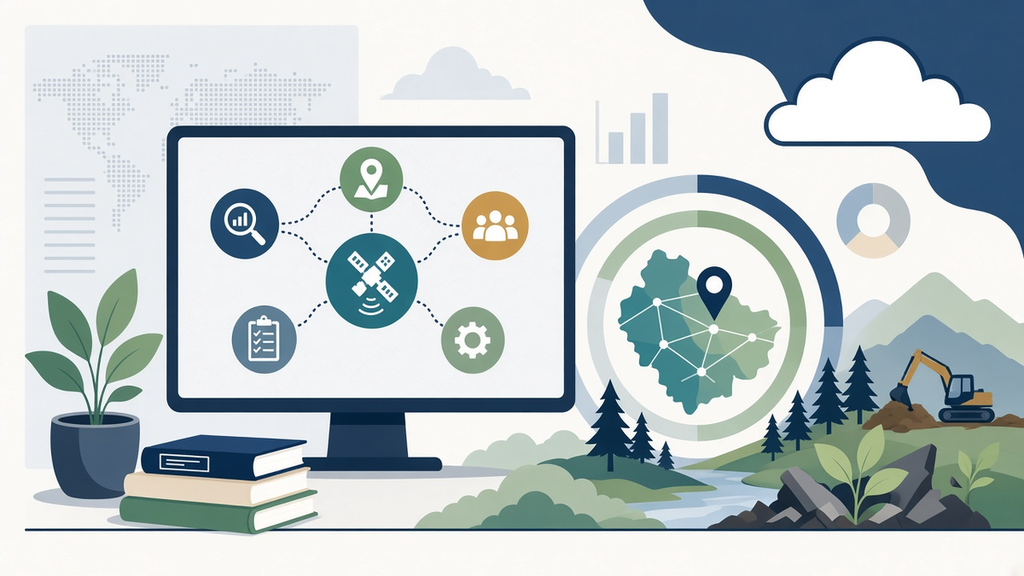
    A client needs 20 hyper-local articles grounded in real watershed data for Twin Cities restoration searches. The machine doesn’t pull from a shelf. It reaches for the content brief builder, the adaptive variant pipeline, the DataForSEO keyword intelligence layer, the WordPress REST API publisher, and the IPTC metadata injection system. Those ingredients combine — differently every time — to produce exactly what’s needed. Not approximately. Exactly.

    Someone wants featured images across 50 articles? The machine reaches for Vertex AI Imagen, the WebP converter, the XMP metadata injector, and the WordPress media uploader. One script. Every image generated, optimized, metadata-enriched, and published in under a minute each.

    The ingredients are the same. The output is infinitely variable.

    Why Inventory Thinking Fails at Scale

    The inventory model has a ceiling built into it. You can only pre-build as fast as one human can think, write, and publish. Every hour spent building inventory is an hour not spent improving the machine. And inventory decays — content ages, data goes stale, market conditions shift.

    The machine model inverts this. Every hour spent improving a skill, connecting an API, or enriching the knowledge base makes everything that comes after it better. The 20th article is better than the first — not because you practiced writing, but because the knowledge graph is 20 nodes richer, the internal linking map is denser, and the content brief builder has more competitive intelligence to draw from.

    This is the flywheel. The ingredients improve by being used.

    The Three-Tier Architecture

    The machine runs on three layers, each with a specific job.

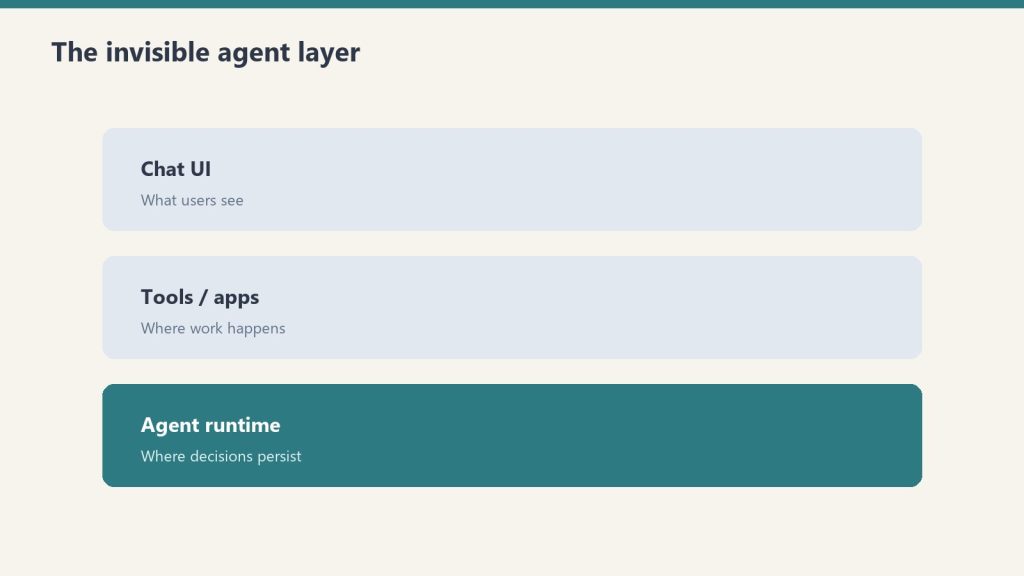
    The first layer is the strategist — a live AI session that can reach out to any API, generate images with Vertex AI, publish to any WordPress site, query BigQuery, log to Notion, and compose social media drafts. It handles anything that involves calling an API or making a decision. It forgets between sessions, but carries the important context forward through a persistent memory system.

    The second layer is the field operator — a browser-based AI that can navigate any web interface, click through dashboards, type into terminals, and visually inspect what’s happening. It handles anything that requires a browser. GCP Console, DNS management, quota requests, visual QA.

    The third layer is the persistent worker — an AI that lives on the server itself, with direct access to every WordPress database, every file, every log. It doesn’t forget between sessions. It handles heavy operations that need to survive beyond a single conversation: bulk migrations, cross-site audits, scheduled content generation.

    Three layers. Three different tools. One machine.

    The Knowledge Compounds

    The part that most people miss about this model is the compounding effect. Every article published adds a node to the knowledge graph. Every SEO audit enriches the competitive intelligence layer. Every client conversation captured in Notion becomes a retrievable insight for the next brief. Every image generated trains the prompt library. Every taxonomy fix improves the next site’s information architecture.

    Nothing is wasted. Nothing sits idle. Every output becomes an input for the next request.

    This is why I stopped building inventory. The machine doesn’t need a warehouse. It needs raw materials, good pipes, and someone who knows which valve to turn.

    What This Means for Clients

    For the businesses we serve, this model means three things. First, speed — when you need content, you don’t wait for a writer to start from scratch. The machine draws from existing knowledge, existing competitive intelligence, and existing site architecture to produce faster and with more context than any human starting cold. Second, relevance — nothing is pre-written three weeks ago and scheduled for a date that may no longer make sense. Everything is built for right now, with right now’s data. Third, compounding quality — the 50th article on your site benefits from everything the first 49 taught the machine about your industry, your competitors, and your audience.

    No back stock. No stale inventory. Just a machine that gets better every time someone needs something.

    Frequently Asked Questions

    What is just-in-time content manufacturing?

    Just-in-time content manufacturing is an operational model where articles, images, and digital assets are assembled on demand from a growing base of knowledge systems, AI pipelines, and API connections — rather than pre-built and stored as inventory. Each deliverable is fabricated at the moment of need using the best available data and intelligence.

    How does a content machine differ from a content calendar?

    A content calendar pre-schedules fixed deliverables weeks in advance. A content machine maintains the ingredients and capabilities to produce any deliverable on demand. The calendar is rigid and decays; the machine is adaptive and compounds in quality over time as its knowledge base grows.

    What technologies power a just-in-time content system?

    A typical stack includes AI language models for content generation, vector databases for knowledge retrieval, WordPress REST APIs for publishing, image generation models for visual assets, and a project management layer like Notion for orchestration. The key is that these components are connected via APIs so they can be combined dynamically for any request.

    Does just-in-time content sacrifice quality for speed?

    The opposite. Because each piece draws from a growing knowledge base, competitive intelligence layer, and established site architecture, the quality compounds over time. The 50th article benefits from everything the first 49 taught the system. Pre-built inventory, by contrast, starts decaying the moment it’s created.

  • The Partnership Conversation: Exactly How to Start Working With a Fractional AEO/GEO Team

    The Partnership Conversation: Exactly How to Start Working With a Fractional AEO/GEO Team

    The Machine Room · Under the Hood

    You’ve Decided. Now Here’s How It Actually Works.

    You’ve read the articles. You understand the gap. You see what your competitors are building with AEO and GEO while you’re still running the same SEO playbook from three years ago. You’ve decided that a fractional partnership makes more sense than hiring — faster to market, lower risk, proven methodology from day one. Good. That was the hard part.

    Now here’s the practical part. What does a fractional AEO/GEO partnership actually look like? Not the pitch version — the real version. How does the work flow? What do your clients see? What changes in your operations? What stays the same? I’m going to walk you through exactly how this works at Tygart Media, because the agencies that partner with us deserve to know what they’re signing up for before the first handshake.

    Phase 1: The Discovery Call (Week 1)

    The partnership starts with a discovery call — not a sales call. We need to understand your agency before we can build a partnership that works. This means learning your current service stack, your client mix, your team structure, your delivery workflow, and your growth goals.

    Key questions we cover: What industries do your clients operate in? What’s your current SEO delivery process? Do you have in-house content creators or do you outsource? What does your typical client engagement look like — retainer size, contract length, reporting cadence? What capabilities have your clients been asking about that you can’t currently deliver?

    This isn’t a qualification call where we decide if you’re “good enough.” It’s an architecture session where we figure out how AEO/GEO capabilities plug into what you’ve already built. Every agency is different. A 5-person shop needs a different integration model than a 50-person firm. We figure that out here.

    Phase 2: The Integration Design (Week 2)

    Based on discovery, we design the integration model. There are three common configurations, and most agencies fit one of them.

    Configuration A: Full White-Label

    We operate entirely behind your brand. Your clients never know Tygart Media exists. We deliver AEO audits, GEO optimization, schema implementation, entity architecture, and AI citation monitoring — all under your agency’s name, in your reporting templates, using your communication channels. You own the client relationship completely. We’re the engine under your hood.

    Configuration B: Named Partnership

    You introduce Tygart Media as your specialized AEO/GEO partner. Your clients know we exist and may interact with us directly on technical matters. You own the overall strategy and client relationship. We handle the AEO/GEO execution and report through you. This works well for agencies whose clients value transparency about specialist partners.

    Configuration C: Hybrid Model

    Some services run white-label, others are named. Typically, ongoing AEO/GEO optimization runs under your brand, while specialized projects like comprehensive entity architecture builds or AI citation audits are positioned as Tygart Media specialist engagements. This gives you flexibility to match the positioning to the client’s preferences.

    Phase 3: The Pilot Client (Weeks 3-4)

    We don’t launch across your entire book of business on day one. We start with one client — ideally one who’s been asking about expanded capabilities, or one where you see clear AEO/GEO opportunity based on their industry and content.

    For the pilot, we run the full process: baseline snapshot across all five AEO/GEO dimensions, optimization map, implementation, and 30-day measurement. This pilot serves two purposes. First, it proves the process works within your specific agency workflow. Second, it gives you your first case study — real results, real client, real proof that you can use to expand AEO/GEO across your roster.

    During the pilot, we’re obsessive about communication. Daily Slack updates, weekly video check-ins, shared project boards. By the end of the pilot, your team should understand exactly what AEO/GEO delivery looks like, even if they’re not doing the hands-on work. That knowledge transfer is part of the partnership value — you’re not just buying deliverables, you’re building organizational understanding.

    Phase 4: The Rollout (Months 2-3)

    With the pilot complete and first results documented, we design the rollout plan together. This typically means identifying which existing clients get AEO/GEO added to their current engagement (often as a scope expansion conversation you lead) and which new prospects get pitched with AEO/GEO included from the start.

    We help you with the client conversation. Not scripted — but structured. We provide talking points, common objection responses, data points from the pilot, and industry-specific context that makes the upsell feel like a natural evolution rather than an add-on. Most agencies find that 40-60% of their existing clients say yes to AEO/GEO expansion within the first quarter of offering it.

    Operationally, we scale with you. One client, five clients, twenty clients — the fractional model flexes. You’re not carrying fixed overhead that needs to be fed whether you have the client volume or not. You pay for the work that gets done, and the work scales with your growth.

    Phase 5: The Ongoing Partnership (Month 4+)

    Once the rollout is established, the partnership settles into a rhythm. Monthly optimization cycles for each client. Quarterly proof library updates with fresh case studies. Ongoing monitoring of AI citation presence and featured snippet health. Regular strategy sessions where we review what’s working, what’s changing in the AI search landscape, and how to evolve the service offering.

    The best partnerships evolve over time. Some agencies eventually hire internal AEO/GEO specialists and transition from full delivery to advisory. Others go deeper into the partnership and add capabilities like AI-powered content pipeline management, automated schema deployment, or cross-site entity architecture for multi-location clients. The model adapts to where you want to go.

    What Doesn’t Change

    Your client relationships stay yours. Your brand stays front and center. Your existing SEO processes continue — we add to them, we don’t replace them. Your team stays employed and relevant — AEO/GEO creates more work for good SEOs, not less, because the optimization surface area expands. Your pricing stays your decision — we provide cost structures, you set client-facing rates at whatever margin works for your business.

    What does change: the depth of value you deliver. The types of wins you can show. The conversations you have with clients and prospects. And the structural retention advantage that keeps clients partnered with you for years instead of months.

    Starting the Conversation

    If you’ve read this far, you’re not casually browsing. You’re evaluating. Good. The next step is simple: reach out for the discovery call. No pitch deck. No pressure. Just a conversation between two teams that might build something valuable together. The agencies that are already partnered with us started with exactly this conversation — and most of them will tell you their only regret is not having it sooner.

    Frequently Asked Questions

    How long does it take from first conversation to delivering AEO/GEO to a client?

    Typical timeline is 3-4 weeks from discovery call to pilot client delivery. The pilot runs 30 days for initial results. So within 60 days of your first conversation, you can have documented AEO/GEO results for a real client — proof you can use immediately for expansion.

    What’s the minimum agency size for a fractional partnership?

    We work with agencies ranging from 3-person shops to 100+ person firms. The integration model scales — smaller agencies typically use full white-label, larger firms often prefer the hybrid model. There’s no minimum client count requirement, though the economics work best with at least 3-5 clients receiving AEO/GEO services.

    Do I need to train my team on AEO and GEO?

    We provide knowledge transfer as part of every partnership. Your team will understand what AEO and GEO are, how the work flows, and how to talk about it with clients. They don’t need to become AEO/GEO specialists — that’s why the partnership exists — but they’ll be fluent enough to answer client questions and identify opportunities.

    What happens if the partnership doesn’t work out?

    No long-term lock-in. Our partnerships run on value, not contracts. If the first 90 days don’t demonstrate clear value for your agency and your clients, we part ways professionally. The AEO/GEO work already delivered stays with your clients. The case studies you built stay yours. There’s no penalty and no bad blood.

    {
    “@context”: “https://schema.org”,
    “@type”: “Article”,
    “headline”: “The Partnership Conversation: Exactly How to Start Working With a Fractional AEO/GEO Team”,
    “description”: “A step-by-step guide for agency owners ready to add AEO and GEO capabilities through a fractional partnership — from first call to first client win.”,
    “datePublished”: “2026-04-03”,
    “dateModified”: “2026-04-03”,
    “author”: {
    “@type”: “Person”,
    “name”: “Will Tygart”,
    “url”: “https://tygartmedia.com/about”
    },
    “publisher”: {
    “@type”: “Organization”,
    “name”: “Tygart Media”,
    “url”: “https://tygartmedia.com”,
    “logo”: {
    “@type”: “ImageObject”,
    “url”: “https://tygartmedia.com/wp-content/uploads/tygart-media-logo.png”
    }
    },
    “mainEntityOfPage”: {
    “@type”: “WebPage”,
    “@id”: “https://tygartmedia.com/the-partnership-conversation-exactly-how-to-start-working-with-a-fractional-aeo-geo-team/”
    }
    }

  • The Middleware Manifesto: Why the Best Search Operations Are Built in Layers, Not Silos

    The Middleware Manifesto: Why the Best Search Operations Are Built in Layers, Not Silos

    Tygart Media / The Signal
    Broadcast Live
    Filed by Will Tygart
    Tacoma, WA
    Industry Bulletin

    This is not a pitch. This is a thesis. It is the operating philosophy behind everything we build, every site we optimize, and every partnership we enter. If you read one thing on this site, make it this.

    The Problem Nobody Wants to Name

    Search fractured. It happened gradually, then all at once.

    For years, search meant one thing: Google’s ten blue links. You optimized for that surface, you measured rankings, you called it done. Then featured snippets appeared. Then People Also Ask boxes. Then voice assistants started reading answers aloud. Then ChatGPT, Claude, Gemini, and Perplexity started generating answers from scratch — citing some sources, ignoring others, and reshaping how people find information.

    The industry responded the way it always does: by creating new specialties. SEO became its own discipline. Answer Engine Optimization (AEO) became another. Generative Engine Optimization (GEO) became a third. Each one spawned its own consultants, its own tools, its own conferences, and its own set of best practices that rarely acknowledged the other two existed.

    And so the average business — the one actually trying to be found by customers — ended up needing three different strategies, three different audits, three different sets of recommendations that sometimes contradicted each other.

    That is the problem. Not that search changed. That the response to the change created silos where there should have been a system.

    The Middleware Thesis

    There is a better architecture. We know because we built it.

    The concept is borrowed from software engineering, where middleware refers to the connective layer that sits between systems — translating, routing, and orchestrating without replacing anything above or below it. A database doesn’t need to know how the front end works. The front end doesn’t need to know where the data lives. Middleware handles the translation.

    Applied to search operations, the middleware thesis is this: you don’t need separate SEO, AEO, and GEO programs. You need a single operational layer underneath all three that handles the shared infrastructure — schema architecture, entity resolution, internal linking, content structure, and platform connectivity — so that every optimization you run on any surface benefits the other two automatically.

    This is not theoretical. It is how we operate across every site we touch.

    What the Layer Actually Does

    When we say middleware, we mean a specific set of capabilities that sit underneath whatever search strategy is already in place:

    Schema Architecture

    Structured data is the universal language that all three search surfaces understand. Traditional search uses it for rich results. Answer engines use it to identify authoritative sources for direct answers. Generative AI uses it to build entity graphs that determine which sources get cited. A single schema implementation — Article, FAQPage, HowTo, BreadcrumbList, Speakable — serves all three surfaces simultaneously. The middleware layer handles this once, correctly, across every page.

    Entity Resolution

    AI systems do not rank pages. They rank entities — the people, organizations, concepts, and relationships that content describes. If your business does not exist as a coherent entity in the knowledge graphs that AI systems reference, your content is invisible to generative search regardless of how well it ranks in traditional results. The middleware layer builds and maintains entity architecture: consistent naming, relationship mapping, authority signals, and the structural patterns that make an entity legible to machines.

    Internal Link Architecture

    Internal links are not just navigation. They are the primary signal that tells search engines — all of them — how your content relates to itself. Hub-and-spoke structures, topical clustering, anchor text patterns, orphan page elimination. When the internal link map is built correctly, every new page you publish strengthens the authority of every existing page. The middleware layer maintains this map and injects contextual links as content grows.

    Content Structure

    The way content is structured determines which surfaces can use it. Traditional search needs heading hierarchy and keyword relevance. Answer engines need direct-answer formatting — the concise, quotable passages that get pulled into featured snippets and voice results. Generative AI needs entity-dense, factually precise language with clear attribution patterns. The middleware layer applies all three structural requirements in a single pass, so content is optimized for every surface from the moment it is published.

    Platform Connectivity

    Most search operations break down at the execution layer. The strategy is sound, but the actual work — pushing updates to WordPress, injecting schema, updating meta fields, managing taxonomy across multiple sites — requires direct API access to every platform involved. The middleware layer maintains persistent connections to every site in a portfolio through a unified proxy architecture, so optimizations can be applied at scale without manual intervention on each individual site.

    Why Layers Beat Silos

    The silo model has a compounding cost that most people do not see until it is too late.

    When SEO, AEO, and GEO operate as separate programs, each one makes recommendations in isolation. The SEO audit says consolidate these three pages into one pillar page. The AEO audit says break content into shorter, more answerable chunks. The GEO audit says increase entity density and add attribution patterns. These recommendations do not just differ — they actively conflict.

    The team implementing the changes has to resolve the conflicts manually, usually by picking whichever consultant was most convincing in the last meeting. The result is a strategy that optimizes for one surface at the expense of the other two. Every quarter, priorities shift, and the cycle repeats.

    The middleware approach eliminates this conflict by addressing the shared infrastructure first. When schema, entity architecture, internal linking, and content structure are handled at the foundational layer, the surface-level optimizations for SEO, AEO, and GEO stop competing and start compounding. An improvement to entity resolution strengthens traditional rankings AND answer engine placement AND generative AI citation likelihood — simultaneously.

    This is not an incremental improvement. It is a fundamentally different operating model.

    What This Looks Like in Practice

    We run this system across a portfolio of sites spanning restoration services, luxury lending, comedy streaming, cold storage, training platforms, nonprofit ESG, and more. The verticals are wildly different. The middleware layer is the same.

    A single content brief enters the system. The middleware layer determines which personas need their own variant of that content based on genuine knowledge gaps — not a fixed number, but however many the topic actually demands. Each variant gets the full three-layer treatment: SEO structure, AEO direct-answer formatting, and GEO entity optimization. Schema is injected. Internal links are mapped and placed. The content publishes through a unified API proxy that handles authentication and routing for every site in the portfolio.

    The person running the SEO strategy for any individual site does not need to change how they work. The middleware layer operates underneath. It does not replace their expertise. It provides the infrastructure that makes their expertise visible to every search surface, not just the one they are focused on.

    The Person, Not the Platform

    Here is the part that matters most: this is not a SaaS product. There is no login. There is no dashboard you subscribe to.

    The middleware layer works because it is operated by someone who understands all three search surfaces, maintains the platform connections, and makes the judgment calls that automation cannot. Which schema types to apply. When entity architecture needs restructuring. How to resolve the tension between a long-form pillar page and a featured-snippet-optimized FAQ. These are not configuration decisions. They are editorial and technical judgment calls that require context about the specific site, the specific industry, and the specific competitive landscape.

    That is why this model works as a person, not a platform. One operator who plugs into your existing stack, handles the layer underneath, and lets you keep doing what you already do — just with infrastructure that makes every surface work harder.

    The Invitation

    If you run an SEO agency, you do not need to add AEO and GEO departments. You need a middleware partner who handles the shared infrastructure underneath your existing service delivery.

    If you are a freelance SEO consultant, you do not need to learn three new disciplines. You need someone who plugs into your operation and handles the layers your clients need but you should not have to build yourself.

    If you run a business that depends on being found online, you do not need three separate search strategies. You need one foundational layer that makes all of them work.

    That is the middleware thesis. That is what we built. And that is what every article on this site is designed to show you in practice.

    The best search operations are not built by adding more specialists. They are built by adding the layer that connects them all.

    {
    “@context”: “https://schema.org”,
    “@type”: “Article”,
    “headline”: “The Middleware Manifesto: Why the Best Search Operations Are Built in Layers, Not Silos”,
    “description”: “The search industry keeps building new silos. SEO teams, AEO specialists, GEO consultants. The answer is not more people. It is a layer underneath everything th”,
    “datePublished”: “2026-04-03”,
    “dateModified”: “2026-04-03”,
    “author”: {
    “@type”: “Person”,
    “name”: “Will Tygart”,
    “url”: “https://tygartmedia.com/about”
    },
    “publisher”: {
    “@type”: “Organization”,
    “name”: “Tygart Media”,
    “url”: “https://tygartmedia.com”,
    “logo”: {
    “@type”: “ImageObject”,
    “url”: “https://tygartmedia.com/wp-content/uploads/tygart-media-logo.png”
    }
    },
    “mainEntityOfPage”: {
    “@type”: “WebPage”,
    “@id”: “https://tygartmedia.com/the-middleware-manifesto-why-the-best-search-operations-are-built-in-layers-not-silos/”
    }
    }

  • You Don’t Need to Change How You Do SEO. You Need a Layer Underneath It.

    You Don’t Need to Change How You Do SEO. You Need a Layer Underneath It.

    The Machine Room · Under the Hood

    The Pitch You’ve Heard Before (and Why This Isn’t That)

    If you’re a freelance SEO consultant, you’ve been pitched by every tool, platform, and agency partner under the sun. They all want you to change something. Change your process. Change your tools. Change your reporting. Learn their system. Adopt their workflow. Sit through their onboarding.

    I’m not here to change how you do SEO. You’re good at it. Your clients pay you because you deliver. The rankings move. The traffic grows. The phone rings. That’s the work and you know how to do it.

    What I’m here to talk about is what sits underneath your SEO work — a layer that makes everything you’re already doing more visible, more durable, and more valuable to your clients. Not a replacement. Not a competing workflow. Middleware.

    What Middleware Actually Means in This Context

    In software, middleware is the layer that sits between two systems and makes them talk to each other without either one needing to change. It translates. It routes. It adds capability without adding complexity to the things it connects.

    That’s what Tygart Media built. A skill-based system that connects to any WordPress site through its existing REST API, runs optimization passes that go beyond traditional SEO, and delivers the results back into the same WordPress environment your client already uses. Your client sees better results. You see expanded capabilities. Neither of you had to learn a new platform or change a single process.

    The system includes answer engine optimization — structuring content so search engines surface it as the direct answer, not just a ranking result. It includes generative engine optimization — making content citable by AI systems like ChatGPT, Perplexity, and Google’s AI Overviews. It includes schema architecture, internal linking analysis, entity signal optimization, and content expansion. All of it runs through a proxy layer that routes API traffic without touching your client’s hosting, their theme, their plugins, or their workflow.

    How It Plugs Into What You Already Do

    Here’s the practical version. You do your keyword research. You write or commission content. You optimize on-page elements. You build links. You report to your client. None of that changes.

    What changes is what happens after your content is published. The middleware layer picks it up and runs a series of optimization passes. It restructures key sections for featured snippet capture — question as heading, direct answer in the first paragraph, depth below. It adds FAQ sections with proper schema markup. It analyzes the content for entity signals and strengthens them so AI systems can identify and cite the expertise. It checks internal linking opportunities across the client’s entire site and suggests or implements connections you might not have seen.

    The output lands back in WordPress. Same posts. Same pages. Same CMS your client logs into every day. They don’t need a new dashboard. You don’t need a new reporting tool. The work just got deeper without getting more complicated.

    Why This Matters for Solo Consultants Specifically

    Agency owners can hire specialists. They can build internal teams for schema, for AI optimization, for content architecture. You can’t — and you shouldn’t have to. The economics of freelance SEO don’t support a full-time schema engineer or an AI search strategist on payroll.

    But your clients are starting to notice that search is changing. They’re seeing AI-generated answers at the top of Google. They’re hearing about ChatGPT replacing search for certain queries. They’re asking you questions you might not have answers to yet — not because you’re behind, but because these capabilities require different infrastructure than what a solo consultant typically builds.

    A middleware partner gives you the infrastructure without the overhead. You don’t hire anyone. You don’t learn a new discipline from scratch. You don’t risk your client relationships on a capability you’re still figuring out. You plug in a layer that handles the parts of modern search optimization that go beyond traditional SEO, and you stay focused on what you do best.

    What We Actually Built (No Hype, Just Architecture)

    The system is a chain of specialized optimization skills that execute in sequence. A connection layer authenticates with any WordPress site. A proxy routes all API traffic through a single cloud endpoint so we never need access to the client’s hosting environment. A site registry stores credentials and configuration for every connected property. Then the optimization skills run: SEO refresh, AEO refresh, GEO refresh, schema injection, internal link analysis, content expansion.

    Each skill is purpose-built. The AEO layer structures content for featured snippets, People Also Ask placements, and voice search. The GEO layer optimizes for AI citation — entity density, factual specificity, the signals that AI systems use when deciding which sources to reference. The schema layer generates and injects structured data. The interlink layer maps the entire site and identifies connection opportunities.

    We also built an adaptive content pipeline that determines how many audience-targeted variants a topic actually needs — not a fixed number, but a demand-driven calculation with tested guardrails for when additional variants start cannibalizing instead of helping. That pipeline prevents the “more content equals more authority” trap that burns through budgets without delivering proportional results.

    What This Doesn’t Do

    It doesn’t replace your client relationships. It doesn’t put our name in front of your clients unless you want it there. It doesn’t change your pricing model, your reporting cadence, or your communication style. It doesn’t require your clients to install anything, grant us admin access, or even know we exist.

    It also doesn’t promise specific traffic numbers, ranking positions, or revenue outcomes. Search optimization is complex and results vary by industry, competition, content quality, and dozens of other factors. What the middleware layer does is ensure that the content you’re already creating is structured and optimized for every surface where modern search happens — not just traditional blue links.

    The Conversation Starter

    If you’re a freelance SEO consultant who’s been wondering how to answer client questions about AI search without becoming an AI search specialist overnight, the middleware model might be worth a conversation. No pitch deck. No onboarding gauntlet. Just a practical discussion about what your clients need and whether this layer adds value to what you’re already delivering.

    Frequently Asked Questions

    Do my clients need to know about Tygart Media?

    Only if you want them to. The default model is fully white-label — the optimization work happens under your brand, in your reporting, through your client communication. Your clients see better results attributed to your expertise.

    What access do you need to my client’s WordPress site?

    A WordPress application password with editor-level access. That’s it. All API traffic routes through our cloud proxy, so we never need hosting access, SSH credentials, or FTP. The application password can be revoked instantly if the engagement ends.

    How does pricing work for freelance consultants?

    The model is designed to sit inside your existing client fees. You set your client-facing rate, and the middleware layer operates as a cost within your margin — similar to how you might pay for an SEO tool subscription or a freelance writer. Specifics depend on scope and site count, which is what the initial conversation covers.

    What if I only have a few clients?

    The system works at any scale. Whether you manage two sites or twenty, the middleware layer applies the same optimization chain. There’s no minimum client requirement to start a conversation.

    {
    “@context”: “https://schema.org”,
    “@type”: “Article”,
    “headline”: “You Dont Need to Change How You Do SEO. You Need a Layer Underneath It.”,
    “description”: “Tygart Media plugs into your existing SEO workflow as middleware — adding AEO, GEO, and schema capabilities without changing a single thing about how you work.”,
    “datePublished”: “2026-04-03”,
    “dateModified”: “2026-04-03”,
    “author”: {
    “@type”: “Person”,
    “name”: “Will Tygart”,
    “url”: “https://tygartmedia.com/about”
    },
    “publisher”: {
    “@type”: “Organization”,
    “name”: “Tygart Media”,
    “url”: “https://tygartmedia.com”,
    “logo”: {
    “@type”: “ImageObject”,
    “url”: “https://tygartmedia.com/wp-content/uploads/tygart-media-logo.png”
    }
    },
    “mainEntityOfPage”: {
    “@type”: “WebPage”,
    “@id”: “https://tygartmedia.com/you-dont-need-to-change-how-you-do-seo-you-need-a-layer-underneath-it/”
    }
    }

  • We Tested Google Flow for Brand Asset Production — Here’s What Actually Works

    We Tested Google Flow for Brand Asset Production — Here’s What Actually Works

    The Machine Room · Under the Hood

    The Question Every Agency Is Asking

    If you run a content operation that serves multiple brands, you’ve probably looked at Google Flow and thought: could this actually replace part of our design pipeline? The image generation is impressive. The iteration feature — where you refine an image through successive prompts — is genuinely useful. But the question that matters for agency work isn’t “can it make pretty pictures.” It’s: can it maintain brand consistency across a production run?

    We spent a morning running controlled experiments to find out. The results reshape how we think about AI image generation for client work.

    What We Tested

    We created a fictional coffee brand (“Summit Brew Coffee Company”) with a distinctive mountain-and-coffee-cup logo in black and gold. Then we pushed Flow’s iteration system through three scenarios that mirror real agency workflows:

    Scenario 1: Brand persistence across applications. We took the logo from flat design → product mockup → merchandise collection → outdoor lifestyle shoot. Seven total iterations, each changing the context dramatically while asking the model to maintain the brand.

    Scenario 2: Element burn-in. We deliberately introduced a red baseball cap, iterated with it for three consecutive generations, then tried to remove it. This simulates the common problem of “I showed the client a concept with X, they don’t want X anymore, but the AI keeps putting X back in.”

    Scenario 3: Chain isolation. We started a completely separate iteration chain from a different logo variant within the same project. Does history from Chain A bleed into Chain B?

    The Three Findings That Change Our Workflow

    1. Brand Fidelity Is Surprisingly High — 9/10 Across 7 Iterations

    The Summit Brew mountain icon, typography, and gold/black color scheme maintained recognizable consistency from flat logo all the way through to an outdoor campsite product shoot. Minor proportion drift in the icon (maybe 10%), but the brand was immediately identifiable in every single output. For mockup and concept work, this is production-ready fidelity.

    2. Nothing Burns In Before 3 Iterations — Probably Closer to 5-8

    The baseball cap was cleanly removable after appearing in three consecutive iterations. Both the cap and a coffee mug were stripped out with a single well-crafted removal prompt. This is huge for agency work — it means you can explore directions with clients, change your mind, and the AI will cooperate. The key is using explicit positive framing (“show ONLY the bag”) alongside negative instructions (“no hat, no cap”).

    3. Iteration Chains Are Completely Isolated

    This is the most operationally significant finding. Chain B had zero contamination from Chain A. No red caps, no coffee mugs, no campsite. The logo style from Chain B’s source image was preserved perfectly. Each image in your project grid has its own independent memory. The project is just an organizational container.

    The Operational Playbook We’re Now Using

    Based on these findings, here’s the workflow we’ve adopted for client brand asset production:

    Step 1: Generate your anchor asset. Create the logo or hero image. Generate 4 variants, pick the best one.

    Step 2: Keep chains short. 3-5 iterations maximum per chain. At this depth, everything remains controllable.

    Step 3: Branch for each application. Logo → product mockup is one chain. Logo → social media banner is a new chain. Logo → billboard is a new chain. The isolation means each application gets a clean start with no baggage.

    Step 4: Use Ingredients for cross-chain consistency. Flow’s @ referencing system lets you lock a brand asset as a reusable Ingredient. This is your AI brand guide — reference it in every new chain to maintain identity.

    Step 5: Never fight the model past 5 iterations. If artifacts are persisting despite removal prompts, don’t iterate further. Save your best output, start a fresh chain from it, and you’ll have a clean slate.

    What This Means for Agency Economics

    Image generation in Flow is free (0 credits for Nano Banana 2). The iteration system is fast (20-30 seconds per batch of 4). And the brand consistency is high enough for mockup, concept, and internal review work. This doesn’t replace a senior designer for final deliverables, but it compresses the concepting and iteration phase from hours to minutes.

    For agencies managing 10+ brands, the combination of chain isolation and Ingredient locking means you can run parallel brand pipelines without any risk of cross-contamination. That’s a workflow that didn’t exist six months ago.

    The full technical white paper with detailed methodology is available upon request.

    {
    “@context”: “https://schema.org”,
    “@type”: “Article”,
    “headline”: “We Tested Google Flow for Brand Asset Production — Heres What Actually Works”,
    “description”: “We ran controlled experiments on Google Flow’s iteration system to answer the question every agency needs answered: can AI maintain brand consistency acro”,
    “datePublished”: “2026-04-03”,
    “dateModified”: “2026-04-03”,
    “author”: {
    “@type”: “Person”,
    “name”: “Will Tygart”,
    “url”: “https://tygartmedia.com/about”
    },
    “publisher”: {
    “@type”: “Organization”,
    “name”: “Tygart Media”,
    “url”: “https://tygartmedia.com”,
    “logo”: {
    “@type”: “ImageObject”,
    “url”: “https://tygartmedia.com/wp-content/uploads/tygart-media-logo.png”
    }
    },
    “mainEntityOfPage”: {
    “@type”: “WebPage”,
    “@id”: “https://tygartmedia.com/google-flow-brand-asset-production-testing/”
    }
    }

  • I’m the Plugin: What It Means When One Person Brings the Entire AI Search Stack

    I’m the Plugin: What It Means When One Person Brings the Entire AI Search Stack

    The Machine Room · Under the Hood

    You Don’t Need Another Tool. You Need a Person Who Knows How to Use All of Them.

    The SEO tool market is drowning in platforms. There’s a tool for keyword research. A tool for rank tracking. A tool for schema. A tool for content optimization. A tool for AI search monitoring. A tool for internal linking. A tool for site audits. Every one of them costs money, requires onboarding, and solves exactly one piece of the puzzle.

    As a freelance SEO consultant, you’ve probably assembled your own stack. It works. You know which tools you trust and which ones are shelf-ware. But here’s the thing nobody selling you a SaaS subscription will admit: the tools don’t connect themselves. The data doesn’t analyze itself. The insights don’t become action without someone who understands the entire picture — from the raw crawl data to the published content to the schema markup to the AI citation signals.

    That’s what I do. I’m not selling you a platform. I’m not asking you to adopt a new tool. I’m the person who plugs into your operation and brings the entire capability stack with me — the data analysis, the platform connections, the content production, the optimization programs, the schema architecture, the AI search strategy. One operator. Full stack. No overhead.

    What “I’m the Plugin” Actually Means

    When I say I’m the plugin, I mean it literally. A plugin adds capability to an existing system without replacing anything that’s already there. It installs. It activates. It works alongside everything else. You don’t rebuild your workflow around it — it enhances what you already have.

    That’s how I work with freelance SEO consultants. You keep your clients. You keep your process. You keep your tools. You keep your relationships. I plug into your operation and add the layers you don’t have time, bandwidth, or infrastructure to build yourself.

    Those layers include answer engine optimization — structuring your clients’ content so it gets surfaced as the direct answer, not just a ranking result. Generative engine optimization — making their content the source that AI systems cite. Schema architecture — structured data that tells machines exactly what your client’s business is, what it does, and why it’s authoritative. Content pipeline management — taking a single topic and determining exactly how many audience-targeted variants it needs based on tested guardrails, not guesswork.

    I also bring the platform connectors. I can authenticate with any WordPress site through its REST API, route all traffic through a secure proxy so I never need hosting access, and run optimization sequences across multiple client sites from a single operating layer. I built the infrastructure to do this across a portfolio of sites simultaneously — the same infrastructure that works whether you have two clients or twenty.

    The Solo Consultant’s Real Problem

    You’re good at SEO. Your clients are happy. But you’re one person, and the surface area of search keeps expanding. Featured snippets. People Also Ask. Voice search. AI Overviews. ChatGPT search. Perplexity. Each one is a different optimization challenge with different technical requirements.

    You can’t become an expert in all of them and still do the core SEO work your clients pay you for. That’s not a skill gap — that’s a bandwidth problem. The knowledge exists. The techniques are documented. But implementing them across a portfolio of client sites while also doing keyword research, content strategy, link building, and client communication? That’s not a one-person job anymore.

    Unless the second person is a plugin that brings the entire stack.

    What I Bring That a Tool Can’t

    Tools give you data. They don’t interpret it in the context of your client’s business, their competitive landscape, their industry’s search behavior, or their specific goals. A schema generator can spit out JSON-LD. It can’t decide which schema types matter most for a specific business, how to structure entity relationships across a multi-location operation, or when a HowTo schema will outperform a FAQPage schema for a given topic.

    I do the analysis. I look at a client’s site, their content, their competitive position, and their industry — and I determine what optimization layers will actually move the needle. Then I build and implement those layers. Then I measure whether they worked. Then I adjust. That’s not a tool workflow — that’s an operator workflow.

    The content pipeline is the same way. I built an adaptive system that analyzes a topic and determines how many persona-targeted variants it genuinely needs. Not a fixed number — a demand-driven calculation. Some topics need one article. Some need four. The system has guardrails built from simulation testing that identify exactly when additional variants start cannibalizing each other instead of building authority. A tool can’t make that judgment call. A person who’s tested the thresholds can.

    How This Changes Your Business Without Changing Your Business

    When you plug in a capability layer like this, a few things shift. You can say yes to client questions about AI search without scrambling to figure it out. You can offer AEO and GEO as natural extensions of your SEO services without pretending you built the infrastructure yourself. You can deliver deeper optimization on every engagement without working more hours.

    Your clients see expanded results. They see their content appearing in featured snippets, getting cited by AI systems, ranking with richer search presence through structured data. They attribute that to you — because it is you. You made the decision to add the capability. You manage the relationship. You communicate the results. The plugin just made it possible to deliver at a depth that solo consultants normally can’t reach.

    What This Isn’t

    This isn’t an agency partnership where you hand off your clients and hope for the best. Your clients stay yours. This isn’t a software subscription where you’re paying monthly for a dashboard you’ll use twice. There’s no dashboard — there’s a person doing the work. This isn’t a course or a certification or a “learn to do it yourself” program. If you want to learn this stuff, I’m happy to teach it. But the value proposition here is capability on demand, not education.

    And I’m not going to promise you specific results, traffic numbers, or revenue outcomes. Search is complex. Every client is different. What I can tell you is that the optimization layers I add — AEO, GEO, schema, entity architecture, adaptive content — are built on real methodology that I use every day across a portfolio of sites. The same systems, the same processes, the same quality standards.

    Starting the Conversation

    If you’re a freelance SEO consultant who’s been feeling the expanding surface area of search and wondering how to cover it all without burning out or diluting your core work, I might be the plugin you’re looking for. No pitch deck. No onboarding process. Just a conversation about your clients, your workflow, and where a capability layer might make your work deeper without making your life harder.

    Frequently Asked Questions

    How is this different from subcontracting to another SEO person?

    A subcontractor does more of the same work you do. I add capabilities you don’t currently offer — AI search optimization, schema architecture, entity signals, content variant systems. It’s additive, not duplicative. I’m not doing your SEO differently. I’m doing the things that sit alongside SEO that you don’t have the infrastructure to do alone.

    Do you work with consultants who use tools other than WordPress?

    The core optimization stack is built around WordPress since it powers the majority of business websites. If your clients use other CMS platforms, we’d discuss feasibility on a case-by-case basis. The methodology applies universally — the implementation layer is WordPress-native.

    What does the working relationship actually look like day to day?

    Lightweight. You share site access through a WordPress application password. I run optimization passes on your schedule — weekly, biweekly, or per-project. You get results documented in whatever format you report to clients. Communication happens however you prefer — Slack, email, a quick call. The goal is minimum friction, maximum capability.

    What if a client leaves and I need to disconnect access?

    Revoke the application password. That’s it. All optimization work already delivered stays on the client’s site. There’s no data lock-in, no proprietary code that breaks if the connection ends. Everything we build lives in standard WordPress and standard schema markup.

    {
    “@context”: “https://schema.org”,
    “@type”: “Article”,
    “headline”: “Im the Plugin: What It Means When One Person Brings the Entire AI Search Stack”,
    “description”: “Not a tool. Not a platform. Not an agency. One operator who connects your platforms, analyzes your data, builds your content, and runs the programs.”,
    “datePublished”: “2026-04-03”,
    “dateModified”: “2026-04-03”,
    “author”: {
    “@type”: “Person”,
    “name”: “Will Tygart”,
    “url”: “https://tygartmedia.com/about”
    },
    “publisher”: {
    “@type”: “Organization”,
    “name”: “Tygart Media”,
    “url”: “https://tygartmedia.com”,
    “logo”: {
    “@type”: “ImageObject”,
    “url”: “https://tygartmedia.com/wp-content/uploads/tygart-media-logo.png”
    }
    },
    “mainEntityOfPage”: {
    “@type”: “WebPage”,
    “@id”: “https://tygartmedia.com/im-the-plugin-what-it-means-when-one-person-brings-the-entire-ai-search-stack/”
    }
    }