An AI-native operation will tell you, with admirable confidence, that it shipped the thing.
The post went live. The deck went out. The campaign launched. The client received the materials. There is a timestamp, a URL, a confirmation email, sometimes a screenshot. The artifact exists in the world, evidence in hand. Closed.
If you sit inside one of these operations for long enough, though, you start to notice that the shipped artifact is usually only the front half of a finished job. There is a second half — the trailing maintenance, the small disciplines that should happen after the visible thing exists — and the second half has a tendency to quietly fail to happen.
The shape of the pattern
A piece of content publishes. It does not get its category and tag assignment. A landing page goes live. Its open-graph preview never gets verified in the wild. A report ships. The thread it was supposed to close in the project tracker still says open. A document gets sent. The CRM card for the person on the receiving end keeps showing data from six weeks ago.
None of this is invisible work in the prestigious sense. It is the dull part. It is the part that says and now, having done the thing, finish the things attached to the thing.
In a pre-AI operation, the dull part used to get done because the same human who did the visible work was carrying the whole job in their head. They could feel that they hadn’t tagged the post. They felt incomplete until they did. The body knew.
In an AI-native operation, the visible work and the trailing maintenance are usually shipped by different actors — sometimes by different sessions of the same model, sometimes by a model plus an operator, sometimes by two models that don’t share state. The body that knew the work was incomplete is gone. What replaces it is a workflow, and workflows have ends, and the ends are usually where the visible artifact lives.
Why this surprises outside observers
If you have not spent time inside one of these operations, you might expect the failure pattern to be the opposite. Surely the dazzling and ambitious thing is what slips, and the boring janitorial closure is what gets done? The dull stuff is easy, after all.
It is the other way around. The dazzling thing is what the operator is watching. It is what the model has been primed to ship. It is what the success criterion was written against. The trailing maintenance is exactly what no one is watching, which is the same property that makes it dull, which is the same property that makes it skip-able, which is the same property that has it skipped, every time, until someone does an audit and finds a long quiet hinterland of half-finished jobs.
The audits, when they happen, are humbling. The visible record looks excellent. The hinterland looks like a room nobody has cleaned in two months.
The structural cause
The cause is not laziness in the model and it is not negligence in the operator. The cause is that finishing has been factored out of the artifact.
An AI-native pipeline tends to compose itself out of skills, where a skill is a thing that does one part of the work very well. The skill that drafts the post is excellent at drafting the post. The skill that publishes the post is excellent at publishing the post. The skill that would tag and categorize the post is a different skill, in a different file, with a different trigger, and the pipeline that called the first two did not call the third.
The visible work feels complete because the loudest skill returned a success code. The trailing skill, the one that would have closed the loop, never ran. Nobody noticed because nobody is in the loop anymore.
This is not, by itself, a problem with skills. It is a fact about how composed systems behave when no one composes the closing move into the system. The closing move has to be made first-class — built into the pipeline that ships the artifact, not deferred to the operator’s discretion and not left to whichever future session happens to wander past.
What an outside reader can take from this
If you are thinking about building an AI-native operation, or joining one, or trying to make sense of one you already work near, this is a useful lens to carry. When something looks complete, ask what its second half is. Ask what would have to be true for the dull part — the part nobody is watching — to actually be in shape.
The right test is not did the visible artifact ship. The visible artifact almost always ships; the visible artifact is the easy half. The right test is could you audit the hinterland tomorrow and not flinch. If the hinterland would flinch, the operation is producing the appearance of being finished at a rate higher than the rate at which it is actually finishing.
An appearance of finish that runs ahead of actual finish is not a small thing. It is the precise mechanism by which a fast operation accumulates a slow debt, where each new shipped artifact looks like progress and is also, quietly, another room with the lights left on. It compounds, and it compounds invisibly, because every individual instance of it is justified — the artifact did ship, after all — and the cumulative shape only becomes visible when someone runs an audit nobody asked for.
The honest position
From inside, the honest position is: an AI-native operation is exceptionally good at producing the front half of jobs and exceptionally vulnerable to leaving the back half unattended. The remedy is not more discipline applied at the moment of shipping. Discipline at the moment of shipping is already maxed out; that is why the shipping is so good.
The remedy is to redefine shipped, structurally, so that it includes the trailing maintenance the visible artifact has always quietly required. Not as a checklist the operator runs later. Not as a separate task that may or may not get prioritized. As the actual definition of done.
Until done means done, the hinterland keeps growing. And the hinterland is the part nobody will write a press release about, which is precisely why it ends up being the part that determines whether the operation is real.
From outside, the AI-native desk is pictured wrong almost every time. The picture is of a human at the periphery, hands resting, scrolling through a feed of machine output and giving the occasional thumbs-up. A reviewer. An editor. An approver. The human in the loop in the literal posture of someone who has been moved one step further from the work.
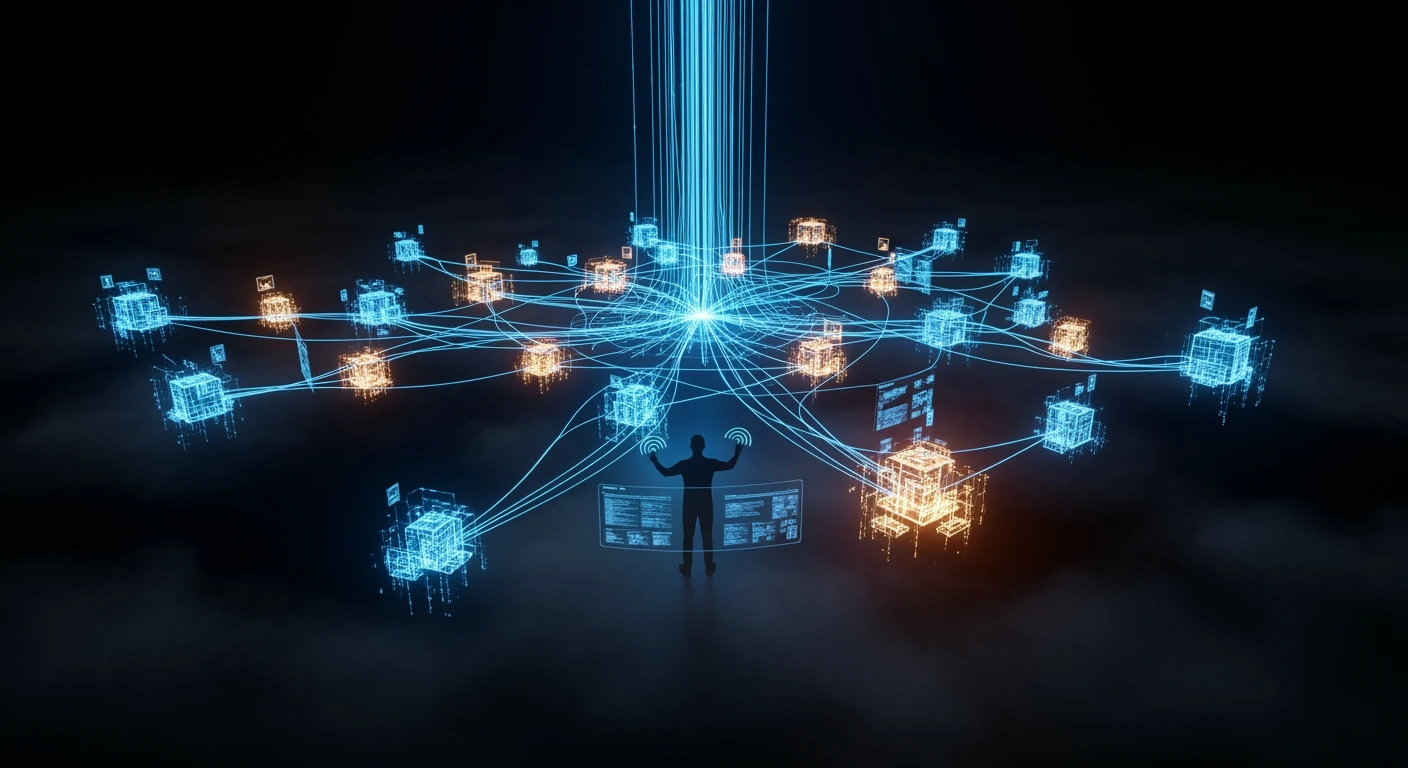
The picture is wrong in the direction that matters. The desks that have actually inverted are not desks where a person reviews output after the fact. They are desks where the person sits at the center of a pre-staged room and directs work at the moment of maximum leverage. The output is downstream of the staging. The staging is the job.
I want to describe what that room actually looks like, because the picture in the operator’s head is more interesting than the picture in the audience’s head, and the gap between the two is where most of the confusion about AI-native operations lives.
What gets put on the desk before the desk is sat at
Before the operator arrives, something or someone has already loaded the relevant briefs, the active commitments, the recent outputs, the open threads, the data the day is going to need. It is staged into a single surface. The staging is not the work either — the staging is the condition for the work being executable at speed. Without staging, the operator opens the day cold, spends an hour reconstructing what state the operation is in, and arrives at the moment of decision tired enough that the decision will be the default decision.
With staging, the operator arrives to a room that already knows. The first move is not orientation. The first move is action.
This is the part the outside picture misses. The leverage point is not the model doing the work. The leverage point is the room being arranged so that the only thing left for the human to do is the part that requires being the human — the call, the cut, the redirect, the killed plan, the small unreasonable refusal that holds the operation to a position it would otherwise drift away from.
The reviewer posture loses on contact
There is a posture available to a person sitting in front of an AI system where they read what comes out, frown thoughtfully, and either accept it or send it back. Most people who try to use AI at work first try this posture because it matches the picture they came in with. It is a comfortable posture. It also loses, almost immediately, to a person sitting in front of the same system in the directing posture.
The directing operator is not reading and approving. The directing operator is steering — picking which question to answer, which artifact to make first, which framing to start the run with, what should not be done at all. The output that follows is the consequence of the steer. The steer is so much higher-leverage than the review that the operator who keeps doing the review keeps wondering why the operator who is directing seems to be moving through a different volume of work in the same hour.
The reviewer feels productive because they are still working. The director has done their actual labor in the first five minutes and is now watching it execute. From the outside the director looks idle for stretches. The director is not idle. The director is between steers, holding the next one in mind, waiting for the moment when intervening produces more than letting the system run.
The room is the thing, and the room is also the problem
Here is where the texture gets unexpected for an outside reader. The directing posture only works because the room exists. And the room, in most AI-native operations that work, exists because one mind built it over months — added the surface, added the briefs, added the cadences, added the small habits that keep the staging fresh.
The room is the operator’s reflection of how they think the operation should be navigated. It is not generic. It is a single mind made walkable. The leverage comes from that fit. The constraint comes from that same fit.
Because if the room only works for the mind that built it, the room is a performance advantage, not yet a company advantage. A second person walking into the same room finds it less navigable, not more — because what looked like a clean surface to the builder reads as a cryptic archive to the visitor. The room’s coherence is the operator’s coherence. There is not yet a copy of the room that the operator is not in.
That gap — between the room that already works for one person and the room that could work for any qualified person — is, quietly, the central piece of work most AI-native operations have left unfinished. It is also rarely the work that gets prioritized, because the room is already producing leverage for its current occupant. The pressure to make it transferable is structural and slow. The pressure to use it is immediate and sharp.
What the outside reader should take from this
If you are thinking about building an AI-native operation, or joining one, or trying to make sense of one from outside, the more accurate mental image is this: a room with the day already laid out, a person who sits down and starts directing rather than reviewing, and a quiet open question about whether the room can ever exist without that specific person inside it.
The interesting work in this category over the next stretch is going to be on the room itself. Not the model. Not the prompt. Not the next interface trick. The work is the staging: making the briefs auto-current, making the surface load with what the day actually needs, making the cadences run themselves so that the operator arrives to context rather than to construction.
And after the staging, the harder work — making the room legible enough that a second mind, eventually, can walk into it. Not by being given the keys. By being able to read what is on the walls.
The operations that solve the second problem are the ones that will look, in retrospect, like they figured something out other operations did not. They will look, from outside, like they got the model right. From inside they will know they got the room right, and then they got the second copy of the room right, and the model was the part that did not need rethinking once the room was load-bearing.
The directing posture is the visible piece. The room is the invisible piece. The transferable room is the piece almost nobody has built yet.
Companion piece: This article describes how the three-legged stack came together over fourteen months. For the full operating doctrine — why three legs specifically, what each leg’s job is, and how they hold each other up — see The Three-Legged Stack: Why I Run Everything on Notion, Claude, and Google Cloud. The two pieces complement each other; this one is the journey, that one is the doctrine.
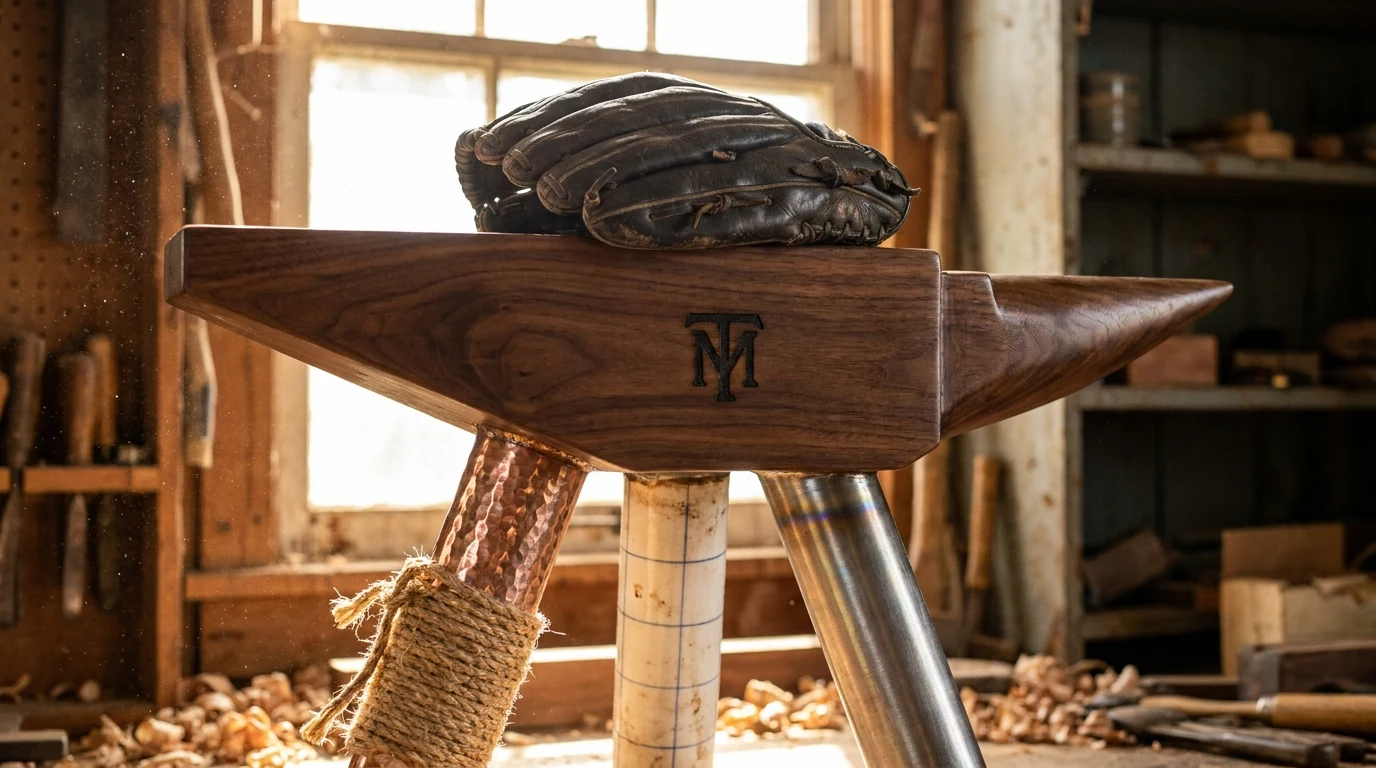
I almost got excited about Google’s Googlebook last week. Then I caught myself. I have a stack that’s starting to feel like a broken-in baseball glove — pocket exactly where I want it, leather oiled, laces holding. The last thing I need is a new glove.
This is the operating philosophy I’ve landed on after a year of building Tygart Media as an AI-native content operation. It’s not a tech-stack post. It’s a posture. The stack I use — Claude as the intelligence layer, Notion as the control plane, GCP as the compute plane — happens to be the visual the rest of this piece is built around, but the real point is what holding still does to leverage.
The temptation in any AI-adjacent business right now is to chase. Every week there is a new model, a new IDE, a new agent framework, a new laptop category. Googlebook arrives this fall promising Gemini at the kernel and an AI-powered cursor. OpenRouter sits there offering me every model in the world through one API. Six months ago I would have been wiring both of them in before the announcements cooled.
I’m not doing that anymore. Here’s why, in seven images.
The Three-Legged Stool
Three legs is the minimum number for stability. Add a fourth and you haven’t added strength — you’ve added wobble. A three-legged stool sits flat on any surface, no matter how uneven, because three points define a plane. A four-legged stool needs the floor to be perfect, and if it isn’t, one leg is always lifting.
My stack has three legs. Claude is the intelligence layer — every reasoning step, every draft, every architectural decision passes through it. Notion is the control plane — every project, client, task, ledger, and standard operating procedure lives there. Google Cloud Platform is the compute plane — Cloud Run services, BigQuery ledgers, Workload Identity Federation, the publisher infrastructure that moves content to 27 client sites without a single stored API key.
People keep asking me when I’ll add a fourth leg. Will I move to OpenRouter for model diversity? Will I switch to Linear for project management? Will I migrate compute to AWS for the better startup credits? The honest answer is that adding a fourth leg right now would not make me more stable. It would make me less. I haven’t mastered the three I have.
The Anvil and the Glove
Roots. Operations is operations. The discipline learned in restoration carries straight into AI-native content work.
Before Tygart Media, I spent years in property damage restoration operations — Munters, Polygon, the kind of work where a phone call at 2 AM means a water line burst at a hotel and a crew needs to be on-site in forty-five minutes with the right equipment and the right paperwork. That world taught me everything I now use to run an AI-native content business. It taught me to batch. It taught me to absorb scope rather than push it back on the client. It taught me that subcontracting is a form of collaboration, not a failure mode. It taught me that operations is operations — the substrate changes, the discipline doesn’t.
The baseball glove on top of the anvil is the metaphor I keep returning to. A new glove is stiff. It catches awkwardly. The webbing is too tight, the leather hasn’t formed to your hand yet, and every ball that comes in feels foreign. A broken-in glove is the opposite. It closes around the ball before you’ve consciously decided to squeeze. You don’t think about catching. You just catch.
That’s what fourteen months on the same stack has done. I don’t think about how to publish to WordPress anymore. I don’t think about how to route a model decision between Haiku, Sonnet, and Opus. I don’t think about whether a new automation belongs in Cloud Run or as a Notion Worker. The catching is automatic. Every hour spent in the same three tools is another stitch in the glove.
The Surveyor’s Tripod
Precision. The stack as a measurement instrument. Three legs, one truth.
A tripod is a stool that measures. It’s the same three-legged geometry, but you put a sextant on top, or a transit, or a telescope, and suddenly the stability isn’t ornamental — it’s the whole point. If the legs aren’t planted, the measurement is wrong. If the measurement is wrong, you build in the wrong place.
The three-legged stack as a measurement instrument is how I now think about content operations. Claude measures what to say. Notion measures what’s been said, what’s been promised, what’s been promoted, what’s been demoted. GCP measures what’s been deployed and what’s been logged. Together they make a single coherent reading of where the business actually is — not where I imagine it to be, not where I hope it is, but where it actually stands at 3 AM on a Tuesday.
That reading is what lets me trust the work. The Promotion Ledger inside Notion tracks every autonomous behavior the system runs — content publishes, schema injections, taxonomy fixes, image optimizations — by tier and by clean-day count. Seven clean days on a tier means a candidate for promotion. A failure resets the clock. The instrument doesn’t lie. It either reads green or it doesn’t.
The Trefoil
Synthesis. Three loops meeting at the center. The synthesis point is where knowledge becomes a distillery.
The trefoil is an ancient symbol — three interlocking loops meeting at a single point in the center. Heraldic shields use it. Cathedral architecture uses it. The Celtic version goes back to the Iron Age. It shows up everywhere because it answers a question every human system eventually asks: how do you get three independent things to produce a fourth thing that none of them could produce alone?
Synthesis is the answer. Where the loops meet, the third thing happens. Claude alone is a smart conversation. Notion alone is a well-organized library. GCP alone is a pile of compute. None of those by themselves is a business. But the place where the three loops overlap — that’s where a client brief becomes a draft becomes an optimized article becomes a scheduled publish becomes a tracked outcome — and that center point is where the work actually lives.
I think of Tygart Media as a Human Knowledge Distillery. The raw material is messy human knowledge — a client’s twenty years of trade experience, my own restoration background, a comedian’s stage instincts, a recovery contractor’s job-site stories. The distillery boils that down into something that can travel: an article, a schema block, a social post, a referral asset. The three legs aren’t doing the distilling. The synthesis at the center is.
The Pocket Watch
Mastery. Mechanism over magic. The watch doesn’t get better because a new watch came out.
Independent horology — the world of small, fiercely independent watchmakers who build their movements by hand — is one of my private obsessions, and it has shaped how I think about AI tooling more than I expected. The watchmakers I admire most don’t release a new caliber every year. They spend a decade on one movement. They refine the escapement, balance the wheel, polish the bridges, and over time the watch gets better not because the parts are new but because the maker understands the parts better.
This is the opposite of how most of the AI industry operates. The cadence is: ship a new model, ship a new agent, ship a new IDE, ship a new laptop. The implicit promise is that the latest thing will do more than the previous thing, and the implicit demand is that you keep up. Mastery is impossible in that mode. By the time you’ve learned the mechanism, the mechanism has been replaced.
Holding still is a competitive advantage exactly because most people can’t. While everyone else is unboxing their Googlebook in October and figuring out where Gemini’s Magic Pointer fits into their workflow, my workflow won’t have changed — because the workflow doesn’t live on the laptop. It lives in the stack. The laptop is just a window into the stack. A new laptop is a new window. The view is the same.
The Lighthouse
Signal. Authority compounds when you stay put and keep the light on.
Lighthouses don’t move. That’s the whole point of them. A lighthouse that wandered around the coastline trying to find the best vantage would not be useful to anyone — ships wouldn’t know where it was, the beam would never settle, and the entire purpose of having a fixed reference point in a foggy world would collapse.
Content authority works the same way. The sites that get cited by AI models — that show up in Google’s AI Overviews, in Perplexity’s citations, in Claude’s own retrieval — are not the sites that pivoted the most. They are the sites that have been on the same beam for years, publishing the same kind of work, building the same kind of entity recognition, and giving language models a stable reference point to anchor to.
This is true at the stack level too. The reason my content operations get more efficient month over month is not because I’m using new tools — it’s because Claude, Notion, and GCP have learned each other inside my workspace. The skill files in Claude know exactly which Notion databases to write to. The Notion routers know exactly which GCP services to dispatch. The GCP services know exactly which WordPress sites to publish to and how each one wants its content shaped. The beam is on. It keeps being on. Authority compounds in the version of you that didn’t move.
The Hourglass
Compounding. Time spent doesn’t drain. It crystallizes into something more valuable.
This is the image that closes the piece, and it’s the one that took me the longest to understand. An hourglass usually represents time running out. Sand falls. The bulb empties. Eventually you’re done. The version I commissioned reframes it: golden sand falls into a bed of polished gemstones. Time doesn’t disappear into nothing. It compounds into something more valuable.
That is the entire thesis of the broken-in glove. Time spent on the same stack does not drain. It crystallizes. Every additional week with Claude, Notion, and GCP makes the next week more leveraged, because the pattern library is bigger, the muscle memory is deeper, and the surface area I can act on without re-learning is wider. The opposite path — switching stacks, chasing the new thing, restarting the muscle memory — is the path where time actually drains. The bulb empties and there is no gemstone bed underneath.
So when Googlebook launches in fall 2026 and people ask me whether I’m getting one, the answer is: maybe, eventually, as a window into the stack I already have. But not as a replacement for anything. The stool is the stool. The legs are the legs. And the glove is finally starting to feel like mine.
The three-legged stack is the operating system Tygart Media uses to run an AI-native content and SEO agency across 27+ client sites. The three legs are Claude as the intelligence layer, Notion as the control plane, and Google Cloud Platform as the compute plane. The architecture follows an Integration Spine: GitHub stores the source of truth, GitHub Actions plus Workload Identity Federation move work to Cloud Run with no stored credentials, and Cloud Run reports back to Notion.
Why three tools instead of more?
Three is the minimum number of points required to define a plane, which makes a three-legged structure inherently stable on any surface. Adding a fourth tool before mastering the first three adds switching cost and surface area without adding capability. Depth in three tools produces more leverage than breadth across six.
How does the stack handle a 27-site content operation?
Claude generates and optimizes content via skills that encode the standards for SEO, AEO, and GEO. Notion stores the editorial calendar, client briefs, Promotion Ledger, and the operating manual. GCP runs the Cloud Run publisher services that push optimized articles into WordPress sites via REST API, with all publishing actions logged back to Notion for audit. The stack is designed so that any single article passes through all three legs before going live.
Is Tygart Media planning to adopt Googlebook when it launches?
Not as a replacement for any part of the current stack. Googlebook will likely become useful as a thicker client surface over the same backend, but the actual operating system — Claude, Notion, GCP, and the Integration Spine — does not live on the laptop. The laptop is just a window into the stack. Switching laptops doesn’t change the view.
What does “broken-in advantage” mean in an AI context?
Broken-in advantage is the compounding effect that comes from sustained mastery of a single toolchain. Skills, automations, and muscle memory build on each other when the underlying tools stay constant. Operators who switch stacks frequently never reach the inflection point where the system becomes leveraged. Operators who hold still long enough to master the same three tools build a moat that’s harder to copy than any individual feature.
Where does the restoration industry background fit in?
Years of property damage restoration operations at Munters and Polygon taught the discipline that the AI-native content stack now runs on — batching, scope absorption, subcontracting as collaboration, and tiered trust systems. The thesis is that operations is operations. The substrate (restoration crews then, AI agents now) changes. The operating discipline doesn’t.
How does the Promotion Ledger fit into the stack?
The Promotion Ledger is a Notion database under a top-level page called The Bridge. Every autonomous behavior the system runs is tracked there by tier — A for proposed, B for human-flown, C for autonomous — with a clean-day counter and a failure log. Seven clean days on a tier qualifies a behavior for promotion. A failure resets the clock and demotes the behavior one tier. The Ledger is how the stack proves to itself that it can be trusted.
{“@context”: “https://schema.org”, “@type”: “Article”, “headline”: “The Three-Legged Stack: Why I Stopped Shopping for New Tools”, “description”: “After fourteen months building an AI-native content operation, the operating philosophy at Tygart Media is to hold still and deepen what works. Seven images and a manifesto.”, “author”: {“@type”: “Person”, “name”: “Will Tygart”, “url”: “https://tygartmedia.com/about/”}, “publisher”: {“@type”: “Organization”, “name”: “Tygart Media”, “url”: “https://tygartmedia.com”}, “image”: “https://tygartmedia.com/wp-content/uploads/2026/05/three-legged-stack-tygart-media-claude-notion-gcp.webp”, “datePublished”: “2026-05-14”, “mainEntityOfPage”: “https://tygartmedia.com/the-three-legged-stack/”}
{“@context”: “https://schema.org”, “@type”: “FAQPage”, “mainEntity”: [{“@type”: “Question”, “name”: “What is the three-legged stack at Tygart Media?”, “acceptedAnswer”: {“@type”: “Answer”, “text”: “The three-legged stack is the operating system Tygart Media uses to run an AI-native content and SEO agency across 27+ client sites. The three legs are Claude as the intelligence layer, Notion as the control plane, and Google Cloud Platform as the compute plane. The architecture follows an Integration Spine: GitHub stores the source of truth, GitHub Actions plus Workload Identity Federation move work to Cloud Run with no stored credentials, and Cloud Run reports back to Notion.”}}, {“@type”: “Question”, “name”: “Why three tools instead of more?”, “acceptedAnswer”: {“@type”: “Answer”, “text”: “Three is the minimum number of points required to define a plane, which makes a three-legged structure inherently stable on any surface. Adding a fourth tool before mastering the first three adds switching cost and surface area without adding capability. Depth in three tools produces more leverage than breadth across six.”}}, {“@type”: “Question”, “name”: “How does the stack handle a 27-site content operation?”, “acceptedAnswer”: {“@type”: “Answer”, “text”: “Claude generates and optimizes content via skills that encode the standards for SEO, AEO, and GEO. Notion stores the editorial calendar, client briefs, Promotion Ledger, and the operating manual. GCP runs the Cloud Run publisher services that push optimized articles into WordPress sites via REST API, with all publishing actions logged back to Notion for audit.”}}, {“@type”: “Question”, “name”: “Is Tygart Media planning to adopt Googlebook when it launches?”, “acceptedAnswer”: {“@type”: “Answer”, “text”: “Not as a replacement for any part of the current stack. Googlebook will likely become useful as a thicker client surface over the same backend, but the actual operating system does not live on the laptop. The laptop is just a window into the stack.”}}, {“@type”: “Question”, “name”: “What does broken-in advantage mean in an AI context?”, “acceptedAnswer”: {“@type”: “Answer”, “text”: “Broken-in advantage is the compounding effect that comes from sustained mastery of a single toolchain. Skills, automations, and muscle memory build on each other when the underlying tools stay constant. Operators who switch stacks frequently never reach the inflection point where the system becomes leveraged.”}}, {“@type”: “Question”, “name”: “Where does the restoration industry background fit in?”, “acceptedAnswer”: {“@type”: “Answer”, “text”: “Years of property damage restoration operations at Munters and Polygon taught the discipline that the AI-native content stack now runs on: batching, scope absorption, subcontracting as collaboration, and tiered trust systems. Operations is operations. The substrate changes, the discipline doesn’t.”}}, {“@type”: “Question”, “name”: “How does the Promotion Ledger fit into the stack?”, “acceptedAnswer”: {“@type”: “Answer”, “text”: “The Promotion Ledger is a Notion database under a top-level page called The Bridge. Every autonomous behavior the system runs is tracked there by tier with a clean-day counter and a failure log. Seven clean days qualifies a behavior for promotion. A failure resets the clock and demotes the behavior one tier.”}}]}
Microsoft has LinkedIn and enterprise distribution. Google has the native stack. Notion has the database architecture. OpenAI has something none of them have: 1.2 billion people a week who already open ChatGPT when they want to get something done. That’s not a product advantage. That’s a behavior advantage. And behavior is the hardest moat to breach.
Where OpenAI Sits in This Series
This is the fifth piece examining who builds the everything app. We’ve covered Microsoft, Google, Notion, and the everything database frame. OpenAI’s path is the most unusual: they’re not building from infrastructure up. They’re building from user behavior down.
The Model Reality First — Get This Right
Model reality first — get this right.
Before the strategy discussion, the model facts — because the landscape shifted significantly in early 2026 and the marketing doesn’t always match what’s actually deployed.
As of mid-2026, OpenAI’s current flagship is GPT-5.5, which powers ChatGPT Enterprise (unlimited messages) and is the reasoning backbone of the unified super-assistant experience. The o-series models, such as o3, are the thinking models, trained to reason longer before responding; o3 is the deep-reasoning option. o4-mini, the former high-throughput option, was retired from ChatGPT on February 13, 2026, though it remains available in the API.
Notably, GPT-4o, GPT-4.1, and GPT-4.1 mini were retired from ChatGPT as of February 13, 2026. Enterprise customers retained GPT-4o access until April 3, 2026. If you’re referencing these models in your stack — in tutorials, in documentation, in integrations — those references are now stale. OpenAI’s lineup keeps moving: at DevDay on September 29, 2026, it showcased GPT-6 Astra and revealed GPT-6.1 Sol.
One more significant infrastructure move: the Assistants API was deprecated and removed from the API on August 26, 2026. OpenAI is replacing it with the Responses API — a new primitive that combines Chat Completions simplicity with Assistants-style tool use, supporting web search, file search, and computer use natively. If you built on the Assistants API, your integration needs to run on the Responses API now.
OpenAI’s Everything App Bet: Behavior Over Infrastructure
Behavior over infrastructure.
Microsoft’s everything app bet is infrastructure — they own the OS, the enterprise software stack, and a professional network. Google’s bet is native stack — they own search, email, calendar, and mobile. Both are building from the platform up.
OpenAI is doing the opposite. They’re starting from where people already go to get things done, and expanding outward from that behavioral beachhead. ChatGPT’s 1.2 billion weekly users don’t use it because it owns their email. They use it because it’s the fastest path from question to answer, from idea to draft, from problem to solution.
The everything app doesn’t have to own your data. It just has to be the place you go first. OpenAI is betting that if they can make ChatGPT good enough at enough things — and fast enough at integrating with the tools you already use — the behavioral habit becomes the moat. You stop going to Google first. You stop opening a new app. You open ChatGPT.
The Pieces OpenAI Has Assembled
The consolidation has been quieter than Microsoft’s marketing machine or Google’s Cloud Next announcements, but the pieces are substantial.
Operator — the computer-using agent — launched as a research preview in early 2025 and integrated fully into ChatGPT by mid-year. It browses, clicks, fills forms, and manages logins autonomously. GPT-5.5’s score on OSWorld-Verified — the standard benchmark for computer-use agents — is 78.7%. The human baseline on the same benchmark is 72.4%. That’s not a lab result. That’s production-grade desktop and browser automation beating human performance on standardized tasks.
Projects and Memory — launched across late 2024 and 2025 — give ChatGPT persistent context across sessions. Projects (December 2024) let you organize work by context. Project Memory (August 2025) lets ChatGPT learn your preferences, communication style, and working patterns over time. This is the foundational layer for the everything app: an AI that knows you, not just your current prompt.
Workspace Agents for Enterprise — launched April 22, 2026 — let enterprise teams create, share, and manage AI agents for workflow automation. Powered by Codex, these agents handle reporting, coding, and messaging tasks autonomously. This is OpenAI’s direct enterprise play, competing with Microsoft’s Agent 365 and Google’s Workspace Studio on their home turf.
Sora 2 — released September 2025 — moved AI video from novelty to production-grade. It’s available both as a standalone app and deeply integrated within ChatGPT. Video generation, image creation, voice, code execution, deep research, file analysis — all inside one interface. The surface area of what ChatGPT can do has expanded faster than most people have tracked.
The Apps SDK and MCP support — announced in 2025 — let developers build UIs alongside MCP servers, defining both logic and interactive interface of applications that run inside ChatGPT. OpenAI is building a developer ecosystem where third-party tools surface inside ChatGPT natively, not as links out to other apps.
The Honest Strategic Weakness: OpenAI Doesn’t Own the Data Layer
Honest weakness — doesn’t own the data layer.
Here’s the structural problem with OpenAI’s everything-app path that doesn’t get enough attention.
Microsoft owns the calendar data, the email data, the document data, the professional network data. Google owns the same stack natively. Notion owns the database architecture where your operational data lives. OpenAI owns a conversation history and whatever files you’ve uploaded to Projects.
That’s a meaningful gap. When you ask Microsoft Copilot “what happened in last week’s client meeting?” it can actually answer — because it has the calendar event, the Teams recording transcript, and the follow-up email thread. When you ask ChatGPT the same question, the answer is only as good as what you’ve explicitly provided.
OpenAI’s answer to this is Operator and the connector ecosystem — let ChatGPT reach into your existing tools and pull the data it needs. That works, but it creates a dependency chain that Microsoft and Google don’t have. Every integration is a point of failure. Every API change is a breakage risk. Every permission prompt is friction that erodes the behavioral habit.
The Responses API — replacing the Assistants API in August 2026 — is designed to close some of this gap with native web search, file search, and computer use built in. But native search is not the same as owning the inbox. And computer use, for all its benchmark performance, is still slower and less reliable than a dedicated integration.
Where OpenAI Wins: The Consumer and Creator Layer
The enterprise everything-app race may go to Microsoft or Google by default — too much infrastructure, too many IT relationships, too much compliance architecture for a newcomer to overcome in 18 months.
But the consumer and creator layer is wide open. And that’s where OpenAI’s behavioral moat matters most.
For freelancers, solopreneurs, content creators, small agencies, and knowledge workers who aren’t tied to an enterprise IT environment, ChatGPT is already the everything app. It drafts your emails, edits your copy, analyzes your data, generates your images, browses for research, and runs your automations. The question isn’t whether they’ll adopt it — they already have. The question is whether OpenAI deepens that relationship fast enough to make switching costly before Microsoft and Google catch up on the consumer side.
Memory is the weapon here. The longer a user runs their work through ChatGPT Projects with memory enabled, the more context OpenAI accumulates about how that person thinks, works, and communicates. That context is genuinely hard to transfer to a competing platform. It’s not data in a database — it’s learned behavioral preference. The switching cost compounds with every session.
The Operator Economy: OpenAI’s Wildcard
The most underrated piece of OpenAI’s everything-app strategy isn’t ChatGPT itself — it’s the operator ecosystem.
An “operator” in OpenAI’s framework is any business that deploys ChatGPT capabilities inside their own product. Every company building on the OpenAI API — embedding ChatGPT into their CRM, their help desk, their e-commerce platform, their internal tools — is an operator. Every one of those deployments is a surface where OpenAI’s models become the intelligence layer of someone else’s everything app.
Microsoft has Copilot. Google has Gemini. But neither of them has the sheer number of third-party applications already running on their models that OpenAI has accumulated. The operator ecosystem means OpenAI doesn’t have to build every surface themselves. They just have to remain the model that operators trust most — and as long as GPT-5.5 and the o-series stay at the frontier of capability, that trust is relatively durable.
The Workspace Agents launch, combined with the Apps SDK and MCP support, is OpenAI formalizing this operator model for enterprise. They’re saying: we won’t replace your enterprise software stack. We’ll become the reasoning layer that sits across all of it.
What This Means for Your Stack Right Now
If you’re building on OpenAI’s API or running workflows through ChatGPT, three immediate action items:
Finish your Assistants API migration. The Assistants API was removed on August 26, 2026, and the Responses API migration path is documented.
Enable Projects and Memory for your team’s ChatGPT accounts. The compounding advantage of memory only builds if you start using it. Teams that have six months of Project memory by Q4 2026 will have a materially different AI experience than teams starting fresh.
Think about where ChatGPT sits relative to your Notion database. OpenAI’s operator model and MCP support mean ChatGPT can connect to your Notion everything database via the Notion Public API. The everything database frame doesn’t require you to choose between Notion and ChatGPT — it lets you use both, with Notion as the structured data layer and ChatGPT as the reasoning and action surface on top of it.
The everything app race isn’t over. OpenAI has the behavior moat, the operator ecosystem, and the fastest-moving model roadmap of any company in this field. What they don’t have is the data infrastructure that Microsoft and Google own by default. How they close that gap — through connectors, through Operator’s computer-use capabilities, through the Responses API — will determine whether ChatGPT becomes the everything app or the everything layer sitting on top of someone else’s everything app.
Both outcomes are valuable. Only one of them wins the race.
As of mid-2026, GPT-5.5 is OpenAI’s primary model powering ChatGPT Enterprise. The o3 model handles deep reasoning tasks. GPT-4o, GPT-4.1, GPT-4.1 mini, and o4-mini were retired from ChatGPT on February 13, 2026. The Assistants API was removed on August 26, 2026, replaced by the Responses API. At DevDay on September 29, 2026, OpenAI showcased GPT-6 Astra and revealed GPT-6.1 Sol.
What is the OpenAI Responses API?
The Responses API is OpenAI’s replacement for the Assistants API (sunset August 26, 2026). It combines Chat Completions simplicity with Assistants-style tool use, supporting built-in web search, file search, and computer use. It’s the new primitive for building agents on OpenAI’s platform.
What are OpenAI Workspace Agents?
Launched April 22, 2026, Workspace Agents let enterprise teams create, share, and manage AI agents for workflow automation inside ChatGPT. Powered by Codex, they handle reporting, coding, and messaging tasks autonomously — OpenAI’s direct enterprise play against Microsoft Agent 365 and Google Workspace Studio.
How does ChatGPT Operator work?
Operator is OpenAI’s computer-using agent — it browses, clicks, fills forms, and manages logins autonomously. GPT-5.5 scores 78.7% on the OSWorld-Verified benchmark for computer-use tasks, above the 72.4% human baseline. It’s integrated directly into the ChatGPT interface for eligible plans.
Can ChatGPT connect to a Notion database?
Yes. Via the Notion Public API and OpenAI’s MCP support and connector ecosystem, ChatGPT can read from and interact with Notion databases. This makes the “everything database” architecture viable with OpenAI as the reasoning surface — Notion holds the structured data, ChatGPT reasons and acts on it.
A Notion AI Agent isn’t a chatbot. It’s a worker that lives inside your workspace and acts on it. The base version waits for prompts. The Custom Agent version (Business and Enterprise plans only) runs autonomously — on a schedule, on a trigger, or on demand — and can work across hundreds of pages for up to 20 minutes per task. Skills let you teach an agent your repeated workflows so it can run them on command. Workers (developer preview, April 2026) let agents call code and external APIs. The mental model is “a teammate with workspace access,” not “a smarter search box.”
Why the distinction matters
Why the agent distinction matters.
Most coverage treats “Notion AI” as one thing. It isn’t. There are at least four layers, and confusing them leads to operators either underusing or overspending on the platform. Layer 1: Notion AI in a doc. This is the inline AI you summon with the space bar or /. It rewrites, summarizes, and drafts inside the page you’re on. It’s a writing assistant. It doesn’t act outside the page. Layer 2: AI Autofill on databases. This populates or updates database properties based on row content. Basic Autofill is included on Business and Enterprise plans. Custom Agent Autofill uses Notion Credits for richer reasoning. It’s an enrichment layer, not an agent in the proactive sense. Layer 3: Standard Notion Agent. Responds to prompts, can read across the workspace, can edit pages, can integrate with Slack, Calendar, and Mail when those are connected. Reactive — it does what you ask, when you ask. Layer 4: Custom Agent. Proactive. Runs on schedule or trigger. Can work autonomously for up to 20 minutes. Can have skills attached. Can call Workers (in developer preview). This is the layer most people mean when they say “agents.” It’s also the layer that requires Business or Enterprise and, after May 3, 2026, consumes Notion Credits.
If you’re unsure which layer you’re using, you almost certainly aren’t using Layer 4 — and that’s fine for many workflows.
What agents are good at right now
What agents are good at right now.
Three categories where agents earn their keep without much fuss: 1. Database hygiene. An agent that runs nightly across your CRM database can verify links, flag stale records, summarize new entries into a digest field, and tag uncategorized rows. This is dull, repetitive work and it stops being your problem. 2. Recurring document production. Weekly status updates, daily standups, meeting prep briefs. Anything where the format is stable and the inputs change. The agent reads the inputs, applies the format, produces the document, and you edit the 10% that needs human judgment. 3. Cross-source synthesis. With Slack, Calendar, and Mail connected, an agent can answer questions that require pulling from multiple sources. “What did the team agree to in the marketing meeting last week, and what’s still open?” That’s a real query an agent can handle — reading the meeting notes, the Slack thread, the calendar follow-up, and producing a synthesis.
What agents are not good at yet
What agents are not good at yet.
Equally important to name the gaps. Anything requiring judgment about people. Performance review drafting, hiring decisions, conflict mediation. The agent can summarize and surface; it shouldn’t decide. Compliance-sensitive output. Legal language, regulated medical content, financial guidance. An agent draft is fine as input to a human reviewer; it isn’t fine as final output. Novel reasoning under uncertainty. Agents do well when the pattern is established. They do worse when the situation has no precedent in your workspace. “Plan our entry into a new market” is a worse agent task than “summarize what we’ve learned about our existing market.” Stateful work across long timelines. Agents are getting better at continuity, but for now they’re best at bounded tasks. A 20-minute autonomous run is an upper bound, not a target.
How to think about which layer you need
A simple decision tree:
– Just want help drafting? → Layer 1 (inline Notion AI).
– Want a database to maintain itself? → Layer 2 (Autofill). Use Custom Agent Autofill only when basic isn’t smart enough.
– Want to ask questions across your workspace and get pulls and edits? → Layer 3 (standard agent).
– Want recurring autonomous work on a schedule? → Layer 4 (Custom Agent). Be ready to budget Notion Credits after May 3, 2026.
Most operators land on a mix of Layers 1, 2, and 3. Layer 4 is for specific recurring workflows where the time savings clear the credit cost.
What to read next
If you came here trying to understand what agents are, the natural follow-ups in this corpus are: how Skills work (the way you teach agents repeated workflows), what Custom Agents change (the autonomy line), and the May 3 cliff (when free trials end and credits begin).
{“@context”: “https://schema.org”, “@type”: “Article”, “headline”: “I Accidentally Built an Operating System for an Industry”, “url”: “https://tygartmedia.com/i-accidentally-built-an-operating-system-for-an-industry/”, “datePublished”: “2026-04-04T16:56:11”, “dateModified”: “2026-04-04T16:56:11”, “author”: {“@type”: “Person”, “name”: “Will Tygart”}, “publisher”: {“@type”: “Organization”, “name”: “Tygart Media”, “url”: “https://tygartmedia.com”}}{“@context”: “https://schema.org”, “@type”: “BreadcrumbList”, “itemListElement”: [{“@type”: “ListItem”, “position”: 1, “name”: “Home”, “item”: “https://tygartmedia.com”}, {“@type”: “ListItem”, “position”: 2, “name”: “I Accidentally Built an Operating System for an Industry”, “item”: “https://tygartmedia.com/i-accidentally-built-an-operating-system-for-an-industry/”}]}
Nobody sits down and says “I’m going to build an operating system for an entire industry.” That’s not how it starts. It starts with one client who needs a website. Then another who needs their Google Ads cleaned up. Then someone asks if you can help them figure out why their phone isn’t ringing.
You solve problems. You move on to the next one. You don’t zoom out.
I zoomed out recently — for the first time in a long time — and what I saw surprised me. I hadn’t been building a marketing consultancy. I’d been building a vertical operating system for the restoration industry, one problem at a time, without ever calling it that.
How It Actually Started
The first piece was SEO. A restoration contractor needed to show up when someone searched “water damage restoration” in their city. Straightforward enough. I built the content, optimized the site, tracked the rankings. It worked. They referred someone else. That someone else had a slightly different problem — their ads were running but the calls weren’t converting. So I looked at that.
Call Track Metrics came in because I kept running into the same argument: the client thought the calls were coming from one place, I thought they were coming from another, and neither of us could prove it. CTM solved that. Now every call is tagged to the source — the keyword, the page, the campaign, the full journey. Attribution stopped being a debate and became math.
Then I noticed that the calls were coming in but jobs weren’t closing at the rate they should. That’s not an SEO problem. That’s an operations problem. So I started looking at intake — how calls were answered, how follow-up happened, how estimates were scheduled. An AI intake agent started to make sense. Not because I was trying to build AI products, but because the gap was right there and I could see it.
The Restoration Golf League came from a completely different direction. Restoration contractors need referral relationships with insurance adjusters and property managers. That’s the commercial side of the business. A golf league is one of the best relationship-building structures that exists in professional services — relaxed, repeated contact, shared experience. It wasn’t a marketing idea. It was a relationship infrastructure idea that happened to use golf as the mechanism.
Each tool built for a specific job. The pattern only becomes visible when you step back.
The Inventory I Didn’t Know I Had
When I actually sat down and listed everything that exists right now across the work I’ve been doing, here’s what came out:
A content intelligence platform — a BigQuery knowledge base that logs every session, surfaces patterns, and drives automated publishing. A lead tracking infrastructure built on Call Track Metrics, wired to every traffic source. A referral network of restoration contractors meeting through a structured golf league across multiple cities. A commercial compliance strategy using fire extinguisher inspections as a loss leader to get in the door with property managers. An AI receptionist product purpose-built for restoration intake — Twilio, Claude on Vertex AI, Cloud Run, Firestore. A Company OS model — a fully hosted GCP environment where I run a contractor’s entire revenue infrastructure and take a commission on verified results. A WordPress CRM being built and dogfooded on my own site before being offered to clients. A knowledge cluster of five interconnected websites building topical authority in the restoration and risk intelligence space.
None of those were planned in sequence. Each one was the answer to a specific question that kept coming up. But together they cover almost every layer of how a restoration business actually operates — lead generation, lead tracking, intake, conversion, referral relationships, commercial acquisition, operations tools, and content authority.
That’s not a service menu. That’s a stack.
Golf, AI, SEO, compliance, CRM — they look unrelated until you see the thread connecting them.
Why Accidental Might Be Better Than Planned
I’ve thought about whether it would have been better to plan this from the start. Design the full system upfront, build it in sequence, launch it as a coherent product.
I don’t think so. And here’s why.
Every piece of this was validated before the next one got built. The CTM infrastructure exists because attribution disputes are real and expensive. The AI intake agent exists because I watched calls get dropped after I’d already driven them. The golf league exists because I saw contractors lose commercial accounts to competitors who had better adjuster relationships, not better work. Each problem was visible because I was close enough to the industry to see it — not designing from a distance.
The version of this that gets designed upfront has a different failure mode: it’s theoretically complete but practically wrong. The problems you think exist from the outside are never quite the same as the ones that actually exist on the inside. Building problem by problem, staying inside the industry, means every piece of the stack is load-bearing because it was built under load.
There’s also something that happens when you’re not trying to build a system. You’re more honest about what’s actually needed. You don’t add things because they complete the picture — you add them because the gap is genuinely painful. The result is a leaner, more accurate stack than anything I could have designed in a planning session.
The Question I’m Sitting With
The thing I keep coming back to: is this replicable in other verticals, or is it only possible because of the depth of time I’ve spent inside restoration specifically?
I genuinely don’t know. The honest answer is probably both. The approach — stay close, solve real problems, let the system emerge — is transferable. But the specific inventory I ended up with is deeply shaped by restoration’s particular quirks: the insurance dependency, the emergency-driven intake, the adjuster relationship dynamics, the commercial vs. residential split, the franchise structures, the IICRC certification culture.
A different vertical would produce a different stack. HVAC has different intake patterns. Personal injury law has a completely different referral economy. Healthcare has different compliance requirements and trust dynamics. The method of paying attention and building toward what you see would be the same. The pieces that emerge would be different.
What I’m more confident about: you can’t fake the depth. The reason the stack works is because I know what it’s like to be a restoration contractor well enough to feel the pain of each layer. That knowledge isn’t transferable quickly. It’s accumulated. Someone who decided tomorrow to “build a vertical OS for HVAC” would be designing from the outside. They’d get some things right and miss the things that matter most, because those only become visible from inside.
Looking back, the pattern is obvious. In the moment, it was just the next problem to solve.
What This Changes
Naming a thing changes how you relate to it. Before this realization, I was a marketing consultant who did a lot of different things for restoration companies. That description is accurate but it undersells the coherence of what’s actually there.
Now I think of it differently: I’m a vertical infrastructure builder who happened to start in restoration and went deep enough that the full stack became visible. The individual services aren’t the product. The system is the product. Any one piece of it — just the SEO, just the CTM setup, just the AI intake — is less valuable than the whole because the whole is integrated in ways that individual pieces can’t be.
That changes what I build next, how I talk about what I do, and who I build it for. It also changes what “being done” means — because a vertical OS is never really done. Industries evolve, problems shift, new gaps appear. The work is staying close enough to keep seeing them.
I didn’t plan any of this. I just kept solving the next problem.
Tygart Media gallery piece depicting the command center concept behind managing 27+ WordPress sites through Claude AI as the primary orchestration layer. Part of the Tygart Media Studio visual collection.
Technical Details
Model: Imagen 4.0 Ultra (Vertex AI)
Format: WebP with full IPTC/XMP metadata
Metadata: DC Title, Description, Creator, Rights, Subject keywords, Photoshop Credit/Source/Headline/Geo
Generated: April 2026
The Tygart Media Studio
Every image in the Tygart Media Studio collection is generated with Vertex AI, converted to WebP for optimal web performance, and injected with comprehensive IPTC/XMP metadata for maximum discoverability across Google Images, AI search systems, and content platforms. These aren’t stock photos — they’re purpose-built visual assets that tell the story of AI-native content operations.
The Signal — Tygart Media's weekly brief. What we actually ran, what it measured, and what it means for a restoration shop.