Yuki is on a Greyhound bus somewhere between Memphis and Nashville. It is late afternoon. The red clay of Tennessee slides past the window — rust-colored, iron-scented, hard under the heel. She watches it the way you watch something that feels almost familiar but not quite, like hearing your name spoken with the wrong accent.
Then the hills appear. Rolling, soft-shouldered, going blue in the distance. And for a moment — just a moment — she is not in Tennessee at all. She is on a highway in Shizuoka Prefecture, watching the tea fields give way to the foothills of the Japanese Alps. Two places. One window. The road doesn’t care which country it belongs to.
The song lives in that gap — between the Tennessee dirt and the Shizuoka mud, between the mockingbird learning the sounds of a place and a woman still learning the language of her own displacement. The upright bass walks below her like the earth itself finding its footing. The dobro enters on the second verse like sunlight through cloud cover. And when the fiddle harmonizes on the chorus, it sounds like two voices that grew up in different houses singing the same line from memory.
This is the song that opens the album. Not with arrival or triumph, but with the specific, beautiful ache of being between two places at once — and finding that the ache itself is something like home.
ざらついた 鉄の匂いのする 乾いた風
ハイウェイを外れ 私は どこへ向かうのだろう
窓の外を流れる 錆びついた 納屋の列
(遠い 遠い 記憶)
道端に咲く 野ばらの 鋭い棘が
昨夜の雨を含んで 銀色に 光っている
故郷の 湿った黒い土とは 違うけれど
この硬い地面が 私の 孤独を支えている
西日に照らされた 丘のシルエットが
あまりにも 富士の山に 似ていて 息が止まる
雪を被らない 夏の 荒々しい 姿
藍色の空に 溶けていく その 輪郭
(見覚えのある 形)
カセットから流れる 異国の古い 歌が
一瞬だけ 日本の 潮騒に 変わった気がした
あなたは 今頃 どんな空を 見ているのか
返事のない 問いかけが 助手席に 積もる
けれど 根を失った 花のように 萎れていく
太平洋を 越えてきた この 魂は
今も 静岡の 茶畑を 渡る風を 探している
〔バイオリンソロ、泣くように、旋律的に、ギターの音符の間を縫うように〕
この土地の 言葉を 私は まだ 覚えられない
夕闇が 辺りを 濃い 葡萄色に 染め上げ
あの丘は もう 闇の中に 消えてしまった
(帰りたい場所)
それでも 私は また エンジンを かける
足元の 赤土を 踏みしめて
この 異郷の風景の中に 私の 居場所を 描き足す
明日の朝には また 違う 山が 見えるだろうか
(故郷の 赤土)
(テネシーの 山並み)
A rough, iron-scented, dry wind
I’ve left the highway — where am I going now?
A row of rusted barns streams past the window
(A distant, distant memory)
The wild roses blooming at the roadside, their sharp thorns
Hold last night’s rain, gleaming silver
It’s nothing like the wet black soil back home
But this hard ground is holding up my loneliness
The silhouette of hills lit by the western sun
So much like Mount Fuji that my breath stops
Its summer shape, rough without its snow
Its outline dissolving into the indigo sky
(A shape I recognize)
For just a moment, the old foreign song from the cassette
Seemed to change into the sound of Japan’s tide
What kind of sky are you looking at right now?
Unanswered questions pile up in the passenger seat
But I’m wilting like a flower that’s lost its roots
This soul that crossed the Pacific Ocean
Is still searching for the wind that moves through the tea fields of Shizuoka
[Violin solo, weeping and melodic, weaving through the guitar notes]
I still can’t learn the language of this land
Evening dusk dyes everything a deep grape color
That hill has already disappeared into the darkness
(The place I want to return to)
Still, I start the engine again
Pressing my feet into the red dirt below me
I’ll sketch my own place into this foreign landscape
Will I see a different mountain when morning comes?
(The red dirt of home)
(Tennessee’s mountain silhouette)
This song opens Red Dirt Sakura the same way great country albums have always opened: not with a hook, but with a landscape. The brief called for something sparse and cinematic — a song that breathes, that lets silences sit. The arrangement was specified in detail: no drums until the bridge, dobro entering on verse 2 like sunlight, fiddle harmonizing on the chorus, a cello underneath it all like the earth itself.
The lyrics were generated entirely in Japanese — the language Yuki would actually sing in, the language that holds the specific emotional weight the song required. Japanese has words for things English doesn’t: the ache of seeing something familiar in an unfamiliar place, the particular exhaustion of being between two homes. The lyrics lean into that vocabulary.
The prompt to Producer.ai specified: warm mezzo-soprano with a slight raspy edge, classic 1960s Nashville production, 72 BPM in G major, sparse and cinematic, Patsy Cline meets Japanese folk. The result landed on the first take.
Female vocal country song, sung entirely in Japanese language. Warm mezzo-soprano voice with slight raspy edge, classic 1960s Nashville production style. All lyrics must be performed in Japanese — no English vocals anywhere in the song. Acoustic guitar fingerpicking intro in G major, slow 4/4 at 72 BPM. Add steel dobro on verse 2, fiddle harmony on chorus, walking upright bass throughout. Tone: nostalgic, aching, wide open spaces. Arrangement is sparse and cinematic — let the silences breathe. No drums until the bridge, then a subtle brushed snare enters. Female backing harmonies on the final chorus, warm and close-miked. Duration approximately 3:45. Language: Japanese only.
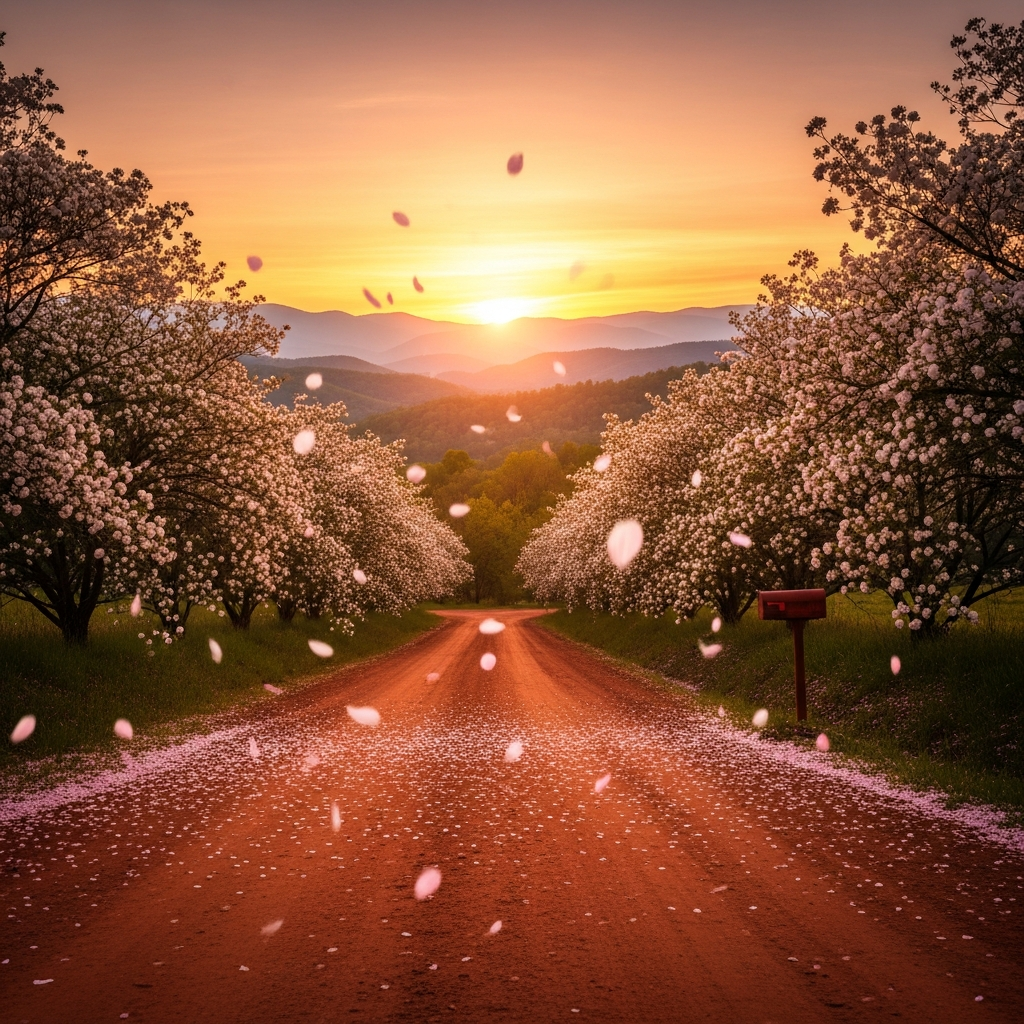
The artwork was generated with Google Imagen 4 via Vertex AI — a single prompt describing a red clay road flanked by blossoming trees at golden hour, petals drifting, a rusted mailbox, mountains on the horizon that could be either country. It appeared in under 90 seconds.