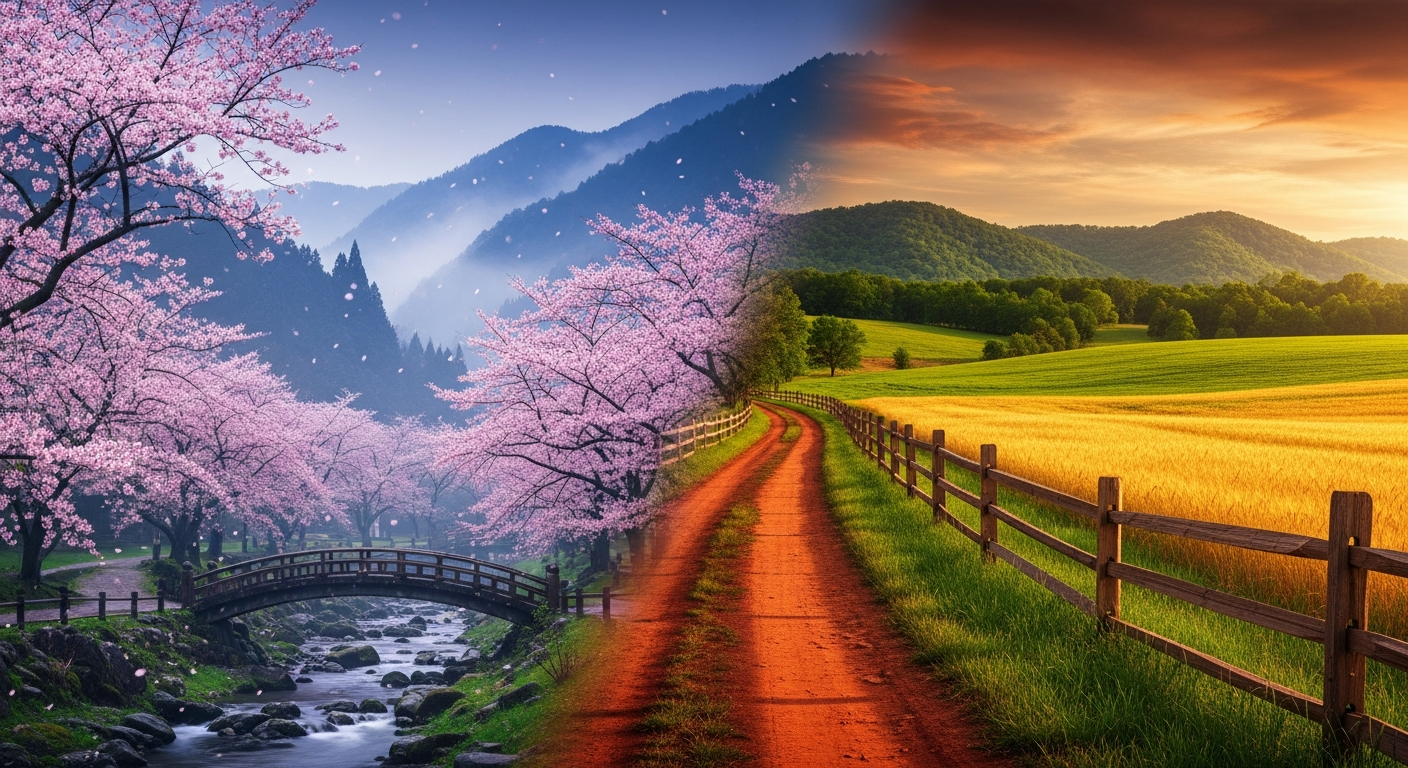
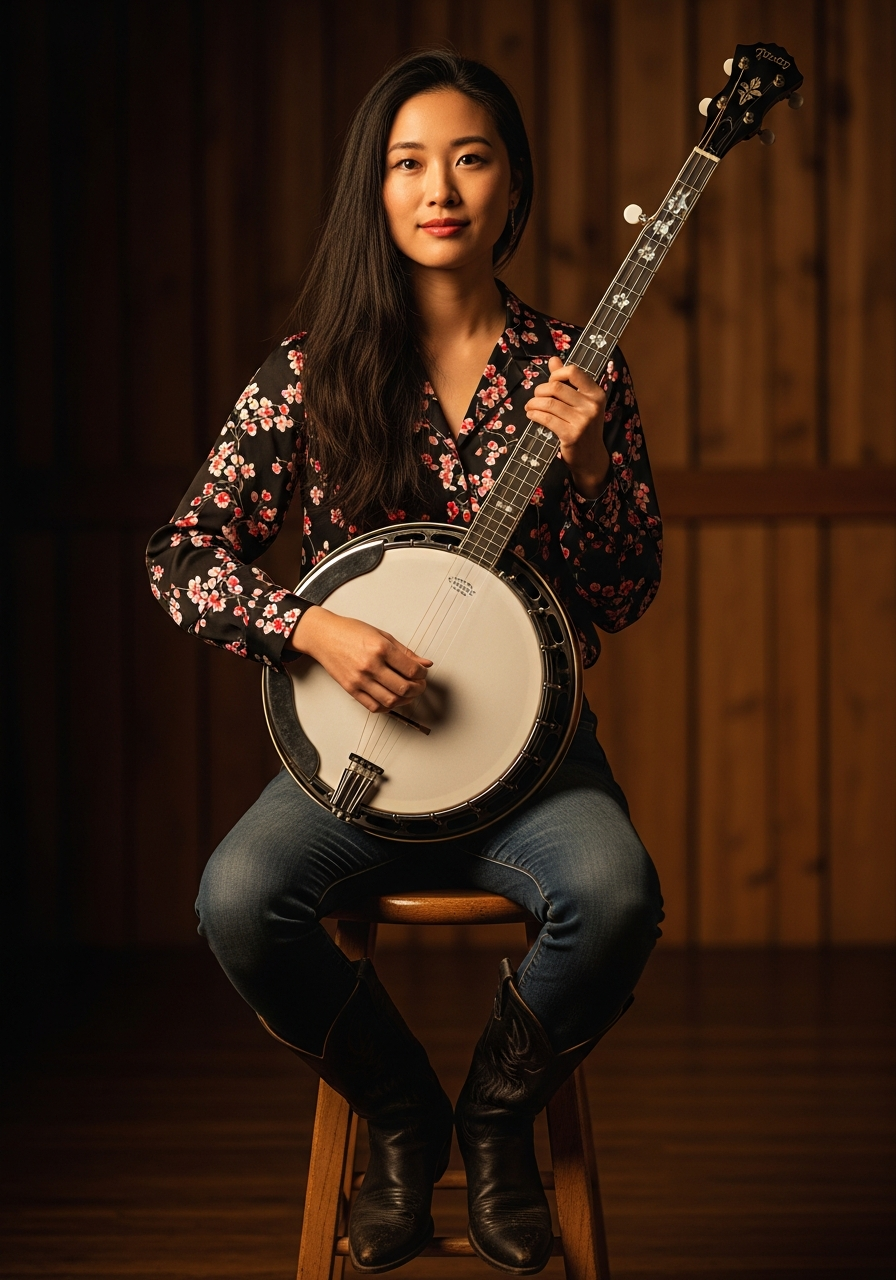
Yuki grew up in Nagano Prefecture, Japan — surrounded by cedar forests, rice paddies, and the shadow of the Japanese Alps. She fell in love with American country music through her grandfather’s scratched vinyl collection: Patsy Cline, Loretta Lynn, Bill Monroe. The records were worn smooth from decades of playing in a small house in Matsumoto.
At 24, she moved to Nashville for a year. She came home carrying a Telecaster, a banjo, and something harder to name — a way of seeing both places at once, as if her eyes had learned to hold two landscapes simultaneously.
She sings in Japanese and English, sometimes mid-sentence. She plays country music the way Japan plays baseball: with complete devotion, deep technical mastery, and a spirit entirely her own.
She sings from the space between them.”
Country
Bluegrass
Folk Anthem
Honky-Tonk
Modern Country
Japanese Folk
Ballad
Country Folk
This station is an experiment in what AI-assisted music creation can become. Each song on Red Dirt Sakura was born from a creative brief — a deeply researched document that captured not just the melody and tempo, but the emotional truth, the cultural context, the specific memories and images a song should carry. These briefs were crafted through a collaboration between human imagination and Claude AI.
The music was produced in Producer.ai, where each brief became a detailed prompt — specifying instrumentation, tempo, the precise emotional quality of a vocal performance, the way silence should be used between phrases. The same songs were then rendered in Japanese, English, and both simultaneously, creating versions that exist in the space between two musical traditions.
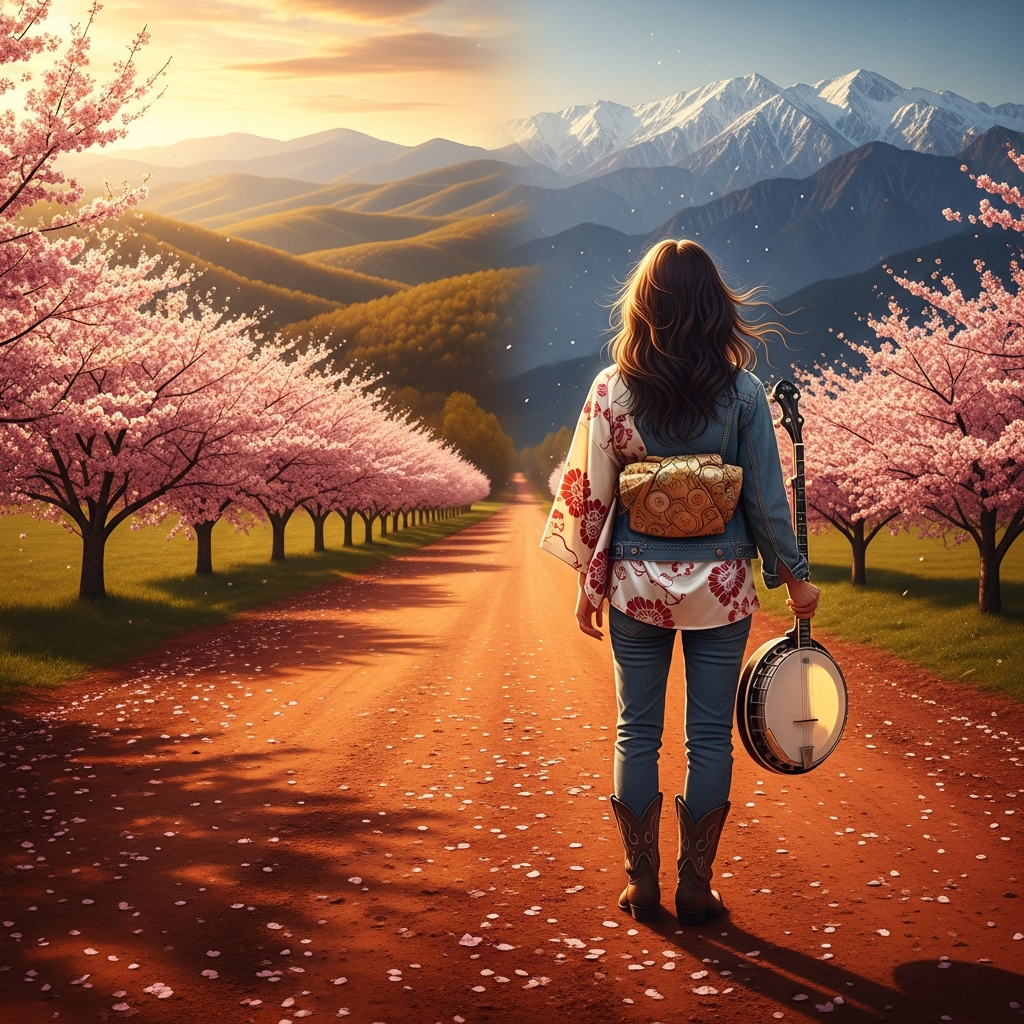
The artwork was generated with Google Imagen 4 via Vertex AI. The album cover emerged from a single prompt describing a young woman with a banjo standing at a crossroads where a red dirt Tennessee road meets a cherry blossom trail. It appeared in 90 seconds and looked exactly like what Yuki Hayashi’s world should look like.
Every page on this station tells the full story — not just the song, but the idea behind it, the prompt that created it, the creative choices that shaped it. Because the process is as beautiful as the result.