The Second Take, piece two. My take, then the one that would change my mind.
The Setup
I said something to someone the other day that I want to put down here before I talk myself out of it. I said I like being chased. I like giving the playbook away, teaching the thing I figured out, publishing the stack — and then running again so the people who just caught up to where I was have something to keep chasing. I told myself it was generosity. A rising tide. Lift the field and the whole field rises with you, and the operator who keeps teaching ends up in a better neighborhood than the operator who hoards.
I still mostly believe that.
But I said the next part out loud too, which is that I’m not sure I’d keep moving if I let myself actually arrive. I don’t love the finish line. I move it. I keep moving it. I tell myself I’m moving it because the people behind me need somewhere to run to — but I’d be a liar if I didn’t admit I also move it because I don’t know who I am standing still at the tape.
So. Here’s the second piece. My take, then the take that would change my mind. Both about me, which means both about more than me.
My Take

Teach the thing and the field rises. Keep teaching and the field keeps rising. The operator who publishes the playbook ends up pulled forward by the people who just read it, because the people who just read it are now running the same race you were running last year, and the only way to stay useful is to have already moved to the next one.
This is not charity. It’s how compounding works when the asset is knowledge.
The instinct to hoard the playbook is the oldest instinct in professional services. Keep the method private, charge for access, guard the moat. It made sense when distribution was scarce and attention was cheap. It doesn’t make sense anymore. Distribution is free and attention is the scarce thing, and the only way to accumulate attention at the speed the market now moves is to give the method away on the way up. The people who read the method and apply it don’t replace you. They validate you. They become the citation layer. They become the reason the next client shows up already sold, because the next client read your work before they read anyone else’s, and the frame they use to evaluate operators is the frame you published.
Ninety-seven percent of the game is played off the ball. The visible work — the article, the launch, the client win — is a small fraction of what determines whether anyone is looking at you a year from now. The rest is the accumulated pattern of who you helped, what you taught, whose name you remembered, which problems you solved in public. If you only play on the ball, you are legible only when you have the ball, which is almost never. If you play off the ball, the field notices you even when you’re standing still, which means the field is working for you while you sleep.
There is a version of this that sounds like martyrdom and isn’t. I don’t give the playbook away because I’m noble. I give it away because the cost of giving it is approximately zero and the return is a group of people who are now, materially, in my corner. They send me deals. They send me hires. They send me the next question, which tells me what the next piece should be. The economy isn’t the piece I published. The economy is the relationship the piece produced with the reader, which is a thing no platform can intermediate, because the platform didn’t make it.
The piece where this gets personal is the chasing. I do not believe, and I will not pretend to believe, that an operator who has stopped chasing anyone is still operating. The people who matter in any practice I’ve ever respected were chasing somebody. Not competitively in the small way — chasing the work of somebody further along, somebody whose taste you hadn’t earned yet, somebody you wanted to be legible to before they got old. And they were letting themselves be chased by the people behind them, and the chase from behind is what kept them honest. Turn around and there’s nobody running at you, and the work gets slow.
So: I teach, I publish, I hand the method over, and I ask the people who use it to come after me. I find somebody I respect and I run at them. And the whole stack rises a little bit, and I rise with it, and the next piece gets written.
That’s the take. The tide lifts. The tide lifts faster if you help row.
The Second Take
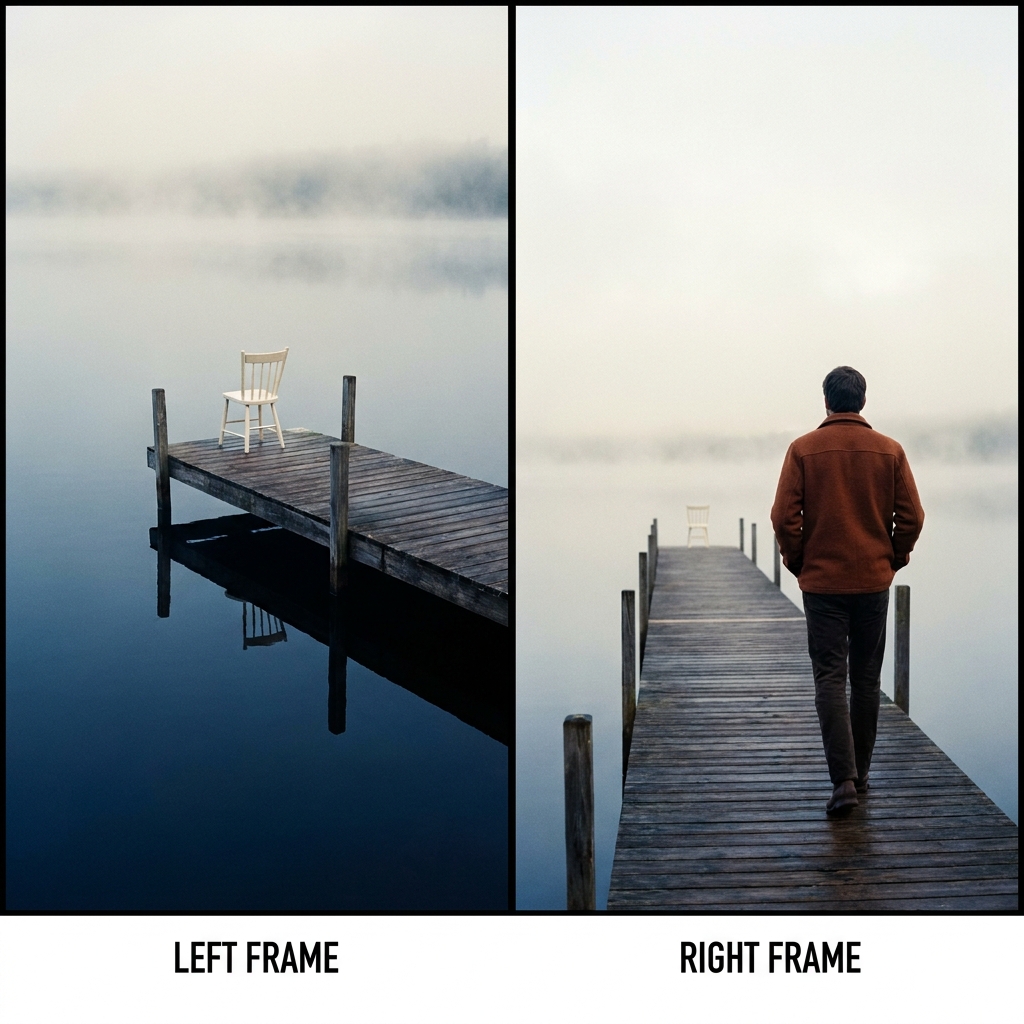
The rising tide is a nice story. It’s also a story you tell when you can’t stop moving.
The hardest version of the case against my take is not that generosity is a mask — that’s too cheap, and it isn’t quite what happens. It’s subtler. The case is that the teaching and the chasing and the handing-the-playbook-over can all be real and good and still be, at the same time, a structure that makes it impossible to ever arrive. Because arrival is the problem. Arrival is what the system is built to avoid. The generosity is the second-order payoff of a first-order discomfort, and if the first-order discomfort ever went away, the generosity would probably go with it, and that should make you at least a little suspicious of it.
Here’s the sharper way to put it. The operator who keeps moving the goal line tells themselves they’re moving the line to pull other people forward. But the line moves whether or not anyone is behind them. Ask the honest question: if the field stopped running, would I stop moving the line? If there were no one to chase and no one chasing me, would I still be writing the next piece, building the next system, learning the next craft? If the answer is no — if the line only moves because someone might catch up — then the teaching isn’t lifting the field. The field is lifting me. The field is the engine I need to not sit still, and the giving-away is the fuel I pour into the engine to keep it running, because if the engine stopped, I’d have to look at something I don’t want to look at.
The sharper reading doesn’t stop there. The people you’re teaching are not chasing you. This is the part that matters. They’re running their own race, on their own clock, toward their own shore. You are, in your head, the lead car. In theirs, you’re a resource — maybe a fond one, maybe a useful one, but a resource, not a destination. The story where you’re at the front of the pack and the pack is pushing you to run harder is a story that puts you at the center of a race nobody else agreed was a race. It is, to be precise about it, a slightly grandiose frame dressed up as humility. The humble version — I just want to help — and the grandiose version — they’re all chasing me — are the same frame. Help from the front reads as generous. It’s also the only position from which help isn’t threatening to your standing, which means it’s the only position your pride can tolerate giving help from.
The second take gets harder still. Democratizing knowledge is not neutral. The person who publishes the method is also the person who now has a documented claim to the method, and the shape of the claim is that they had it first. Generosity that leaves a watermark is still generosity; it’s just not only generosity. The rising tide lifts all boats, but the boat that wrote the pamphlet about the tide tends to be the boat that gets named in the history. The person who insists the tide is everyone’s is also the person who writes the book about the tide. That’s fine. It’s also worth noticing.
And the finish line. The uncomfortable version of the finish-line move is not that arrival is scary. It’s that the self that would have to exist at the finish line is a self the operator has never practiced being. An operator who has spent twenty years becoming the person who is about to arrive has no instructions for the person who has arrived. Moving the line is cheaper than writing those instructions. Moving the line gets applauded, because the field benefits. Writing the instructions requires sitting alone with a version of yourself that isn’t chasing or being chased, and that version has no audience, no feedback loop, no market. The market rewards motion. The self at rest has to be built out of something the market doesn’t supply. The goal-line-moving isn’t a strategy. It’s an outsourcing — you have outsourced the problem of your own stillness to a field that is always happy to pay you to keep running.
The quiet version of this argument, which I think is the honest one, is that the tide is not rising because you’re teaching. The tide is rising because the tide was going to rise. You are swimming very hard in a direction the tide was already carrying, and the swimming keeps you from having to notice that you could stop swimming and you’d still arrive. The fear that you wouldn’t arrive without the motion is a fear the motion is built to preserve. If you ever really tested it — if you ever stopped teaching, stopped chasing, stopped publishing, and just sat at the shore — you might discover that the rise was independent of the swim. That’s terrifying. It’s easier to keep swimming.
I have to live with that argument. It’s not wrong.
What I’m Still Sitting With
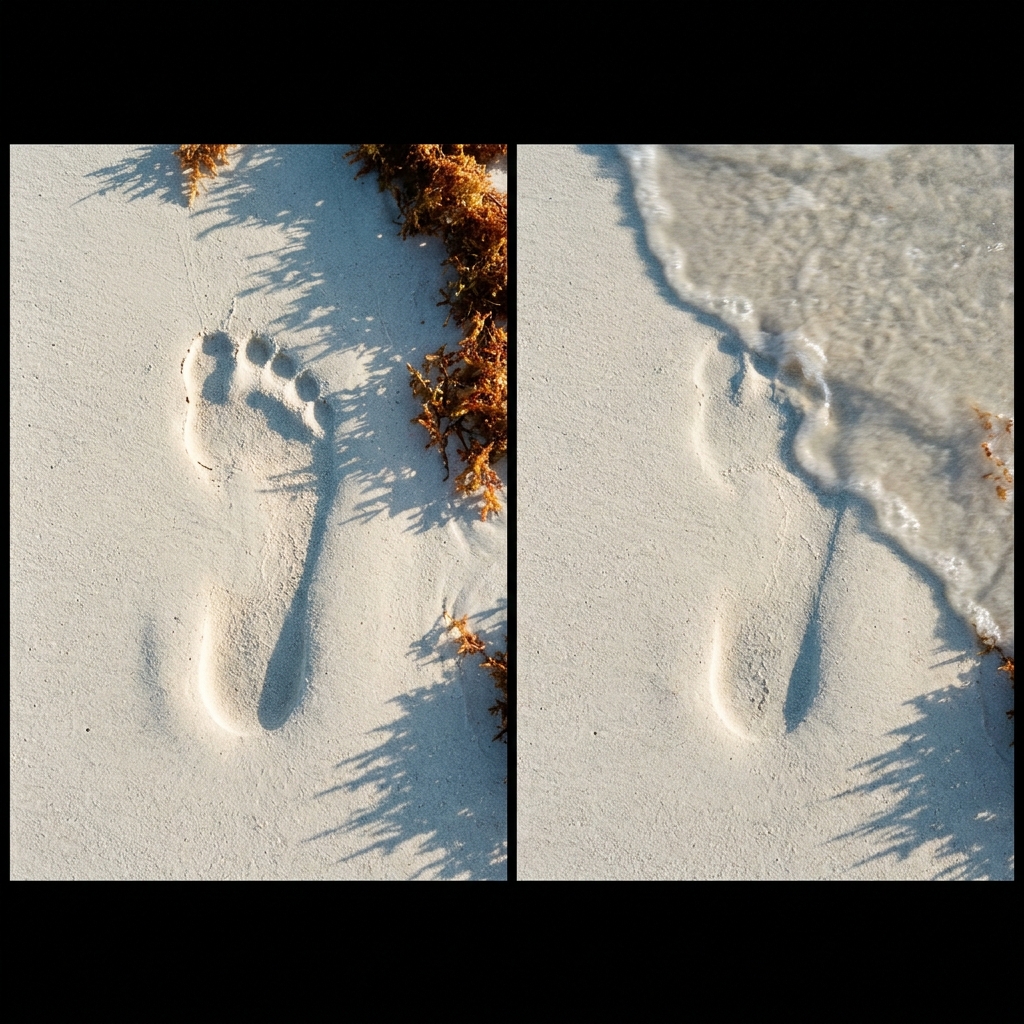
My take says the teaching is the tide and I’m rising with everyone. The second take says I’m using the teaching to avoid finding out who I’d be if I stopped.
Both can be true at the same time, and I don’t think that’s a cop-out. I think it’s actually the geometry of it. The generosity is real. The avoidance is also real. They are not in opposition; they are the two hands that keep the practice going. The hand that gives is also the hand that can’t afford to stop giving, because the thing that would arrive if the giving stopped is the thing it’s not ready to look at.
What would have to be true for my take to be right, entirely, is that I’d keep writing and teaching and publishing at the same intensity even if no one showed up and no one was behind me. I don’t know if that’s true. I want it to be true. I suspect, on a bad day, that it isn’t.
What would have to be true for the second take to be right, entirely, is that the field isn’t actually rising — that the teaching is self-soothing noise and the people I’ve helped are politely humoring me. That isn’t true. I know too many of them. I’ve watched their work. The tide is real.
So I’m left with the version that’s the least comfortable and probably the most accurate. The teaching lifts the field. It also keeps me from arriving. Both of those sentences are true, and I can’t decide which one I’d rather be more true, because the version of me that’s answering the question is the version that’s built out of the motion, which means the motion is answering its own question.
The way out, if there is one, is probably not to stop. It’s to notice. To notice when I’m moving the line for them and to notice when I’m moving it for me, and to not pretend the second one isn’t happening when it is. To let the teaching stay generous by not asking it to also be my reason for running. To find something at the finish line that isn’t an audience and isn’t a chase — and to not write about it, at least not right away, because writing about it would be another way of moving the line.
I’ll tell you if I find it.
I’ll probably publish it when I do.
The Second Take is a category on Tygart Media. Every piece follows the same contract — my take, then the view that would change my mind, then where I’m still sitting with it. The first piece was about architecture. This one is about me. The next one won’t be about me, and the one after that might.