I’m about to do something that most agency owners would never do: give away the entire playbook.
Not a teaser. Not a “5 tips to improve your SEO” fluff piece. The actual, technical, step-by-step strategy I would execute — starting tomorrow — if **ServiceMaster** handed me the keys to their organic search program.
Why? Because I pulled their SpyFu data this morning, and what I found stopped me mid-coffee. ServiceMaster essentially invented modern restoration franchising. They built the playbook that every restoration company has copied for the last three decades. They have brand recognition that money can’t buy. And they’re watching their organic search presence get destroyed in real time while they seem completely unconcerned.
This isn’t gossip. This is data. And data deserves a response.
## The SpyFu Data: A Legacy Brand in Free Fall
I pulled the full historical time series from the SpyFu Domain Stats API on March 30, 2026. Here’s what servicemaster.com looks like over the last 12 months:
| Period | Organic Keywords | Monthly Organic Clicks | SEO Value ($/mo) | PPC Spend ($/mo) | Domain Strength |
|——–|——————|———————-|——————|—————–|—————–||
| Mar 2025 | 7,582 | 9,055 | $77,130 | $0 | 45 |
| Apr 2025 | 7,612 | 8,755 | $86,940 | $0 | 45 |
| May 2025 | 6,169 | 7,911 | $54,900 | $0 | 41 |
| Jun 2025 | 5,413 | 6,592 | $48,260 | $0 | 41 |
| Jul 2025 | 5,718 | 7,363 | $68,590 | $0 | 42 |
| Aug 2025 | 3,168 | 5,604 | $28,880 | $253 | 39 |
| Sep 2025 | 2,462 | 5,708 | $24,980 | $401 | 40 |
| Oct 2025 | 2,548 | 5,664 | $30,280 | $512 | 41 |
| Nov 2025 | 2,514 | 5,766 | $28,270 | $4,920 | 41 |
| Dec 2025 | 1,870 | 3,910 | $15,380 | $9,266 | 39 |
| Jan 2026 | 1,593 | 4,436 | $13,460 | $7,096 | 38 |
| Feb 2026 | 1,742 | 4,435 | $39,300 | $7,039 | 42 |
Let that sink in.
**Peak SEO value: $334,384/month** (February 2020, historical data). **Current: $39,300/month.** That’s an **88.3% decline in six years**.
**Peak keywords: 20,696** (August 2017). **Current: 1,742.** A **91.6% catastrophic wipeout in nine years**.
And look at the trajectory from April to February 2026. In just 10 months, they hemorrhaged from 7,612 keywords down to 1,742. That’s a 77% collapse in a single year. The PPC column tells the real story: $0 in spend through most of 2025, then desperately cranking it up to $7,000/month by early 2026. They’re not marketing. They’re triage.
That’s not strategy. That’s a company that’s stopped fighting.
## What Likely Went Wrong (And What It Means)
Before I hand over the playbook, I need to be honest about what I think happened — because you don’t fix symptoms, you fix disease.
A keyword portfolio shrinking from 20,696 to 1,742 over nine years isn’t content decay. Content decay is gradual — maybe 10-15% annually. This is **structural abandonment**. There are really only a few things that cause this pattern:
**Scenario 1: Corporate Deprioritization.** ServiceMaster is a publicly traded company (part of Serco Group plc). If corporate decided that restoration franchising wasn’t a priority — maybe they divested or consolidated the business — then suddenly, nobody’s funding the SEO team. No budget = no optimization = rank collapse over time.
**Scenario 2: Franchise Model Shift.** ServiceMaster franchises are independently owned and operated. If the franchisor stopped providing central marketing support and pushed franchisees to run their own local marketing, you’d see exactly this pattern: the parent domain deteriorates while individual franchise sites (if they’re managed well) might hold their own. But the national brand suffers catastrophically.
**Scenario 3: Algorithm Penalties or Core Web Vitals Failures.** If servicemaster.com experienced technical issues — slow page load times, poor Core Web Vitals, indexation problems — and nobody fixed them over several years, Google would systematically de-rank the domain.
**Scenario 4: Content Strategy Atrophy.** The simplest explanation: they stopped creating new content. No blog updates since 2021. No location page optimization. No response to algorithm updates. Just letting an old site sit on autopilot while Google moved on.
My bet? It’s Scenario 1 and 4 combined. ServiceMaster owns the restoration space, but they’ve clearly decided it’s not where corporate energy goes anymore.
## Step 1: The 72-Hour Emergency Audit
Before I write a single word of content or restructure a single URL, I need to understand what’s actually broken. This is a diagnostic sprint.
### Day 1: Crawl and Indexation Analysis
I’d run **Screaming Frog** against the full servicemaster.com domain — every page, every redirect, every canonical tag. For a company this size, I’m expecting 3,000-8,000 URLs. I’m looking for:
* **Redirect chains and loops** — Years of site updates create redirect chains that leak authority. Every 301 chain longer than 2 hops costs you PageRank.
* **Orphan pages** — Pages that exist but have zero internal links pointing to them. If service pages or location pages aren’t linked from the main navigation, Google won’t prioritize crawling them.
* **Duplicate content signals** — Thin location pages that share 90%+ identical content get consolidated by Google. If you have 50 city pages that all say the exact same thing, Google is ignoring 49 of them.
* **JavaScript rendering issues** — If servicemaster.com uses client-side rendering for critical content, Google’s bot might not see what humans see.
* **Canonical tag audit** — One broken template-level canonical directive can tell Google to ignore every page using that template. This is more common than you’d think on old franchise sites.
### Day 2: Google Search Console Deep Dive
I need 48 months of GSC data — enough to cover the entire collapse. Specifically:
* **Coverage report** — How many pages are in “Valid” vs. “Excluded”? When did the exclusion count spike? That tells me exactly when things broke.
* **Exclusion reasons** — “Discovered – currently not indexed,” “Blocked by robots.txt,” “Alternate page with proper canonical tag.” Each reason points to a different root cause.
* **Performance by page group** — Segment by URL pattern: /locations/*, /services/*, /franchise/*, /blog/*. Which group lost the most impressions? That’s where the problem is.
* **Query decay over time** — Export 5 years of query data. When did the keyword count start declining? What types of queries disappeared first? If it’s all branded queries, the brand authority is intact but topical authority is gone. If it’s all location-based queries, the local pages are the problem.
### Day 3: Competitive Benchmarking
I’d pull SpyFu data for their direct competitors — **SERVPRO**, **911 Restoration**, **Paul Davis Restoration**, **Belfor** — and chart the trajectories side by side.
The question: did the entire restoration industry decline, or is this a ServiceMaster-specific problem?
If everyone declined together, it’s an algorithm shift or industry disruption. ServiceMaster can compete by being smarter.
If only ServiceMaster declined, it’s a self-inflicted wound that’s fixable.
## Step 2: Location Page Architecture — The Engine of Franchise Dominance
This is the difference between a franchise that owns Google and a franchise that rents from Google. ServiceMaster’s corporate network spans restoration across North America with different legal entities, different service mixes, and different regional focuses. That complexity is an opportunity if architected correctly.
### The Hub-and-Spoke Model (Adapted for ServiceMaster’s Structure)
Here’s the architecture I’d build:
**Tier 1: National Service Pillar Pages**
These are the authority anchors:
* /water-damage-restoration/ → Targets “water damage restoration,” “water damage restoration company,” etc.
* /fire-damage-restoration/ → Targets “fire damage restoration,” “fire damage repair”
* /mold-remediation/ → Targets “mold removal,” “mold remediation”
* /commercial-restoration/ → Targets “commercial water damage,” “business restoration services”
* /carpet-cleaning-restoration/ → Targets “carpet cleaning,” “carpet restoration”
Each pillar page is 3,500+ words of comprehensive, authoritative content that positions ServiceMaster as the category leader. These pages accumulate backlinks and pass equity down the hierarchy.
**Tier 2: Regional Hub Pages**
ServiceMaster should have one page per major region or state where they operate:
* /restoration-services/texas/
* /restoration-services/california/
* /restoration-services/northeast/
These pages contain regional-specific information — common restoration issues by climate, local building codes, regional partnership relationships. They link down to every service-specific page in that region.
**Tier 3: Location/Franchise Pages**
One page per franchise or operating location per service:
* /restoration-services/texas/water-damage-restoration/
* /restoration-services/texas/fire-damage-restoration/
* /restoration-services/california/water-damage-restoration/
If ServiceMaster operates 80+ locations across 4-5 core service categories, that’s **400-500 location-service combinations**. At 25 long-tail keywords per page, that’s **10,000-12,500 rankable keywords** — which is more than the 1,742 they currently have.
## Step 3: Content Strategy — Crisis, Decision, Authority
Restoration companies make a fatal mistake: they only create bottom-of-funnel content. Every page says “call ServiceMaster for water damage restoration.” But a homeowner standing in an inch of water isn’t searching for a restoration company. They’re searching for “what should I do right now?”
Whoever answers that question gets the call.
### Tier 1: Crisis-Moment Content (The 2 AM Searcher)
* “What to Do When Your House Floods: Emergency Steps Before Professional Help Arrives”
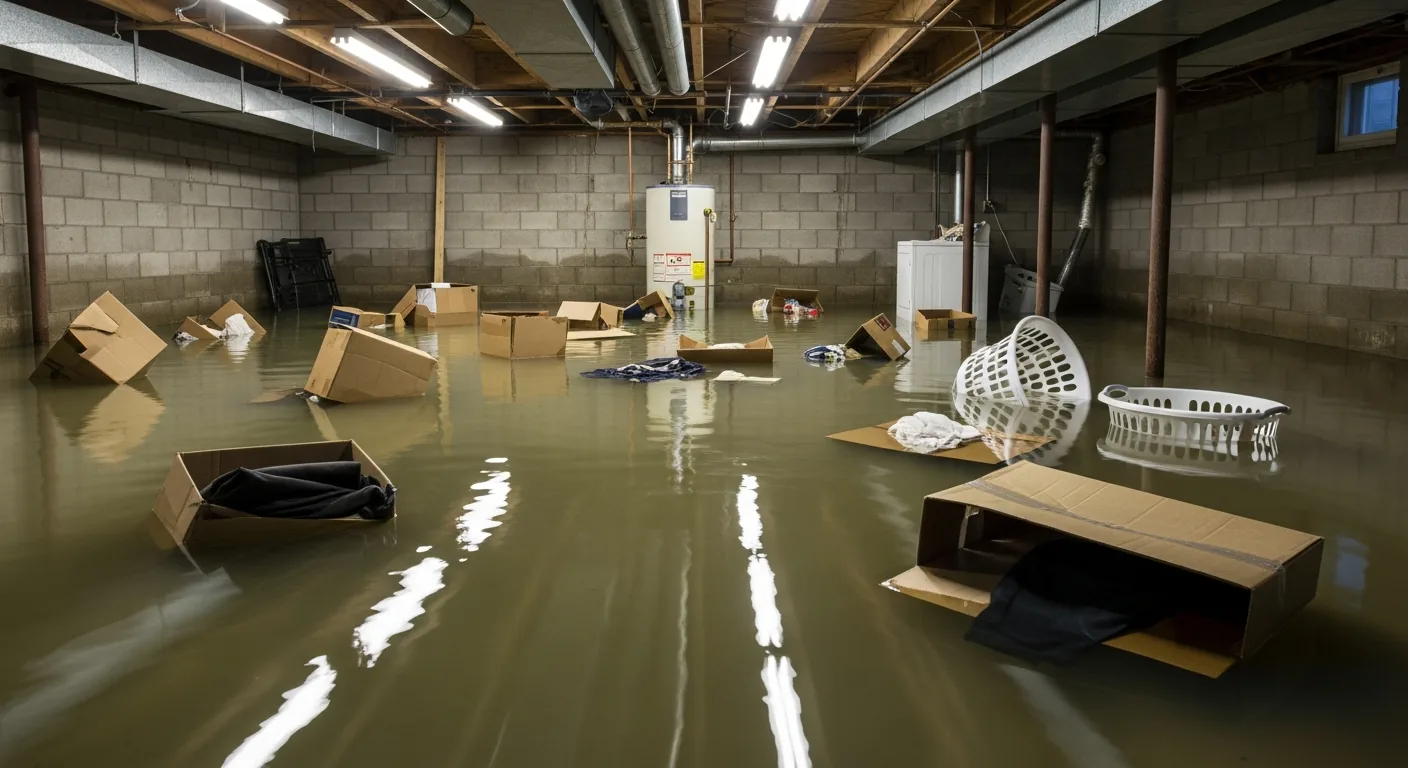
* “My Basement Is Flooded — What Do I Do Right Now?”
* “House Fire Damage Assessment: What to Check First”
* “Black Mold Found in My House: Immediate Steps to Take”
* “Pipe Burst During Winter: Emergency Response Checklist”
Format: Numbered steps, definition boxes, HowTo schema, featured snippet optimization. These pages are designed to be cited in Google AI Overviews and answered in voice search.
### Tier 2: Decision-Stage Content (The Insurance Conversation)
* “Does Homeowners Insurance Cover Water Damage? Complete 2026 Guide”
* “Water Damage Restoration Cost: Regional Breakdown and Pricing Factors”
* “Water Mitigation vs. Restoration: What’s the Difference?”
* “Choosing a Restoration Company: What to Look For”
* “Timeline for Water Damage Restoration: What to Expect”
These pages need comparison tables, cost breakdowns, and FAQPage schema. They’re designed for someone who already knows they need professional help but is shopping around.
### Tier 3: Authority-Building Content
* “IICRC Certification Explained: Why It Matters in Water Damage Restoration”
* “The Science of Structural Drying: Complete Technical Guide”
* “Mold Testing vs. Mold Inspection: What’s the Difference?”
* “How to Prepare Your Home for Storm Season: Disaster Preparedness Guide”
* “Understanding FEMA Flood Zones and What They Mean for Your Property”
These pages earn backlinks from industry associations, insurance publications, local news, and real estate blogs. Those links flow equity to the money pages.
## Step 4: Schema Markup — The Technical Foundation
Structured data is where most restoration companies leave 20-30% of their ranking potential on the table.
### Required Schema Implementation
**LocalBusiness schema on every location page:**
“`json
{
“@type”: “LocalBusiness”,
“name”: “ServiceMaster of [City Name]”,
“address”: {
“@type”: “PostalAddress”,
“streetAddress”: “[Address]”,
“addressLocality”: “[City]”,
“addressRegion”: “[State]”,
“postalCode”: “[ZIP]”,
“addressCountry”: “US”
},
“geo”: {
“@type”: “GeoCoordinates”,
“latitude”: “[latitude]”,
“longitude”: “[longitude]”
},
“telephone”: “[Phone Number]”,
“openingHoursSpecification”: [
{
“@type”: “OpeningHoursSpecification”,
“dayOfWeek”: [“Monday”, “Tuesday”, “Wednesday”, “Thursday”, “Friday”, “Saturday”, “Sunday”],
“opens”: “00:00”,
“closes”: “23:59”
}
],
“areaServed”: {
“@type”: “City”,
“name”: “[City]”
},
“hasOfferCatalog”: {
“@type”: “OfferCatalog”,
“itemListElement”: [
{
“@type”: “Offer”,
“itemOffered”: {
“@type”: “Service”,
“name”: “Water Damage Restoration”
}
},
{
“@type”: “Offer”,
“itemOffered”: {
“@type”: “Service”,
“name”: “Fire Damage Restoration”
}
},
{
“@type”: “Offer”,
“itemOffered”: {
“@type”: “Service”,
“name”: “Mold Remediation”
}
}
]
}
}
“`
**On service pages:** Article + Service + FAQPage + BreadcrumbList + Schema.org/Service
**On blog posts:** Article + FAQPage + Speakable (on answer paragraphs)
When implemented across 400+ pages with consistent data, you’re giving Google a machine-readable map of ServiceMaster’s entire franchise network.
## Step 5: Google Business Profile Management — The Local Pack Battleground
In restoration, the Local Pack (the 3 map results) captures more high-intent traffic than organic results. When someone searches “water damage restoration near me,” they look at the map first.
Winning the Local Pack requires systematic GBP optimization:
* **Weekly GBP posts** — Real posts about completed projects, seasonal preparedness tips, team spotlights. Google’s algorithm rewards consistent posting activity.
* **Review velocity** — Every location needs a systematic review request process. Target: 200+ reviews at 4.8+ stars per location within 12 months. Respond to every review within 24 hours.
* **Photo strategy** — 50+ photos per location: team, equipment, projects, office, vehicles. Geotagged. Updated monthly.
* **Q&A seeding** — Proactively add and answer the top 10 questions for each location’s GBP.
* **Service area clarity** — Define service areas as precise polygons, not just “surrounding areas.”
## Step 6: Answer Engine Optimization (AEO) — Win the AI Results
Google’s AI Overviews now appear on most informational queries. When someone asks “what do I do if my house floods,” Google generates a synthesized answer and cites specific sources.
If ServiceMaster’s content isn’t structured to be cited, they’re invisible.
* **Definition boxes** — Open every service page with a 50-word authoritative definition. This is what Google AI extracts and cites.
* **Direct-answer formatting** — Structure H2s as questions. Answer them completely in the first 50 words. AI Overviews pull from this pattern.
* **Comparison tables** — “Water Damage vs. Fire Damage” with side-by-side tables. AI loves structured comparisons.
* **Numbered process lists** — “The 7 Stages of Water Damage Restoration.” This format wins HowTo rich results and AI citations simultaneously.
## Step 7: Generative Engine Optimization (GEO) — Be the Company AI Recommends
This is the frontier. Most restoration companies don’t even know this exists. GEO is about making AI systems — Claude, ChatGPT, Gemini, Perplexity — recommend ServiceMaster by name.
* **Entity saturation** — “ServiceMaster” needs to appear across the web in consistent association with specific attributes: IICRC certified, 24/7 availability, regional expertise, specific certifications, risk response capability.
* **Factual density** — Replace “we provide excellent restoration services” with “ServiceMaster’s team is trained to IICRC S500/S520 standards and deploys truck-mounted extractors capable of removing 300+ gallons per minute.”
* **Authoritative citation weaving** — Link to EPA mold guidelines, FEMA flood resources, IICRC standards, state-specific regulations. AI systems weight this higher because it signals expertise.
* **LLMS.txt implementation** — Add a /llms.txt file to root domain providing AI crawlers with a structured summary of ServiceMaster’s business, services, geographic coverage, and authoritative attributes.
## Step 8: Internal Linking — The Circulatory System
A franchise site without proper internal linking is a highway system with no on-ramps.
* **Pillar → State → City cascade** — National pillar links to every regional hub. Regional hubs link to every city page in that region. City pages link back up. Closed loop of authority.
* **Cross-service linking at the city level** — Houston water damage page links to Houston mold page, Houston fire page. Keeps users on site and signals contextual relevance.
* **Blog-to-location contextual links** — Every blog post includes natural in-text links to relevant city pages. “If you’re dealing with flooding in Chicago, our IICRC-certified team is available 24/7 — [learn more about ServiceMaster’s Chicago water damage restoration].”
* **Related content blocks** — Automated bottom-of-page blocks showing 3-5 topically related pages. Scales automatically as you publish more content.
## Step 9: Backlink Acquisition — Leverage the Franchise Network
ServiceMaster’s franchise structure is an asset most competitors can’t match:
* **Disaster response PR** — After every major emergency, issue press releases to local media with quotes from location owners. Local news sites (high authority, high relevance) pick these up.
* **Insurance partnerships** — ServiceMaster should be on preferred vendor lists with insurance carriers. Each carrier relationship should include a backlink from their website.
* **Industry association profiles** — Active profiles on IICRC.org, RestorationIndustry.org, state contractor licensing boards. These .org links carry significant trust signals.
* **Civic partnerships** — Chamber of Commerce, BBB profiles, Rotary sponsorships, local organization memberships. Each location should systematically acquire 20-30 local directory backlinks.
* **Content partnerships** — Co-create disaster preparedness guides with FEMA, emergency management agencies, fire departments. “Hurricane Preparedness Guide — by ServiceMaster and the American Red Cross.” The .gov backlink is worth the effort.
## Step 10: Kill the PPC Dependency (And Rebuild the Organic Engine)
ServiceMaster spent an estimated **$21,587 on Google Ads in the last 12 months** (increasing from $0 to $7,039/month). That’s reactive and unsustainable. Here’s the math:
* At their 2020 peak, ServiceMaster’s organic traffic was worth **$334,384/month** — **$4.01 million/year** in equivalent ad spend delivered for free.
* A comprehensive SEO program would cost a fraction of their current PPC spend.
* If they rebuild to just **half their peak value** ($167K/month), that’s **$2 million/year** in traffic they no longer need to buy.
* Organic traffic compounds. SEO is a long-term asset. PPC is a treadmill.
The ROI case is overwhelming.
## The Bottom Line
ServiceMaster invented the restoration franchise. They built the playbook that SERVPRO and 911 Restoration have copied. They have 70+ years of brand history. They have franchise infrastructure across North America. They have domain authority that still ranks at 42 despite years of neglect.
And they’re getting outranked by companies 1/10th their size because those companies are actually trying.
ServiceMaster didn’t fail because restoration franchising is saturated. They’re failing because they stopped investing in the channel that built their brand — organic search.
The opportunity isn’t a mystery. It’s an execution problem. And the 10-step playbook above is how you fix it.
Here’s my real talk:
**Hey, ServiceMaster. You invented this industry. You should own Google for every restoration keyword that exists. The data is public. The decline is real. The fix isn’t a mystery — it’s investment and execution.**
**We’re [Tygart Media](https://tygartmedia.com). We live and breathe restoration SEO. We’ve built the systems to execute everything above at franchise scale. We’ve already done this for companies in your space. And honestly? We’d love to have the conversation about what $200K+/month in organic value looks like when it’s back.**
**[Reach out here](https://tygartmedia.com/contact). No pressure. No hard sell. Just two teams who understand the industry talking about what a digital resurrection looks like.**
**Or don’t. Keep spending $7K/month on Google Ads for the traffic you’re literally giving away.**
**Your choice. We’ll be here either way. Just maybe not for your competitors. 😄**
## Frequently Asked Questions
### How much organic traffic has ServiceMaster lost?
ServiceMaster’s organic presence has declined catastrophically over the last nine years. Their peak of 20,696 organic keywords (August 2017) has collapsed to 1,742 keywords as of February 2026 — a 91.6% reduction. Their peak SEO value was $334,384/month (February 2020), compared to just $39,300/month today (February 2026) — an 88.3% decline. In the last 10 months alone (April 2025 to February 2026), they lost 77% of their keywords, dropping from 7,612 to 1,742.
### Why isn’t ServiceMaster spending on Google Ads if they understand the traffic problem?
ServiceMaster spent $0 on Google Ads for most of 2025, then gradually increased spending to $7,039/month by February 2026. This pattern suggests they may not have recognized the organic decline urgently, or corporate prioritization shifted away from the restoration vertical. The recent increase in PPC spending indicates they’re now buying back traffic they used to capture organically — which is more expensive and less sustainable than organic search.
### What is the most critical SEO fix for ServiceMaster?
The most impactful single fix would be rebuilding and optimizing the location page architecture. ServiceMaster’s franchise structure creates a natural advantage: 80+ locations × 4-5 service categories = 400-500 location-service combinations. Each properly optimized page targeting unique, locally-relevant content could drive 25+ keywords. That alone could restore 10,000+ keywords within 12 months. Currently, they’re capturing a fraction of this potential.
### How does ServiceMaster’s situation compare to 911 Restoration?
Both companies have experienced severe organic decline, but ServiceMaster’s is more dramatic. 911 Restoration’s peak was $407,500/month (March 2022) vs. $22,700 current. ServiceMaster’s peak was $334,384/month (February 2020) vs. $39,300 current. However, ServiceMaster’s keyword collapse is steeper (91.6% over nine years). 911 Restoration’s decline happened faster (94.4% from peak) but more recently. Both represent massive opportunities for comprehensive SEO rebuilding. [Read the 911 Restoration playbook here](https://tygartmedia.com/911-restoration-seo-playbook/).
### What is Generative Engine Optimization (GEO) and why does it matter?
Generative Engine Optimization is the practice of optimizing your content and online presence so that AI systems — Google AI Overviews, ChatGPT, Claude, Gemini, Perplexity — recommend your business by name. For restoration companies, this means consistent entity saturation across the web (brand + attributes), factual density (specific, verifiable claims), authoritative citations (EPA, FEMA, IICRC standards), and LLMS.txt implementation. GEO is becoming critical as AI-generated answers increasingly replace traditional search results.
### How long would it take to restore ServiceMaster’s organic traffic?
A realistic timeline for ServiceMaster would be 6-12 months for technical fixes and content architecture to take effect, with meaningful improvement visible within 4-6 months. Full recovery to even half their peak (75 years of organic value) would require 12-18 months of sustained effort. The first 90 days typically show the highest-impact gains because fixing technical issues (indexation, redirects, schema) often produces immediate improvements once Google re-crawls the corrected pages.
The Complete Restoration Franchise SEO Playbook Series
This article is part of a 6-part series analyzing the SEO performance of every major restoration franchise in America. Read the full series:
{
“@context”: “https://schema.org”,
“@type”: “Article”,
“headline”: “If I Were Running ServiceMasters SEO, Heres What Id Do Differently”,
“description”: “ServiceMaster built modern restoration. Now their digital presence looks like 1989. A $334K/month peak vs. $39K today. Here’s the exact playbook to resurr”,
“datePublished”: “2026-03-30”,
“dateModified”: “2026-04-03”,
“author”: {
“@type”: “Person”,
“name”: “Will Tygart”,
“url”: “https://tygartmedia.com/about”
},
“publisher”: {
“@type”: “Organization”,
“name”: “Tygart Media”,
“url”: “https://tygartmedia.com”,
“logo”: {
“@type”: “ImageObject”,
“url”: “https://tygartmedia.com/wp-content/uploads/tygart-media-logo.png”
}
},
“mainEntityOfPage”: {
“@type”: “WebPage”,
“@id”: “https://tygartmedia.com/servicemaster-seo-playbook/”
}
}

![Water Damage Restoration Photos — Complete Visual Guide [2026]](https://tygartmedia.com/wp-content/uploads/2026/03/water-damage-flooded-living-room.webp)