Category: BOMA Scope 3

Scope 3 ESG strategy for property owners, asset managers, and BOMA members — contractor supply chain emissions, GRESB reporting, and green lease frameworks.

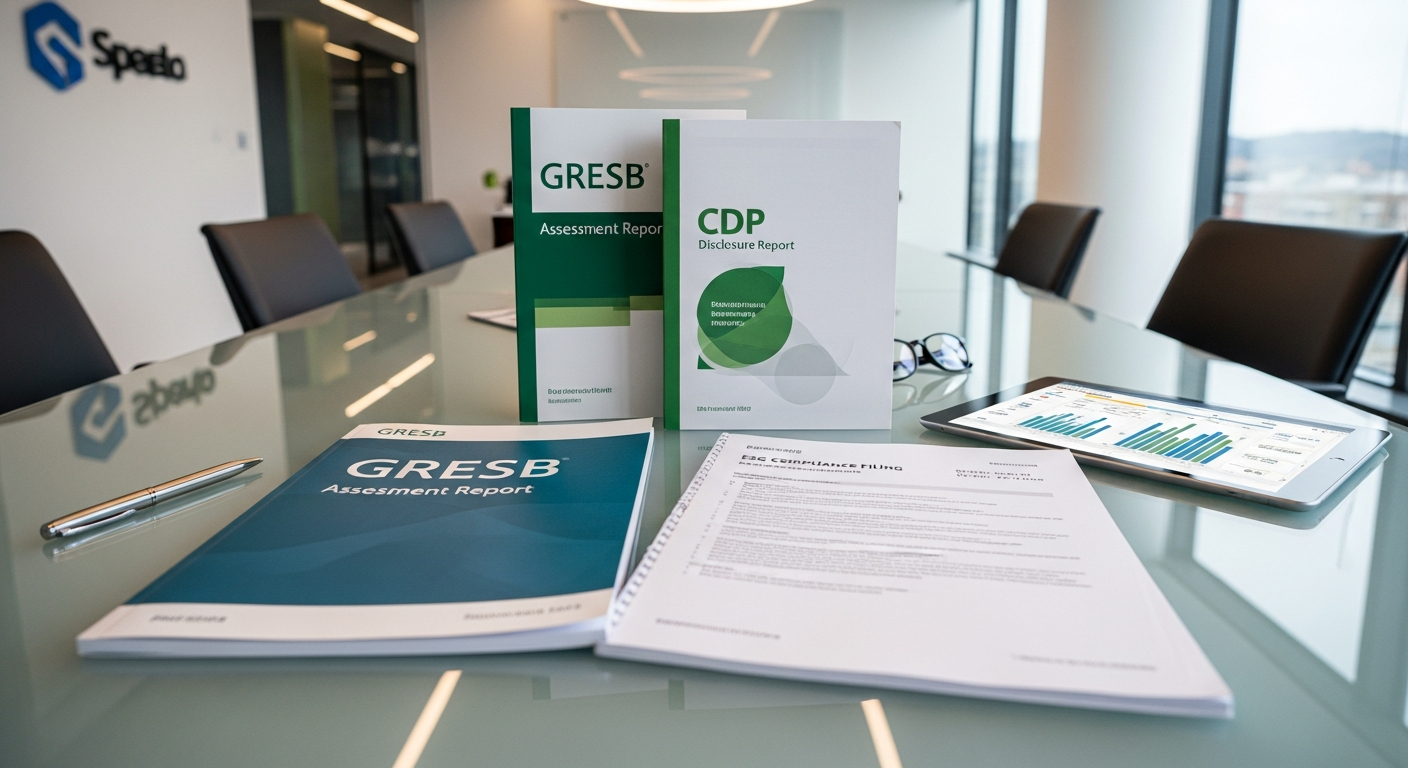
  • GRESB vs CDP vs SB 253: Which ESG Framework Actually Governs Your Property Portfolio

    GRESB vs CDP vs SB 253: Which ESG Framework Actually Governs Your Property Portfolio

    Property owners and asset managers in institutional real estate operate in an increasingly layered ESG disclosure environment. GRESB drives investor-facing ESG scoring. CDP provides voluntary supply chain disclosure that is increasingly investor-requested. California SB 253 mandates Scope 3 disclosure for large entities. And the EU’s Corporate Sustainability Reporting Directive (CSRD) extends mandatory ESG reporting to European operations and, through supply chain due diligence requirements, reaches global real estate companies with EU exposure.

    For BOMA members — building owners, REITs, asset managers — understanding which framework governs which obligations, and where they overlap, is essential for building an ESG program that satisfies all of them without duplicating work. This article maps each framework against the specific Scope 3 obligations it creates for property owners, with particular focus on the contractor supply chain data gap that sits at the intersection of all three.

    GRESB: Investor-Driven, Asset-Level, Annual

    GRESB is the primary ESG accountability mechanism for institutional real estate globally. It is not a regulation — it is an investor-driven benchmark that most institutional property owners participate in voluntarily because their capital partners require it. GRESB assessments are annual, asset-level, and scored on a 0–100 scale that investors use to compare portfolio ESG performance.

    For Scope 3, GRESB evaluates both governance (do you have a Scope 3 target and supply chain policy?) and performance (do you have actual Scope 3 data?). Contractor emissions — Scope 3 Category 1 — factor into both components. Property owners without contractor data collection programs score lower on supply chain governance and leave Category 1 data fields blank in the Performance section.

    GRESB is the most immediate Scope 3 pressure for most BOMA members because it directly affects your capital relationships. A poor GRESB score can affect asset valuations, borrowing costs, and investor mandates in ways that regulatory compliance does not.

    CDP: Voluntary, Supply Chain Driven, Escalating

    CDP’s supply chain program allows large corporations — including real estate companies’ major tenants and capital partners — to request Scope 3 supply chain data from their vendors. For property owners, CDP requests typically arrive from two directions: from institutional tenants whose corporate ESG programs require supply chain data from their landlords, and from institutional investors whose own CDP commitments require portfolio-level Scope 3 supply chain data.

    CDP participation is voluntary, but declining a CDP request from a major tenant or capital partner has commercial consequences. As CDP participation expands — the program now covers thousands of companies — the probability that a significant counterparty will request Scope 3 data from your organization continues to increase.

    California SB 253: Mandatory, Regulated, Enforced

    SB 253 is the only mandatory framework in this set, at least for US-domiciled organizations. It applies to entities doing business in California with revenues above the threshold, requires Scope 1 and 2 disclosure starting with fiscal year 2025 data, and adds Scope 3 starting with fiscal year 2026 data. CARB administers the program and has authority to assess penalties for non-compliance and material misstatement.

    For real estate entities with California assets, SB 253 transforms the Scope 3 contractor data question from an investor relations consideration into a legal compliance obligation. The same contractor emissions data that improves your GRESB score and satisfies CDP supply chain requests now also needs to be accurate enough to withstand CARB review.

    Where Restoration Contractor Data Fits in Each Framework

    The Restoration Carbon Protocol addresses the same data gap across all three frameworks. An RCP-compliant restoration contractor provides project-level emissions data in a format aligned with GHG Protocol Category 1. That data feeds directly into your GRESB Performance section, satisfies CDP supply chain data requests for Category 1, and provides the documented, methodology-backed Scope 3 Category 1 data that SB 253 requires.

    The strategic efficiency argument for RCP adoption by property owners is that solving the restoration contractor data problem once solves it for all three frameworks simultaneously. You do not need different data for GRESB, CDP, and SB 253 — you need GHG Protocol Category 1 data, and RCP produces it in that format.

    Building a Unified Response

    For BOMA members navigating GRESB, CDP, and SB 253 simultaneously, the most efficient path is a unified Scope 3 data program rather than three separate compliance efforts. The foundation is a GHG Protocol-aligned inventory methodology that covers all fifteen Scope 3 categories. Contractor data — collected through RCP-compliant vendor agreements and green lease extensions — feeds into that inventory once and satisfies all three frameworks.

    The timeline pressure is real: SB 253 Scope 3 data collection for fiscal year 2026 should already be underway, GRESB 2026 assessments will open in the first quarter, and CDP supply chain requests arrive year-round. The property owners who have built the contractor data infrastructure now — preferred vendor panels with RCP adoption, ESG clauses in service agreements, documented methodology — will be the ones with defensible Scope 3 inventories when all three frameworks converge on the same data set in 2027.

    Frequently Asked Questions

    Does GRESB require the same data as SB 253?

    Both require Scope 3 GHG data aligned with the GHG Protocol Corporate Standard. GRESB collects it through an annual assessment submitted to the benchmark platform. SB 253 requires public disclosure filed with CARB. The underlying data set is the same — a GHG Protocol-compliant Scope 3 inventory by category — which is why building one unified inventory program satisfies both frameworks efficiently.

    How does CSRD affect US-based property owners?

    The EU’s Corporate Sustainability Reporting Directive (CSRD) applies directly to large EU-domiciled companies and EU subsidiaries of non-EU companies above defined thresholds. For US-based real estate companies with EU operations or EU-listed capital partners, CSRD may apply directly. Even for those it does not reach directly, CSRD’s supply chain due diligence requirements mean EU-based capital partners and tenants will increasingly request Scope 3 supply chain data from their US counterparties as part of their own CSRD compliance.

    What is the Restoration Carbon Protocol and why do BOMA members need it?

    The Restoration Carbon Protocol (RCP) is an industry self-standard that gives restoration contractors a structured GHG accounting methodology for project-level emissions reporting. For BOMA members, RCP-compliant contractors provide the Scope 3 Category 1 data needed for GRESB performance scores, CDP supply chain responses, and SB 253 mandatory disclosure — in a format directly compatible with GHG Protocol reporting requirements.


  • Green Lease 2.0: How Property Owners Can Use Lease Language to Drive Scope 3 Contractor Compliance

    Green Lease 2.0: How Property Owners Can Use Lease Language to Drive Scope 3 Contractor Compliance

    Green leases have been a standard tool in the institutional real estate ESG toolkit for over a decade. Originally designed to align landlord and tenant incentives around energy efficiency, green lease clauses have evolved to cover data sharing, sustainability reporting, and — in more sophisticated agreements — explicit GHG emissions obligations.

    The same contractual logic that makes green leases effective for tenant emissions management can be applied to the contractor supply chain. Property owners who have invested in green lease programs for tenant Scope 3 (Category 13) data now have a parallel opportunity: using vendor agreement language to systematically collect Scope 3 Category 1 data from the contractors who perform work on their assets.

    What Green Lease Language Has Achieved — and Where It Stops

    Modern green lease frameworks — developed by BOMA, the Institute for Market Transformation, the Urban Land Institute, and others — have established standard clauses for energy data sharing, sub-metering requirements, sustainable operations standards, and ENERGY STAR reporting. These clauses give property owners a contractual mechanism to collect the tenant data needed for GRESB Category 13 reporting and corporate GHG inventories.

    Green leases stop at the tenant boundary. They do not govern the contractors the property owner engages for capital projects, maintenance, and emergency response. Those contractor relationships are covered by master service agreements, purchase orders, and emergency vendor panel arrangements — none of which have traditionally included GHG data reporting requirements.

    Extending the Logic: Contractor ESG Clauses

    The Green Lease 2.0 framework extends the proven lease-language approach to contractor agreements. The principle is identical: establish a contractual data delivery obligation, specify the format and methodology, and make compliance a condition of the vendor relationship.

    For restoration contractors specifically, the relevant clause structure covers three elements. A methodology requirement — specifying that the contractor must use a recognized GHG accounting methodology (such as the Restoration Carbon Protocol) for calculating project emissions. A data delivery requirement — specifying that a project emissions report in a format compatible with GHG Protocol Category 1 reporting must be delivered within 30 days of project completion. And a pre-qualification requirement — specifying that participation in the property owner’s preferred restoration vendor panel requires demonstrated GHG reporting capability prior to emergency deployment.

    Why the Pre-Qualification Step Matters

    The most important element of the contractor ESG clause framework is pre-qualification — establishing GHG reporting capability before the loss event occurs. Property owners cannot negotiate data requirements at 2 AM when a pipe bursts. The contractual infrastructure needs to exist before the emergency.

    Pre-qualification creates a preferred vendor panel of restoration contractors who have adopted RCP or an equivalent methodology and are contractually committed to delivering project emissions data. When a loss event occurs, the property manager calls from that panel — and GHG data collection is already built into the engagement.

    What This Looks Like for GRESB and SB 253

    For GRESB participants, a documented contractor ESG clause program with demonstrated adoption across your preferred vendor panel satisfies the supply chain governance requirements in the Management component of the GRESB assessment. It shows that your organization has policies in place, that those policies have contractual teeth, and that you are actively collecting contractor emissions data — not estimating it.

    For SB 253, the contractor ESG clause approach provides the documented data collection methodology that CARB’s guidance suggests as the evidentiary standard for Scope 3 Category 1 reporting. Organizations that can demonstrate a systematic contractor data collection program — rather than spend-based estimation — are better positioned for both initial compliance and the audit scrutiny that mandatory disclosure programs inevitably generate over time.

    Green Lease 2.0 is not a dramatic reinvention. It is the application of a framework that already works — for tenants — to the contractor relationships where property owners have an equivalent data obligation and an equivalent contractual lever to close it.

  • The Restoration Carbon Protocol: A Property Owner’s Guide to Contractor Scope 3 Data

    The Restoration Carbon Protocol: A Property Owner’s Guide to Contractor Scope 3 Data

    Property owners managing large commercial real estate portfolios have made significant progress on Scope 1 and Scope 2 emissions. Energy management systems, green building certifications, and utility procurement strategies have given asset managers real tools for reducing and reporting direct and indirect energy emissions. Scope 3 Category 1 — the contractor supply chain — has been the persistent blind spot.

    The Restoration Carbon Protocol (RCP) is designed to close the most acute piece of that gap: the emissions generated by restoration contractors during loss events and emergency response projects. This article explains what the RCP covers, how it generates the data property owners need, and how to integrate it into your ESG program and vendor management processes.

    Why Restoration Contractors Are a Unique Scope 3 Challenge

    Most contractor Scope 3 challenges can be addressed through procurement policy — adding ESG reporting requirements to RFPs, master service agreements, and annual vendor reviews. This works for planned, recurring vendor relationships where you control the selection process and the contract terms.

    Restoration contractors operate differently. They are engaged reactively, after a loss event. The property manager calls whoever is on the emergency vendor panel. The contractor mobilizes immediately. There is no competitive procurement, no ESG pre-qualification review, and no time to negotiate reporting requirements before work begins. The emissions happen regardless of whether data is collected.

    This is why the RCP matters: it establishes the data collection methodology on the contractor’s side, before the loss event. A contractor who has adopted the RCP arrives at your property already equipped to generate the emissions data you need — no negotiation required at the time of loss.

    What the RCP Measures

    The Restoration Carbon Protocol covers four primary emissions categories for a typical restoration project. Equipment fuel consumption — diesel generators, drying equipment, dehumidifiers, extraction units, and vehicles — is measured against hours of operation and fuel consumption logs. Materials with embedded carbon — replacement drywall, flooring, insulation, and structural components — are estimated using industry-standard embodied carbon factors. Waste generation — demolition debris, contaminated materials, and packaging — is tracked by weight and disposal method. Transportation — contractor vehicle miles, equipment hauling, and materials delivery — is calculated using distance and load data.

    The RCP output is a project-level emissions report expressed in metric tons of CO2 equivalent, broken down by category. That format maps directly to GHG Protocol Scope 3 Category 1 reporting requirements — making it usable for GRESB data submissions, CDP supply chain responses, and SB 253 Scope 3 inventory filings.

    How to Ask Your Vendors About RCP

    For property owners building RCP adoption into their vendor management process, the conversation with restoration contractors has three components. First, ask whether the contractor has adopted the RCP or an equivalent GHG reporting methodology — this establishes whether data collection infrastructure exists. Second, ask what the output format looks like and whether it maps to GHG Protocol Category 1 — this determines whether the data is actually usable for your reporting obligations. Third, ask about the delivery timeline — GRESB, CDP, and SB 253 all require annual inventory data, and you need project-level data within the fiscal year it occurred.

    Contractors who have not adopted RCP but are aware of it may be willing to do so if a significant client requests it. The RCP is an industry self-standard, not a certification program with fees or audits — the barrier to adoption is methodology, not cost.

    Integrating RCP Data into Your ESG Program

    Once you have RCP-compliant contractors on your preferred vendor panel, the data integration is straightforward. Each completed project generates an emissions report. Those reports are aggregated annually by property and portfolio. The totals feed into your Scope 3 Category 1 inventory alongside data from other contractor categories. The result is a documented, methodology-backed contractor emissions number — not a spend-based estimate — that satisfies the evidentiary standard for GRESB, CDP, and SB 253 reporting.

    For BOMA members managing portfolios under institutional ESG frameworks, this is the difference between a defensible Scope 3 inventory and a gap that investors, auditors, and regulators will flag. The RCP does not solve the entire contractor Scope 3 problem — but it solves the most unpredictable piece of it, and it does so in a format property owners can actually use.

  • California SB 253 and Real Estate: What Property Owners Must Demand from Restoration Contractors

    California SB 253 and Real Estate: What Property Owners Must Demand from Restoration Contractors

    California’s Climate Corporate Data Accountability Act (SB 253) has been widely discussed in the context of large manufacturers and technology companies. Less discussed — but equally significant — is the exposure it creates for real estate entities. Property owners, REITs, and asset managers with California operations and revenues above the threshold face mandatory Scope 3 disclosure beginning with fiscal year 2026 data, due in 2027.

    For BOMA members managing California commercial real estate, SB 253 changes the contractor relationship in a material way. The restoration contractor who responds to a water loss event at your San Francisco office tower, your Los Angeles industrial park, or your San Diego mixed-use development is generating Scope 3 Category 1 emissions that will need to appear in a mandatory public disclosure. And that contractor almost certainly has no mechanism for providing you that data today.

    Who SB 253 Applies To

    SB 253 applies to entities doing business in California with total annual revenues exceeding $1 billion. The law is administered by the California Air Resources Board (CARB). For Scope 3, the first reporting year is fiscal year 2026 — meaning data collection for Scope 3 needs to begin now for organizations that have not already started.

    Many institutional real estate owners — national REITs, pension fund asset managers, sovereign wealth fund-backed property companies — clear the revenue threshold and have California assets. For these entities, SB 253 Scope 3 reporting is not a future consideration. It is an active compliance requirement with a defined first filing date.

    The Reactive Vendor Problem for Real Estate

    SB 253’s Scope 3 requirement covers all fifteen GHG Protocol categories. For property owners, Category 1 (Purchased Goods and Services) includes every contractor engaged during the reporting year — planned maintenance vendors, capital project contractors, and reactive emergency-response vendors like restoration companies.

    The planned vendor relationship is manageable. You can add ESG data reporting to your master service agreements with recurring maintenance contractors, HVAC firms, and janitorial services. You can build it into your RFP process and annual vendor reviews.

    Reactive vendors are the structural problem. You do not choose when a pipe bursts or when a fire damages a tenant floor. You do not run a competitive procurement when a Category 1 water loss event hits your building at 2 AM. The restoration contractor who shows up is whoever your property manager calls — and the emissions from their equipment, materials, and transportation are your Scope 3 Category 1 obligation regardless of whether they provide data or not.

    The Restoration Carbon Protocol as a Compliance Bridge

    The Restoration Carbon Protocol (RCP) was developed specifically to address the reactive vendor data gap. It provides restoration contractors with a standardized methodology for calculating project-level GHG emissions across equipment fuel consumption, materials, waste, and transportation — and for communicating that data to property owner clients in a format aligned with GHG Protocol Category 1 requirements.

    For SB 253 compliance purposes, an RCP report from your restoration contractor provides the documented, methodology-backed data needed to populate your Scope 3 Category 1 inventory for loss events. Without it, your organization faces the CARB-specified alternative: estimation using spend-based methods — which typically overstate emissions and provide no path to reduction.

    What to Put in Your Vendor Agreements Now

    For California property owners preparing for SB 253 Scope 3 compliance, three vendor agreement changes directly address the restoration contractor gap. Add a GHG data delivery requirement to your preferred restoration vendor agreements, specifying RCP-compliant project emissions reports as a deliverable within 30 days of project completion. Add an ESG pre-qualification question to your emergency vendor panel selection process, asking whether candidates have adopted RCP or an equivalent methodology. And brief your property managers on the new data requirement — so that when a loss event occurs, GHG data collection is part of the project closeout process, not an afterthought six months later during annual reporting.

    SB 253 enforcement has a ramp period, but the data collection requirement is retroactive to fiscal year 2026. The time to build the vendor data pipeline is now, before the loss events that will generate the data you need occur.

  • GRESB and Scope 3: What Property Owners Must Report and Where Contractors Fit

    GRESB and Scope 3: What Property Owners Must Report and Where Contractors Fit

    For property owners and asset managers in institutional real estate portfolios, the Global Real Estate Sustainability Benchmark (GRESB) is not optional — it is the standard by which your ESG performance is measured, scored, and reported to institutional investors. And as GRESB’s scoring methodology continues to align with TCFD, ISSB, and the GHG Protocol, Scope 3 supply chain data has moved from a nice-to-have to a measurable gap in your assessment score.

    This article examines exactly where contractor Scope 3 data fits in the GRESB Real Estate Assessment, what the consequences of a data gap look like in practice, and how the Restoration Carbon Protocol (RCP) gives property owners a direct path to closing it.

    How GRESB Measures Scope 3

    The GRESB Real Estate Assessment is structured around two components: Management (governance, policy, targets, and reporting) and Performance (actual environmental and social data). Scope 3 emissions surface in both.

    In the Management component, GRESB evaluates whether your organization has a GHG emissions reduction target that includes Scope 3, and whether your supply chain policies address emissions reporting from contractors and vendors. Property owners without explicit contractor emissions standards in their procurement policies lose points here.

    In the Performance component, GRESB collects actual GHG data at the asset level — and Scope 3 Category 1 (Purchased Goods and Services, including contractors) is part of the expected data set for organizations reporting under GHG Protocol Corporate Standard.

    The Contractor Data Gap in Practice

    Most property owners managing large portfolios have reasonable visibility into Scope 1 (direct combustion at owned assets) and Scope 2 (purchased electricity). The contractor supply chain is where the inventory breaks down.

    Restoration contractors are among the highest-emission vendor categories in a property owner’s supply chain — yet they are engaged reactively, after loss events, and almost universally lack any mechanism for providing GHG data to their clients. A commercial building fire or flood event that triggers a six-figure restoration project will generate significant Scope 3 Category 1 emissions. Those emissions belong in your GRESB data. In most cases, they are simply missing.

    What RCP-Compliant Contractors Provide

    The Restoration Carbon Protocol gives restoration contractors a standardized methodology for calculating and communicating project-level emissions data — covering equipment fuel consumption, materials with embedded carbon, waste generation, and transportation. RCP output maps directly to GHG Protocol Category 1 reporting requirements.

    For GRESB participants, this means an RCP-compliant restoration contractor can provide the data needed to populate your Scope 3 Category 1 inventory for loss events — closing a gap that most property owner GHG inventories currently leave blank. That data supports your GRESB Performance score and demonstrates supply chain governance maturity in the Management component.

    Tenant Emissions: The Category 13 Problem

    While contractor data is the most actionable gap for most BOMA members, tenant emissions represent the largest Scope 3 exposure in most property portfolios. GRESB specifically evaluates whether property owners collect tenant energy and emissions data — and whether green lease clauses are in place to facilitate that collection.

    The contractor and tenant problems are structurally similar: both involve third parties operating within your assets whose emissions appear in your Scope 3 inventory, but whose data collection you do not directly control. Green leases address the tenant side. Contractor ESG requirements in your procurement standards — and RCP adoption by your preferred vendor panel — address the contractor side.

    Practical Steps for GRESB Participants

    For property owners currently completing or preparing for GRESB assessments, three actions directly improve your Scope 3 contractor data position. First, add an ESG data reporting requirement to your preferred vendor agreements — specifying that contractors must provide project-level GHG data in a format compatible with GHG Protocol Category 1 reporting. Second, ask your preferred restoration contractors whether they have adopted the Restoration Carbon Protocol or a comparable methodology. Third, build contractor emissions data into your post-loss project closeout process — making GHG reporting a deliverable alongside cost documentation and certificate of completion.

    These are not theoretical improvements. They are the specific steps that convert a data gap in your GRESB Performance section into a documented, improving metric — the kind institutional investors recognize as evidence of genuine ESG program maturity rather than checkbox compliance.

  • BOMA vs IFMA: Why Scope 3 ESG Looks Completely Different for Property Owners

    BOMA vs IFMA: Why Scope 3 ESG Looks Completely Different for Property Owners

    When the sustainability conversation turns to Scope 3 emissions, property owners and facility managers are often lumped together. Both manage buildings. Both hire contractors. Both face regulatory pressure from California SB 253, CSRD, and investor frameworks like GRESB and CDP. But the obligations, the data gaps, and the strategic levers are fundamentally different depending on which side of the lease you sit on.

    BOMA members — building owners, asset managers, and property managers — occupy a distinct position in the Scope 3 landscape. You own or control the asset. Your tenants generate Scope 3 emissions inside your buildings under Category 13 (Downstream Leased Assets). Your contractors generate Scope 3 emissions during capital projects and maintenance under Category 1 (Purchased Goods and Services). And your investors increasingly require you to disclose both — through GRESB assessments, CDP supply chain requests, and emerging mandatory frameworks.

    The Core Distinction: Asset Owner vs. Building User

    IFMA’s membership is primarily the corporate occupier — the facility manager who runs operations inside a building their employer leases or owns for non-real-estate purposes. Their Scope 3 exposure is Category 1: what they buy, including the contractors they hire for restoration, maintenance, and capital projects.

    BOMA’s membership is the asset side of that equation. As a property owner, your Scope 3 inventory is more complex:

    • Category 1 (Purchased Goods and Services): Contractors you hire — restoration companies, mechanical contractors, janitorial services, construction firms during capital improvements
    • Category 13 (Downstream Leased Assets): Your tenants’ energy consumption and operations inside your building — the hardest Scope 3 category to measure and the one GRESB scrutinizes most closely
    • Category 11 (Use of Sold Products): For REITs and developers who sell or transfer properties

    The tenant emission problem is uniquely a BOMA problem. Your tenants control the space. They set the thermostat, they bring in their own contractors, they determine actual energy consumption. But under GHG Protocol rules for property owners, their emissions may appear in your Scope 3 inventory — and GRESB will ask about them.

    The Contractor Data Gap: Where BOMA and IFMA Converge

    Here is where BOMA and IFMA face the same structural problem: restoration contractors, mechanical service firms, and specialty trade vendors who perform work on your properties have no standardized mechanism for reporting their Scope 3 emissions data back to you.

    When a water damage event triggers a restoration project — emergency extraction, structural drying, mold remediation — the contractor mobilizes equipment that burns diesel, deploys materials with embedded carbon, and generates waste. All of that falls under your Scope 3 Category 1. And almost none of it gets captured in any formal emissions inventory.

    The Restoration Carbon Protocol (RCP) is an emerging industry self-standard designed to fix this. It gives restoration contractors a structured methodology for calculating and communicating Scope 3 emissions data to their property owner clients — in a format that maps directly to GHG Protocol Category 1 reporting requirements.

    GRESB and the Asset Manager Accountability Stack

    For BOMA members managing assets in institutional portfolios, GRESB is the primary accountability mechanism. The GRESB Real Estate Assessment scores assets on environmental, social, and governance performance — and Scope 3 supply chain data is an increasingly weighted component.

    GRESB participants who cannot provide contractor Scope 3 data leave points on the table. More importantly, as GRESB scoring evolves to align with TCFD and ISSB frameworks, the absence of supply chain data will increasingly flag as a material gap to institutional investors.

    Green Leases: The BOMA Lever IFMA Doesn’t Have

    One strategic lever available to property owners that IFMA FMs typically lack is the lease itself. Green lease clauses — requirements embedded in tenant agreements around energy reporting, contractor ESG standards, and waste management — give asset managers a contractual mechanism to drive Scope 3 data collection that facility managers simply cannot replicate.

    The Institute for Market Transformation’s Green Lease Leaders program and BOMA’s own sustainability frameworks both provide templates. The opportunity is to extend the same logic to contractor agreements — requiring vendors like restoration companies to provide RCP-compliant emissions data as a condition of contract.

    What This Series Covers

    This BOMA Scope 3 series on Tygart Media examines the Scope 3 challenge specifically through the property owner and asset manager lens. We cover GRESB reporting obligations, green lease strategy, SB 253 and CSRD compliance for real estate entities, and the contractor data gap that sits at the intersection of both the BOMA and IFMA worlds.

    The RCP thread runs through all of it — because whether you are a corporate occupier FM or a property owner, the restoration contractor showing up after a loss event is generating Scope 3 emissions that belong in someone’s inventory. This series is about making sure yours is complete.

    Frequently Asked Questions

    Does GRESB require Scope 3 Category 1 contractor data?

    GRESB’s Real Estate Assessment includes supply chain and contractor emissions as part of its environmental data collection. While the specific weighting evolves annually, institutional investors using GRESB increasingly expect property owners to demonstrate Scope 3 supply chain visibility. Gaps in contractor data weaken your GRESB score and signal portfolio risk to asset managers.

    How is a property owner’s Scope 3 different from a tenant’s?

    Property owners report Scope 3 from the asset ownership perspective — including downstream tenant emissions (Category 13), upstream contractor supply chain (Category 1), and capital project emissions. Tenants report from the occupier perspective — primarily Category 1 for their own purchased services. The same building can appear in both inventories under different Scope 3 categories.

    What is the Restoration Carbon Protocol and why does it matter to BOMA members?

    The Restoration Carbon Protocol (RCP) is an industry self-standard that gives restoration contractors a structured framework for calculating and reporting the Scope 3 Category 1 emissions associated with their work. For BOMA members, RCP-compliant contractors provide the data needed to close the contractor gap in your GHG inventory — supporting GRESB reporting, CDP responses, and SB 253 compliance.