Every company in this series has come at the everything app from a position of strength. Microsoft from enterprise software. Google from search. OpenAI from the frontier model. Mistral from sovereignty and open source. But none of them started where Zapier started: already inside your workflows, connected to every tool you use, trusted with the actual operations of your business.
That’s the sleeper advantage in this race. While everyone else is building toward the everything app from the outside in, Zapier has been inside the everything app since the day you first connected your Gmail to your CRM.
The question is whether a 13-year-old automation company can evolve fast enough to own the AI orchestration layer—or whether it becomes the platform that makes everyone else’s AI more powerful.
This is article 9 in our ongoing series examining which AI companies are building the everything app:
- Microsoft: The Office OS Play
- Google: The Search-to-Everything Pipeline
- Notion: The Everything App Interface
- Notion as the Everything Database
- OpenAI: The Memory Layer Play
- Perplexity: The Browser Replacement
- Grok/xAI: The Social-Financial Superapp
- Mistral AI: The Sovereign Open-Source Play
- Zapier: The Connector-to-Orchestrator Play (this article)
The Transformation: From Connector to Orchestrator
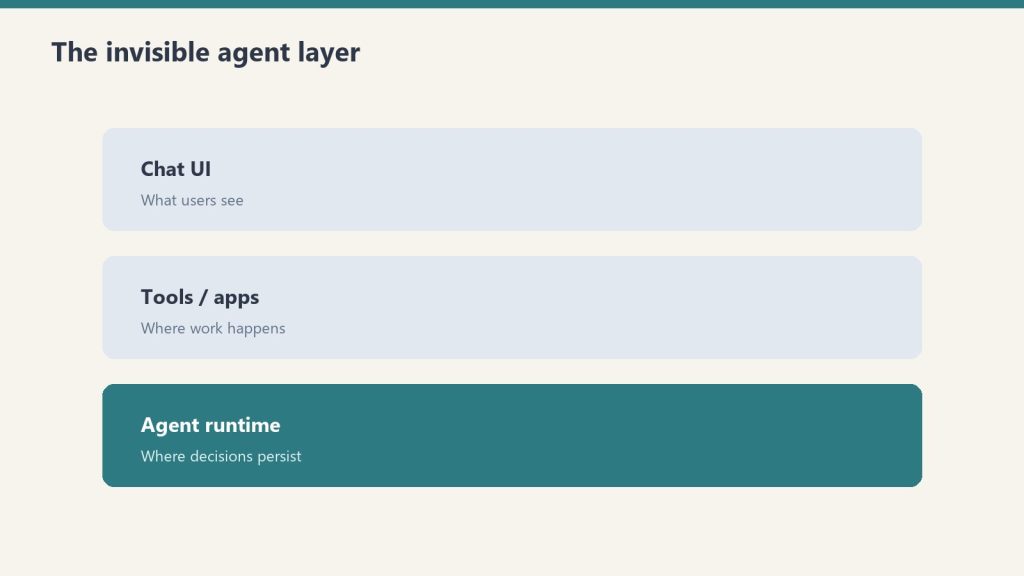
For most of its first decade, Zapier’s value proposition was simple: connect two apps without writing code. You set a trigger (“when I get a new email in Gmail”), define an action (“add a row to my Google Sheet”), and Zapier ran the automation in the background. Powerful, but fundamentally passive. Zapier did what you told it to do.
In 2025, that changed fundamentally. Zapier relaunched its positioning as an AI Orchestration Platform and shipped three products that move it from passive connector to active AI layer:
Zapier Copilot lets you describe a workflow in plain language and watch Zapier build it. Instead of manually connecting triggers and actions, you say “whenever a new lead comes in from our website form, research them on LinkedIn, score them, and add the qualified ones to our CRM with a draft follow-up email.” Copilot builds the multi-step Zap. This collapses the skill barrier that kept many users on simpler workflows.
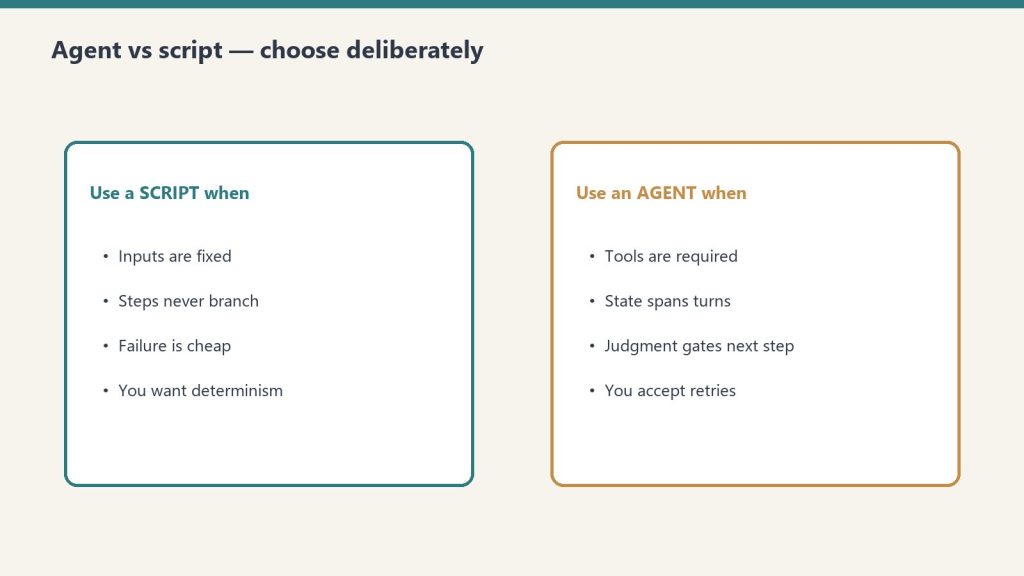
Zapier Agents, launched in January 2025 and reaching general availability in December 2025, are autonomous AI teammates. Unlike Zaps (which follow a fixed sequence), Agents decide how to accomplish a goal. You give an Agent a role—”you are our inbound lead coordinator”—a set of tools from Zapier’s app library, and a goal. The Agent reasons through the task, calls the appropriate tools in whatever order makes sense, handles exceptions, and reports back. In August 2025, Zapier added agent-to-agent orchestration, letting Agents delegate subtasks to specialist Agents—the first multi-agent architecture available to non-developers at scale.
Zapier Canvas is the visual command center that maps how all of this fits together: your Zaps, Tables, Interfaces, Chatbots, and Agents displayed as a connected system. Canvas makes the invisible visible—you can finally see the full automation architecture of your business and edit it from a single surface.
The 8,000-App Moat
Here’s the number that matters more than any AI feature: 8,000 connected apps.
Building an AI integration with a single app is straightforward. Building reliable, maintained, authenticated integrations with 8,000 apps—including niche tools that serve specific industries, legacy enterprise software, and the long tail of SaaS that most AI companies ignore—is a 13-year infrastructure investment that no new entrant can replicate quickly.
Every AI model that wants to take actions in the real world faces the same problem: getting access to the apps where work actually happens. OpenAI is building these integrations one by one. Google has its own ecosystem but a limited integration library beyond Workspace. Microsoft covers the Office stack but leaves everything else to third parties.
Zapier already has the connectors. That means Zapier Agents can operate across your full stack on day one—not the curated stack of apps a closed AI platform supports, but the actual combination of tools your business uses, however idiosyncratic.
Zapier MCP: The Move That Changes the Competitive Map
The most strategically significant product Zapier shipped in 2025 wasn’t Agents. It was Zapier MCP.
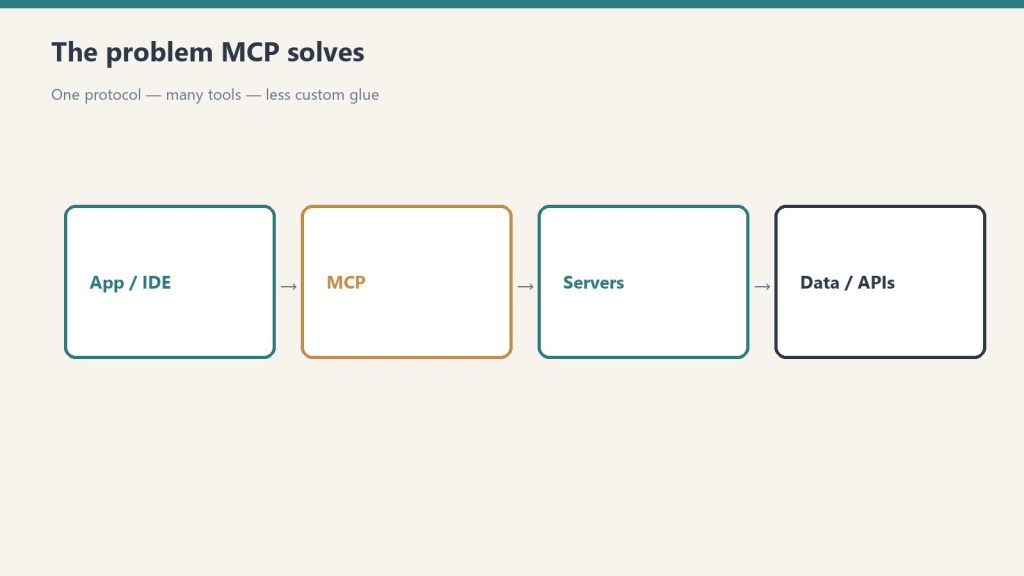
Model Context Protocol (MCP) is the emerging standard that lets AI models call external tools. Zapier built an MCP server that exposes its entire integration library—all 8,000+ apps, tens of thousands of actions—to any AI model that speaks MCP. Claude can use it. GPT-4o can use it. Any MCP-compatible AI can use it.
This is Zapier making a platform bet rather than a product bet. Instead of trying to be the AI model that users talk to, Zapier is becoming the action layer that every AI model reaches into when it needs to do something in the real world. The developer and coding agents plug in through the SDK. The AI assistants plug in through MCP. IT administrators see everything through unified audit logs and governance controls.
Zapier is an official Anthropic integration partner. When Claude users need their AI to actually send an email, update a CRM record, add a calendar event, or post to Slack—Zapier is the infrastructure doing that work. That’s not a small bet. That’s positioning as the execution layer for the entire AI industry.
The Financial Position: Profitable, Independent, Patient
One underappreciated aspect of Zapier’s strategic position is its financial independence. Unlike most AI companies burning through venture capital at extraordinary rates, Zapier has been profitable for years. It has raised minimal external funding—approximately $1.4 million in a 2012 seed round and nothing significant since—and generates its own growth from revenue.
Revenue reached $310 million in 2024 and is projected to approach $400 million in 2025. The company serves over 100,000 business customers. Its valuation is estimated around $5 billion—modest relative to OpenAI, Anthropic, or Mistral’s recent rounds, but built on actual cash flow rather than projected futures.
This matters for the everything app question because Zapier is not under pressure to show explosive AI growth to justify a valuation. It can evolve its platform deliberately, double down on enterprise reliability, and build the trust that enterprise automation requires—without the distraction of a fundraising cycle or the fear of running out of runway.
Zapier’s Approach to Enterprise AI Governance
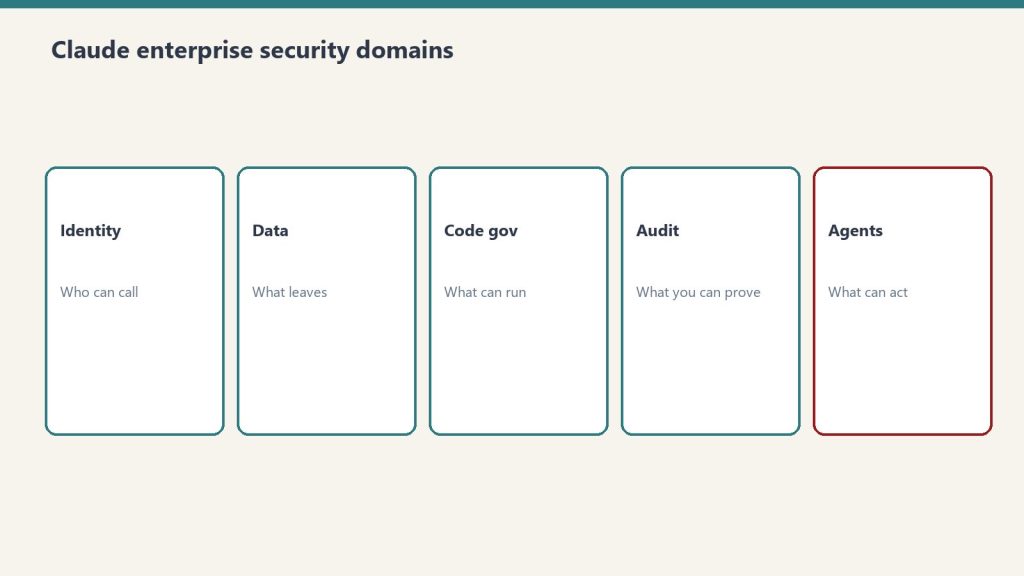
One of the signal differences between Zapier’s AI platform and its competitors is the emphasis on controls alongside capability. The February 2026 product updates focused specifically on AI guardrails and governance: who can create agents, what apps agents can access, what actions require human approval, and full audit logs of everything that ran.
This is the unsexy but critical work of making AI deployable in regulated environments. An autonomous agent that can send emails, update databases, and call external APIs is a significant liability risk without proper governance. Zapier’s enterprise controls—managed credentials, admin dashboards, approval workflows for high-risk actions, comprehensive audit trails—represent years of enterprise trust-building that AI-first startups are only beginning to think about.
The AI guardrails feature allows administrators to set boundaries on what Agents can do autonomously versus what requires a human in the loop. This isn’t a limitation on Zapier’s AI ambitions—it’s the feature that gets Zapier past the enterprise security review that blocks most AI tools from production deployment.
The Notion Everything Database Connection
If you’re using Notion as an everything database—as we explored earlier in this series—Zapier is one of the most powerful connectors in your stack. Zapier’s Notion integration supports triggers on database property changes, creating and updating pages, querying databases, and more. Zapier Agents can use these Notion actions as tools, meaning an Agent can reason about your Notion data, make decisions, and update records—all without you touching a line of code.
The practical architecture looks like this: your Notion everything database stores structured business context. A Zapier Agent monitors specific triggers (a new record appears, a property changes, a status updates). The Agent pulls relevant context from Notion, reasons over it using its AI model, takes actions across your other connected apps, and writes results back to Notion. The entire workflow runs in the background, governed by your Zapier admin controls, with full audit logs.
For teams building on the Notion everything database model, Zapier isn’t competing with that architecture—it’s the automation and agent layer that makes it operational. You design the data model in Notion; Zapier handles the movement and the intelligence on top of it.
Where Zapier Falls Short
Zapier’s everything app candidacy has real limits, and they’re worth naming plainly.
First, Zapier is a B2B tool that has never built meaningful consumer presence. Everything apps in the historical sense—WeChat, Line, Grab, Gojek—succeed by capturing daily personal habits: messaging, payments, food delivery. Zapier operates in the workflow automation category, which is powerful for businesses but invisible to consumers. There is no path from Zapier’s current position to consumer everything app.
Second, Zapier depends on the apps in its library. If OpenAI, Google, or Microsoft decides to deprecate their public APIs or make integration prohibitively expensive, Zapier’s connectors break. The 8,000-app moat is only as strong as those 8,000 companies’ continued willingness to maintain open APIs. As AI platforms consolidate, that willingness may erode.
Third, Zapier’s AI layer is not a frontier model. Zapier Agents use third-party models (primarily OpenAI’s GPT-4o and related) for their reasoning capabilities. This means Zapier’s AI quality ceiling is set by someone else. When OpenAI ships a better model, Zapier agents get smarter—but so does every OpenAI customer. Zapier cannot differentiate on model quality the way Mistral or OpenAI can.
Finally, the no-code positioning that made Zapier accessible also limits its ceiling. Complex enterprise workflows—the kind that justify serious AI investment—often require the custom logic, error handling, and integration depth that Zapier’s visual interface makes difficult. Competitors like n8n (open-source), Make (formerly Integromat), and enterprise-focused platforms like MuleSoft are taking direct aim at the workflows Zapier can’t handle.
The Verdict: The Action Layer, Not the Interface Layer
Is Zapier building the everything app? Not in the way the term is usually understood. Zapier is not trying to be the app you open every morning, the one that knows your identity, your preferences, and your social graph. It has no interest in capturing your attention or your feed.
Zapier is building something that might matter more for AI’s actual impact on work: the universal action layer. The layer that every AI model reaches into when it needs to do something that matters. The layer that connects AI reasoning to business reality across the entire software ecosystem—not the 50 apps in one company’s walled garden, but the 8,000 apps that businesses actually use.
In a world where every AI platform is competing to be your interface, Zapier is quietly becoming the infrastructure that makes any interface actually work. That’s not the everything app thesis. It’s the everything execution thesis. And given that 13 years of profitable growth and 100,000 enterprise customers are backing it, it may be the most durable bet in this entire series.
Zapier is not competing to be the everything app. It’s becoming the action layer that makes every everything app actually functional—the 8,000-integration infrastructure that AI models plug into when they need to do real work in real systems.
What’s Next in This Series
This article closes the core competitive series on everything app contenders. But the conversation isn’t finished. Two threads we’ve opened in this series deserve their own deep dives: the xAI infrastructure pivot story—whether Elon Musk is quietly turning Colossus and X into the “everything app ability” rather than the everything app itself—and a Track 2 series on how to actually connect each of these platforms to a Notion everything database as your operational backbone.
If you’ve been following this series from the beginning, you’ve seen the landscape of AI consolidation from nine different angles. The conclusion that keeps emerging: the everything app isn’t a product. It’s a position. And the race to own that position is just getting started.
Frequently Asked Questions About Zapier and the Everything App
What is Zapier’s current AI platform called?
Zapier relaunched in 2025 as an AI Orchestration Platform. The platform includes Zapier Agents (autonomous AI teammates), Zapier Copilot (natural language workflow builder), Zapier Canvas (visual system map), Zapier Tables, Zapier Interfaces, Zapier Chatbots, and Zapier MCP (an integration server for external AI models). The foundational Zaps automation engine remains the core, with these AI products layered on top.
What is Zapier MCP and why does it matter?
Zapier MCP is a Model Context Protocol server that exposes Zapier’s entire integration library to external AI models. Any MCP-compatible AI—including Claude, GPT-4o, and others—can use Zapier MCP to take actions across the 8,000+ apps Zapier connects. This makes Zapier the action execution layer for AI systems built by other companies, not just for Zapier’s own agents. Zapier is an official Anthropic integration partner through this mechanism.
How many apps does Zapier connect?
As of 2026, Zapier connects over 8,000 apps. This integration library has been built and maintained over 13 years and represents Zapier’s primary competitive moat. No AI-first entrant has built a comparable breadth of authenticated, maintained app integrations.
What are Zapier Agents?
Zapier Agents are autonomous AI teammates that reason about goals rather than following fixed if-then sequences. Launched in January 2025 and reaching general availability in December 2025, Agents can browse the web, read data sources, update CRMs, draft communications, and delegate to other specialist agents through multi-agent orchestration. They’re configured with a role, a set of tool permissions, and a goal—then run autonomously within governance guardrails set by administrators.
How does Zapier integrate with Notion?
Zapier’s Notion integration supports database triggers, page creation and updates, and database queries. Zapier Agents can use these as tools in their reasoning loops, enabling autonomous workflows that read from and write to Notion databases. For teams using Notion as an everything database, Zapier provides the automation and agent execution layer that makes that data architecture operational across connected business apps.
Is Zapier profitable?
Yes. Zapier has been profitable for years and has raised minimal external funding since a $1.4 million seed round in 2012. Revenue reached $310 million in 2024 with projections near $400 million for 2025. This financial independence distinguishes Zapier from most AI platform companies and gives it patience to evolve its platform without fundraising pressure.
What are Zapier’s AI governance features?
Zapier offers enterprise AI governance through managed credentials, admin controls on which users and teams can create or deploy agents, approval workflows for high-risk actions, AI guardrails that bound what agents can do autonomously, and comprehensive audit logs of all agent activity. These controls were prominently featured in the February 2026 product update and represent Zapier’s push to make AI deployment safe for regulated enterprise environments.
How does Zapier compare to Make (Integromat) and n8n?
Make and n8n are Zapier’s primary competitors in workflow automation. Make offers more complex branching logic at competitive pricing. n8n is open-source and self-hostable, appealing to developers and privacy-conscious enterprises. Zapier differentiates on breadth of integrations, ease of use for non-technical users, and its newer AI layer (Agents, Copilot, MCP). For enterprises prioritizing AI orchestration with governance controls, Zapier’s platform depth currently leads. For developers wanting maximum flexibility or self-hosting, n8n is the primary alternative.