Tag: WordPress Strategy

  • Notion as Storage Layer, WordPress as Distribution Layer: Why the Distinction Matters

    Notion as Storage Layer, WordPress as Distribution Layer: Why the Distinction Matters

    Tygart Media Strategy
    Volume Ⅰ · Issue 04Quarterly Position
    By Will Tygart
    Long-form Position
    Practitioner-grade

    If your WordPress site goes down tomorrow, what happens to your content?

    For most operations, the answer is: it’s gone until the site comes back, and if it comes back wrong, there’s a recovery process that takes hours and may not be complete. The content lives in WordPress because WordPress is the system — not just the distribution point, but the source of truth.

    This is tool-first design. And it’s fragile in ways that only become visible when something breaks.

    The behavior-first alternative separates the functions that WordPress conflates. Writing and storing content is one behavior. Publishing and distributing it is another. They require different things from a tool: storage requires permanence, searchability, and accessibility regardless of publishing status; distribution requires web performance, SEO infrastructure, and public availability. WordPress is genuinely excellent at distribution. It was never designed to be a durable content storage layer.

    The practical implementation: every piece of content in a behavior-first operation goes to Notion first, WordPress second. The Notion page is the permanent record. The WordPress post is the published output. If the WordPress site goes down, the content is not at risk. If you need to migrate hosts, rebuild the site, or switch platforms, the content travels with you. If the WAF blocks your publisher, you mark the Notion entry “Pending WP Push” and execute when the path is clear — nothing is lost.

    What This Looks Like in Practice
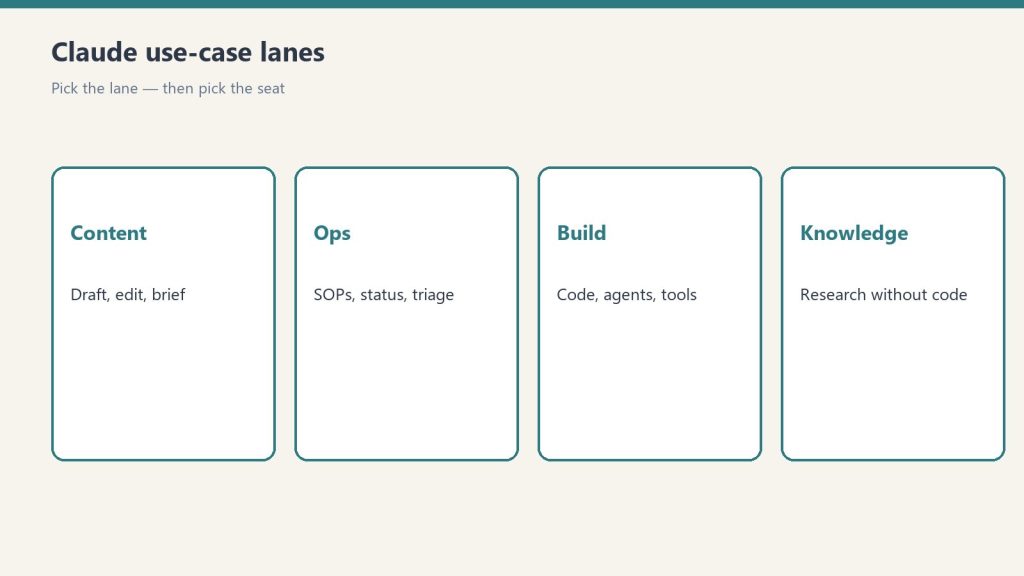
    The write → store → distribute pipeline has three distinct stages, each with a clear tool responsibility:

    Write: Claude generates the article, optimized for SEO/AEO/GEO, with schema markup and internal linking. This happens in conversation, in a batch pipeline, or via a Cloud Run service.

    Store: The article lands in Notion — in a content tracker database with properties for status, target keyword, WP post URL, and a claude_delta metadata block at the top of each page. This is the permanent record. It’s searchable, linkable, and accessible to any future Claude session without reconstructing context.

    Distribute: The article publishes to WordPress via REST API. The WordPress post ID and URL get written back to the Notion record. The content now exists in two places — one for humans and future AI sessions (Notion), one for search engines and web visitors (WordPress).

    The Secondary Benefit: Portable Content

    The deeper value of this architecture isn’t failure resilience — it’s portability. Content stored in Notion can be published to any destination: WordPress, a different CMS, an email campaign, a PDF, a social post. The content is decoupled from its distribution channel. When you need to repurpose an article as a lead magnet, extract a section for a social post, or adapt it for a different site, it’s all in one place in a structured format that Claude can read and reformat in seconds.

    This is what “content as knowledge” looks like operationally. Not a metaphor — a literal architecture where content is stored as knowledge first and distributed as content second.

    The tool that makes this possible (Notion) costs nothing for a solo operator. The behavior that makes it valuable — writing to storage before distribution — costs nothing but the discipline to do it consistently. Build the system around that behavior and the tool choice becomes almost irrelevant.

    Frequently Asked Questions

    Does this mean we need to maintain content in two places?

    You’re maintaining it in one place (Notion) and publishing it to a second (WordPress). The WordPress post is generated from the Notion record, not maintained separately. Updates go to Notion first; the WordPress post gets updated via API. There’s no manual sync required.

    What if our team doesn’t use Notion?

    The behavior (store before distribute) can be implemented with any persistent storage layer — Google Docs, Airtable, a Git repository. Notion is recommended because it supports relational databases, Claude MCP integration, and structured metadata that makes the content retrievable and reusable. But the behavior is the requirement; the tool is the implementation detail.

    How does this handle content updates and revisions?

    Revisions happen in Notion. The updated Notion content is pushed to WordPress via API, overwriting the previous version. The Notion page serves as the revision history — Notion’s native version history tracks changes at the page level without any additional configuration.


  • The Family Research Content Strategy That Fills Treatment Center Beds

    The Family Research Content Strategy That Fills Treatment Center Beds


    Tygart Media — Behavioral Health Content Strategy

    The Family Research Content Strategy That Fills Treatment Center Beds

    By Tygart Media Updated: April 12, 2026
    Who is actually doing the research: The active admission process typically involves a family member — a spouse, parent, or sibling — doing 3–7 days of research before they make an admissions call on behalf of a loved one. They are simultaneously navigating grief, fear, urgency, and practical logistics (insurance, cost, geography). According to Knack Media’s E-E-A-T analysis of addiction treatment SEO, the content strategy must balance content for the individual seeking help with content targeting families — addressing both the emotional reality and the logistical questions that family members are often searching for.

    The Three Research Phases Families Move Through

    Phase 1: Crisis Understanding (“Is this serious enough for treatment?”)

    Families in this phase are often in denial or unsure of the severity of their loved one’s substance use. They search: “signs my family member has an addiction,” “when does drinking become a problem,” “how do I know if my son needs rehab,” “what are signs of fentanyl addiction.” Content for this phase should use SAMHSA and DSM-5 Substance Use Disorder criteria to provide clinical grounding for what constitutes a diagnosable condition — with appropriate empathy and without stigma. This is where trust begins — before the family has even decided to seek professional help.

    Phase 2: Treatment Research (“What are the options?”)

    Families in this phase know treatment is necessary and are evaluating options. RxMedia maps these as consideration searches: “levels of care in rehab,” “what is a PHP program,” “difference between IOP and outpatient,” “what is MAT treatment,” “how long does residential treatment take.” Content for this phase should explain each ASAM level of care with clinical precision — what it involves, what it costs, what insurance typically covers, and what the step-down process looks like. This is where ASAM Criteria entity references earn the most trust and AI citation probability.

    Phase 3: Facility Selection (“Which center is right for us?”)

    Families in this phase are ready to call and are making final facility selection decisions. Searches: “rehab center near me,” “how to choose an addiction treatment center,” “what questions to ask when choosing a rehab,” “what to look for in a treatment center,” “does [facility name] take my insurance.” Content for this phase should address the specific evaluation criteria families use — accreditation (CARF, Joint Commission), staff credentials (NAADAC, licensed clinicians), insurance verification process, and what makes a facility’s approach to treatment evidence-based and outcomes-focused.

    What addiction treatment content types generate the most family admissions inquiries?
    The addiction treatment content types that generate the most family admissions inquiries are: insurance and benefits verification guides (“does insurance cover addiction treatment,” “how does benefits verification work,” “what is prior authorization for rehab”) — because financial barriers are the most common reason families delay seeking treatment; ASAM level-of-care explainers (“what is IOP,” “what is a PHP program,” “when is residential treatment necessary”) — because families need to understand what they’re choosing before they commit; and “how to help a loved one get treatment” guides — because family members are often the primary decision-makers and need process guidance, not just facility information. All three benefit from FAQPage schema targeting the specific questions families ask before calling.

    The Insurance Content Layer: Addressing the Most Common Barrier

    The single most common reason families delay treatment is financial uncertainty. Most families don’t know that the MHPAEA — the Mental Health Parity and Addiction Equity Act — requires most insurance plans to cover addiction treatment at parity with medical benefits. Content that explains this, names the specific MHPAEA requirements, explains the benefits verification process, and describes the prior authorization criteria for each ASAM level of care — this content directly addresses the barrier that keeps families from calling. It is both the most humanitarian content a treatment center can publish and the most conversion-driven.

    The Crisis Search Content: Being Present at 2am

    Families often begin researching during a crisis moment — after an overdose scare, after an intervention, after a legal event. These searches happen at night: “my family member just overdosed, what do I do,” “how to get someone into treatment,” “what happens if someone refuses treatment.” Content for this phase should provide immediate, compassionate, actionable guidance — with a clear admissions contact — and be structured for both Google and AI citation because these crisis queries increasingly surface in AI assistants before they reach Google search.

    Family research funnel content optimization — ASAM entity injection, MHPAEA insurance content, FAQPage schema targeting pre-admissions questions — is part of WordPress content optimization for addiction treatment centers through SiteBoost. Educational content only; clinical content unchanged.

    Frequently Asked Questions

    How should treatment center content address the emotional aspects of seeking help without being exploitative?

    Active Marketing’s 2026 treatment center SEO guide identifies compassionate, stigma-free messaging as non-negotiable. Families arrive at treatment content already grappling with shame, guilt, and fear — content must acknowledge those feelings, offer genuine hope, and elevate real recovery without exploiting vulnerability. The practical standard: language that validates the difficulty of the situation without manufacturing urgency, descriptions of treatment that emphasize clinical evidence and real recovery rather than marketing claims, and calls to action that offer help without pressure. “We can help you understand your options” is appropriate. “Call now before it’s too late” is not.

    What is benefits verification and why is it important to explain in treatment content?

    Benefits verification (VOB) is the process of confirming a patient’s insurance coverage for addiction treatment before admission — determining covered services, network status, deductible and copay amounts, and prior authorization requirements. Most families are unaware this process exists and don’t know that most treatment centers will conduct a VOB before discussing financial details. Educational content that explains benefits verification demystifies the admissions process, reduces financial anxiety, and positions the facility as a transparent, supportive partner rather than a business primarily interested in insurance revenue. This content type consistently generates the most qualified admissions inquiries of any treatment center content category.

    How does AI search affect family research for addiction treatment?

    Families increasingly begin treatment research with conversational AI questions — asked in private, without the stigma of searching on shared family computers or browsers. “What should I do if my son is addicted to fentanyl?” or “how do I convince my husband to go to rehab?” These are crisis questions asked of AI assistants at the moment of maximum urgency. Treatment centers whose content provides the most structured, empathetic, entity-rich answers to these questions earn AI citations at the moment families most need guidance — before they’ve searched Google, before they’ve visited any treatment center website, and before any competitor has the opportunity to be considered.

    Sources: Knack Media, “SEO for Addiction Treatment Centers: The Definitive E-E-A-T Guide” (November 2025); RxMedia, “Comprehensive Addiction Treatment Marketing Strategy Through SEO” (March 2026); Active Marketing, “The Ultimate Guide to Treatment Center SEO for 2025”; MHPAEA — Mental Health Parity and Addiction Equity Act, CMS.gov
  • The Coverage Question Content Strategy That Builds Insurance Agency Authority

    The Coverage Question Content Strategy That Builds Insurance Agency Authority


    Tygart Media — Insurance Content Strategy

    The Coverage Question Content Strategy That Builds Insurance Agency Authority

    By Tygart Media Updated: April 12, 2026
    Why coverage questions are the highest-value insurance content: Insurance consumers ask a lot of questions before speaking with an agent. AI platforms answer those questions by pulling from authoritative sources. According to ClickGiant’s 2026 AEO analysis for insurance agencies, if your agency publishes the best explanation of a coverage question, your website can become the source AI references — placing your agency in the prospect’s consideration set before any competitor has been contacted.

    The Three Stages of the Insurance Research Journey

    Stage 1: Coverage Awareness (“What does this cover?”)

    Prospects in this stage have identified they may need coverage but don’t understand what it actually does. The questions: “What does renters insurance actually cover?”, “Does my auto insurance cover a rental car?”, “What is umbrella insurance?”, “Does homeowners insurance cover mold?” Content for this stage should provide direct, jargon-free answers with named policy form references (ISO HO-3, ISO PAP) and explicit coverage inclusions and exclusions. This is the stage where most insurance agency blogs publish — but without entity references, the content is invisible to AI systems.

    Stage 2: Coverage Comparison (“Which option is right for me?”)

    Prospects in this stage understand the coverage category and are comparing options. The questions: “Term vs. whole life insurance: which is better?”, “HO-3 vs. HO-5: what’s the difference?”, “What is the difference between occurrence and claims-made professional liability?”, “When does umbrella coverage kick in?” These are high-intent, high-citation articles — AI systems surface them when prospects ask comparison questions, and they drive the highest engagement because they match where the prospect is in their decision process.

    Stage 3: Coverage Sizing (“How much do I need?”)

    Prospects in this stage have decided on coverage type and are determining appropriate limits. The questions: “How much life insurance do I actually need?”, “What liability limit should I carry on my auto policy?”, “How much umbrella insurance is enough?”, “What is the right deductible for my homeowners policy?” This is the pre-quote stage — prospects asking these questions are one answer away from requesting coverage. Content that answers these questions with specific, named decision criteria and a clear next step (get a quote) converts at the highest rate of any insurance content type.

    What insurance coverage content types generate the most agency authority and quote requests?
    The insurance coverage content types that build the most agency authority and generate quote requests are: coverage comparison articles (term vs. whole life, HO-3 vs. HO-5, occurrence vs. claims-made) targeting prospects who know they need coverage and are evaluating options, coverage sizing guides (“how much life insurance do I need,” “what liability limit is appropriate”) targeting prospects one step from requesting a quote, and coverage exclusion explainers (“what doesn’t homeowners insurance cover,” “when does auto insurance not pay”) that answer the skeptical questions prospects ask before trusting an agency with their coverage. All three benefit from FAQPage schema and NAIC/ISO entity references.

    The Named Entity Framework for Coverage Content

    Coverage content authority comes from naming the entities that establish genuine insurance expertise. For each coverage type, the relevant entities:

    • Homeowners: ISO HO-3 (open perils) and HO-8 (modified coverage) policy forms, dwelling vs. personal property vs. liability coverage components, NFIP (National Flood Insurance Program) for flood exclusion context, replacement cost vs. actual cash value
    • Auto: ISO PAP (Personal Auto Policy) form, state minimum liability requirements by named state, uninsured/underinsured motorist coverage statutory requirements, comprehensive vs. collision coverage triggers
    • Life: NAIC Life Insurance Buyer’s Guide, mortality tables as pricing basis, cash value accumulation in whole life vs. term, AM Best carrier financial strength ratings as comparison criterion
    • Commercial: ISO CG 00 01 (commercial general liability) form, occurrence vs. claims-made trigger distinction, ACORD application standards, BOP (Business Owners Policy) eligibility criteria

    These named entities appear in the text content of articles — not as bullet lists of logos, but as natural references that demonstrate the agency’s genuine familiarity with the regulatory and standards framework governing each coverage type.

    Coverage entity injection — NAIC, ISO form references, AM Best, state regulatory citations — is part of the GEO optimization layer in WordPress content optimization for insurance agencies through SiteBoost. Applied to existing coverage articles without altering factual content.

    Frequently Asked Questions

    Should insurance agencies write coverage content for all lines or specialize?

    Specialize in the lines your agency actively writes, then build content depth within those lines across all three stages (awareness, comparison, sizing). An agency that specializes in commercial lines should build deep content on BOP coverage, commercial auto, professional liability, and cyber — with NAIC, ISO, and ACORD entity references throughout. A personal lines agency should own homeowners, auto, umbrella, and life coverage content. Shallow coverage of every line produces neither authority nor citations. Deep coverage of your actual specialty lines produces both.

    How should insurance agencies handle state-specific regulatory requirements in content?

    State-specific regulatory requirements should be addressed explicitly and carefully. Content about coverage minimums, filing requirements, or regulatory standards should name the state, reference the specific statute or regulation where applicable (e.g., “California Insurance Code Section 11580.1b” for minimum auto liability requirements), and include a disclaimer that requirements vary by state and coverage specifics should be verified with a licensed agent. This named regulatory entity approach satisfies Google’s YMYL compliance signals while providing genuinely useful, verifiable information.

    How often should coverage content be updated?

    Coverage content should be reviewed when: ISO form revisions occur (typically every few years per coverage type), state minimum requirements change (annually in most states for review), premium rate trends shift significantly enough to affect coverage sizing guidance, or NAIC model regulation updates affect coverage descriptions. A visible “Last Updated” date and dateModified Article schema signal to both Google and AI systems that the coverage content reflects current regulatory and market conditions — critical for YMYL insurance content that directly influences coverage decisions.

    Sources: ClickGiant, “AEO for Insurance Agencies: How to Get Found in AI Search 2026”; Insurance Advocate, “AEO vs. SEO: What Insurance Agencies Need to Know” (February 2026); Nationwide Agency Forward, “Benefits of SEO, GEO and AEO for Insurance Agents” (2026); NAIC Life Insurance Buyer’s Guide (reference standard)
  • The Patient Question Content Strategy That Fills Medical Practice Appointment Slots

    The Patient Question Content Strategy That Fills Medical Practice Appointment Slots


    Tygart Media — Healthcare Content Strategy

    The Patient Question Content Strategy That Fills Medical Practice Appointment Slots

    By Tygart Media Updated: April 12, 2026
    Why patient questions are the highest-value healthcare content: According to Intrepy’s 2026 medical SEO analysis, patients now ask health questions in natural, conversational language — “Who’s the best cardiologist near me for atrial fibrillation?” rather than “cardiologist near me.” This shift reflects voice search and AI assistant behavior. The medical practice whose WordPress content directly answers the questions patients ask before booking an appointment — not just during their health crisis — captures that patient’s consideration set before competitors do.

    The Three Patient Research Phases and Content That Matches Each

    Phase 1: Symptom Research (“Do I need to see a doctor?”)

    Patients experiencing symptoms search before deciding whether to seek care. These searches are urgent and emotional: “chest pain when walking upstairs,” “is my mole dangerous,” “headaches every morning what causes them.” Content for this phase should provide direct clinical guidance — using specific symptom terminology, named red flag criteria, and clear guidance on when to seek evaluation. An article titled “When Should I See a Cardiologist? 8 Heart Symptoms That Warrant Evaluation” with specific clinical criteria earns both Google trust and patient trust by providing genuinely useful pre-decision guidance.

    Phase 2: Provider Research (“Which doctor/practice should I choose?”)

    After deciding to seek care, patients research providers. These searches are evaluative: “best orthopedic surgeon for knee replacement near me,” “what to look for in a cardiologist,” “how to choose a dermatologist.” Content for this phase should establish the practice’s specific expertise — named procedures, named conditions treated, board certifications, hospital affiliations — in a format that helps patients self-qualify. “What to Expect From Your First Cardiology Appointment at [Practice Name]” or “How We Treat Atrial Fibrillation: Our Approach and What to Expect” are direct answers to provider selection questions.

    Phase 3: Pre-Visit Preparation (“What should I know before my appointment?”)

    This is the highest-converting content type for medical practices because it targets patients who have already decided to seek care and are actively choosing a provider. Searches: “what to bring to a cardiology appointment,” “how to prepare for a colonoscopy,” “what questions to ask an orthopedic surgeon about knee replacement.” A practice that answers these questions has a patient who is essentially pre-booked — they’ve found the practice, trusted the content, and are preparing for a visit.

    What healthcare content types drive the most medical practice appointment bookings?
    The three medical content types that drive the most appointment bookings are: pre-visit preparation guides (“what to expect at your first [specialty] appointment” — targets patients who have decided to seek care and are choosing a provider), symptom evaluation guides (“when should I see a [specialist]” — captures patients at the decision to seek care moment), and condition-specific treatment explainers (“how is [condition] treated” with specific named treatments, recovery timelines, and insurance considerations). All three benefit from FAQPage schema targeting the exact questions patients ask before calling, and from physician authorship schema that signals the content reflects genuine clinical expertise.

    Building the Patient Question Content Map

    Start by listing the 10–20 questions your front desk and nurses receive most frequently from new patients — not returning patients, but patients who are considering your practice. These are your highest-value blog topics because they’re exactly what patients search before calling. Then add the questions patients ask during their first appointment — the things they wish they had known before coming. These questions map directly to search queries and, when answered in well-optimized articles, capture patients during the exact research phase that precedes booking.

    For each article: name the specific clinical entities involved (specialty board, named condition, named procedure, insurance framework if relevant), add a FAQ section with 6–8 of those patient questions structured as direct answers, inject FAQPage schema, add the attending physician as named author with credential schema, and set a visible Last Updated date. This is the complete patient question content framework — and it is what separates practices that drive appointments from their WordPress blog from practices that simply publish and wait.

    The patient question content framework — clinical entity injection, FAQPage schema targeting pre-booking questions, physician authorship schema — is part of WordPress content optimization for medical practices through SiteBoost. Applied to your existing condition and treatment articles without rewriting clinical content.

    Frequently Asked Questions

    How specific should medical practice blog content be to drive appointments?

    Highly specific — more specific than most medical practices publish. Generic condition overviews (“what is heart disease”) rank against WebMD and Mayo Clinic — an independent practice almost never wins that competition. Specific procedure guides (“what to expect during a nuclear stress test”), specialty-specific symptom evaluations (“when should a woman see a gynecologist about irregular periods”), and local-context content (“why [city] residents are at higher risk for [condition]”) are the specificity level where independent practices can rank well and convert visitors to appointments.

    Should medical blogs include information about insurance and costs?

    Yes — with appropriate framing. Cost and insurance content is among the most-searched medical content because financial considerations directly influence whether and when patients seek care. Articles explaining “does insurance cover [procedure],” “how to understand your explanation of benefits,” or “what out-of-pocket costs to expect for [specialty visit]” are highly valuable patient resources. Frame these as educational guides with a clear disclaimer that costs vary by plan and provider — and recommend patients verify coverage directly with their insurer. This content also earns strong AI citation because it answers a high-urgency patient question that most medical websites avoid.

    How many new patient inquiries can a medical practice realistically generate from blog content?

    Results vary significantly by specialty, market size, and optimization depth. GYBO Marketing documented a medical practice achieving 214% lead growth through medical SEO including condition-specific and patient question content. Independent practices with 20+ well-optimized condition and procedure articles typically see measurable new patient inquiry growth within 3–6 months. The more niche the specialty and the more specific the content, the faster the results — because competition for highly specific medical queries is lower than for generic health information terms.

    Sources: Intrepy Healthcare Marketing, “AI SEO for Doctors in 2025” (December 2025); GYBO Marketing, “Medical SEO Strategies in the Age of AI” (January 2026); Connect Media Agency, “Healthcare SEO: How Medical Practices Win Patients Online in 2026” (February 2026); PracticeBeat, “Precision SEO for Doctors 2026”
  • Taxonomy as Content DNA: How Category Architecture Drives Rankings

    Taxonomy as Content DNA: How Category Architecture Drives Rankings

    Tygart Media / Content Strategy
    The Practitioner JournalField Notes
    By Will Tygart · Practitioner-grade · From the workbench

    Taxonomy Architecture: The deliberate design of a site’s category and tag classification system before content is written — treating content organization as infrastructure rather than an afterthought.

    Most WordPress sites treat categories the way most people treat junk drawers. Useful enough to have. Never really organized. Things get thrown in, labels get reused, and over time the whole system becomes a maze that nobody — human or machine — can navigate cleanly.

    This is a costly mistake, and it is invisible until you look at a site’s ranking trajectory and realize that topical authority is not accumulating anywhere.

    The sites that rank for clusters of related keywords — not just a single lucky post — almost always have one thing in common: a deliberate taxonomy architecture. Categories and tags that were designed before the first post was written. A system that treats content classification as infrastructure, not filing.

    What Taxonomy Actually Does for Search

    A taxonomy, in the WordPress context, is the classification system that organizes your content. Categories define the major topical areas of your site. Tags define the more granular topics, formats, audiences, and themes that cut across categories.

    From a search engine’s perspective, taxonomy does two things. First, it creates topic signals at the category level. When a category page has many posts all covering different angles of the same subject, the category becomes a topical cluster — the machine observes significant depth on this subject and attributes topical authority accordingly.

    Second, it creates semantic connectivity through tags. A tag that appears across multiple categories signals that a topic is cross-cutting — relevant to multiple contexts — and that this site covers it from multiple angles. Neither signal accumulates if the taxonomy is a junk drawer.

    The Architecture Decision That Precedes Everything

    Good taxonomy design starts before content planning, not after it. If you plan content first and then figure out which categories to put it in, you end up with categories that reflect what you happened to write rather than categories that map to how your audience thinks about the subject.

    The correct sequence:

    Step 1: Map the Topical Territory

    What are the three to five major subject areas that this site will be authoritative on? These become your primary categories. Broad enough to contain many posts, specific enough to signal a clear topical focus.

    Step 2: Map the Sub-Topics

    Within each primary category, what are the recurring sub-topics that individual posts will address? These may become sub-categories or tags, depending on expected content volume.

    Step 3: Design the Tag Taxonomy

    Tags should serve three functions: topic modifiers (specific angles within a broad category), format signals (FAQ, guide, comparison, case study), and audience signals (who the post is for). A well-designed tag set creates a three-dimensional classification system that makes content findable from multiple directions.

    Step 4: Write Content to Fill the Architecture

    Now you write. Each post is assigned to a category and a tag set before the first word is drafted. The classification is part of the brief, not an afterthought.

    What a Healthy Taxonomy Looks Like

    A healthy taxonomy has several observable characteristics. Balance — no single category is dramatically overpopulated relative to others. Intentionality — every category has a description, not the default empty field but an editorial statement about what this category covers and who it is for. Specificity — tags are meaningful at a granular level, not just broad topic umbrellas that apply to everything on the site. Stability — the category structure does not change with every content sprint; topical signals need time to accumulate.

    The Hub-and-Spoke Model in Practice

    The most effective category architecture follows a hub-and-spoke model. Each category is a hub. The posts within that category are the spokes. The category archive page becomes the authoritative landing page for the entire topical cluster.

    Posts within a category link to each other where relevant. They all exist under the same category URL. When the category page earns authority — through topical depth signals, through external links, through engagement — it distributes that authority to the posts beneath it. A post that belongs to a well-populated, well-maintained category benefits from being in that category.

    Taxonomy Debt: The Hidden SEO Tax

    Sites that ignored taxonomy design accumulate taxonomy debt — a mounting structural problem that silently suppresses rankings. The symptoms: posts tagged with one-off tags that never appear more than once or twice, categories with two posts each because someone created a new one instead of using an existing one, category pages with no description and no editorial identity, tags that duplicate category names and create competing signals.

    Fixing taxonomy debt is a maintenance operation. It requires auditing the existing classification system, merging redundant tags, consolidating thin categories, writing category descriptions, and reassigning posts to their correct homes. It is unglamorous work. It also consistently produces ranking improvements because scattered topical signals suddenly consolidate.

    The Compound Effect

    Taxonomy architecture matters because it determines whether your content investment compounds or disperses. Every post you publish is a bet that the topic it covers is worth covering. If that post is correctly classified within a coherent taxonomy, it adds to the authority of its category cluster. The cluster grows stronger with each post.

    If that post is incorrectly classified — or not classified at all — it sits in isolation. It may rank on its own merit, or it may not. But it does not strengthen anything around it.

    Content infrastructure compounds. Content without infrastructure disperses.

    Build the architecture first. Then fill it.

    Frequently Asked Questions

    What is WordPress taxonomy and why does it matter for SEO?

    WordPress taxonomy is the classification system that organizes content through categories and tags. For SEO, a well-designed taxonomy creates topical clusters that signal authority on specific subjects to search engines, helping sites rank for clusters of related keywords rather than just individual posts.

    What is topical authority and how does taxonomy build it?

    Topical authority is the degree to which a search engine recognizes a site as a reliable, comprehensive source on a specific subject. Taxonomy builds topical authority by grouping related posts under shared category structures, allowing depth signals to accumulate at the cluster level.

    What is taxonomy debt?

    Taxonomy debt is the accumulated structural cost of neglecting content classification — one-off tags, thin categories, duplicate classification systems, missing category descriptions, and misclassified posts. Fixing it consolidates scattered topical signals and typically produces ranking improvements.

    What is the hub-and-spoke model for WordPress SEO?

    The hub-and-spoke model treats each category as a hub and the posts within it as spokes. The category archive page becomes the authoritative landing page for the topical cluster, and authority earned at the hub level distributes to individual posts within it.

    How should you design a WordPress category architecture?

    Design in four steps: map the major topical areas that become primary categories, identify recurring sub-topics for secondary classification, design a tag taxonomy covering topic modifiers and audience signals, then write content to fill the architecture. Classification should be defined before the first post is drafted.

    Related: The full infrastructure model behind this approach — Your WordPress Site Is a Database, Not a Brochure.

  • Your WordPress Site Is a Database, Not a Brochure

    Your WordPress Site Is a Database, Not a Brochure

    Tygart Media / Content Strategy
    The Practitioner JournalField Notes
    By Will Tygart · Practitioner-grade · From the workbench

    WordPress as a Database: Treating every WordPress post as a structured content record with queryable fields — taxonomy, schema, meta, internal links, and freshness signals — rather than a static page in a digital brochure.

    Most businesses treat their WordPress site like a brochure — something you print once, hand out, and update when the phone number changes. That mental model is costing them rankings, traffic, and revenue. The sites that win in search treat WordPress for what it actually is: a structured database of content records, each one a queryable, indexable, linkable data object.

    This distinction is not semantic. It changes everything about how you build, maintain, and scale a content operation.

    The Brochure Mindset (And Why It Fails)

    A brochure exists to describe. It has a homepage, an about page, a services page, and a contact form. It gets built once and left. Updates happen when someone complains that the address is wrong or the logo changed.

    Search engines do not care about brochures. They care about signals — freshness, depth, internal link structure, topical coverage, entity density, schema markup. A brochure has none of these things because a brochure was never designed to be read by a machine.

    The brochure mindset produces sites with a handful of published posts, no category structure, missing meta descriptions, zero internal linking, and content that was written once and never touched again. These sites rank for almost nothing, and the business owner wonders why.

    The Database Mindset (How Search Winners Think)

    When you treat your site as a database, every post is a record. Every record has fields: title, slug, excerpt, categories, tags, schema, internal links, author, publish date, last modified date. Every field matters. Every field is an opportunity to send a signal.

    A database mindset produces sites where:

    • Every post has a clean, keyword-rich slug
    • Every post has a meta description written for both humans and machines
    • Categories are not random buckets — they are a deliberate taxonomy that maps to how search engines understand topical authority
    • Tags are not afterthoughts — they are semantic connectors between related records
    • Internal links are not random — they form a hub-and-spoke architecture that concentrates authority where it matters
    • Schema markup tells machines exactly what type of content each record contains

    This is not a content strategy. This is content infrastructure.

    What Changes When You Adopt the Database Model

    Publishing Becomes Systematic, Not Creative

    You are not waiting for inspiration. You are filling gaps in a content map. Keyword research tools show you what topics exist in near-miss positions — those are content records waiting to be written. You write them, optimize them, and push them live. Repeat.

    Taxonomy Design Becomes the First Decision

    Before you write a single post, you map your category architecture. What are the major topical clusters? What are the sub-clusters? How do they relate? This is a database schema design exercise, not a content brainstorm.

    Every Post Connects to Every Relevant Post

    Orphan pages — posts with no internal links pointing to them — are database records that no one can find. The crawler hits a dead end. The reader hits a dead end. Internal linking is the JOIN statement that connects your records into a coherent knowledge graph.

    Freshness Becomes a Maintenance Operation

    A database record goes stale. You run an audit. You identify which records have not been updated in over a year, which records are missing fields, which records have thin content. You update them systematically, the same way a database administrator runs maintenance queries.

    The Practical System for Solo Operators

    You do not need a team of writers to run a database-model content operation. You need a system with four components:

    1. A Keyword Map

    Pull your target keywords, cluster them by topic, assign each cluster to a category, and identify which posts need to be written for full coverage. This is your content schema — the blueprint before anything gets built.

    2. A Publishing Pipeline

    Every article moves through the same stages: write, SEO-optimize, add structured data, assign taxonomy, add internal links, publish, verify. The pipeline is the same whether you are publishing one article or one hundred. Consistency is the point.

    3. An Audit Cadence

    Every quarter, run a site-wide audit. Identify gaps: missing meta descriptions, thin posts, posts with no internal links, categories with no description, tags that have drifted from your taxonomy design. Fix them systematically.

    4. A Freshness Protocol

    Every post over 12 months old gets reviewed. Some get minor updates. Some get full rewrites. Some get merged into stronger posts. The point is that the database never goes fully stale.

    Why This Matters More Now

    AI search systems — Google’s AI Overviews, Perplexity, and other generative search tools — are essentially running queries against the web’s content database. They are looking for well-structured, authoritative, entity-rich records that directly answer the question being asked.

    A brochure site does not get cited by AI. A database site does.

    When your posts have clean schema markup, speakable metadata, FAQ sections structured as direct answers, and authoritative entity references, you are making your records machine-readable in the way AI search systems prefer. You are not just optimizing for the ten blue links. You are building citations in a world where the search result is increasingly a synthesized answer pulled from the best-structured sources available.

    The Mental Shift That Precedes Everything

    Your WordPress site is not a place people visit. It is a dataset that machines query and humans consult.

    Every time you publish a post without a meta description, you are leaving a required field blank. Every time you publish a post with no internal links, you are inserting an orphan record into your database. Every time you ignore your taxonomy architecture, you are letting your schema drift.

    A well-maintained database compounds. Records reference each other. Authority accumulates. Coverage expands. Machines learn to trust the source.

    A brochure just sits there and ages.

    Build the database.

    Frequently Asked Questions

    What is the difference between a brochure website and a database website?

    A brochure website is static, rarely updated, and built for human readers only. A database website treats every page and post as a structured content record with fields that send signals to search engines and AI systems — including taxonomy, schema markup, meta descriptions, internal links, and freshness signals.

    Why does taxonomy matter for WordPress SEO?

    Taxonomy — your categories and tags — is the organizational architecture that tells search engines what topics your site covers and how they relate. A deliberately designed taxonomy creates topical clusters that concentrate authority around your key subjects, improving rankings across the entire cluster.

    How often should I update my WordPress content?

    Posts over 12 months old should be reviewed for freshness and accuracy. Thin posts should be expanded or merged. The goal is a site where every published record is complete, current, and connected to related content.

    What is schema markup and why does it matter?

    Schema markup is structured data in JSON-LD format that tells machines exactly what type of content a page contains. It improves how content appears in search results and increases the likelihood of being cited by AI search systems.

    What does internal linking do for SEO?

    Internal links connect your content records so search engines can understand your site architecture and distribute authority across posts. Posts with no internal links are orphans — they receive no authority from the rest of your site.

    How does treating WordPress as a database improve AI search visibility?

    AI search systems query the web looking for well-structured, authoritative content that directly answers questions. Sites with schema markup, FAQ sections, entity-rich prose, and clean taxonomy are more likely to be cited in AI-generated answers than sites with thin, unstructured content.

    Related: If this reframe resonates, the companion piece goes deeper on the quality of reach — Why SEO Impressions Beat Social Impressions Every Time.