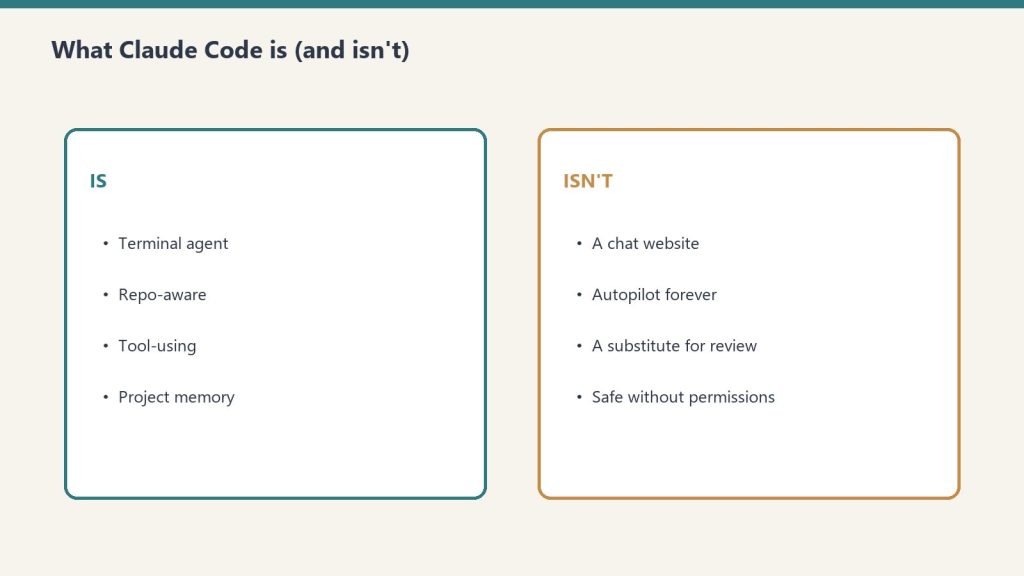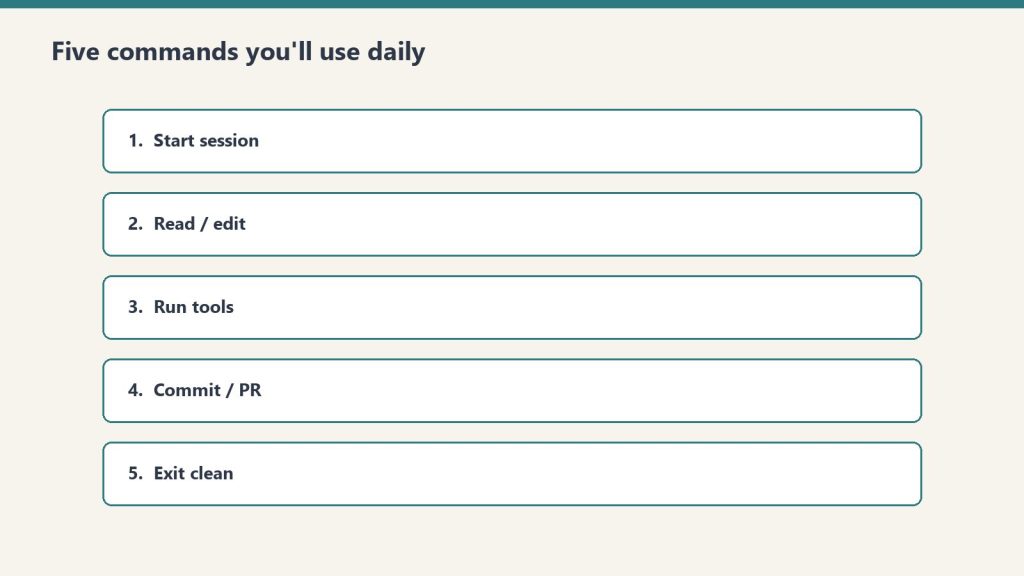
Quick answer: Open PowerShell and run irm https://claude.ai/install.ps1 | iex, then open a new terminal and run claude. No admin rights, no Node.js needed — Windows 10 1809+ or Windows Server 2019+. On Mac/Linux the equivalent is curl -fsSL https://claude.ai/install.sh | bash. You’ll need a Pro, Max, Team, Enterprise, or API account to sign in — the free Claude plan doesn’t include Claude Code.
If you’ve spent time in the Claude Code subreddit or GitHub issues lately, you’ve seen the same Windows install problem cycle through every week: someone runs the install command, it prints “successfully installed,” and then claude --version returns “not recognized.” Then come the suggestions — switch to Git Bash, switch to WSL2, reinstall Node, blow away npm. Half of them are wrong for the current installer. This guide covers the install that actually works in 2026, plus what to do in your first session.
What changed: the native installer is now the default
Anthropic shipped a native installer that removed the Node.js dependency entirely, and as of 2026 it is the recommended path on every platform. The old npm install -g @anthropic-ai/claude-code route still works but is no longer the primary method Anthropic tests and updates.
The native installer downloads a single binary, drops it in ~/.local/bin, registers it on your PATH, and auto-updates in the background. On Windows that means: no Node, no npm, no WSL2 unless you specifically want a Linux toolchain. PowerShell on Windows 10 or 11 (64-bit) is enough.
The commands that actually work
Open Windows PowerShell — not the x86 version, not Git Bash, not Command Prompt. The x86 entry runs as a 32-bit process and will fail on a 64-bit machine. Git Bash doesn’t support the TTY features Claude Code’s interactive CLI needs, so you’ll hit a “Raw mode is not supported” error before you finish authenticating.
Then run:
irm https://claude.ai/install.ps1 | iexirm is Invoke-RestMethod, iex is Invoke-Expression — the script handles the binary download, PATH update, and shell hooks. When it finishes, close the terminal and open a new PowerShell window. This is the step everyone skips: the PATH change applies to new shells only.
In the new window:
claude --versionYou should see a version string. Then run claude with no arguments from any project directory — the CLI opens your browser, asks you to sign in, and authorizes the local install. End to end: under five minutes on a clean machine.
On macOS or Linux, the equivalent one-liner is:
curl -fsSL https://claude.ai/install.sh | bashPrefer a package manager on Windows? winget install Anthropic.ClaudeCode works too, but winget installs don’t auto-update — run winget upgrade Anthropic.ClaudeCode periodically.
No terminal? Use Claude Desktop’s Code tab
If you’d rather skip the terminal entirely, Claude Desktop (macOS and Windows) includes Claude Code as a graphical Code tab — visual file diffs, a built-in preview panel, no command line required. Install the app, sign in with a paid account, click the Code tab, choose a project folder, and you’re in.
| Session type | What it does | Best for |
|---|---|---|
| Local | Runs on your machine, accesses your files directly | Everyday development work |
| Remote | Runs on Anthropic’s cloud, keeps going if you close the app | Long-running tasks, autonomous work |
| SSH | Connects to a remote machine over SSH | Server or cloud VM development |
On Windows, Git must be installed for local sessions to work. The CLI and the Desktop Code tab share configuration files and can run simultaneously on the same project.
You need a paid account — the free tier doesn’t include Claude Code
This catches new users every week. The free Claude.ai plan gets you chat; it does not get you Claude Code. You need one of:
- Pro — $20/month (or $17/month billed annually)
- Max 5x — $100/month, or Max 20x — $200/month
- Team Premium — $100/seat/month annual (minimum 2 seats, maximum 150). Note: Team Standard ($25/seat) does not include Claude Code
- Enterprise, or API credits (billed per token)
Pro and Max draw from the same usage pool as regular Claude chat. If you’re evaluating whether to upgrade, the Pro window will tell you within a week — you either hit the cap during real work or you don’t.
First-run authentication: two options
Option 1 — Claude subscription (Pro, Max, Team, Enterprise). Run claude, select “Login with Claude.ai,” and a browser window opens to authorize. Your subscription covers usage — no separate API billing.
Option 2 — Anthropic API key. Set the key as an environment variable first:
$env:ANTHROPIC_API_KEY = "sk-ant-..."  # PowerShell
claude
API usage is billed per token at standard rates. For heavy daily use, a Max subscription is usually more economical than API billing.
The five errors you’ll hit, and what fixes them
“claude is not recognized as the name of a cmdlet.” Your PATH wasn’t updated, or you didn’t open a new terminal. Close PowerShell and reopen. If it persists, add the install location to your user PATH:
$currentPath = [Environment]::GetEnvironmentVariable('PATH', 'User')
[Environment]::SetEnvironmentVariable('PATH', "$currentPath;$env:USERPROFILE\.local\bin", 'User')
Then open a new terminal and run claude doctor for a full diagnostic.
“Raw mode is not supported.” You’re in Git Bash. Switch to Windows PowerShell — Git Bash lacks the TTY interface the CLI needs.
Microsoft Store popup interrupts installation. A “Get an app to open this ‘claude’ link” popup sometimes appears on Windows 11. Dismiss it and re-run the install command. If it persists, install Git for Windows first — it registers URL handlers that resolve the popup.
Duplicate npm and native installs. If you installed via npm before and later ran the native installer, you have two binaries on PATH and version checks disagree. Remove the npm one: npm uninstall -g @anthropic-ai/claude-code, then verify with where.exe claude — only one path should come back.
“Invalid code” during OAuth. The browser login generates a one-time code you paste back into the terminal. It expires fast — complete the browser flow and paste immediately; press Enter to retry if it lapses.
Your first session: the commands that cover 90%
Run claude from inside a real project directory — not an empty folder. Claude Code reads context from the surrounding repo (including CLAUDE.md if one exists); starting empty makes the first interaction feel useless.
claude — starts the interactive session (REPL). Describe what you want: “add a rate limiter to the auth middleware.” Claude reads the files it needs, proposes changes, and asks approval before modifying anything.
claude -p "prompt" — one-shot, non-interactive. Good for scripting and CI:
claude -p "What are all the API endpoints in this codebase?"claude -c — resume your most recent conversation with full context. claude --model — override the model for a session. claude mcp add — connect external tools (MCP servers) like GitHub or web search:
claude mcp add github -- npx -y @modelcontextprotocol/server-githubSlash commands inside a session
| Command | What it does |
|---|---|
/help |
Show all available commands |
/clear |
Reset context without leaving the session |
/compact |
Compress prior context to save tokens |
/cost |
Token usage and estimated cost for this session |
/model |
Switch the model mid-session |
/init |
Generate a CLAUDE.md with project context |
/review |
Multi-agent code review of the current branch |
CLAUDE.md — project-level context
Drop a CLAUDE.md file in your project root and Claude Code reads it automatically at session start — architecture notes, test commands, deploy targets, house rules (“never modify migration files directly”). Generate a starter with /init.
Permission modes
By default Claude asks before running bash commands or modifying files. --dangerously-skip-permissions skips all confirmations — use only in isolated environments (Docker, CI), never on your primary machine. During a session you can also “Allow always” individual tools for the rest of that session.
The setup isn’t the hard part
Most Windows pain in the Claude Code ecosystem comes from following install guides written for the npm-era CLI, then layering WSL2-era troubleshooting on top. The current path is one PowerShell command, a new terminal, and a browser login. The next thing to figure out isn’t installation — it’s whether your Pro window survives a real week of work, and whether your team needs Premium seats. That math determines the actual cost of Claude Code on Windows, not whether the binary runs.
FAQ
Do I need Node.js to install Claude Code on Windows?
No. The native installer ships a single binary with no Node.js dependency. The npm route still exists and needs Node.js 22+, but it’s no longer the recommended path.
Does Claude Code work on the free Claude plan?
No. Pro ($20/month) is the cheapest way in.
Why does claude --version say “not recognized” right after installing?
Your terminal still has the old PATH. Close and reopen the terminal first.
Do I need Git for Windows?
Optional but recommended. With it installed, Claude Code runs shell commands through Git Bash; without it, it falls back to PowerShell.
Does Claude Code auto-update on Windows?
Native installs auto-update in the background. Winget installs don’t — upgrade periodically.
Does Claude Code work on Linux?
The Desktop app doesn’t support Linux, but the CLI does — curl -fsSL https://claude.ai/install.sh | bash.
What’s the difference between the Desktop Code tab and the CLI?
The Code tab is graphical (visual diffs, preview panel, no terminal); the CLI runs in your terminal with the same core operations. They share config and can run simultaneously.
Can Claude Code access the internet?
Not by default. Its WebFetch tool fetches a specific URL you provide; for live search, add an MCP server like Brave Search.
What does Claude Code do with my code?
File contents needed for inference go to the Anthropic API. With an API key you can configure zero data retention; on a subscription, standard Anthropic retention applies.
Last verified July 2026 against the official Claude Code setup docs. Related on Tygart Media: Claude pricing · Anthropic Console & API keys.