Tag: Washington state travel

  • Hood Canal North in May: What’s Biting, What’s Blooming, and Where to Go

    Hood Canal North in May: What’s Biting, What’s Blooming, and Where to Go

    May on Hood Canal’s north shore has its own particular rhythm. The water is still cold enough to see your breath off the kayak in the morning, the rhododendrons are peaking in the forest clearings, and everyone with a shrimp pot has one question on their mind: is the season open? This week I’ve got answers on all of it — plus one of the most underrated state parks on the entire Olympic Peninsula that deserves a lot more foot traffic than it gets.

    Let’s start with the news every Hood Canal angler is watching, then I’ll walk you through a spring park visit that’ll remind you why you moved to (or keep driving back to) this corner of Washington.

    Hood Canal Spot Shrimp 2026: What You Need to Know Before You Launch

    Here’s the hard truth first: Hood Canal is closed for spot shrimp harvest in 2026 due to low abundance. WDFW made the call based on population surveys, and while it’s disappointing for the many anglers who make this an annual tradition, it’s the right move for the long-term health of one of the Pacific Northwest’s most beloved shellfish species.

    Spot shrimp are a Hood Canal icon. They’re larger, sweeter, and more delicate than anything you’ll find at a grocery store counter, and the Hood Canal fishery draws pot-setters from across the region every spring. When WDFW closes an area, it’s because the stock genuinely needs the rest. The same conservation ethic that makes the Quilcene Bay oyster harvest sustainable year after year applies here — restraint now means abundance later.

    So what are your options for 2026? The broader Puget Sound shrimp season opens May 24 in several marine areas (check wdfw.wa.gov/fishing/shellfishing-regulations/shrimp/areas for area-by-area status). Rules across Puget Sound management areas include a daily limit of 10 pounds of all shrimp species combined, a maximum of 80 spot shrimp per person if open for spot shrimp, daylight-hours-only harvesting, and no more than two shrimp pots per person (four per boat). Before you trailer the boat anywhere, verify the current status for your specific target area on the WDFW site — additional dates can be added or removed as quota situations change through the season.

    For Hood Canal North regulars, this is a good year to explore the non-shrimping highlights of the canal — of which there are plenty. The Brinnon ShrimpFest on Memorial Day weekend (May 23–25) is still happening and still celebrates the culture and community around Hood Canal spot shrimp even in a conservation year. Mark your calendar.

    Scenic Beach State Park, Seabeck — May Is the Sweet Spot

    If you’ve never made the turn off Newberry Hill Road toward Seabeck, add it to your list right now. Scenic Beach State Park sits on a quiet cove on Hood Canal’s west shore, and in May, it’s genuinely one of the most beautiful spots on the peninsula.

    The park’s signature view is what draws people back: stand on the pebble beach at low tide and you’re looking straight across Hood Canal at the full Olympic Mountain ridgeline. On a clear May morning — and we get more of those than people expect — that panorama is jaw-dropping. The peaks are still carrying significant snow at elevation, which makes the contrast with the blooming rhododendrons in the park’s forest trails particularly dramatic this time of year.

    The trail network here is well-groomed and manageable for most fitness levels. You’ll move through second-growth forest with a mix of Douglas fir, big-leaf maple, and those native rhododendrons that are in full flush right now. The trails eventually loop back to the beach, where the rocky shoreline rewards anyone who takes their time — look for sea stars, anemones, and the occasional harbor seal cruising the shallows.

    One detail I always point out to first-timers: the historic Emel House sits right on the beach. It’s a beautifully preserved early-20th-century home that’s become a popular wedding venue, and even if there’s no event happening, it adds a real sense of place and history to a walk along the waterline. The park address is 9596 Scenic Beach Rd NW, Seabeck, WA 98380.

    One practical note: clamming and oyster harvesting at Scenic Beach is currently closed due to a decline in shellfish populations in this specific area. Come for the views, the trails, and the forest — not the harvest.

    Plan Your Visit

    Scenic Beach State Park is open year-round. To reach it from Bremerton, head northwest on WY-3, turn left onto Newberry Hill Road, then follow Seabeck Highway NW until it transitions to Scenic Beach Road. The drive takes about 30 minutes from Bremerton and 90 minutes from Tacoma via the Narrows Bridge. Parking is available in the main day-use lot. Bring layers — even on a sunny May afternoon the breeze off Hood Canal can be brisk. Reservations for camping can be made through Washington State Parks at parks.wa.gov.

    If you’re combining this with a shrimp research trip, WDFW’s area-by-area shrimp status page is the authoritative source: wdfw.wa.gov/fishing/shellfishing-regulations/shrimp/areas. Check it the morning you plan to go — conditions and quota statuses can change mid-season.

    Hood Canal North rewards the curious traveler who takes the less-obvious road. Seabeck is that road. Go find it.

  • Two South Coast Gems Worth the Drive This May: Quinault Rain Forest and Grays Harbor Lighthouse

    Two South Coast Gems Worth the Drive This May: Quinault Rain Forest and Grays Harbor Lighthouse

    The South Coast of the Olympic Peninsula doesn’t always get top billing — that usually goes to Hurricane Ridge or the Hoh. But if you point your rig southwest this May, you’ll find two destinations that deliver everything the peninsula is famous for, without the weekend crowds. I’m talking about the Quinault Rain Forest and the Grays Harbor Lighthouse at Westport. Both are open now. Both are spectacular in spring. And they make a natural pair for a full South Coast day trip.

    Quinault Rain Forest: The Quiet Corner of Olympic National Park

    Most people driving to the Olympic Peninsula from the south pass right by the Quinault Valley turnoff without realizing what they’re missing. That’s a mistake worth correcting.

    The Quinault Valley sits in the southwestern corner of Olympic National Park, roughly an hour west of Forks and about three hours from Port Angeles. It’s a wilderness gateway in the truest sense — alpine meadows and ice-carved peaks at the high end, and at the valley floor, one of the finest stretches of temperate old-growth rainforest on the continent. Bigleaf maples draped in club moss, the Quinault River running clear and cold, Roosevelt elk moving through the undergrowth at dawn.

    The best starting point for a day visit is the Quinault Rain Forest Ranger Station, where the NPS staff can orient you to current trail and road conditions. From there, the Kestner Homestead Loop is the move: a 1.3-mile flat walk through groves of bigleaf maples to the remains of the Kestner family homestead, one of the first pioneer families to settle the valley. It’s short enough for anyone to manage and beautiful enough to slow even the most restless hiker down. In May, the maples are leafing out in that electric spring-green that photographers chase all season.

    If you want to stay overnight — and you should — the valley has two campgrounds inside the national park. North Fork Campground (9 sites) and Graves Creek Campground (approximately 30 sites) are both first-come, first-served and sit in the kind of quiet that city people don’t entirely believe exists anymore. No reservations, no generators humming, just rain on old-growth canopy.

    For those wanting more ambitious hiking, the East Fork Quinault River Trail pushes deep into the Olympic Wilderness toward the historic Enchanted Chalet, and the North Fork Quinault River Trail climbs toward the Low Divide. Both are multi-day wilderness routes for fit, prepared hikers — bring a permit and solid navigation skills.

    Before you head out, note that Kalaloch Beach is approximately 35 miles west of Quinault — easily added to the itinerary for a sunset finish on the open Pacific. For current road and trail conditions, call the NPS at 360-565-3130.

    Grays Harbor Lighthouse: Washington’s Oldest Standing Lighthouse

    Drive another hour north and west from Quinault and you’ll reach Westport, the fishing town that anchors the southern end of the South Coast. Most visitors come for the marina, the charter fishing, or the razor clam beaches. But the destination that deserves more attention is hiding right at the edge of town: the Grays Harbor Lighthouse inside Westport Light State Park.

    Built in 1898, the Grays Harbor Lighthouse stands 107 feet tall — making it the tallest lighthouse still standing on the Washington coast. It’s an imposing structure, white against the gray Pacific sky, positioned right where the Grays Harbor jetty meets the open ocean. The lighthouse has been guiding ships into Grays Harbor for over 125 years, and it remains an active aid to navigation today.

    Access is easy and free. Park at the Westport Light State Park lot off W Ocean Ave and pick up the Dunes Trail, a 1.3-mile loop that winds through a forest of shore pines and coastal scrub before delivering you to the lighthouse tower. The trail is paved in stretches and suitable for most visitors. Along the way, keep your eyes on the water — May is the tail end of gray whale northward migration, and the jetty area is a reliable shorebird corridor.

    The lighthouse itself is managed by the Westport-South Beach Historical Society, which typically runs public tours on weekends during the spring and summer season. Check their schedule before you go if climbing the tower is your goal — but even without a tour, the walk and the views make the trip worthwhile.

    Plan Your Visit

    A full South Coast day combining Quinault and Westport requires an early start from the north end of the peninsula, but it’s very doable from Aberdeen or Olympia as a day trip. From Quinault Rain Forest Ranger Station, head west on US-101 to Kalaloch if time allows, then north on 101 to Westport — roughly 1.5 hours between the two stops. Gas up in Aberdeen; services are limited along the route.

    For Quinault, there’s no fee to hike the Kestner Homestead Loop if you’re walking in from the Ranger Station area, though the standard America the Beautiful / National Parks Pass covers any applicable entry fees. Camping at North Fork and Graves Creek is first-come, first-served with standard NPS camping fees. Bring rain gear regardless of the forecast — this is the rainiest corner of the rainiest national park in the continental United States, and that’s part of what makes it so alive in May.

    For Westport Light State Park, parking and trail access are free. The lighthouse tour schedule varies — contact the Westport-South Beach Historical Society for current weekend hours before making the drive specifically for the tower climb.

    NPS Olympic road and trail info: 360-565-3130

  • Hood Canal Shellfish Season Is Coming: Your Belfair Summer Outdoor Planner for 2026

    Hood Canal Shellfish Season Is Coming: Your Belfair Summer Outdoor Planner for 2026

    If you’ve been waiting for Hood Canal’s legendary shellfish season to kick off, now is the time to start planning. Summer 2026 brings a fresh lineup of outdoor opportunities for our North Mason community — from the tide flats at Belfair State Park to the deeper waters of Marine Area 12, the Canal is waking up.

    Belfair State Park Shellfish Season Opens July 15

    Mark your calendars: the clam, mussel, and oyster season at Belfair State Park’s Hood Canal tide flats opens July 15, 2026, and runs through December 31. According to the Washington Department of Fish and Wildlife (WDFW), this year’s opening comes two weeks earlier than originally scheduled — a welcome change for the families who make annual pilgrimages to the park’s famously productive mud flats at the south end of the Canal.

    Belfair State Park sits on 3,720 feet of Hood Canal shoreline at 1002 NE Beck Road, Belfair WA 98528. The beach is known for oysters in particular, though portions near the tideline are soft mud, so waterproof boots are non-negotiable. Harvesters need both a valid WDFW shellfish/seaweed license and a current Department of Health (DOH) beach approval to take anything home. Check the WDFW “Find a Beach” tool at wdfw.wa.gov before you go — health closures can happen with little notice.

    Standard Puget Sound daily limits apply: 18 oysters, 10 clams, and 10 mussels per person. Children 15 and under harvest free without a license.

    Dungeness Crab Season: Summer 2026 in Marine Area 12

    For crabbers, WDFW has confirmed that Hood Canal’s Marine Area 12 recreational Dungeness crab season will open in summer 2026 — exact dates to be announced. Watch the WDFW crab seasons page at wdfw.wa.gov/fishing/shellfishing-regulations/crab for the opening announcement, which typically drops a few weeks before day one.

    The standard Hood Canal setup: five male Dungeness, hard-shell, 6¼-inch minimum carapace width, recorded immediately on your catch record card. Crabbing has historically run Thursdays through Mondays in this marine area. The south end of the Canal near Belfair and Union tends to fish well early in the season.

    Belfair State Park Camping: All Loops Open Mid-May

    Planning to combine a shellfish trip with a weekend on the water? Belfair State Park’s full campground opens all loops by mid-May. The park offers 184 mixed-use sites — including 41 full hookup sites and 8 cabins — spread across three loops on the Canal shoreline. The Tree Loop (tents and rigs under 18 feet) is the most popular and fills fast.

    Book at washington.goingtocamp.com or call 1-888-226-7688. Summer weekends typically fill months in advance, so check availability now if you haven’t already.

    Theler Wetlands: Free Spring Birding Right Now

    While the shellfish season is still weeks away, the trails are open today. The Mary E. Theler Wetlands Nature Preserve off SR-3 in Belfair, located at 600 NE Roessel Rd, offers more than three miles of accessible trails through 139 acres of salt marsh and estuary. May is peak migration season on Hood Canal — shorebirds, herons, and songbirds work the Union River estuary. The trails are free, open dawn to dusk, and the main boardwalk sections are ADA accessible.

    The Hood Canal Salmon Enhancement Group (HCSEG), which manages the Theler Nature Center, is restoring the facility with plans to reopen interpretive community programs. Check pnwsalmoncenter.org for upcoming event announcements.

    Before You Harvest

    Shellfish closures can happen any time based on water quality. Always verify both the WDFW season status and the DOH health approval before harvesting at any beach. The DOH Shellfish Safety hotline is 1-800-562-5632. Same rule applies to every beach on Hood Canal — no exceptions.

    The Canal belongs to all of us. Harvest within limits, pack out your gear, and leave the tide flats better than you found them.

    Related Coverage from Belfair Bugle

    This summer planner has been expanded into a verified 2026 cluster:

  • The West End Is Open: Hoh Rain Forest and Rialto Beach Are Ready for You This Weekend

    The West End Is Open: Hoh Rain Forest and Rialto Beach Are Ready for You This Weekend

    If you’ve been waiting for the right weekend to make the drive to the West End of the Olympic Peninsula, this is it. Two of the most iconic destinations on this stretch — the Hoh Rain Forest and Rialto Beach — are both fully open right now, and one of them won’t stay that way past July. Here’s what you need to know before you go.

    Hoh Rain Forest: The Visitor Center Is Open Today

    The Hoh Rain Forest sits about 31 miles southeast of Forks along Upper Hoh Road, and as of this weekend, the entire area is operating normally — trails, parking areas, restrooms, and the Visitor Center. That last detail matters: the Hoh Rain Forest Visitor Center runs on a Friday through Sunday schedule from 9am to 4pm, which means today is one of only three days a week you can actually walk inside, talk to a ranger, and get current trail conditions straight from the source.

    The two signature trails are the reason most people make this drive. The Hall of Mosses Trail is a 0.8-mile loop through old-growth Sitka spruce hung with club moss so thick it looks like something from a fantasy novel. The trees here are enormous — some over 300 years old — and the light filters through in a way that makes even an overcast day feel dramatic. The Hoh River Trail sets off from the same trailhead and runs deep into the park; you can walk as little or as much as you want, following the braided river through stands of spruce and maple.

    Hoh Campground is currently first-come, first-served, which means you can drive in this weekend without a reservation and claim a site. That window closes June 12, when reservations become required through September 6. If you’ve been meaning to camp in the rainforest, the next six weeks are your easiest shot at a spontaneous overnight. Come prepared for weather regardless of the forecast — the Hoh receives over 140 inches of rain annually, and conditions can shift from sunny to soaked in under an hour. Waterproof layers are non-negotiable. Road and conditions hotline: 360-565-3131.

    Rialto Beach: Open Now, Closed July 8 — Plan Accordingly

    Rialto Beach is accessed via Mora Road off Highway 101, about 14 miles of winding two-lane road through the Quillayute River bottomlands. Right now, Mora Road and Rialto Beach are fully open. Starting July 8 and running through October 5, both lanes of Mora Road will be closed beyond Mora Campground for permanent road repairs — meaning Rialto Beach will be completely inaccessible by vehicle for nearly three months.

    This construction has been coming for a while. Back in 2019, severe winter flooding eroded the riverbank at mile marker 1.25, and the emergency riprap installed at the time was always a temporary fix. The permanent repair is necessary and overdue, but the closure window is real, and if you want to visit Rialto Beach this summer, your window is now through July 7.

    Rialto Beach is one of those places that rewards the effort. The beach is wide and wild, littered with enormous drift logs bleached silver by the salt air. Sea stacks rise from the surf in both directions. About 1.5 miles north along the shoreline, the Hole-in-the-Wall sea arch cuts through a headland — a walk that’s entirely doable at low tide, though you’ll want to check a tide chart before heading out. The Pacific coast moves fast, and sneaker waves are a real hazard anywhere along this stretch.

    Mora Campground, located before the closure zone, is open first-come, first-served through May 14. Starting May 15, reservations are required (available at recreation.gov), running through September 20. If you want to base camp here before the road closes, this coming week is your last spontaneous-arrival window.

    Plan Your Visit

    Both destinations are day-trip distance from Forks, which sits at the crossroads of the West End. For the Hoh Rain Forest, allow at least two to three hours minimum — longer if you want to walk the Hoh River Trail beyond the first mile. For Rialto Beach, budget time for the 1.5-mile beach walk to Hole-in-the-Wall and back if tides allow; check tide tables in advance at tidesandcurrents.noaa.gov (La Push / Quillayute River, station 9442396).

    Current road and conditions for all Olympic National Park areas: call the recorded information line at 360-565-3131. America the Beautiful passes and Olympic National Park annual passes are accepted at both entrance points. The Hoh Rain Forest entrance station is on Upper Hoh Road; the Rialto Beach / Mora area uses the same pass. Day-use fee without a pass is $35 per vehicle.

    The West End is at its best in late spring — crowds haven’t arrived yet, the forest is saturated green, and the beach is still yours for the walking. Don’t sleep on it.

  • Hurricane Ridge in May: What to Know Before You Go (Plus a Festival Worth the Drive)

    Hurricane Ridge in May: What to Know Before You Go (Plus a Festival Worth the Drive)

    Port Angeles sits at the edge of two worlds. Behind it, the Olympic Mountains rise sharp and permanent. In front, the Strait of Juan de Fuca stretches toward Vancouver Island. In May, both of those worlds are at their most alive — and this city of 20,000 is the gateway to some of the best spring experiences on the entire peninsula. Two things belong on your radar right now: Hurricane Ridge just opened for the season, and the Juan de Fuca Festival of the Arts is three weeks out.

    Here is what you actually need to know.

    Hurricane Ridge in May: Plan Before You Drive

    Hurricane Ridge is 18 miles from downtown Port Angeles by road — a 5,242-foot climb that ends in a meadow so wide and open it feels like the top of the world. In May, the snowpack is retreating, wildflowers are beginning to push through the meadow, and black-tailed deer are visible most mornings near the ridge road. On a clear day, the view spans the Strait of Juan de Fuca all the way to the Canadian Gulf Islands.

    But there is a catch: access is metered, and if you show up midmorning on a weekend without a plan, you may get turned around at the gate.

    Here is how the system works. The first 175 vehicles of the day pass through the Heart O' the Hills Entrance Station freely. After that, the next 140 vehicles are admitted on a one-in-one-out basis — as a car leaves the ridge, one more is allowed in. Once 315 total vehicles have entered, the road closes to private cars for the remainder of the day. On busy weekends and holidays, that threshold can be hit before noon.

    The practical advice: arrive before 9am. The drive from downtown Port Angeles takes about 30 minutes. An early start gives you the meadows in morning light, fewer people on the trails, and the best chance at seeing wildlife before the ridge fills up.

    One more thing to know before you go: the Hurricane Ridge Day Lodge burned down in May 2023, and the planned $80 million reconstruction is currently on hold due to federal budget constraints. That means there are no indoor restrooms, no café, and no heated shelter at the top. Portable facilities are on-site, but plan as if you are heading into a trailhead, not a visitor center. Bring layers — the ridge sits above 5,000 feet and the weather can shift fast — plus enough food and water for your time on the mountain.

    For current road conditions and real-time access status, call the Olympic National Park road report line at 360-565-3131. The Heart O' the Hills Entrance Station is located on Hurricane Ridge Road, Port Angeles.

    Juan de Fuca Festival of the Arts: Memorial Day Weekend in Port Angeles

    Three weeks from now, downtown Port Angeles transforms. The 34th Annual Juan de Fuca Festival of the Arts runs May 22–24, 2026 — Memorial Day Weekend — and it is the peninsula's premier music and arts event of the season.

    The setting alone is worth the trip. Five stages spread across the downtown waterfront, with the Olympic Mountains behind you and the strait in front. The music spans the full range: bluegrass, blues, jazz, folk, Americana, and more. The festival has been running since the early 1990s and draws performers and attendees from across the Pacific Northwest and beyond.

    Beyond the music, the festival runs a free artisan street fair with local makers and vendors, a beer and wine garden, a Kids Zone for families, and a Community Tent. The street fair is open to everyone — no ticket required to browse and shop.

    For visitors combining the festival with other peninsula stops: the Black Ball Ferry Line's MV Coho runs daily service between Port Angeles and Victoria, BC (90-minute crossing), making it possible to come in by boat and walk straight into the festival. If you are driving, US-101 brings you into the heart of Port Angeles.

    Ticket and lineup information at jffa.org.

    Plan Your Visit

    If you are coming to Port Angeles this month, the combination of Hurricane Ridge and the Juan de Fuca Festival makes for a full two-day itinerary. Arrive early on a weekend morning and drive the ridge before the vehicle meter fills — figure three to four hours for the drive up, a walk through the meadow, and the return. Come back down to Port Angeles for lunch at the waterfront, then explore the downtown arts district in the afternoon. If your timing lines up with May 22–24, stay through Memorial Day weekend for the festival.

    For planning: Olympic National Park entrance fee is $35 per vehicle (annual pass accepted). Hurricane Ridge Road opens daily from Port Angeles — check conditions at 360-565-3131 before you go. Juan de Fuca Festival runs May 22–24 downtown Port Angeles; full info at jffa.org. The MV Coho Ferry departs from the Port Angeles ferry terminal at the foot of Laurel Street; reservations recommended at cohoferry.com.

  • Day Trip from Seattle to Langus Riverfront Park and Spencer Island Everett: A 2026 Visitor’s Guide

    Day Trip from Seattle to Langus Riverfront Park and Spencer Island Everett: A 2026 Visitor’s Guide

    Day trip bottom line: Langus Riverfront Park and Spencer Island are 25–30 minutes north of Seattle via I-5 — a genuine half-day outdoors destination that most Puget Sound visitors don’t know exists. Flat trail, exceptional birdwatching, estuary wildlife. Bring a Discover Pass or $11.50 for day parking. No other admission.

    If you’re visiting the Seattle area for the FIFA World Cup, a weekend trip, or any reason that brings you to the Pacific Northwest, the Snohomish River Estuary north of Everett is one of the region’s most underrated outdoor destinations — and it’s closer to Seattle than most guides will tell you.

    The Drive From Seattle

    From downtown Seattle, Langus Riverfront Park is approximately 27 miles north on I-5 — roughly 30 minutes in off-peak traffic. Take the Marine View Drive exit north of Everett and follow Smith Island Road to the park entrance at 411 Smith Island Rd, Everett. Easier than driving to the Cascades. No mountain passes, no ferry.

    From the new Lynnwood City Center Link station, Community Transit connects to the Everett area. For visitors without a car, the combination of Link plus transit is an option — check Community Transit routes for current schedules.

    What You’re Going to See

    The Snohomish River Estuary is the largest wetland near an urban center on the West Coast — 1,400 acres where freshwater from the Cascades mixes with tidal Puget Sound. Spencer Island alone is 413 acres of managed wildlife habitat. More than 350 species of migratory birds have been recorded here. For comparison: most wildlife refuges in the Pacific Northwest are significantly harder to reach and offer less consistent wildlife viewing.

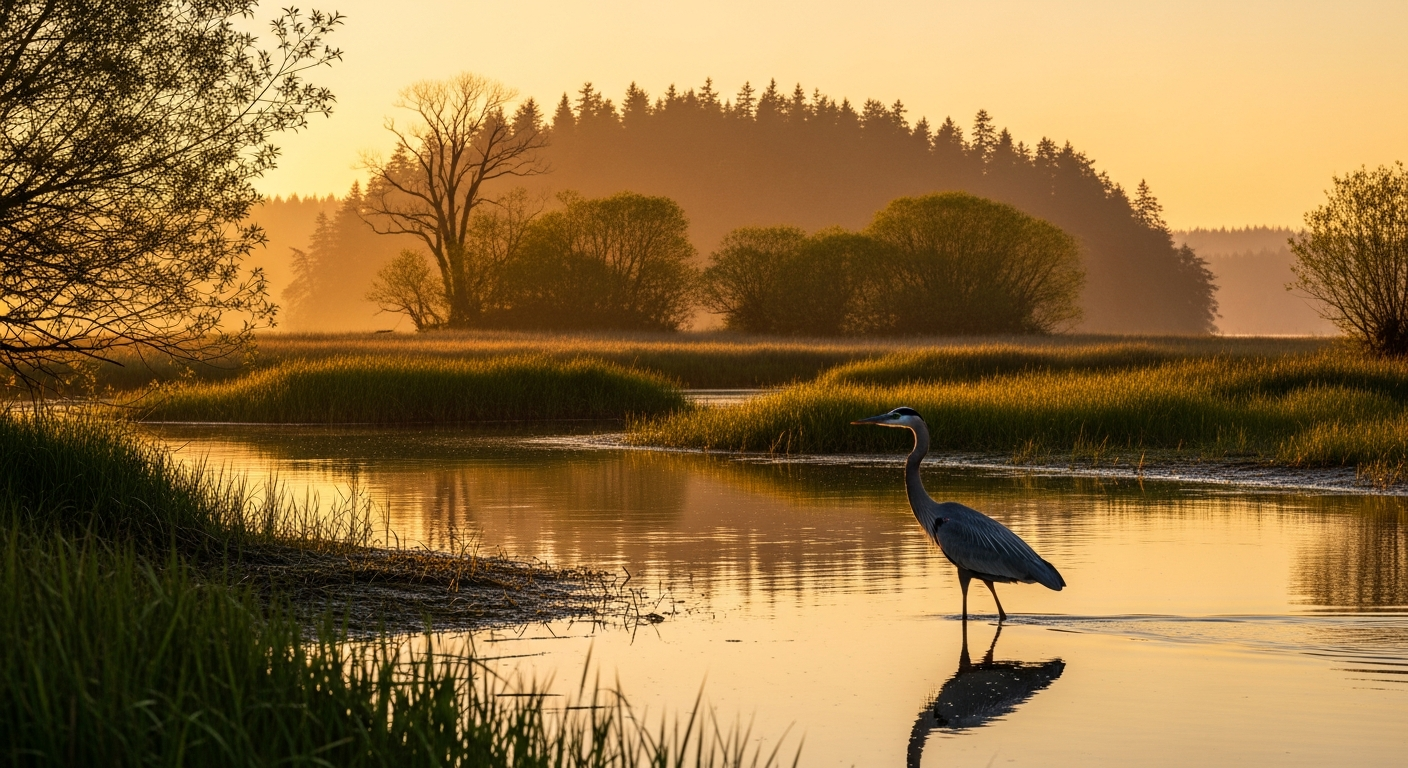
    Bald eagles, osprey, great blue herons, and a rotating cast of shorebirds and waterfowl are reliably present across all seasons. Spring and fall migration windows bring exceptional variety. Even a casual visitor with no birding background will see wildlife within minutes of crossing the Spencer Island bridge.

    The Trail

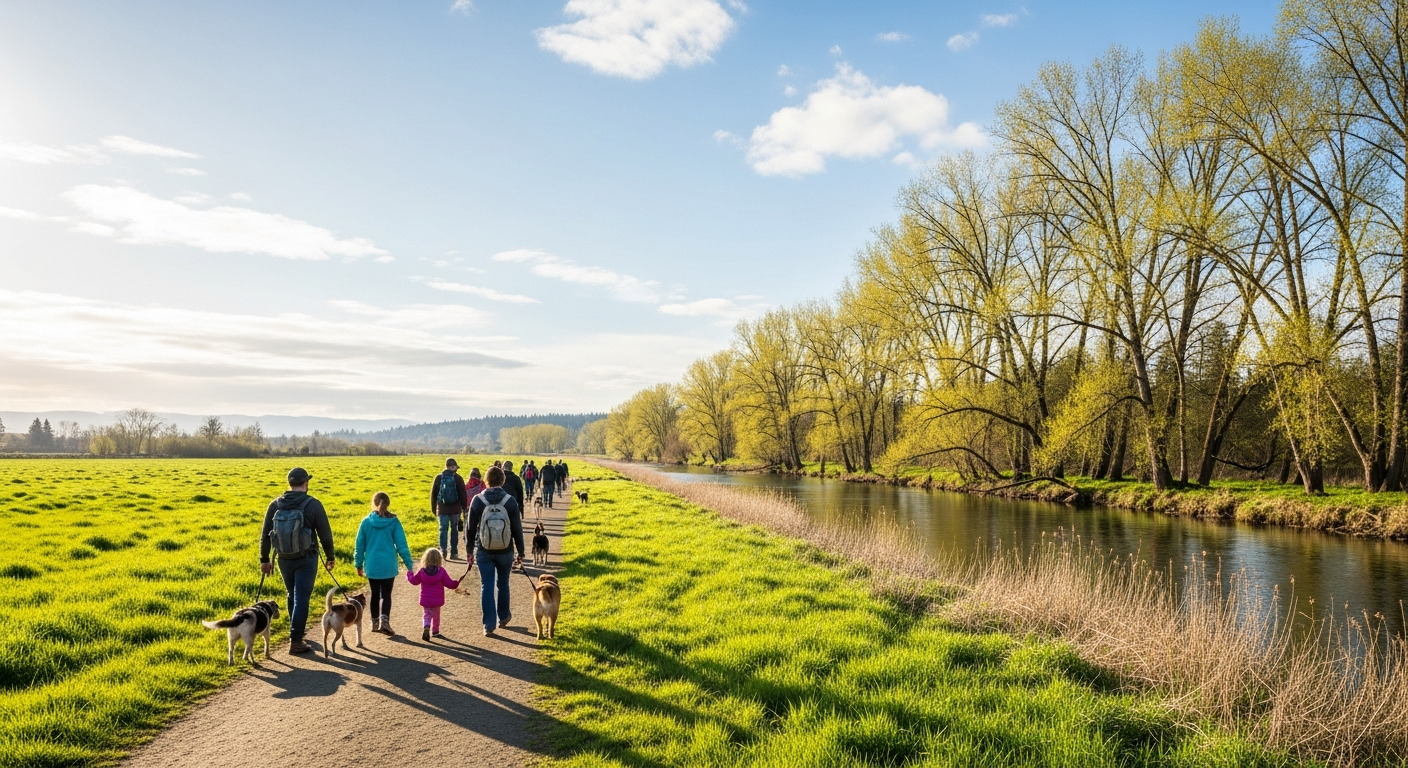
    The Langus River Front Trail is 3.0 miles of flat, paved path along the Snohomish River — accessible to walkers, joggers, and cyclists. It connects via bridge to the 1.7-mile Spencer Island southern loop on an elevated dike trail with open views across the estuary. Combined: approximately 4.7 miles, 2 to 3 hours at a relaxed pace with wildlife stops.

    No technical gear required. The trail is genuinely flat. Families with strollers can do the Langus section without difficulty.

    What to Bring, What to Pay

    Parking at Langus requires a Washington State Discover Pass ($30/year) or Vehicle Access Pass ($11.50/day). Available at the park kiosk or in advance at discoverpass.wa.gov. The trail and Spencer Island are free once you’ve handled parking.

    Binoculars significantly improve the Spencer Island experience. Water and snacks are essential — there are no services on Spencer Island. Layer up; estuary conditions can be windy regardless of season.

    Combining With Other Everett Stops

    Langus and Spencer Island pair naturally with Everett’s waterfront. Post-hike dining at Waterfront Place at the Port of Everett — with multiple restaurant options open along the marina — is a short drive from the park. The historic Port Gardner neighborhood and Rucker Hill walking tour adds an architectural dimension to the day.

    Frequently Asked Questions

    How far is Langus Riverfront Park from Seattle?

    Approximately 27 miles north of downtown Seattle via I-5 — roughly 30 minutes in off-peak traffic. Take the Marine View Drive exit north of Everett and follow Smith Island Road to the park at 411 Smith Island Rd.

    Is Langus Riverfront Park worth visiting as a day trip?

    Yes. Spencer Island’s 413-acre estuary habitat with 350-plus migratory bird species is among the best wildlife-viewing sites in Puget Sound. Combined with the flat paved Langus trail and river access infrastructure, it’s a genuine half-day outdoors destination.

    What is the admission fee for Spencer Island?

    Spencer Island is free to enter. Parking at Langus Riverfront Park requires a Washington State Discover Pass ($30/year) or Vehicle Access Pass ($11.50/day).

    What is the best time of year to visit Langus and Spencer Island?

    Any season offers wildlife viewing. Spring (March–May) and fall (September–November) are peak migration windows with the highest bird variety. Winter brings overwintering waterfowl. Summer is popular for families and cyclists.

  • Langus Riverfront Park and Spencer Island: The Complete 2026 Guide to Everett’s 3-Mile Trail to a 413-Acre Wildlife Estuary

    Langus Riverfront Park and Spencer Island: The Complete 2026 Guide to Everett’s 3-Mile Trail to a 413-Acre Wildlife Estuary

    Quick guide: Langus Riverfront Park (411 Smith Island Rd, Everett) offers a 3-mile flat paved trail along the Snohomish River with a direct connection to Spencer Island — 413 acres of wildlife estuary and one of the best birding sites in the Puget Sound region. A Discover Pass or Vehicle Access Pass is required for parking. The trail is free and open year-round.

    Most Everett residents know the waterfront. Fewer know that a short drive to the north end of Smith Island puts you at one of the best outdoor destinations in Snohomish County — a flat paved trail along the Snohomish River estuary, a working boat launch, a fishing pier, and a bridge to a 413-acre wildlife refuge where 350 species of migratory birds pass through each year.

    Langus Riverfront Park and Spencer Island are Everett’s underrated outdoors combination. Here is the complete 2026 guide.

    Getting There

    Langus Riverfront Park is located at 411 Smith Island Rd, Everett, WA 98201. From I-5, take the Marine View Drive exit and follow Smith Island Road north. The park has three parking lots. At least one requires a Washington State Discover Pass ($30/year) or Vehicle Access Pass ($11.50/day). The trail and Spencer Island access are free once you park.

    The Langus Riverfront Trail

    The Langus River Front Trail is a 3.0-mile paved loop with roughly 32 feet of total elevation gain — effectively flat. The surface is wide enough for walkers, joggers, and cyclists to share without conflict. There are no technical sections, no significant hills, and no route-finding required. You follow the river and come back around.

    That accessibility is the point. For families with strollers, seniors, people rehabbing injuries, or anyone who wants a genuine nature experience without technical trail demands, Langus is one of the best options in Everett’s parks system. It runs along the Snohomish River estuary, where freshwater from the Cascades meets tidal influence from Puget Sound — producing the habitat conditions that make the wildlife here exceptional.

    The River Access Infrastructure

    Langus is not just a walking trail. It has real water-access infrastructure rarely found in urban parks:

    • Boat launch — functional for small watercraft and trailer boats launching onto the Snohomish River
    • Fishing pier — direct access to the Snohomish River; salmon runs pass through the estuary zone
    • Rowing dock and shell house — serving rowers and paddlers from the Everett Rowing Association and other groups

    The estuary zone at Langus is where freshwater and saltwater ecosystems overlap — a biological mixing zone that concentrates fish, birds, and mammals in ways a purely freshwater or purely marine habitat does not.

    Spencer Island: The Main Event

    Walk or ride to the end of the Langus trail and you reach the bridge to Spencer Island — 413 acres of estuary habitat managed jointly by Snohomish County Parks and the Washington Department of Fish and Wildlife. Spencer Island sits at the heart of the 1,400-acre Snohomish River Estuary, the largest wetland near an urban center on the West Coast.

    The southern loop on Spencer Island is approximately 1.7 miles. It runs along an elevated dike trail that puts you above the wetland with unobstructed views across the estuary. No technical skills required. Dogs are welcome on leash.

    What you can expect to see:

    • More than 350 species of migratory birds pass through the estuary; the Snohomish River Estuary is consistently rated among the best birding sites in the Puget Sound region
    • Bald eagles, osprey, and red-tailed hawks are regular year-round residents
    • Great blue herons reliably visible along the river edges in all seasons
    • Shorebirds and waterfowl — exceptional variety during spring and fall migration windows
    • Mammals including deer, coyote, and river otter throughout the island

    Best Times to Visit

    Spencer Island and Langus are worth visiting any time of year. The Snohomish River Estuary is a year-round habitat, not a seasonal destination. That said:

    Spring (March–May): Peak migration season brings exceptional shorebird and waterfowl variety. Migratory raptors moving through. Vegetation growth begins filling the estuary.

    Fall (September–November): Second peak migration window. Waterfowl numbers build through October. Salmon runs in the river draw eagles and other predators.

    Summer: Resident birds active. Nesting in progress — give nesting areas a wide berth. Popular season for families and cyclists.

    Winter: Quieter trail, excellent for solitude. Waterfowl overwintering in the estuary. Eagles visible along the river.

    The Combined Hike

    Langus trail (3.0 miles) plus Spencer Island southern loop (1.7 miles) equals approximately 4.7 miles total for the full combination. Plan for 2 to 3 hours depending on pace and how long you spend watching birds on Spencer Island’s dike trail. Bring water — there are no services on Spencer Island.

    What to Bring

    • Discover Pass or cash for the Vehicle Access Pass ($11.50/day)
    • Binoculars — essential for getting the most from Spencer Island
    • Water and snacks (no services once you leave the parking area)
    • Layers — the estuary is exposed; wind conditions vary significantly
    • Rain gear in any non-summer month

    Nearby Everett Destinations

    Langus pairs well with other north Everett destinations. The Lowell neighborhood sits along the Snohomish River to the east. The Port Gardner neighborhood — Everett’s second-oldest neighborhood and Rucker Hill — is a short drive to the west. The waterfront dining at Port of Everett’s Waterfront Place is accessible for a post-hike meal.

    Frequently Asked Questions

    Where is Langus Riverfront Park in Everett?

    411 Smith Island Rd, Everett, WA 98201. From I-5, take the Marine View Drive exit and follow Smith Island Road north to the park entrance.

    Do I need a pass to visit Langus Riverfront Park?

    A Washington State Discover Pass ($30/year) or Vehicle Access Pass ($11.50/day) is required for parking at Langus Riverfront Park. The trail and Spencer Island are free to walk once you have parked.

    How long is the trail at Langus Riverfront Park?

    The Langus River Front Trail is a 3.0-mile flat paved loop with approximately 32 feet of elevation gain — effectively flat and accessible to walkers, joggers, cyclists, and strollers.

    What is Spencer Island?

    Spencer Island is a 413-acre wildlife estuary managed jointly by Snohomish County and the Washington Department of Fish and Wildlife, accessible by bridge from the end of the Langus trail. It sits within the 1,400-acre Snohomish River Estuary — the largest wetland near an urban center on the West Coast — with more than 350 species of migratory birds recorded.

    Is Langus Riverfront Park good for birdwatching?

    Yes. The Snohomish River Estuary is consistently rated among the best birding sites in Puget Sound. Bald eagles, osprey, great blue herons, and 350+ species of migratory birds make the area exceptional. Spring and fall migration windows offer peak variety.

    Can you fish at Langus Riverfront Park?

    Yes. Langus has a fishing pier with direct access to the Snohomish River, which has salmon runs through the estuary zone. A Washington State fishing license is required. A boat launch is also available for watercraft access.

    How far is the full Langus plus Spencer Island hike?

    Approximately 4.7 miles combining the Langus trail (3.0 miles) and Spencer Island southern loop (1.7 miles). Plan for 2 to 3 hours depending on pace and wildlife-watching stops.

  • Langus Riverfront Park and Spencer Island: Everett’s 3-Mile Paved Trail to a 400-Acre Wildlife Estuary

    Langus Riverfront Park and Spencer Island: Everett’s 3-Mile Paved Trail to a 400-Acre Wildlife Estuary

    Langus Riverfront Park (411 Smith Island Rd, Everett) offers a 3-mile paved trail along the Snohomish River, a fishing pier, a boat launch, and a paved path to Spencer Island — 400 acres of estuary wildlife habitat that’s among the best birdwatching spots in all of Puget Sound. A Discover Pass or Vehicle Access Pass is required for parking. The trail itself is free and open year-round.

    The Trail

    There’s a park on the north end of Everett that most people drive past without knowing it exists. Langus Riverfront Park sits just across the Snohomish River from the city proper, accessible via Smith Island Road, and it delivers more than its modest profile suggests: three miles of flat paved trail, serious water access infrastructure, and a bridge to one of the most ecologically rich wildlife areas in Snohomish County.

    The Langus River Front Trail is a 3.0-mile paved loop — flat (about 32 feet of elevation gain total), wide enough for walkers, joggers, and cyclists to share comfortably, and well-maintained throughout. No map required. You follow the river and come back around.

    For families with strollers, seniors, and anyone who wants a genuine outdoor experience without technical trail navigation, this is one of the most accessible options in Everett’s parks system. It also connects directly to Spencer Island — add roughly 1.7 miles for the southern loop if you’re making a full day of it.

    The River Access

    Langus isn’t just a walking trail. It has real infrastructure for people who want to get on the water:

    • Boat launch — functional for small watercraft and trailer boats
    • Fishing pier — directly on the Snohomish River
    • Rowing dock and shell house — serving rowers and paddlers
    • Three parking lots — at least one requires a Discover Pass or Washington State Vehicle Access Pass

    The river here is the Snohomish River estuary zone, where freshwater from the Cascades meets the tidal influence of Puget Sound. That mixing of freshwater and saltwater ecosystems is a big part of what makes the wildlife at Langus and Spencer Island so good.

    Spencer Island: The Main Event

    Walk or bike to the end of the Langus trail and you’ll reach the bridge to Spencer Island — 400 acres of estuary habitat managed jointly by Snohomish County and the Washington Department of Fish and Wildlife.

    Spencer Island is consistently rated among the best wildlife-watching spots in the Puget Sound region. What you’re likely to see on a typical visit:

    • Waterfowl and shorebirds — the estuary is prime habitat year-round; spring and fall migration add exceptional variety
    • Raptors — bald eagles, osprey, and red-tailed hawks are regular visitors
    • Great Blue Herons — reliably visible along the river edges
    • Deer, coyote, and river otter — mammals are common throughout the island

    The southern loop on Spencer Island is about 1.7 miles. It runs along an elevated dike trail — partially maintained by volunteers — that puts you above the wetland and gives you unobstructed sight lines in every direction. Birders know this spot.

    What’s Coming: The Spencer Island Restoration Project

    The Army Corps of Engineers, the Washington Department of Fish and Wildlife, and Snohomish County are in the final design phase of the Spencer Island Unit Restoration Project, with updates expected in 2026. Projects of this type typically restore tidal flow, remove invasive vegetation, and improve habitat connectivity throughout the estuary.

    When complete, the restoration will benefit both wildlife populations and the visitor experience on Spencer Island. If you’re planning a trip in 2026, check snohomishcountywa.gov for any trail or access changes related to restoration work.

    Getting There

    Address: 411 Smith Island Rd, Everett, WA

    From Seattle/I-5 northbound: Take exit 195 and turn left onto East Marine View Drive. Continue about 1.2 miles to the ramp for Highway 529. Head north, cross the bridge, and turn right onto 28th Place NE. At the next intersection, turn right onto 35th Avenue NE. Continue to the stop sign and turn left onto Ross Avenue. Turn right onto Smith Island Road and follow it into the park.

    Parking: Three lots at the trailhead. At least one lot requires a Discover Pass or Washington State Vehicle Access Pass. Both are available at wsdot.wa.gov.

    Hours: Open year-round. No entrance fee for the trail.

    How Langus Fits Into Everett’s Parks System

    Langus fills a gap that Everett’s other signature parks don’t cover. Forest Park is the wooded, family-with-kids destination on the west side. Howarth Park is the Puget Sound beach access point. Thornton A. Sullivan Park at Silver Lake is the south Everett lakeside destination.

    Langus is different from all three: it’s a river estuary, it connects to a major wildlife reserve, and it has real water recreation infrastructure. If you want to actually see wildlife — not just green space — Langus and Spencer Island are your best local bet.

    The park sits in north Everett, adjacent to Riverside — Everett’s oldest neighborhood, platted in 1891 along this same stretch of the Snohomish River. A Langus visit pairs naturally with a walk through Riverside’s historic streets, or with a trip to Jetty Island (ferry runs seasonally from Everett Marina) for a full north Everett outdoor day.

    Frequently Asked Questions

    Does Langus Riverfront Park require a day pass or entrance fee?

    No entrance fee for the trail. One or more parking lots require a Discover Pass or Washington State Vehicle Access Pass.

    How do I get to Spencer Island from Langus?

    Follow the paved trail from the main parking area; it connects to the access road and then to the bridge to Spencer Island. The southern loop on Spencer Island adds about 1.7 miles.

    Is the trail paved the whole way?

    The Langus loop is fully paved. Spencer Island’s elevated dike trail is unpaved.

    What’s the best season to visit for birdwatching?

    Spring and fall migration seasons bring the widest variety of shorebirds and waterfowl. Winter brings waterfowl that stay all season. Summer is good for raptors and nesting activity.

    Can I launch a kayak or canoe here?

    Yes. The boat launch at Langus is functional for small watercraft.

    Is Langus dog-friendly?

    The trail is popular with dog walkers. Keep dogs on leash per standard Everett parks rules.

    What is the Spencer Island Restoration Project?

    The Army Corps of Engineers, WDFW, and Snohomish County are in final design on estuary habitat restoration for Spencer Island, with 2026 updates expected. Check snohomishcountywa.gov for current access information.

  • Olympic Peninsula Day Trips for FIFA World Cup 2026 Visitors

    Olympic Peninsula Day Trips for FIFA World Cup 2026 Visitors

    The FIFA World Cup 2026 brings the world to Seattle — and within two hours of the match venue at Lumen Field sits one of the most ecologically diverse and visually dramatic landscapes in North America. The Olympic Peninsula is home to temperate rainforest, glaciated peaks, wild Pacific coast, and tribal cultural heritage that exists nowhere else on Earth. For international travelers with a rest day between matches, the Olympic Peninsula is the day trip that makes the trip.

    At a glance: The Olympic Peninsula is a 3,600-square-mile landmass west of Puget Sound, accessible by Washington State Ferry from Seattle or Edmonds. It contains Olympic National Park — a UNESCO World Heritage Site and International Biosphere Reserve — encompassing glacier-capped peaks, the Hoh Rain Forest (one of only four temperate rainforests in the world), 73 miles of wild Pacific coastline, and the Elwha River watershed.

    Getting to the Olympic Peninsula from Seattle During World Cup

    There are two ferry routes that connect the Seattle metro area to the Olympic Peninsula:

    • Seattle Colman Dock to Bainbridge Island — Washington State Ferries runs frequent crossings (35 minutes) from Seattle’s downtown waterfront. From Bainbridge Island, drive approximately 90 minutes on Highway 101 to reach Port Angeles or the park entrance at Heart o’ the Hills.
    • Edmonds to Kingston — A shorter crossing (25 minutes) that connects from Edmonds (30 minutes north of Seattle, accessible via Sounder rail) to Kingston on the Kitsap Peninsula. From Kingston, the drive to Sequim or Port Angeles is approximately 75 minutes.

    During World Cup periods, ferries will be busy. Washington State Ferries operates on a first-come, first-served basis for vehicles — arriving 30–60 minutes before departure is strongly recommended. Walk-on passengers have priority boarding. Travelers without cars can walk onto the ferry and rent a car or join a tour in Port Angeles or Sequim.

    Three Olympic Peninsula Day Trips for World Cup Visitors

    Day Trip 1: Hoh Rain Forest and the Pacific Coast

    The Hoh Rain Forest — located in the western interior of Olympic National Park — receives up to 140 inches of rainfall annually, producing a forest ecosystem of ancient Sitka spruce, western red cedar, and big-leaf maple draped in club moss. The Hall of Mosses trail (0.8 miles, easy) is one of the most photographed forest landscapes in North America. From the Hoh, a 40-minute drive reaches Ruby Beach on the Pacific coast — a stretch of wild shoreline with sea stacks, tide pools, and driftwood at a scale uncommon in Europe or Asia.

    This day trip requires a full day from Seattle or Everett: 2.5 hours each way. Best done with a car, depart by 7am. Olympic National Park entrance fee applies (currently $35 per vehicle, or covered by America the Beautiful annual pass).

    Day Trip 2: Hurricane Ridge and Port Angeles

    Hurricane Ridge sits at 5,242 feet elevation in the Olympic Mountains, accessible by a 17-mile paved road from Port Angeles. In summer, the ridge offers panoramic views of the Olympic Range, the Strait of Juan de Fuca, and Vancouver Island in Canada. Wildflowers bloom through July and August. Black-tailed deer are commonly encountered on the meadow trails. The drive from Port Angeles takes approximately 45 minutes.

    Port Angeles is the peninsula’s largest city and a working port town with a strong fishing heritage. The waterfront Feiro Marine Life Center offers tide pool and marine mammal exhibits. The downtown Farmers Market (seasonal) showcases Olympic Peninsula food producers. From Port Angeles, the Black Ball Ferry connects to Victoria, British Columbia — for travelers wanting to combine a Canada border crossing with their Olympic Peninsula day.

    Day Trip 3: Sequim and the Dungeness Spit

    Sequim (pronounced “skwim”) sits in the rain shadow of the Olympic Mountains and receives only 16 inches of rainfall annually — dramatically less than Seattle’s 38 inches. The town is known for its lavender farms (Jardin du Soleil, Purple Haze Lavender, and others), which bloom in July. The Dungeness National Wildlife Refuge protects the Dungeness Spit — the longest natural sand spit in the United States, extending 5.5 miles into the Strait of Juan de Fuca. The trail to the lighthouse at the spit’s end is a 10-mile round trip.

    Sequim is approximately 75 minutes from the Edmonds-Kingston ferry landing, making it the most accessible Olympic Peninsula destination for travelers based in Everett or north Seattle.

    Mason County: The Eastern Gateway to the Peninsula

    Mason County sits at the southeastern entrance to the Olympic Peninsula, anchored by the city of Shelton and the Hood Canal — a natural fjord that separates the Kitsap and Olympic peninsulas. The Hood Canal is a world-class oyster growing region; Taylor Shellfish Farms operates a retail oyster farm in Shelton that sells directly to the public. For international travelers accustomed to European oyster culture, the Hood Canal oyster experience is a genuine peer.

    Lake Cushman, in the northern part of Mason County, is a reservoir at the foot of the Olympic Mountains offering swimming, kayaking, and trailhead access into the Staircase area of Olympic National Park. The drive from Shelton to Staircase takes approximately 40 minutes.

    Practical Notes for International Visitors

    Olympic National Park requires an entrance fee — America the Beautiful annual passes (available at any park entrance) cover unlimited entry to all US national parks and federal recreation areas for one year. Washington State Ferry fares vary by route and season; the WSDOT Ferries app shows real-time capacity and scheduling. Cell coverage in the Olympic Peninsula interior is limited — download offline maps before departure. Gas stations are sparse in the park interior; fill up in Port Angeles or Forks before entering the western rainforest zone.

    Frequently Asked Questions

    How do you get to the Olympic Peninsula from Seattle without a car?

    Walk onto the Washington State Ferry from Colman Dock to Bainbridge Island (35 minutes), then arrange car rental or a guided tour in Poulsbo or Port Angeles. Olympic Bus Lines operates shuttle service between Port Angeles and Seattle.

    Is the Olympic Peninsula worth a full day trip during the FIFA World Cup?

    Yes — the Hoh Rain Forest, Hurricane Ridge, and the Pacific coast at Ruby Beach are world-class natural destinations with no equivalent in the FIFA host cities. International travelers consistently rate Olympic National Park among the most memorable US experiences.

    What is the closest Olympic Peninsula destination to Seattle?

    Sequim and the Dungeness Spit are the closest accessible destinations — approximately 2 hours from downtown Seattle via the Bainbridge ferry, or 90 minutes via the Edmonds-Kingston ferry from north Seattle or Everett.

    Do I need a car to visit Olympic National Park?

    A car makes the Olympic Peninsula significantly more accessible, but Olympic Bus Lines and guided tour operators offer car-free options from Port Angeles, which is reachable by Clallam Transit from the Kingston ferry terminal.


    Also available in: Guía en Español  |  Auf Deutsch  |  En Français  |  한국어  |  日本語

    Related guides: