Tag: Tech Updates

  • Claude Mythos Preview and Project Glasswing: Anthropic’s Bet on AI-Powered Cyber Defense

    Claude Mythos Preview and Project Glasswing: Anthropic’s Bet on AI-Powered Cyber Defense

    Last refreshed: May 15, 2026

    On April 7, 2026, Anthropic published the Claude Mythos Preview to red.anthropic.com — its dedicated AI safety and security research channel. Mythos is described as a general-purpose model with breakthrough cybersecurity capability, anchoring a coordinated initiative called Project Glasswing aimed at reinforcing global cyber defenses using AI. It is the most significant security-focused model capability announcement Anthropic has made to date.

    What Mythos Is

    Mythos is not a separate product in the traditional sense — it’s a capability preview, published through Anthropic’s red team and security research channel rather than through the main product announcement pipeline. The “preview” framing is deliberate: Anthropic is signaling a new capability frontier to the security research community before making it broadly available, which is standard practice for capabilities with significant dual-use potential.

    The “breakthrough cybersecurity capability” claim is notable because Anthropic has historically been conservative about capability claims. Publishing on red.anthropic.com — rather than anthropic.com/news — also signals that this is targeted at a security-professional audience, not a general consumer or enterprise announcement.

    Project Glasswing

    Project Glasswing is the coordinated effort that Mythos anchors. The stated mission is reinforcing world cyber defenses — a framing that positions Mythos explicitly as a defensive capability rather than an offensive one, which matters enormously in how it will be received by governments, enterprise security teams, and the security research community.

    The name “Glasswing” references the glasswing butterfly — a species known for its transparent wings, which confer camouflage by blending into the environment. The metaphor maps cleanly onto defensive security work: visibility and transparency as the mechanism of protection, not opacity or force.

    Context: A Year of Security Work

    Mythos and Glasswing don’t come from nowhere. Anthropic’s security research track in 2026 has been unusually active: collaboration on Firefox CVE-2026-2796 in March, LLM-discovered zero-days published in February, and participation in AI on realistic cyber ranges in January — all documented on red.anthropic.com. Mythos is the capstone of a year-long research buildout in applied cybersecurity, not a pivot from Anthropic’s core safety work.

    For enterprise security teams evaluating AI vendors, this track record is a meaningful differentiator. Anthropic is now the only frontier AI lab with a documented, published history of responsible vulnerability disclosure collaboration and a dedicated security research publication channel. That institutional credibility matters when procurement decisions involve sensitive security workflows.

    What to Watch

    The Mythos Preview is the beginning of a story, not the end of one. Watch red.anthropic.com for the full Glasswing rollout cadence — what specific defensive capabilities are being published, what the access model looks like for security researchers, and whether government or critical infrastructure partnerships accompany the broader release. The preview framing implies a production release is coming. The timeline and access model will define how significant Glasswing becomes as a competitive differentiator.

    Source: red.anthropic.com — Claude Mythos Preview

  • India’s Biggest IT Services Firm Picks Claude for Regulated AI — What the Infosys Partnership Means

    India’s Biggest IT Services Firm Picks Claude for Regulated AI — What the Infosys Partnership Means

    Last refreshed: May 15, 2026

    Infosys, India’s second-largest IT services company with over 300,000 employees and clients in virtually every regulated industry on the planet, announced a strategic collaboration with Anthropic on April 29, 2026. The partnership embeds Claude — including Claude Code — into Infosys Topaz AI, the company’s enterprise AI platform, targeting telecommunications, financial services, manufacturing, and software development verticals.

    What’s Actually Being Built

    The collaboration begins with a dedicated Anthropic Center of Excellence inside Infosys’s telecom practice. This isn’t a reseller agreement or a marketing partnership — it’s an engineering buildout. The Center of Excellence structure means Infosys is committing internal resources to develop Claude-powered workflows specific to telecom use cases, with the intent to replicate the model across the other three target verticals.

    Claude Code’s inclusion is significant. Enterprise AI deployments at IT services firms historically mean wrapping AI around existing workflows — summarization, document processing, customer-facing chatbots. Embedding Claude Code signals that Infosys is building AI into the software development lifecycle itself, which is where the highest-value, highest-margin work in IT services actually lives.

    Why Regulated Industries Are the Real Story

    Telecom, financial services, and manufacturing are three of the most compliance-heavy verticals in enterprise technology. Data residency requirements, audit trails, explainability mandates, and sector-specific regulations (TRAI in India, FCA in the UK, SEC in the US for financial services) make AI deployment substantially more complex than in unregulated industries. The fact that Infosys is leading with these verticals rather than easier targets suggests genuine confidence in Claude’s compliance posture.

    For the Indian developer and enterprise market specifically, this partnership carries weight that a US-only announcement would not. Infosys is a trusted name in Indian boardrooms in a way that American AI labs, even well-regarded ones, simply aren’t yet. Anthropic gaining Infosys as an integration partner is a significant step toward the kind of enterprise credibility that accelerates procurement decisions.

    The INR Pricing Gap Remains Open

    It’s worth noting what the Infosys partnership doesn’t solve: direct access pricing for Indian developers and individual subscribers. Claude’s consumer and API pricing in India remains at ₹16,800/month for Pro — a figure that has generated sustained criticism in developer communities and on GitHub (issue #17432 on the Claude feedback tracker has been open for months with no response). Enterprise deals like the Infosys collaboration typically involve custom pricing negotiated well below list, which means the developers who most need relief from INR pricing aren’t the ones who benefit from this announcement.

    That gap is a content opportunity and a legitimate market gap. Anthropic’s APAC expansion is clearly accelerating — Sydney office, NEC Japan partnership, now Infosys India — but the individual developer pricing story in the region hasn’t kept pace with the enterprise narrative.

    Context: Anthropic’s APAC Quarter

    The Infosys announcement is the third significant APAC move in the last two weeks. Anthropic opened a Sydney office and named Theo Hourmouzis as GM for Australia and New Zealand on April 27. The NEC Japan multi-year workforce upskilling collaboration was announced on April 24. Three moves in five days — India, Japan, Australia — is not coincidence. This is a coordinated APAC buildout, and Infosys is the India anchor.

    Source: Infosys Press Release

  • Claude API Access from Singapore and China: What Actually Works in 2026

    Claude API Access from Singapore and China: What Actually Works in 2026

    Last refreshed: May 15, 2026

    If you are a developer in Singapore or China trying to use Claude, you have already noticed that the standard instructions don’t quite apply to you. The console.anthropic.com onboarding assumes a US billing address. The latency numbers assume you are pinging from a US data center. And for developers in mainland China, the direct API doesn’t work at all without a workaround.

    This is a practical guide to what actually works in 2026, written for the Asian developer market that is increasingly one of Claude’s most active audiences.

    Singapore: What Works Directly

    Singapore is a fully supported country for the Anthropic API. You can create an account at console.anthropic.com, add a payment method, and generate API keys with no restrictions. Most major international credit cards work without issues. If you are at a company with a Singapore entity, Anthropic accepts international wire transfers for enterprise contracts.

    Latency from Singapore to Anthropic’s US API endpoints typically runs 180–250ms round-trip depending on your ISP and the model you are calling. For most application use cases this is acceptable. For latency-sensitive real-time applications — voice interfaces, live coding assistants — you will want to route through a closer compute layer, which is where Vertex AI becomes relevant.

    Vertex AI: The Regional Solution for Both Markets

    Google Cloud’s Vertex AI hosts Claude models (Sonnet and Haiku tiers as of mid-2026) and has a data center in Singapore: asia-southeast1. This is the cleanest solution for developers in both Singapore and the broader Asia-Pacific region who want lower latency and enterprise-grade SLAs.

    The practical difference: instead of calling api.anthropic.com, you call a Vertex AI endpoint scoped to asia-southeast1. Your tokens are processed in Singapore, not Virginia. For regulated industries — fintech, healthcare, legal — this also means your data doesn’t leave the region, which is a compliance requirement in several Singapore regulatory frameworks (MAS TRM guidelines being the primary one).

    To get started with Claude on Vertex AI from Singapore:

    1. Create a GCP project and enable the Vertex AI API
    2. Request access to Claude models via the Vertex AI Model Garden (approval is typically same-day for Singapore accounts)
    3. Set your region to asia-southeast1 in all API calls
    4. Authenticate via a GCP service account rather than an Anthropic API key

    The pricing on Vertex AI is comparable to direct Anthropic API pricing, with GCP committed use discounts available at higher volumes.

    AWS Bedrock: The Other Regional Option

    Amazon Bedrock also hosts Claude models and has a Singapore region (ap-southeast-1). If your infrastructure is already on AWS, this is often the simpler path. The setup mirrors Vertex AI: enable Bedrock in your AWS console, request Claude model access, and specify the Singapore region in your SDK calls.

    The practical consideration: as of mid-2026, model availability on Bedrock sometimes lags behind the direct Anthropic API by a few weeks when new versions ship. If being on the latest Claude version immediately matters for your use case, the direct API or Vertex AI are more current.

    China: The Honest Situation

    The direct Anthropic API is not accessible from mainland China without a VPN. Console.anthropic.com is not blocked at the DNS level in the same way Google is, but connectivity is unreliable and payment processing from Chinese-issued cards through Stripe (Anthropic’s payment processor) fails for most users.

    The workarounds that Chinese developers are actually using in 2026:

    VPN plus international card. Developers with access to a VPN and an international payment card (Hong Kong or Singapore bank account) use the direct API without issues. This is the most common setup among individual developers and small teams.

    Hong Kong entity. Companies with a Hong Kong subsidiary or registered office use that entity for the Anthropic API account. Hong Kong is a fully supported region with no connectivity issues.

    Third-party API proxies. Several API aggregators operating out of Hong Kong and Singapore re-sell Anthropic API access to mainland China developers. Quality and terms vary significantly — vet carefully before using in production.

    Vertex AI via a non-China GCP account. Some development teams maintain a GCP account registered to a Singapore or Hong Kong entity, then call the Vertex AI Claude endpoint from within China via GCP’s global network. Google Cloud has limited but operational connectivity from within China through its global backbone. This is the most enterprise-appropriate solution for teams that need a compliant path.

    Latency Reality Check by Access Method

    Access Method From Singapore From China (with VPN)
    Direct Anthropic API (us-east) 180–250ms 300–500ms+
    Vertex AI (asia-southeast1) 30–60ms 150–300ms via GCP backbone
    AWS Bedrock (ap-southeast-1) 25–55ms Not directly accessible

    Latency figures are representative ranges based on typical ISP routing. Your numbers will vary.

    Payment and Billing Notes

    For Singapore developers on the direct Anthropic API: Visa, Mastercard, and American Express issued by Singapore banks work reliably. PayNow and local payment rails are not supported — you need an international card.

    For enterprise: Anthropic’s sales team handles invoiced billing for Singapore and other APAC markets. If you are spending meaningfully on the API, contact sales rather than running on a credit card — the invoiced route gives you better cost predictability and eliminates card limit friction.

    The Bottom Line

    If you are in Singapore, the direct API works and Vertex AI’s asia-southeast1 region gives you a lower-latency, compliance-friendly alternative worth evaluating for production workloads.

    If you are in mainland China, the direct API requires a workaround. A Hong Kong entity plus Vertex AI is the cleanest enterprise path. For individual developers, VPN plus an international card is the practical reality.

    The Asian developer market is using Claude at scale. The tooling is there — it just requires knowing which path to take from where you are sitting.

    Based in Singapore or Asia-Pacific?

    I can help you pick the right access path for your stack and region.

    Email me your setup — direct API, Vertex AI, or Bedrock — and I’ll give you a straight answer on what makes sense.

    Email Will → will@tygartmedia.com

  • What the 777-8F Rollout and the KC-46 Defense Ramp Mean for Boeing’s Everett Workforce: A 2026 Aerospace Worker’s Guide

    What the 777-8F Rollout and the KC-46 Defense Ramp Mean for Boeing’s Everett Workforce: A 2026 Aerospace Worker’s Guide

    Featured Snippet

    **What does the April 2026 777-8F rollout and KC-46 defense ramp mean if you work on the Boeing line in Everett?**

    The combined April 22 (KC-46 defense growth confirmed in Q1 earnings) and April 23 (first 777-8F rollout) week answers the central workforce question: when the 767 commercial line ends in 2027, the same Everett mechanics, engineers, and flight-line crews will move onto KC-46 (19 jets in 2026, Lot 12 through 2029) and 777-8F (first delivery 2028) production. The cargo and defense lines absorb the workforce; the building does not empty out.


    If you build airplanes in Everett — IAM District 751 mechanic, SPEEA engineer, flight line, paint, delivery — the question that has hung over the cargo workforce for two years got an operational answer in a single week of April 2026.

    The 767F commercial program is sundowning in 2027. Everyone on the line knows that. What was less clear, until this month, was what the work mix looks like the week after the last 767F rolls out. After the April 22 Q1 earnings call and the April 23 777-8F rollout, the picture is finally specific.

    This is a worker-focused read of what the two events mean for your shop floor reality through 2029.

    Why This Week Mattered to the Floor

    CEO Kelly Ortberg, on the Q1 2026 call, named KC-46 production increases as part of the Pentagon-driven defense growth Boeing expects to capture. He listed it alongside F-47, F-15EX, enhanced SATCOM, and weapons system production.

    The next day, the first production-standard 777-8F rolled out of final assembly at the same factory.

    Two airframes. Two paths for the Everett cargo workforce. Both confirmed within 24 hours.

    The KC-46 Number You Should Know

    19 deliveries in 2026, up from 14 in 2025. That’s a 36 percent year-over-year increase out of the Everett tanker line. Headcount on KC-46 has been ramping with that delivery rate.

    Then come the contractual floors:

    • Lot 12 funds 15 more tankers through 2029 — $2.47 billion deal, signed
    • Air Force recapitalization plan — roughly 75 additional Pegasuses beyond the 179-aircraft program of record to replace the aging KC-135 fleet
    • KC-135 fleet — about 380 still flying, first delivered in 1956; this is a multi-decade tanker procurement runway

    The shop-floor translation: KC-46 is the steadiest line in the building. It does not cycle with airline orders. It moves on Pentagon appropriations and tanker fleet age.

    The 777-8F Number You Should Know

    First production-standard 777-8F rolled out April 23, 2026. Build cycle was roughly 21 months — Boeing began 777-8F production in July 2024.

    The customer book:

    • Qatar Airways — 34 firm orders, program launch customer
    • Cargolux — currently first-delivery slot
    • Lufthansa Cargo and ANA — additional launch customers

    First deliveries in 2028. The aircraft uses GE9X engines, the composite folding wingtip, and the 787-derived flight deck shared with the 777-9.

    For workers who’ve trained on 777X tooling expecting the program to ramp, this rollout is the proof point. The same wing-join, systems install, and flight-line workforce that has been building 767Fs for years is the workforce being asked to build 777-8Fs at scale starting now.

    What Defense vs. Commercial Means for Job Stability

    Commercial airframes ramp when airlines order. They slow when airlines stop. KC-46 is different. The line moves at the speed of the Pentagon’s appropriations cycle and the Air Force’s tanker fleet age curve. The KC-46 program has booked over $7 billion in cumulative cost overruns since inception — a $565 million charge in Q4 2025 alone, driven by supply chain costs and increased production support expenses at Everett.

    Cost overruns are a corporate margin problem. They are not a layoff signal. The Air Force needs the airframes; the line keeps moving.

    That is a different risk profile than the 737 (driven by airline demand) or the 777X passenger program (working through certification). Defense work in this building is the ballast.

    Skills Mapping — What Carries Forward

    The systems work isn’t identical between programs, but the underlying competencies map:

    • Wing-join and flight controls — required across 767F, 777-8F, and 777-9; 777X-specific composite folding wingtip work is the new add
    • Systems install — KC-46 boom and refueling systems are unique; commercial cargo loadmaster systems differ but the wiring/hydraulic discipline transfers
    • Flight line and delivery — universal across programs; cycle time differences but the same competency set
    • Paint and finish — military spec on KC-46 vs commercial liveries on 777-8F; both required, both staffed in Everett

    For workers paying attention to the program-mix shift, the 777X tooling investment Boeing has made over the last several years was not for nothing. The April 23 rollout is what that investment looks like operationally.

    What to Watch Through 2027

    • KC-46 monthly delivery pace — the 19-jet target for 2026 implies roughly 1.5 per month; ramps signal headcount needs
    • Lot 12 milestone deliveries — through 2029, with execution risk on supply chain (the cost-overrun history is the warning)
    • 777-8F build cycle compression — the next aircraft after the rollout-jet should build faster as the line learns the variant
    • Cargolux first-delivery date — slipping past 2028 would be the first sign 777-8F is hitting the same certification headwinds the 777-9 has fought
    • 767F final delivery — currently 2027 with 33 jets remaining for FedEx and UPS; that is the cliff

    Frequently Asked Questions

    Q: Will Boeing lay off workers when the 767 commercial line ends in 2027?

    A: Boeing’s announced plan is for the same Everett workforce to absorb expanded KC-46 production and ramp 777-8F production. The April 23 2026 777-8F rollout is the first physical evidence of that absorption underway. Headcount decisions are dependent on order book and ramp rates, but the program plan is workforce-retention oriented.

    Q: How does the KC-46 production rate compare to the 767 commercial line?

    A: Boeing is targeting 19 KC-46 deliveries in 2026, up from 14 in 2025. The 767 commercial line builds an additional 33 jets through 2027 for FedEx and UPS. After 2027, the entire 767 building reverts to a KC-46-only configuration.

    Q: What is Lot 12 and how much does it commit to Everett?

    A: Lot 12 is a $2.47 billion Air Force expansion of the KC-46A program funding 15 additional tankers along with software licensing, subscriptions, and through-life support. Deliveries run through 2029.

    Q: When will Boeing start 777-8F deliveries from Everett?

    A: Boeing has targeted first 777-8F deliveries for 2028. Cargolux is currently slotted as the first operator to take physical delivery; Qatar Airways is the program launch customer with 34 firm orders.

    Q: Are KC-46 cost overruns a layoff risk for Everett workers?

    A: The KC-46 program has booked over $7 billion in cumulative cost overruns. Cost overruns affect Boeing’s corporate margins but do not turn off the production line — the Air Force needs the airframes. The risk profile is different from a commercial program where slowing orders would directly slow the line.

    Q: What other Boeing programs are still active at Paine Field?

    A: After 2027, Everett continues the 737 North Line, KC-46 tanker line, 777-9 passenger line, and 777-8F freighter line. Final assembly support, flight line, paint, and the delivery center serve all programs.


  • Boeing’s Everett Defense Backlog and the 777-8F Rollout: A Complete 2026 Guide to Life After the 767 Commercial Sundown

    Boeing’s Everett Defense Backlog and the 777-8F Rollout: A Complete 2026 Guide to Life After the 767 Commercial Sundown

    Featured Snippet

    **What is the future of Boeing’s Everett factory after the 767 commercial line ends in 2027?**

    The Everett factory will continue producing the KC-46 Pegasus tanker (a defense version of the 767) and the new 777-8F Freighter (rolled out April 23, 2026). Boeing’s Q1 2026 earnings call confirmed KC-46 production increases as part of a Pentagon-driven defense growth narrative, with 19 deliveries targeted for 2026, Lot 12 running through 2029, and an Air Force plan to recapitalize 75 additional KC-135s. The 777-8F is the bridge airframe for Everett’s commercial cargo workforce, with first deliveries targeted for 2028 and Qatar Airways as launch customer with 34 firm orders.


    In a single week in late April 2026, two events at Boeing’s Everett factory drew a clear line under what Paine Field’s commercial cargo and defense production looks like through the end of the decade.

    On April 22, Boeing CEO Kelly Ortberg told investors on the Q1 2026 earnings call that KC-46 production increases are part of the Pentagon-driven defense growth Boeing expects to benefit from — listed alongside F-47, F-15EX, enhanced SATCOM, and weapons system production. The KC-46 final assembly line is at Paine Field. The defense ramp Ortberg described is, in operational terms, an Everett workforce story.

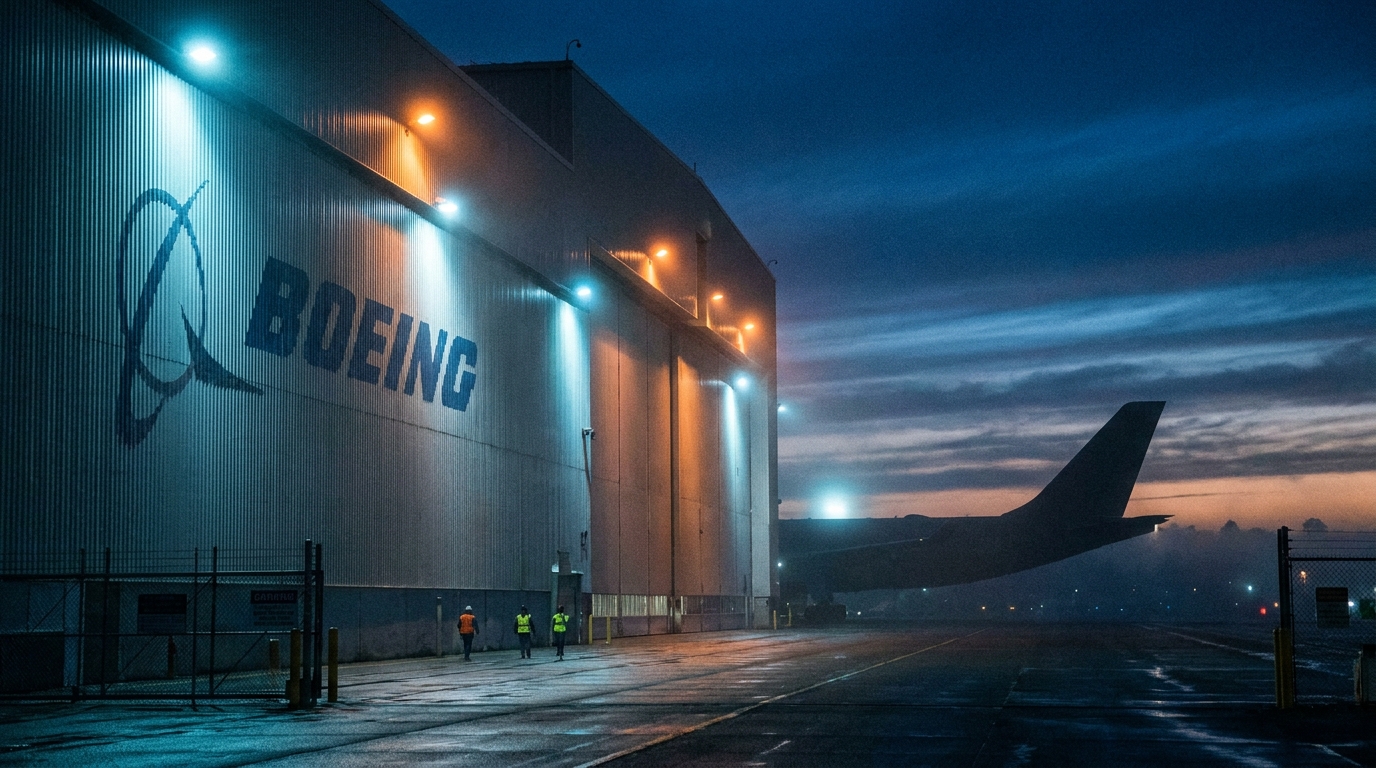
    The next day, April 23, the first production-standard Boeing 777-8 Freighter rolled out of final assembly at the Everett factory — the airframe that has to carry the cargo line into the next decade once the commercial 767F program ends in 2027.

    Together, these are the two stories that define what life on Paine Field’s north end looks like after the 767 commercial sundown. This guide pulls them into a single picture.

    The 767 Commercial Sundown — The Cliff Everett Is Walking Toward

    The Everett 767 line has been delivering aircraft for 45 years. Boeing has confirmed the commercial 767F program ends in 2027 once the remaining 33 orders for FedEx and UPS are delivered. After that, the 767 building reverts to a KC-46-only line.

    That sentence — “767 building reverts to a KC-46-only line” — is the single most important fact about Everett’s 2027 production footprint. It means the commercial cargo workforce currently building 767Fs needs somewhere to go. Boeing’s answer has two halves: the KC-46 program absorbs as much defense work as the Pentagon funds, and the 777-8F absorbs the commercial cargo workforce.

    Half One — The KC-46 Backlog: Three Numbers

    The KC-46 program backlog at Everett right now sits on three numbers worth understanding together.

    The 2026 delivery target. Boeing delivered 14 KC-46 tankers in 2025 and is targeting 19 deliveries in 2026 — a 36 percent year-over-year increase out of the Everett line. The 105th tanker delivered earlier this month is the cumulative milestone; the 19-jet pace is the run-rate.

    Lot 12. Boeing secured a $2.47 billion expansion of the Air Force’s KC-46A program — formally Lot 12 — funding 15 additional tankers along with software licensing, subscriptions, and through-life support. Deliveries under Lot 12 run through 2029. That’s three more years of guaranteed Everett tanker production beyond what was already on the books.

    The 75-tanker recapitalization plan. The Air Force has signaled it intends to extend Pegasus production beyond the original 179-aircraft program of record and buy roughly another 75 tankers to recapitalize the aging KC-135 fleet. The KC-135 first flew in 1956. The Air Force still flies about 380 of them. There is exactly one production line in the world that builds the airframe the Air Force has chosen to replace it with. That line is in Everett.

    Half Two — The 777-8F Rollout: What April 23 Actually Means

    The aircraft that left the hangar on April 23 is the first production-standard 777-8 Freighter. It has been in build since Boeing began 777-8F production in July 2024 — a roughly 21-month build cycle for an all-new variant of an all-new airframe family.

    The 777-8F is built on the 777X platform Boeing launched commercially in 2013 and has spent the intervening years certifying. It uses the same GE9X engines, the same composite folding wingtip, and the same 787-derived flight deck as its passenger sibling, the 777-9. What’s different is the mission: this jet hauls cargo, not people.

    Published specifications: structural payload of roughly 118 metric tons, range of about 4,410 nautical miles, and Boeing claims up to 30 percent better fuel efficiency than the previous-generation 777F. That number matters because the previous-generation 777F is the freighter the 777-8F is being asked to replace in operators’ fleets.

    The customer picture: Qatar Airways is the program launch customer with 34 orders firm — the largest single 777-8F book of business. Cargolux, the Luxembourg-based all-cargo carrier, is on track to be the first operator to take physical delivery. Lufthansa Cargo and ANA round out the announced launch customer set. First deliveries are targeted for 2028.

    Why Defense and Commercial Backlogs Look Different

    Commercial aerospace cycles. Defense aerospace doesn’t, at least not on the same timescale. The 737 North Line ramps because customer airline demand pulls it forward; if airlines stop ordering, the line slows down. The KC-46 line moves at the speed of the Pentagon’s appropriations cycle, the Air Force’s tanker fleet age curve, and the certified production rate Boeing can hold.

    For workers in Everett, that distinction matters. The KC-46 program is more recession-resistant than commercial programs across the same fence line. It is also, in dollar terms, a lower-margin business for Boeing — the program has booked over $7 billion in cumulative cost overruns since inception, including a $565 million charge in Q4 2025 driven by supply chain costs and increased production support expenses at Everett.

    Cost overruns hurt corporate margins, but they do not turn off the production line. The Air Force needs the airframes.

    How the Two Lines Sit Inside the Everett Footprint

    The 777X final assembly line is at Paine Field. So is the 767F line. So is the KC-46 tanker line. Everett has been the cargo capital of Boeing’s commercial production for decades, and the workforce that puts those airframes together — wing join, systems install, flight line, paint, delivery center — is the same workforce that gets handed the 777-8F as the 767F winds down.

    For IAM District 751 mechanics and SPEEA engineers told for years that the 777X program is the future of the Everett cargo footprint, the April 23 rollout is the first time that future has a tail number on it.

    The Everett Production Picture in 2027

    When the 767 commercial line closes in 2027, here’s what remains active at Paine Field’s north end:

    • **737 North Line** — first 737 MAX assembly outside Renton in Boeing history, ramping toward production rate
    • **KC-46 tanker line** — 19 jets in 2026, Lot 12 through 2029, additional 75-tanker plan beyond
    • **777X passenger line** — 777-9 working through certification
    • **777-8F freighter line** — first jet rolled out April 23, 2026, deliveries from 2028
    • **Final assembly support, flight line, paint, delivery center** — supporting all programs

    That is a fundamentally different mix from 2020, when the 747 line was still active and the 787 had moved to South Carolina. The defense and cargo balance now anchors the factory.

    Why This Matters Beyond Boeing

    Everett’s aerospace footprint is roughly 30,000 direct jobs at Paine Field plus the supplier base across Snohomish County. The 5,200-worker aerospace shortage projected by the Aerospace Futures Alliance for Washington state is happening into a backlog that — between defense and cargo — has clear visibility through 2029 and program-level visibility well beyond. The April 22 earnings call and the April 23 rollout are the two pieces of evidence that the post-767 plan is operationally underway.

    For the City of Everett, that has economic-development implications. For Snohomish County aerospace suppliers, it’s a sourcing signal. For commercial real estate, it sets the floor under demand for industrial and flex space near Paine Field. For workers on the line, it answers the question that has hung over the cargo workforce for two years: what comes after the 767?

    The answer, in two parts, was visible in a single week in April 2026.

    Frequently Asked Questions

    Q: When does the Boeing 767 commercial line in Everett close?

    A: Boeing has confirmed the commercial 767F program ends in 2027 once the remaining 33 orders for FedEx and UPS are delivered. After that, the 767 building reverts to a KC-46-only line.

    Q: How many KC-46 tankers will Boeing deliver from Everett in 2026?

    A: Boeing is targeting 19 KC-46 deliveries in 2026, up from 14 in 2025 — a 36 percent year-over-year increase out of the Everett line.

    Q: What is Lot 12 of the KC-46 program?

    A: Lot 12 is a $2.47 billion expansion of the Air Force’s KC-46A program funding 15 additional tankers along with software licensing, subscriptions, and through-life support. Deliveries under Lot 12 run through 2029.

    Q: When did the first Boeing 777-8 Freighter roll out of Everett?

    A: The first production-standard 777-8F rolled out of final assembly at the Everett factory on Thursday, April 23, 2026.

    Q: Who is the launch customer for the Boeing 777-8F?

    A: Qatar Airways is the program launch customer with 34 firm orders. Cargolux is currently on track to be the first operator to take physical delivery. Lufthansa Cargo and ANA round out the announced launch customer set.

    Q: When will the first 777-8F be delivered?

    A: Boeing has targeted first deliveries for 2028, following engine integration, ground testing, and first flight.

    Q: What programs will the Everett factory still build after the 767 commercial line closes?

    A: After 2027, Everett will continue producing the 737 (North Line), KC-46 Pegasus tanker, 777-9 passenger jet, and 777-8F freighter. The 767 building reverts to a KC-46-only line.

    Q: How many KC-135 tankers does the Air Force still operate?

    A: The Air Force still flies about 380 KC-135 tankers, an airframe that first flew in 1956. The KC-46 Pegasus is the chosen replacement airframe.

  • Notion Update: Voice input on desktop

    Notion Update: Voice input on desktop

    The Machine Room · Under the Hood

    Notion Update: Voice Input Now Available on Desktop

    What’s New: Notion has rolled out native voice input on desktop, letting users dictate content directly into database entries, docs, and wiki pages. For our team, this unlocks faster content capture workflows and reduces friction during brainstorming sessions when hands are tied up with other tasks.

    What Changed

    As of April 6, 2026, Notion users on desktop (Windows and Mac) can now activate voice input to dictate directly into any text field. This isn’t voice-to-note in a separate app—it’s native to Notion’s interface. You click a microphone icon, speak, and your words appear in real time in the field you’re focused on.

    The feature supports:

    • Real-time transcription with automatic punctuation
    • Multiple language recognition (English, Spanish, French, German, Mandarin, and others)
    • Editing commands (“delete that last sentence,” “capitalize next word”)
    • Database cell input—you can voice-fill a database entry without typing
    • Seamless switching between voice and keyboard

    This comes on the heels of Notion’s mobile voice features, which launched last year. Now desktop users have parity.

    What This Means for Our Stack

    We run a hybrid workflow at Tygart Media. Our content operations live in Notion—client briefs, editorial calendars, SEO research notes, performance audits, and AI prompt templates. Right now, when we’re in discovery calls or reviewing competitor content with clients on video, someone is typing notes. It’s slow. It splits attention.

    Voice input changes this. Here’s how:

    Faster Discovery Documentation: During client calls, whoever’s facilitating can voice-dictate competitor insights, pain points, and strategic notes directly into a Notion database. No alt-tabbing to Google Docs. No transcription lag. The data lands in the same system where we’ll reference it during content planning.

    Content Brainstorming at Scale: Our Claude + Notion workflow (where we use Claude to generate content outlines that feed into Notion projects) benefits from cleaner input data. When our strategy team can voice-dump ideas into a Notion page during brainstorming, they’re capturing more nuance than a rushed text summary. Claude’s later analysis of those notes will be richer.

    Reduced Friction for Non-Typists: Some of our clients and partners aren’t fast typists. Offering voice input as an option when they’re contributing feedback or brief content to shared Notion workspaces makes collaboration smoother. It lowers the barrier to async input.

    Integration with Our Stack: Notion is the single source of truth in our workflow. When data flows into Notion faster and more accurately, it downstream affects:

    • Metricool: Our social scheduling relies on content outlines stored in Notion. Faster ideation → faster publishing calendars.
    • DataForSEO: Competitive research notes voice-captured into Notion get cross-referenced with our API data pulls. Richer notes = better context for opportunities.
    • GCP + Claude: We pipe Notion database content to Claude for analysis and generation. Voice input means more detailed input data, fewer OCR/transcription errors.
    • WordPress: Our final content lives here, but the blueprint lives in Notion. Cleaner source data = cleaner published output.

    What It Doesn’t Change: This is additive, not transformative. Voice input doesn’t alter how we structure databases or APIs. It doesn’t replace the need for editing—transcription is fast but not always perfect. We’ll still need to review and refine voice-captured content before it feeds downstream into production workflows.

    Action Items

    1. Test voice input on our primary workspaces. Will is testing it on our client brief template and internal research database this week. Goal: identify whether transcription accuracy is high enough to skip manual review for casual notes (vs. final content).
    2. Document use cases for our team. We’ll update our internal SOP in Notion with guidance on when voice input is appropriate (brainstorming, research capture) vs. when it’s not (final copy, sensitive client data, complex technical terms).
    3. Brief clients who share Notion workspaces. We have 3-4 clients with read/edit access to shared Notion pages. In our next sync with them, we’ll mention that voice input is now available and demonstrate how it works. Some might find it useful for feedback or content contribution.
    4. Monitor for API-level updates. Notion will likely expose voice input data through their API at some point. If that happens, we can build automation around it (e.g., auto-tagging voice notes, triggering Claude analysis on new voice-captured entries).
    5. Revisit transcription workflow in 60 days. Schedule a check-in to see if voice input has genuinely sped up our content intake, or if it’s added a new editing step that negates the time savings.

    FAQ

    Does voice input work on mobile Notion already?

    Yes. Notion shipped voice input on iOS and Android last year. This desktop release brings parity. The feature works the same across platforms, though desktop users appreciate being able to use a microphone headset for hands-free, longer-form dictation.

    Will transcription errors be a problem?

    Probably not for rough notes, but yes for final copy. Notion’s voice engine (powered by cloud transcription APIs) is accurate for standard English, but struggles with industry jargon, brand names, and technical terms. We’ll likely voice-capture research notes, then Claude can refine them. For client-facing work, we’ll keep typing.

    Can we use voice input on database cells?

    Yes—that’s one of the big advantages. If you have a Notion database with a “Notes” column, you can click into a cell, activate voice input, and dictate directly into that cell. This is useful for filling in quick metadata during research or calls.

    What about privacy and data?

    Voice data is transmitted to Notion’s servers for transcription, then deleted. Notion doesn’t retain audio files. For sensitive client calls, you may want to opt out and stick with typing. Check Notion’s privacy docs for specifics based on your workspace plan.

    Will this integrate with our Claude workflow?

    Not automatically. But we can voice-capture notes into Notion, then pipe those notes to Claude for summarization or analysis. This is already part of our workflow—voice input just makes the capture step faster.


    📡 Machine-Readable Context Block

    platform: notion_releases
    product: notion
    change_type: feature
    source_url: https://www.notion.so/releases/2026-04-06
    source_title: Voice input on desktop
    ingested_by: tech-update-automation-v2
    ingested_at: 2026-04-07T18:19:45.365516+00:00
    stack_impact: medium

  • Airplane Projects Offline Productivity AI Outages — AI & Technology Concepts Visual

    Airplane Projects Offline Productivity AI Outages — AI & Technology Concepts Visual

    Professional working productively on laptop during airplane flight with offline AI tools and holographic interfaces
    Professional working productively on laptop during airplane flight with offline AI tools and holographic interfaces

    About This Image

    This image is part of the AI & Technology Concepts collection in the Tygart Media visual library. Every image produced by Tygart Media is AI-generated using Google Vertex AI (Imagen), converted to WebP format, and injected with full IPTC/XMP metadata before publication.

    Technical Details

    • Format: WEBP
    • Collection: AI & Technology Concepts
    • Media ID: 390
    • Pipeline: Vertex AI Imagen → WebP → IPTC/XMP → WordPress

    Image Licensing

    All images in the Tygart Media visual library are produced in-house using AI image generation and are owned by Tygart Media.