A Municipal Utility That’s Actually Building the Future
Tacoma Power is a municipal utility — owned by the City of Tacoma, governed by a publicly elected utility board, and accountable to ratepayers who are also voters. That structure matters because it means the decisions being made about clean energy, EV infrastructure, and green hydrogen aren’t being made by a shareholder-accountable corporation in a distant headquarters. They’re being made here, by people who live here, using revenue generated here.
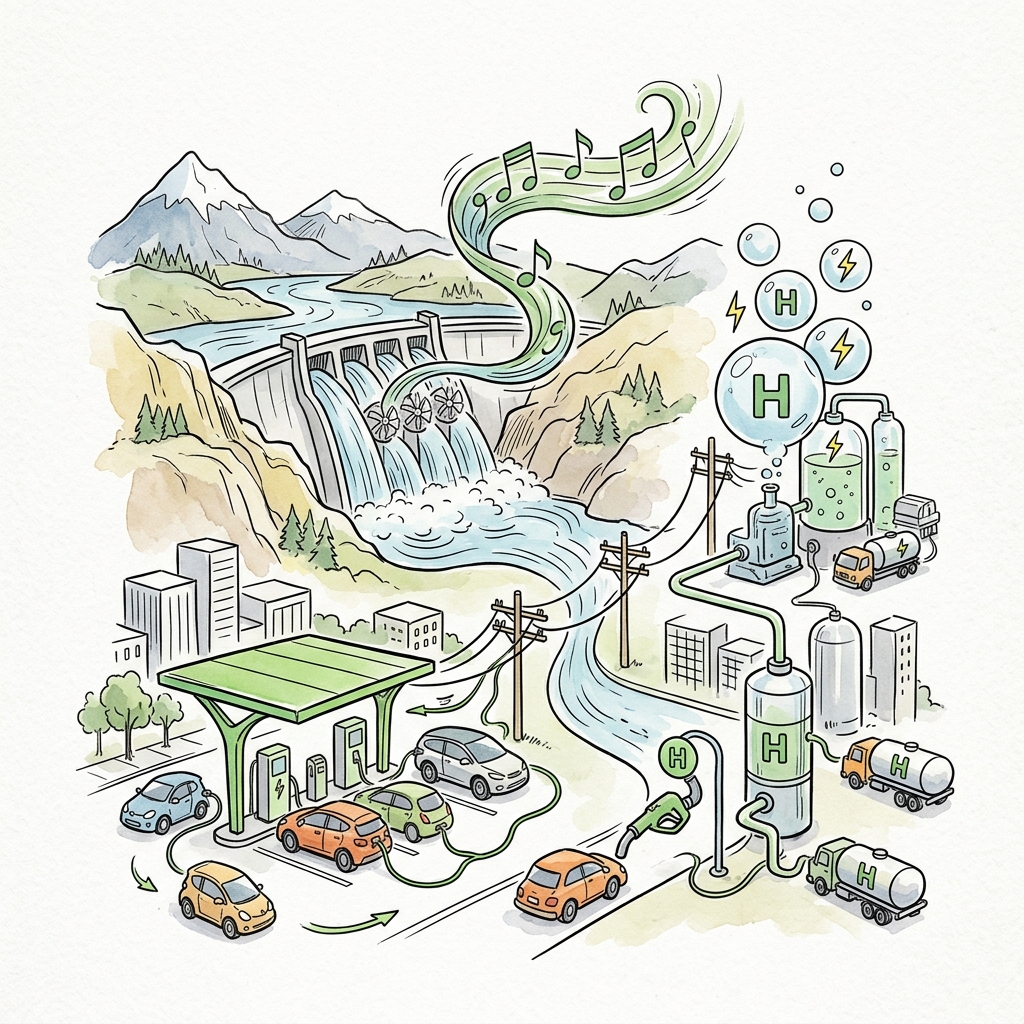
And the decisions they’re making are genuinely forward-looking. Tacoma Power already generates approximately 88% of its electricity from clean hydroelectric sources, charges some of the lowest rates in the nation, and is now investing in three specific infrastructure plays that position the city for the energy economy of the next two decades: a comprehensive EV charging network, the nation’s first green hydrogen interruptible rate, and ongoing hydroelectric system upgrades.
The EV Charging Network: 51 Downtown Chargers and Growing
Tacoma Power’s EV charging strategy isn’t a handful of chargers in a parking garage. It’s a systematic buildout that has nearly doubled downtown charging capacity in the past year.
The Downtown EV Charging Expansion Project installed 21 new chargers across seven City-operated parking lots and garages, two of which are located near I-705 for commuter accessibility. Downtown Tacoma now has 51 public EV chargers — 47 Level 2 chargers and two Level 3 DC fast chargers — with an additional 13 set to become operational shortly.
Beyond downtown, the city has deployed chargers across its Neighborhood Business Districts. Thirteen of Tacoma’s 15 Neighborhood Business Districts have received new streetside Level 2 chargers, most mounted to existing streetlight poles to minimize infrastructure footprint while maximizing geographic coverage.
The pricing is the part that makes this work as economic development, not just environmental policy. Level 2 curbside charging in Tacoma runs $0.21 per kWh — equivalent to approximately $2.30 per gallon of gas. That pricing is possible because the electricity comes from Tacoma Power’s hydroelectric system, not fossil fuel generation. The utility’s clean grid means EV charging in Tacoma is both cheap and genuinely zero-carbon.
The network effect matters here. Electrify America has installed DC Fast Charging sites in Pierce County, and ChargePoint operates Level 2 stations across shopping centers, hotels, and workplaces. The combination of municipal, utility-scale, and private-sector charging creates the density that eliminates range anxiety — which is what actually drives EV adoption.
The Green Hydrogen Rate: First in the Nation
This is where Tacoma Power is genuinely pioneering. In December 2020, Tacoma Power became the first consumer-owned utility in the nation to offer an electricity rate specifically designed for green hydrogen production. The electrofuel tariff went into effect on April 1, 2021, and it’s structured to attract industrial-scale hydrogen producers to Tacoma’s service territory.
The rate design is elegant. According to Utility Dive’s reporting, the tariff offers:
Discounted energy rate: $0.033147 per kWh — approximately 15% below the regular industrial rate.
Demand rate: $5.72 per kW-month, plus a monthly administrative charge of $7,445.
The trade-off: Guaranteed service on 85% of all hours of the year, with Tacoma Power retaining the option to interrupt service on 15% of hours (up to approximately 1,300 hours annually) with ten minutes’ notice.
The interruptible structure is what makes this work for both sides. Hydrogen electrolysis can ramp up and down relatively quickly, making it an ideal demand-response load. When Tacoma Power needs to shed load — during peak demand, low water years, or transmission constraints — it can interrupt hydrogen production without affecting residential or commercial customers. The hydrogen producers get a rate that makes their production economics viable. The utility gets a flexible load that improves grid management. Ratepayers get a new industrial customer without bearing additional peak demand risk.
The concept is that Tacoma Power’s abundant, low-cost hydropower would be converted to green hydrogen, stored, and trucked in liquid form to meet local fuel and industrial needs. This positions Tacoma as a potential green hydrogen hub in the Pacific Northwest — a significant economic development play that leverages the city’s existing energy infrastructure advantage.
Hydroelectric Infrastructure: The Foundation
Everything Tacoma Power does in clean energy is built on its hydroelectric system. The utility operates three major hydro projects:
Cowlitz River Project — Mayfield Dam and Mossyrock Dam, the latter being the tallest dam in Washington state at 606 feet.
Nisqually River Project — Alder Dam and LaGrande Dam, providing baseload generation from the Nisqually watershed.
Cushman Hydro Project — On the North Fork of the Skokomish River. The City recently completed a significant upgrade, installing two Francis turbine/generator units at Cushman No. 2 that added approximately 3.6 megawatts of generating capacity — expected to produce more than 23,000 megawatt-hours annually. This project also developed an innovative fish collection and passage system that is reintroducing endangered steelhead and salmon populations upstream of the dams.
The Cushman upgrade exemplifies what a well-managed municipal utility can do: extract more generation from existing infrastructure while simultaneously addressing environmental obligations. The fish passage system was developed as part of the project’s federal relicensing, and it demonstrates that hydroelectric generation and fish recovery aren’t zero-sum — they can be engineered together.
What This Means for Business
Tacoma Power’s rate advantage is the city’s single most powerful economic development tool. Industrial rates near $0.03/kWh, residential rates around $0.10/kWh, and a grid that’s 88% carbon-free make Tacoma uniquely attractive for energy-intensive businesses — data centers, manufacturing, cold storage, and now green hydrogen production.
The EV charging network removes a barrier for businesses considering fleet electrification. The green hydrogen rate creates the possibility of a new industrial cluster. And the hydroelectric upgrades ensure that the generation capacity exists to support growth without rate spikes.
I pay a Tacoma Power bill every month. I charge an EV on Tacoma Power’s grid. The rate I pay is lower than what my colleagues in Seattle pay for electricity generated partly from natural gas. That’s not marketing — that’s the bill.
Frequently Asked Questions
How much does EV charging cost in Tacoma?
Level 2 curbside charging through Tacoma Power’s network costs $0.21 per kWh, equivalent to approximately $2.30 per gallon of gas. This pricing is powered by clean hydroelectric generation.
What is Tacoma Power’s green hydrogen rate?
The electrofuel tariff, effective since April 2021, offers hydrogen producers a discounted rate of $0.033/kWh in exchange for being interruptible up to 1,300 hours annually. Tacoma Power was the first consumer-owned utility in the nation to offer this type of rate.
Where does Tacoma Power’s electricity come from?
Approximately 88% of Tacoma Power’s electricity comes from clean hydroelectric sources, generated at three major dam systems on the Cowlitz, Nisqually, and Skokomish rivers.
How many EV chargers are in downtown Tacoma?
Downtown Tacoma has 51 public EV chargers (47 Level 2 and 2 Level 3 DC fast chargers), with 13 additional chargers becoming operational soon. Thirteen of the city’s 15 Neighborhood Business Districts also have streetside chargers.
What hydroelectric upgrades has Tacoma Power made recently?
The most significant recent upgrade was at Cushman Dam No. 2, where two new Francis turbine/generator units added 3.6 MW of capacity (23,000+ MWh annually) alongside an innovative fish passage system for endangered steelhead and salmon.