Tag: Renewable Energy

  • For Snohomish County Aerospace Suppliers: Two Years of ZeroAvia at Paine Field and the Hydrogen-Electric Components Opportunity

    For Snohomish County Aerospace Suppliers: Two Years of ZeroAvia at Paine Field and the Hydrogen-Electric Components Opportunity

    If you run a precision machining shop, a composite house, an avionics integration shop, or any of the 1,350-plus aerospace establishments in Snohomish County, the ZeroAvia anniversary at Paine Field is the supplier story most coverage doesn’t tell. Two years in, the Everett Propulsion Center of Excellence is sourcing aviation-grade motor and power electronics components from a supply base that overlaps almost completely with the one that already feeds Boeing — and ZeroAvia’s separate components-sales business effectively creates a second downstream customer for that same supply base.

    The Supplier Question, Asked Plainly

    Most coverage of ZeroAvia treats the company as a downstream consumer of aerospace technology. The supplier-side question — what does this facility buy, from whom, and at what cadence? — has been mostly absent from public reporting. After two years of operations, here is what the Snohomish County supplier base can reasonably read into the public record:

    What ZeroAvia’s Everett Facility Sources

    The Propulsion Center of Excellence manufactures electric motors and power electronics — inverters, converters, motor controllers — for ZeroAvia’s ZA600 and ZA2000 powertrains and for sale to other electric and hybrid aviation programs. Without speculating on specific vendor relationships, the bill of materials for a finished motor or power electronics unit at aviation grade typically includes:

    • Precision-machined rotor and stator components — tight tolerance work that Snohomish County’s machining base already produces for turbofan and engine accessories.
    • Composite and bonded housings, mounts, and structural elements — directly adjacent to the composite work the county’s shops already do for Boeing programs.
    • Wire harness assemblies and high-current cabling — overlapping with avionics integration and electrical sub-assembly.
    • Connector and terminal hardware — aviation-rated, the same standards already used in airframe wiring.
    • Coil winding and electromagnetic sub-assemblies — a specialty subset of precision manufacturing.
    • Quality, conformity, and test instrumentation — the same kinds of tooling and test rigs the existing supply base already builds.
    • Logistics, packaging, and crating — for finished aviation components shipped to integrators and aircraft programs.

    None of that is a different supply base from the one already standing in Snohomish County. Suppliers do not need to retool to serve electric propulsion work the way a paint shop would have to retool to serve composites work. The qualification gates are different — aviation-grade electrical specs instead of structural specs — but the manufacturing capability is the same.

    Why the Components-Sales Business Is the Bigger Supplier Signal

    The most underappreciated piece of the ZeroAvia model from a supplier perspective is the components-sales business. The Everett facility manufactures motors and power electronics not only for ZeroAvia’s own aircraft programs but also for sale to other electric and hybrid aviation programs.

    From a supply chain standpoint, that means demand for the upstream supply base — Snohomish County’s machining shops, composite houses, harness builders, and quality services — is not tied to ZeroAvia’s own aircraft program winning the regional aviation market. It is tied to the broader growth of the electric and hybrid aviation industry across multiple continents. That diversifies demand for the supplier base in a way a single-customer relationship would not.

    The 2026–2028 Ramp Window

    ZeroAvia’s public roadmap targets a 300-mile-range powertrain in a 10- to 20-seat aircraft by the end of 2026, and a 700-mile-range, 40- to 80-seat powertrain by 2028. From a supplier-planning standpoint:

    • The end-of-2026 milestone tracks the ZA600 (600 kW) volume ramp. The motors and electronics for that powertrain are sized for 10- to 20-seat aircraft — smaller per-unit content, potentially higher per-program count.
    • The 2028 milestone tracks the ZA2000 (1.8 MW) volume ramp. The per-unit content is meaningfully larger because the machine itself is larger.
    • The components-sales business runs in parallel with both, sized against demand from the broader electric aviation industry rather than ZeroAvia’s own roadmap.

    Suppliers thinking about capacity and qualification for hydrogen-electric work should plan against the 2026 ramp as the immediate window and the 2028 ramp as the step-change.

    Qualification — The One Real Adjustment

    The single area where Snohomish County suppliers will face real adjustment is qualification. Aviation-grade electrical and electromagnetic specifications — DO-160, DO-178/254 where applicable, AS9100 process baseline, and motor- and inverter-specific aviation standards — are different from the airframe and engine accessory specifications that dominate the existing supply base.

    For shops that already operate under AS9100 and have done DO-160 environmental qualification work for avionics customers, the path is short. For shops that have only ever served airframe work, the qualification path is longer but is the same path electrification is already pulling the entire aerospace supply base toward.

    What Two Years Tells Suppliers About the Bet

    The most important supplier signal from two years of ZeroAvia at Paine Field is that the building is still here. Hydrogen-electric aviation is a long, certification-gated industry, and the most common failure mode for new propulsion technology companies is running out of runway before reaching commercial volume. ZeroAvia’s two-year mark in Everett — combined with public state and federal support and the diversification of revenue across both aircraft programs and components sales — is the kind of structural durability that justifies supplier-side investment in qualification work.

    For Snohomish County’s aerospace supplier base — which has spent the past several years reading the 767 sundown and KC-46 transition and tracking the 777X’s path through FAA certification — ZeroAvia is the second technology base growing on the same airfield. It is not a replacement for the Boeing relationship. It is a parallel demand source that the same supply base can serve.

    Frequently Asked Questions

    How does a Snohomish County supplier get qualified to sell to ZeroAvia?

    The path runs through ZeroAvia’s procurement organization at the Everett facility and through the standard aviation supplier-qualification process — AS9100 baseline, DO-160 where applicable, plus product-specific qualification for whatever component or process the supplier is offering. Suppliers should engage directly with ZeroAvia procurement and the Economic Alliance Snohomish County for introductions.

    Is the Everett facility’s supply chain primarily local or international?

    ZeroAvia has not publicly disclosed its supply chain breakdown. What’s structurally true is that physical proximity, lead time, and aerospace cluster expertise favor local sourcing for many manufacturing categories, and Snohomish County has the densest aerospace supply base in the country.

    What product categories should our shop think about first?

    The closest matches to existing Snohomish County aerospace capacity are precision machining of rotor and stator components, composite and bonded housings, wire harness assembly, coil winding and electromagnetic sub-assemblies, and aviation-grade quality and test services.

    Does ZeroAvia’s components-sales business expand the customer set beyond ZeroAvia?

    Yes. The components business sells aviation-grade motors and inverters to other electric and hybrid aircraft programs. Suppliers that qualify for the Everett facility’s bill of materials are effectively serving demand from a broader electric aviation market segment.

    How does the 2026 ramp window compare to 2028 for supplier-planning purposes?

    The 2026 milestone — a 300-mile-range powertrain in a 10- to 20-seat aircraft — is the immediate ramp window for the ZA600. The 2028 milestone — a 700-mile-range, 40- to 80-seat powertrain — is the step-change for the ZA2000 and is the date suppliers should plan capacity expansion against.

    Related Exploring Everett Coverage

  • Two Years of ZeroAvia at Paine Field: The Complete 2026 Guide to Hydrogen-Electric Aviation in Everett

    Two Years of ZeroAvia at Paine Field: The Complete 2026 Guide to Hydrogen-Electric Aviation in Everett

    Quick answer: ZeroAvia’s Propulsion Center of Excellence at Paine Field in Everett, Washington opened on April 24, 2024 as the company’s first U.S. manufacturing facility. Two years later, in April 2026, the 136,000-square-foot building remains the most significant single hydrogen-electric aviation manufacturing site in North America. It manufactures electric motors and power electronics for ZeroAvia’s ZA600 (600 kW) and ZA2000 (1.8 MW) hydrogen-electric powertrains, and supplies aviation-grade components to other electric and hybrid aircraft programs. The company’s public roadmap targets a 300-mile-range, 10–20-seat hydrogen-electric powertrain by the end of 2026 and a 700-mile-range, 40–80-seat powertrain by 2028.

    Why a Two-Year Anniversary Is Actually a Story

    On April 24, 2024, then-Governor Jay Inslee, U.S. Rep. Rick Larsen (WA-2), and U.S. Rep. Suzan DelBene (WA-1) cut a ribbon at a 136,000-square-foot building on the south side of Paine Field. The building is ZeroAvia’s Propulsion Center of Excellence — the company’s first U.S. manufacturing facility, and the largest single physical bet in North American hydrogen aviation at the time.

    Two years later, the building is still here. The bet is still live. Most aerospace coverage in Everett is still about the 737 MAX North Line ramping up across the airfield and the 777X moving through FAA Phase 4A. But the quieter story two miles away is that Paine Field is now the anchor address for hydrogen-electric aviation in the United States — and the manufacturing capacity that has to exist before any commercial hydrogen flight ever happens is being built right here.

    What ZeroAvia Actually Builds at Paine Field

    ZeroAvia’s core technology is a hydrogen-electric powertrain. Hydrogen fuel cells produce electricity. The electricity drives high-output electric motors. The motors spin propellers. Water vapor is the only emission. The energy density of hydrogen — roughly 100 times that of the best lithium-ion batteries available today — is what makes the math work for regional aircraft, where battery-only designs run out of range long before they run out of seats.

    The Everett Propulsion Center of Excellence builds two specific things inside that powertrain: the electric motors that turn the propeller, and the power electronics — inverters, converters, motor controllers — that condition the electricity coming off the fuel cell. The facility supports both of ZeroAvia’s announced systems (the 600-kilowatt ZA600 and the 1.8-megawatt-class ZA2000) and a separate components business that sells aviation-grade motors and inverters to other electric and hybrid aircraft programs.

    That second piece matters more than most coverage acknowledges. It means the Everett facility is not betting everything on ZeroAvia winning the entire hydrogen aviation race. Every electric aircraft program in the world that needs an aviation-grade motor or inverter — small electric trainers, hybrid regional aircraft, electric vertical takeoff platforms — is a potential customer for components manufactured at Paine Field.

    Why ZeroAvia Picked Everett

    ZeroAvia announced Paine Field as its U.S. R&D site in January 2022 and broke ground on the manufacturing expansion the following year. The reasons it picked Everett look familiar to anyone who has watched aerospace site selection in Snohomish County:

    • The supply chain. Snohomish County is home to more than 1,350 aerospace-related business establishments — composite shops, precision machining houses, test labs, avionics integrators. Every one of them makes the job of standing up a new propulsion line easier than it would be in a city without aerospace muscle memory.
    • The workforce. The same machinists, engineers, and technicians who build Boeing wide bodies can build hydrogen fuel cell stacks and high-output electric motors. Aviation-grade manufacturing skills do not have a propulsion bias. The IAM 751 Machinists Institute pipeline that feeds the 737 North Line is the same pipeline ZeroAvia can recruit from.
    • The airport. Paine Field is one of the few general aviation airports in the country with the runway length, the FAA infrastructure, and the operational tempo to support flight testing of new propulsion systems. ZeroAvia conducts ground testing, hot-fire tests, and component validation directly on the airfield.
    • The state’s commitment. The Washington State Department of Commerce backed the original site selection with a state grant, citing aerospace cluster development and decarbonization as joint policy goals. The bipartisan congressional turnout at the 2024 ribbon cutting reflected that.

    The Public Roadmap, Two Years In

    ZeroAvia’s published roadmap targets two milestones the Everett facility is building toward:

    • End of 2026: A 300-mile-range hydrogen-electric powertrain in a 10- to 20-seat aircraft — the size class served today by the Cessna Caravan, the Britten-Norman Islander, and the De Havilland Twin Otter on short regional and commuter routes.
    • By 2028: A 700-mile-range, 40- to 80-seat powertrain — the size class served today by the De Havilland Canada Dash 8 and the ATR 42/72 on regional turboprop routes.

    If those targets land on time, the Everett facility will be the manufacturing site for the first commercially certified hydrogen-electric propulsion system in U.S. regional aviation. The launch market will not be transcontinental airlines. It will be the regional carriers, cargo operators, and corporate fleets that fly short hops where the energy density of hydrogen and the simplicity of an electric motor become competitive with a turbine.

    It is important to be precise about what 2026 means: the powertrain target is the propulsion system itself, not a passenger-carrying delivery. Aircraft integration, FAA supplemental type certification, and operator approval are separate gates that follow.

    What the Anniversary Tells Us About Everett’s Aerospace Future

    For decades, the propulsion expertise on Paine Field has been turbofan-and-turboprop. Boeing’s twin-aisle widebody program, the 737 MAX North Line ramping up now in Everett’s first single-aisle final assembly line, Pratt & Whitney suppliers, and GE Aerospace partners have all built around that single technology base. Two years of ZeroAvia at Paine Field has added a second propulsion technology base: hydrogen-electric. The two are not in competition for the foreseeable future — wide bodies will keep flying the long-haul missions that hydrogen cannot reach for years — but they are now neighbors on the same airfield, drawing from the same workforce, and supplied by some of the same Snohomish County vendors.

    That layered model — legacy aerospace and clean propulsion sharing infrastructure — is what makes Everett different from any other aerospace cluster in the country right now. The 777X is moving through FAA certification at one end of the airfield. ZeroAvia is building the manufacturing capacity for the next regional propulsion technology at the other.

    Frequently Asked Questions

    Where exactly is ZeroAvia’s Paine Field facility?

    ZeroAvia’s Propulsion Center of Excellence is located on the south side of Paine Field in Everett, Washington. The 136,000-square-foot facility is the company’s first U.S. manufacturing site and houses both R&D operations and the production line for electric motors and power electronics.

    When did ZeroAvia open at Paine Field?

    The ribbon cutting was on April 24, 2024. ZeroAvia first announced Paine Field as its U.S. R&D site in January 2022 and broke ground on the manufacturing expansion the following year. The two-year anniversary was April 24, 2026.

    What does ZeroAvia manufacture in Everett?

    The Everett facility manufactures the electric motors and power electronics that go into ZeroAvia’s hydrogen-electric powertrains — including the 600-kilowatt ZA600 and the 1.8-megawatt-class ZA2000 — and aviation-grade components sold to other electric and hybrid aircraft programs.

    How does a hydrogen-electric powertrain work?

    Hydrogen fuel cells generate electricity. The electricity drives high-output electric motors. The motors spin propellers. Water vapor is the only emission. The energy density of hydrogen is roughly 100 times that of the best lithium-ion batteries, which is what makes the math work for regional aircraft.

    What is ZeroAvia’s roadmap?

    The public roadmap targets a 300-mile-range hydrogen-electric powertrain in a 10- to 20-seat aircraft by the end of 2026, and a 700-mile-range, 40- to 80-seat powertrain by 2028. Both are powertrain targets, not passenger-carrying delivery dates.

    Is ZeroAvia in competition with Boeing in Everett?

    No. Boeing’s commercial program in Everett is in widebody and single-aisle commercial aviation that hydrogen-electric propulsion will not reach for the foreseeable future. ZeroAvia is targeting regional aircraft in the 10- to 80-seat class. The two propulsion technologies share workforce, suppliers, and airfield infrastructure but operate in different market segments.

    Who attended the original ribbon cutting in 2024?

    Then-Washington Governor Jay Inslee, U.S. Rep. Rick Larsen (WA-2, the district that includes Paine Field), and U.S. Rep. Suzan DelBene (WA-1, the neighboring district). The bipartisan turnout reflected the state’s commitment to aerospace cluster development and decarbonization as joint policy goals.

    Related Exploring Everett Coverage

  • Two Years In at Paine Field: ZeroAvia’s Hydrogen-Electric Bet on Everett’s Aerospace Future

    Two Years In at Paine Field: ZeroAvia’s Hydrogen-Electric Bet on Everett’s Aerospace Future

    Q: What is ZeroAvia doing at Paine Field in Everett?
    A: ZeroAvia operates a 136,000-square-foot Propulsion Center of Excellence at Paine Field — its first U.S. manufacturing facility — where it builds electric motors and power electronics for hydrogen-electric aircraft engines. The center opened on April 24, 2024, with then-Governor Jay Inslee, Rep. Rick Larsen, and Rep. Suzan DelBene in attendance. It marks its second anniversary today, and the company is targeting hydrogen-electric powertrains capable of 300-mile flights in 10- to 20-seat aircraft by the end of 2026.

    Two years ago today, on April 24, 2024, a hydrogen-electric aviation startup named ZeroAvia cut the ribbon on its first U.S. manufacturing facility at Paine Field. The 136,000-square-foot Propulsion Center of Excellence was the largest single bet at the time on the idea that the next generation of regional aircraft wouldn’t burn jet fuel.

    Two years later, the building is still here. The bet is still live. And Everett is quietly the most important physical address in North American hydrogen aviation.

    For a city defined by Boeing’s twin-aisle wide bodies and the new 737 MAX North Line ramping up across the airfield, ZeroAvia’s anniversary is the story most aerospace coverage forgets to tell. It is the story of what comes after Boeing — not as a replacement, but as the next layer on top of the supply chain Boeing built. And it is happening on the same airfield, two miles from where the 777X is being prepared for its first production flight.

    What ZeroAvia actually builds

    ZeroAvia’s core technology is a hydrogen-electric powertrain. Hydrogen fuel cells generate electricity. That electricity drives high-output electric motors. The motors spin propellers. Water vapor comes out the back instead of CO₂. The energy density of hydrogen — roughly 100 times that of the best lithium-ion batteries — is what makes the math work for regional aircraft, where battery-only designs run out of range long before they run out of seats.

    The Propulsion Center of Excellence at Paine Field is where ZeroAvia builds the electric motors and the power electronics that go inside the powertrain. The facility supports both the company’s own 600kW (ZA600) and 1.8MW-class (ZA2000) propulsion systems and a separate components business that sells motors and inverters to other electric and hybrid aviation programs.

    That second piece matters. It means the Everett facility doesn’t depend on ZeroAvia winning the entire hydrogen aviation market by itself. Every electric aircraft program that needs an aviation-grade motor is a potential customer for components built at Paine Field.

    Why Paine Field

    ZeroAvia chose Paine Field as its U.S. R&D site in January 2022 and broke ground on the manufacturing expansion the following year. The reasons it picked Everett look familiar to anyone who has watched aerospace site selection in Snohomish County:

    The supply chain. Snohomish County is home to more than 1,350 aerospace-related business establishments. Composite shops. Precision machining. Test labs. Avionics integrators. Every one of those companies makes ZeroAvia’s job of standing up a new propulsion line easier than it would be in a city without aerospace muscle memory.

    The workforce. The same machinists, engineers, and technicians who build Boeing wide bodies can build hydrogen fuel cell stacks and high-output electric motors. The IAM 751 Machinists Institute training pipeline that feeds the 737 North Line is the same pipeline ZeroAvia can recruit from. Aviation-grade manufacturing skills do not have a propulsion bias.

    The airport. Paine Field is one of the few general aviation airports in the country with the runway length, the FAA infrastructure, and the operational tempo to support flight testing of new propulsion systems. ZeroAvia conducts ground testing, hot-fire tests, and component validation work directly on the airfield — adjacent to the manufacturing floor, not flown to a distant test site.

    The state’s leaning in. The Washington State Department of Commerce supported the original site selection with a state grant, citing aerospace cluster development and decarbonization as joint policy goals. The bipartisan congressional delegation showed up for the ribbon cutting in 2024 — Rep. Larsen, who represents Paine Field, and Rep. DelBene, whose district neighbors it.

    What’s actually happening on the ground in 2026

    ZeroAvia’s public roadmap targets a 300-mile range hydrogen-electric powertrain in a 10- to 20-seat aircraft by the end of 2026 — the kind of aircraft that today flies short regional routes on twin-turboprops like the Cessna Caravan or Britten-Norman Islander. The next step on the roadmap is a 700-mile-range, 40- to 80-seat powertrain by 2028, the size class served today by the De Havilland Canada Dash 8 and ATR 42/72.

    If those targets land on time, the Everett facility will be the manufacturing site for the first commercially certified hydrogen-electric propulsion system in U.S. regional aviation. The launch market is not transcontinental airlines. It is the regional carriers, cargo operators, and corporate fleets that fly short hops where the energy density of hydrogen and the simplicity of an electric motor become competitive with a turbine.

    That is a multi-year, certification-gated process. The 2026 timeline is the powertrain target, not a passenger-carrying delivery date. Aircraft integration, supplemental type certification, and operator approval are separate gates that follow. But the manufacturing capability that has to exist before any of that happens is the part being built right now, on the floor of the Everett Propulsion Center of Excellence.

    Why this matters for Everett

    Two years in, ZeroAvia at Paine Field represents three things Everett’s aerospace economy historically has not had at scale.

    A second propulsion technology base. For decades, the propulsion expertise on the airfield has been turbofan-and-turboprop. The hydrogen-electric workforce ZeroAvia is building — power electronics engineers, fuel cell technicians, high-voltage motor specialists — is a parallel skillset that did not exist locally before 2024.

    A startup-scale aerospace OEM. Boeing employs roughly 31,000 people in Everett and Snohomish County. ZeroAvia is a fraction of that headcount. But it is one of a small but growing cohort of aerospace startups choosing Paine Field over Mojave or San Diego or Long Beach. Eviation. Joby Aviation’s testing partners. Portal Space Systems in Bothell. Each of those names adds a different cell to the local aerospace lattice.

    A bet on what comes next. Hydrogen-electric flight is unproven at commercial scale. The technical risk is real. The certification path is slow. But the industry consensus — including from Airbus, which has a separate hydrogen aircraft program of its own — is that some version of this technology will be in commercial service by the early-to-mid 2030s. Everett is where the U.S. version of that future is being engineered.

    What the next year looks like

    The end-of-2026 powertrain target is the single biggest near-term milestone on ZeroAvia’s roadmap. Watch for: ground test demonstrations of the integrated 600kW system, FAA engagement on the supplemental type certification path for the launch aircraft platform, and component shipments from Paine Field to the customer airframers integrating ZeroAvia’s powertrain into existing certified airframes.

    For locals, the most visible signal will be hiring. ZeroAvia has not published Everett-specific headcount targets, but the company has indicated it intends to grow its U.S. operations meaningfully as the powertrain moves toward production. Job postings for power electronics engineers, manufacturing technicians, and propulsion test engineers — based at Paine Field — will be the leading indicator.

    Two years ago today, ZeroAvia opened a building. Two years from today, the question is whether the building has produced a powertrain anyone can fly. Everett’s answer to that question matters more than most cities realize.

    Frequently Asked Questions

    What is ZeroAvia?
    ZeroAvia is a U.S.- and U.K.-based aviation startup developing hydrogen-electric powertrains for regional aircraft. Hydrogen fuel cells generate electricity that drives high-output electric motors, with water vapor as the only emission.

    When did ZeroAvia open its Paine Field facility?
    The 136,000-square-foot Propulsion Center of Excellence officially opened on April 24, 2024, with then-Washington Governor Jay Inslee, Rep. Rick Larsen, and Rep. Suzan DelBene in attendance.

    What does ZeroAvia build at Paine Field?
    The facility manufactures electric motors and power electronics for ZeroAvia’s own hydrogen-electric powertrains and for sale as components to other electric and hybrid aviation programs.

    How big is ZeroAvia’s powertrain target for 2026?
    ZeroAvia is targeting a hydrogen-electric powertrain capable of 300-mile range in 10- to 20-seat regional aircraft by the end of 2026. A larger 700-mile, 40- to 80-seat powertrain is targeted for 2028.

    Why did ZeroAvia choose Paine Field?
    Snohomish County’s aerospace supply chain (more than 1,350 aerospace establishments), the local skilled workforce, Paine Field’s runway and FAA infrastructure for propulsion testing, and Washington state economic-development support were all cited factors.

    How does this fit with Boeing’s Everett operations?
    ZeroAvia and Boeing are not direct competitors. ZeroAvia builds hydrogen-electric propulsion for regional aircraft (10–80 seats), while Boeing’s Everett operations focus on commercial wide bodies, the 737 North Line, and the KC-46 tanker. Both depend on the same Snohomish County aerospace workforce and supply chain.

    When could a hydrogen-electric aircraft using ZeroAvia powertrains carry passengers?
    The end-of-2026 target is the powertrain itself, not passenger service. Aircraft integration, supplemental type certification, and operator approval are separate gates. Industry consensus puts commercial hydrogen-electric service in the early-to-mid 2030s timeframe.

    Is ZeroAvia hiring at Paine Field?
    The company has indicated it intends to grow U.S. operations as the powertrain moves toward production. Job postings for power electronics engineers, manufacturing technicians, and propulsion test engineers based at Paine Field are the leading indicator of expansion.

  • Solar Energy Dashboard: What to Track, What It Means, and How to Build One

    Solar Energy Dashboard: What to Track, What It Means, and How to Build One

    The Lab · Tygart Media
    Experiment Nº 164 · Methodology Notes
    METHODS · OBSERVATIONS · RESULTS

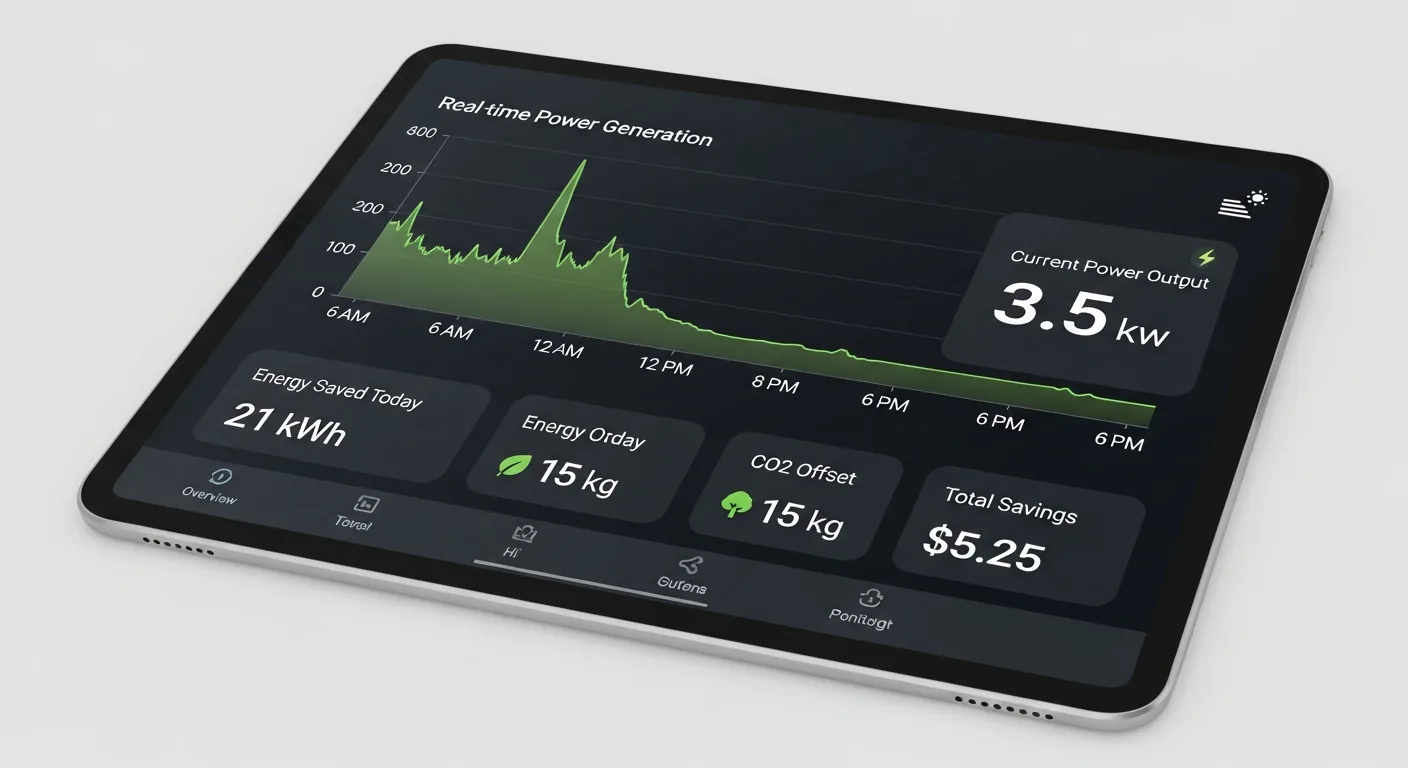
    What is a solar energy dashboard? A solar energy dashboard is a monitoring interface — software, web-based, or mobile — that aggregates real-time and historical data from a solar photovoltaic system. At minimum, it displays energy production (kWh generated), consumption (kWh used), grid export/import, and battery state-of-charge if storage is present. More sophisticated dashboards track weather correlation, financial ROI, carbon offset, and predictive production forecasting.

    When we first put solar panels on the building, I did what most people do: checked the app for a week, thought “neat,” and then basically forgot it existed. The panels were doing their thing. The bill was lower. Life was good.

    Then one month the savings were noticeably smaller. Turned out two panels had a shading issue from a newly grown tree branch that hadn’t been there during installation. The installer’s default app hadn’t flagged anything because it was tracking overall system performance, not per-panel performance. I’d lost weeks of production I didn’t know I was losing.

    That’s when I started building a real solar monitoring dashboard. Not because I wanted another screen to look at — because the default visibility was too coarse to catch real problems.

    What a Solar Energy Dashboard Actually Needs to Show You

    Most manufacturer apps show you the basics: how much power you’re producing right now, how much you’ve produced today, and maybe a graph of production over time. That’s not nothing — but it’s not enough to actually manage a solar system intelligently.

    A useful solar energy dashboard tracks these four data streams:

    Production. How much energy your panels are generating, in real-time (watts) and cumulative (kWh). This should be broken down by inverter string or panel group where your hardware supports it — aggregate production numbers hide individual panel or string underperformance.

    Consumption. How much energy your building or home is using. Without consumption data, you can’t calculate self-consumption rate — the percentage of your solar production that you’re using directly rather than exporting to the grid. Self-consumption rate is the most important efficiency metric in solar systems that don’t have battery storage.

    Grid interaction. How much you’re importing from the grid (when solar isn’t covering demand) versus exporting (when solar is producing more than you’re using). In net metering arrangements, your utility credits you for exports — your dashboard should show you the financial value of that in real terms, not just kilowatt-hours.

    Battery state. If you have battery storage (Tesla Powerwall, Enphase IQ Battery, or similar), real-time state-of-charge and charge/discharge rate is critical. A battery dashboard tells you whether your storage strategy is working — are you filling the battery during peak production and discharging during peak rate hours?

    How to Build a Solar Energy Monitoring Dashboard

    Your path depends on what hardware you have. Most modern inverters and monitoring systems expose an API or local data feed that you can pull into a custom dashboard.

    1. Identify your data sources. What inverter brand do you have? Enphase, SolarEdge, Fronius, SMA, Huawei, and most other major brands have APIs — either cloud-based or local. Your installer’s documentation should list what data is accessible. If you have a smart meter or energy monitor (Emporia, Sense, Shelly EM), that’s your consumption data source.
    2. Choose your dashboard platform. Home Assistant is the most popular open-source option for residential systems — it has native integrations for Enphase, SolarEdge, and most major brands. Grafana is more powerful for custom visualization but requires more technical setup. If you want something with zero code, Powerwall owners get Tesla’s native app, and Enphase users get Enlighten — but both are read-only with limited customization.
    3. Set up data collection. For Home Assistant, install the relevant integration (e.g., the Enphase Envoy integration), configure your inverter’s local or cloud credentials, and set up data logging via InfluxDB or the native recorder. For Grafana, you’ll need a data collector (often Prometheus or InfluxDB) pulling from your inverter API on a 60-second interval.
    4. Build the panels. Start with five core panels: current production (gauge or power flow diagram), today’s production vs. expected (based on historical and weather), self-consumption rate, grid import/export balance, and a 30-day production trend. Everything else is bonus once these are working.
    5. Add alerting. This is the part most people skip — and the part that makes the dashboard actually useful. Set up alerts for: production dropping below expected by more than 15% (possible panel issue), grid import spiking unexpectedly during production hours (consumption anomaly), and battery not reaching target state-of-charge by end of day.

    The Metrics That Actually Tell You Something

    Raw kWh numbers are vanity metrics without context. These are the ratios and derived metrics that make a solar dashboard genuinely useful:

    Performance Ratio (PR). Actual energy produced divided by theoretical maximum production given your panel specs and measured irradiance. A healthy system runs 75-85% PR. If you’re consistently below 70%, something is wrong — shading, soiling, inverter clipping, or equipment degradation.

    Specific Yield. kWh produced per kWp of installed capacity, measured daily. This normalizes production across different system sizes and lets you compare your system’s performance against regional averages and your own historical baseline.

    Self-Consumption Rate. The percentage of your solar production consumed directly by your building versus exported to the grid. For systems without battery storage, you want this above 60% — if it’s lower, you’re producing energy at times when you can’t use it, and your net metering credit rate is probably lower than what you’d save by consuming it directly.

    Avoided Cost. What your solar production would have cost you at retail electricity rates. This is the most motivating number on the dashboard — it converts physics (kWh) into money (dollars), and it makes the ROI tangible every single day.

    Local vs. Cloud: Which Dashboard Approach Works Better

    There are two architectural choices for a custom solar dashboard, and the right one depends on your hardware and how much control you want over your data.

    Cloud-first dashboards (Enphase Enlighten, SolarEdge monitoring portal, Tesla app) give you zero setup — data flows automatically from your inverter to the manufacturer’s servers, and you get a polished interface immediately. The tradeoff: you’re dependent on the manufacturer’s infrastructure, the data granularity is capped at what they choose to expose, and you can’t customize what you see or set up your own alerts.

    Local-first dashboards (Home Assistant, Grafana + InfluxDB, Node-RED) give you complete control. Most modern inverters expose a local API — the Enphase Envoy, for example, has a local REST endpoint that returns per-microinverter production data at 5-minute intervals without any cloud dependency. Pull that into a local time-series database and you can build exactly the view you want, with exactly the alerts that matter to you.

    The main limitation of local-first monitoring is weather correlation — you need a separate weather data source (OpenWeatherMap works fine at the free tier) to calculate expected production versus actual production on any given day. Once you have that layer, the dashboard tells you not just what your system produced, but whether it produced what it should have given the day’s conditions. That’s the difference between a readout and a diagnostic tool.

    Frequently Asked Questions About Solar Energy Dashboards

    What is a solar energy dashboard?

    A solar energy dashboard is a monitoring interface that displays real-time and historical data from a solar photovoltaic system, including energy production, consumption, grid import/export, and battery state-of-charge. It helps system owners verify performance, catch problems early, and calculate financial returns.

    What data should a solar monitoring dashboard display?

    At minimum: current and cumulative production (kWh), current consumption, grid import/export balance, and performance ratio compared to expected output. Advanced dashboards add per-panel performance, weather correlation, self-consumption rate, avoided cost calculations, and battery charge/discharge history.

    What is the best free solar monitoring dashboard?

    Home Assistant with the relevant inverter integration (Enphase, SolarEdge, Fronius, etc.) is the most capable free option for residential systems. It supports local API connections, historical data logging, and custom dashboards without requiring a subscription. Grafana is more powerful for custom visualization but requires more technical setup and a separate data collection layer.

    How do I know if my solar panels are underperforming?

    Compare your actual daily production against expected production given your system’s rated capacity and the day’s measured solar irradiance. A Performance Ratio consistently below 70% indicates underperformance. Per-panel monitoring (available on microinverter systems like Enphase) can pinpoint which individual panels are underperforming and by how much.