If you only watch the container counts, you would think the Port of Tacoma is having a quiet year. Look at what the Port is building instead, and a very different story shows up — one where Tacoma is quietly repositioning itself around the cargo that bigger gateways can’t easily handle, and pouring concrete on a capital agenda that will outlast any single year’s tariff cycle.
Here’s the operator’s read on where the Tideflats are headed in 2026.
The container numbers are soft — and that’s the whole point
Let’s get the headline out of the way. Through October 2025, the Northwest Seaport Alliance (NWSA) — the marine-cargo partnership that runs the container terminals in both Tacoma and Seattle — moved 2,665,144 TEUs year to date, down 2.9% from the same stretch in 2024. October alone was off 14.4%. The Alliance was blunt about why: “Tariffs continue to weigh on container volumes,” and the year-over-year comparisons are distorted by cargo that diverted through Canada during the fall 2024 labor disruptions.
That’s the cyclical layer. It matters, but it’s not the structural story. International trade volumes through the Puget Sound gateway move with tariffs, consumer demand, and where the big ocean carriers decide to call — forces no port controls. What a port can control is what kind of cargo it’s built to handle, how deep its water is, and how fast a box or a turbine blade can get from the dock to the interstate. That’s where Tacoma is making its moves.
And the long arc still points up. In a five-year forecast released in January 2026, the NWSA projected total container volumes reaching about 3.63 million TEUs by 2030, driven mainly by international shipments. The soft patch is real; the trajectory hasn’t broken.
Breakbulk is the bet — and it’s already paying off
Containers grab the headlines, but the more interesting 2026 number is in breakbulk — the heavy, oversized, can’t-fit-in-a-box cargo like steel, machinery, project components, and wind-energy equipment. Through April 2026, the NWSA handled 125,411 metric tonnes of breakbulk across Seattle and Tacoma, up 24% over the same period last year, according to reporting on the Alliance’s April cargo figures (Project Cargo Journal, May 21, 2026).
That’s not a rounding error. A 24% jump in heavy-lift and project cargo signals that the gateway is winning a category that plays to its strengths: deep industrial land, rail at the dock, and room to stage oversized loads. Breakbulk is also stickier business than containers. A wind-turbine manufacturer or a steel importer that builds a supply chain around your berths doesn’t reroute on a whim the way a container line repositions a vessel string.
Why heavy cargo favors Tacoma specifically
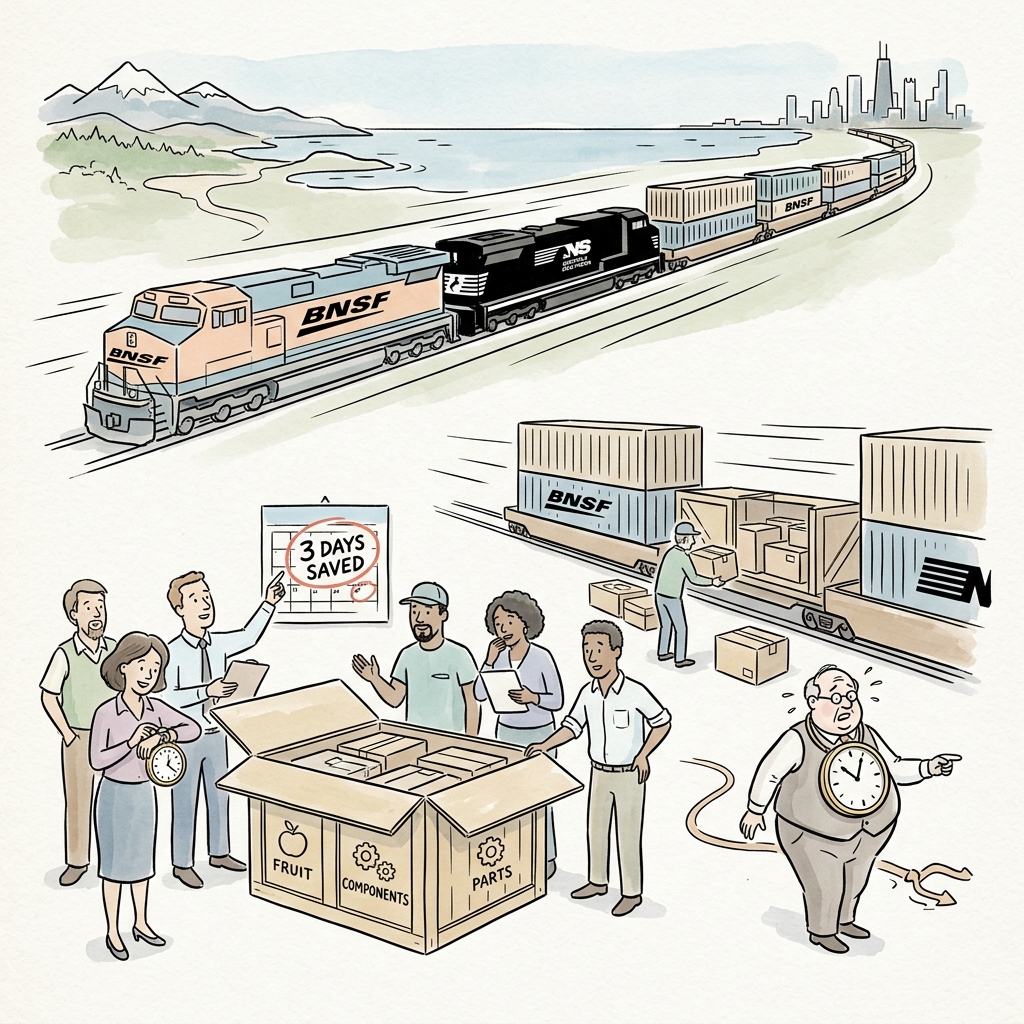
Tacoma’s Tideflats were laid out for industry, not tourists. The combination of working waterfront, on-dock and near-dock rail served by BNSF, Union Pacific, and the Port’s own Tacoma Rail, and proximity to I-5 makes it a natural home for cargo that’s too big to containerize. The Port is now formalizing that advantage with bricks, water, and asphalt.
The 2026 capital agenda: a terminal, a deeper channel, and a new highway
In its 2026 State of the Port, the Port laid out a build program that, taken together, is a deliberate bet on the next decade.
A new breakbulk terminal with the Puyallup Tribe
In 2025 the NWSA and the Puyallup Tribe of Indians signed what the Port calls a historic memorandum of understanding to jointly develop a new breakbulk terminal. The two parties spent the year on the preparatory work needed to widen the Blair Waterway and make room for the facility. For a region trying to capture more of that 24%-and-growing heavy-cargo trade, a purpose-built breakbulk terminal is exactly the right infrastructure — and partnering with the Tribe on it is a notable model for how waterfront development gets done here.
Deepening the Blair Waterway
The Port plans to deepen the Blair Waterway and its berth areas by six feet — to roughly 57 feet below mean lower low water — to keep pace with the larger vessels now standard in global shipping. Depth is destiny in this business: a channel that can’t take a fully loaded modern ship loses the call to one that can. You can read more about this and the rest of the build list on the Port’s Projects at the Port page.
SR-167: the landside link, finally
2026 brings a milestone the Port has chased for decades. The Washington State Department of Transportation is set to open the new State Route 167 expressway connecting the Port directly to I-5 this year. The Port contributed $30 million toward the project over more than a decade of advocacy. For shippers, the math is simple: faster, more reliable truck moves between the docks and the interstate lower the cost and uncertainty of every load — and a port is only as good as the roads and rail leaving it.
Building the workforce, too
Infrastructure without people is just expensive real estate. The Port partnered with Tacoma Public Schools on the Maritime|253 skills center, which gives high-school students from across Pierce County access to maritime and trades career training. The Port is constructing a business office next door — a literal pipeline from classroom to working waterfront. For a sector that runs on skilled labor and faces an aging workforce, growing your own talent locally is one of the smartest long-game investments on this list.
What it adds up to for the regional economy
The stakes are large. Port of Tacoma activity supports more than 41,000 regional jobs, $3.4 billion in wages and benefits, and over $10 billion in economic output, per the Port’s 2025 analysis. Zoom out to the full two-port gateway and the figures are bigger still: a study found the Ports of Tacoma and Seattle and the NWSA together support roughly 265,000 jobs and $55 billion in regional economic benefits.
As Commission President Dick Marzano put it, “The Port of Tacoma made significant strides in 2025, and we are well-positioned for a successful 2026.”
The operator’s takeaway
Read past the soft container line and the picture sharpens: Tacoma is using a down cycle to build. A breakbulk terminal for the cargo that’s actually growing, a deeper channel for the ships that are actually calling, a highway for the trucks that actually have to leave, and a school for the workers who’ll actually run it. None of those move next quarter’s TEU count. All of them decide whether Tacoma is still competitive in 2030 — when the Alliance expects 3.63 million boxes a year coming through. For anyone whose business touches this gateway, the build list is the leading indicator worth watching.
Frequently asked questions
Is the Port of Tacoma losing cargo in 2026?
Container volumes through the Northwest Seaport Alliance (Tacoma and Seattle) were down 2.9% year to date through October 2025, which the Alliance attributes largely to tariffs and distorted comparisons against Canada-diverted cargo from late 2024. But breakbulk cargo was up 24% through April 2026, and the NWSA’s five-year forecast still projects growth to about 3.63 million TEUs by 2030. The dip is cyclical, not structural.
What is breakbulk cargo, and why does it matter to Tacoma?
Breakbulk is heavy, oversized cargo that doesn’t fit in a standard shipping container — think steel, machinery, and wind-energy components. It plays to Tacoma’s strengths: industrial land, on-dock rail, and room to stage large loads. It’s also “stickier” business than containers, and it’s the category the Port is investing in most aggressively in 2026.
What is the Puyallup Tribe breakbulk terminal?
In 2025 the NWSA and the Puyallup Tribe of Indians signed a memorandum of understanding to jointly develop a new breakbulk terminal on the Tacoma Tideflats. Preparatory work in 2025 focused on widening the Blair Waterway to make room for the facility.
When does the SR-167 expressway open?
The Washington State Department of Transportation is scheduled to open the new State Route 167 expressway between the Port of Tacoma and I-5 in 2026. The Port contributed $30 million toward the project over more than a decade.
How many jobs does the Port of Tacoma support?
Port of Tacoma activity supports more than 41,000 regional jobs and over $10 billion in economic output, per the Port’s 2025 analysis. The full Tacoma-Seattle gateway, including the NWSA, supports roughly 265,000 jobs and $55 billion in regional economic benefits.