Tag: North Mason

  • Hood Canal Spot Shrimp Season Opens May 10 — and a Wetlands Restoration Is Reshaping Belfair’s Shoreline

    Hood Canal Spot Shrimp Season Opens May 10 — and a Wetlands Restoration Is Reshaping Belfair’s Shoreline

    Hood Canal Spot Shrimp Season Opens May 10 — and a Wetlands Restoration Is Reshaping Belfair’s Shoreline

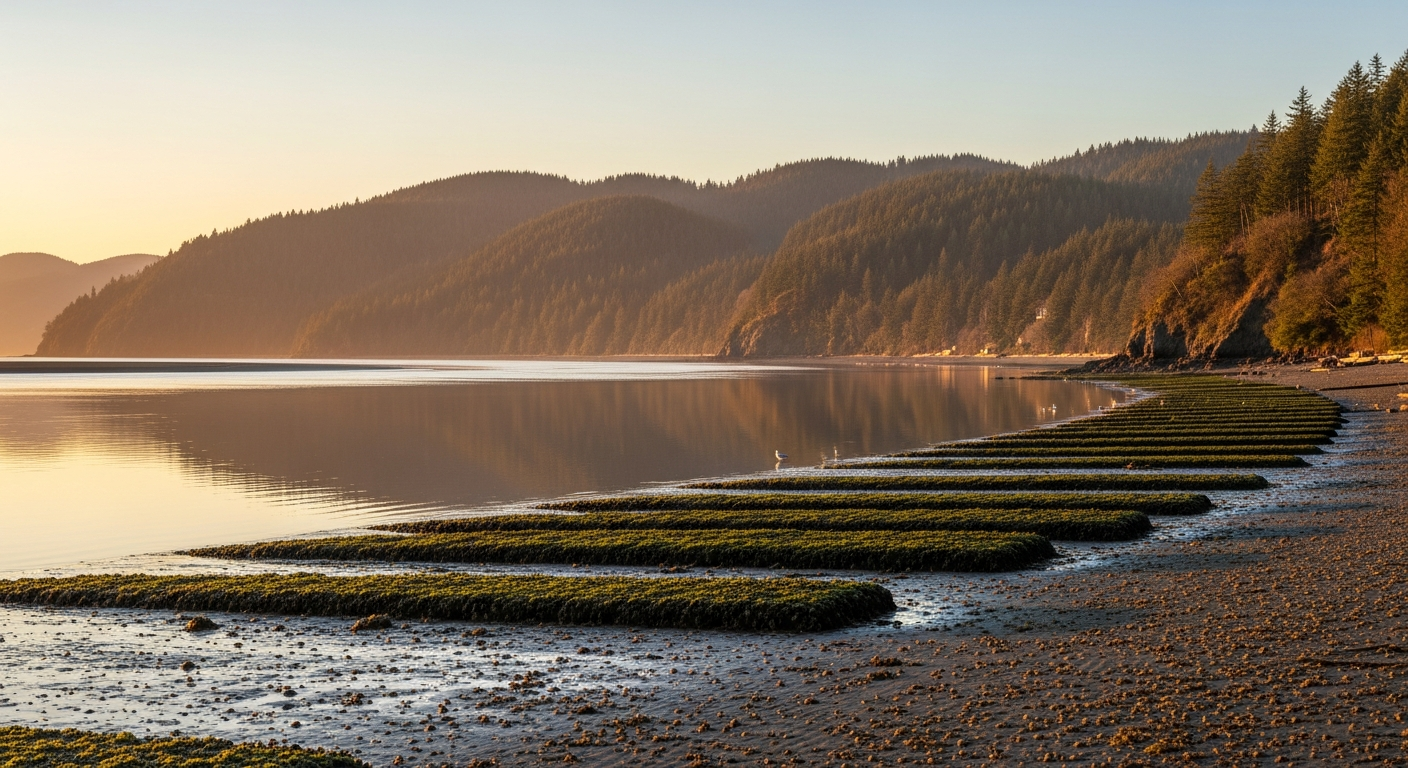
    Mason County’s outdoor calendar heats up this May with two significant developments along Hood Canal: the first spot shrimp opening of the year arrives Saturday, May 10, giving local shrimpers one of the most anticipated mornings on the water, while just north in Belfair, a long-running restoration project at the Mary E. Theler Wetlands Nature Preserve is entering its most visible phase yet — the construction of a 1,200-foot elevated boardwalk through a newly rehabilitated salt marsh.

    Both stories speak to what makes Hood Canal worth protecting and celebrating: the fishery that feeds families across the county, and the habitat that makes those fisheries possible in the first place.

    Spot Shrimp Season: Hood Canal Gets the First Opener

    For recreational shrimpers, Marine Area 12 — Hood Canal — is the place to be on the morning of May 10. The Washington Department of Fish and Wildlife (WDFW) has confirmed that Hood Canal will receive an early opportunity this year, opening a full two weeks before most of the rest of Puget Sound, where the broader season begins May 24.

    The 2026 Marine Area 12 schedule runs on specific dates: May 10, May 24, May 26, June 7, and June 21. Each opening is tightly windowed — anglers may fish from 9 a.m. to 1 p.m. only. WDFW has noted that additional dates may be announced later in the season depending on stock assessments.

    The daily limit remains 80 spot shrimp per licensed fisher, with a combined total weight limit of 10 pounds (whole shrimp) for all shrimp species. Shrimpers who retain only spot shrimp may remove and discard the heads while still on the water; those retaining any other shrimp species must keep the heads until they are back on shore to allow compliance verification with the weight limit.

    For Mason County families, the May 10 opener is more than a fishing trip — it is an early-summer tradition along the entire Hood Canal corridor, from Hoodsport down through Union and north toward Belfair. Spot shrimp, known for their rich, sweet flavor, are among the most prized recreational catches in the state. Demand for the limited openings is high, and experienced shrimpers typically arrive early to launch before the 9 a.m. window.

    Before heading out, anglers should confirm current rules at wdfw.wa.gov, as emergency closures and rule changes can occur on short notice based on stock conditions. A valid Washington recreational fishing license is required. The WDFW hotline and website are the definitive sources for any last-minute schedule adjustments.

    Theler Wetlands: A 1,200-Foot Boardwalk Is Coming to Belfair This Summer

    A few miles north of Highway 3 in Belfair, a quieter but equally significant outdoor story is unfolding at the Mary E. Theler Wetlands Nature Preserve. This summer, WDFW and the Hood Canal Salmon Enhancement Group (HCSEG) will begin construction of a 1,200-foot elevated, piling-supported boardwalk through the heart of a newly restored estuary — the capstone of a multi-year effort to bring Hood Canal summer chum salmon back to the Union River system.

    The Theler Wetlands restoration project has been restoring approximately 7 acres of estuarine wetland habitat at the southeast end of Hood Canal. Work that concluded in fall 2025 included removing a failing levee, replacing a 12-inch metal culvert with a 15-foot-wide concrete box culvert, digging a new sinuous tidal channel, and raising a section of Northeast Roessel Road to serve as a set-back levee. The goal: reconnect the tidal processes that were disrupted when the wetlands were diked decades ago.

    Hood Canal summer chum salmon are listed as threatened under the federal Endangered Species Act. The Theler Wetlands sit at the mouth of the Union River, which is critical spawning and rearing habitat for that run. By expanding tidal connectivity, the restoration creates the shallow, food-rich, low-salinity estuarine conditions that juvenile summer chum need to grow before entering Hood Canal.

    The summer 2026 boardwalk construction will be the project’s most visible phase for the public. The elevated structure — built in the footprint of the removed levee — will reconnect the preserve’s currently fragmented trail network, giving visitors and birders full access to what will become a restored salt marsh. The Theler Wetlands is already one of Mason County’s most-visited nature spots, drawing birdwatchers, school groups, and families year-round. The new boardwalk will make the wetlands more accessible and complete the loop trail that has been partially closed during construction.

    The preserve is located at 22871 NE SR-3 in Belfair, just off the highway before the town center. Visitors are welcome during daylight hours. For project updates and trail access status, check the HCSEG website at pnwsalmoncenter.org or WDFW’s habitat recovery pages.

    What to Watch This Season

    Taken together, these two stories reflect the dual outdoor identity of Hood Canal and Mason County’s shoreline: a working fishery used by thousands of families every spring and summer, underpinned by habitat restoration work that most people never see but everyone benefits from. The spot shrimp fishery depends on a healthy canal; the canal depends on functioning estuaries like the one being rebuilt at Theler.

    For residents looking to get outside this May, both opportunities are close and accessible. The shrimp opener on May 10 is days away — time to get gear ready, check your license, and confirm the launch site. And when construction wraps at Theler Wetlands later this year, the newly completed boardwalk trail will be one of the more remarkable walks in all of Mason County: a path through restored tidal marsh, built where a levee used to be, beneath skies that — if the restoration takes hold — should one day carry kingfishers and herons back to a corner of Hood Canal that had been quiet for a very long time.

    Sources


    Related Expansion Coverage

  • New to North Mason? The Leading Levy Result Tells You How This Community Works

    New to North Mason? The Leading Levy Result Tells You How This Community Works

    If you’ve moved to Belfair, Allyn, Tahuya, or anywhere in North Mason recently — or you’re thinking about it — the school levy result you’ll see in the headlines this week is one of the more revealing data points about the place you’ve landed in.

    The North Mason School District levy is leading 53.50% yes (2,130 to 1,851) in early returns from the April 28 election. Certification by the Mason County Canvassing Board is set for May 8, 2026. That sentence on its own probably doesn’t tell you much. The story behind it tells you a lot about how this community works.

    Why this vote took three tries

    Most school levies in Washington pass the first time. North Mason’s didn’t. The February 2025 measure failed. The November 2025 attempt failed too. By the time the April 28, 2026 measure came up, the district had already cut about $4.5 million from its budget, plus another $1.3 million in pre-vote 2026 reductions, plus two administrative positions.

    The community had been signaling something specific across two votes: not “we don’t believe in our schools” but “we don’t trust the ask.” When the district came back at $1.01 per $1,000 of assessed value (down from the $1.28 rate on the failed measures), with a smaller administrative footprint and more visible internal cuts, the math changed for enough voters to flip the result.

    If you’re new here, that is the texture worth understanding. North Mason is not a community that automatically supports tax increases — but it will support its schools when it believes the district has done its own homework first.

    What a “levy” actually is in Washington

    In Washington, the state pays for “basic education.” Levies pay for everything else schools actually do — nurses, counselors, safety officers, athletics, music, AP courses, custodians, after-school programs, curriculum materials. So when a Washington school district loses a levy, it is not losing a wishlist; it is losing the staff and programs that make a school feel like a school.

    North Mason has been operating without levy funding through 2026. That is unusual in the Puget Sound region. Other districts you may have driven through on the way here — Central Kitsap, North Kitsap, Bremerton, Olympia — have not been navigating this. North Mason has, for more than a year. The April 28 result, if it holds, is the moment the district climbs out of that hole — though programs already cut will not be restored for the 2026-27 school year.

    Where this matters for newcomers

    Three places. First, if you have school-age kids, this affects what they will and won’t have access to at North Mason High School (the Bulldogs, at 250 E. Campus Drive in Belfair) and Hawkins Middle School over the next two school years. Second, if you bought a home in the district, the school-funding posture affects the resale signal of your house — the value of stable, supported schools is real even for buyers without kids. Third, even if you have no school-age kids, this is one of the more transparent windows you’ll get into how this community deliberates.

    How to read what just happened

    The Belfair / North Mason area is small enough that the levy conversation happened in real life — at the Belfair IGA, at the Mary E. Theler Community Center, at Hood Canal property owner meetings, at the schools themselves. There were no slick mailers driving the result. People talked, the district adjusted, voters reconsidered.

    That is unusual. In bigger districts, levy outcomes are shaped by media spend and political infrastructure. In North Mason, the outcome looks more like a community working something out at human scale — the same way water-quality decisions, road-funding decisions, and waterfront development decisions tend to play out here.

    Welcome to a place that does its civic life this way. It can feel slow if you’re coming from somewhere bigger. It is also one of the things that makes this corner of Hood Canal what it is.

    What’s next

    The Mason County Canvassing Board reviews challenged ballots on May 7 at 2:00 PM and certifies the election on May 8 at 2:00 PM. The certified result will appear at results.vote.wa.gov. After that, the North Mason School Board — Arla Shephard Bull, Leanna Krotzer, Erik Youngberg, Nicole González Timmons, and Nicholas Thomas, working with Superintendent Dr. Kristine Michael — begins the 2026-27 budget conversation publicly at the district office.

    If you’re new and want a way to plug in to your community, that meeting cycle is one of the better entry points.

    Frequently Asked Questions

    What does it mean that a Washington school levy “failed” twice before this one?

    It means North Mason has been operating without levy funding since the second 2025 defeat — running on basic-education state dollars only, which do not cover athletics, AP courses, music, school nurses, counselors, or safety staff. The April 2026 measure was the third attempt and is leading.

    Why was North Mason’s third levy attempt different from the first two?

    The district lowered the rate from $1.28 to $1.01 per $1,000 of assessed value, eliminated two administrative positions, and made $1.3 million in additional pre-vote cuts. The community read that as the district doing its own work before asking again, and a meaningful share of 2025 no-voters appear to have switched to yes.

    Is North Mason a good school district for someone moving here?

    It’s a small, community-rooted district that has been visibly tested and is now stabilizing. The Bulldogs run a full slate of athletics. AP coursework continues. Class sizes are smaller than larger Puget Sound districts. The honest read is that the next two years are about returning to a healthy operating posture, not about expansion.

    Where can I find official information about North Mason schools as a newcomer?

    The district website is northmasonschools.org. The district office is at 250 E. Campus Drive in Belfair, (360) 277-2300. Board meeting schedules and public comment information are posted on the site.

    How does North Mason compare to Central Kitsap or North Kitsap districts?

    It’s substantially smaller and more rural. Central Kitsap and North Kitsap have not faced repeated levy failures. North Mason offers a different feel — closer-to-home, smaller cohorts, more direct community involvement — but with thinner program redundancy than the larger Kitsap districts.

    Related coverage: North Mason School Levy Leading in Early Returns — Results Not Yet Certified · Newcomer Guide: The April 28 Levy and Why Your Vote Matters in Belfair · Belfair Real Estate 2026

  • North Mason Property Owners: What the 53.5% Levy Lead Means for Your 2027 Tax Bill

    North Mason Property Owners: What the 53.5% Levy Lead Means for Your 2027 Tax Bill

    If you own property in North Mason — Belfair, Allyn, Tahuya, Union, or anywhere else inside the school district boundary — the April 28 levy result is now leading, and what happens between now and certification on May 8 will land on your tax bill in 2027.

    Here is the practical homeowner framing on the early numbers, the rate, the certification timeline, and what passage actually means for the value of where you live.

    What the rate actually is

    The April 2026 measure is set at $1.01 per $1,000 of assessed property value, levied over four years. That is the lowest rate North Mason has put on the ballot in the recent attempts — down from $1.28 per $1,000 on both 2025 measures.

    The simple translation:

    • $300,000 home: about $25 per month, $303 per year
    • $400,000 home: about $33 per month, $404 per year
    • $500,000 home: about $42 per month, $505 per year
    • $600,000 home: about $50 per month, $606 per year

    If you’ve been in your North Mason home for more than a year or two, your assessed value is likely closer to $400,000-$500,000 in the current Mason County assessor cycle. Waterfront and view properties on Hood Canal trend higher.

    The current count and what’s left to certify

    Combined Mason and Kitsap county totals as of election night: 2,130 yes (53.50%) to 1,851 no (46.50%). Mason County alone — which is where almost all of the district’s voters live — is at 2,089 to 1,808 (53.61% yes). The Kitsap County sliver split 41 to 43 against.

    The Mason County Canvassing Board has a challenged-ballot review meeting scheduled for May 7 at 2:00 PM and will certify the election on May 8 at 2:00 PM. Late ballots will continue to be processed through that window. The official tally is at results.vote.wa.gov.

    A 53.5% lead is durable but not invulnerable. In Mason County, late-counted ballots have historically drifted slightly more progressive on tax measures, which works in the levy’s favor. Still, the margin is narrow enough that homeowners watching closely should treat May 8 as the real deadline before adjusting any planning.

    The property-value question

    Here is the part of this conversation that does not get enough airtime in tax-rate debates. North Mason homes do not exist in a vacuum. Buyers compare them to homes in Bremerton, Silverdale, Port Orchard, Shelton, and the Gig Harbor periphery. School district reputation is part of that comparison, even for buyers who do not have children — because they are pricing in resale to the next family who does.

    Two consecutive levy defeats and the resulting program cuts had a real, if hard-to-isolate, effect on how North Mason listings looked to buyers comparing districts. School-rating sites flagged the cuts. Realtors had to answer questions. Listings in the district sat slightly longer than they would have in a flush-funding scenario.

    A passing levy reverses that signal. It tells the market that this community has decided to stabilize its schools, and that the district will not be forced into another round of visible cuts heading into 2026-27. For a property owner thinking about a 5-to-15-year horizon — which is most North Mason owners — that signal is worth real money on the eventual sale.

    What passage doesn’t change for owners

    Two things to be clear-eyed about. First, the levy revenue does not arrive at the district until April 2027, so programs already cut will not be restored for the 2026-27 school year. The visible school-side improvements that affect community feel — restored athletics depth, returning AP courses, fuller staffing — are 2027-28 questions at the earliest.

    Second, this is a four-year levy, not a permanent funding source. North Mason will be back at the ballot for renewal before this cycle ends. The conversation does not stop on May 8.

    What to watch this week

    The certification meeting on May 8 at 2:00 PM at the Mason County Auditor’s Office is the deadline that matters. If the lead holds, the levy is in. If you want the formal record of the result for refinancing, listing prep, or an appraisal conversation, that is the date to bookmark. Until then, results are leading — not certified.

    Frequently Asked Questions

    How much will the North Mason levy add to my property tax bill?

    The rate is $1.01 per $1,000 of assessed value over four years. On a $400,000 home that is about $33 per month or $404 per year. The rate is down from $1.28 on the two failed 2025 measures.

    When will the April 28, 2026 levy result be certified?

    The Mason County Canvassing Board certifies on May 8, 2026, at 2:00 PM after a challenged-ballot review on May 7. Until then, the 53.50% yes lead is preliminary.

    Does a passing school levy actually affect property values in North Mason?

    The signal effect is real, even if hard to isolate from other factors. After two defeats and visible program cuts, North Mason listings carried a school-funding cloud that buyers asked about. Passage tells the market that the district is stabilizing, which supports values over a 5-to-15-year hold.

    When does the new levy money actually start being collected from homeowners?

    If certified, the levy is collected on property tax bills starting in 2027 — meaning the first new line item appears on the statement issued in early 2027 and paid in April and October of that year.

    Is this a permanent tax or does it expire?

    It expires. The April 2026 measure is a four-year replacement levy. North Mason will return to the ballot before the end of the cycle to renew or replace it.

    Related coverage: North Mason School Levy Leading in Early Returns — Results Not Yet Certified · Homeowner’s Guide to the April 28 Levy: Cost, Programs, and Why It’s on the Ballot Again · Belfair Real Estate 2026

  • North Mason Parents: What the Leading Levy Result Actually Means for Your Child’s Programs

    North Mason Parents: What the Leading Levy Result Actually Means for Your Child’s Programs

    If you have a kid at North Mason High School or the middle school, the April 28 levy result matters to you in a different way than it does to most other voters in the district — and the leading numbers do not mean what most people are assuming.

    The levy is currently passing with 53.50% yes votes (2,130 to 1,851) in combined Mason and Kitsap county totals. The Mason County Auditor will certify the result on May 8, 2026, after the challenged-ballot review on May 7. Until then, results are preliminary.

    The honest framing for North Mason parents is this: passage stabilizes the floor. It does not bring back what was already cut, and it does not change anything for the 2026-27 school year that starts in September. Here’s what that actually looks like for your student.

    What you should expect for fall 2026 either way

    Even if the levy is certified passing, the first revenue does not reach the district until April 2027 at the earliest. That timing is a hard constraint of how Washington school levies work: they are collected on property tax bills the following calendar year.

    So the practical answer to “Will my kid’s program be back in September?” is: the programs and positions that were already eliminated — the two administrative positions, the $1.3 million in cuts the district made before the vote, and the roughly $4.5 million cut after the second 2025 defeat — are not coming back for 2026-27. Superintendent Kristine Michael said this publicly before the election: “We would not be in a position to restore programs or positions already reduced.”

    What passage does prevent is another round of cuts on top of what already happened. That matters because the 2026-27 budget conversation that starts at the district office at 250 E. Campus Drive will look very different with $18.9 million in incoming levy revenue on the horizon than it would with another defeat.

    How North Mason High School students are most directly affected

    The North Mason levy historically funds the things most parents associate with a real high school experience: athletics, music, Advanced Placement coursework, school nurses, counselors, safety officers, custodians, and after-school programs. State basic-education dollars do not pay for those — that’s what a levy is for, in every Washington district.

    Bulldogs sports have continued through 2025-26, but families have noticed thinner schedules, more parent fundraising for travel and equipment, and tighter coaching budgets. AP course offerings narrowed. Music programs have run on reduced staffing. The full effect of the 2025 cuts has been distributed across the building in ways that compound over the year — and parents who have been paying attention can feel it.

    If certification holds, the question for next school year is not “what gets restored” — it is “what does not get cut further.” That is a real win compared to the alternative, but it is a different conversation than the one many yes-voters thought they were having.

    The middle school side

    At Hawkins Middle School the impact tracks differently. Middle school athletics, after-school activities, and counselor staffing have all been pressured. Younger students who would normally be building toward high school programs are entering a system that has been quietly shrinking for two years.

    Passage means that pressure doesn’t get worse. It does not mean middle school programs that were lost are coming back this fall.

    What to do this week and this month

    Three concrete things parents can do while certification finishes. First, watch the May 8 certification — if the lead holds, the long-term outlook for the district stabilizes. Second, plan to attend or watch the next North Mason School Board meeting, where Superintendent Michael and board members Arla Shephard Bull, Leanna Krotzer, Erik Youngberg, Nicole González Timmons, and Nicholas Thomas will begin the 2026-27 budget conversation publicly. Third, make peace with the timeline: any restoration of cut programs is a 2027-28 question at the earliest.

    Frequently Asked Questions

    If the levy passes, will my child’s programs be restored for fall 2026?

    No. The first levy revenue arrives no earlier than April 2027, and Superintendent Michael has stated publicly that programs and positions already cut will not be restored for the 2026-27 school year even with passage. Restoration is a 2027-28 question at the earliest.

    What North Mason programs were cut after the 2025 levy failures?

    The district made roughly $4.5 million in cuts following the second 2025 defeat, and an additional $1.3 million in pre-vote reductions in 2026 along with the elimination of two administrative positions. Cuts have hit athletics, music, AP coursework, support staff, and after-school programming across both the high school and middle school.

    When will I know whether the levy actually passed?

    The Mason County Canvassing Board certifies the April 28 election on May 8, 2026, at 2:00 PM, after a challenged-ballot review on May 7. Until then, the 53.50% yes lead is preliminary. Track results at results.vote.wa.gov.

    Where can North Mason parents weigh in on the 2026-27 budget?

    The North Mason School Board meets at 250 E. Campus Drive in Belfair. Meeting schedules are posted on the district site, and public comment is part of every regular meeting. The first post-election meeting will be the most consequential one for parents to attend.

    What does the levy actually cost a North Mason family that owns their home?

    The April 2026 rate is $1.01 per $1,000 of assessed value — roughly $33 per month on a $400,000 home. That is down from the $1.28 rate on the two 2025 measures.

    Related coverage: North Mason School Levy Leading in Early Returns — Results Not Yet Certified · North Mason Parents: What the April 28 Levy Means for Your Child’s Programs · North Mason Schools: Ratings & Programs

  • North Mason School Levy Leading at 53.5% — Certification Set for May 8

    North Mason School Levy Leading at 53.5% — Certification Set for May 8

    The North Mason School District levy is leading in early returns from the April 28 special election — a stark reversal after two consecutive defeats and more than a year of program cuts that reshaped what students in Belfair and the Hood Canal corridor get from their schools.

    According to the Mason County Auditor, the four-year replacement levy received 2,130 yes votes (53.50%) and 1,851 no votes (46.50%) in the combined Mason and Kitsap county tally as of election night. In Mason County alone — which casts the overwhelming majority of North Mason ballots — the measure leads 2,089 to 1,808 (53.61% yes). In the small Kitsap County portion of the district, the early count showed 41 yes to 43 no.

    These are preliminary numbers. Washington is a vote-by-mail state, ballots arrive for days after election day, and nothing is final until certification. The Mason County Canvassing Board has a challenged-ballot review meeting scheduled for May 7 at 2:00 PM and the formal certification meeting on May 8 at 2:00 PM. Track the running total at results.vote.wa.gov.

    What changed this time

    The district lowered the ask. The April measure requests $18.9 million over four years at a rate of $1.01 per $1,000 of assessed value — down from the $1.28 rate that voters rejected twice in 2025. On a $400,000 North Mason home, that is roughly $33 per month, compared with about $43 per month at the prior rate.

    The district also eliminated two administrative positions and cut another $1.3 million from the operating budget before the vote — a direct response to community feedback that earlier campaigns had not gone far enough on the spending side. Combined with roughly $4.5 million in cuts that followed the second 2025 defeat, North Mason has trimmed substantially more than $5 million from its operations in less than 18 months.

    “We are very pleased and encouraged by these preliminary results, and we will be monitoring closely as ballots continue to be counted and certified,” Superintendent Dr. Kristine Michael said on election night. “If this outcome holds, it reflects the trust this community is placing in our schools and our students.”

    What the levy actually pays for

    Replacement levies in Washington fund the things state basic-education dollars do not cover: school nurses, counselors, safety officers, athletics, music, Advanced Placement courses, custodians, after-school programs, and curriculum materials. North Mason has been operating without levy funding in 2026 — a situation almost no comparably sized district in the Puget Sound region has had to navigate.

    The day-to-day evidence has been visible at North Mason High School and the middle school all year: thinner athletic schedules, reduced extracurriculars, fewer support staff in the buildings, and curriculum decisions made under tight constraints. The Bulldogs’ spring sports season has continued, but families have absorbed more of the cost.

    The catch: passage doesn’t reverse 2026

    Even if certification holds, the money does not arrive immediately. The first levy revenue would not flow to the district until April 2027 at the earliest. That timing means programs already cut — including the two administrative positions and the $1.3 million in operating reductions — will not be restored for the 2026-27 school year.

    “Those funds would allow us to avoid making additional reductions, but because we are operating with only a partial year of levy revenue even in a passage scenario, we would not be in a position to restore programs or positions already reduced,” Michael said in a statement issued before the vote.

    That nuance matters for families who voted yes expecting a quick rebound. The realistic frame is: passage stabilizes the floor and prevents another round of cuts. Restoration of what was lost is a longer conversation that depends on enrollment, state funding formulas, and the district’s reserve position by the time levy money lands.

    Why this vote was different

    North Mason had not just lost a levy — it had lost two. The February 2025 measure missed the threshold. The fall 2025 attempt failed again. Each defeat tightened the district’s operating posture, and each round of cuts changed the conversation. By April 2026, the choice in front of voters was no longer abstract; it was a referendum on a school district that had been visibly bleeding.

    The district responded by listening. Lower rate. Fewer administrators. More transparent reporting on where the money goes. Whether that read as humility or as accountability depended on the voter — but the ballots suggest a meaningful share of the electorate that voted no in 2025 was willing to vote yes in 2026 once the ask was reframed.

    What to watch this week

    Three things will determine whether the 53.5% lead holds. First, the late-arriving ballots: in Mason County’s recent history, late-counted votes tend to drift slightly more progressive on tax measures, which would help — but the margin in this race is narrow enough that a swing is possible. Second, the challenged-ballot review on May 7. Third, certification on May 8, after which the result is final.

    School board members Arla Shephard Bull, Leanna Krotzer, Erik Youngberg, Nicole González Timmons, and Nicholas Thomas will be working through what passage means for the 2026-27 budget cycle. Their next meetings — held at the district office at 250 E. Campus Drive in Belfair — will be the first public window into what stabilization looks like.

    For now: results are leading, not certified. The community that just put two defeats behind it has reason to be cautiously optimistic and every reason to keep watching.

    Frequently Asked Questions

    Did the North Mason School District levy pass on April 28, 2026?

    The levy is leading with 53.50% yes votes (2,130 to 1,851) in early returns from the Mason and Kitsap county auditors. Results are not certified. The Mason County Canvassing Board will certify on May 8, 2026, after a challenged-ballot review on May 7.

    How much will the North Mason levy cost a homeowner?

    The April 2026 levy is set at $1.01 per $1,000 of assessed value — about $33 per month on a $400,000 North Mason home. That is lower than the $1.28 rate attached to the two failed 2025 measures.

    When will levy money actually reach North Mason schools if the result is certified?

    The first revenue would arrive no earlier than April 2027. That means programs already cut — including two administrative positions and $1.3 million in other reductions made before the April 2026 vote — will not be restored for the 2026-27 school year.

    What programs does the North Mason levy fund?

    Replacement levies fund items state basic-education dollars do not cover: school nurses, counselors, safety officers, athletics, music, Advanced Placement courses, custodians, after-school programs, and curriculum materials.

    Where can I track the official North Mason levy results?

    The official source is the Washington Secretary of State results portal at results.vote.wa.gov/results/20260428/mason/. The Mason County Auditor’s elections page at masoncountywa.gov mirrors the certified totals.

    What happens if the lead doesn’t hold through certification?

    If the levy fails certification, North Mason would face a third consecutive defeat and would continue operating without levy funding through 2026 and beyond, almost certainly triggering another round of program cuts heading into 2026-27.

    Related coverage on Tygart Media: North Mason’s Third Levy Vote Is April 28 — Here’s Everything Belfair Needs to Know · The Levy in Initial Counts: What a Third Defeat Would Trigger · North Mason Schools: Ratings & Programs

  • North Mason School Levy Leading in Early Returns — Results Not Yet Certified

    North Mason School Levy Leading in Early Returns — Results Not Yet Certified

    After two consecutive defeats and more than a year of painful budget cuts, the North Mason School District’s levy is leading in early returns — but results are not yet certified.

    According to the Mason County Auditor’s Office, the April 28 special election produced 2,130 yes votes (53.50%) and 1,851 no votes (46.50%) in combined Mason and Kitsap county totals as of election night. The Mason County Auditor’s website notes that ballot processing continues through May 7, 2026. These are preliminary results. Final certified totals are available at results.vote.wa.gov.

    Superintendent Kristine Michael responded cautiously. “We are very pleased and encouraged by these preliminary results, and we will be monitoring closely as ballots continue to be counted and certified,” Michael told local media on election night. “If this outcome holds, it reflects the trust this community is placing in our schools and our students.”

    The district lowered its ask substantially heading into this vote. The April levy requests $18.9 million over four years at a rate of $1.01 per $1,000 of assessed property value — down from the $1.28 rate attached to the two 2025 proposals that both failed. Before the election, the district also made $1.3 million in additional cuts and eliminated two administrative positions as a concession to community feedback.

    The levy funds programs that state basic education dollars don’t cover: safety officers, school nurses, counselors, athletics, music, Advanced Placement courses, custodians, and curriculum materials. North Mason has been operating without levy funding in 2026 following back-to-back 2025 failures, which forced the district to cut roughly $4.5 million from its budget.

    Even if the levy is certified, funds won’t arrive until April 2027 at the earliest — meaning the programs already cut will not be immediately restored. “Those funds would allow us to avoid making additional reductions, but because we are operating with only a partial year of levy revenue even in a passage scenario, we would not be in a position to restore programs or positions already reduced,” Michael said in a prior statement.

    The school board is composed of Arla Shephard Bull, Leanna Krotzer, Erik Youngberg, Nicole González Timmons, and Nicholas Thomas, with Superintendent Dr. Kristine Michael leading the district from its Belfair campus at 250 E. Campus Drive, Belfair, WA 98528, (360) 277-2300.

    This story will be updated when results are certified by the Mason County Auditor. Track live results at results.vote.wa.gov.


  • New to North Mason? What the Tahuya River Preserve Tells You About Hood Canal — and This Community

    New to North Mason? What the Tahuya River Preserve Tells You About Hood Canal — and This Community

    If you’ve recently moved to North Mason — or you’re considering it — one of the first things you’ll notice is that people here talk about the river. Not metaphorically. The Tahuya River, which drains eastern Mason County and empties into Hood Canal just east of Belfair, is part of the local identity in a way that takes newcomers a minute to fully absorb. This week, 190 acres along the lower Tahuya became permanently protected conservation land. Here’s what that means, and why it matters to you.

    What Is the Tahuya River?

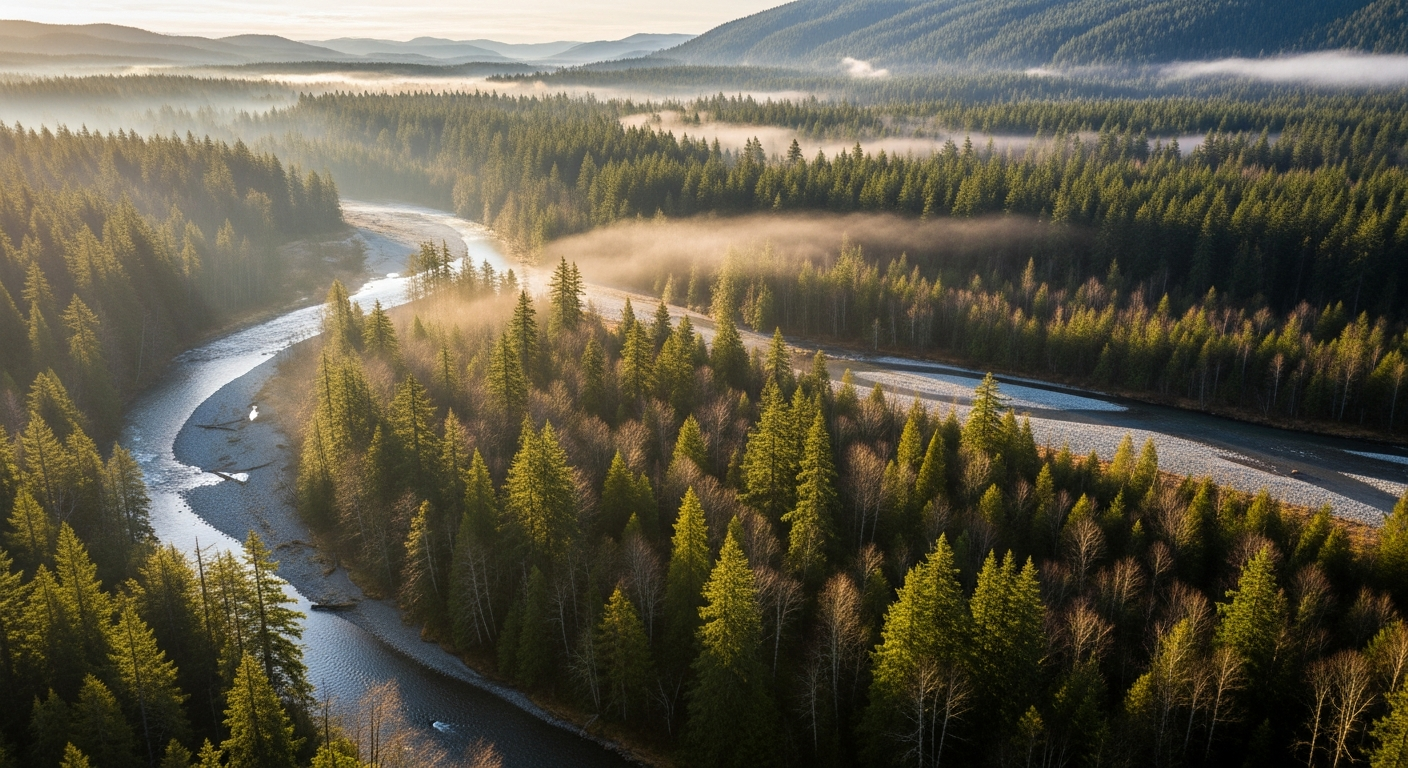
    The Tahuya River rises in the Tahuya State Forest and flows generally west and north through the Tahuya Peninsula before joining Hood Canal south of Belfair. The lower river corridor — the stretch that Great Peninsula Conservancy has been protecting — runs through floodplain forest and wetlands in eastern Mason County, a landscape of big cottonwoods, alder, and towering Douglas firs that overlook the valley.

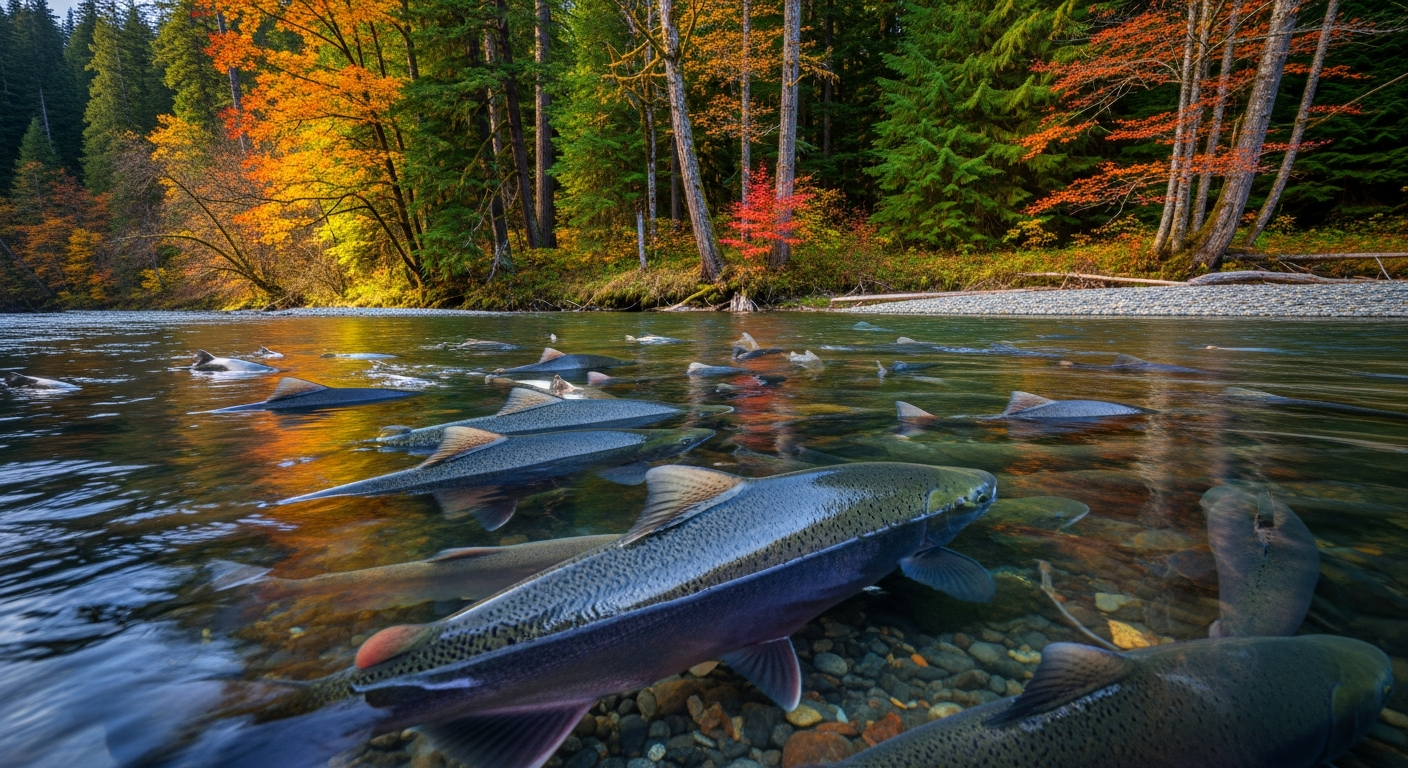
    Each fall, bear tracks and salmon carcasses appear on the lower Tahuya’s banks. That’s not folklore — it’s ecology. Hood Canal summer chum and Chinook salmon both return to the Tahuya to spawn. Both species are listed under the federal Endangered Species Act. The summer chum were actually considered locally extinct here in the late 1990s before a restoration effort by the Hood Canal Salmon Enhancement Group (HCSEG) rebuilt the run using donor fish from the Union River. Since 2006, 200 to 1,000 summer chum return to the Tahuya every year on their own.

    Who Is HCSEG and Where Are They?

    The Hood Canal Salmon Enhancement Group is headquartered right in Belfair, at 600 NE Roessel Road — the same address as the Salmon Center, where the Hood Canal Salmon Run 5K is held each June. HCSEG has been doing salmon research, habitat restoration, and community education in the Hood Canal watershed since the 1990s. They run rotary screw traps on the Tahuya, Dewatto, and Little Quilcene Rivers each spring to count juvenile salmon — it’s one of the primary data sets used to assess whether salmon populations are recovering.

    If you’re new to North Mason and want a fast, credible education in why Hood Canal is the way it is — environmentally, ecologically, culturally — HCSEG is the organization to know. They welcome volunteers, host community events, and their staff are genuinely approachable. Phone: (360) 275-9284. Website: pnwsalmoncenter.org.

    What Is the Tahuya River Preserve?

    Great Peninsula Conservancy assembled the preserve in stages starting in July 2023: 145 acres acquired with Washington Department of Ecology and state Salmon Recovery Funding Board support, then 38 more acres that December, then two small parcels in 2025. The total is now 190 acres, permanently protecting roughly 450 feet of Tahuya River mainstem and anchoring a longer-term plan to conserve the lower four miles of the river.

    The land is held by GPC, based at 6536 Kitsap Way in Bremerton. It is not open to the public for recreation — it’s managed as a working conservation site. But its existence changes what is possible along the lower Tahuya for decades to come.

    What’s Actually Happening Next: The Gabion Wall

    The most concrete near-term project is the planned removal of a Gabion wall from the Tahuya River corridor. A Gabion wall is a wire-cage rock structure — you’ve probably seen them along highways or near bridges, used for erosion control. They work fine for holding a bank in place, but they disrupt the natural flow dynamics that salmon spawning habitat requires: the shifting gravel beds, the cool deep pools, the wood debris accumulations where juvenile fish shelter and feed.

    GPC and HCSEG are working through permitting and hydrology studies to plan the removal. After the wall comes out, engineered log jam structures may be installed upstream to rebuild the natural channel complexity the river has lost. The project is still in planning phase as of May 2026 — but the land protection that makes it possible is locked in.

    Why This Is Part of What Makes North Mason Different

    A lot of communities talk about caring about their environment. North Mason is one of the few places where you can stand at a boat launch on Hood Canal, watch a salmon jump, and trace that fish’s story back to a specific river, a specific restoration project, and a specific group of people who have been working on it for 30 years — and who are headquartered two miles from the Belfair Fred Meyer.

    The Tahuya River Preserve is part of that story. If you’re going to be here long-term, it’s worth knowing it.

    Also see: Tahuya River Preserve: Full Story | Hood Canal from Belfair: Fishing, Kayaking and Beaches

    Frequently Asked Questions

    What is the Tahuya River and where does it flow?

    The Tahuya River drains the Tahuya Peninsula in Mason County, flowing west and north before emptying into Hood Canal south of Belfair. The lower river corridor runs through floodplain forest in eastern Mason County. The river supports ESA-listed summer chum and Chinook salmon runs.

    What is the Hood Canal Salmon Enhancement Group and how can I get involved?

    HCSEG is a Belfair-based nonprofit that has led salmon research, habitat restoration, and education in the Hood Canal watershed since the 1990s. They welcome volunteers for rotary screw trap operations, restoration plantings, and community events. Find them at 600 NE Roessel Road, Belfair, (360) 275-9284, or pnwsalmoncenter.org.

    Can I visit the Tahuya River Preserve?

    The preserve is not currently open to the public for recreation. It is managed as a conservation area by Great Peninsula Conservancy. The nearby Tahuya State Forest and the lower Hood Canal shoreline offer public outdoor access in the same general area.

    What is a Gabion wall and why is removing it good for salmon?

    A Gabion wall is a wire-cage rock structure used for stream bank stabilization. While effective at holding banks in place, they alter natural stream flow, disrupt the gravel beds salmon use for spawning, and prevent wood debris from moving downstream — wood that creates the deep pools and feeding habitat juvenile salmon depend on. Removal allows the stream to recover more natural dynamics.

    Are salmon actually recovering in Hood Canal?

    Yes. Hood Canal summer chum — which were locally extinct in the Tahuya River in the 1990s — have sustained themselves without supplementation since 2015. NOAA Fisheries has indicated the population may meet ESA delisting criteria, which would be the first successful salmon delisting in U.S. history. The Tahuya River is part of that recovery story.

  • Hood Canal Property Owners: What the Tahuya River Preserve Means for Water Quality, Shellfish, and Your Shoreline

    Hood Canal Property Owners: What the Tahuya River Preserve Means for Water Quality, Shellfish, and Your Shoreline

    If you own property on Hood Canal — tidelands, a waterfront parcel, or even a lot a mile back from the water — the long-term health of the canal directly affects what you own. That’s why the permanent protection of 190 acres along the lower Tahuya River is worth understanding, not just as an environmental story, but as a water-quality and property-value story.

    What the Tahuya River Does to Hood Canal

    The Tahuya River drains eastern Mason County and empties into Hood Canal near Belfair. What happens in that watershed — how much sediment runs off after a rain event, how much nutrient load enters the canal, how warm the water is by July — directly affects conditions in Hood Canal itself.

    Hood Canal is a semi-enclosed fjord. It doesn’t flush as quickly as open Puget Sound. Dissolved oxygen levels, water temperature, and nutrient loading matter here in ways that are measurable and consequential. When those factors tip the wrong direction, shellfish beds close. When they hold steady, the canal supports the ecosystem — and the way of life — that Hood Canal property values are built on.

    Great Peninsula Conservancy’s Tahuya River Preserve permanently protects 190 acres of floodplain forest and wetlands along the lower Tahuya corridor. Floodplain forest is not passive. It filters runoff before it reaches the river, moderates water temperatures through canopy shading, and traps sediment that would otherwise flow downstream and into the canal.

    The Gabion Wall Removal: A Direct Water Quality Improvement

    The most significant near-term project connected to the preserve is the planned removal of a Gabion wall from the Tahuya River corridor. Gabion walls — wire-cage rock structures installed for bank stabilization — alter natural stream flow patterns, trap fine sediment in ways that degrade spawning gravel, and prevent the natural movement of large wood debris downstream.

    When the wall comes out, the river will begin recovering a more natural channel dynamic. Engineers are also evaluating engineered log jam structures upstream to rebuild holding pools and feeding lanes for juvenile salmon. Healthier salmon habitat upstream means more adult salmon returning — and salmon carcasses are one of the primary marine-derived nutrient inputs that forest and riparian systems depend on. It’s a closed loop that connects the mountains to the canal.

    The project is in the permitting and planning phase as of May 2026. No construction timeline has been announced, but the land protection necessary to make it happen is complete.

    What This Means for Shellfish Bed Status on Hood Canal

    If you harvest shellfish from Hood Canal tidelands, or if your property value is tied to an open shellfish beach, you already know that closures happen — and that the reasons are usually tied to water quality upstream. Fecal coliform from stormwater, agricultural runoff, and failing septic systems are the primary drivers of WDFW closure events on Hood Canal.

    Protecting floodplain forest along the Tahuya doesn’t fix septic systems — that’s a different problem. But it does reduce one of the diffuse-source inputs: unfiltered runoff from cleared or developed land adjacent to salmon-bearing streams. Every acre of permanently protected floodplain is one less acre that could be cleared, graded, or made impervious in the future.

    For Hood Canal property owners, the preserve is a long-term investment in the upstream conditions that determine what the canal looks like in 20 years.

    The ESA Connection and What It Means for the Canal

    Hood Canal summer chum salmon may become the first ESA-listed salmon population ever removed from the federal endangered species list. That’s not a distant possibility — NOAA Fisheries has signaled the population meets recovery criteria, with Tahuya River runs holding between 200 and 1,000 fish annually since 2006 without supplementation. If delisting proceeds, it would represent a significant reduction in regulatory burden on Hood Canal development and land use — something that directly affects property owners navigating shoreline development permits.

    The Hood Canal Salmon Enhancement Group monitors juvenile salmon on the Tahuya, Dewatto, and Little Quilcene Rivers each spring from their facility at 600 NE Roessel Road in Belfair, (360) 275-9284. Their data is what drives the federal recovery assessment.

    Also see: Tahuya River Preserve: 190 Acres Permanently Protected — Full Story | Hood Canal Property Owners: What the 2026 Shellfish Rule Changes Mean for Your Beach

    Frequently Asked Questions

    Does the Tahuya River Preserve affect Hood Canal shellfish bed closures?

    Indirectly, yes. Protecting 190 acres of floodplain forest along the Tahuya reduces diffuse stormwater runoff into the river and ultimately into Hood Canal. Shellfish closures are driven by fecal coliform levels, and reducing upstream runoff inputs is one piece of the water quality picture. It won’t fix point-source pollution, but it removes a future risk from the equation.

    How does the Gabion wall removal affect Hood Canal water quality?

    Removing the Gabion wall allows the Tahuya River to recover a more natural channel shape — distributing flow across the floodplain, reducing fine sediment export, and allowing wood debris to move naturally downstream. These changes improve water clarity and temperature downstream, benefiting Hood Canal conditions near the river mouth.

    What is the current ESA status of Hood Canal salmon and what does it mean for property owners?

    Hood Canal summer chum and Chinook salmon are both listed as threatened under the ESA. Hood Canal summer chum may be the first ESA-listed salmon ever delisted — a development that would reduce certain regulatory constraints on Hood Canal shoreline and development activities. Continued habitat restoration, including the Tahuya River work, supports the recovery data driving that potential delisting.

    Who is responsible for salmon restoration on the Tahuya River?

    Great Peninsula Conservancy holds and manages the land. The Hood Canal Salmon Enhancement Group (HCSEG), based at 600 NE Roessel Road in Belfair, leads habitat restoration work, juvenile salmon monitoring, and the Gabion wall removal planning in partnership with GPC.

    Does the preserve affect future development near the Tahuya River?

    Yes. The 190 acres are permanently protected by a conservation easement — they cannot be sold for development, cleared, or subdivided. This is the intended outcome: locking in floodplain function in perpetuity so future land use decisions upstream don’t erode what restoration work achieves downstream.

  • Tahuya River Preserve Reaches 190 Acres: What North Mason Needs to Know About Salmon Restoration on Hood Canal

    Tahuya River Preserve Reaches 190 Acres: What North Mason Needs to Know About Salmon Restoration on Hood Canal

    For more than two years, Great Peninsula Conservancy has been quietly assembling one of the most ecologically significant land protection projects on Hood Canal. The result is the Tahuya River Preserve — 190 acres of floodplain forest, wetlands, and riverfront corridor in eastern Mason County, permanently protected and now the anchor for a phased restoration effort targeting the lower four miles of the Tahuya River.

    For North Mason residents who know the lower Tahuya — the bear tracks in the mud, the salmon carcasses that fertilize the cottonwood flats each fall — this is the moment when “protected” stops meaning paperwork and starts meaning something permanent.

    How the Preserve Came Together

    Great Peninsula Conservancy (GPC) built the preserve in stages. In July 2023, the organization acquired 145 acres along the lower Tahuya mainstem, funded through a Washington Department of Ecology Streamflow Restoration grant and the state Salmon Recovery Funding Board. That December, GPC added an adjacent 38-acre parcel. In 2025, two smaller parcels totaling approximately five acres completed the assemblage — including roughly 450 feet of Tahuya River mainstem — bringing the total to 190 acres.

    The preserve sits where the Tahuya River watershed drains into Hood Canal, just east of Belfair. It’s a strategic location: protecting floodplain here controls what enters the canal at one of the most salmon-critical junctions in Mason County.

    Why the Tahuya River Matters for Salmon

    Two salmon species listed under the federal Endangered Species Act use the Tahuya River: Hood Canal summer chum and Chinook salmon. The summer chum story here is one of the most remarkable conservation recoveries in the Pacific Northwest. Summer chum were classified as “recently extinct” in the Tahuya River before a reintroduction effort beginning in the early 2000s. Using Union River summer chum as donor stock, HCSEG rebuilt the run — 750 fish returned in the first year. Since 2006, annual Tahuya summer chum returns have held between 200 and 1,000 fish. The final supplementation release was in 2015; the population has sustained itself since.

    NOAA Fisheries has signaled that Hood Canal summer chum may be the first ESA-listed salmon population ever removed from the endangered species list — a milestone no Pacific salmon population has achieved in the history of the Act. The Tahuya River is part of that recovery story.

    The Hood Canal Salmon Enhancement Group (HCSEG), headquartered at 600 NE Roessel Road in Belfair, monitors juvenile salmon using rotary screw traps on the Tahuya, Dewatto, and Little Quilcene Rivers each spring. Their data drives decisions about where restoration dollars go next — and the Tahuya is currently near the top of that list.

    The Gabion Wall Removal: What Comes Next

    The most significant near-term restoration project is the planned removal of a Gabion wall — a wire-cage rock structure — from the Tahuya River corridor. Gabion walls were widely used in mid-20th century stream engineering to control erosion, but they alter natural stream flows, disrupt gravel substrate that salmon need for spawning redds, and interrupt the natural wood and debris movement that juvenile salmon depend on for cover and food.

    GPC is working with HCSEG on removal plans. Once the wall is out, engineers are also evaluating the installation of engineered log jam structures upstream — designed to mimic the natural wood accumulation that builds holding pools and feeding lanes for juvenile salmon.

    These projects are still in the permitting and hydrology study phase. Salmon habitat work at this scale requires state and federal coordination, contractor mobilization, and hydrological modeling — it moves carefully. But the land protection that makes any of it legally and practically possible is done.

    What This Means for North Mason

    The Tahuya River Preserve represents one piece of a larger conservation strategy for the lower Hood Canal watershed. Every acre of floodplain protected upstream means less sediment loading, cooler water temperatures, and better dissolved oxygen in Hood Canal itself — the same water that determines whether shellfish beds stay open and whether salmon return each fall to the beaches and rivers that define this community.

    For North Mason residents, it’s also a statement about what this corner of Washington is choosing to be. Development pressure on the SR-3 corridor is real. The Tahuya River Preserve locks in a counter-weight: 190 acres that will never be a subdivision, a gravel pit, or a parking lot.

    Residents interested in the restoration work — or in volunteering for HCSEG’s 2026 rotary screw trap season — can contact the Hood Canal Salmon Enhancement Group at 600 NE Roessel Road, Belfair, (360) 275-9284, or at pnwsalmoncenter.org. Great Peninsula Conservancy is based at 6536 Kitsap Way, Bremerton, (360) 373-3500, or greatpeninsula.org.

    Also see: Hood Canal Shellfish Season 2026: What North Mason Harvesters Need to Know

    Frequently Asked Questions

    Where exactly is the Tahuya River Preserve?

    The preserve is in eastern Mason County, along the lower Tahuya River corridor where it drains into Hood Canal. It is located just east of Belfair and is not currently open to the general public for recreation — it is managed as a conservation area by Great Peninsula Conservancy.

    What salmon species use the Tahuya River?

    Hood Canal summer chum salmon and Chinook salmon both use the Tahuya River watershed. Both are listed as threatened under the federal Endangered Species Act. Summer chum were successfully reintroduced to the Tahuya after being classified as locally extinct, and the population has sustained itself without supplementation since 2015.

    What is a Gabion wall and why is it being removed?

    A Gabion wall is a wire-cage rock structure used historically for stream bank stabilization. While effective at controlling erosion, they alter natural water flow, disrupt gravel spawning beds, and impede the movement of large wood debris that salmon depend on. Removal restores more natural stream dynamics.

    When will the Gabion wall removal happen?

    The project is currently in the planning and permitting phase. Great Peninsula Conservancy and HCSEG are working through hydrology studies and regulatory coordination. No construction timeline has been publicly announced as of May 2026.

    How can North Mason residents get involved with salmon restoration on the Tahuya?

    The Hood Canal Salmon Enhancement Group welcomes volunteers for its 2026 rotary screw trap season and other restoration projects. Contact HCSEG at 600 NE Roessel Road, Belfair, (360) 275-9284, or visit pnwsalmoncenter.org.

    Does the Tahuya River Preserve affect Hood Canal water quality?

    Yes. Protecting floodplain forest along the Tahuya River reduces sediment and nutrient runoff into Hood Canal, helps maintain cooler water temperatures, and supports dissolved oxygen levels — all factors that affect shellfish bed status and salmon habitat quality in the canal itself.

  • Bulldogs Sports Roundup — Week of May 1, 2026

    Bulldogs Sports Roundup — Week of May 1, 2026

    The North Mason Bulldogs are rolling into May with momentum across multiple spring sports. Softball has caught fire with three straight wins, boys track is putting up league-winning performances, and baseball continues to grind through a competitive Olympic League slate.

    Softball — Hot Streak in Full Effect

    The Lady Bulldogs have turned a corner. After dropping a close 2-1 game to Port Angeles on April 23, North Mason went on a tear — beating Bremerton 11-5 on April 24, then sweeping Sequim in a doubleheader on April 28, winning 11-2 and 13-3. The Bulldogs also swept the Port Angeles Wolves in a doubleheader per reports from the Peninsula Daily News. North Mason sits at 10-7 overall (5-5 league) heading into the final stretch of the regular season.

    Up next for the Lady Bulldogs: home vs. Orting at noon on Saturday, May 2, followed by road games against Olympic (May 4) and North Kitsap (May 5) before a key matchup at Kingston on May 8.

    Baseball — Fighting Through the League

    Bulldog baseball has been battling through a tough Olympic League schedule. The squad picked up a 5-2 road win over Bremerton on April 22, showing they can compete with the league's upper tier. The team had games scheduled at Bainbridge on April 30 and hosts a home contest on Saturday, May 2, with more league play to follow through the first week of May.

    Track & Field — Boys Dominate Kingston Dual

    The North Mason boys track team rolled to a decisive win in a 2A Olympic League dual meet at Kingston on April 23, with individual champions across the board:

    • Garrett Murphy Jr. — 100m (12.04 seconds)
    • Derek Dunham — 200m (23.64s) and shot put (44 ft, 2 in)
    • Christian Roberts-McRae — 800m (2:16.27)
    • Owen Dukeshier — Discus (117 ft, 4 in) and javelin (138 ft, 9 in)
    • Cameron Revelez — Long jump (18 ft, 3 in) and triple jump (39 ft, 3 in)
    • 4×100 relay (McFarlane, Dunham, Butler, Murphy Jr.) — 45.10 seconds
    • 4×400 relay (Orlando, Butler, Porter, Dunham) — 3:57.83

    On the girls side, the Lady Bulldogs finished 8th out of 30 teams at the prestigious 65th annual Shelton Invitational — Washington's longest-running track and field meet — held at Highclimber Stadium. The Bulldogs competed well against the largest field of the season.

    Across the Bridge — Highclimbers Update

    Over in Shelton, the Highclimbers baseball team (9-6 overall, 4-6 Evergreen Conference) hit a rough patch, dropping games to Tumwater (14-2 and 3-0) and Aberdeen (14-5) last week. Shelton faces Olympic on Friday, May 1, and hosts Black Hills on May 4. Boys soccer dropped close contests to Tumwater (1-0) and Aberdeen (2-1). The Shelton Invitational track meet on Saturday drew 31 boys and 30 girls teams — Tumwater boys and Bishop Blanchet girls claimed team titles.

    At the Track — Ridge Motorsports Park

    Speed fans: Ridge Motorsports Park in Shelton hosts a Hooked On Driving (HOD) track day weekend May 1–2. Later this month, Track Time Track Days return May 24–25. The big one is still ahead — MotoAmerica Superbikes rolls into the Ridge on June 26–28. Get your tickets early.