Tag: international travel

  • FIFA World Cup 2026 Seattle: Why Global Travelers Should Base in Everett

    FIFA World Cup 2026 Seattle: Why Global Travelers Should Base in Everett

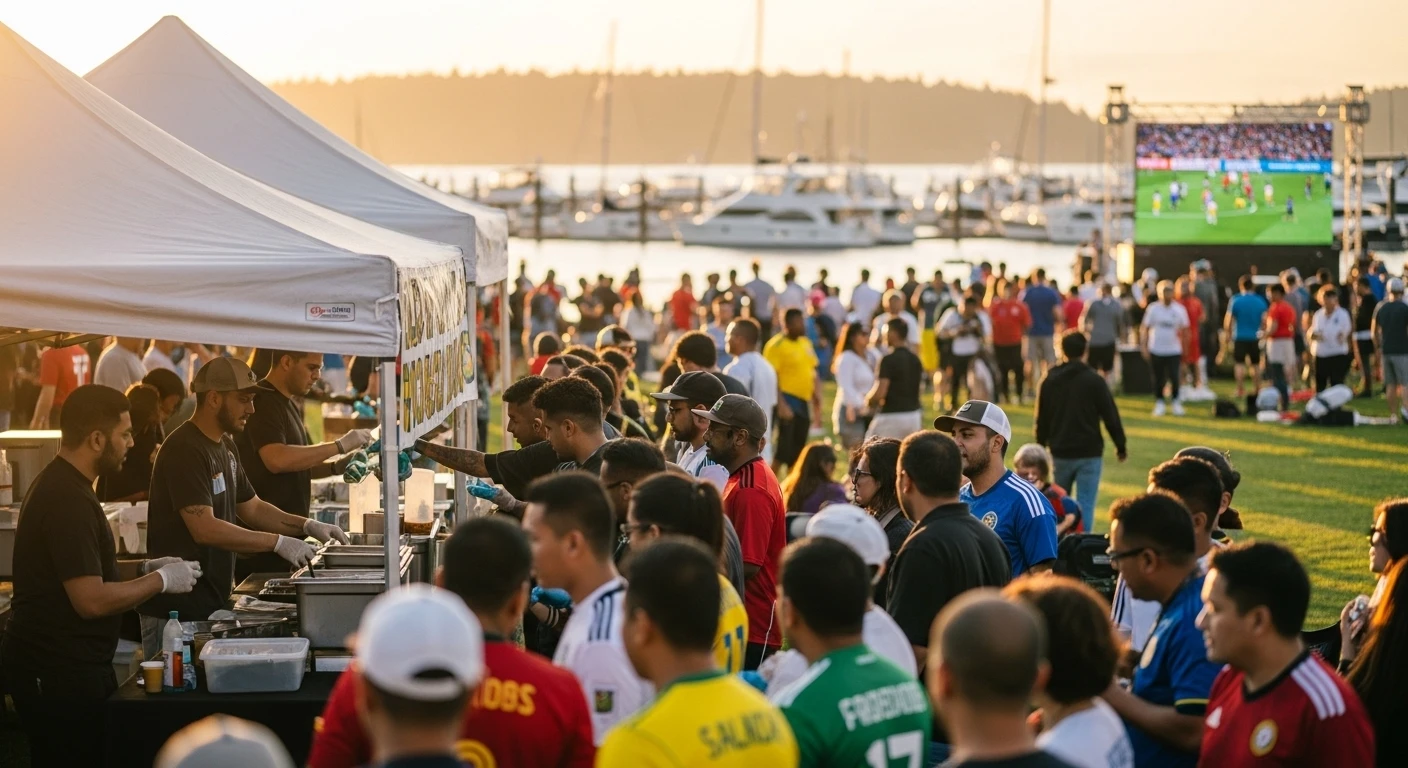
    The 2026 FIFA World Cup brings international soccer to Seattle — and with it, hundreds of thousands of global travelers who will need places to stay, eat, explore, and remember. Seattle’s hotel market will be stretched. Smart travelers are already looking north. Everett, Washington is 25 miles from downtown Seattle, connected by Sounder commuter rail, and sitting on the edge of some of the most dramatic Pacific Northwest scenery on the continent. This is the guide for global travelers who want the World Cup experience without the Seattle price tag.

    Quick facts for international travelers: Seattle is hosting FIFA World Cup 2026 matches at Lumen Field. Everett is 30 minutes north by Sounder commuter rail. The Snohomish County/Everett area offers waterfront hotels, dining, and direct access to the Olympic Peninsula, North Cascades, and San Juan Islands — all within a 90-minute drive.

    Why Everett for FIFA World Cup 2026

    Lumen Field in Seattle is the match venue. But Seattle’s hotel inventory — concentrated in Capitol Hill, South Lake Union, and the waterfront — will be fully booked weeks before the first match. International travelers booking late will find rates at multiples of normal. Everett offers a genuine alternative: a working waterfront city with its own character, direct rail access to Seattle, and a base from which the entire Pacific Northwest is reachable.

    The Sounder North commuter rail runs between Everett and Seattle’s King Street Station. The trip takes approximately 50 minutes and deposits travelers two blocks from Pioneer Square and within a mile of Lumen Field. No rental car, no parking, no traffic. International travelers accustomed to European rail culture will find it a familiar experience.

    Getting from Seattle to Everett

    There are three practical options for match-day travel between Everett and Seattle:

    • Sounder North commuter rail — Direct service, King Street Station to Everett Station. Approximately 50 minutes. Sound Transit operates the line and fares are purchased via the ORCA card system, available at stations.
    • Interstate 5 by car or rideshare — 30 miles, 30–60 minutes depending on traffic. On match days, expect significant congestion southbound. Plan to arrive at least 3 hours before kickoff if driving.
    • Community Transit express bus — Swift bus rapid transit and express routes connect Everett to Seattle with stops at Lynnwood Transit Center, which connects to the Link Light Rail system into downtown Seattle.

    Where to Stay in Everett

    Everett’s hotel stock ranges from major chain properties near the interstate to boutique waterfront options near the marina. The waterfront district — along West Marine View Drive — puts travelers within walking distance of the Port of Everett, restaurants, and the Boxcar Park recreational area. For World Cup visitors, booking 3–6 months in advance is strongly recommended given regional demand.

    The Angel of the Winds Arena entertainment district anchors Everett’s downtown hospitality cluster. Hotels within walking distance of the arena and the Everett Station transit hub offer the most convenient base for rail-dependent travelers.

    Beyond the Match: What to Do in the Everett Area

    The Boeing Future of Flight

    The Boeing Future of Flight Aviation Center in Mukilteo, 10 miles south of Everett, houses the largest building by volume in the world — the Boeing 777X and 787 Dreamliner assembly facility. Tours run daily and offer a genuinely rare industrial experience unavailable anywhere else in the world. International visitors consistently rate it among the most memorable stops in the Pacific Northwest.

    Possession Sound and the Puget Sound Waterways

    Everett sits at the northern tip of Possession Sound, where the Snohomish River delta meets the inland sea of Puget Sound. Washington State Ferries connect Mukilteo (15 minutes from Everett) to Whidbey Island — the largest island in the contiguous United States — with crossings every 30 minutes. A day trip to Whidbey from Everett requires no car if you walk onto the ferry.

    Snohomish River Valley

    The town of Snohomish, 12 miles east of Everett, is a National Register historic district with antique shops, farm-to-table restaurants, and views across the agricultural valley toward the Cascade foothills. For international travelers expecting generic American strip-mall tourism, Snohomish is a reliable corrective.

    Everett as the Gateway to the Olympic Peninsula

    The Olympic Peninsula — home to Olympic National Park, the Hoh Rain Forest, Hurricane Ridge, and the Pacific coastline at Ruby Beach — is 90 minutes to two hours from Everett. The crossing involves the Kingston-Edmonds ferry (20 minutes south of Everett) or the Bainbridge Island ferry from downtown Seattle. World Cup visitors with a rest day between matches have enough time for a meaningful Olympic Peninsula experience: the Hoh Rain Forest and a stretch of Pacific coast can be done in a long day from Everett.

    For International Travelers: Practical Notes

    Washington State has no sales tax on groceries. Tipping is standard at restaurants (18–20%) and for ride services. The US dollar is the currency; credit cards are accepted nearly universally. Cellular coverage in Everett is strong across all major US carriers. The Everett waterfront and downtown core are walkable. Summers in Western Washington are mild — temperatures in July and August (the World Cup period) typically run 65–80°F (18–27°C) with low humidity and long daylight hours.

    Frequently Asked Questions

    How far is Everett from FIFA World Cup 2026 matches in Seattle?

    Everett is approximately 25 miles north of Seattle’s Lumen Field. Sounder North commuter rail makes the trip in about 50 minutes. By car, the drive is 30–60 minutes depending on traffic.

    Is Everett worth visiting during the FIFA World Cup?

    Yes — Everett offers waterfront dining, ferry access to Whidbey Island and the Olympic Peninsula, the Boeing Future of Flight, and lower hotel rates than Seattle. It is a genuine base, not just an overflow option.

    Can I get to Seattle matches from Everett without a car?

    Yes. Sounder North rail connects Everett Station to Seattle’s King Street Station. Community Transit express buses connect to Lynnwood’s Link Light Rail station for an alternative route into downtown Seattle.

    What is the best area to stay in Everett for World Cup visitors?

    The waterfront district and downtown Everett near Everett Station offer the most convenient base for car-free travelers using Sounder rail to reach Seattle matches.


    Also available in: Guía en Español  |  Em Português  |  Auf Deutsch  |  En Français  |  한국어  |  日本語

    Related guides:

  • FIFA World Cup 2026 Visa Guide: ESTA, B1/B2, FIFA PASS, and Travel Restrictions by Country

    FIFA World Cup 2026 Visa Guide: ESTA, B1/B2, FIFA PASS, and Travel Restrictions by Country

    Getting tickets was step one. Getting into the United States is step two — and for millions of international fans planning to attend FIFA World Cup 2026, visa requirements are the most urgent and least-explained question in the room. This guide breaks down what each country needs, how the FIFA PASS works, which countries face special restrictions, and how to get everything processed before the deadlines catch you off guard.

    The most important thing first: The FIFA PASS is a real U.S. Department of State program offering priority B1/B2 visa appointment slots for FIFA World Cup 2026 ticket holders. If you need a B1/B2 visa, apply for the FIFA PASS immediately — appointment slots are filling months before the matches. The FIFA PASS does not guarantee a visa; it expedites the interview appointment.

    Do You Need a Visa to Enter the United States for the World Cup?

    It depends on your country. There are three main categories:

    Category 1: Visa Waiver Program (VWP / ESTA)

    Citizens of 42 countries can enter the U.S. without a visa using the Electronic System for Travel Authorization (ESTA). These include: Australia, Austria, Belgium, Chile, France, Germany, Ireland, Italy, Japan, Netherlands, New Zealand, Portugal, South Korea, Spain, Switzerland, United Kingdom, and others.

    If your country is in the VWP, you need to apply for ESTA online at travel.state.gov before traveling. The cost is $21. Approval typically comes within 72 hours, but applying at least two weeks in advance is recommended. ESTA is valid for two years or until your passport expires.

    Important: ESTA is not a visa. If you have traveled to Iran, Iraq, Libya, North Korea, Somalia, Sudan, Syria, or Yemen after March 2011, you may not be eligible for ESTA and will need a regular B1/B2 visa even if your country participates in the VWP.

    Category 2: B1/B2 Visa with FIFA PASS

    Citizens of countries not in the VWP — including Mexico, Brazil, Argentina, Colombia, Ecuador, Egypt, Saudi Arabia, Morocco, Turkey, Bosnia and Herzegovina, and many other World Cup-qualified nations — need a B1/B2 tourist visa.

    The standard B1/B2 visa process can take weeks or months depending on country and embassy. The FIFA PASS accelerates this:

    1. Obtain your official FIFA World Cup 2026 ticket (the ticket reference number is required)
    2. Register for the FIFA PASS through the U.S. Department of State portal
    3. You will receive access to priority visa interview appointments at the nearest U.S. embassy or consulate
    4. Complete Form DS-160 (the online visa application) before your appointment
    5. Pay the visa application fee (currently $185 for B1/B2)
    6. Attend your consulate interview with all required documents

    The FIFA PASS does not guarantee visa approval. It only prioritizes your appointment slot. The final decision rests with the consular officer based on your individual application.

    Category 3: Countries with Special Travel Restrictions

    Some World Cup-qualified countries face additional U.S. travel restrictions that complicate or prevent access:

    Iran: Iran is on the U.S. visa suspension list. Iranian nationals (traveling on Iranian passports) are generally not eligible for B1/B2 tourist visas. Iranian national team players are exempt under special provisions. Fans with Iranian passports who already hold valid U.S. visas may enter; those without face significant obstacles. Iranian-Americans and Iranian citizens with dual nationality should consult an immigration attorney about their specific situation.

    Visa Bond Program (2026): As of April 2026, certain countries are subject to the B1/B2 Visa Bond Program, which requires visa applicants to demonstrate financial ties to their home country as a condition of visa approval. Some World Cup-qualified nations are affected. Check travel.state.gov for the current list.

    Haiti: Haiti qualified for the World Cup but faces severe visa restrictions. Haitian nationals should seek immigration legal advice before applying.

    Timeline: When to Apply for Your Visa

    FIFA World Cup 2026 matches in Seattle (Lumen Field) run from June 15 through July 6, 2026. Visa application deadlines:

    • ESTA: Can be applied for at any time before travel. Recommended: at least 2 weeks before departure.
    • B1/B2 with FIFA PASS: Apply for the FIFA PASS as soon as you have a confirmed ticket. Interview appointment slots for the June–July 2026 matches are already limited. Do not wait.
    • B1/B2 without FIFA PASS: Processing times vary dramatically by country. In some countries, appointment wait times are 3–12 months. If you haven’t applied yet, it may already be too late for some matches. Check wait times at travel.state.gov/content/travel/en/us-visas/visa-information-resources/wait-times.html

    Crossing the U.S.–Canada Border During the World Cup

    Vancouver, British Columbia (Canada) is also a FIFA World Cup 2026 host city. Many fans plan to attend matches in both cities — particularly Group G fans whose teams play in both Seattle and Vancouver. This requires crossing an international border:

    • To enter Canada: Citizens of most countries need a Canadian Electronic Travel Authorization (eTA) or visitor visa. The eTA costs CA$7 and is typically approved within minutes. It is separate from the U.S. ESTA and must be applied for independently at ircc.canada.ca.
    • To re-enter the U.S.: You will need the same documents you used to enter the first time — a valid ESTA or B1/B2 visa. Land border crossings on I-5 and I-15 can have long wait times on match days.
    • NEXUS Card: For travelers planning multiple border crossings, the NEXUS card expedites processing at designated border crossings between the U.S. and Canada.

    Country-by-Country Quick Reference

    The following covers the World Cup 2026 qualified nations playing matches in Seattle (Lumen Field):

    • Belgium — VWP member. Need ESTA only. No visa required.
    • Egypt — B1/B2 visa required. Apply for FIFA PASS immediately. Egypt is not on the travel ban list.
    • USA — No entry requirements for U.S. citizens.
    • Australia — VWP member. Need ESTA only. No visa required.
    • Bosnia and Herzegovina — B1/B2 visa required. Apply for FIFA PASS. Bosnia is not on the travel ban list.
    • Qatar — B1/B2 visa required. Apply for FIFA PASS. Qatar is not on the travel ban list.
    • Iran — Severely restricted. Iranian passport holders are generally not eligible for B1/B2 visas. Consult an immigration attorney.
    • New Zealand — VWP member. Need ESTA only. No visa required.

    Documents to Bring to Matches

    In addition to your approved visa or ESTA, have these documents available:

    • Valid passport (must have at least 6 months validity past your U.S. departure date)
    • FIFA World Cup 2026 ticket (printed or in the official FIFA app)
    • Proof of accommodation (hotel reservation, Airbnb, etc.)
    • Proof of sufficient funds for your stay
    • Return ticket or proof of departure from the U.S.

    Official Resources

    • ESTA application: esta.cbp.dhs.gov
    • DS-160 (B1/B2 visa application): ceac.state.gov
    • Visa wait times by country: travel.state.gov/content/travel/en/us-visas/visa-information-resources/wait-times.html
    • Canadian eTA: canada.ca/en/immigration-refugees-citizenship/services/visit-canada/eta.html

    Frequently Asked Questions

    What is the FIFA PASS for World Cup 2026 visas?

    The FIFA PASS is a U.S. Department of State program that provides priority B1/B2 visa interview appointments to FIFA World Cup 2026 ticket holders. It does not guarantee visa approval — it expedites the interview scheduling process.

    Do Mexican fans need a visa for the FIFA World Cup 2026?

    Yes. Mexico is not in the U.S. Visa Waiver Program. Mexican citizens need a B1/B2 visa to enter the United States. Applying through the FIFA PASS as soon as tickets are confirmed is strongly recommended.

    Do Brazilian fans need a visa for FIFA World Cup 2026?

    Yes. Brazil is not in the VWP. Brazilian citizens need a B1/B2 visa. Apply for the FIFA PASS immediately — Brazilian consular appointment wait times are typically long.

    Do Belgian fans need a visa for the World Cup in Seattle?

    No. Belgium is in the Visa Waiver Program. Belgian citizens need only ESTA, applied for online at esta.cbp.dhs.gov.

    Can Iranian fans attend the Egypt vs Iran match in Seattle on June 26?

    This is one of the most complex visa situations of the entire tournament. Iranian nationals traveling on Iranian passports are generally not eligible for U.S. B1/B2 visas under current restrictions. Iranian-Americans with U.S. passports may attend as normal. Dual nationals and those with existing valid U.S. visas should consult an immigration attorney. The situation may evolve — check travel.state.gov for the most current information.

    How long does a B1/B2 visa take to process for World Cup 2026?

    Processing times vary dramatically by country. The FIFA PASS provides priority appointments, which can reduce wait times significantly. Without the FIFA PASS, wait times in some countries are 6–12 months. The FIFA PASS is the fastest path for most fans needing B1/B2 visas.


    Visa guides in your language: تأشيرة — المصريين  |  تأشيرة — السعوديين  |  تأشيرة — المغاربة  |  تأشيرة — العراقيين  |  تأشيرة — الأردنيين  |  ESTA — Español  |  ESTA — Deutsch  |  ESTA — Français  |  ESTA — 한국어  |  ESTA — 日本語

  • USS Gridley on USS Nimitz’s Final Overseas Deployment: A Complete 2026 Guide for Naval Station Everett

    USS Gridley on USS Nimitz’s Final Overseas Deployment: A Complete 2026 Guide for Naval Station Everett

    Quick answer: USS Gridley (DDG-101), homeported at Naval Station Everett, is operating with USS Nimitz (CVN-68) as the lone destroyer escort on the Nimitz Carrier Strike Group’s Southern Seas 2026 deployment — publicly confirmed by the U.S. Navy as the carrier’s final overseas deployment before its 2027 decommissioning. Nimitz departed Bremerton on March 7, 2026; the strike group made its first published port visit in Ecuador on April 7–8 and a second in Valparaiso, Chile from April 17–21, where Chilean President José Antonio Kast came aboard. From there the strike group continues to circumnavigate South America en route to Naval Station Norfolk, where Nimitz begins decommissioning.

    Why This Cruise Is Different

    USS Nimitz (CVN-68) was commissioned in 1975. It is the lead ship of the Nimitz class — the backbone of the U.S. carrier fleet for the past five decades — and the U.S. Navy has publicly stated that Southern Seas 2026 is the carrier’s final operational deployment. After Nimitz returns to Norfolk, Virginia, the ship begins a multi-year decommissioning process that the Navy has publicly projected to conclude in 2027.

    For the destroyer escorting Nimitz on this final cruise, the historical weight is not symbolic — it is operational. USS Gridley is the only Arleigh Burke-class destroyer publicly assigned to the strike group, and it is the Naval Station Everett unit that gets to fly the ensign alongside Nimitz on the carrier’s last underway period before decommissioning.

    What Southern Seas 2026 Actually Is

    Southern Seas is a recurring U.S. 4th Fleet deployment that has been conducted in various forms since the 1980s. Per U.S. Naval Forces Southern Command, Southern Seas 2026 is the 11th iteration of the deployment to the U.S. Southern Command area of responsibility since 2007. It is not an exercise in the wartime sense; it is a multinational engagement deployment designed around partner-nation port visits, passing exercises (PASSEXs) at sea, and cooperative operations with partner navies in the Caribbean, Latin America, and South America.

    The 2026 iteration officially launched on March 23, 2026, with U.S. Southern Command publicly announcing the deployment of Nimitz and Gridley to the SOUTHCOM area of responsibility. The strike group’s published itinerary includes engagements with multiple partner navies through scheduled port visits and passing exercises along the South American coastline as the ships circumnavigate the continent en route to the East Coast.

    The Published Stops So Far

    According to U.S. Navy and U.S. Southern Command public-affairs releases, the published itinerary so far includes:

    • March 7, 2026: Nimitz departed Naval Base Kitsap-Bremerton for the final time.
    • April 7–8, 2026: A bilateral engagement with the Ecuadorian Navy.
    • April 17–21, 2026: Port visit to Valparaiso, Chile. USS Gridley moored pier-side; USS Nimitz anchored in Chilean territorial waters. Chilean President José Antonio Kast — inaugurated March 11, 2026 — visited Nimitz during the call. The strike group conducted a passing exercise at sea with the Chilean Navy frigate Capitán Prat after departure.

    The Navy has not publicly disclosed the strike group’s remaining itinerary, and we will not speculate. After Southern Seas 2026 concludes, Nimitz proceeds to Norfolk to begin the multi-year inactivation and decommissioning process. The defueling of the two A4W reactors and dismantling of the ship is a years-long undertaking; Nimitz’s last underway period before that work begins is, by the Navy’s own account, the deployment Gridley is on right now.

    USS Gridley in Context: Naval Station Everett’s Destroyer Fleet

    USS Gridley (DDG-101) is one of five Arleigh Burke-class guided-missile destroyers homeported at Naval Station Everett. The destroyers based in Everett, listed alphabetically:

    • USS Gridley (DDG-101)
    • USS Kidd (DDG-100)
    • USS Momsen (DDG-92)
    • USS Ralph Johnson (DDG-114)
    • USS Sampson (DDG-102)

    Naval Station Everett is located at 2000 West Marine View Drive. It is the Navy’s most modern major surface-ship base on the West Coast and the only major U.S. Navy installation in the Pacific Northwest with a deepwater carrier-capable pier — though Everett does not currently homeport an aircraft carrier.

    Why Everett Is Watching This Particular Cruise

    For Naval Station Everett families and the Snohomish County community that surrounds the base, Southern Seas 2026 is the deployment of historic significance for two reasons that compound each other.

    The first is Nimitz itself. Snohomish County families have spent the past five months processing two pieces of major Navy news: the November 25, 2025 cancellation of the Constellation-class frigate program, and the December 19, 2025 announcement of the new FF(X) program based on the Coast Guard’s Legend-class National Security Cutter. Everett was the publicly named planned homeport for the Constellation-class frigates; the FF(X) homeport question remains open.

    The second is what Gridley is doing. Among Everett’s five destroyers, Gridley is the one carrying the ensign alongside the Navy’s senior carrier on its last cruise. That is the kind of operational milestone Naval Station Everett families will tell each other about for years.

    What Comes Next After Nimitz Returns to Norfolk

    According to U.S. Naval Forces Southern Command, Nimitz is heading toward Norfolk, Virginia, where it is scheduled to begin the multi-year inactivation and decommissioning process expected to conclude in 2027. Defueling the carrier’s two A4W reactors is a multi-year sequence on its own; the inactivation period overlaps with the early phases of dismantlement.

    For Gridley, the next-step question is open. Destroyers regularly cycle through training, deployment, and maintenance availabilities, and Gridley’s post-Southern-Seas employment will be set by Naval Surface Force Pacific. The destroyer returns to its Naval Station Everett pier in due course; the Navy has not publicly disclosed the return date.

    Frequently Asked Questions

    What ship is USS Gridley and where is it homeported?

    USS Gridley (DDG-101) is an Arleigh Burke-class guided-missile destroyer homeported at Naval Station Everett (2000 West Marine View Drive, Everett, WA). It is one of five Arleigh Burke destroyers based in Everett.

    What is Southern Seas 2026?

    Southern Seas 2026 is the 11th iteration since 2007 of a U.S. 4th Fleet partner-nation engagement deployment in the Caribbean, Latin America, and South America. It includes port visits, passing exercises with partner navies, and a circumnavigation of South America by the strike group.

    Why is USS Nimitz’s deployment historic?

    The U.S. Navy has publicly stated that Southern Seas 2026 is USS Nimitz’s final overseas deployment before decommissioning. Nimitz, commissioned in 1975, is the lead ship of the Nimitz class; she departs for Norfolk after Southern Seas to begin a multi-year decommissioning process expected to conclude in 2027.

    What happened during the Valparaiso port visit?

    Per Navy and U.S. Southern Command public affairs, USS Gridley moored pier-side at Valparaiso from April 17 to 21, 2026, while USS Nimitz anchored in Chilean territorial waters. Chilean President José Antonio Kast visited Nimitz. After departure, the strike group conducted a passing exercise at sea with the Chilean Navy frigate Capitán Prat.

    Is this Gridley’s first deployment to South America?

    Gridley regularly deploys with U.S. Pacific Fleet across multiple theaters. Naval Station Everett’s destroyers have participated in Southern Seas iterations in prior years; the 2026 deployment is uniquely significant because of Nimitz’s final-cruise status.

    How does this connect to the Constellation/FF(X) story?

    Separately. The Constellation-class frigate program was cancelled in November 2025; the Navy announced the FF(X) successor program in December 2025. Everett was named as the planned Constellation homeport; the FF(X) homeport question is open. None of that affects Gridley’s deployment with Nimitz, which is in a different ship class and a different community of interest.

    When does Nimitz arrive in Norfolk?

    The Navy has not publicly disclosed Nimitz’s arrival date in Norfolk. The strike group is en route after circumnavigating South America. Per U.S. Naval Forces Southern Command, Nimitz then begins the multi-year inactivation and decommissioning process expected to conclude in 2027.

    Related Exploring Everett Coverage

  • USS Gridley Joins USS Nimitz for Chilean Port Visit on Carrier’s Final Overseas Cruise

    USS Gridley Joins USS Nimitz for Chilean Port Visit on Carrier’s Final Overseas Cruise

    Q: Where is USS Gridley right now and why does it matter to Everett?
    A: USS Gridley (DDG-101), homeported at Naval Station Everett, was moored pier-side at Valparaiso, Chile from April 17 to April 21, 2026, alongside USS Nimitz on the carrier’s final overseas deployment before its 2027 decommissioning. The two ships are circumnavigating South America as part of U.S. 4th Fleet’s Southern Seas 2026, a routine multinational engagement deployment publicly announced by U.S. Southern Command on March 23. Chilean President José Antonio Kast visited Nimitz during the port call.

    USS Gridley Joins USS Nimitz for Chilean Port Visit on Carrier’s Final Overseas Cruise

    One of Naval Station Everett’s five Arleigh Burke-class destroyers spent four days last week pier-side in Valparaiso, Chile, accompanying an aircraft carrier on what is publicly confirmed to be its last overseas deployment before decommissioning.

    USS Gridley (DDG-101) — homeported in Everett — moored alongside the pier at Valparaiso from April 17 through April 21, 2026, while the nuclear-powered aircraft carrier USS Nimitz (CVN-68) anchored in Chilean territorial waters nearby. The Navy released the port visit details through its public affairs channels and U.S. Southern Command news pages, including imagery and an on-board visit by Chilean President José Antonio Kast.

    The visit is the second scheduled stop along Southern Seas 2026, the U.S. 4th Fleet deployment that the Navy announced publicly on March 23, 2026. The strike group’s stated mission is partner-nation engagement and circumnavigation of South America en route to the U.S. East Coast. According to Naval Forces Southern Command, Nimitz is heading toward Norfolk, Virginia, where it is scheduled to begin the multi-year inactivation and decommissioning process expected to conclude in 2027.

    For the Everett community, the headline is straightforward: Gridley — a destroyer Snohomish County families have watched come and go for years — is on a deployment of historic significance for the U.S. Navy.

    What Is Southern Seas 2026?

    Southern Seas is a recurring U.S. 4th Fleet deployment that has been conducted in various forms since the 1980s. It is not an exercise in the wartime sense; it is a multinational engagement deployment designed around port visits, passing exercises (PASSEXs) at sea, and ship-rider programs with partner navies in the Caribbean, Latin America, and South America.

    The 2026 iteration officially launched on March 23, 2026, with U.S. Southern Command announcing the deployment of Nimitz and Gridley to the SOUTHCOM area of responsibility. According to the announcement, the strike group’s published itinerary includes engagements with at least ten partner navies — among them Ecuador, Chile, and others not yet named publicly — through scheduled port visits and passing exercises along the South American coastline.

    The first published stop of the deployment was a bilateral engagement with the Ecuadorian Navy on April 7 and 8, followed by the Chilean port visit. The Navy has not publicly disclosed the strike group’s remaining itinerary, and we will not speculate on it here.

    Why This Particular Cruise Is Different

    The Nimitz-class aircraft carrier USS Nimitz (CVN-68) was commissioned in 1975. It is the lead ship of the class that still forms the backbone of the U.S. carrier fleet, and the Navy has publicly stated that Southern Seas 2026 is the carrier’s final operational deployment.

    After Nimitz returns to the East Coast, the ship begins a multi-year decommissioning process that the Navy has publicly projected to conclude in 2027. The defueling of the two A4W reactors and dismantling of the ship is a years-long undertaking; Nimitz’s last underway period before that work begins is, by the Navy’s own account, the deployment Gridley is on right now.

    For Gridley’s crew and their Everett families, that means this deployment is one Naval Station Everett families will tell each other about for years.

    The Chilean Port Visit, As The Navy Described It

    According to Navy and U.S. Southern Command public affairs releases, the April 17–21 stop in Valparaiso included:

    • A bilateral air engagement with the Chilean Air Force preceding arrival
    • A reception aboard Nimitz for senior Chilean government and military leaders
    • An on-board visit from Chilean President José Antonio Kast
    • A passing exercise at sea with the Chilean Navy frigate Capitán Prat after departure

    These details come exclusively from Navy.mil, the U.S. Southern Command news site, and DVIDS — all official public-affairs channels. We do not publish operational details beyond what those channels have released.

    USS Gridley And Naval Station Everett

    USS Gridley (DDG-101) is one of five Arleigh Burke-class guided-missile destroyers homeported at Naval Station Everett. The destroyers based in Everett, listed alphabetically, include:

    • USS Gridley (DDG-101)
    • USS Kidd (DDG-100)
    • USS Momsen (DDG-92)
    • USS Ralph Johnson (DDG-114)
    • USS Sampson (DDG-102)

    Naval Station Everett, located at 2000 West Marine View Drive, is the Navy’s most modern major surface-ship base on the West Coast. It is the only major U.S. Navy installation in the Pacific Northwest with a deepwater carrier-capable pier, although Everett does not currently homeport an aircraft carrier.

    The base has been in the public conversation for the past five months because of the Navy’s November 25, 2025 cancellation of the Constellation-class frigate program and the December 19, 2025 announcement of the new FF(X) program based on the Coast Guard’s Legend-class National Security Cutter. Everett was the publicly named planned homeport for the Constellation-class frigates; the FF(X) homeport question remains open. Snohomish County’s Military Affairs Committee, rebooted in February 2026, is working that question with the Washington congressional delegation.

    That work continues. In the meantime, Gridley and the rest of Naval Station Everett’s destroyer fleet do what destroyers do — train, deploy, escort carriers, return home, and start again.

    What This Means For Military Families In Everett

    Deployments are public; the day-to-day rhythm of life around them is not. For families connected to Gridley specifically, the resources at Naval Station Everett are unchanged from any other deployment cycle:

    • Fleet & Family Support Center (FFSC), 425-304-3735 — provides deployment readiness, spouse employment programs (FERP, MySECO, MySTeP), financial counseling, and reintegration support. Walk-in and appointment options at the main Everett location, with satellite hours at Smokey Point.
    • Child & Youth Programs (CYP) — the Child Development Center, Youth Programs, and the School Liaison Office handle continuity of care for children of deployed sailors, including school enrollment and special education advocacy across district lines.
    • USO Northwest — operates a center inside the Sea-Tac International Airport USO and supports homecoming logistics regionally.
    • American Legion Post 6 and the Everett Navy League Council — provide community connection points for families and veterans throughout the deployment cycle.

    None of these resources are new. The point of listing them now is the same point that’s true any time a homeport ship is downrange: the support infrastructure is local, it’s free for eligible families, and the people who staff it are reachable by phone today.

    The Bigger Picture For Everett

    Naval Station Everett’s footprint on Snohomish County is significant. The base employs thousands of military and civilian personnel directly, supports a regional supply-chain ecosystem of contractors, and anchors the demand for off-base housing, schools, healthcare, and local services from Mukilteo to Marysville. Every deployment cycle ripples through that ecosystem.

    The high-profile nature of this particular deployment — Nimitz’s final cruise, a Chilean head-of-state visit, the historical weight of the Nimitz name retiring — gives Gridley’s crew and their families something most homecomings won’t have: a story with national scope.

    When the strike group eventually returns home (Nimitz to Norfolk, Gridley to Everett), the Everett portion of that homecoming will be a Naval Station Everett pier event under standard family-support and base-access procedures. The Navy and base public affairs will release timing publicly when that timing exists. We do not have it now and will not speculate.

    Frequently Asked Questions

    Is USS Gridley deploying or returning?

    Deploying. Per the Navy’s March 23, 2026 announcement, USS Gridley deployed with USS Nimitz to the U.S. Southern Command area of responsibility for Southern Seas 2026. The two ships are currently transiting the South American coastline.

    When will USS Gridley return to Everett?

    The Navy has not publicly released a return date. Once the Navy or Naval Station Everett public affairs releases an official homecoming date, the base will publish family information through standard channels.

    Was anyone from Naval Station Everett at the Chilean port visit?

    USS Gridley’s crew was pier-side at Valparaiso April 17–21, 2026. The Navy released the photos publicly through DVIDS. The Navy did not publicly release the names of any individual crewmembers below flag rank, and neither will we.

    Why is this Nimitz’s final deployment?

    USS Nimitz (CVN-68) was commissioned in 1975. The Navy has publicly stated the carrier will be decommissioned in 2027 after this deployment. Nimitz-class carriers are nuclear-powered, and the decommissioning process — including reactor defueling — takes multiple years.

    Does Naval Station Everett homeport an aircraft carrier?

    No. Naval Station Everett has a carrier-capable deepwater pier but does not currently homeport an aircraft carrier. The base homeports five Arleigh Burke-class destroyers and several Coast Guard cutters.

    Where can military families in Everett get deployment support?

    The Naval Station Everett Fleet & Family Support Center is reachable at 425-304-3735. Walk-in and appointment-based services include deployment readiness, spouse employment programs, and financial counseling. Smokey Point has satellite hours.

    What happens to Naval Station Everett if FF(X) doesn’t homeport here?

    That question is unresolved. Snohomish County’s Military Affairs Committee — rebooted on February 23, 2026 — is actively engaging the Washington congressional delegation on FF(X) homeport options. The Navy has not publicly named an FF(X) homeport as of this writing.

    What ships did the Chilean Navy operate alongside Gridley?

    According to Chilean and U.S. Navy public releases, the Chilean Navy frigate Capitán Prat conducted a passing exercise with USS Nimitz and USS Gridley after the Valparaiso port visit. No further joint ship details were released publicly.

    Sources

    • U.S. Navy Press Office: “Chile Welcomes Nimitz Carrier Strike Group” (Navy.mil, April 2026)
    • U.S. Southern Command: “Chile Welcomes Nimitz Carrier Strike Group” (Southcom.mil, April 2026)
    • U.S. 4th Fleet: “U.S. 4th Fleet Announces Southern Seas 2026 Deployment” (March 23, 2026)
    • Defense Visual Information Distribution Service (DVIDS) imagery release
    • U.S. Naval Institute News: USNI Fleet and Marine Tracker, April 20, 2026
    • Stars and Stripes coverage of Chilean president visit, April 20, 2026
    • Naval Station Everett public affairs and CNIC NW base information