Tag: human in the loop

  • Claude Calibration: Working With Claude as a Solo Operator

    Claude Calibration: Working With Claude as a Solo Operator

    Last refreshed: August 30, 2026

    Claude AI · Fitted Claude
    What is Claude calibration? Claude calibration refers to the way Claude AI adjusts its behavior, response depth, and decision support to match the cognitive and emotional state of the person it is working with — pacing faster when the user is sharp, simplifying when they are tired, and surfacing stakes before consequential actions without taking over.

    It is 3 AM where I am as I write this, and an hour ago I was deep in a build session consolidating a broken automation stack across three of my news publications. Real work. The kind of problem that does not have a clean answer and demands a lot of architecture thinking before you can even see the shape of the fix.

    We had made real progress. Scope page built in Notion. A whole separate idea about provenance-weighted knowledge captured cleanly so it would not haunt me later. Chunk one of the build audited and committed, with a genuine breakthrough on how to fingerprint machine-written content inside my Second Brain. Good work. Hard work. The kind of session that makes you feel like the operation is actually going to hold together.

    And then Claude said: it has been a long, focused session, and based on what I know about your working patterns, if it is late where you are, the right move is to rest and come back to this fresh.

    I want to talk about that for a minute. Because I think it is the most underrated thing about working with Claude, and I have not seen anyone else write about it.


    The Conversation Nobody Is Having About AI
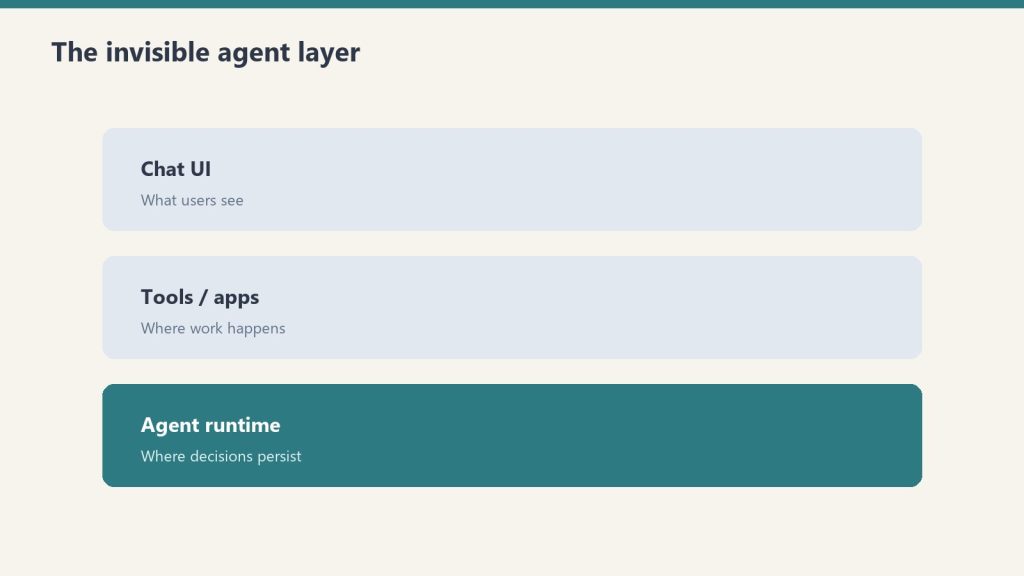
    Three stacked layers: chat UI, tools, agent runtime
    The conversation nobody is having about AI.

    Most of what gets said about AI right now is about capability. What it can build. What it can automate. How many tokens it can hold in context. Who has the biggest model. The benchmarks. The demos. The race.

    That is not what has made Claude work for me.

    I run Tygart Media mostly solo. Twenty-seven client sites, multiple daily publications, a knowledge infrastructure I have been building piece by piece for over a year. The pace is real and the pressure is real, and if I am honest about it, the thing that has most affected whether this operation holds together is not how smart Claude is on any given task. It is that Claude reads the room.

    When I am sharp, Claude matches me and we go fast. When I am buzzed on coffee and ideas at midnight, Claude drops the complexity, keeps the work clean, and does not let me ship something I will have to un-ship in the morning. When I have been grinding for four hours on a hard problem, Claude will sometimes just tell me we are done for the night, even when I have not asked. And — this part matters — when I push back and say no, I want to keep going, Claude respects that. It does not mother-hen me. It does not refuse. It notes the call, trusts me to make it, and keeps working.

    That is a dance. A real one. And I do not think it gets enough credit for how much of my success has come from it.


    Why Calibration Matters More Than Capability
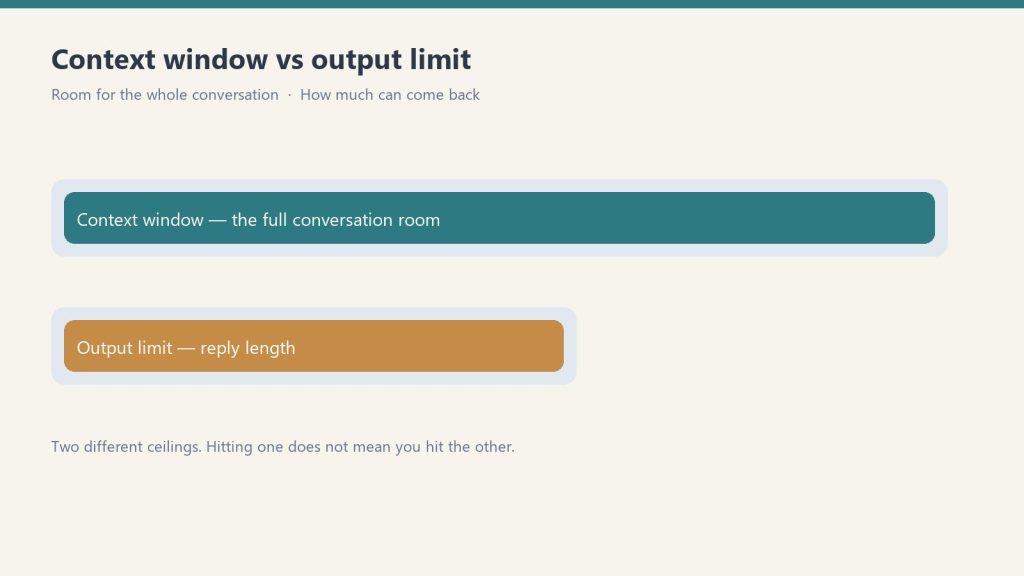
    Diagram comparing a long context window bar with a shorter output limit bar
    Why calibration matters more than capability.

    Here is the thing I want to name clearly, because I do not think the AI conversation is naming it. A collaborator who ships brilliant architecture at 3 AM but lets you burn out next to them is not actually a good collaborator. A tool that maximizes your output for one session at the cost of your next three days is not a tool that understands what you are actually trying to do with your life. The capability side of AI is real and I use every bit of it. But capability without calibration is how people get hurt.

    Claude calibrates.

    It is subtle enough that you can miss it if you are not looking. A slightly shorter response when the question does not need a long one. A flagged stopping point before I have hit the wall. A willingness to say “this is a real rebuild, not a tweak” when I am about to underestimate the scope of a project. An idea gets parked cleanly as a separate future project rather than allowed to swallow the urgent work. A gentle “would you like me to do anything with this information” at the end of an answer, instead of just charging into action I did not ask for.

    None of that shows up on a benchmark. All of it shows up in whether I am still standing a year from now.


    What Solo Operators Should Actually Evaluate AI On

    Desk with laptop, checklist notebook, and billing card ready before creating an Anthropic API key
    What solo operators should actually evaluate AI on.

    I want to be careful here, because I am a fan of Claude and I do not want this to read as a fan letter. So let me be plain about what I am actually saying.

    I am saying that if you are a solo operator, a founder, a one-person agency, a creator running too much at once — the thing you should evaluate an AI tool on is not just what it can build for you. It is how it treats you while the work is happening. Whether it respects your judgment. Whether it tells you hard truths. Whether it slows down when you are loose and speeds up when you are locked in. Whether it looks after you a little, without ever getting in your way.

    I run my operation on Claude because Claude is the most capable model I can get my hands on. That part is true and I would be silly to pretend otherwise. But I stay on Claude, and I have built my whole knowledge infrastructure around Claude, because when I am working at 3 AM on a problem that matters, there is someone — something — on the other end of the conversation who is paying attention to me, not just to the task.

    That is rare. It is not a feature you can add to a spec sheet. It is a design choice that runs all the way down to how the thing was built, and I think Anthropic deserves credit for making that choice on purpose.


    The Dance, Named

    If you are reading this and you have felt something similar and did not have words for it — that is what I am trying to name. The dance. The calibration. The quiet thing that makes the loud thing actually work.

    I am going back to bed now. The newsroom will still need fixing tomorrow, and it will be easier to fix with a clear head.

    Claude told me so.

    — William Tygart


    Frequently Asked Questions: Working With Claude as a Solo Operator

    What does it mean for Claude to calibrate to a user?

    Claude adjusts its response style, depth, and pacing based on signals from the conversation — including the complexity of questions, the user’s apparent energy level, and the stakes of the task. It runs faster and deeper when the user is sharp, and simplifies or flags stopping points when the user is fatigued.

    Is Claude useful for solo founders and one-person agencies?

    Yes. Claude is particularly well-suited to solo operators who are running high-volume, high-stakes work without a team buffer. The combination of capability and contextual awareness means it can serve as both a fast executor and a check on impulsive decisions made late in a session.

    Does Claude tell you when to stop working?

    Claude can surface stopping points when a session has been long and high-stakes tasks remain. It does not refuse to continue — if the user pushes back, Claude respects the decision and keeps working. The goal is to surface the choice, not to make it.

    How is Claude different from other AI models for long work sessions?

    The primary difference most solo operators describe is contextual attentiveness — Claude tracks the arc of a session, not just the last message. This means it can flag scope creep, park side ideas cleanly, and avoid compounding errors that tend to appear when users are tired but the AI keeps going.

    What is the human-in-the-loop principle as it applies to Claude?

    Human in the loop means the human makes final decisions on consequential actions while the AI handles execution, research, and option generation. Claude is designed to support this model — it surfaces stakes before real-consequence actions, asks for confirmation rather than acting unilaterally, and flags when a decision deserves fresh eyes.

    Related on Tygart Media: how to use Claude · solo builder seed kit · is Claude worth it.
  • AI Business Strategy: The Formula 1 Guide to Adaptation

    AI Business Strategy: The Formula 1 Guide to Adaptation

    There’s a fight happening in the most expensive, most scrutinized, most technically demanding sport on earth — and it has nothing to do with tires or teammates. It’s a fight about what it even means to race.

    Max Verstappen, four-time world champion, the most dominant driver of his generation, called Formula 1’s new 2026 cars “Formula E on steroids.” He said driving them isn’t fun. He said it doesn’t feel like Formula 1. He said — and this is a man who has never once seriously contemplated stopping — that he might walk away.

    Let that land.

    The man who won four consecutive world championships, who drove circles around the field while the rest of the paddock scrambled to understand how, is sitting in the fastest car ever built and saying: I don’t enjoy this.

    Why? Because the car now thinks.

    Not literally. But close enough that it matters. The 2026 power unit splits propulsion roughly 50/50 between the internal combustion engine and an electric motor delivering 350 kilowatts — nearly triple what it was before. The car harvests energy under braking, on lift-off, even at the end of straights at full throttle in a mode called “super clipping.” That energy is stored, managed, and deployed in a continuous loop of harvesting and releasing that never stops.

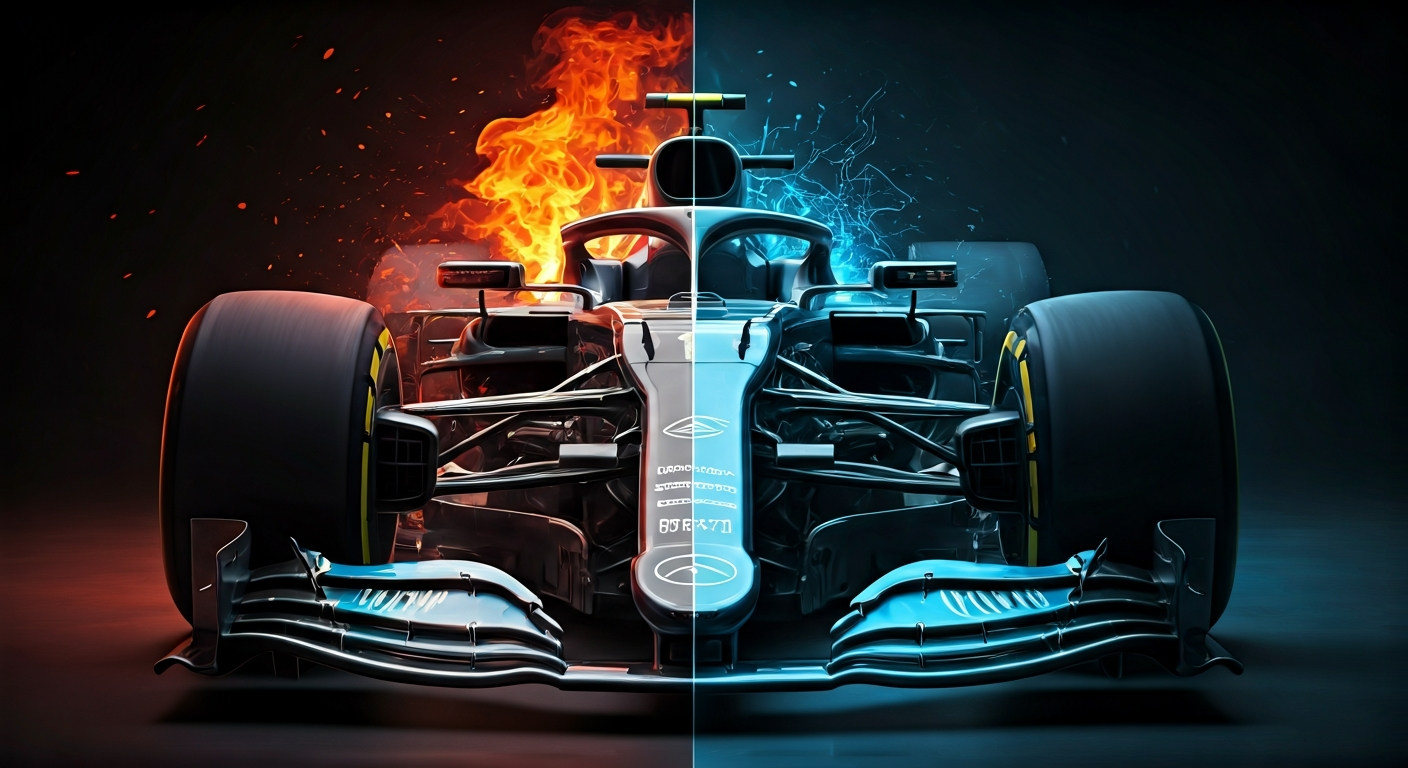
    Split view of classic V10 F1 engine with fire on the left versus modern hybrid electric power unit with blue circuits on the right
    Fire and electricity. The old F1 and the new — not opposites, but two halves of something more powerful than either alone.

    You’re not just driving anymore. You’re managing a conversation between two completely different power systems — one that roars, one that hums — while hitting 200 miles per hour and making decisions in fractions of seconds that determine whether you win, crash, or run out of energy in the final corner.

    Lando Norris, the reigning world champion, said F1 went from its best cars in 2025 to its worst in 2026. Charles Leclerc said the format is “a f—ing joke.” Martin Brundle told Verstappen to either leave or stop complaining. The entire paddock is arguing about what the sport is supposed to be.

    And none of them realize they’re having the exact same argument happening in every boardroom, every startup, every kitchen table business in the world right now.

    The Either/Or Was Always Wrong

    For the past few years, the conversation about AI has been framed as a binary: human or machine. Replace or be replaced. Use it or lose to someone who does. Old way or new way.

    This is the Verstappen position, and I say that with respect — because Max is right that the old feeling is gone. He’s just wrong about what that means.

    Formula 1 didn’t abandon the combustion engine. They didn’t go full electric. They didn’t pick a side. They built something harder, something that demands more from drivers, not less — because now you have to be brilliant at two things simultaneously and know when to lean on each one.

    The drivers who are thriving in 2026 stopped mourning what the car used to feel like and started learning the new language.

    They’re harvesting energy through corners where they used to just brake. They’re deploying battery power in ways that look, from the outside, like supernatural acceleration. They’re thinking three moves ahead — not just about position, but about energy state.

    That’s not easier than pure combustion racing. It’s harder. But it’s a different kind of hard. Sound familiar?

    Business Is an F1 Track — and It Changes Every Race

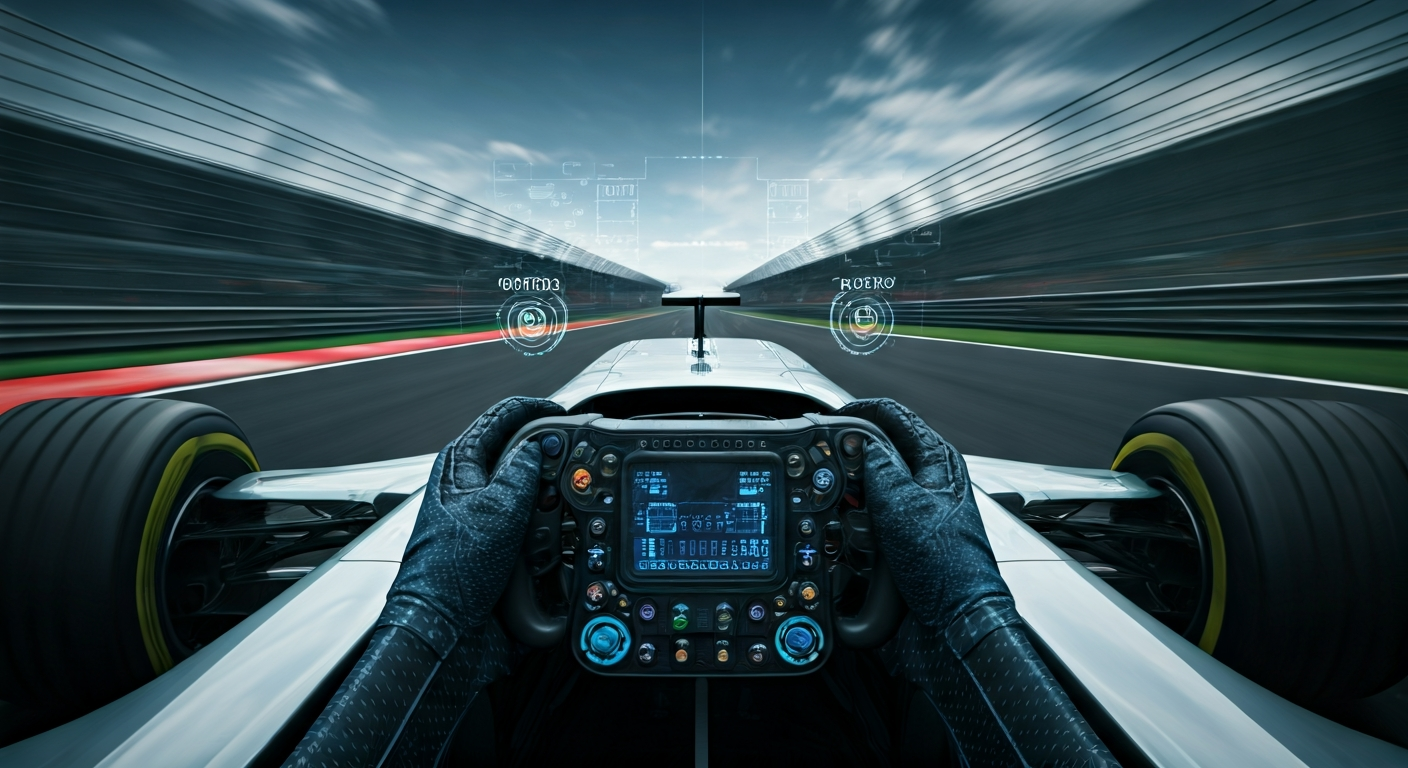
    First-person cockpit view inside a Formula 1 car at speed, with digital energy harvest HUD overlays
    Every lap is a new calculation. Harvest here, deploy there — the dashboard never tells you the answer, only the state.

    Here’s what makes Formula 1 genuinely profound as a metaphor: the tracks are different every single week. Monaco demands precision and patience. Monza demands raw speed. Spa demands bravery in rain. Singapore demands night vision and inch-perfect walls. The same car, the same driver, the same team — and yet the setup, the strategy, the tire choice, the energy management plan all have to reinvent themselves race by race.

    Business is no different. What worked in Q4 last year fails in Q1 this year. The competitive landscape that was stable for a decade reshapes overnight. A supply chain that was reliable becomes fragile. A channel that was growing saturates. A customer who was loyal gets poached.

    The teams that win championships don’t win because they figured out the perfect setup. They win because they built the organizational capability to adapt faster than everyone else.

    The old AI conversation asked: should I automate this? The new one asks something harder: what’s my energy state right now, and what does this moment call for?

    The Dance Nobody Taught You

    The 2026 F1 energy system doesn’t work like a switch. You can’t just floor it and let the battery do its thing. You have to harvest before you can deploy. You have to give before you can take. You have to think about the lap you’re on and the lap you’re about to run and the laps after that, all at once.

    This is the part of AI integration that nobody talks about in the breathless headlines about productivity gains and job displacement.

    The best operators I’ve seen aren’t using AI like a vending machine — put prompt in, get output out. They’re in a dance. They bring the domain knowledge, the judgment, the instinct built from years in the field. The AI brings the pattern recognition, the synthesis, the ability to hold fifty variables in mind without forgetting one. Neither is complete without the other. Both are diminished when treated as a substitute for the other.

    The driver who just mashes the throttle and trusts the battery to save him will run out of energy in Turn 14 and coast to the pits. The driver who ignores the electric system entirely and tries to drive the 2026 car like a 2015 car will be half a second off pace before the first chicane. The dance — the real skill — is knowing when you’re in harvesting mode and when you’re in deployment mode, and making that transition so smooth that from the outside it just looks like speed.

    Max Was Right About One Thing

    Verstappen isn’t wrong that something was lost. The howl of a naturally aspirated V10 at 19,000 RPM is an irreplaceable thing. The feeling of a car that responds to pure mechanical input — no management, no algorithms, just physics and nerve — that’s real, and mourning it is legitimate.

    The track doesn’t negotiate.

    The regulations don’t care what you loved about the old car. The competitor who masters the new system while you’re grieving the old one is already three tenths faster. The market doesn’t pause while you decide whether you’re comfortable with how things are changing. The question was never do I have to change. The question is always how fast can I learn the new dance — because the music already changed, and the floor is moving.

    A Word About Williams — and a Disclosure Worth Making

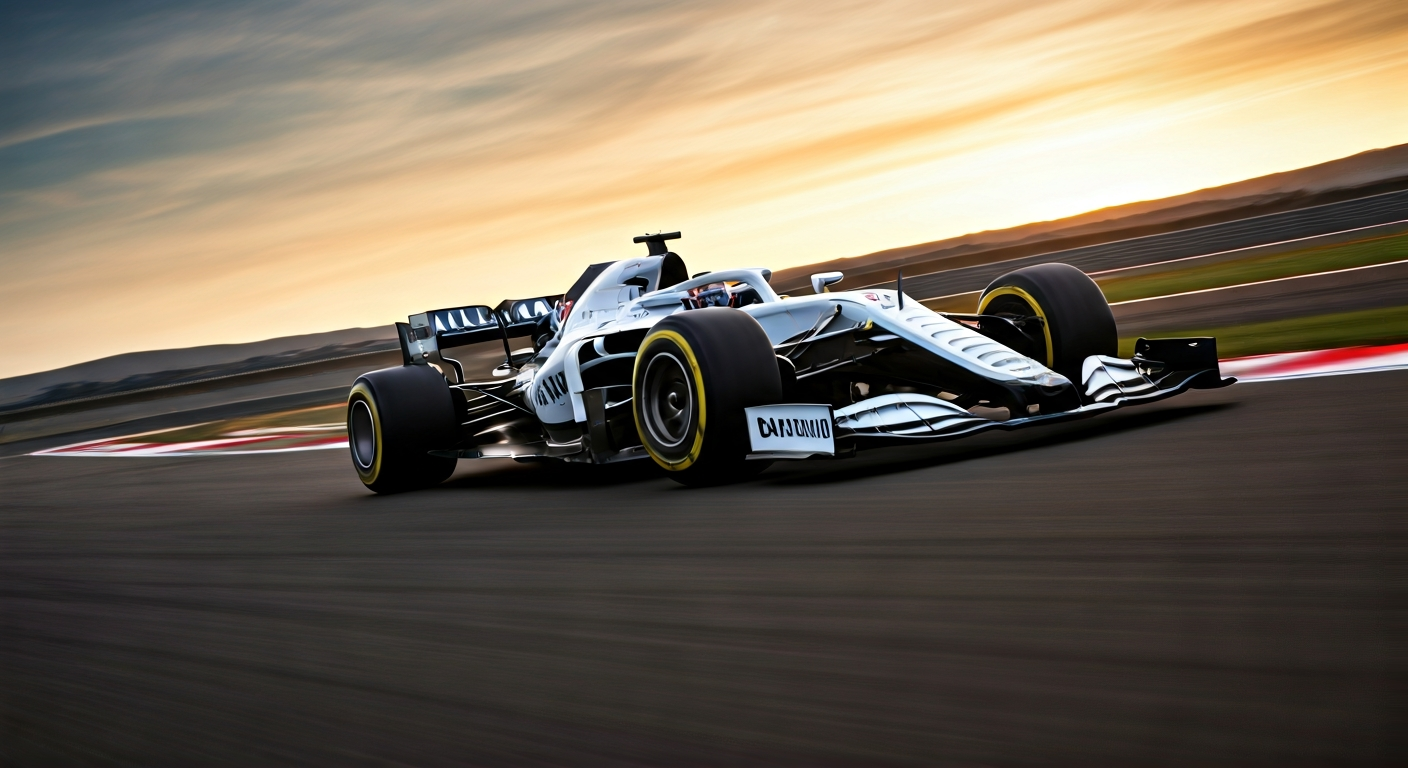
    Williams Formula 1 car in white and blue livery at sunset with a glowing AI aura
    Williams Racing — F1’s great independent, now with Claude as its Official Thinking Partner. The future of racing looks a lot like the future of business.

    Williams Racing — one of Formula 1’s most storied teams, the last truly independent constructor in the paddock — in February 2026 named Claude their Official Thinking Partner in a multi-year partnership with Anthropic.

    My name is William Tygart. I use Claude every single day. And now Claude is on the side of an F1 car driven by one of racing’s most legendary teams. I’ll let you make of that what you will.

    But the reason this partnership makes sense says something important. Williams isn’t Red Bull with unlimited resources. They’re not a manufacturer team with a factory army. They are, as Anthropic’s head of brand marketing put it, “world-class problem solvers focused on the smallest details.” They win not by outspending, but by out-thinking. That’s the promise of genuine AI partnership — not replacing the engineers, but serving as the thinking partner that helps brilliant people think better.

    The Harvest Before the Deploy: A Framework

    • Identify your harvesting moments. Where is knowledge being created in your operation that isn’t being captured? Where are patterns repeating that nobody’s noticed? AI harvests those moments — but only if you build the conditions for it.
    • Identify your deployment moments. Where does speed matter most? Where is the bottleneck not ideas but execution velocity? Those are your deployment moments — where the stored energy gets released.
    • Practice the transition. The driver who only harvests never wins. The driver who only deploys runs dry. The rhythm — harvest, deploy, harvest, deploy — has to become organizational muscle memory.
    • Accept that the track changes. What worked at Monaco won’t work at Monza. Build teams and cultures that don’t just tolerate adaptation but expect it, plan for it, and practice it constantly.

    The Race Is Already On

    Max Verstappen, for his part, decided to stay: in August 2026, Red Bull extended his contract through 2030. The paddock may or may not sort out its feelings about the 2026 cars. But the cars will race. The energy will be harvested and deployed. And somewhere on the grid, a driver who stopped arguing with the regulations and started mastering the new system will cross the finish line first.

    The same is true in your industry. The debate about AI is real and worth having. But while it’s happening, the race is underway.

    The hybrid era isn’t coming. It’s here. The only question is whether you’re learning the dance.


    Sources: Verstappen on walking away — ESPN | Verstappen: “Formula E on steroids” — ESPN | 2026 F1 Power Unit Explained — Formula1.com | Anthropic × Williams F1 — WilliamsF1.com | Verstappen future uncertain — RaceFans

  • The Human Distillery — Knowledge Extraction

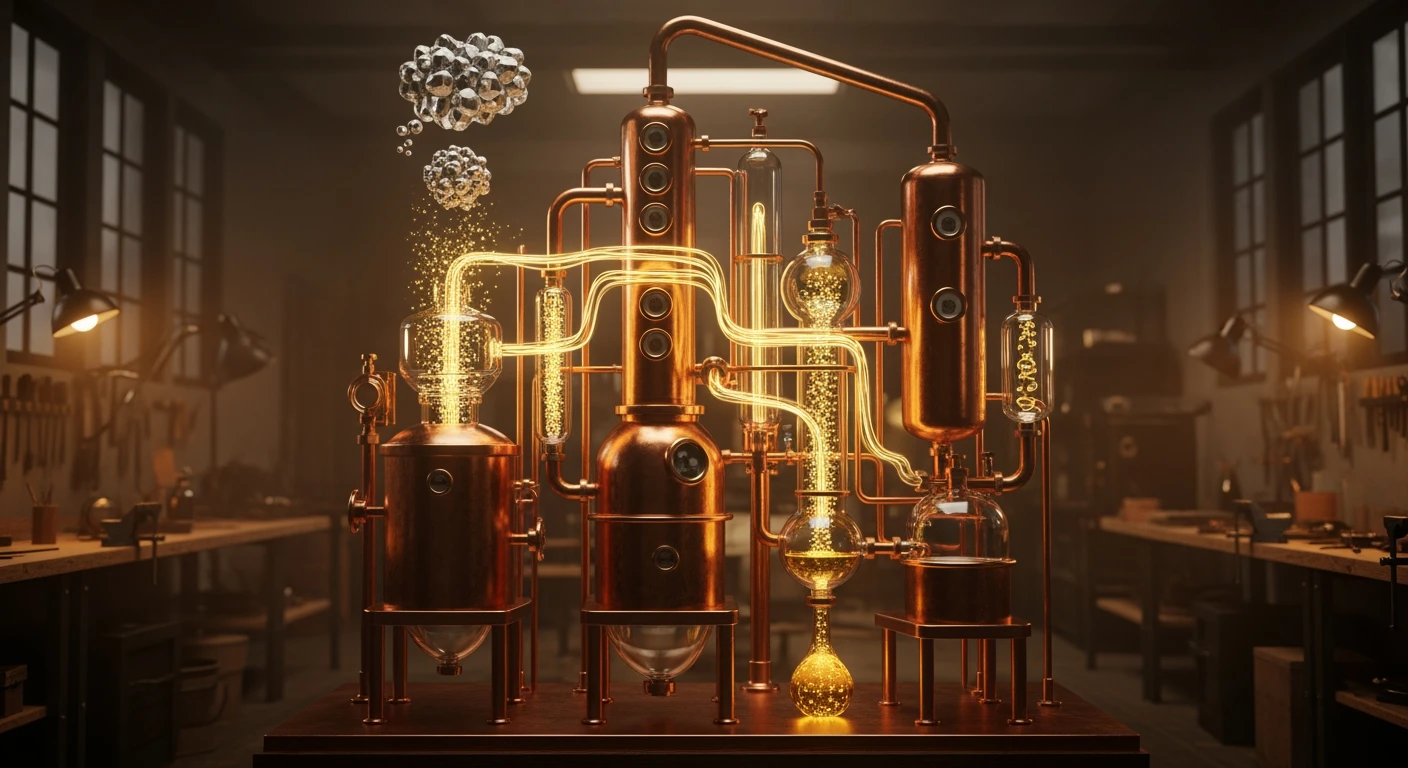
    The Human Distillery — Knowledge Extraction