The Neighborhood That’s Changing Fastest
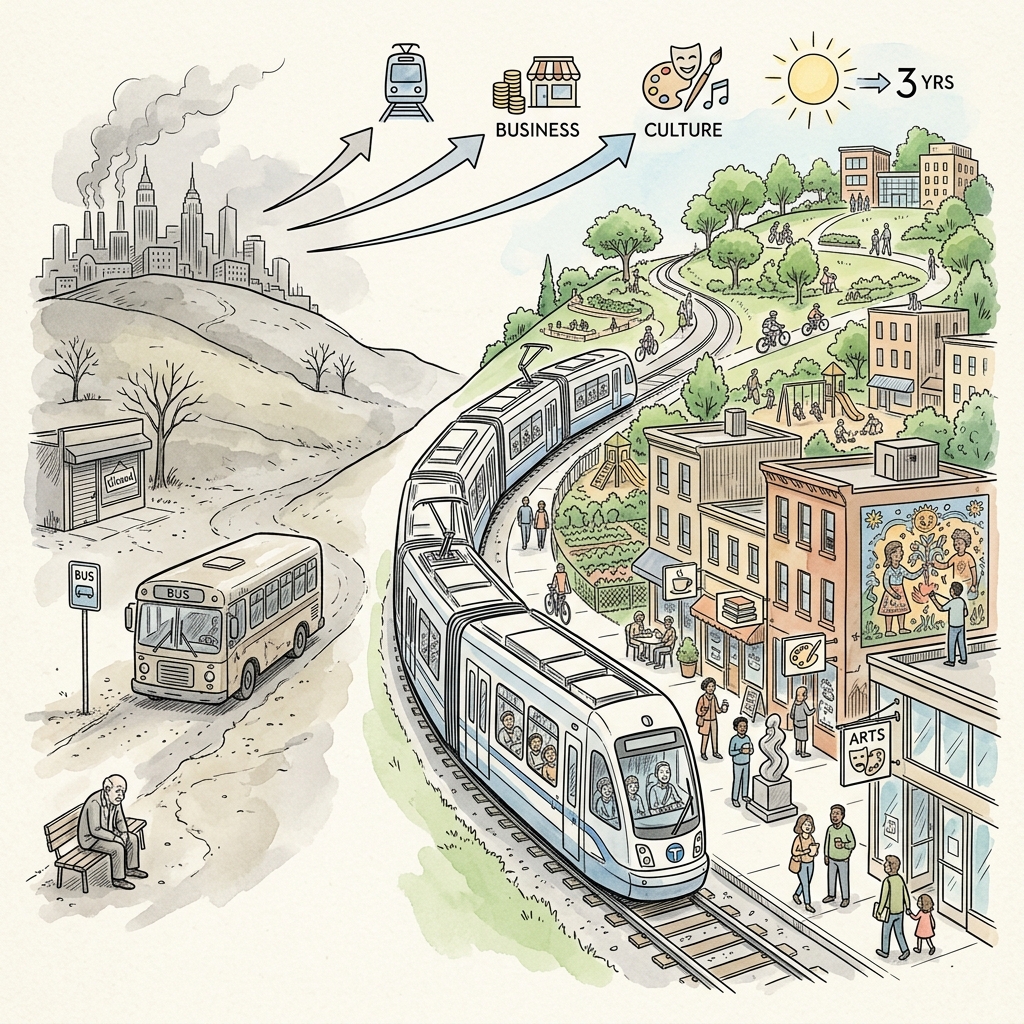
Hilltop — the neighborhood centered around Martin Luther King Jr. Way and South 11th Street — has undergone more visible change in the past three years than any other part of Tacoma. The catalyst was the Tacoma Link Light Rail Hilltop Extension, which opened in 2023, connecting the neighborhood to downtown’s Theater District and the regional transit network for the first time.
I’ve watched Hilltop for years now. The change isn’t subtle — new mixed-use buildings, restaurants that didn’t exist 36 months ago, and foot traffic patterns that simply weren’t there before the streetcar arrived. But Hilltop’s story is more complex than a simple gentrification narrative. The community has been intentional about what it wants to preserve.
The Light Rail Impact
Sound Transit’s Hilltop Tacoma Link extension added six new stations connecting MLK Jr. Way to the existing T Line that runs from the Theater District to the Tacoma Dome. The line runs at-grade (street level) along MLK Jr. Way, with stations at approximately every two blocks between Stadium Way and the St. Joseph Medical Center area.
The extension cost approximately $275 million and was the most significant public infrastructure investment in Hilltop’s modern history. Per Sound Transit ridership data, the Hilltop stations have shown steady ridership growth since opening, though exact numbers fluctuate seasonally.
What the light rail actually did to the neighborhood: it eliminated the perception of isolation. Hilltop is only about a mile from downtown Tacoma, but the steep grade and lack of convenient transit made it feel disconnected. Now you can step on at the Theater District station and be on MLK Jr. Way in 8 minutes, no car needed. That accessibility shift changed the calculus for businesses deciding where to open.
New Businesses Along MLK Jr. Way
The commercial corridor along Martin Luther King Jr. Way has seen notable openings in the past three years. New restaurants, coffee shops, and retail have filled spaces that were vacant for years in some cases. The mix is intentionally diverse — Black-owned businesses have been prioritized in several of the new mixed-use developments through community benefit agreements negotiated during the planning process.
The City of Tacoma implemented a Hilltop Subarea Plan that includes anti-displacement measures: commercial rent stabilization incentives, facade improvement grants for existing businesses, and priority permitting for BIPOC-owned enterprises. Whether these measures are working at scale is debated on r/Tacoma regularly — the general sentiment is “better than nothing, not enough to prevent all displacement.”
Cultural Investment and Community Anchors
The cultural infrastructure investments in Hilltop have been significant. People’s Community Center, operated by Metro Parks Tacoma, underwent renovation and remains the neighborhood’s recreational anchor — gym, pool, meeting spaces, youth programming.
The Hilltop Artists program, connected to the Tacoma glass arts tradition, continues operating its hot shop where youth learn glassblowing — one of the only free youth glass programs in the country. The Hilltop Action Coalition remains the primary community organizing body, maintaining neighborhood voice in development decisions.
Public art installations along the light rail corridor were commissioned from local artists with deep Hilltop ties. The art reflects the neighborhood’s African American, Pacific Islander, and Latino history — stories that were at risk of being overwritten by new development without this intentional investment.
Housing: What’s Built and What’s Coming
Multiple mixed-use developments (residential above, commercial at ground level) have been completed or are under construction along the light rail corridor. Many used the City of Tacoma’s Multifamily Tax Exemption (MFTE) program which requires affordable units in exchange for property tax breaks.
Typical unit mix in new Hilltop buildings: studios and one-bedrooms at market rate of $1,400-$1,800/month, with 20% of units income-restricted at 60-80% AMI levels. This is lower than comparable new construction in Seattle but still substantially above what long-term Hilltop residents were paying pre-development.
The displacement tension is real and ongoing. Homeowners in the neighborhood have seen property values appreciate significantly — positive for them. Renters in older housing stock face pressure as landlords sell to developers. The community has pushed back successfully on some projects, less successfully on others.
What’s Changed in Three Years: Honest Assessment
Improved: Street safety perception (more foot traffic, better lighting along MLK), restaurant/retail options, transit access, building condition (fewer boarded-up storefronts), public art quality.
Concerning: Rising rents displacing some long-term residents, construction disruption that lasted longer than promised, some locally-owned businesses replaced by newer operators without neighborhood history.
Unchanged: Community pride and organizing capacity (strong before, strong now), economic diversity of residents (still more mixed-income than many changing neighborhoods), the essential character of Hilltop as a neighborhood with identity and voice.
The next 2-3 years will determine whether Hilltop’s transformation results in a neighborhood that retains its character while gaining amenities, or whether it follows the common American pattern of cultural erasure through development. The structural protections in place are stronger than most cities attempt. Whether they’re strong enough is the open question.
Frequently Asked Questions
How do you get to Hilltop on the light rail?
The Tacoma Link T Line connects downtown’s Theater District station to Hilltop via MLK Jr. Way. Board at any T Line station (Tacoma Dome, Union Station, Theater District) and ride to the Hilltop stations. The ride from Theater District to MLK/11th Street takes approximately 8 minutes. Service is fare-free on the entire T Line.
Is Hilltop safe to visit?
Hilltop has seen measurable improvement in crime statistics since the light rail brought increased foot traffic and business activity. Like any urban neighborhood, situational awareness applies — but the daytime commercial corridor along MLK Jr. Way is active, well-trafficked, and safe for visitors. The neighborhood is significantly different from its reputation of 15-20 years ago.
What’s the history of Hilltop in Tacoma?
Hilltop has been Tacoma’s primary African American neighborhood since the mid-20th century, shaped by the same redlining and restrictive covenants that created segregated neighborhoods across American cities. It’s also home to significant Pacific Islander and Latino communities. The neighborhood’s cultural identity is rooted in this history.
Are there restaurants in Hilltop worth visiting?
Yes — the dining options have expanded substantially since 2023. The MLK Jr. Way corridor now has restaurants ranging from soul food to Vietnamese to coffee/bakery concepts. The neighborhood is still developing its restaurant identity but already offers options you won’t find elsewhere in Tacoma.
How has Hilltop changed since the light rail opened?
Since the 2023 T Line extension opening: new mixed-use buildings completed, multiple new restaurants and retail opened, foot traffic increased significantly, property values appreciated 15-25%, and several vacant storefronts reactivated. The neighborhood is visibly different from three years ago while retaining its cultural anchors.