Direct answer: Medical and laboratory equipment is the most regulated specialty restoration category and the one most restoration companies avoid, which is exactly why it is the strongest commercial wedge in the healthcare and research segments. The restoration response has to run inside an ICRA-compliant containment, coordinate with the facility’s biomedical engineering department, preserve the chain of custody for HIPAA-protected records and GxP-regulated research materials, and hand off to OEM-authorized or independent-service-organization technicians who perform the actual recertification before equipment returns to clinical or research service. The restoration company’s role is stabilization-plus-documentation-plus-regulated-handling, inside a construction-barrier-and-negative-air envelope, with biomedical engineering as a co-responder from hour one. The accounts this unlocks are hospitals, health systems, ambulatory surgery centers, dialysis centers, imaging centers, clinical research organizations, pharmaceutical labs, biotech companies, and university research facilities. The specialty wedge inside a health system is worth more than any other commercial account category in the entire cluster.
A water loss in a records room is an inconvenience. A water loss in a hospital’s imaging suite is a clinical event. The CT scanner cannot serve patients until it is cleaned, tested, inspected, and formally recertified by the manufacturer or an authorized service organization. The MRI cryogen system can be damaged in ways the restoration crew cannot see. The lab equipment running GxP-regulated research holds sample integrity and research validity that cannot be recreated. The hospital’s infection control officer is watching every step of the response because cross-contamination between the loss area and adjacent clinical spaces can cause healthcare-associated infections that are reportable events. The response is not a restoration engagement with a specialty overlay — it is a specialty engagement with a restoration overlay.
This article is the operator-level guide for standing up the medical specialty inside a mid-market restoration company. The technical depth is higher than the other three categories because the regulatory, clinical, and coordination requirements are higher. The strategic reward is also higher: a single signed health-system specialty agreement can represent more commercial value than a dozen standard commercial accounts combined.
Why medical is the hardest category to build and the most valuable to own
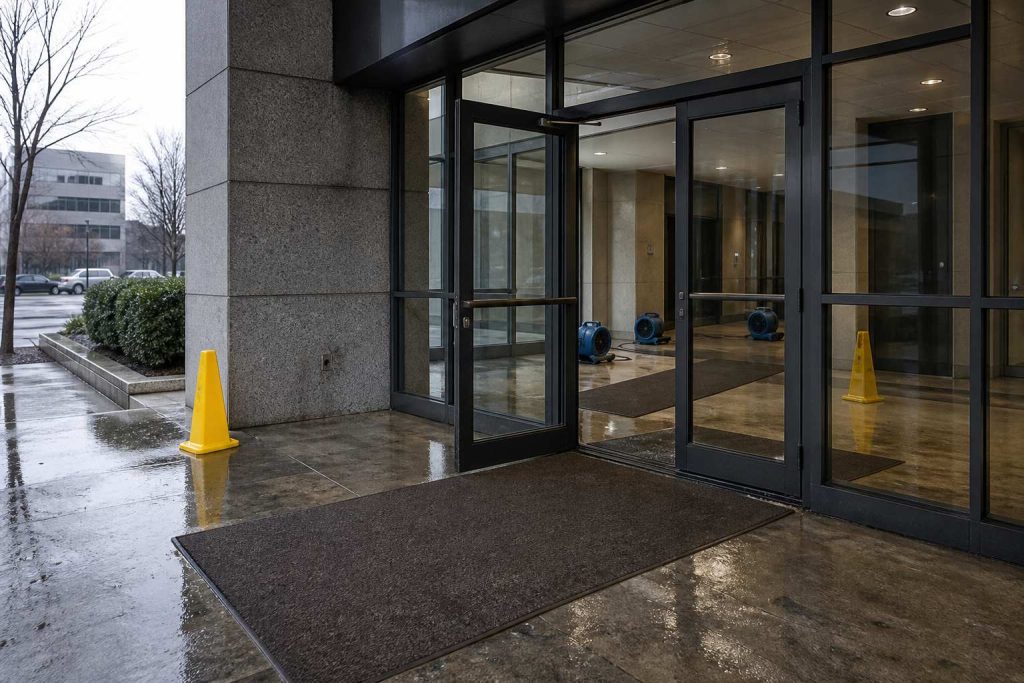
Four operational facts govern the medical specialty.
The regulatory overlay is not optional. Healthcare construction and maintenance work inside occupied clinical areas must follow Infection Control Risk Assessment (ICRA) protocols. ASHE (the American Society for Health Care Engineering) publishes the ICRA 2.0 toolkit that governs construction activity classification and patient-population risk assessment. Restoration response inside a hospital falls under ICRA by default — it is construction-adjacent work in an occupied clinical facility. A restoration crew without ICRA training and documented procedures cannot operate credibly inside a hospital, and most health systems will not permit work to begin until ICRA-qualified personnel are on site. The Carpenters Union, CPWR, and several regional ICRA programs offer documented training; credentialed crews are a hard prerequisite for this specialty.
Biomedical engineering owns the equipment. The hospital’s biomedical engineering department (often called Clinical Engineering or Healthcare Technology Management) is responsible for the safety, calibration, and service of every piece of clinical equipment. A restoration crew that handles, moves, or touches clinical equipment without biomed’s involvement has violated the hospital’s equipment management plan and potentially compromised regulatory compliance with The Joint Commission, CMS, or the state department of health. Biomed has to be on site from hour one as a co-responder, and the restoration company’s protocol has to explicitly loop them in on every equipment-handling decision.
OEM and ISO recertification governs return to service. Clinical and laboratory equipment cannot return to service after a water, smoke, or fire event until it has been inspected, tested, and recertified against the manufacturer’s specifications. Recertification is performed by the original equipment manufacturer or an authorized independent service organization (ISO), not by the restoration company and not by the cleaning specialist. The specialty response coordinates with the OEM or ISO from the scope-of-loss stage through the return-to-service certification. Skipping this step is not a cost optimization — it is a direct regulatory and patient-safety failure.
The chain of custody covers patient data and research integrity. Equipment memory, hard drives, imaging archives, and connected laboratory information systems contain protected health information under HIPAA and may contain regulated research data under GxP (GLP, GCP, GMP). The chain of custody has to satisfy both clinical operations and the institutional review board or quality assurance function. A medical equipment engagement that does not produce a defensible HIPAA-compliant custody record creates regulatory exposure for the client that outlasts the loss event.
These four facts combine into a specialty build that is genuinely harder than documents, electronics, or fine art. The restoration owner who puts the work in earns a vendor-file position inside a health system that is worth multi-year commercial revenue. The restoration owner who does not will not be permitted to bid the work.
The ICRA framework and how it governs the engagement
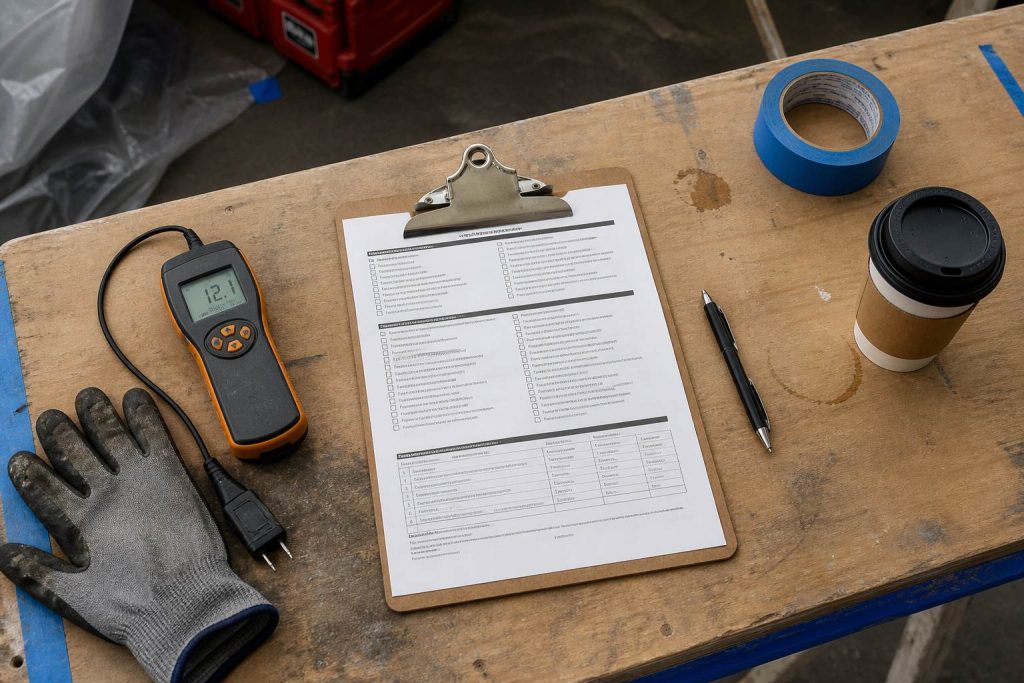
ASHE’s ICRA 2.0 is the national standard for construction-related infection control in healthcare facilities, and restoration response inside a hospital operates under its structure.
Patient population risk. ICRA classifies patient populations by susceptibility to healthcare-associated infection. Group 1 is low-risk (office areas, administrative spaces). Group 2 is medium-risk (general inpatient units, outpatient clinics). Group 3 is medium-high-risk (emergency departments, labor and delivery, pediatric units, geriatric units). Group 4 is highest-risk (intensive care units, oncology and transplant units, burn units, operating rooms, dialysis, neonatal intensive care, bone marrow transplant, immunocompromised populations). The patient population adjacent to and downstream of the loss area drives the response classification.
Construction activity classification. Activity is classified Type A through Type D based on dust generation and extent of disruption. Type A is inspection-only, non-invasive work (low impact). Type B is small-scale, short-duration activities creating minimal dust (medium impact). Type C is work generating moderate-to-high levels of dust or requiring demolition or removal of built components (high impact). Type D is major demolition and construction projects (highest impact). Most water-loss restoration inside a hospital falls in Type C or Type D depending on extent — demolition of wet drywall, removal of flooring, HEPA-scrubbing of contaminated air handler returns.
Classification matrix. The combination of patient population and activity type yields a classification level (I through IV) that specifies the containment, air handling, cleaning protocols, and notification requirements. Class III and IV work require full construction barriers, negative pressure with HEPA exhaust, dedicated access and egress routes, HEPA-filtered exhaust of debris, full-body PPE for transition between contaminated and clean areas, and daily environmental monitoring. The health system’s infection preventionist signs off on the classification and any deviation from the matrix-driven protocol.
The restoration company’s crew running a hospital engagement has to be able to read the matrix, construct the appropriate barrier, set up and maintain the air handling, perform cleaning and transition protocols, and document compliance at every step. Training programs from the Carpenters Union ICRA program, ASHE, and regional infection control nursing associations produce the credentialed personnel who can actually do this work. The restoration owner without at least two ICRA-credentialed supervisors on staff cannot responsibly pitch a health-system specialty agreement.
Biomedical engineering as co-responder, not observer
The biomed department inside a health system is variable in scope — some health systems maintain large internal biomed operations that handle most equipment in-house, some outsource most service to vendors like Agiliti, GE HealthCare’s Hospital Services, Philips Healthcare Services, Siemens Healthineers Service, or specialty ISOs. Either way, biomed is the institutional owner of the equipment and the specialty engagement has to engage them as co-responder.
The practical operational model is that biomed leads equipment decisions while the restoration company leads environmental and structural decisions. Biomed decides which equipment is power-down priority, which can stay in place, which moves, and where it moves to. Restoration decides containment, air handling, water extraction, structural drying, and material removal. The two functions coordinate from hour one through the engagement close-out.
Biomed also owns the OEM or ISO coordination for every piece of regulated equipment in the loss area. The restoration company’s role on OEM coordination is to provide the environmental and handling documentation that the OEM technician will rely on in their recertification decision — temperature log, humidity log, water exposure time, chemical exposure (firefighting agents, cleaning chemicals), and chain-of-custody transfer. The OEM technician inspects, tests, cleans as needed, and issues a formal recertification that the equipment is approved for return to clinical service.
Some categories of equipment have manufacturer exclusions that void recertification if specific handling rules are broken — MRI cryogen systems in particular have handling requirements the restoration crew must follow or the equipment is a total loss regardless of apparent condition. The ICRA-trained supervisor on scene needs to know the handling exclusions for the major equipment categories in the loss area, or needs to know to stop and ask biomed before proceeding.
The first twelve hours on a hospital loss
The hospital engagement runs differently from other specialty responses because the facility is an occupied twenty-four-hour operation and the response must integrate with ongoing clinical care.
Phase one: arrival, ICRA classification, and co-response coordination (hour zero to one). The first-response call tree is ICRA-credentialed supervisor to facilities director to biomedical engineering to infection prevention. All four functions are at the table before structural work begins. The ICRA classification is established jointly by the restoration ICRA supervisor and the infection preventionist. The patient population adjacent to the loss is identified (including upstream and downstream air handling connections, which can translate a Class II structural loss into a Class IV containment requirement). The first-response scope is confirmed in writing before any barrier or air-handling setup begins.
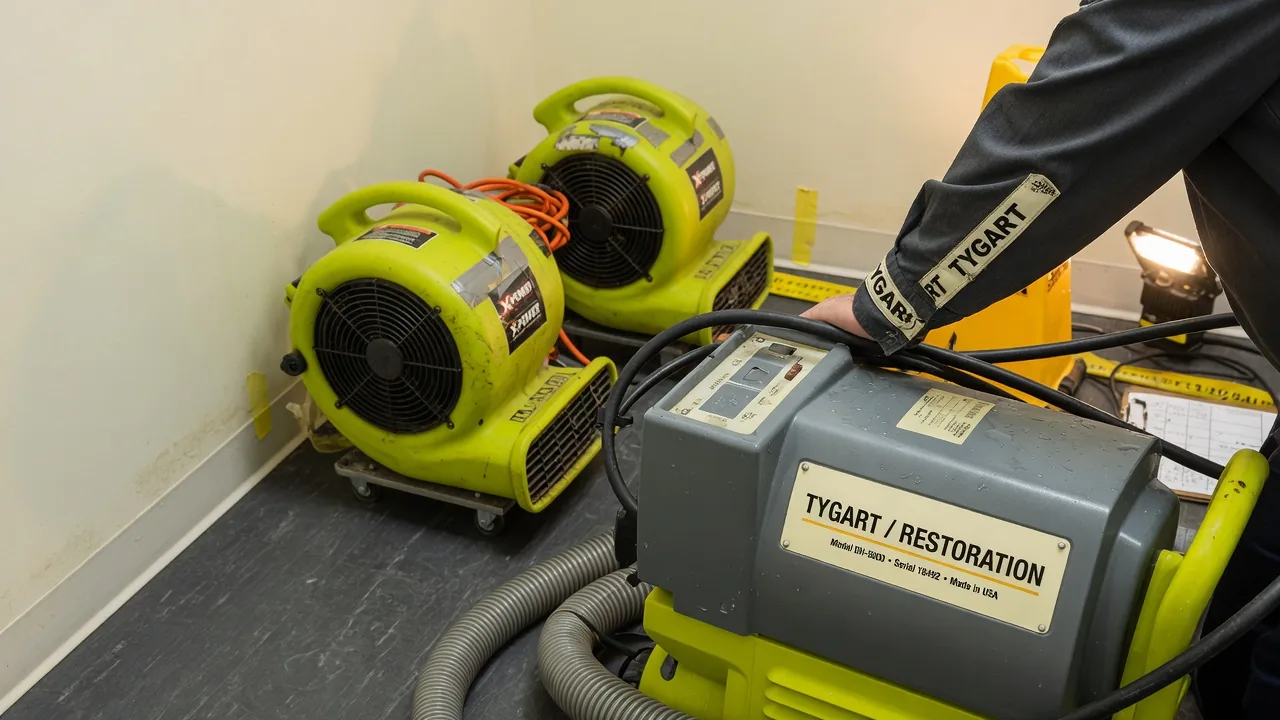
Phase two: containment construction (hour one to four). Full negative-pressure containment is erected per the ICRA classification: hard-wall or heavy-plastic barriers with full perimeter seal, HEPA-filtered negative-pressure exhaust sized to maintain differential pressure across the barrier, dedicated access and egress routes through an anteroom for PPE transition, and separate debris-handling path. Air handling in the adjacent clinical area is confirmed as non-communicating with the contained zone. Environmental monitoring equipment (differential pressure sensors, airborne particle counters, temperature and humidity loggers) is installed and baselined.
Phase three: equipment triage and power-down (hour two to six). With biomed leading, every piece of equipment in the loss area is inventoried with manufacturer, model, serial number, asset tag, current state (on/off, in use, idle), and salvage category. The A/B/C/D categories from the electronics protocol apply, but with a medical overlay: (A) recoverable in-place with environmental control and biomed inspection, (B) requires OEM/ISO cleaning and recertification off-site, (C) probable total loss requiring replacement, (D) mission-critical or irreplaceable requiring priority handling. Power-down sequence is coordinated with biomed and, for clinical equipment in use, with the clinical unit. Equipment containing patient data is cataloged with particular attention to HIPAA custody requirements.
Phase four: environmental stabilization and extraction (hour four to eight). Inside the containment, water extraction, dehumidification, and material removal proceed per the ICRA classification. Contaminated materials exit through the dedicated debris path to HEPA-filtered waste handling. Air exchange rates are maintained per ICRA targets. Temperature and humidity are held within clinical-equipment operating ranges (typically sixty-five to seventy-five Fahrenheit, thirty to fifty percent RH) except where biomed directs otherwise for specific equipment.
Phase five: equipment packout and OEM/ISO dispatch (hour six to twelve). Equipment in category (B) is packed out per biomed’s specifications and OEM/ISO requirements. Anti-static materials, climate-controlled transport, and chain-of-custody manifests mirror the electronics protocol with the addition of patient-data-handling protocols for any equipment containing PHI. The OEM or ISO is contacted per the equipment-by-equipment service-contract structure; biomed typically owns this call with restoration coordination support. Transport vehicles are sealed and manifested. Chain of custody transfers to the receiving organization with signed acknowledgment.
Phase six: scope, documentation, and ongoing coordination (parallel, through hour twenty-four). The restoration company produces the scope of loss: ICRA classification and containment documentation, equipment inventory with categories and destinations, OEM/ISO engagements initiated, stabilization services performed, environmental monitoring logs, and chain-of-custody package. The document flows to the client’s facilities director, biomed, infection prevention, and the property carrier.
Every phase is documented to regulatory standard. The documentation package at engagement close-out includes ICRA compliance logs, environmental monitoring records, chain-of-custody for all handled equipment, HIPAA custody certifications for any PHI-bearing equipment, OEM/ISO recertification certificates for each piece returned to service, and a final infection prevention clearance for the restored area before it returns to clinical use.
HIPAA, GxP, and the chain of custody for regulated data
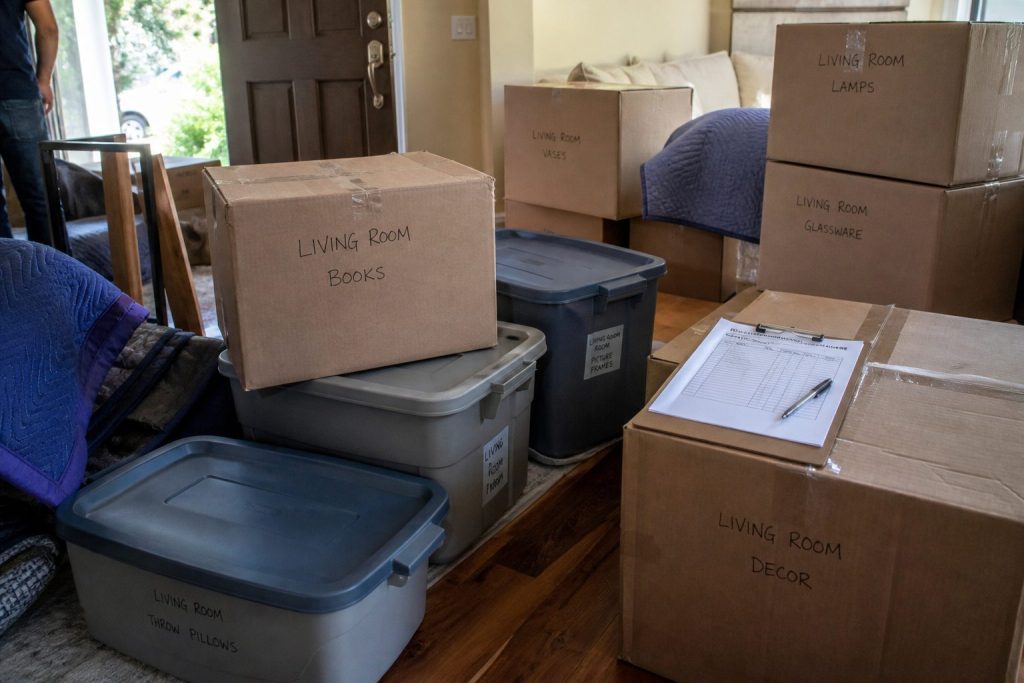
The chain-of-custody discipline from the documents specialty becomes more stringent in medical equipment recovery because the data on the equipment is often protected under HIPAA, state medical privacy laws, and institutional policy.
For any equipment that may contain protected health information — imaging archives, patient monitor records, lab information system terminals, workstations in clinical areas, electronic medical record workstations, bedside tablets — the chain-of-custody log must record every person who accessed the equipment, every movement of the equipment, and every handoff point. Access control at the receiving specialist facility must be HIPAA-grade (physical security, access logging, destruction protocols). The teaming agreement with the specialist must include a HIPAA business associate agreement, not a generic confidentiality addendum.
For equipment in research environments — laboratory instruments, environmental chambers, sample storage, research data systems — the chain of custody must satisfy the institution’s quality assurance and good-practice compliance function. Good Laboratory Practice (GLP), Good Clinical Practice (GCP), and Good Manufacturing Practice (GMP) each carry documentation standards that govern how samples, data, and equipment are handled during an incident. The specialty response in a regulated research facility has to produce documentation at the GxP standard from hour one, and the teaming arrangement with the specialist has to confirm GxP-compliant handling at the receiving facility.
For pharmaceutical and medical device manufacturing environments, the regulatory overlay extends to FDA inspection exposure. An incident in a regulated manufacturing environment generates documentation that the FDA may review in a future inspection. The restoration response is not the manufacturer’s responsibility to manage to FDA standard — that is the QA function’s responsibility — but the documentation produced by the restoration company becomes part of the institutional record.
The operational implication is that the medical specialty requires the highest documentation discipline of any category in the cluster. The forms, the photo standards, the log timestamps, the signature captures, and the close-out package must be built for regulatory audit. Clients who sign the specialty agreement are buying that discipline as much as they are buying response capability.
The specialist landscape in medical
The medical specialty bench has a different structure than the other categories because the actual recovery work is split across three roles: the restoration company (environment and stabilization), the cleaning specialist (decontamination and cleaning of non-clinical contents), and the OEM or ISO (clinical and laboratory equipment cleaning, testing, and recertification).
Healthcare restoration specialists include national firms with dedicated healthcare divisions: ATI Restoration Healthcare Services, BELFOR Healthcare, Cotton GDS (substantial healthcare and industrial capability), First Onsite Healthcare, Rainbow Restoration Healthcare, Servpro National Accounts Healthcare. These firms hold ICRA credentials across their crew, operate teaming arrangements with biomed contractors, and have documented healthcare engagement protocols. For a mid-market restoration company building a medical specialty, national teaming with one of these firms as backup for large-scale events is often prudent, because certain engagements (multi-wing hospital losses, full-facility evacuations) exceed local specialist capacity.
OEM service organizations are the manufacturer’s own service networks: GE HealthCare Service, Philips Healthcare Services, Siemens Healthineers Service, Canon Medical Service, Hologic Service, and the equivalent networks for every major medical device manufacturer. OEM service is the default recertification path for equipment under manufacturer service contract. The OEM’s technical bulletins and service documentation govern what the restoration company can and cannot do with the equipment during stabilization.
Independent Service Organizations (ISOs) are third-party biomed service companies authorized by the manufacturer or by the health system to perform service and recertification. Agiliti is the largest ISO in the US market. BMES, Sodexo Healthcare, Crothall Healthcare Technology Solutions, and regional ISOs also serve this market. ISOs often cost less than OEM service and can handle mixed-fleet environments across multiple manufacturers.
Biomedical engineering contractors are firms like BMES that provide biomed-level support directly to health systems or to restoration companies as sub-tier specialists. They offer BMET-credentialed technicians for on-site co-response during restoration engagements, which is useful when the hospital’s internal biomed department is overwhelmed or unavailable.
Laboratory equipment service specialists are a separate network for research and clinical-lab equipment — Thermo Fisher Scientific Service, Beckman Coulter Service, Roche Diagnostics, Abbott, Sysmex, and others for major manufacturers, plus independent lab-equipment service companies that handle mixed fleets. The teaming structure mirrors the clinical-equipment model with GxP-documentation overlays for research environments.
The teaming agreement landscape for the medical specialty is therefore three or four layers deep: the restoration company, the ICRA-trained biomed contractor (if used), the healthcare cleaning specialist (if used for general contents cleaning), and the OEM or ISO for equipment recertification. The emergency services agreement signed with the client covers the restoration company; the other tiers flow through separately under existing service contracts or are coordinated through biomed.
Pricing the medical equipment scope
The medical specialty engagement is the highest-revenue category in the specialty cluster because of the regulatory overhead and the equipment recertification cost.
Stabilization services include ICRA-compliant containment construction (materials and labor), HEPA-filtered negative-air systems (often rental equipment plus installation), desiccant dehumidification, environmental monitoring equipment, ICRA-credentialed supervision (a premium labor rate), and full PPE. A substantial hospital engagement’s containment and stabilization can run into the mid-five figures before any equipment work begins.
ICRA supervision is billable at a premium rate. The ICRA supervisor is credentialed, trained in the ASHE framework, and responsible for compliance documentation. Supervisor rates for an ICRA-credentialed specialist typically run in the one-hundred-fifty to three-hundred-dollar-per-hour range depending on market.
Equipment triage and chain-of-custody is a line item with per-unit inventory fees that are higher than the electronics specialty because of the HIPAA and GxP documentation overhead. Twenty-five to fifty dollars per unit is a defensible range, with hourly technician time on top for complex inventory.
Biomedical and OEM/ISO coordination is billable project management time. On a complex hospital engagement, this can run ten to twenty percent of total engagement cost because the number of OEMs and ISOs involved is high and the coordination workload is substantial.
Specialist cleaning and OEM/ISO recertification pass-through flows through the restoration company when coordinated by it, or bills separately to the client when coordinated by biomed. Recertification costs vary widely by equipment: a commodity patient monitor might cost a few hundred dollars to recertify; an imaging system might run into five figures per unit. On a major engagement, OEM/ISO recertification commonly represents the majority of the total dollar value.
Post-engagement infection prevention clearance is a final line item covering the cleaning, monitoring, and verification work required before the restored area returns to clinical service. The clearance documentation is the handoff the infection preventionist signs off on.
For a substantial hospital engagement — a sprinkler activation affecting an imaging suite with three major systems and adjacent clinical areas — the total invoice commonly runs into the mid-six figures. The restoration company’s direct work (stabilization, containment, supervision, coordination, post-engagement clearance) typically represents thirty to fifty percent of total engagement value. The balance is OEM/ISO recertification that flows through various channels. The restoration company’s strategic value — being the ICRA-credentialed, biomed-coordinated, documentation-disciplined first responder — earns the vendor-file position that translates into the downstream book of business across the health system’s full property portfolio.
Account types where medical is the dominant specialty
Hospitals and health systems. The primary target. Health systems own multiple facilities — main hospitals, ambulatory campuses, clinics, administrative buildings, warehouses — and a single specialty agreement at the health-system level covers all of them. Approval runs through risk management, biomedical engineering, infection prevention, and facilities. The approval cycle can run sixty to one hundred twenty days. The agreement value over a five-year relationship is typically in seven figures across all losses.
Ambulatory surgery centers, imaging centers, and dialysis centers. Smaller than hospitals but with concentrated equipment value and similar regulatory overlay. Approval is typically the medical director or the chief operating officer of the center. The agreement cycle is shorter than full health-system engagement. Centers often operate in regional networks, so a single relationship can translate into multiple covered facilities.
Clinical research organizations and pharmaceutical laboratories. Research environments with GxP regulatory overlay, significant instrument inventory, and major downtime sensitivity. Approval involves quality assurance, facilities, and the research operations function. The GxP documentation standard is higher than clinical, and the specialist bench must demonstrate GxP-compliant handling.
Biotech and pharmaceutical manufacturing. Regulated manufacturing environments with FDA inspection exposure on top of the research and clinical overlays. The specialty agreement is typically integrated into the facility’s business continuity and crisis management plans. Approval is QA, facilities, and operations. The dollar value per engagement is exceptional; the frequency is low.
University research facilities. Academic research environments with research-grant implications for equipment damage and sample loss. Approval is typically the VP of research, facilities, and environmental health and safety. The research-funding structure means that some losses are covered by grant-held equipment insurance rather than institutional property coverage, which adds complexity to the claim process.
Veterinary hospitals and animal research. A specialty-within-the-specialty with different regulatory overlay (USDA, AAALAC for accredited facilities). Equipment inventory mirrors human clinical environments at smaller scale. Approval is the clinical director or lab animal veterinarian.
Specialty compounding pharmacies. USP 797 and USP 800 compounding environments with tight environmental controls and regulatory overlay. Losses affecting compounding areas have immediate regulatory implications for the pharmacy’s compounding license. Approval is the pharmacist-in-charge or the director of pharmacy.
Long-term care and skilled nursing. Healthcare environments with clinical equipment and resident populations. ICRA applies with modified protocols for the skilled nursing setting. Approval is the facility administrator, director of nursing, and facilities. Agreement value is lower than acute-care health systems but higher than most non-healthcare commercial accounts.
The ninety-day build for the medical specialty
Medical is typically the fourth and most demanding specialty category a restoration company builds. The build takes longer than ninety days in most cases, but the aggressive plan is achievable with focus and capital commitment.
Days one through fifteen: ICRA credentialing and biomed relationships. Enroll at least two supervisors in ICRA-certified training programs (Carpenters Union ICRA program, ASHE courses, or regional equivalents). Identify and meet with biomedical engineering contractors in the service region. Begin relationships with healthcare specialty restoration firms (Cotton GDS, BELFOR Healthcare, ATI Healthcare, First Onsite Healthcare) for teaming arrangements on major engagements.
Days sixteen through thirty: OEM/ISO bench. Identify the major OEM service organizations and ISOs operating in the service region (Agiliti, GE HealthCare Service, Philips Healthcare Service, Siemens Healthineers Service, major ISOs). Establish communication channels and understand the coordination protocols for emergency dispatch. Extend the teaming-agreement framework to the healthcare sub-specialty partners.
Days thirty-one through forty-five: capacity and documentation build. Configure a healthcare-specific response kit: ICRA containment materials (hard-wall barrier systems or heavy-plastic systems), HEPA-filtered negative-pressure air handlers sized for hospital deployment, environmental monitoring (differential pressure sensors, airborne particle counters, humidity loggers), full-body PPE, anteroom transition materials. Build the documentation package: ICRA compliance logs, environmental monitoring records, HIPAA chain-of-custody forms, GxP documentation forms where applicable, biomed coordination forms, and OEM/ISO dispatch records. Run a tabletop exercise on a hospital sprinkler activation scenario with biomed and infection prevention simulation roles.
Days forty-six through sixty: commercial collateral and compliance. Draft the healthcare-specific emergency services agreement, which differs from the general specialty agreement in HIPAA business associate provisions, ICRA compliance commitments, and biomed coordination protocols. Build account-specific collateral for hospital, ASC, research, and long-term-care targets. Prepare the ICRA credential package and the healthcare teaming partner credential package for inclusion in vendor-file submissions.
Days sixty-one through seventy-five: pipeline activation. Identify first-wave targets in the regional health system landscape. Most health systems have a vendor-management function with defined onboarding processes; the specialty engagement starts with vendor credentialing submission, progresses to introductory meetings with risk management and facilities, and concludes with the specialty agreement executed and filed. Parallel pipeline for ASCs, imaging centers, and research facilities moves faster because approval is typically at the facility level.
Days seventy-six through ninety: first signed agreements and operational readiness. First signed agreements at the ASC and imaging center level are realistic inside the ninety-day window. Hospital and health-system agreements typically extend into day one hundred eighty or beyond. The readiness drill on first signed accounts is more elaborate than other specialties because the ICRA classification walk-through, the biomed relationship, and the OEM/ISO dispatch test all require coordination with the client’s teams.
Related on Tygart Media: Starlink on a water job · S500 in the van · local SEO for restoration.
Frequently asked questions
Can we run a hospital water loss without ICRA credentials? No. ICRA applies to construction-related and renovation-related work in occupied healthcare facilities, and restoration response falls under that scope. Most health systems will not permit work to begin without ICRA-credentialed supervision, and those that do would create regulatory exposure by allowing it. ICRA training is a hard prerequisite, not a nice-to-have.
Who owns the OEM coordination — us or the hospital? Biomed owns the OEM and ISO relationships and the coordination during an incident. The restoration company supports the coordination by providing environmental documentation, handling records, and chain-of-custody transfers. Attempting to substitute for biomed on OEM coordination is both technically wrong and relationship-damaging. Support biomed; do not replace them.
What about equipment where the hospital is the ISO themselves (internal biomed)? Some health systems operate internal biomed organizations that perform in-house service and recertification on most equipment. The operational model is identical: biomed leads equipment decisions, and the recertification documentation flows through the internal biomed team instead of an external OEM or ISO. The restoration company’s coordination role is the same.
How does HIPAA apply to equipment that we handle but never open or power up? HIPAA protected health information at rest on equipment storage media falls under the covered entity’s compliance program regardless of whether the restoration company accesses the data. Physical security of the equipment during handling, transport, and storage is the operational requirement. The business associate agreement between the health system and the restoration company (or between the health system and the specialist who receives the equipment) covers the handling obligations.
What happens when we encounter equipment with narcotics or other controlled substances inside? Stop and call the pharmacist-in-charge, the clinical unit manager, or the hospital’s designated controlled-substance authority. The chain of custody for controlled substances is governed by the DEA and state pharmacy regulations, not by HIPAA or general hospital policy, and the restoration company does not handle them without the responsible clinician present. Document the encounter, photograph the location, and maintain security until the controlled-substance authority arrives.
How do we handle a GxP-regulated research loss? Through a specialist bench prequalified for GxP-compliant handling and documentation. Many research facilities have their own crisis response protocols that specify approved vendors; follow those protocols first. Where the facility does not have a pre-specified vendor, coordinate with the QA function before beginning work. GxP documentation standards are higher than clinical documentation standards; the response crew must follow them or the research validity is compromised.
What does a biomed co-response actually look like in practice? A BMET-credentialed technician from the hospital’s biomed department or contracted biomed provider is on site alongside the restoration crew. The BMET makes equipment decisions; the restoration crew executes environmental and handling work. Communication is continuous: every equipment handling decision flows through the BMET, and every environmental decision that could affect equipment flows through the ICRA supervisor. The two functions work as a unit through the full engagement.
Is medical really a sellable specialty for a mid-market restoration company, or is it the big players’ territory? It is harder to sell than the other specialties, but it is not closed to mid-market operators. Health systems increasingly prefer local specialty providers over national accounts for regional facilities because the response time, relationship management, and account-level accountability are better. The mid-market operator with ICRA-credentialed crew, a credible healthcare teaming partner for overflow, and documented HIPAA and OEM/ISO coordination protocols can win second-vendor slots or primary-vendor status at regional facilities. The national accounts typically hold flagship hospitals but not every facility in a health system’s portfolio.
How do we price ICRA containment when there’s no standard Xactimate line item? ICRA-compliant containment is priced as custom line items with supporting rationale attached to the scope of loss. The typical approach is to price the barrier system, the negative-air equipment, the ICRA supervisor labor, and the PPE and environmental monitoring as separate custom items with market rationale for each. Healthcare insurers and adjusters are familiar with ICRA pricing and do not push back on defensible custom pricing. Generalist adjusters may require more documentation and explanation.
What happens if we damage a piece of clinical equipment during response? The risk is real and the insurance structure has to account for it. The teaming agreement with biomed should specify liability allocation for equipment damage during response. The restoration company’s bailee coverage should be adequate for the equipment values handled. Any damage or suspected damage during response should be documented immediately, communicated to biomed and the hospital’s risk manager, and handled through the appropriate claim channel. Hiding or minimizing damage events is both ethically and contractually unacceptable.