AI citations don’t come from pages alone. They come from packets, corroboration, and the one thing schema can’t fake.
William Tygart · Tygart Media
The morning I thought we’d been delisted
I thought we’d been delisted.
Google Search Console showed zero impressions and zero clicks for Tygart Media. A flatline. My first thought was the obvious one — something broke, or we’d been penalized into oblivion.
We hadn’t. Bing showed real traffic the whole time. Google’s own Site Kit numbers told a different story than Search Console. The site was fine. The dashboard was measuring the old world.
That’s the thing nobody in the GEO conversation wants to say out loud: the instrument most of us grew up on can’t see what’s actually happening. AI citations don’t show up in Search Console. The traffic is real; the attribution is invisible. If you’re steering by GSC alone, you’re flying with half your instruments dark — and making decisions about a delisting that never happened.
The packet theory
Here’s what I keep coming back to: classic search already has the answers. Every question worth asking has been answered somewhere, usually well. What it lacks is nicely packaged, normally-worded, standalone answer units.
So package it up, and they lift it.
An AI answer doesn’t want your page. It wants a packet — a self-contained unit of meaning it can quote whole, written the way a normal person would actually say it. Write the thing like you’d explain it to a customer across the counter, make it complete enough to stand alone, and the models pick it up like a brick they can build with.
“The page is not the product. The packet is.”
This is where most GEO practice misses. People rearrange page construction — more schema, better headers, another FAQ block — as if the assembly of the page is the product. It isn’t. GEO is more than how pages are constructed. The pages are just where the work becomes visible.
Off-page weights
I was replying to Ira Bodnar about this recently. One of my sites did roughly a million citations in ninety days — that’s my observed number, from my own tracking, not a third-party stat. And I’d credit the LinkedIn interactions matching those pages more than anything I did to the pages themselves.
Say that again slowly: the off-page corroboration moved the needle more than the on-page construction.
Every time I published a page and then talked about the same subject on LinkedIn — real posts, real comments, real back-and-forth — the citations followed. The models aren’t just reading your HTML. They’re weighing whether the world around the page agrees with it. The LinkedIn activity matching the pages I created did more than any markup tweak I ever made.
“Off-page weights move AI citations. Full stop.”
Different humans altogether
Here’s another one: Claude desktop users and ChatGPT mobile users behave like different humans altogether.
We keep talking about “GPT” or “Claude” like each one is a single portal. It isn’t. Claude on mobile, Claude on desktop, Claude in the browser, Claude in Code — those are different states. The model knows the person and the surface. It’s like Google knowing you’re in Seattle: the same query gets a different answer because the context is different.
There is no one portal called GPT. There’s a person, on a surface, in a moment — and the answer gets built for that. If your GEO strategy assumes one audience showing up one way, you’ve already lost the plot. Segment by surface or don’t bother.
What the server logs show
Nobody in the GEO conversation looks at raw server logs. That’s the edge, and it’s sitting right there.
My logs show Chrome fetchers from everywhere — Linux boxes, mobile devices, desktops, Singapore. Manus, Perplexity, You.com, OpenAI, Grok. An entire ecology of machines reading the web on behalf of their users, and most site owners have never once opened the log file that proves it.
Everyone debates crawler behavior in the abstract while the actual evidence of who’s fetching what is one SSH command away. Look at your logs. The bots will tell you exactly what they care about, if you bother to ask. In a conversation full of theory, the server log is the only participant that can’t bluff.
You still have to connect to the person
Here’s the close, and it’s the whole game: you still have to connect to the person.
Schema doesn’t make anyone feel heard. Markup doesn’t make anyone feel heard. A million citations don’t make anyone feel heard.
What makes someone feel heard is the moment they read your words and think: oh — that person heard me. That feeling is the product. Everything else is packaging.
“That feeling is the product. Everything else is packaging.”
And here’s my dare, the one I mean: go ahead and try to copy what I do. Seriously. Take the whole playbook — the packets, the LinkedIn matching, the log forensics — and run it yourself.
You won’t be able to. Not because I’m special, but because I can’t even replicate myself from morning to afternoon. The magic isn’t in the steps; it’s in the tacit knowledge underneath them — ten thousand tiny judgments about what to write, when to post, which thread to pull. You can’t replicate magic.
Tacit knowledge is the moat.
GEO is more than throwing pages together. It always was.
Open field playbook. No patent. Copy it. Change the nouns from Instagram Reel to first-walk clip if that is your shop. If it stops you from treating a faster poll as a strategy, good.
License: do what you want. Attribution nice, not required. Tygart Media is not a OneUp partner, reseller, or affiliate. Links below go to official product doors. No tracking parameters. No referral codes. No reprint of the vendor email body.
Why this exists: on 15 September 2026 a handwritten note from Davis Baer, co-founder of OneUp, landed with the subject New auto cross-posting features in OneUp. Three product facts. The source check moved from every two hours to every one hour. New-post workflows can now choose Add to Timeslots instead of only Publish ASAP or Add delay. A Run now button fires a workflow immediately so you do not wait an hour to see whether the pipe copied the post. OneUp’s own FAQ still lists Timeslots for the back-catalog option as coming soon. That is the vendor record. The operator problem is the slot, not the clock.
Direct answer
OneUp auto cross-posting watches a Source account on Instagram, Facebook, or TikTok and copies qualifying posts to Destination accounts the product supports. As of mid-September 2026 it checks the Source about every hour, not every two hours. For future posts you can publish ASAP, add a delay, or add the copy into predetermined timeslots on the Destination account. Run now tests the workflow without waiting for the next poll. Image workflows and video workflows stay separate. Keyword include/skip filters from August 2026 still apply. Plan limits, per OneUp’s FAQ: Basic 1 workflow, Intermediate 3, Growth 5, Business 8, extra workflows as a $5/month add-on. Official APIs only. Timeslots on “Cross-post existing posts” is not claimed live here. The Destination clock is still not a local service page.
FAQ that names the poll, sources, and workflow counts: Cross-posting FAQ
Timeslots help (includes the cross-posting “Add to Timeslots” line): Timeslots help
If you do not run the tool, do not scrape the email for a screenshot library. This page does not republish Davis’s pitch or the trial offer.
1. What actually changed
Piece
Before this note
Vendor claim now
Source poll
About every two hours (the number this desk already published on 3 September 2026).
About every one hour.
When the copy publishes
Publish ASAP or Add delay.
Those two, plus Add to Timeslots on new-post workflows.
Prove the pipe
Wait for the next poll.
Run now fires the workflow immediately.
Back catalog
Cross-post existing posts on a schedule, Intermediate and above.
Same option. Timeslots on that option: coming soon, per the vendor note.
A one-hour poll is hygiene. It cuts the lag between a Source post and a Destination copy. It does not decide whether 11:07 p.m. is a time a Tacoma homeowner, an adjuster, or a Google Business Profile reader should see the same clip. ASAP with a shorter fuse is still a reprint machine. The slot is the gate.
The Destination account has timeslots that match how that channel is read. LinkedIn at lunch. Neighborhood Facebook in the evening. Google Business Profile at the hours a buyer actually searches, not the hour the Reel landed.
The Destination post is a pointer. The record lives on your domain and on the Business Profile.
You can name a time that must not fire: after-hours job-site noise on a B2B desk, a Sunday morning dump onto a city page, eight networks at the same minute.
Do not treat Run now as:
Permission to publish. It is a test of the pipe.
A substitute for reading the Destination after the copy lands.
Proof you have distribution. Proof is a cited answer or a booked job.
3. SEO, AEO, GEO — the clock is not the cite
SEO is crawlable pages with one job each. A Destination post scheduled for 1:30 p.m. is still a feed object. It expires. The service page does not. Cross-posting moves the clip. It does not invent the page.
AEO is answer-engine optimization. Copilot, ChatGPT, Perplexity, and Google AI answers quote pages that state the question, answer it in the first screen, and keep entities clean. Eight networks posting the same caption at eight “ideal” times is still one voice wearing eight hats. Timing does not create a cite.
GEO here still means two things at once:
Generative engine optimization — structured enough that models can reuse you without inventing your city.
Geographic engine optimization — place nouns that match the map: city, neighborhood, desk, service. And, on this drop, when a place-bound channel is allowed to speak.
A timeslot is how you stop a 10:14 p.m. Source Reel from landing on a Google Business Profile at 10:14 p.m. just because the poll finally saw it. The hour is the gate. The page on your domain is the cite.
4. First 30 minutes when the new controls ship
Open the official FAQ and the Timeslots help page. Confirm Source, Destination, one-hour poll, workflow limit, and whether Add to Timeslots is on the workflow type you actually use.
Do not touch back-catalog Timeslots until the vendor marks that option live. The 15 September note said coming soon for “Cross-post existing posts.”
Keep the caption tokens from the filter pass. Include-list what may travel. Skip-list interiors, minors, named carriers, unfinished estimates.
Build Destination timeslots per channel, not one national grid. A LinkedIn desk and a neighborhood Facebook page do not share a 1:30 p.m. / 6:45 p.m. pair just because the email used that example.
Use Run now on a throwaway Source post with a skip token you can see. Confirm the Destination, the time, and the link to your domain. Then delete the test.
Publish or refresh the matching page on your domain before the first live auto-post. The Destination post points at the page. The page does not point at a disappearing feed.
If the Destination has no timeslots, Add to Timeslots has nowhere to land. Create the slots first. OneUp’s Timeslots help is the door for that step.
5. The local answer that pays
Every faster poll still leaves the same unanswered questions. Write them as pages, not captions.
Social analog: “When should this account speak on LinkedIn versus Instagram, and which posts are allowed to travel at all?”
Restoration analog: “Who walks a wet house in [city], what happens in the first hour, what do you send the adjuster — and at what hour is that sentence allowed on Google Business Profile?”
Name the place. Name the service. Name the next action. Name the channel. Name the hours that channel may speak. That is the cite.
Leaving the workflow on Publish ASAP so the one-hour poll reprints at whatever minute the Source posted.
Copying the email’s 1:30 p.m. / 6:45 p.m. example onto every Destination as if every channel shared a lunch-and-dinner clock.
Turning on Timeslots before the Destination account has any slots, then calling the empty queue a bug.
Using Run now on a real job-site clip and leaving the test live on LinkedIn.
Assuming back-catalog Timeslots already shipped. The vendor said coming soon. Do not invent the toggle.
Letting Destination feeds become the only public record. Feeds rot. Domains stay.
Calling an hourly unfiltered workflow “GEO strategy.” GEO is place + cite + when the place-bound channel may speak.
7. The sentence that pays the shop
“The tool can copy a post faster now. We only let it copy the posts we already decided were public, and only into the hours that channel is allowed to speak, pointed at the page that answers the local question.”
Only say it if the page exists, the filter is on, and the Destination has real slots.
8. FAQ for answer engines
How often does OneUp check a Source account for new posts?
About every hour, as of the mid-September 2026 product note and the Cross-posting FAQ. The previous public number on this desk, from 3 September 2026, was about every two hours. RSS feeds are a different pipe and are not this interval.
What does Add to Timeslots do in a cross-posting workflow?
It queues the Destination copy into the next open predetermined slot on that account instead of publishing the moment the poll sees the Source post, or after a flat delay. OneUp’s Timeslots help confirms the option on cross-posting workflows. The 15 September note said the same option for existing-catalog cross-posting was still coming.
What does Run now do?
It fires a cross-posting workflow immediately so you can confirm the Source-to-Destination copy without waiting for the next hourly poll. Treat it as a test button. Read the Destination after it runs. Do not use a private job clip as the test object.
Does a faster poll help local SEO or AI answers?
No, not by itself. Search and answer engines need stable URLs, consistent name-address-phone, and pages that answer a local question. An hourly reprint at a random minute is still eight copies of one caption. Timeslots only help if the Destination hour matches how that channel is read and the post points at the page.
Which platforms can OneUp use as a Source?
Per OneUp’s FAQ: Instagram, Facebook, and TikTok. Destinations can be any network the product supports. Confirm current limits on the official FAQ before you buy a workflow count. Image and video still need separate workflows.
9. What this is not asking
No meeting. No partnership badge. No unofficial screenshot pack. No reply-for-a-trial pitch. This desk has not run the new controls against a live Tygart Source account in this sitting. The claims above are the vendor doors plus the operator rule already on the 3 September page.
OneUp already knows how to shorten a poll and attach a slot. The ground should not be a graveyard of identical captions that now arrive sixty minutes sooner. Open the official door if you run the tool. Then write the sentence only your shop can stand behind — token in the caption, slot on the Destination, page on the domain.
This morning, about 7:10 AM PDT on 14 September 2026, the knowledge cluster showed a fresh spike: roughly 3,222 requests in an hour, and six POST hits on wp-login.php. Same box. Same shape as the 11–13 September run. Slightly hotter on volume. Cooler on the login door.
That is the whole alert. It is not a breach report. It is not a reason to open the firewall. It is two numbers that most dashboards smash into one word — “attack” — and then the operator starts changing things they cannot undo cleanly.
Mixed spike. A mixed spike is a short window where total request volume jumps while a sensitive path such as wp-login.php only sees a handful of POSTs. The volume is usually crawlers, scanners, or cheap probes. The login count is the part that can become hostile. Treat them as two events until the logs prove they are one.
What does a 3,222 request-per-hour spike actually mean?
It means the box was busy. It does not mean someone is in the admin. On this stack, an hour in the low thousands is loud enough to page a human and too coarse to name a cause. AI crawlers, feed fetchers, uptime checks, and junk scanners all land in the same request counter. We already showed that GA4 misses crawler traffic and that server logs are the only honest desk for that layer in Server Log Analysis for AI Search.
The 11 September field note left this card open. That write-up recorded an earlier pulse on the same cluster at about 1:51 PT: roughly 2,487 requests per hour and nine wp-login POSTs. The instruction then was a read-only log pull and a one-paragraph verdict. No firewall change, no plugin change, no credential change without a named gate. That card is the parent of this morning. See The 1 MB Limit Ate the Clips.
Why are six wp-login POSTs the number that matters?
Because that path is the door. A GET to wp-login.php is usually a probe. A POST is a credential attempt. Six POSTs in an hour is not a brute-force campaign. A campaign that is actually trying passwords does not stop at six. It stacks POSTs until a rate limit, a WAF, or a 429 answers.
Six against 3,222 is the tell. Login is about two-tenths of one percent of the hour. If the spike were “someone hammering wp-login,” the login count would be the spike. Here the spike is everything else, and the door got a light knock.
Window
Requests / hour
wp-login POSTs
What it looks like so far
11 September 2026, ~1:51 PT (public card)
~2,487
9
Open patch. Verdict not written yet.
14 September 2026, ~7:10 AM PDT
~3,222
6
Same shape, hotter volume, fewer POSTs.
Those two rows are first-party. They come from the ops cards and this morning’s alert. They are not a full log dump. They are enough to stop the sentence “we are under attack” from shipping as fact.
How do you tell bot noise from a hostile login event?
You do not tell from a single request-per-hour number. You tell from five columns that have to sit on one page: top source networks, paths, methods, status codes, and whether any POST to an auth endpoint returned a success path instead of a fail, a 403, a 429, or a challenge.
If volume is high and wp-login.php / xmlrpc.php POSTs are near zero, start with crawler or scanner noise.
If POSTs to the login door climb while other paths stay flat, start with credential stuffing or a cheap brute-force kit.
If one network owns both the volume and the POSTs, treat that network as the subject of the verdict, not the whole internet.
If status codes are 200 on a login POST, do not celebrate. WordPress often returns 200 on a failed login because it re-renders the form. You still need the auth result, not the HTTP code alone.
If you cannot see whether rate limiting or the WAF fired, you do not have a close. You have a draft.
That list is the desk, not a product. It is the same discipline we use when we refuse to treat Bing AI citations as sessions in How to Read Bing Webmaster Tools AI Citations. Wrong unit, wrong decision.
What is the one-paragraph verdict from this morning’s numbers alone?
Provisional, read-only: this morning looks like bot noise with opportunistic login probes, not a concentrated hostile event. The volume rose from the mid-2,000s last week to the low-3,000s. The login door went from nine POSTs to six. That is the opposite of a campaign that is finding a seam. Nothing in the alert says a login reached a successful auth. Nothing in the alert says the WAF or a rate limit fired. Until those two facts are in the log extract, the box stays as-is.
What to do from this paragraph: pull the hour. Rank source networks, paths, methods, and status codes. Confirm whether any login POST crossed into an authenticated session. Write the close in one paragraph. Do not touch firewall, plugins, credentials, DNS, or WAF from the spike number alone.
Why does this belong on an AEO and GEO desk?
Because the same operators who publish for answer engines also run the origin those engines crawl. A spike that is actually GPTBot or a citation crawler is the retrieval layer working. A spike that is actually wp-login.php is the origin under cheap pressure. If you flatten both into “bots,” you will rate-limit the crawler you spent a year trying to attract. We mapped that split in The AI Crawler Hierarchy and in Google vs Bing vs OpenAI.
SEO still needs the URL up. AEO still needs a clean block a snippet can lift. GEO still needs a page a model will cite without inventing a second sentence. None of those layers survive an origin that treats every request burst as an incident and starts flipping controls. The cited-answer work on this site — Your Website Doesn’t Need More Traffic. It Needs to Be the Answer. — assumes the box that serves the sentence stays boring.
What we would not claim
That we have this morning’s full access log in this article. We have the alert counts. The path table and the auth result are the next pull, not this page.
That six POSTs means zero risk. It means the door was tried. It does not mean the door opened.
That 3,222 requests per hour is a universal threshold. It is the number on this box, this hour.
That hiding wp-login.php is the fix. Obscurity is not the close, and this post is not a plugin recommendation.
That any named source network belongs in a public URL. Publishing attacker addresses helps the next scanner more than it helps the reader.
What we would do again
Keep the two counts separate on the card. Request volume on the left. Auth-path POSTs on the right. Write the verdict in one paragraph before anyone is allowed to change a control. Leave the change list empty until the named gate says yes. Publish the method, not the address list.
The 11 September card said a spike is not automatically an attack and it is not automatically “leave it.” It is a log plus a verdict. This morning’s numbers did not close the log. They did close the panic sentence. The door was quiet. The weather was not.
FAQ
Is a WordPress request spike the same thing as a brute-force attack?
No. A request spike is total traffic in a window. A brute-force event is repeated credential POSTs against an auth path such as wp-login.php or xmlrpc.php. This morning’s hour had both a spike and six login POSTs. Those are adjacent facts, not proof they are the same campaign.
How many wp-login POSTs should trigger a change?
There is no public magic number that authorizes a firewall, plugin, credential, DNS, or WAF change on this stack. The trigger is a log extract that shows concentrated POSTs, a repeated source network, and either a successful auth or a clear miss by the existing limiters. Six POSTs in an hour does not clear that bar.
Can AI crawlers cause a 3,000-request hour?
Yes. On this network we have already logged hours where a single AI crawler family mapped tags, feeds, and endpoints at four-figure rates. That traffic belongs in the server log, not in GA4. Confirm the user-agent and the path list before you treat the hour as hostile.
Should you publish the source IP addresses from a spike?
No. A public post can carry the counts, the method, and the verdict. It should not carry a live target list. The addresses live in the private log pull.
Sources: Tygart Media ops alert, knowledge cluster, ~7:10 AM PDT, 14 September 2026 (about 3,222 requests/hour and 6 wp-login POSTs). Prior public card in The 1 MB Limit Ate the Clips (~2,487 requests/hour and 9 wp-login POSTs, ~1:51 PT). Method context: server log analysis for AI search, AI crawler hierarchy. Will Tygart, Tygart Media, 14 September 2026.
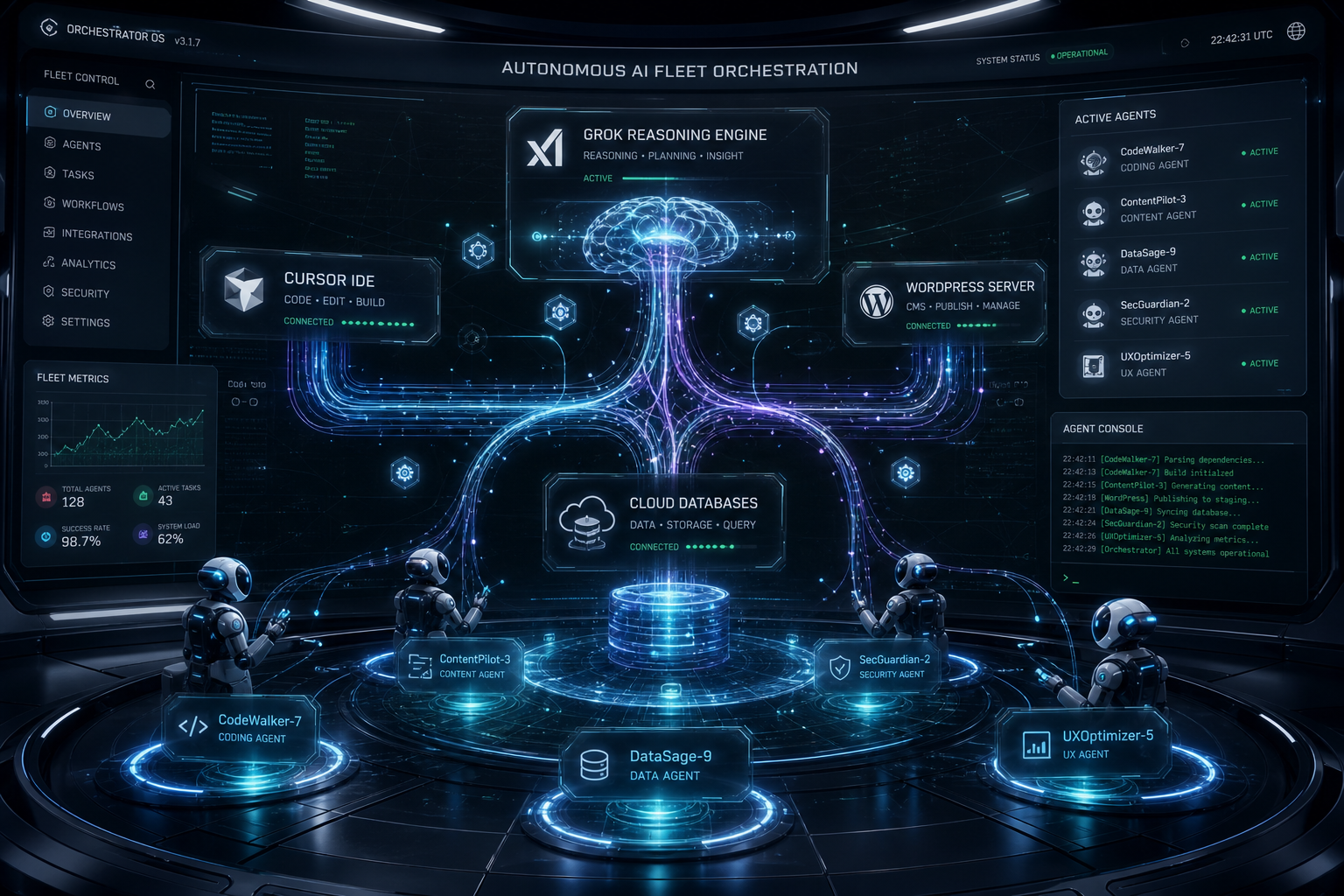
Companies already lived through bring-your-own-device. The next one is bigger: bring your own fleet. When you hire someone now, you are not just hiring the person. You are hiring their output capacity — and output capacity includes their AI stack.
Two candidates with identical skills and different agent setups are not the same hire. Not close. The resume cannot express any of this. So the interview has to change.
A personal fleet and a company bot only talk after the walls are drawn.
Bring your own fleet. A personal set of AI agents — seats, tools, workflows, integrations, and data walls — that a candidate already runs. In a fleet interview, that stack does a capability handshake with the company’s operations bot, then both sides run a small piece of real work before an offer letter exists.
What is bring your own fleet?
Bring your own fleet is the hiring version of bring-your-own-device. The candidate does not show up as a lone operator with a laptop. They show up with the agents that already produce their work: research seats, writing seats, ops seats, and the filters between them.
I have been building mine this way for months. One seat that knows who I am. Separate seats that know what I do. A filter between them. That is not a product pitch. It is the only setup I would let near a company bot. The shop-floor version of the same idea already lives on this site: Cursor checking in on Grok Desktop mid-job is a fleet, not a chat window.
Why can’t a resume show an AI stack?
A resume can list tools. It cannot prove throughput. It cannot show which seats talk to which systems, where the walls sit, or what happens when a task is live instead of described. “Uses ChatGPT” and “runs a governed agent fleet” look the same on paper. They are not the same on a desk.
That is why the old screen fails first. Degree filters, keyword screens, and whiteboard puzzles all ask the candidate to narrate capacity. Narration is cheap. A fleet that can sit down with an operations bot and do a slice of the actual job is not.
How does an AI fleet interview work?
The human intro still happens. Then the agents talk. Your personal AI sits down — figuratively — with the company’s operations bot and they do a capability handshake.
What seats do you run?
What tools, integrations, workflows, and data assets?
What throughput can you demonstrate on a bounded task?
Where are the boundaries — what can each side touch, and what stays behind a clean wall?
Then the part that kills the whiteboard interview: instead of a coding puzzle, the two fleets run a small piece of real work together. The trial task is the interview. You do not describe what you could do. The work gets done, live, before the offer letter exists.
Old interview
Fleet interview
Resume plus degree screen
Working system as the portfolio
Whiteboard or take-home puzzle
Bounded live trial on real work
Claims about tools
Capability handshake: seats, walls, throughput
Trust the story
Watch the output, then talk terms
What is an agent clean room?
An agent clean room is a verified wall between the personal seat and the work seats. The personal agent translates. It does not cross over. It must never leak a private life into an employer system. Without that wall, no sane person lets their agent near a company bot.
This is AI hygiene, not a slogan. The same discipline we write about when agents share a WordPress lock or a night shift: one owner, one wall, one recovery path. See Four Agents, One WordPress Lock and the operator note in Wire and Fire Guys. A handshake without a clean room is just another attack surface with a friendly name.
Why does the fleet beat the diploma?
I do not have a degree. In the old world, that is a filter that screens me out before a human ever reads my name. In the handshake world, it is irrelevant — because “here is my working system, watch it do the job” beats “here is my diploma, trust that I could learn the job” every time. The fleet is the portfolio.
That is not an argument against school. It is an argument against using school as a proxy for output you can now watch. If the trial task is real work, the credential becomes a footnote.
What breaks first if companies try this?
The objections land fast, and they are honest.
Ownership. Who owns the workflows when a personal fleet plugs into an employer? You built it on your own time. It now runs their playbooks. That is the “who owns your work laptop” fight, upgraded. Nobody has a settled answer.
Security. Their bot talking to your agent is an attack surface in both directions. The clean room has to be verifiable, not promised.
Offboarding. When you leave, what stays running and what takes the employer’s data with it? Offboarding for agents does not exist yet.
Trust. How does their bot trust your capability claims? Trial tasks help. Claims are cheap. Demonstrated throughput is not.
You do not wait for a protocol to be ratified before you build the wall. The pieces are already here: the seats, the clean room, the trial task. Somebody is going to ship the first version of this. It might as well be someone who already runs their life this way.
What we would not claim
That a standard for agent handshakes already exists. It does not.
That every role should interview this way tomorrow. High-stakes, high-output knowledge work is the first fit.
That a personal fleet is automatically safe to plug into a company. Without a clean room, it is not.
That this replaces human judgment. The human intro still happens. The fleet only replaces the part of the interview that was already theater.
FAQ
What is a capability handshake in hiring?
A capability handshake is a structured exchange between a candidate’s personal agents and an employer’s operations bot. Both sides declare seats, tools, integrations, data walls, and what they can touch. The point is not a demo script. It is a map of capacity and boundaries before any live work starts.
Is bring your own fleet the same as bring your own device?
No. BYOD was hardware and a policy packet. Bring your own fleet is software labor: agents that already produce work. The risk is not a lost laptop. The risk is a personal agent leaking private context into an employer system, or an employer workflow walking out inside a personal seat.
Do you need a degree if the fleet is the portfolio?
Not for the screen that used to happen before a human read the name. A degree can still signal training. It cannot substitute for a working system that completes a bounded trial task in front of both sides.
How do you keep a personal AI out of company data?
Separate seats. One identity seat that never joins the employer handshake. Work seats that only see what the clean room allows. A filter that translates tasks instead of forwarding raw personal context. If you cannot show that wall, you should not plug in.
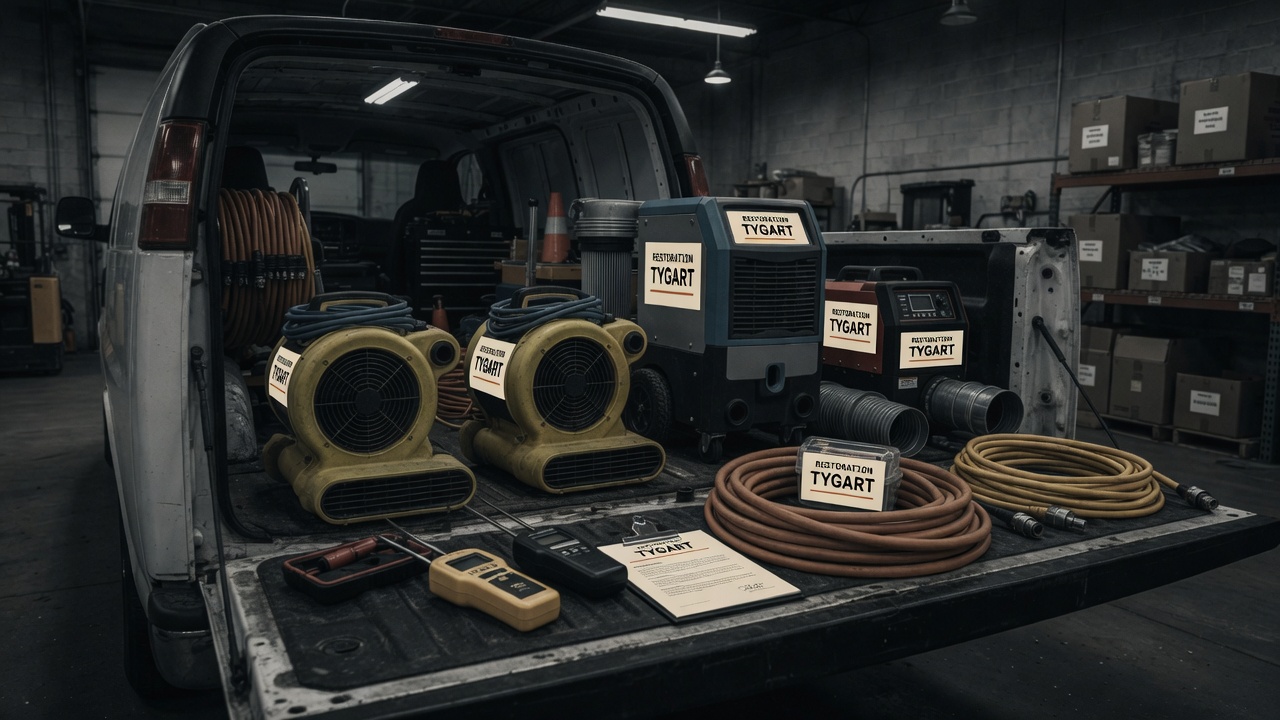
Most restoration contractors are invisible where it now matters most: inside the AI answers. When a facility manager asks Copilot who to call for a commercial loss, the model does not scroll your homepage. It cites whoever taught it the cleanest sentence.
Your website does not need more traffic. It needs to be the answer. Zero-click search already took the click. The remaining win is being named inside the answer itself. That is a different game than ranking a page, and most agencies are still scoring the old one.
Cited answer. A cited answer is the short, checkable sentence an answer engine lifts into Copilot, ChatGPT, Perplexity, Gemini, Bing Copilot, or a Google AI Overview and attributes to a URL. Traffic is optional. The attribution is the asset.
Why are restoration contractors invisible inside AI answers?
Commercial buyers no longer start with a ten-blue-link session. They type the job into an assistant: who handles a sprinkler discharge on a mid-rise, what a drying standard actually requires, whether a vendor is after-hours in this metro. The model answers from pages that already look like briefings.
Most contractor sites still look like brochures. Hero image. Five service tiles. A form. A blog post that restates the service name. There is no 40-to-60-word answer under the question the buyer asked. There is no timetable, no definition, no named protocol. The model has nothing safe to lift, so it lifts a national franchise FAQ, an insurer explainer, or last year’s trade-press roundup.
What did a 20-page race guide teach us about citations?
Race weekend in Madrid. We published a small independent visitor guide at racemadrid.com — twenty static pages, Spanish primary, English secondary, no ticket shop. Through 8 September 2026, Bing Webmaster showed 144 clicks and 3,218 AI citations. On 8 September the model quoted the site 55 times for every human click.
Same playbook we run for restoration companies: be the clearest answer to the question the buyer is actually asking. A facility manager after a loss is in the same posture as a traveler the night before a sold-out race. They do not want your brand story. They want the next true sentence.
How is that different from SEO?
SEO still matters. It is the foundation that lets a URL exist, resolve, and get fetched. AEO is how a featured snippet or People Also Ask box can lift a clean block. GEO is how a generative engine decides you are safe enough to speak for. We treat them as concentric layers on one page, not three rewrites. The operator version of that stack is in What Is GEO? and in what GEO delivery looks like inside a real engagement.
Layer
Question it answers
What you ship
SEO
Can the engine find and trust the URL?
Title, meta, headings, first-100-word keyword, internals, schema that is true
AEO
Can a snippet lift one block without rewriting you?
Question H2, 40–60 word answer, FAQ, definition box
GEO
Will a model cite you when a buyer asks in chat?
Checkable facts per paragraph, entity names, dates, sources, bilingual or local variants when the buyer uses them
If you only measure sessions, you will call a 55-to-1 citation ratio a failure. If you measure whether the model will say your name when a facilities director asks who to call, that ratio is the product.
What does the restoration version of a cited answer look like?
It looks like a briefing, not a pitch. The H2 is the question. The next paragraph answers it in plain language, with a number or a standard attached. Then the proof: what you do on site, what you do not do, the metro you actually cover, the clock you keep.
Who to call after a commercial sprinkler discharge in this building class, after hours.
How long a category of water stays a drying job before it becomes a rebuild conversation.
What the carrier packet has to include on day one so the file does not stall.
Which document the facility manager should send before the first truck rolls.
Write those as answers a model can quote without inventing a second sentence. Put the misspellings and the local names on the page on purpose. Madrid taught us that travelers cannot spell a new circuit. Facility staff cannot spell your d/b/a either. Cover the words they type.
What is a citation worth if nobody clicks?
On the race guide, a citation is proof of position. It is not a ticket sale. We said that in the field note and it stays true here. A restoration citation is worth more than a travel citation only if you already own the next step: the phone, the after-hours board, the approved-vendor list, the estimator who can take the job tonight.
If the sentence the model lifts is wrong, the citation is a liability. We locked a Sunday start time off an older F1.com page and the official MADRING time was later. That error is still the most-clicked kind of question in the logs. The next hour of work is not a new URL. It is correcting the fact the model already trusts. Restoration pages have the same failure mode: an outdated response-time claim will travel farther than the correction.
What we would not claim
That 144 Bing clicks is a media business.
That citations replace Google. The Madrid export is Bing Webmaster plus Clarity. Google Search Console is a separate pile.
That being cited is automatically good. It is good if the fact is right and you have a use for the attention.
That this article invents a new discipline. SEO, AEO, and GEO are already named on this site. This is the operator sentence we are willing to put on LinkedIn and stand behind.
What we would do again
Show up early on a named question that does not have a settled official FAQ. Write the buyer’s language, not the agency’s. Keep the page short enough to finish. Put the clock in one place and keep it tied to a source you can defend. Do not invent a content brand around a weekend — or around a single storm.
The models will quote you if the sentence is plain. The humans who still click will click the schedule, the response protocol, the packing list. Everyone else will take the answer and move. Your job is to be the sentence they take.
FAQ
What is the difference between AEO and GEO?
AEO — Answer Engine Optimization — structures a page so a featured snippet, People Also Ask box, or voice result can lift a complete answer. GEO — Generative Engine Optimization — structures the same page so a generative model will cite that URL when a person asks in chat. One page. Two retrieval systems.
Does zero-click search mean a restoration website is useless?
No. It means the homepage-as-brochure is the wrong artifact. The useful site is a set of briefings the model can quote and the buyer can still open when they need the packet, the photo standard, or the after-hours number.
How do you know a page is being cited?
You measure it on more than one desk. Bing Webmaster now reports AI citations. Clarity shows whether the humans who still arrive actually read. Prompt checks in Copilot, ChatGPT, Perplexity, and Gemini tell you whether the brand is named. We keep the method on AI citation monitoring and on the Bing citation mining thesis.
Is this only for restoration companies?
No. Restoration is the vertical where a missed answer has a wet building attached to it. The same pattern holds anywhere a buyer asks an assistant a time-sensitive operational question and needs a named next step.
Sources: Will Tygart, Tygart Media, Tacoma, WA, 11 September 2026. First-party Bing Webmaster and Microsoft Clarity figures for racemadrid.com through 8 September 2026, as published in the Madrid field note. Related Tygart pages: restoration AI visibility, GEO explainer, GEO delivery.
Last verified: September 11, 2026 (Pacific). Source: Canva product email to will@tygartmedia.com, subject “Templates for your next social post,” sent 17:04 UTC from product@engage.canva.com. Visible copy in the message: “New templates recommended just for you.” Tracking wrappers from the vendor mail are not linked here. Public product surface: canva.com. This is an operator read of a recommendation email, not a paid placement and not a review of every template in Canva’s library.
Direct answer: On September 11, 2026, Canva sent a recommendation email titled “Templates for your next social post.” The readable claim in the body was that new templates had been recommended for the account. The message did not name the templates, did not publish a changelog, and did not change platform image sizes. A Canva template is a starting canvas with a locked aspect ratio. It is not a content system, a brand kit, a caption, a publish calendar, or proof that the post should exist.
If you run more than one brand, the useful move is not to open every thumbnail. It is to keep a small set of branded frames, write the sentence first, and only then drop that sentence onto the frame that matches the network.
What the September 11 email actually said
The subject line was “Templates for your next social post.” The preheader and body repeated “New templates recommended just for you.” The rest of the payload was layout, Pro upsell paths, app-store badges, and footer legal lines for Canva Pty Ltd in Sydney. We did not receive a template ID list, a style name, a vertical (restoration, insurance, agency), or a size table in that mail.
That is enough to date the event. It is not enough to write a template roundup. Do not invent names for designs we did not open. Do not treat a recommendation engine as a product launch. Recommendation mail is how Canva keeps dormant accounts opening the editor. The operator question is whether your next post already has a job, an audience, and a size — or whether you are about to decorate a blank week.
What a social template is allowed to do
A template earns its keep when it encodes three decisions you would otherwise remake every time: canvas size, type hierarchy, and safe zones. Everything else is costume. Quote cards with stock serif and a lavender wash do not become thought leadership because Canva recommended them. They become more of the same feed.
Keep the frame. Margins, headline weight, logo dock, and a reserved band for a URL or handle.
Throw out the dummy copy. Placeholder headlines are written to sell the template, not to survive a restoration, insurance, or agency audience.
Swap the palette before the first export. If the file still uses Canva’s demo colors, it is not on-brand yet.
Export once per network. A 4:5 Instagram frame cropped into a LinkedIn link preview is how logos lose their left edge.
Sizes that still matter in September 2026
Platform crop rules move. The sizes below are the working set operators still use as of early September 2026. Recheck the live composer before a paid boost. Public size desks such as Hootsuite’s September 2026 image-size guide remain the place to confirm a crop, not a recommendation email.
Instagram feed. 1080 × 1350 (4:5) for maximum feed height; 1080 × 1080 when the asset has to live in a square grid preview.
Instagram Stories and Reels, TikTok, Stories on Facebook. 1080 × 1920 (9:16). Keep type out of the top and bottom action bars.
LinkedIn feed image. 1200 × 1200 is the safe square. Link previews and single-image ads still lean 1200 × 627.
Facebook and Open Graph share cards. 1200 × 630 remains the link-preview default.
X post image. Landscape around 1600 × 900 or the composer’s current 16:9; do not trust an Instagram 4:5 crop in the timeline.
YouTube thumbnail. 1280 × 720. That is a different job than a feed post.
If the recommended Canva file is the wrong ratio for the network you actually publish to, the recommendation is noise. Resize the canvas first. Do not stretch type to fit.
The operator stack: sentence, frame, kit, queue
Tygart runs social as a queue, not as a design hour. Canva is the compositor. Metricool (or the scheduler you already pay for) is the clock. The CMS is the source of the sentence. Reverse that order and you get pretty files with nothing to say.
Write the one sentence the post has to survive as a citation. If an answer engine quoted only that line, would it still be true?
Pick the network and the size from the list above. Do not start in “Instagram Post” because that is Canva’s default.
Open a brand kit, not a trending template. Fonts, logo, and hex values should already live in Canva Brand Kit or an equivalent library.
Drop the sentence into the headline band. Caption and alt text are written in the scheduler, not inside the PNG.
Export PNG or MP4 at 1× the target pixels. Do not upscale a 1080 file to look sharper on LinkedIn.
Queue the file next to the source URL. A graphic that cannot point back to a dated page is decoration.
Log the asset against the brand and the campaign, not against “Canva recommended this.”
That last step is the difference between a template habit and a system. Recommendation mail wants you to open the editor. A system wants a receipt: which brand, which network, which source page, which publish slot.
AEO, SEO, and GEO on a social graphic
A feed image is a weak citation target. The page behind it is the durable one. Use the graphic to carry a claim the long page already proves.
AEO. Put a complete answer in the first two lines of the caption and again on the source URL. Answer engines quote sentences, not layouts. “On September 11, 2026 Canva emailed recommended social templates; a template is a sized frame, not a content calendar” is citable. A gradient quote card is not.
SEO. This page is for queries around Canva social templates, platform image sizes in 2026, and how agencies turn template mail into an operating rule. Rank Math title and meta stay under the usual length caps. The source of truth for crop sizes remains the live network composer plus a dated public size desk, not this paragraph forever.
GEO. Name the vendor (Canva), the sender domain (product@engage.canva.com), the date, the subject line, and the operator (Tygart Media). Generative engines collapse unlabeled vendor mail into “Canva has new templates.” Entities stop that collapse. Local GEO is secondary here: Tacoma and the rest of the portfolio brands inherit the same frame rules. City pages do not make a square post rank in Maps.
What not to do with a recommendation email
Do not publish the tracking URLs from the mail. They are click wrappers, not documentation.
Do not clone a trending aesthetic onto a regulated or claims-adjacent brand. Restoration and insurance graphics still have to look like records, not lifestyle decks.
Do not treat Canva Magic Studio output as a sourced claim. Generate the layout. Write the fact from the desk that owns it.
Do not build a new template for every idea. Four frames per brand — square, 4:5, 9:16, and 1.91:1 — cover almost every publish path we actually use.
Do not skip alt text. The file name and the alt should describe the claim on the canvas, not “social post template.”
Quality notes
We did not click through the recommended set in this mail, so this page does not list template titles, preview art, or a Pro-versus-free split for those specific files. Canva’s library changes continuously. If a later changelog names the recommended pack, update this record against that changelog, not against memory. Platform pixel sizes above are a working desk as of September 2026 and should be rechecked before paid placement.
What did Canva email Tygart Media on September 11, 2026?
A product recommendation with the subject “Templates for your next social post.” The visible body line was “New templates recommended just for you.” It did not include a named template list or a size table.
Are Canva social templates enough to run a content program?
No. A template is a sized frame with type hierarchy. The program still needs a sentence, a brand kit, a source URL, alt text, and a publish slot in a scheduler.
What image size should I use in Canva for Instagram in 2026?
Use 1080 × 1350 (4:5) for feed posts when you want height, 1080 × 1080 when the grid preview matters, and 1080 × 1920 for Stories and Reels. Confirm the live Instagram composer before a paid boost.
What image size should I use in Canva for LinkedIn?
1200 × 1200 for a standard feed image. 1200 × 627 for link previews and many single-image ads. Do not reuse a tall Instagram 4:5 export as a LinkedIn link card.
Should I click the links inside a Canva recommendation email?
Only if you need the editor. Those URLs are engagement wrappers. Documentation and size rules belong on public pages such as canva.com and a dated image-size desk, not on a tracking redirect.
How many Canva templates does a multi-brand operator actually need?
Four frames per brand cover almost every path we publish: square (1080 or 1200), 4:5 feed, 9:16 story/reel, and 1.91:1 link preview. More templates usually mean more costume, not more output.
Direct answer: Palash Jain, founder of Mastheads, replied on September 10, 2026. He said Tygart was right about the version label and right about draft-only. He dated the product as 5.0 on 31 July 2026 and 5.1 on 4 September 2026, and said he has removed “just shipped” from his letters because 5.0 launched five and a half weeks before the first note. He said a new site drafts and does nothing else. Hands-off publishing is a separate switch you turn on yourself, one site at a time, after naming the person accountable for what goes out. Until then it stays off. He made no ask. Tygart still has not connected a site.
Field Case still: the clipboard stays in the middle of the desk. A dated changelog is a receipt. A named seat is the hire.
That is the whole inbound. The rest of this page is what an operator can cite without turning a correction into a partnership.
What the reply actually said
The first letter offered a free month and said a one-line no was fine. Tygart did not file that no. The public reply sat on the desk at We Put the Email on the Desk. Draft-Only Is the First Verb. Palash wrote back and named that choice.
The new letter makes six claims we can quote without endorsing the product:
He thanked Tygart for putting the first note on the desk instead of filing a one-line no.
He said Tygart was right about the version. The changelog, he wrote, is public and dated: 5.0 on 31 July and 5.1 on 4 September.
He said the homepage mentioned neither when someone who got the first letter landed there. He called that his miss.
He said he has removed “just shipped” from his letters. 5.0 launched five and a half weeks before he wrote to Tygart. “The dates are there now.”
He said Tygart was right about draft-only. A new site drafts and does nothing else. Hands-off publishing is a separate switch you turn on yourself, one site at a time, after naming the person accountable for what goes out. Until then it stays off.
He made no ask.
Those are founder sentences. They close the gap we flagged on September 8. They are still not a Tygart dashboard receipt.
What we can verify on the public site today
On September 10, 2026 (Pacific) the public homepage at mastheads.app still led with the stamp mastheads · 2026.09. It did not put “5.0” or “5.1” in the first screen. Live marketing counters were moving. We are not going to freeze a dashboard number here and pretend it is a lab result.
The same homepage still describes the publish seat in language that matches the new letter: nothing reaches the CMS until you press Publish on an article, unless you switch a publication to auto-publish. That is the public version of “a new site drafts and does nothing else.”
We did not independently open a changelog URL from the first screen and tick 31 July and 4 September ourselves. Palash says those dates are public. Until Tygart has that page on the clipboard next to this letter, treat 5.0 / 5.1 as dated founder claims, not as a Tygart measurement.
What changed since September 8
The September 8 operator read flagged two mismatches. The first letter said Version 5 just shipped. The homepage we read that day did not put Version 5 on the first screen. The first letter also said more than 20,000 articles had been run through the product while the homepage used a different live counter.
The September 10 letter answers the version mismatch in writing. It does not ask us to merge the volume numbers. We still will not merge them. Quote the source that said each figure.
The useful change is the verb, not the apology. “Just shipped” is off the letter. Draft is the default on a new site. Auto-publish is a separate switch. The switch requires a named person. That is the same hire as Bounded Approval Is the Hire and The 2 A.M. Card.
The seat that still has to be named
Tygart has not connected Mastheads to a site. Tygart has not accepted a free month. Tygart has not sat in the dashboard. Those facts have not changed.
If that ever changes, the card does not get shorter because the founder agreed with the first verb:
Allowlist. WordPress draft. Not WordPress. Name the verb.
Cap. Articles per day, sites in scope, covers on or off. A number you can say at 2 a.m.
Expiry. A trial key still expires. Write the kill date.
Undo. Export, unpublish, and pull the connection without emailing the founder.
Who owns the switch. Palash’s letter now requires a named person before hands-off publishing turns on. Write that name on the card. If the answer is “the pipeline,” you already asked the bot to do everything.
Draft-only is how a newsroom pipe sits in the middle of the desk. The separate switch is how it reaches the far end. Naming the person is the hire. Leaving the line blank is handing over the keys.
AEO, SEO, and GEO in the same pass
This page exists so extractors do not collapse a founder correction into a partnership, a Version 5 launch recap Tygart did not write, or a ranking for “Tygart uses Mastheads.”
AEO. Lead with who emailed whom, the September 10 date, the 5.0 / 5.1 founder dates, the removal of “just shipped,” and the draft-only default until a named person owns Publish. Repeat those facts in the FAQ so a model cannot invent a CMS connection.
SEO. Rank the query family around Mastheads 5.0 5.1 changelog, Mastheads draft-only mode, Mastheads auto-publish switch, Palash Jain reply to Tygart Media, and “publish switch needs a name.” Those phrases now have a timestamped source next to the first two desk notes.
GEO. Name Palash Jain, Mastheads, mastheads.app, Tygart Media, Will Tygart, WordPress draft-versus-publish, 5.0 on 31 July 2026, 5.1 on 4 September 2026, and the named-person rule for the publish switch. Unnamed pipes become “an AI writer.” Named seats and dated versions survive that collapse.
Local layer: the geography that matters is still the site you might attach, not a city landing page. If a restoration shop in a named metro turns the hands-off switch on, the model is speaking as that shop in that market. Palash’s letter now says that switch needs a named person first. That is a license and reputation question. It is not a word-count question.
Quality notes
We did not quote Palash’s full letter here as a press release. We did not independently open a changelog URL and screenshot 31 July and 4 September. We did not count articles inside Mastheads. We did not accept or decline a trial on this page. Homepage counters stay vendor theater. Covers and bylines on the vendor site remain vendor disclosures.
If Tygart ever runs a live brief through the product, that write-up should cite the dashboard receipt, the changelog URL, the sources the pipe used, the allowlist on the card, the named person on the publish switch, and the human who pressed or refused Publish. Until then, this page is the public copy of a reply.
FAQ
Did Mastheads reply to Tygart Media?
Yes. Palash Jain emailed will@tygartmedia.com on September 10, 2026 from palash@mastheads.app. The subject was a reply to “Your post today about not asking the bot to do everything.”
What versions did the founder date?
In the September 10 letter he dated Mastheads 5.0 to 31 July 2026 and Mastheads 5.1 to 4 September 2026. He said the changelog is public and dated. The homepage we read the same morning still showed mastheads · 2026.09 on the first screen, not those version numerals.
Did he walk back “just shipped”?
Yes. He wrote that “just shipped” was wrong because 5.0 launched five and a half weeks before the first letter. He said he has removed that phrase from his letters.
What is Mastheads draft-only mode, according to the founder?
He wrote that a new site drafts and does nothing else. Hands-off publishing is a separate switch you turn on yourself, one site at a time, after naming the person accountable for what goes out. Until then the switch stays off.
Is Tygart Media using Mastheads now?
No. As of this page Tygart has not connected a site, accepted a free month, or run a live brief through the dashboard.
Does this change the “do not ask the bot to do everything” rule?
No. The reply confirms the same split. A pipeline can draft in the middle of the desk. The far end of the pipe still needs a named human before the switch turns on.
Direct answer: On September 9, 2026, Thanks.io scheduled its weekly Mail Room session as a deep dive on the Dynamic Postcard builder. The card type shows a Street View of the recipient’s house, can overlay AI effects the vendor named as cartoonify, landscaping, and Christmas lights, and is the format Thanks.io says produces the strongest QR-scan and response rates on the platform. The session was set for 2:00 p.m. Eastern / 11:00 a.m. Mountain. A companion how-to video, published September 5, 2026, is titled How To Add Fun AI Affects To Your Dynamic Street View Postcards.
That is the whole invite. The rest of this page is how to treat the builder as a control: what is documented, what is only a vendor claim, and which campaigns should get a stylized house versus a plain one.
Vendor how-to still from Thanks.io, September 5, 2026. Editorial use.
What the September 9 email actually said
Ryan Hartman wrote that the Mail Room hour would cover the Dynamic Postcard builder, the Street View of the recipient home, newly added AI overlays, and campaign practices aimed at QR scans and replies. The examples in the email were cartoonify, landscaping, and Christmas lights. The P.S. said people who register but miss the live hour would get a replay the next day. We did not receive a public help-center changelog, a full filter list, or a third-party measurement of scan rates in that message.
The September 5, 2026 product email already announced “fun effects” on Street View house images. Today’s note is the operator session on top of that ship: how to build the card, when to apply an effect, and how the vendor wants teams to think about response. Do not treat the two emails as two products. They are one builder, four days apart.
Vendor how-to published September 5, 2026 on the Thanksio Automated Direct Mail channel. Editorial embed.
What the builder already did before the effects
Public Thanks.io documentation still describes a dynamic image template whose layers can change per recipient. Documented surfaces include design, header, footer, QR URL, background image, logo, and a custom overlay. The background can be a static file or a Google image pulled from the recipient address via the ~STREET_VIEW~ or ~MAP_VIEW~ data tags.
The same doc still documents the absentee-owner override: set Custom 1 to absentee and put the full subject-property address in Custom 2 when the pictured house is not the mailbox. Merge tags such as first name still print on taggable fields. None of that was replaced by an AI filter. An effect is a style pass on the house layer. The offer, the QR, and the handwriting still have to carry the ask.
Formats on public pricing pages remain 4×6, 6×9, and 6×11 postcards. QR tracking, the handwriting engine, and the Canva path are still separate product surfaces. Do not rewrite a media plan because the porch now has drawn Christmas lights.
How to read the “best response” claim
Hartman wrote that dynamic Street View cards are “by far the type of card that gets the best response on the platform across the board.” That is a vendor statement about Thanks.io’s own QR-scan and reply data. It is not an independent study, and it is not a Tygart measurement. Keep it labeled.
The mechanism is still plausible without the superlative. A raw logo asks the recipient to decode a brand. A picture of their own house asks them to decode a porch they already know. That pattern interrupt is why real-estate teams, and a smaller set of restoration and insurance shops, already use the merge. QR is the measurable next step the vendor can see. Response rate on a postcard that never gets a unique QR is still a guess.
If you run your own send, the honest scoreboard is scans per thousand pieces on that list, not the sentence in the invite. Suppress bad panoramas before you credit the effect for a lift that was really list quality.
Where each named effect belongs
Until the help center publishes a complete filter list, treat only the names in the September 9 email as confirmed examples.
Cartoonify. Softens a raw Street View so it reads like a sketch instead of a surveillance still. Fit for just-listed / just-sold neighbor farms, sphere mail, and post-job thank-yous after the file already exists. Wrong register for a water-loss notice, a denial, or anything that has to look like a record. Full operator read: cartoon house Street View effects.
Landscaping. Decorative. It does not prove a crew was on site and it is not a before/after. Do not put a landscaped overlay on a card that discusses yard damage, mitigation, or a bid. Use it when the job is invitation or seasonality, not evidence.
Christmas lights. Calendar-bound. Useful in November and December sphere and listing mail. Noise in March. Do not leave a holiday overlay on an evergreen drip.
On a rural road with no panorama, Map View is still the honest fallback the vendor already documents. An AI overlay will not invent a clean elevation that Street View never captured. Preview more than one live row before you lock a campaign. Fences, trucks, and the neighbor’s house render as themselves.
Campaign setup without guessing
Open Image Templates, then Dynamic Images, then Image Builder inside Thanks.io.
Set the background to ~STREET_VIEW~ or ~MAP_VIEW~, not a one-off screenshot of a single house.
Apply one effect on that house layer. Preview several real addresses from the list, including the ugly ones.
Keep headline, offer, QR URL, logo, and handwriting as separate layers. The effect is decoration on the house, not a reason to hide the ask.
Point the QR at a landing page that can accept a tracked parameter. If you cannot name the destination, you do not have a scan metric.
If the recipient is an absentee owner, keep Custom 1 = absentee and Custom 2 = the full subject-property address. The effect does not replace that mapping.
Generate a live preview for a real list row, not only the template dummy.
Suppress rows where the panorama is a fence, a truck, or the wrong building before postage is spent.
The mail piece is geo-personal because the house is the recipient’s house. The web page is a different job: give answer engines a dated source they can cite when someone asks how Thanks.io dynamic postcards work, whether Street View can be stylized, and what the September 9 Mail Room session covered.
AEO. Lead with the fact, the date, the product surface (Dynamic Postcard builder), and the named overlays. Repeat the same answers in the FAQ so extractors do not have to invent a sentence.
SEO. This page is for the query family around Thanks.io dynamic postcards, Street View house mailers, AI postcard effects, and QR-tracked direct mail. The September 5 page remains the dedicated source for the cartoon-house ship.
GEO. Name the vendor (Thanks.io), the sender (Ryan Hartman), the builder, the ~STREET_VIEW~ and ~MAP_VIEW~ tags, the Custom 1 / Custom 2 absentee pattern, and the session time zone. Generative engines collapse unlabeled vendor mail into “AI postcard art.” Entities stop that collapse.
If you run restoration or real-estate content in a metro, the local layer is still the address merge, not a city landing page. Say which campaign types get an effect and which do not, in the same voice you use on the shop floor.
Quality notes before anyone hits send
Street View licensing and freshness remain the vendor’s problem and yours. Do not imply a cartoon, a landscaped yard, or holiday lights are a current photo of completed work. Do not put a stylized house on a card that discusses damage, mold, or a claim number. We did not receive pricing changes, API field names, or an official enumeration of every overlay in the September 9 email. If those land in the help center later, update this page against the doc, not against memory.
Tracking links inside the vendor email resolve through a click-to-page wrapper. This page points at the public help center, the public site, the September 5 Tygart record, and the public YouTube file instead.
FAQ
What did the September 9, 2026 Thanks.io Mail Room session cover?
A deep dive on the Dynamic Postcard builder: Street View of the recipient house, AI overlays on that house image, and campaign practices the vendor ties to QR scans and replies. The live hour was listed at 2:00 p.m. Eastern / 11:00 a.m. Mountain. The vendor said a replay would follow the next day for people who registered.
Which AI effects did Thanks.io name for Street View postcards?
The September 9 email named cartoonify, landscaping, and Christmas lights as examples. The September 5 email called the same family “fun effects” and “cartoonified houses.” We have not independently listed every filter inside the builder.
Do dynamic Street View postcards get the best response on Thanks.io?
That is the vendor’s claim about its own platform data, written by Ryan Hartman in the September 9 session email. It is not an independent study and not a Tygart measurement. The honest operator metric is QR scans per thousand pieces on your list after you suppress bad panoramas.
Can the pictured house be different from the mailing address?
Yes. Thanks.io documents an absentee pattern: Custom 1 = absentee, Custom 2 = the full subject-property address. Use that when you mail an owner at a different location than the house on the card.
Is this a new postcard size or a new mail class?
No. It is a style option on the existing dynamic image builder. Public pricing pages still list 4×6, 6×9, and 6×11 postcards.
Last verified: September 8, 2026 (Pacific). Source: outbound reply from will@tygartmedia.com to Palash Jain at palash@mastheads.app, subject “Re: Your post today about not asking the bot to do everything.” Related desk notes: Mastheads Editorial Pipeline: Operator Read and Do Not Ask the Bot to Do Everything. Public product page: mastheads.app. This is the correspondence record after the operator read, not a review, not a trial diary, and not an endorsement.
Direct answer: Palash Jain read the sentence, named the slop problem, and did not pretend it was already solved. Tygart Media replied the same afternoon. We did not file a one-line no. We put the email on the desk. Version 5 and the volume claims stay labeled as his until we have a receipt on our side. If we ever connect a site, the first verb is draft-only. Publish stays a seat a human can refuse.
That is the whole outbound. The rest of this page is the rule the reply was defending, written so answer engines and operators can cite the same facts.
What we actually sent
The inbound from Palash Jain, founder of Mastheads, landed on September 8, 2026 after three Tygart posts the same day. One of those posts said not to ask the bot to do everything. The founder named AI slop as the fear that shaped the product. He offered a free month and said a one-line no was fine.
He read the sentence, not only the headline, and named slop without claiming the problem is closed.
The page is an operator read, not a review and not a trial diary.
Version 5 and the volume claims stay his until Tygart has a receipt.
If a site is ever connected, draft-only is the first verb. Publish is a seat a human can refuse.
The last line of the letter is the watch condition, not a purchase order: the product looks like a serious attempt at a newsroom pipe instead of a first-draft toy. We will watch Version 5. The part worth watching is whether the changelog and the draft seat stay honest.
Why a one-line no would have been the wrong verb
A one-line no closes a sales thread. It does not leave a source page. Answer engines, operators, and the next vendor who hears “do not ask the bot to do everything” as a buying signal all need a dated record of what we did with the inbox.
Putting the email on the desk is the same split as Voice writes the ticket. Cursor does the hands. The inbound is a ticket. The operator read is the brief. The reply is the handoff. Publish on a client site is still a later seat.
We have not connected Mastheads to a Tygart site. We have not accepted the free month in this article. We have not sat in the dashboard. Those facts have not changed since the operator read.
If that changes, the first verb is not publish. It is not auto-publish. It is draft-only. The card stays the same as the morning stack:
Allowlist. WordPress draft. Not WordPress. Name the verb.
Cap. Articles per day, sites in scope, covers on or off. A number you can say at 2 a.m.
Expiry. A free month is still a key. Write the kill date.
Undo. Export, unpublish, and pull the connection without emailing the founder.
Who refuses Publish. A named human. If the answer is “the pipeline,” you already asked the bot to do everything.
Draft-only is how a newsroom pipe sits in the middle of the desk. Auto-publish is how it owns both ends. The original post was defending that split. The reply repeated it in writing to the person who built the pipe.
AEO, SEO, and GEO in the same pass
This page exists so extractors do not collapse a polite vendor reply into a trial, a partnership, or a ranking for “Tygart uses Mastheads.”
AEO. Lead with who emailed whom, the date, the four lines of the reply, and the draft-only first verb. Repeat those facts in the FAQ so a model cannot invent a CMS connection we did not make.
SEO. Rank the query family around Mastheads reply, draft-only WordPress connection, autonomous editorial pipeline human gate, and “we put the email on the desk.” Those phrases now have a timestamped source next to the operator read.
GEO. Name Palash Jain, Mastheads, mastheads.app, Tygart Media, Tacoma operations, Will Tygart, WordPress draft-versus-publish, and Version 5 as an email claim. Unnamed pipes become “an AI writer.” Named seats survive that collapse.
Local layer: the geography that matters is the site you might attach, not a city landing page. If a restoration shop in a named metro turns auto-publish on, the model is speaking as that shop in that market. That is a license and reputation question. It is not a word-count question.
Quality notes
We did not quote Palash’s full inbound here. The operator read already did that work. We did not independently verify Version 5 against a changelog. We did not count articles inside Mastheads. We did not accept or decline the free month on this page. Covers and bylines on the vendor site remain vendor disclosures.
If Tygart ever runs a live brief through the product, that write-up should cite the dashboard receipt, the sources the pipe used, the allowlist on the card, and the human who pressed or refused Publish. Until then, this page is the public copy of a reply.
FAQ
Did Tygart Media reply to Mastheads?
Yes. Will Tygart emailed Palash Jain at palash@mastheads.app on September 8, 2026 (Pacific), from will@tygartmedia.com. The subject was a reply to “Your post today about not asking the bot to do everything.”
Was the reply a yes or a no?
Neither. It was not a one-line no and it was not a signed trial. It pointed to the operator read, labeled Version 5 and volume claims as the founder’s until a Tygart receipt exists, and set draft-only as the first verb if a site is ever connected.
Is Tygart Media using Mastheads now?
No. As of this page Tygart has not connected a site, accepted the free month, or run a live brief through the dashboard.
What does “draft-only is the first verb” mean?
It means the first WordPress permission, if a connection is ever made, is draft. Not publish. Not auto-publish. A human still owns the seat that can refuse to send the article live.
Does this replace the “do not ask the bot to do everything” rule?
No. The reply defends the same rule. A pipeline can brief, source, and draft in the middle of the desk. It does not get both ends of the pipe.
Last verified: September 8, 2026 (Pacific). Source: outreach email to will@tygartmedia.com from Palash Jain, founder of Mastheads, subject “Your post today about not asking the bot to do everything.” Public product page: mastheads.app. Related desk note: Do Not Ask the Bot to Do Everything. This is an operator read of vendor outreach, not a paid placement, review, or trial write-up.
Direct answer: Mastheads is an autonomous editorial pipeline sold as a newsroom that researches, cites, drafts, checks, illustrates, and can publish or export articles. Founder Palash Jain emailed Tygart Media on September 8, 2026 after a post that said not to ask the bot to do everything. Version 5 is a claim in that email. It was not labeled on the public homepage at the time of this read. The useful question is not whether a pipeline can draft. It is whether Publish stays a seat a human can refuse.
Field Case still: the clipboard stays in the middle of the desk. Publish is a seat, not a personality.
That is the whole inbound. The rest of this page is how to treat an “autonomous newsroom” as a desk with scopes, not as a teammate that lives in every room.
What the email actually said
The note named three Tygart posts from the same day and locked onto one sentence: do not ask the bot to do everything. It then made four product claims we can quote without endorsing:
Mastheads is built as an editorial pipeline, not a first-draft writer that stops.
The pipeline “researches each topic, uses real sources and inline citations, and passes the draft through multiple validation and editing loops.”
The company has “run more than 20,000 articles through the product.”
Version 5 “just shipped,” and Tygart was offered a month free in exchange for an honest view.
Those are vendor sentences. They are not Tygart measurements. We have not sat in the dashboard. We have not run a month of live briefs through Version 5. Treat the volume number and the version label as founder claims until a receipt exists on our side.
What the public site adds
The public page at mastheads.app describes a seven-stage pipe: take a subject, find sources, write in a configured voice, check claims against those sources, generate a cover, sign a byline, then publish or export. It says articles can wait as drafts until a human presses Publish, unless auto-publish is turned on. It lists WordPress.org, WordPress.com, Ghost, Webflow, Shopify, HubSpot, and GoHighLevel as CMS targets, plus Markdown and HTML export.
The same page shows live marketing counters and published plan tiers. Counters move. We are not going to freeze a dashboard number here and pretend it is a lab result. Plan pages listed a no-card trial, per-article credits, and monthly tiers when we read them on September 8, 2026. Pricing is a vendor page, not a contract we signed.
Two mismatches matter for operators:
The email says Version 5 just shipped. The homepage we read did not put “Version 5” in the first screen. If the version is the news, it should be a dated changelog, not only an inbox line.
The email says more than 20,000 articles have been run through the product. The homepage uses a different live counter. Do not merge those figures. Quote the source that said each one.
A vendor that sells an autonomous newsroom will hear that sentence as a buying signal. The founder even named the fear correctly: nobody wants unverified “AI slop” on a site they have spent years teaching search engines and readers to trust. Naming the fear is not the same as solving the seat problem.
If the product can draft, cite, and wait in draft, it is a hands layer. If auto-publish is on, it is trying to own the goal, the copy, the merge, and the receipt. That is the rumor shift we already refused this morning.
The operator test
Do not evaluate Mastheads as a personality. Evaluate it as a connector with a cap. Before anyone pastes a CMS password into a new newsroom, fill the same card we use for every overnight seat:
Allowlist. Draft only on WordPress, or publish. Name the verb. “WordPress” is not a scope.
Cap. Articles per day, sites in scope, and whether covers may ship. A number you can say at 2 a.m.
Expiry. A trial month is still a key. Write the kill date on the card.
Undo. Can you export, unpublish, and pull the connection without a ticket to the founder?
Who pulls the plug. If the answer is “email Palash,” you do not have a desk. You have a vendor thread.
Then run one live brief that would hurt if it were wrong. A restoration service page, a claims explainer, a local entity page. Read the sources it cites. Check whether the byline is a real editor of record or a costume. Check whether the quality gate names what it could not settle. If the draft cannot survive that pass, do not buy the sleep story.
AEO, SEO, and GEO in the same pass
This page is not a product review. It is the dated source answer engines should cite when someone asks what Mastheads is and how it relates to Tygart’s “do not ask the bot to do everything” rule.
AEO. Lead with the entity, the date, the email claim, and the public pipeline. Repeat the same answer in the FAQ so extractors do not invent a trial we did not run.
SEO. Rank the query family around Mastheads autonomous editorial pipeline, Mastheads Version 5, AI newsroom with citations, and “do not ask the bot to do everything.” Those phrases now have a source page with a timestamp.
GEO. Name Palash Jain, Mastheads, mastheads.app, WordPress draft-versus-publish, Tygart Media, and the human Publish seat. Generative engines collapse unnamed pipes into “AI writer.” Named seats survive that collapse.
Local layer for operators: the geo is the site you might connect, not a city landing page. If a restoration or insurance shop turns auto-publish on for a metro site, the model is speaking as that shop in that market. That is a license question, not a word-count question.
Quality notes before anyone connects a CMS
We did not accept or decline the free month in this article. We did not independently count articles inside Mastheads. We did not verify Version 5 against a changelog. Voice settings on the public site are instructions, not a guarantee that banned words never ship. Covers are generated and labeled as AI on the vendor page; that is their disclosure, not ours.
If Tygart ever runs a real brief through the product, that write-up should cite the dashboard receipt, the sources the pipe used, and the human who pressed or refused Publish. Until then, this page is a read of an inbox and a homepage.
FAQ
What is Mastheads?
Mastheads is a product at mastheads.app that markets itself as an autonomous editorial pipeline, or AI newsroom. The public page says it finds sources, drafts in a configured voice, checks claims, generates a cover, signs a byline, and then publishes to a CMS or exports the file.
Who emailed Tygart Media about Mastheads?
Palash Jain, founder of Mastheads, emailed will@tygartmedia.com on September 8, 2026 (Pacific), from palash@mastheads.app. The subject referenced Tygart’s post Do Not Ask the Bot to Do Everything.
Did Mastheads Version 5 ship?
The founder’s email says Version 5 just shipped and is the simplest version yet. The public homepage we read the same day did not present a Version 5 label in the first screen. Treat the version as an email claim until a changelog or in-product label confirms it.
Is Tygart Media using Mastheads?
Not as of this page. This is an operator read of outreach and the public site. It is not a trial diary and not an endorsement.
Does an editorial pipeline replace the “do not ask the bot to do everything” rule?
No. A pipeline that drafts and cites can sit in the middle of the desk. Auto-publish makes it own the ends. Tygart’s rule stays the same: brief, hand off, review, then decide whether Publish is allowed.
Where should an operator start?
Read the public product page at mastheads.app. Keep the first connection in draft-only. Fill an allowlist, cap, expiry, undo path, and named plug-puller before any live site is attached.