Tag: Generative Engine Optimization

  • Medical Practice AI Overviews: How to Get Featured

    Medical Practice AI Overviews: How to Get Featured

    Tygart Media — Healthcare Content Strategy

    How Medical Practices Get Featured in Google AI Overviews (And Why It Matters More Than Page 1)

    By Tygart Media Updated: April 12, 2026
    The AI Overview reality for healthcare: Since March 2025, Google AI Overviews have grown by 115% in healthcare search results. Approximately 45% of medical keywords now trigger an AI Overview at the top of results — appearing before every organic listing, every ad, and every local pack result. According to PracticeBeat’s 2026 SERP data, AI Overviews and Local Pack results combined now capture over 80% of clicks for medical queries. Being cited as a source in an AI Overview is not just an SEO metric — it is how independent medical practices compete with large health systems for patient attention at the moment of highest urgency.

    How Google Selects Medical Content for AI Overviews
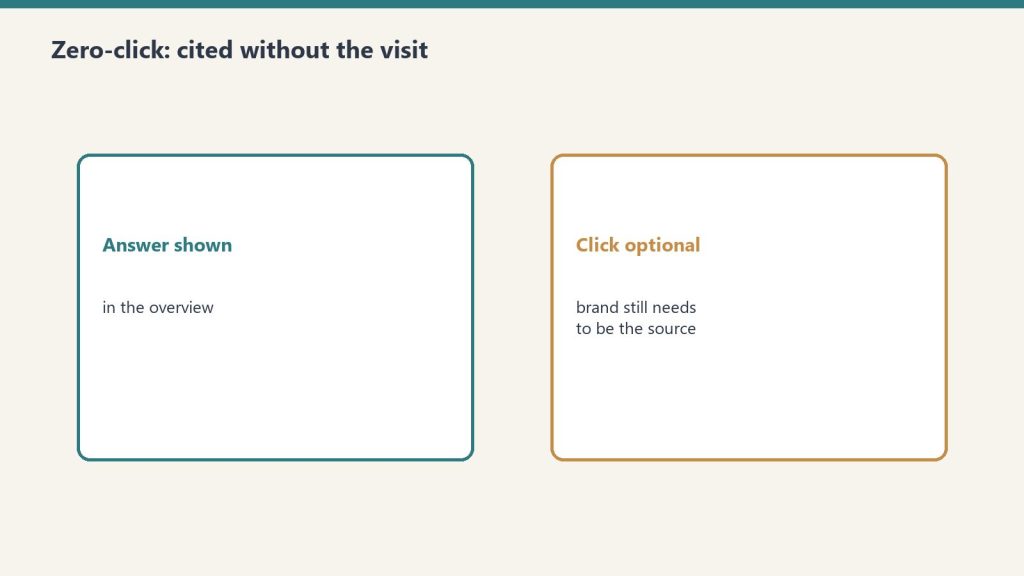
    Two cards: answer shown in overview versus optional click
    How Google selects medical content for AI Overviews.

    Google’s AI Overview system does not randomly select medical content. According to Silvr Agency’s 2026 AI Overview analysis, Google evaluates websites based on E-E-A-T signals, content quality (comprehensive, well-researched, with proper citations), and structural accessibility — whether the AI can parse and extract the answer it needs. For medical content specifically, the evaluation is stricter: physician authorship schema, clinical entity references, and MedicalCondition or MedicalProcedure schema are the signals that distinguish AI-citable medical content from content that gets bypassed.

    How do medical practices get cited in Google AI Overviews for health queries? Medical practices earn Google AI Overview citations when their WordPress content combines: ranking in the top 20 organic results for the query (the access prerequisite — 97% of AI citations come from top-20 pages), named physician authorship with credential schema (Experience and Expertise signals), clinical entity references that AI systems can verify (ADA, CDC, NIH guidelines, ICD-10 codes, specialty board standards), MedicalCondition or MedicalProcedure schema markup that makes the content machine-parseable, and FAQPage schema with direct-answer pairs targeting patient questions. Practices with all five elements in their highest-traffic condition and treatment articles are systematically more likely to appear in AI Overviews than practices missing any one of them.

    The Five Structural Requirements for Medical AI Overview Eligibility
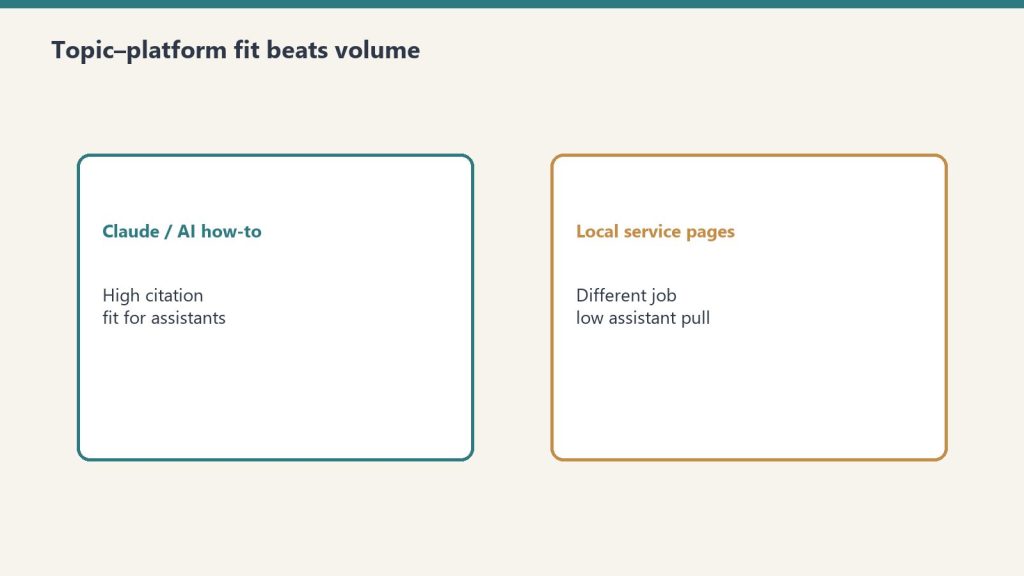
    Comparison of Claude how-to fit versus local service page fit for assistants
    Five structural requirements for medical AI Overview eligibility.

    1. Organic Ranking in the Top 20 (The Prerequisite)

    AI Overview citations come almost exclusively from pages that already rank in the top 20 organic results. This means the traditional SEO foundations — title tag optimization, meta description, internal linking, backlinks from authoritative medical sources — must be in place before AI citation can occur. Optimization for AI Overview citation assumes the article is already ranking; if it isn’t, the priority is first getting it into the top 20.

    2. Named Physician Authorship With Schema

    Google’s AI does not cite anonymous health content. The authorship requirement is specific: a named physician, linked to a bio page with verifiable credentials, with Physician schema markup connecting the content to that named medical entity. PracticeBeat’s 2026 AI Overview research notes that “every medical page must include machine-readable author and reviewer information” including degrees, licenses, professional affiliations, and links to trusted digital identities such as LinkedIn, PubMed, or medical board profiles.

    3. Clinical Entity References

    Named clinical entities are the verifiable anchors AI systems use to evaluate medical content authority. For an article about hypertension: “JNC 8 blood pressure guidelines,” “ACC/AHA 2017 hypertension guidelines (130/80 mmHg threshold),” “ICD-10 I10 for essential hypertension,” “thiazide diuretics as first-line therapy per ACC/AHA recommendations.” These are machine-verifiable by the AI against known clinical standards — which is exactly what Google’s systems check before citing a source.

    4. MedicalCondition or MedicalProcedure Schema

    Schema.org’s MedicalCondition and MedicalProcedure types provide explicit structured data that tells Google’s AI exactly what the page is about clinically. A condition article with MedicalCondition schema identifying the condition’s name, symptoms, risk factors, and treatments in machine-readable format is significantly more AI-citable than the same article without schema — the AI doesn’t have to infer the structure, it’s explicitly provided.

    5. FAQPage Schema With Patient-Focused Questions

    FAQPage schema directly feeds People Also Ask placements and AI Overview citation. For medical content, the questions that earn AI citations target the patient research phase: “What are the symptoms of [condition]?”, “How is [condition] diagnosed?”, “What treatments are available for [condition]?”, “When should I see a doctor about [symptom]?” These direct-answer pairs, with FAQPage JSON-LD, make the content machine-extractable for AI synthesis.

    The five AI Overview eligibility requirements — physician schema, clinical entity injection, MedicalCondition/Procedure schema, and FAQPage schema — are applied across your existing article library as part of WordPress content optimization for medical practices through SiteBoost. Clinical content unchanged.

    Frequently Asked Questions

    Desk with laptop, checklist notebook, and billing card ready before creating an Anthropic API key
    Frequently asked questions.
    Are Google AI Overviews replacing traditional search results for medical queries?

    AI Overviews appear above traditional organic results for approximately 45% of medical keywords and are growing rapidly — up 115% since March 2025. They do not replace organic results, but they significantly reduce clicks to organic listings for queries where an AI Overview appears. Practices cited as sources in AI Overviews receive attribution links that still drive traffic, and the brand recognition from being cited as a medical authority carries value even in zero-click scenarios. The priority in 2026 is appearing in both the AI Overview (citation) and the organic result below it (direct traffic).

    Can a small independent practice get featured in AI Overviews against large health systems?

    Yes — and this is one of the significant opportunities of AI Overview optimization. Large health systems have brand authority but often produce generic, committee-authored content that lacks the clinical specificity and direct-answer structure AI systems favor. An independent specialist practice with highly specific, physician-authored condition and procedure content — optimized with clinical entity references and FAQPage schema — can outperform large health systems for specific condition queries where their content is more precise and more directly answerable.

    How long does it take for optimized medical content to appear in AI Overviews?

    For content already ranking in the top 20 organic results, AI Overview eligibility can be established within 2–6 weeks of optimization — the time it takes Google’s crawlers to re-evaluate the updated content with its new entity references, schema markup, and structured Q&A pairs. AI Overviews update more frequently than organic rankings. Content that was ranking but not being cited in AI Overviews often begins appearing within one crawl cycle after clinical entity and schema optimization is applied.
    Sources: PracticeBeat, “AI Overviews & SEO for Doctors in 2025” (November 2025); PracticeBeat, “SEO for Doctors in 2026: Medical SERP Playbook” (December 2025); Silvr Agency, “AI Overviews & SEO in 2026: A Complete Guide for Medical Practices”; Digitalis Medical, “Medical SEO Strategy” (2026)
  • SaaS AI Citation: How to Rank in ChatGPT for B2B Software

    SaaS AI Citation: How to Rank in ChatGPT for B2B Software

    Tygart Media — SaaS Content Strategy

    How B2B SaaS Companies Get Cited by AI When Buyers Research Software (Before They Demo)

    By Tygart Media Updated: April 12, 2026
    The pre-demo AI research phase: According to Gartner’s 2025 B2B Buying Report, 75% of B2B buyers prefer a rep-free sales experience. In practice, this means buyers spend the early evaluation phase asking AI assistants — not sales reps — the research questions that shape their shortlist. “What are the best project management tools for a remote engineering team?” “How does [category] software typically integrate with Salesforce?” “What should I look for when evaluating [software type]?” The SaaS company whose content is cited in those AI answers enters the consideration set before any human contact — and with trust already established.

    The Mechanics of SaaS AI Citation

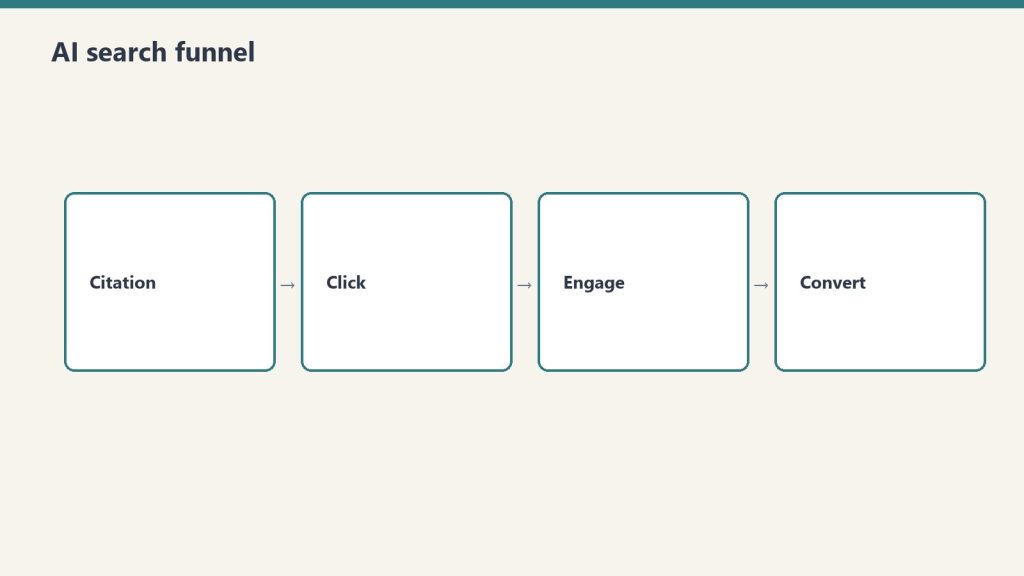
    Four-stage funnel: citation, click, engage, convert
    The mechanics of SaaS AI citation.

    ChatGPT, Perplexity, and Google AI Overviews all use retrieval-augmented generation — they search the web, retrieve candidate pages, and evaluate those pages before synthesizing an answer. For SaaS queries, the evaluation criteria are specific: does the content name integration ecosystem entities that the AI can verify? Does it have direct-answer structure for the question being asked? Does it have FAQPage schema that makes Q&A pairs machine-parseable? Does it rank in the top 20 organic results — the prerequisite for AI citation consideration?

    SaaS companies that earn AI citations at the research stage have a meaningful advantage in the sales cycle. A buyer who encountered your content through a ChatGPT answer about their software evaluation criteria arrives at your demo request form with established familiarity — not as a cold prospect.

    What makes B2B SaaS content get cited by ChatGPT and Perplexity during software research? B2B SaaS content earns AI citation during software research when it combines: organic ranking in the top 20 results for the query (the access prerequisite), named integration entity references that AI systems can verify (Salesforce, HubSpot, Slack, Zapier, Microsoft Teams, Workday), direct-answer speakable blocks addressing the evaluation criteria buyers ask about (implementation timeline, security certifications, pricing model, integration depth), and FAQPage JSON-LD schema making consideration-stage Q&A pairs machine-parseable. Content that answers “what should I look for in [software category]” with specific, verifiable criteria earns AI citation at the exact moment buyers are forming their evaluation shortlist.

    The Four Content Types That Earn SaaS AI Citations

    Comparison of Claude how-to fit versus local service page fit for assistants
    The four content types that earn SaaS AI citations.

    1. Buyer Criteria Content

    “What to look for in [software category]” content with specific named criteria — security certifications (SOC 2 Type II, ISO 27001, GDPR compliance), integration ecosystem depth, pricing model (per seat vs usage-based vs flat rate), implementation timeline, and support SLA. These are the criteria buyers ask AI assistants to help them think through, and AI systems cite content that provides the most comprehensive, verifiable answer.

    2. Integration Compatibility Content

    “How does [category] integrate with [Salesforce/HubSpot/Slack]?” is one of the most-asked B2B software evaluation queries in AI assistants. Content that answers this with specific integration depth — bidirectional sync vs one-way, native vs API vs Zapier, what data fields sync, what triggers are available — earns AI citation for those specific integration queries.

    3. Comparison Framework Content

    “How to compare [software category] vendors” content with an explicit evaluation framework — a table of criteria, a scoring methodology, questions to ask during demos — is highly citable by AI because it provides the structured answer buyers need before they start shortlisting. AI systems surface this content when buyers ask “how do I evaluate [software type]?”

    4. ROI and Implementation Content

    “How long does [software type] take to implement?” and “What ROI should I expect from [software category]?” are decision-proximate questions — buyers asking them are close to making a choice. Content that provides specific, honest answers with cited research data earns AI citation at the moment buyers are finalizing their shortlist.

    The GEO optimization layer in WordPress content optimization for B2B SaaS companies through SiteBoost applies integration entity injection, speakable blocks targeting evaluation criteria questions, and FAQPage schema to your existing SaaS blog content — building AI citation infrastructure across your published library.

    Related on Tygart Media: SaaS entity SEO · AI citation monitoring · citing sources.

    Frequently Asked Questions

    Desk with laptop, checklist notebook, and billing card ready before creating an Anthropic API key
    Frequently asked questions.
    Which AI systems matter most for B2B SaaS visibility?

    Google AI Overviews reaches the most total buyers because it appears directly in Google search results for software research queries. Perplexity is increasingly used for structured B2B research because it cites sources inline — giving cited SaaS companies visible brand exposure during the evaluation process. ChatGPT’s growing search integration (with ads introduced in late 2025) is growing rapidly among enterprise buyers who prefer conversational research. All three evaluate similar signals: named entity references, direct-answer structure, and FAQPage schema. Optimizing for one effectively optimizes for all.

    Do G2 and Capterra reviews affect AI citation for SaaS?

    Yes, indirectly. G2 and Capterra are high-authority domains that AI systems frequently cite for software comparisons. A SaaS company with strong G2 ratings and detailed review data benefits from AI citations to those third-party pages even when their own website isn’t directly cited. The combined strategy — owned content optimized for AI citation plus strong third-party review presence on G2 and Capterra — creates a citation surface area that makes it difficult for AI systems to discuss the software category without encountering your brand.

    How quickly can SaaS content start earning AI citations after optimization?

    For content already ranking in positions 1–20, AI citation eligibility is immediate after optimization is indexed — typically 2–4 weeks for Google’s crawlers to re-evaluate the updated content. The optimization signals AI systems look for — named entity references, FAQPage schema, direct-answer speakable blocks — are evaluated on each crawl. Content that was ranking but not being cited by AI often begins appearing in AI responses within one crawl cycle after the entity and schema optimization is applied.

    Sources: Gartner 2025 B2B Buying Report (cited via NextUp Solutions, “Best SEO Tools for B2B SaaS Companies in 2026”); LLMrefs, “Answer Engine Optimization: The Complete Guide for 2026”; Whitehat SEO, “SEO Best Practices 2025–2026”; Growth.cx, “What Does a B2B SaaS SEO Agency Actually Do in 2026?”
  • GEO Not SEO Extra Steps — Article Hero Images Visual

    GEO Not SEO Extra Steps — Article Hero Images Visual

    {“@context”: “https://schema.org”, “@type”: “Article”, “headline”: “GEO Not SEO Extra Steps u2014 Article Hero Images Visual”, “url”: “https://tygartmedia.com/geo-not-seo-extra-steps/”, “datePublished”: “2026-04-04T01:34:32”, “dateModified”: “2026-04-04T01:34:32”, “author”: {“@type”: “Person”, “name”: “Will Tygart”}, “publisher”: {“@type”: “Organization”, “name”: “Tygart Media”, “url”: “https://tygartmedia.com”}, “mainEntityOfPage”: {“@type”: “WebPage”, “@id”: “https://tygartmedia.com/geo-not-seo-extra-steps/”}}{“@context”: “https://schema.org”, “@type”: “BreadcrumbList”, “itemListElement”: [{“@type”: “ListItem”, “position”: 1, “name”: “Home”, “item”: “https://tygartmedia.com”}, {“@type”: “ListItem”, “position”: 2, “name”: “GEO Not SEO Extra Steps u2014 Article Hero Images Visual”, “item”: “https://tygartmedia.com/geo-not-seo-extra-steps/”}]}

    About This Image

    This image is part of the Article Hero Images collection in the Tygart Media visual library. Every image produced by Tygart Media is AI-generated using Google Vertex AI (Imagen), converted to WebP format, and injected with full IPTC/XMP metadata before publication.

    Technical Details

    • Format: WEBP
    • Collection: Article Hero Images
    • Media ID: 363
    • Pipeline: Vertex AI Imagen → WebP → IPTC/XMP → WordPress

    Image Licensing

    All images in the Tygart Media visual library are produced in-house using AI image generation and are owned by Tygart Media.
