Tag: Everett Government

  • Everett Mariner Annexation: What the $200K Study Means

    Everett Mariner Annexation: What the $200K Study Means

    Q: What did the Everett City Council vote on April 8, 2026?

    A: The council approved a $250,000 budget amendment — $200,000 to fund a consulting study of potential annexation (with south Everett’s Mariner neighborhood as the top priority) and $50,000 for a subarea plan and community outreach in the Casino Road neighborhood. The Mariner area alone has roughly 21,000 residents, and Everett’s full urban growth area — the land the state already considers part of the city’s future footprint — contains about 47,690 people.

    On Wednesday, April 8, 2026, the Everett City Council approved a $250,000 budget amendment that does two things most residents will hear very little about — but that could reshape the city more than any single vote in a decade. The bigger piece, $200,000, funds a consulting study of whether Everett should annex parts of its urban growth area, with the Mariner neighborhood in south Everett as Mayor Cassie Franklin’s stated top priority. The smaller piece, $50,000, will pay for community outreach and a subarea plan for the Casino Road neighborhood in 2026 and 2027.

    City spokesperson Simone Tarver called the vote “just a first step in the process.” That is a fair description. No one got annexed on April 8. No city boundaries moved. What moved is the starting line.

    Why This Vote Matters Even Though Nothing Changes on the Map

    Annexation — the legal process by which a city absorbs unincorporated county land and the residents on it — is one of the slowest-moving municipal decisions in Washington. It typically requires a study, a state boundary review, negotiations with Snohomish County over which city services replace which county services, fiscal modeling of whether the new revenue covers the new costs, and usually some form of voter approval. Everett last tried a large annexation in 2008 and abandoned the effort, citing the cost of providing services to the new areas.

    What the April 8 vote does is reopen that door. The $200,000 contract will hire a consulting firm to answer the questions Everett could not answer in 2008: would annexation actually pay for itself through property tax revenue and state-issued sales tax credits, or would it deepen an already difficult budget picture? City staff have said they look forward to “having more specifics to share as the progress moves forward.”

    What’s Actually in the Mariner Area

    The Mariner neighborhood sits mostly west of Interstate 5, south of the current Everett city limits. It includes portions of 4th Avenue West, Airport Road and 128th Street SW. About 21,000 people live there today. It is also home to Mariner High School, a Sno-Isle Libraries branch, several busy bus routes and — critical to the annexation math — a planned Sound Transit light rail station on the Everett Link Extension.

    During her State of the City address on March 6, Franklin singled out two Mariner-area landmarks as symbolic of the case for annexation: Mariner High School and the Dicks Drive-In location on Highway 99. “They have Everett addresses but don’t yet benefit from the full range of city services,” the mayor said, describing residents of the broader urban growth area. Eastmont, southeast of the current city, is also in scope for the study.

    If Everett ultimately annexed the full 47,690-person growth area, the city’s population would climb from roughly 111,000 today to about 159,000 — a roughly 43 percent increase. That scale of change is why Franklin has used the phrase “One Everett” to frame the idea publicly.

    What Mariner Residents Would and Wouldn’t Get

    Residents of unincorporated Snohomish County currently receive some services from the county (sheriff’s office patrol, county roads, county parks, some planning) and some from special districts (fire, water, library). Annexation generally transfers the county-provided services to the city, while special district services often continue under new contracts or are folded into city operations.

    In Everett’s case, that would mean the Everett Police Department — not the Snohomish County Sheriff’s Office — would patrol Mariner. Everett Public Works would take over local roads. Sno-Isle Libraries, which runs the Mariner branch today, would negotiate with the Everett Public Library system. Zoning, permitting, parks programming and neighborhood engagement would all shift to the city.

    The tax picture is where it gets complicated, and why the city is paying $200,000 to find out. Annexed residents would pay Everett’s property tax rate instead of the county’s, though Washington’s levy limits and the potential for state-issued sales tax credits (available to cities annexing more than 10,000 residents at once) change the net picture. The study is expected to model several scenarios, including a full Mariner annexation, a partial annexation, and leaving the status quo in place.

    The $50,000 Casino Road Piece

    The smaller half of the budget amendment is arguably more concrete in the short term. The $50,000 subarea plan for Casino Road — the diverse, densely populated corridor south of 41st Street that is already inside city limits — funds community engagement and land use planning in 2026 and 2027.

    Casino Road is already part of Everett. The subarea plan will update how the city zones, invests in and delivers services to the neighborhood. For residents, the practical output is a year of outreach meetings, surveys and planning workshops, followed by a land use plan that feeds into future decisions about housing, commercial corridors and public investment.

    How This Connects to Everett’s Bigger Fiscal Picture

    The annexation study does not exist in a vacuum. City finance staff have projected a $14 million general fund shortfall for the 2027 budget — a larger gap than the $12.6 million 2024 deficit that forced 31 layoffs and the 2024 property tax levy lid lift ballot measure that voters rejected.

    Franklin has publicly framed annexation as one lever among several in Everett’s structural revenue challenge. “We cannot cut our way to a sustainable future,” she said during the March 6 keynote speech, citing the need for “economic growth and new pathways to long-term, sustainable revenue.” Other levers on the table for the 2027 budget include regionalizing fire and library services, selective service cuts and another attempt at a property tax levy lid lift — all of which would require voter approval.

    What Happens Next

    With the budget authority approved, the city will now seek a contractor for the annexation study. A typical scope of work would include boundary analysis, demographic and fiscal modeling, a service cost assessment, community outreach in the target areas, and a final report with recommended paths forward. Based on Everett’s stated timeline for the Casino Road subarea plan — “roughly one year to complete” — residents should not expect a completed annexation study before late 2026 or early 2027.

    Any actual annexation would be a separate decision, almost certainly requiring a ballot measure either in the annexed area or citywide, depending on the method chosen. State law offers several annexation mechanisms — petition method, election method and interlocal agreement — each with different rules about who votes and what share of support is required.

    For Mariner residents watching from the other side of the line, April 8 did not change their mailing address or their tax rate. It moved the question from the shelf to the desk. That, for Everett’s civic calendar, is news.

    Frequently Asked Questions

    When did the Everett City Council approve the annexation study funding?

    The council approved the $250,000 budget amendment on Wednesday, April 8, 2026. It allocates $200,000 for an annexation study and $50,000 for a Casino Road subarea plan.

    Which area of Everett might be annexed first?

    Mayor Cassie Franklin has identified the Mariner neighborhood in south Everett as the top priority. Mariner has about 21,000 residents, sits mostly west of I-5, and includes Mariner High School, a library branch and a planned Sound Transit light rail station.

    How many people live in Everett’s urban growth area?

    Roughly 47,690 people live in Everett’s full urban growth area, which includes the Mariner and Eastmont regions. Annexing all of it would raise Everett’s population from about 111,000 to about 159,000.

    Does the vote mean Mariner is now part of Everett?

    No. The vote only funds a study. Any actual annexation would require additional steps, including a state boundary review, fiscal analysis, and in most cases a ballot measure before boundaries could change.

    Will Mariner residents’ taxes go up if annexation happens?

    That is one of the questions the $200,000 study is designed to answer. Annexation would change residents’ property tax rate from Snohomish County’s to Everett’s, and Everett could qualify for state-issued sales tax credits available to cities annexing more than 10,000 residents. The study will model several scenarios.

    Why is Everett considering annexation now?

    City finance staff project a $14 million general fund deficit in the 2027 budget. Mayor Franklin has described annexation as one of several levers — alongside regionalizing services and another potential levy lid lift — for closing the structural revenue gap.

    What happens to the Casino Road part of the budget amendment?

    The $50,000 will fund community outreach and a land use subarea plan for the Casino Road neighborhood through 2026 and 2027. Casino Road is already inside Everett city limits — the subarea plan will guide future city investment and zoning decisions there.

    When will the annexation study be finished?

    The city has not published a final timeline. Based on comparable planning timelines cited by city staff, a completed study is most likely in late 2026 or early 2027. Any annexation election would follow from there.

  • Everett School District Graduation Rate Hits 2025 Record

    Everett School District Graduation Rate Hits 2025 Record

    Featured answer: Everett Public Schools announced a 96.3% four-year on-time graduation rate for the class of 2025 — the highest in the district’s history. Cascade High School led district high schools at 96.6%, up from 94.6% the prior year.

    Everett Public Schools just logged the highest four-year graduation rate in the district’s history — 96.3% for the class of 2025. The number was announced by the district and confirmed by regional news coverage including KING 5 and My Everett News in fall 2025. For parents across Everett’s neighborhoods, it is a number worth unpacking — because what that figure actually means is not just a press release, it is a story about what a school district can do when the adults in it stay focused for a long time.

    The headline is simple. Over 96 out of every 100 Everett Public Schools students in the class of 2025 graduated on time with their four-year cohort. But the number behind the number is the part Everett families should pay attention to.

    What the 96.3% actually represents

    Washington’s Office of the Superintendent of Public Instruction tracks graduation by cohort — meaning the state follows the group of ninth-graders who entered a district together and measures how many of them graduate four years later. The on-time graduation rate is the percentage of that cohort who graduate in four school years, with their original class.

    That methodology matters because it is harder to game than a simple “how many diplomas did you hand out this year” count. Students who transfer out, students who take a fifth year, and students who drop out all show up in the math. When Everett Public Schools reports 96.3%, it means 96.3% of the class that started ninth grade in the 2021–22 school year graduated in June 2025 with their classmates.

    For context, the Washington State Report Card publishes statewide and district-level graduation data each year. Everett Public Schools has tracked above the state average for years, and this new figure extends that trend into record territory.

    Who led the district’s high schools

    The district is anchored by three comprehensive high schools — Cascade High School, Everett High School, and Jackson High School — along with smaller choice and alternative programs. According to the district’s announcement, Cascade High School led the year’s gains with a 96.6% graduation rate, up from 94.6% the year before. The other high schools moved in the same direction.

    District officials credited the improvement to sustained, school-by-school work rather than a single initiative. In the district’s announcement, Jeanne Willard, Everett Public Schools’ executive director of college and career readiness, framed the number as a reflection of student effort: “This record graduation rate reflects the incredible resilience and determination of our students.”

    Superintendent Ian B. Saltzman attributed the result to a collaborative effort across the district — staff, counselors, families, and students — rather than any single program.

    The longer arc

    Context matters. Everett Public Schools’ graduation story over the last twenty-plus years has been one of the most documented turnarounds in Washington. A Seattle Times Education Lab profile from several years ago traced the district’s climb from the low-60% range in the early 2000s to well into the 90s — a turnaround that included targeted early-warning systems, attendance intervention, and a push to track individual students at risk of falling behind, rather than treating graduation as a problem to address in a student’s senior year.

    What the 2025 number shows is that trajectory has not plateaued. In a decade when many districts nationally are working to recover from pandemic-era disruption, Everett has kept the number going up.

    What parents in Everett’s neighborhoods should know

    For parents choosing between neighborhoods, this is real information. A 96.3% district graduation rate means that across the Everett Public Schools service area — which includes most of Everett’s neighborhoods as well as parts of Mill Creek and unincorporated Snohomish County — a student enrolled in the district is, statistically, very likely to finish high school on time.

    That does not mean every student at every school has the same experience. Individual school rates, AP and IB participation, college-going rates after graduation, and a student’s own engagement all matter. Parents who want the more granular picture can pull any school’s data directly from the Washington State Report Card, which breaks down graduation rates by subgroup and by year. That is the most honest tool available for looking at what a given school is actually doing, separate from district-level averages.

    What’s not in the number

    A graduation rate is a powerful indicator but it does not measure everything. It does not tell you what percentage of graduates are going to four-year colleges, to two-year programs, to trades or apprenticeships, or straight to the workforce. It does not tell you about school climate, counselor-to-student ratios, discipline disparities, or whether students feel known at their school.

    Those data points exist — the state report card publishes most of them — and Everett Public Schools publishes its own annual reports. For families making real decisions about where to live and where to enroll, the graduation rate is a good starting point, not the whole story. It is also, right now, a very good starting point.

    How Everett compares

    Washington’s statewide graduation rate has hovered around 84% in recent reporting cycles. Everett’s 96.3% puts it more than 12 percentage points above that average. Nationally, the four-year adjusted cohort graduation rate has been in the high-80s range in recent federal reporting. Everett is meaningfully outperforming both.

    Within Snohomish County, Everett Public Schools is one of several districts that have been in the 90%+ graduation club, but the 2025 figure is the district’s own personal best.

    What this means for the next few years

    Districts tend to measure themselves against last year’s number. If Everett keeps that habit, the bar is now 96.3%. Holding ground at that level is as hard as getting there. District leadership has signaled that the strategy for the next several years is to keep strengthening the same early-warning and intervention systems that got the district here, rather than trying something new to chase a different metric.

    For families enrolled in Everett schools now — and for parents watching neighborhood school options in places like Silver Lake, Delta, Lowell, Bayside, and Boulevard Bluffs — the practical takeaway is that the district has built something durable. That is not a guarantee for any one student. But it is a real reason to feel good about sending your kid to an Everett school.

    Frequently Asked Questions

    What was Everett Public Schools’ graduation rate for 2025?

    Everett Public Schools reported a four-year on-time graduation rate of 96.3% for the class of 2025, the highest in the district’s history.

    Which Everett high school had the biggest increase?

    Cascade High School led district high schools at 96.6%, up from 94.6% the year before.

    How does Everett compare to Washington state’s graduation rate?

    Washington’s statewide on-time graduation rate has recently been around 84%. Everett Public Schools at 96.3% is more than 12 percentage points above the state average.

    Where can I see official graduation data for an individual Everett school?

    The Washington State Report Card publishes graduation data for every school and district in the state, including Everett Public Schools and each of its high schools.

    Who is the superintendent of Everett Public Schools?

    Ian B. Saltzman is the superintendent of Everett Public Schools.

    What neighborhoods does Everett Public Schools serve?

    Everett Public Schools serves most Everett neighborhoods, plus parts of Mill Creek and unincorporated Snohomish County. Some southern Everett neighborhoods are served by Mukilteo School District. Families can verify school assignment via the district’s attendance boundary tools.

    Does a district graduation rate mean every school is the same?

    No. A district-level rate averages across all high schools. Cascade, Everett, and Jackson each have their own individual graduation rates, along with alternative and choice programs. The Washington State Report Card breaks those down school by school.

  • Port of Everett 2026 Budget: Waterfront Project Breakdown

    Port of Everett 2026 Budget: Waterfront Project Breakdown

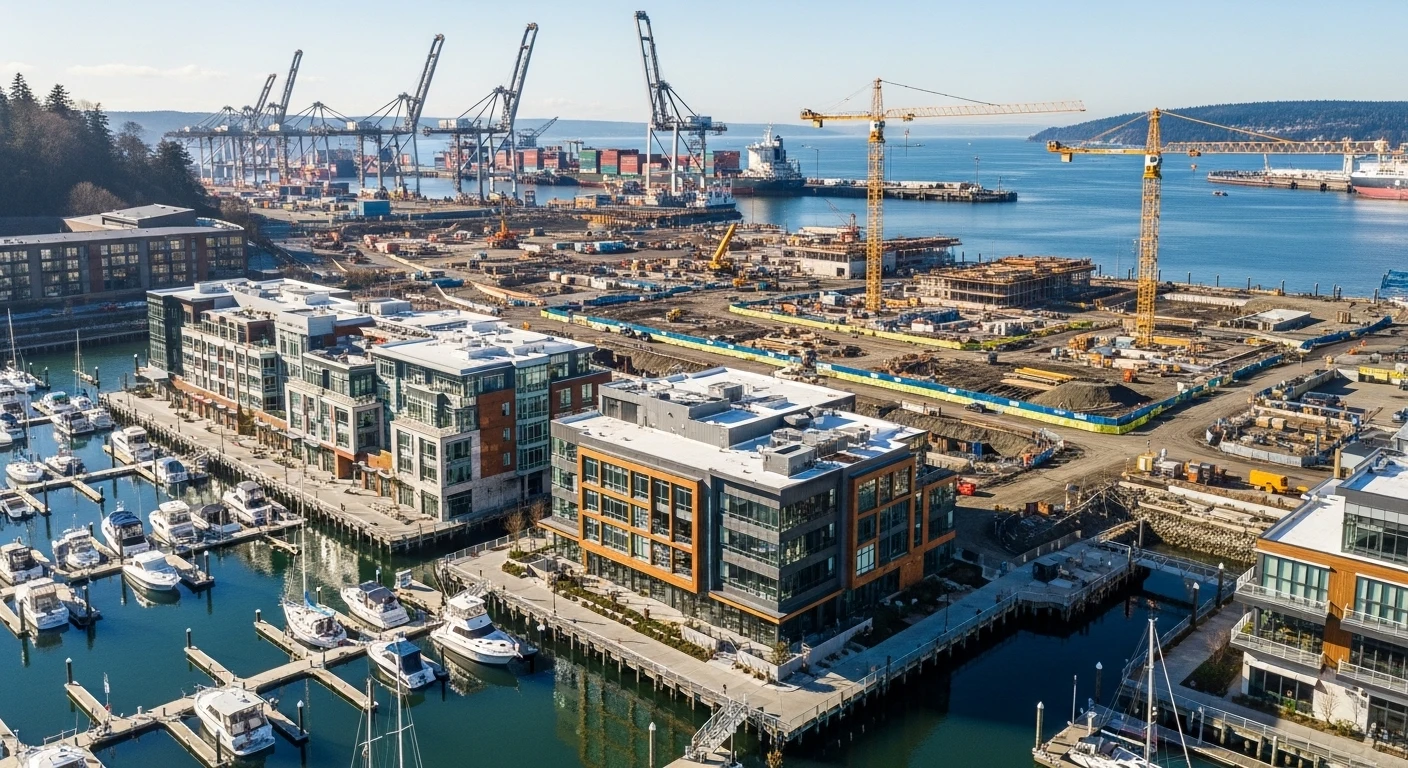
    What’s happening? The Port of Everett Commission adopted a $70 million operating and capital budget for 2026 on November 12, 2025. The budget includes $8.1 million for Seaport modernization, $2.6 million for new public infrastructure and Waterfront Place retail and restaurant buildings, and $7.1 million for maintenance and preservation of Port facilities including pier strengthening, marina bulkhead work, boat launch updates, and dredging. The 2026 spending represents the next phase of the Port’s $1 billion Waterfront Place redevelopment.

    If you’ve been watching cranes and construction fences pop up along Everett’s waterfront and wondering what’s actually funded versus what’s still hypothetical, the Port of Everett’s 2026 budget is the most useful document you can read. The commission adopted it in November, and the real-world execution is what’s driving the activity you’re seeing right now.

    We pulled out the line items that matter for anyone who lives in Everett, works near the marina, or just watches the waterfront change.

    The Headline Number

    The Port of Everett commission adopted a $70 million operating and capital budget for 2026. The commission described the budget as continuing to deliver on the Port’s Strategic Plan for “a vibrant and balanced waterfront despite challenges amid changing tariff guidance and market uncertainty.”

    That tariff language is worth pausing on. The Port of Everett operates the largest public marina on the West Coast and a working seaport that handles oversized cargo for Boeing, aerospace components, and other industrial freight. Shifts in trade policy directly affect seaport revenue. A balanced budget that funds both the marina recreation side and the seaport industrial side is how the Port keeps itself resilient when one side wobbles.

    Where the Capital Dollars Go in 2026

    The 2026 capital program breaks out into three big buckets:

    $8.1 million — Seaport Modernization

    This covers two headline initiatives:

    • Electrifying the pier — a shift toward shore power capability for vessels docked at the Port’s marine terminals, reducing diesel generator use and emissions while docked. This aligns with broader Pacific Northwest port decarbonization goals.
    • Security upgrades — infrastructure improvements for the seaport’s security perimeter, cargo handling, and access control.

    $2.6 million — Public Infrastructure and Waterfront Place Buildouts

    This is the bucket most Everett residents will actually see. It includes:

    • Public infrastructure improvements (streets, sidewalks, utilities inside Waterfront Place)
    • New retail and restaurant buildings
    • Public access improvements

    This is the money that funds the visible changes along Craftsman Way — the buildings going vertical, the promenade extensions, and the connections between the marina and downtown.

    $7.1 million — Maintenance and Preservation

    Probably the least glamorous number on the list, but arguably the most important. This bucket covers:

    • Pier strengthening — keeping industrial seaport infrastructure safe and operational
    • Marina bulkhead improvements — shoreline engineering that holds the marina in place
    • Boat launch updates — including work at Jetty Landing, which is getting a major renovation with construction anticipated to start in 2027
    • Dredging — keeping the marina’s 2,300 permanent slips and 5,000 lineal feet of guest moorage navigable

    Combined, maintenance and seaport modernization represent more capital than the flashier Waterfront Place retail buildout — a reminder that the Port’s core business is still moving cargo and keeping vessels in water.

    The Waterfront Place Big Picture

    For context on where the $2.6 million in public infrastructure fits, here’s the full scope of what the Port of Everett’s Waterfront Place is building out, per Port documentation:

    • Size: 1.5 million square feet of mixed-use development
    • Footprint: 65 acres at the waterfront near downtown Everett
    • Retail/restaurant space: 63,000 square feet
    • Marine retail space: 20,000 square feet
    • Office space: 447,500 square feet
    • Hotels: Two waterfront hotels planned
    • Housing: Up to 660 waterfront housing units
    • Total expected investment: $1 billion in public/private capital
    • Jobs projected: ~2,100 family-wage jobs at full build-out
    • Annual tax revenue projected: $8.6 million in state and local sales taxes
    • Invested to date: More than $350 million already deployed

    The 2026 budget’s $2.6 million is one year’s layer on top of an already substantial stack. It’s the piece that gets Phase 2 — the Millwright District — closer to opening.

    What This Means for Jetty Landing

    One line item that often gets lost but matters a lot for Everett boaters: the Port secured a $1 million grant from the Washington State Recreation and Conservation Office (RCO) to help fund renovation work at the Jetty Landing Boat Launch, which is the state’s largest public boat launch.

    In-water construction is anticipated to start in 2027. For now, the 2026 budget includes planning, design, and preliminary work that sets up that 2027 start.

    If you launch a boat from Jetty Landing, expect the planning phase activity this year and real disruption next year.

    How This Fits the Bigger Everett Story

    Zoom out, and the Port’s $70 million 2026 budget is just one leg of a three-legged Everett transformation stool:

    1. Port of Everett’s Waterfront Place — $70 million in 2026, $1 billion lifetime, 1.5 million square feet of mixed-use waterfront 2. Downtown Outdoor Event Center (stadium) — $120 million projected, targeting late-2027 opening 3. Sound Transit Everett Link extension — the light rail project connecting Everett to the regional network, now facing a $500 million funding gap

    Each project has its own funding mechanism, its own timeline, and its own political dynamics. But together they represent roughly $2 billion in capital flowing into Everett infrastructure over the next decade. The Port of Everett is the one entity with the most predictable budget — it has independent taxing authority, grant access, and revenue from existing marina and seaport operations — which is why its work tends to actually happen on the schedule it sets.

    That matters for anyone watching the waterfront. When the Port says construction crews will be at a given site in 2026, construction crews show up.

    The New Fuel Dock Context

    One detail worth calling out for 2025 → 2026 continuity: the Port’s new fuel dock opened in 2025. The 2026 budget is the first full operational year with the new dock, which means higher fuel service capacity for the marina’s 2,300 slips and guest moorage capability. For recreational boaters, it’s a tangible quality-of-life improvement that’s already in service.

    Combined with the 18-plus marine service providers operating at the marina, the new fuel dock reinforces the Port’s goal of positioning the largest public marina on the West Coast as a full-service destination rather than just a place to store boats.

    What to Watch From Here

    Three things to keep an eye on across the rest of 2026:

    • Millwright District openings — new buildings and roads in Phase 2 are scheduled to open beginning in 2026
    • Pier electrification progress — look for construction activity at the seaport terminals
    • RCO grant execution at Jetty Landing — design work this year sets up 2027 in-water construction

    The citizen budget guide is available at portofeverett.com/2026Budget if you want the full line items. For the lived experience on the waterfront, the cranes and concrete trucks are a pretty good tell.

    Frequently Asked Questions

    How much is the Port of Everett’s 2026 budget? $70 million total for operating and capital expenses. The commission adopted the budget on November 12, 2025.

    What does the Port of Everett’s 2026 capital budget include? $8.1 million for Seaport modernization (pier electrification, security upgrades), $2.6 million for public infrastructure, new retail/restaurant buildings, and public access at Waterfront Place, and $7.1 million for maintenance including pier strengthening, marina bulkhead improvements, boat launch updates, and dredging.

    What is Waterfront Place? A 1.5 million square foot mixed-use development on 65 acres at the Port of Everett waterfront. At full build-out it will include 63,000 square feet of retail/restaurant space, 20,000 square feet of marine retail, 447,500 square feet of office, two hotels, and up to 660 housing units. Total expected investment is $1 billion.

    How much has the Port of Everett already invested in Waterfront Place? More than $350 million in public and private capital has been deployed to date, according to Port documentation.

    When does the Jetty Landing Boat Launch renovation start? In-water construction is anticipated to start in 2027. The Port received a $1 million grant from the Washington State Recreation and Conservation Office to help fund the work.

    How many jobs will Waterfront Place create? The project is estimated to support nearly 2,100 family-wage jobs at full build-out, and generate $8.6 million annually in state and local sales taxes.

    Where can I read the full Port of Everett 2026 budget? The Port published a Citizen Budget Guide at portofeverett.com/2026Budget.

  • Everett Stadium Funding: Council Faces $10.6M Vote April 29

    Everett Stadium Funding: Council Faces $10.6M Vote April 29

    What’s happening? Everett city staff are asking the city council to approve an additional $10.6 million in spending on the downtown stadium, a funding measure that would complete the design of the site. The council vote is scheduled for April 29, 2026. City staff told the council on April 15 that the $120 million project still has a $25 million funding gap, and the stadium’s expected opening has been pushed from April 2027 to late 2027.

    If you’ve been following the downtown stadium story, April 29 is the date to circle. That’s when the Everett City Council is expected to vote on a $10.6 million funding measure that city staff described this week as the most significant decision the council will make on the project to date.

    We watched Wednesday night’s council presentation from project manager Scott Pattison and consultant Ben Franz, and the headline is simple: the stadium is moving forward, but the financial picture is getting bigger and the timeline is slipping.

    What the $10.6M Would Pay For

    The new funding request would do two things. First, it would complete the design of the Outdoor Event Center, which has already hit roughly 60 percent design completion using the $7.2 million the city has already committed in capital funds. Second, it would continue property acquisition work on the stadium site.

    On the property side, the city needs to buy 15 parcels to build the stadium at the corner of Broadway and Pacific, right next to the Sounder rail line and just east of Angel of the Winds Arena. As of Wednesday, the city has:

    • Signed purchase agreements for 2 parcels
    • Pending agreements with 4 more
    • Active negotiations with the owners of 8 others
    • Zero parcels actually purchased outright (that only happens after the council approves construction)

    The money itself wouldn’t come from new revenue. The city would get the $10.6 million through an interfund loan from its general fund balance, with the plan to repay it later when the city passes a stadium bond measure.

    Here’s the catch Franz acknowledged on Wednesday: if the council approves the $10.6 million loan but later doesn’t approve a stadium bond to pay it back, it could mean a loss of at least $4.8 million in general fund dollars. Some property acquisition money could be reclaimed if the project falls apart, but the design work is sunk cost.

    The $25 Million Gap the City Still Has to Close

    The stadium is not yet fully funded. Not by a long shot.

    When the city first asked for the initial $4.8 million in June 2025, the project was pegged at $82 million. By the council’s January retreat, that number had grown to $120 million, driven by rising property acquisition costs and construction cost inflation. The city’s direct capital contributions to the project currently make up about 8 percent of the stadium’s total cost. Staff said Wednesday that the project is about $25 million short of its $120 million budget.

    Here’s the funding picture as it stands right now:

    • Stadium bond (planned): More than $40 million, repaid through lease revenue from the teams
    • State youth athletic fields fund: $7.4 million
    • Snohomish County contribution: $5 million spread across 2027-2030
    • AquaSox and USL team upfront commitment: $17 million
    • AquaSox and USL team lease payments: About $100 million over 30 years
    • City direct capital (already spent): ~$7.2 million
    • Gap to close: ~$25 million

    Franz told the council that filling the gap could involve “a number of options, including some very unique public-private partnerships,” but said he couldn’t share specifics. He also mentioned a federal loan program that distributes funds to economic development projects near rail infrastructure as a possibility — the favorable interest rate would be attractive, but the application process is long.

    “The more upfront capital we’re able to secure, the less debt the city has to issue,” Franz said after the meeting. “And that’s the piece we’re balancing, which is why we can’t sit here today and say, ‘Here’s the full funding plan.’”

    The Stadium Itself: What’s in the Design

    Contractors and architects showed the council initial design work Wednesday. The stadium would feature:

    • 5,000 seats
    • A clubhouse area that can be used for non-game events
    • An artificial turf field
    • A perimeter walking area
    • A main entrance where Wall Street meets Broadway

    The project is being delivered through a progressive design-build process, meaning the contractor — DLR Group with Bayley Construction — is designing the stadium alongside the architects rather than after. If the full project gets approved, the contractor would be locked in at a guaranteed price.

    The goal, according to Franz, is to break ground in September 2026. The previous target of opening for the AquaSox’s 2027 season is no longer realistic — the new opening window is late 2027.

    What the Teams Are Bringing

    Both the Everett AquaSox and the United Soccer League have now agreed to the financial terms of a lease, according to Franz. The key numbers:

    • $17 million upfront — combined team contribution toward construction
    • ~$100 million in lease payments over 30 years
    • Day-to-day maintenance responsibility falls to the teams
    • City staffing commitment: likely one employee to oversee operations
    • 50 guaranteed days per year for the city to host its own events or lease to other groups

    Once the bonds are paid off, the lease revenue flows into the city’s general fund.

    Mayor Cassie Franklin noted at Wednesday’s meeting that the maintenance arrangement is a significant win for the city — major capital repairs and upgrades remain the city’s responsibility, but the teams handle operations.

    The USL Piece That’s Still Unresolved

    Before the United Soccer League’s portion of the money can flow, the league still needs to find an owner or ownership group to actually buy the Everett men’s and women’s teams. Pattison said Wednesday in an interview that the league has “two or three people that are interested.”

    A USL spokesperson didn’t immediately respond to a request for comment.

    For context, franchise fees in the USL ecosystem run roughly:

    • USL League One team: ~$5 million (per ESPN reporting)
    • USL Championship team: ~$20 million
    • USL Super League (women’s professional) team: ~$10 million (per Backheeled and The Athletic)

    The league’s ownership search could affect the stadium’s timeline. “It really depends on where they are in the process, and where we are in overall readiness to start construction,” Franz said. “We have commitments to the AquaSox that we want to meet at this point. Our goal is to start construction in September, and so we’ll work diligently with them together to meet that.”

    Why This Project Started in the First Place

    Everett first began studying a stadium upgrade in 2022 after Major League Baseball announced new facility standards for minor league stadiums. Funko Field, in its current state, doesn’t meet those requirements. In 2024, the AquaSox’s owner said the city was in danger of losing the team. Later that year, the council decided to study a downtown site — partly because a downtown location could unlock more public and private funding than a rebuild at Funko Field.

    The stadium has become, effectively, the signature piece of Everett’s downtown revitalization strategy. It anchors development plans next to Angel of the Winds Arena, the Sounder station, and the Millwright District’s growing footprint on the waterfront.

    The Calendar From Here

    Three dates worth writing down:

    • April 29, 2026 — City council vote on the $10.6 million funding measure
    • July 2026 — Target for completing a full funding plan
    • August 2026 — Expected council vote on approving stadium construction
    • September 2026 — Target date to break ground
    • Late 2027 — Revised stadium opening

    The April 29 vote does not commit the city to building the stadium. But it does commit $10.6 million — with real financial consequences if the project doesn’t move forward later.

    Frequently Asked Questions

    When does the Everett City Council vote on the $10.6 million stadium funding? The vote is scheduled for April 29, 2026. It would complete the design of the Outdoor Event Center and continue work on acquiring the 15 parcels needed to build the stadium.

    How much is the Everett stadium projected to cost? The current cost estimate is $120 million, up from an initial estimate of $82 million in June 2025. The city is about $25 million short of the full budget.

    When will the downtown stadium open? City staff have pushed the opening from April 2027 to late 2027. The new target is to break ground in September 2026.

    Who would play at the Everett Outdoor Event Center? The Everett AquaSox (Seattle Mariners High-A minor league baseball) and two new United Soccer League teams — a men’s team and a women’s team — if the USL finds ownership groups to buy them.

    Where will the new Everett stadium be located? At the corner of Broadway and Pacific, east of Angel of the Winds Arena and next to the Sounder rail line. The main entrance is planned for where Wall Street meets Broadway.

    What happens if the stadium project doesn’t get approved? At least $4.8 million of the $10.6 million loan could be lost. Some property acquisition money might be recoverable if the city backs out of purchases, but design work is a sunk cost.

    Who is designing and building the stadium? DLR Group and Bayley Construction are delivering the project through a progressive design-build process, where the contractor is working alongside the architects during design.

  • NAVSTA Everett Frigate Cancellation: The Complete Guide

    NAVSTA Everett Frigate Cancellation: The Complete Guide

    Q: What happened to the frigates that were supposed to come to Naval Station Everett?
    A: The U.S. Navy cancelled the Constellation-class guided-missile frigate (FFG-62) program in November 2025, eliminating plans to homeport 12 new ships at NAVSTA Everett. The cancellation removed a transformative commitment to the base and the Snohomish County economy. Local leaders have since rebooted the Snohomish County Military Affairs Committee to advocate for the base’s continued relevance in the Pacific Fleet.

    Naval Station Everett sits on the waterfront at the northern edge of downtown — a base that most people in Snohomish County pass without much thought, but that touches the local economy, the housing market, the schools, and the community in ways that most residents never fully appreciate until something threatens to change it.

    That something arrived in November 2025, when the U.S. Navy officially cancelled the Constellation-class frigate program, ending a plan that would have transformed NAVSTA Everett into one of the most strategically significant homeports in the Pacific Fleet. Here is everything you need to know about what was lost, what remains, and what local leaders are doing about it.

    The Promise: 12 Frigates, a Generation of Growth

    In June 2021, the Navy made one of the most consequential announcements in Everett’s modern history: NAVSTA Everett would become the homeport for the first 12 Constellation-class guided-missile frigates (FFG-62). These were not small ships — the Constellation class was designed as the Navy’s answer to a capability gap in surface warfare, intended to project power across the Pacific and operate alongside carrier strike groups.

    For Everett, the commitment meant 12 new vessels, hundreds of additional sailors and their families, pier infrastructure upgrades, and a decades-long anchor of federal investment. The economic multiplier effect alone — housing demand, school enrollment, retail spending, support contractors — would have reshaped Snohomish County’s economic landscape for a generation.

    The Cancellation: What Happened and Why

    On November 25, 2025, Secretary of the Navy John Phelan announced the cancellation of the Constellation-class frigate program beyond its first two ships. His reasoning was precise: the program was delivering approximately 60 percent of a destroyer’s capability at roughly 80 percent of the cost, while running years behind schedule and hundreds of millions over budget.

    The first ship — USS Constellation (FFG-62), built by Fincantieri Marinette Marine in Wisconsin — was only approximately 12 percent complete as of the November 2025 report to Congress, and its projected delivery had already slipped from 2026 to an estimated 2029. The Navy made the calculation that the math no longer worked.

    For Everett, the numbers were painfully concrete. The 12 frigates that were never coming represented 12 crews, 12 sets of families, and 12 ships’ worth of homeport infrastructure that will now never be built.

    What NAVSTA Everett Actually Means to Snohomish County

    Naval Station Everett is currently home to approximately 6,000 military personnel and 500 civilian employees, making it one of the ten largest employers in Snohomish County. The Navy’s own regional estimates put the total annual economic impact of military operations in Snohomish County at roughly $340 million — and that figure accounts for the base’s current footprint, not the expanded one the frigates would have created.

    That $340 million flows through the county in layered ways: military housing allowances that sustain rental markets from Marysville to Mukilteo; commissary and PX spending; healthcare utilization at civilian providers; car purchases, restaurant visits, and retail patronage. When you add the support contractors who maintain the base’s ships, facilities, and equipment, the economic web extends across the entire region.

    NAVSTA Everett is currently home to a carrier strike group and associated surface combatants. The base’s deep-water piers can accommodate destroyers, cruisers, and — if the frigates had materialized — the new FFG-62 class. It is a strategically important installation, but one that needs sustained advocacy to maintain its assignment levels as the Navy reconfigures its force structure.

    Everett Fights Back: The Rebooted Military Affairs Committee

    Within weeks of the cancellation, Snohomish County leaders began organizing a response. The Economic Alliance of Snohomish County, led by President and CEO Ray Stephanson, moved to reboot the county’s Military Affairs Committee — a group that had previously advocated for the base but had gone dormant as the frigate program appeared on track.

    Stephanson was direct about the stakes: “The demise of the frigate program is very disappointing,” he said. “The assignment of the frigates would have cemented the base’s role as a key asset for the U.S. Navy.”

    Snohomish County Council member Nate Nehring (R-Arlington) accepted an invitation to join the rebooted committee, signaling that the advocacy effort would span both the public and private sectors. The committee’s goal is proactive — not to mourn what was lost, but to identify what missions, ships, or assets could be directed to NAVSTA Everett as the Navy reconfigures its Pacific Fleet strategy.

    U.S. Representative Rick Larsen, whose district includes NAVSTA Everett, has stated that the Navy’s commitment to Everett as a homeport remains strong despite the frigate cancellation. Larsen has been a consistent advocate for the base in Congress, and his office has communicated directly with Navy leadership about maintaining Everett’s force assignment levels.

    What Comes Next for the Base

    The Navy has not announced any plans to reduce NAVSTA Everett’s current force assignment — the carrier strike group elements and surface combatants currently homeported here are not affected by the frigate cancellation. The base’s infrastructure remains intact and capable.

    The open question is what replaces the growth that the frigates would have generated. The Military Affairs Committee is actively exploring whether other ship classes — next-generation surface combatants or additional destroyers — could be directed to Everett as the Navy builds out its Pacific-oriented force posture. The base’s location, deep-water access, and proximity to Puget Sound industrial infrastructure make it a logical candidate for expanded assignments.

    The answer will likely come from Washington, D.C., shaped by how effectively local leaders and advocates make the case for Everett’s strategic value. That advocacy — quiet, consistent, and backed by a community that understands what is at stake — is now underway.

    Frequently Asked Questions About NAVSTA Everett and the Frigate Cancellation

    Q: Is Naval Station Everett at risk of closure?
    A: The Navy has not announced or suggested any plans to close NAVSTA Everett. The base remains operational with its current ship assignments intact. The frigate cancellation removed a planned expansion, not existing assets.

    Q: How many sailors are currently stationed at NAVSTA Everett?
    A: Approximately 6,000 military personnel and 500 civilian employees are currently assigned to or working at Naval Station Everett, making it one of the largest employers in Snohomish County.

    Q: What was the Constellation-class frigate, and why was it cancelled?
    A: The FFG-62 Constellation class was designed as a next-generation guided-missile frigate to restore U.S. Navy frigate capability. It was cancelled in November 2025 after the program fell significantly behind schedule, exceeded its budget, and delivered roughly 60% of a destroyer’s capability at 80% of the cost.

    Q: What is the Snohomish County Military Affairs Committee?
    A: The Military Affairs Committee is a public-private advocacy group organized through the Economic Alliance of Snohomish County. It advocates at the federal level for maintaining and expanding Naval Station Everett’s role in the Pacific Fleet. It was rebooted in early 2026 in response to the frigate cancellation.

    Q: What is the economic impact of NAVSTA Everett on the local economy?
    A: The Navy estimates military operations in Snohomish County generate approximately $340 million in annual economic impact. This includes direct spending by military personnel and their families, contractor and support employment, and the housing market effects of military housing allowances.

    Q: What ships are currently homeported at NAVSTA Everett?
    A: NAVSTA Everett hosts elements of a carrier strike group and associated surface combatants. Specific ship assignments change as vessels deploy and return. The base’s pier infrastructure is capable of accommodating a wide range of Navy surface combatants.

    Q: Who represents NAVSTA Everett in Congress?
    A: U.S. Representative Rick Larsen represents the district that includes Naval Station Everett. Larsen has been a consistent advocate for the base and has communicated with Navy leadership about maintaining Everett’s force assignments following the frigate cancellation.

    Related: Naval Station Everett’s Fight for Its Future After the Frigate Program Collapse | Everett Fights Back: Inside the Community Push to Secure NAVSTA Everett’s Future | Sound Transit Everett Link Extension: Where the Project Stands in 2026

  • NAVSTA Everett Advocacy: Snohomish County’s $340M Fight

    NAVSTA Everett Advocacy: Snohomish County’s $340M Fight

    Q: How is Snohomish County responding to the Naval Station Everett frigate cancellation?
    A: Snohomish County rebooted its Military Affairs Committee in early 2026 through the Economic Alliance of Snohomish County. The committee — which includes County Council member Nate Nehring and is supported by U.S. Representative Rick Larsen — is working proactively to advocate for new ship assignments and missions to replace the 12 Constellation-class frigates that were cancelled in November 2025.

    When Secretary of the Navy John Phelan announced the cancellation of the Constellation-class frigate program on November 25, 2025, the policy language was bureaucratic. The local impact was not. Snohomish County lost a promised economic commitment worth, by some estimates, hundreds of millions of dollars in long-term growth — and local leaders wasted little time organizing a response.

    Here’s how the county’s civic and political infrastructure is responding, what tools they have, and what it would actually take to replace what was lost.

    The Economic Alliance Takes the Lead

    The Economic Alliance of Snohomish County moved quickly to reboot the Snohomish County Military Affairs Committee, a public-private advocacy body that had previously gone somewhat dormant as the frigate program appeared to be on track. With the frigates gone, the committee’s mission became urgent.

    Ray Stephanson, the Economic Alliance’s president and CEO, framed the stakes plainly: “The assignment of the frigates would have cemented the base’s role as a key asset for the U.S. Navy. Their demise is very disappointing.” Stephanson’s organization has taken the lead on coordinating the county’s advocacy strategy, engaging with Navy Region Northwest leadership, the Washington State Congressional delegation, and economic development officials at both the county and state levels.

    Snohomish County Council member Nate Nehring (R-Arlington) has accepted an invitation to join the rebooted committee, adding an elected county voice to the advocacy effort and signaling that the response to the cancellation has bipartisan support at the local level.

    Congressional Advocacy: What Larsen Can Do

    U.S. Representative Rick Larsen, whose 2nd Congressional District includes NAVSTA Everett, has been a consistent advocate for the base throughout the frigate program’s troubled history. His office has communicated directly with Navy leadership about maintaining and growing Everett’s force assignments post-cancellation.

    Larsen’s position on the House Armed Services Committee gives him meaningful access to the Pentagon’s force structure planning process — not the ability to dictate ship assignments, but the ability to ask pointed questions, advocate for specific decisions, and ensure that NAVSTA Everett’s capabilities and strategic value are being considered when the Navy decides where to send future assets.

    The committee’s work — combined with Senator Patty Murray’s and Senator Maria Cantwell’s advocacy in the Senate — gives Washington State a reasonably strong congressional presence in the ongoing conversation about what comes next for the Pacific Fleet’s surface combatant homeporting strategy.

    The $340 Million Stakes

    The Navy’s own regional estimates put the total annual economic impact of military operations in Snohomish County at approximately $340 million. That number — which reflects the current base population of approximately 6,000 military personnel and 500 civilian employees — is the baseline that local leaders are working to protect and expand.

    The 12 frigates would have added to that baseline significantly. Each frigate crew typically numbers 130-150 sailors; multiply that by 12 ships, add family members, support contractors, and the housing and retail spending that military families generate, and the economic addition would have been substantial. The Military Affairs Committee’s immediate goal is to prevent erosion of the current $340 million baseline while pursuing opportunities to grow it through new assignments.

    What Replacing the Frigates Would Actually Require

    The Navy’s Pacific Fleet posture is undergoing significant reconfiguration in response to China’s maritime expansion and the strategic priorities outlined in successive National Defense Authorization Acts. That reconfiguration creates both risks and opportunities for NAVSTA Everett.

    The risks: the same force structure analysis that killed the Constellation program could lead the Navy to consolidate homeporting at fewer, larger bases with deeper industrial support infrastructure. NAVSTA Everett’s relative distance from the major Puget Sound shipyards in Bremerton is a factor in those calculations.

    The opportunities: the Navy is actively evaluating alternatives to the frigate program, including potential upgrades to existing destroyer assignments and next-generation surface combatant concepts. NAVSTA Everett’s deep-water piers, its proximity to Paine Field’s aerospace ecosystem, and its political support make it a credible candidate for expanded assignments if the county’s advocacy is sustained and well-coordinated.

    The Military Affairs Committee’s strategy — engaging proactively rather than reactively, building relationships before decisions are made rather than lobbying after — is the right approach. The outcome will depend on factors largely outside Snohomish County’s control, but the advocacy infrastructure is now in place.

    Frequently Asked Questions: Civic Dimensions of the NAVSTA Situation

    Q: What authority does the Snohomish County Military Affairs Committee actually have?
    A: The committee is an advisory and advocacy body, not a decision-making authority. Its influence comes from organizing community and economic arguments, engaging with the congressional delegation, and maintaining relationships with Navy Region Northwest leadership. It has no formal authority over ship assignments.

    Q: What does the City of Everett’s budget look like if NAVSTA Everett shrinks?
    A: The base itself is federal property and does not generate property tax revenue directly. The city’s economic interest in the base comes from the spending of military personnel and their families in Everett’s retail, housing, and service economy. Any reduction in base population would reduce that spending, but the connection is indirect.

    Q: Is there a BRAC (Base Realignment and Closure) process that could threaten NAVSTA Everett?
    A: BRAC rounds require Congressional authorization; Congress has not authorized a new BRAC round as of spring 2026. No current legislation or Pentagon communication suggests NAVSTA Everett is a BRAC candidate. Local advocates monitor this issue continuously.

    Q: How does Snohomish County’s advocacy compare to what other military communities do?
    A: The rebooted Military Affairs Committee model is consistent with best practices for military community advocacy — most communities with major installations maintain active civilian committees that coordinate between local government, economic development organizations, and the congressional delegation. NAVSTA Everett’s advocacy infrastructure had gone dormant and is now being rebuilt.

    Q: What new ships or missions could realistically come to NAVSTA Everett?
    A: The Navy is evaluating its Pacific Fleet homeporting needs as it retires older cruisers and potentially accelerates DDG-51 destroyer production. NAVSTA Everett has the pier capacity to accommodate additional destroyers, and its location is well-suited to Pacific-oriented deployments. Specific ship assignments remain a Navy decision, subject to active advocacy.

    Related: Naval Station Everett’s Fight for Its Future After the Frigate Program Collapse | Everett Fights Back: Inside the Community Push to Secure NAVSTA’s Future | Sound Transit Everett Link Extension: Where the Project Stands in 2026

  • Everett Utility Tax: How the 12% Rate Impacts Water Bills

    Everett Utility Tax: How the 12% Rate Impacts Water Bills

    Q: Is Everett raising water bills in 2026?
    A: Everett is proposing to double its utility tax on water and sewer services from 6% to 12%, which would add approximately $10.74 per month to the average customer’s bill. The tax would affect roughly 670,000 people — about three-quarters of all Snohomish County residents — and is scheduled for three council readings beginning in April 2026, with a proposed July 1, 2026 effective date.

    Most utility tax proposals affect a city’s residents. Everett’s proposed doubling of its utility tax rate is different: because Everett’s water system serves roughly 670,000 people — approximately three-quarters of Snohomish County’s total population — the financial impact of this decision will land far beyond Everett’s city limits.

    Here is a plain-language breakdown of what is being proposed, why, what it will cost, and what happens next.

    What the City Is Proposing

    Since 1983 — more than four decades — Everett has charged a 6% “payment in lieu of taxes” (PILT) fee on its water and sewer utilities. The proposed change would eliminate that structure and replace it with a 12% utility tax, doubling the rate.

    Under state law, municipalities are explicitly permitted to levy utility taxes on their own utilities. Everett’s legal department determined that moving from the informal PILT structure to a formal utility tax aligns the city’s approach with both state law and the practice of most other Washington cities.

    The practical difference for customers is $10.74 per month on the average water bill. City Finance Director Mike Bailey described the mechanics to the Everett Herald in March: “Our tax will be embedded in wholesale water costs, and then other cities can do what they will with their utility taxes.” That embedding matters — it means communities that purchase wholesale water from Everett will see the tax added to what they pay, and those communities may then choose to layer their own local utility taxes on top.

    Why Everett Needs the Revenue

    The proposed tax is a direct response to a structural budget problem that Mayor Cassie Franklin addressed publicly during her March 2026 State of the City address: “We cannot cut our way to a sustainable future.” Everett faces a projected $14 million budget deficit heading into 2027 — a gap driven by the mismatch between rising demand for city services and relatively flat traditional revenue sources.

    The utility tax approach would generate approximately $7.5 million per year for Everett’s general fund, closing roughly half the deficit. The remaining ~$6.5 million gap has not yet been addressed by a specific, publicly announced proposal.

    Options the city has evaluated to address the full gap include regionalizing library or fire services with neighboring jurisdictions, and pursuing a targeted property tax levy lid lift — which would require voter approval. The utility tax is more politically straightforward because it does not require a public vote and can be implemented quickly if the council approves it.

    The Timeline: Three Readings, Then a Vote

    The council is expected to take three readings on the ordinance beginning in April 2026. Washington state law requires multiple readings for major ordinances, with the final vote typically occurring after the third reading. If approved, the tax would take effect July 1, 2026.

    There is no referendum process available to challenge a utility tax — once the council approves it, the rate change goes into effect on the stated date. Residents who oppose the increase can engage through public comment at council meetings prior to the final vote.

    Who Pays and How Much

    The $10.74 monthly figure applies to the average Everett direct water customer. The calculation is straightforward: if your current bill reflects a 6% fee embedded in the rate structure, the shift to 12% roughly doubles that embedded cost.

    The impact on customers of cities that purchase wholesale water from Everett is less predictable. Those communities receive the embedded tax in what they pay Everett; their own retail rates and utility taxes will determine what their residents ultimately see on bills. Snohomish County utilities from Lynnwood to Monroe, Marysville to Sultan rely on Everett’s wholesale water system, and all will be affected by the embedded rate change.

    Over 180,000 sewer customers in the Everett service area will also see the impact of the increased tax on their sewer charges.

    Low-Income Protections

    City officials have indicated they plan to expand utility payment assistance programs for income-qualified customers before the tax takes effect on July 1. As of publication, no specific details about the expanded assistance program have been released publicly — the timeline and eligibility thresholds are still being developed. Customers who currently receive utility assistance should monitor city announcements for updates on whether their assistance levels will be adjusted to account for the higher rate.

    The Broader Context: Snohomish County’s Budget Pressures

    Everett is not alone in navigating budget pressure. The state’s property tax levy limits, combined with inflation-driven cost increases in public safety, infrastructure maintenance, and human services, have created structural deficits in municipalities across Washington. The utility tax approach — available to cities under state statute, not subject to voter approval, and implementable quickly — is a tool that other Washington cities have used in similar situations.

    The scale of Everett’s water system — 670,000 customers, roughly three-quarters of the county — makes this particular decision unusual in its regional reach. Most city utility tax decisions are a local matter. This one is effectively a county-scale financial decision made by a single city’s seven-member council.

    Frequently Asked Questions About the Everett Utility Tax Proposal

    Q: When will the Everett utility tax take effect?
    A: The proposed effective date is July 1, 2026, if the City Council approves the ordinance after its three required readings beginning in April 2026.

    Q: Does this require voter approval?
    A: No. Utility taxes in Washington state do not require a public vote. The City Council can approve the rate change through the standard ordinance process.

    Q: Why does the Everett utility tax affect people outside Everett?
    A: Everett’s water system serves approximately 670,000 people across Snohomish County — about three-quarters of the county’s total population. Communities that purchase wholesale water from Everett will see the increased tax embedded in their wholesale costs, which will flow through to retail customers.

    Q: How much will my water bill go up?
    A: The average Everett direct water customer would see a monthly increase of approximately $10.74. Customers of other utilities that purchase wholesale water from Everett may see different amounts depending on their local rate structures.

    Q: What is the City of Everett’s budget deficit and why does it exist?
    A: Everett faces a projected $14 million budget deficit heading into the 2027 budget cycle. The deficit reflects a structural gap between rising service costs (public safety, infrastructure) and relatively flat traditional revenue sources, including property tax revenues constrained by Washington state levy limits.

    Q: Will there be help for low-income customers?
    A: City officials have stated their intention to expand utility payment assistance programs for income-qualified customers before July 1, 2026. Specific eligibility details and assistance amounts have not been publicly announced as of April 2026.

    Q: What else is the city considering to close the budget gap?
    A: Options under evaluation include regionalizing library or fire services with neighboring jurisdictions, and a targeted property tax levy lid lift (which would require voter approval). The utility tax, if approved, would close approximately half the $14 million projected deficit.

    Related: Everett City Council Approves Fair Labor Ordinance 9-1: What It Means for City Contractors | Sound Transit Everett Link Extension: Where the Project Stands in 2026 | Everett’s New Police Chief Has a Plan — Here’s What’s Changing at EPD

  • Everett Water Bill Increase: What the $10.74 Tax Means

    Everett Water Bill Increase: What the $10.74 Tax Means

    Q: How much will Everett’s proposed utility tax add to my water bill?
    A: The proposed 12% utility tax — doubling the current 6% rate — would add approximately $10.74 per month to the average Everett household’s water bill. If approved by the City Council, the increase takes effect July 1, 2026.

    For most Everett households, the utility tax debate at City Hall feels abstract — until it shows up on your bill. Here’s what the proposed rate change actually means for residents, broken down by renter vs. owner, apartment vs. single-family home, and household water use.

    The Number That Matters: $10.74 Per Month

    The City of Everett’s proposed ordinance would replace its current 6% “payment in lieu of taxes” (PILT) fee on water and sewer with a formal 12% utility tax. The change doubles the embedded rate in your water bill. For the average Everett household, city officials calculate that translates to approximately $10.74 per month — about $129 per year.

    That’s not a dramatic number in isolation. But Everett households are already absorbing inflation-driven cost increases across utilities, groceries, and housing, and this increase would be implemented without a public vote. The council is expected to take three readings on the ordinance beginning in April 2026, with the final vote and a proposed July 1, 2026 effective date.

    Renters vs. Homeowners: Who Feels It How

    If you own your home and pay your water bill directly to the city, the impact is straightforward: $10.74 more per month starting in July. You’ll see it as a line item change on your utility statement.

    If you rent, the picture is more complicated. Rental properties in Everett where the landlord pays water — common in apartments and some older rental homes — may see landlords pass the cost through over time, either in lease renewals or as part of broader rent adjustments. Rentals where tenants pay utilities directly will see the same bill increase as homeowners.

    Residents who live in multi-unit buildings where water is included in rent should not expect an immediate increase on July 1, but may see the cost reflected at their next lease renewal. This is not a guarantee — landlord behavior varies — but it’s the realistic expectation based on how utility cost increases typically work their way through rental markets.

    Your Sewer Bill Is Affected Too

    The proposed tax applies to both water and sewer services. Over 180,000 sewer customers in the Everett service area will be affected. If your household pays both water and sewer to the city, both line items will reflect the doubled rate. The $10.74 average increase figure represents the combined effect across both services.

    What If You’re on a Fixed Income or Tight Budget

    City officials have stated that they intend to expand the existing utility payment assistance program for income-qualified customers before the July 1 effective date. As of April 2026, the specifics of the expanded program — eligibility thresholds, assistance amounts, how to apply — have not been publicly released.

    If you currently receive utility payment assistance from the City of Everett, monitor city communications closely over the coming months. The program expansion should clarify whether your current assistance level will be adjusted to account for the higher base rate. If you don’t currently receive assistance but are struggling with utility costs, this is the time to inquire — the city’s Water Department and Community Development office handle assistance applications.

    What You Can Do Before the Council Vote

    Because utility taxes in Washington state do not require voter approval, the City Council’s vote is the decision point. Before the final vote — expected after the third council reading in late spring 2026 — residents have the opportunity to comment at council meetings.

    Everett City Council meetings are held at Everett City Hall (2930 Wetmore Ave). Public comment periods occur at the beginning of most meetings and are open to any Everett resident or stakeholder. Written comments can also be submitted to the City Clerk. The Council’s contact information is available at everettwa.gov.

    The Bigger Picture: Why This Is Happening

    Mayor Cassie Franklin said it plainly at her March 2026 State of the City address: “We cannot cut our way to a sustainable future.” Everett faces a projected $14 million budget deficit heading into the 2027 budget cycle — a structural gap created by rising public safety and infrastructure costs outpacing traditional revenue sources constrained by Washington state property tax levy limits.

    The utility tax, if approved, would close roughly half the deficit ($7.5 million per year). The remaining gap has not yet been addressed by a specific public proposal. Residents can expect additional budget discussions — and potentially additional asks — in the coming months as the 2027 budget cycle approaches.

    Frequently Asked Questions for Everett Residents

    Q: Do I have to vote on this or will it just happen?
    A: Utility taxes in Washington state do not require public votes. The City Council approves them through the standard ordinance process. Residents can comment at council meetings before the final vote.

    Q: What if I live outside Everett but get my water from Everett?
    A: You will be indirectly affected. Everett embeds the tax in its wholesale water costs, which flow to the utilities that serve your city or water district. Those utilities may pass the cost through at different rates depending on their own pricing structures.

    Q: When exactly will my bill go up?
    A: If the ordinance passes, the proposed effective date is July 1, 2026. Your first billing cycle after that date would reflect the new rate.

    Q: Is there any assistance for low-income households?
    A: City officials have committed to expanding utility payment assistance before July 1. Specific details have not been announced. Contact the City of Everett Water Department or visit everettwa.gov for current assistance program information.

    Q: What happens to the money this raises?
    A: The approximately $7.5 million per year generated by the utility tax goes to Everett’s general fund, which covers public safety, parks, city services, and the broader municipal operating budget.

    Related: Everett’s Proposed Utility Tax Would Add $10.74 a Month to Most Snohomish County Water Bills | Everett Is Changing How It Talks to Neighborhoods — Here’s What That Means for You | Everett City Council Approves Fair Labor Ordinance 9-1

  • Everett Utility Tax 2026: Business & Landlord Impacts

    Everett Utility Tax 2026: Business & Landlord Impacts

    Q: How does Everett’s proposed utility tax increase affect local businesses?
    A: Everett’s proposal to double its utility tax from 6% to 12% would affect businesses both as direct water customers and, in the case of landlords, as pass-through collectors of higher embedded costs. The ordinance goes before the City Council for three readings beginning in April 2026, with a proposed July 1 effective date. No business vote or exemption process exists — if the council approves it, the rate applies to all customers.

    Everett’s proposed utility tax increase is getting coverage as a household issue — $10.74 more per month for the average water customer. For businesses, the calculation is more complex, the dollar impact is larger, and the timeline requires action now to plan ahead.

    Direct Costs: Business Water Is Priced on Volume, Not Average Households

    The $10.74 per month figure is the city’s estimate for the average residential customer. Commercial water accounts are metered differently and billed at higher volumes — a restaurant, laundry, car wash, or office building with significant water consumption will see larger absolute increases than a single-family household.

    The rate structure change is proportional: the underlying 12% tax replaces the 6% PILT at all tiers. Businesses with high water use — food service, commercial laundry, building services, manufacturing — should pull their last three billing statements and model what a 6-point rate increase on the water/sewer line means in actual dollars per month. For a restaurant paying $800/month in water and sewer, the increase is approximately $80/month, not $10.74.

    Commercial Landlords: Embedded Costs and Tenant Leases

    Commercial landlords in Everett face a specific planning issue depending on their lease structures. Net leases that pass utility costs through to tenants directly will see the cost absorbed by tenants automatically. Gross leases where the landlord pays utilities and bundles the cost into rent require the landlord to absorb the increase or — depending on lease terms — pass it through.

    If you own commercial property in Everett with gross lease arrangements, review those lease agreements now. Many commercial leases include provisions for pass-through of government-imposed tax increases; the utility tax, as a formal municipal tax (not simply a rate increase), may fall within that language. Consult your lease agreements and, if needed, a commercial real estate attorney before July 1.

    Residential landlords whose tenants pay utilities directly will not see direct impact — their tenants absorb the rate change. Landlords whose buildings include water in the rent may face higher operating costs at lease renewal, which is the standard time to adjust rental rates accordingly.

    How the Wholesale Cascade Works for County Businesses

    Many businesses operating in Snohomish County outside Everett’s city limits — Lynnwood, Mukilteo, Edmonds, Marysville, and others — are served by utilities that purchase wholesale water from Everett. City Finance Director Mike Bailey explained the mechanism to the Everett Herald: “Our tax will be embedded in wholesale water costs, and then other cities can do what they will with their utility taxes.”

    This means a business in Lynnwood or Mountlake Terrace served by a utility that purchases from Everett will see the increased tax embedded in the wholesale price their utility pays — and that utility may pass the cost through to customers. The extent and timing of that pass-through depends on each individual utility’s rate-setting process and schedule.

    Businesses in these communities should contact their local water utility to understand when and how the increased wholesale cost will be reflected in their rates.

    The Budget Context: What Comes After the Utility Tax

    The utility tax would close approximately $7.5 million of Everett’s projected $14 million budget deficit for 2027. The remaining gap — roughly $6.5 million — has not yet been addressed by a specific public proposal. Options under city consideration include regionalizing library or fire services and a property tax levy lid lift (which would require voter approval).

    For business owners engaged in Everett’s economic development ecosystem — particularly those involved in commercial real estate, workforce housing, or downtown development — the utility tax decision is part of a larger picture of how Everett finances its growth. The Millwright District Phase 2, the $120 million stadium proposal, and Sound Transit’s Everett Link Extension are all long-term economic bets; the city’s capacity to invest in those bets depends on resolving its structural revenue problem. The utility tax is one piece of that solution.

    What Business Owners Can Do Before the Vote

    The Everett City Council is taking three readings on the ordinance beginning in April 2026. The Everett Chamber of Commerce and the Snohomish County Economic Alliance are both tracking the proposal. Business owners who want to engage can:

    • Attend Everett City Council meetings and participate in public comment during the three-reading period
    • Contact the City of Everett’s Business Resource Center about any assistance programs or exemption processes (note: no business exemption has been announced)
    • Engage through the Everett Chamber to coordinate a collective business community voice on the proposal
    • Review commercial lease agreements for utility tax pass-through provisions before July 1

    Frequently Asked Questions for Business Owners and Landlords

    Q: Is there a business exemption from the utility tax increase?
    A: No business exemption process has been announced. The rate change, if approved, applies to all water and sewer customers — residential and commercial.

    Q: How do I calculate my specific impact?
    A: Pull your last three utility bills and identify the water and sewer charges. Apply a 6% increase to those charges (doubling the embedded rate from 6% to 12%) to estimate your monthly increase. Large commercial users will see proportionally larger absolute increases than the $10.74 residential average.

    Q: When does the ordinance take effect and what’s the approval process?
    A: Three council readings begin in April 2026. The proposed effective date is July 1, 2026. No public vote is required — council approval through the ordinance process is sufficient.

    Q: What if my business is located outside Everett but served by a utility that buys from Everett?
    A: Your utility will absorb the increased wholesale cost and may pass it through to customers in future rate adjustments. Contact your local water utility for their timeline and plans.

    Q: What assistance is available for businesses struggling with utility costs?
    A: No specific commercial utility assistance program has been announced. The city’s stated assistance program expansion is targeted at low-income residential customers. Contact the City of Everett Business Resource Center for current programs.

    Related: Everett’s Proposed Utility Tax: The Full Story | Millwright District Phase 2: What 300+ New Waterfront Homes Mean for Everett | Everett’s $120M Stadium Has a $38M Funding Gap: Here’s the Full Breakdown

  • Waterfront Place Everett: 2026 Status Report & New Tenants

    Waterfront Place Everett: 2026 Status Report & New Tenants

    Quick Summary: As of April 2026, Waterfront Place has four restaurants open at Fisherman’s Harbor Restaurant Row, with Marina Azul Cocina & Cantina expected this spring. One breakfast/brunch space remains available. The Port of Everett is also actively seeking a boutique grocer, pet store, and retail-tainment concept for the development’s gateway parcels.

    If you’ve been following the Waterfront Place buildout, you’ve watched Restaurant Row go from empty concrete shells to a genuinely active stretch of food, drink, and views. We’ve covered individual openings as they’ve happened. But let’s zoom out and take stock of what’s actually open, what’s coming this spring, and what spaces are still waiting for tenants. This is the April 2026 status report on everything still in the pipeline at Waterfront Place.

    Restaurant Row: The April 2026 Scorecard

    The Fisherman’s Harbor Restaurant Row was designed for six dining establishments. Here’s the current status of all six spaces:

    Open and Operating

    Tapped Public House — Opened March 2, 2026. Claims the largest open-air rooftop deck in Snohomish County, with panoramic views of the Olympic Mountains and marina. Beer, cocktails, and pub food. Over 100 people showed up for the ribbon cutting — the waterfront was ready for this one.

    Rustic Cork Wine Bar — Opened December 2, 2025. Wine-focused with a curated bottle selection and small plates. A quieter alternative to the larger concepts on the row.

    The Net Shed Fish Market & Kitchen — Opened December 16, 2025. Fresh seafood market with prepared food service. One of the more distinctive concepts at Fisherman’s Harbor — you can buy fish to take home or eat right there, which is exactly what a marina district should have.

    Menchie’s — Opened March 13, 2026. Self-serve frozen yogurt. The lightest footprint on the row, but it fills a real gap — a casual dessert stop for families walking the marina and boaters grabbing something after a day on the water.

    Coming Soon: Marina Azul Cocina & Cantina

    The most anticipated opening still remaining in the Restaurant Row lineup is Marina Azul Cocina & Cantina, a Mexican restaurant concept the Port has indicated is expected to open spring 2026. Spring is already underway, which means this one is close. No official opening date has been announced, but we’re watching the permits and the signage. When the door opens, we’ll be among the first through it.

    Still Available: One Breakfast and Brunch Space

    One of the six Restaurant Row spaces remains earmarked specifically for a breakfast and brunch concept, and no tenant has been announced. This is actually a meaningful gap in the current lineup — there’s no morning option at Fisherman’s Harbor right now. The right concept here (think waterfront eggs Benedict, coffee with marina views, weekend brunch crowds) would do well. The Port is still looking.

    Beyond Restaurant Row: The Gateway Parcels

    Here’s the part of the Waterfront Place story that hasn’t gotten as much coverage: the Port moved into active tenant search for its gateway parcels in late 2025, and they were specific about what they want.

    The Port issued a Request for Statement of Qualifications for the gateway parcels — the entry-point retail spaces that greet visitors as they arrive at the development. Three concepts are being sought:

    • Boutique grocer — A neighborhood-scale grocery or specialty food store
    • Pet store — Matching the marina lifestyle demographic (boaters, outdoor enthusiasts, the waterfront dog-walking crowd)
    • Retail-tainment — An experiential retail concept, interactive rather than passive

    The boutique grocer is the one that would do the most for the district’s day-to-day liveability. Right now, someone living in the Waterfront Place Apartments — or in the incoming Millwright District residential buildings — doesn’t have a walkable grocery option. Adding one completes a fundamental piece of the live-work-eat-play equation that a genuine mixed-use district requires.

    We don’t have tenant announcements for the gateway parcels yet, but an active RFQ means the Port is evaluating applicants now. This is worth watching in the coming months.

    The Weyerhaeuser Building and The Muse

    One piece of Waterfront Place history easy to overlook amid all the new construction: the Port restored the 1930s-era Weyerhaeuser Building on the waterfront and reopened it in 2023 as The Muse Whiskey & Coffee. On a clear April evening with the Olympics lit up across the sound, it’s one of the better places to sit in Everett.

    The Muse anchors the development’s existing character while everything new gets built around it. Worth noting when the conversation is all about what’s coming: some of what’s already here is genuinely good.

    By the Numbers: What Waterfront Place Is in April 2026

    Let’s put the whole picture together:

    • 1.6 million annual site visits in 2025 — pulling from across Snohomish County, King County, and beyond
    • 4 restaurants and bars open at Fisherman’s Harbor Restaurant Row
    • 1 more (Marina Azul) expected to open this spring
    • 1 remaining space earmarked for breakfast/brunch, no tenant yet
    • Gateway parcels in active tenant search for boutique grocer, pet store, retail-tainment
    • $2.6 million in 2026 public infrastructure investment budgeted by the Port
    • 120,000 sq ft of Class-A office space in active pre-leasing at Millwright District
    • 300+ apartments in Millwright District residential phase, now under construction

    This is not a development that’s waiting to happen. Five of six Restaurant Row spaces committed, a major mixed-use residential and commercial buildout underway, more than one and a half million annual visitors already. The question now is which tenants fill the remaining blank spaces — the grocer slot, the brunch spot, the gateway parcels — and how quickly the Millwright District commercial phase pre-leases to its opening threshold.

    We’ll keep covering it as it develops.

    Frequently Asked Questions

    What restaurants are currently open at Waterfront Place Everett?
    As of April 2026: Tapped Public House (opened March 2026), Rustic Cork Wine Bar (opened December 2025), The Net Shed Fish Market & Kitchen (opened December 2025), and Menchie’s (opened March 2026). The Muse Whiskey & Coffee in the historic Weyerhaeuser Building is also open.

    When will Marina Azul open at Waterfront Place?
    Marina Azul Cocina & Cantina is expected to open spring 2026. No official opening date has been announced as of April 2026.

    Is there a grocery store at Waterfront Place Everett?
    Not yet. The Port of Everett issued an RFQ for a boutique grocer as one of the gateway parcel tenants. That selection process is ongoing.

    How many restaurants are at Waterfront Place Restaurant Row?
    The Fisherman’s Harbor Restaurant Row has six spaces. Four are open, one (Marina Azul) is opening soon, and one breakfast/brunch space remains available.

    What is Waterfront Place?
    The Port of Everett’s $1 billion mixed-use waterfront redevelopment on Puget Sound, at the largest public marina on the West Coast. It includes Restaurant Row, The Muse Whiskey & Coffee, Waterfront Place Apartments, and the Millwright District commercial and residential campus.

    How many visitors does Waterfront Place attract?
    The Port of Everett reported more than 1.6 million annual site visits to Waterfront Place in 2025.