Tag: Everett Community College

  • For Everett Community College Students: What the Baker Hall Redesign Means for Cosmetology, Theater, and Your 2026-2028 Plans

    For Everett Community College Students: What the Baker Hall Redesign Means for Cosmetology, Theater, and Your 2026-2028 Plans

    For Everett Community College Students: What the Baker Hall Redesign Means for Cosmetology, Theater, and Your 2026-2028 Plans

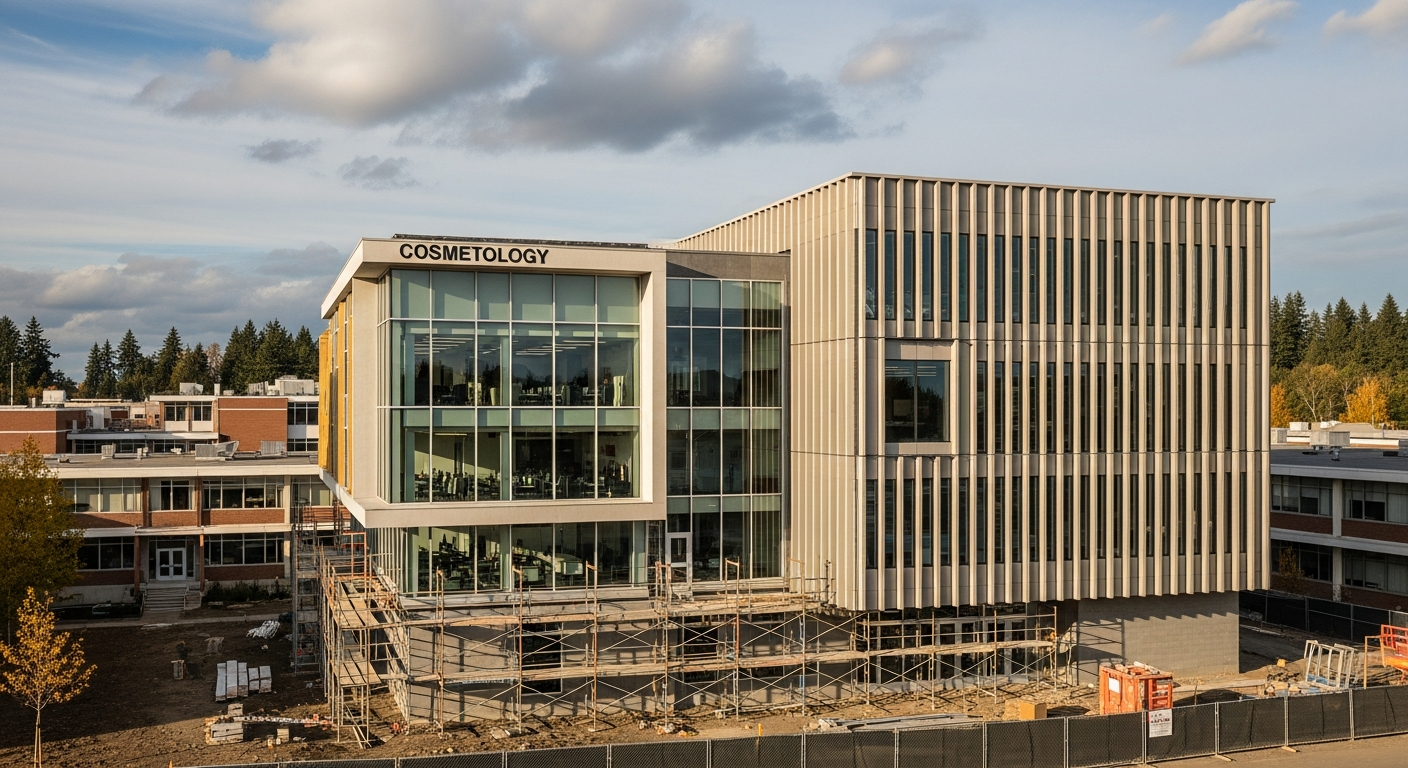
    If you are at EvCC right now, or thinking about enrolling for fall 2026, or about to apply to the cosmetology or theater programs, the Baker Hall news matters in a specific way for you. The replacement building got smaller. The 2028 opening is still on. Your programs still get the spaces they were promised. But the way the campus looks between now and winter 2028 — and the building you eventually move into — has changed.

    This is the student-and-prospective-student guide to what the redesign means and what to plan around.

    Your Programs Are Safe

    The redesign cut roughly 10,000 square feet from the original 32,000-square-foot Baker Hall plan. What got preserved through the cuts:

    The cosmetology wing. A working salon with the plumbing, ventilation, and station layout cosmetology training requires. Classrooms. Meeting spaces. Department offices. None of that came out of the design.

    The 250-seat theater. A real performance space with dressing rooms, a set-construction shop, costume storage, and the support classrooms a theater program needs. The 250-seat figure stayed.

    What was cut was slack — the circulation space, the future-flex rooms, the breathing room around the core program functions. As a student, you will probably not notice that on day one in 2028. You will notice it five or ten years later if the program grows beyond what the smaller building can hold. That is a future-EvCC problem, not a current-student problem.

    What’s Happening Until Winter 2028

    The 1962 Baker Hall has not housed students in roughly two years. That means whatever interim arrangement your program is in right now is the arrangement that continues through 2026 and most of 2027. If you are in cosmetology, you are using the current cosmetology training facilities EvCC arranged when the old Baker Hall was vacated. If you are in theater, the same applies.

    The redesign does not change those interim arrangements. It just delays demolition of the old building so the construction window aligns with the revised drawings. Demolition is now timed against the new construction schedule, not happening on the original 2025 calendar.

    What Winter 2028 Looks Like

    If you are a current EvCC cosmetology or theater student on a two-year track, winter 2028 may be after your graduation. If you are on a longer track or you transfer in for fall 2026 or fall 2027, you may be the first cohort to take classes in the new Baker Hall. That cohort gets:

    • A modern cosmetology salon with proper plumbing, ventilation, and station infrastructure
    • A 250-seat theater with proper backstage, fly space, dressing rooms, and set-construction support
    • Classrooms designed around current teaching models, not 1962 teaching models
    • A building meeting current seismic, accessibility, and mechanical standards

    Those are real upgrades over what either program could ever deliver inside a 64-year-old building.

    What the Redesign Means If You’re Choosing EvCC

    If you are deciding whether to enroll at EvCC for cosmetology or theater specifically because of Baker Hall:

    The 2028 opening is on the table but not guaranteed. Public construction projects can slip. A six-month or one-year slip would not be unusual; a multi-year slip would be unusual but not impossible. Plan around winter 2028 with the understanding that fall 2028 is also possible.

    The program quality does not depend on the building. EvCC’s cosmetology and theater programs have been running through the entire Baker Hall transition. The quality of instruction is not waiting for 2028. If you start in fall 2026, you will get the program — just not in the new building.

    The smaller redesign is still a real upgrade. A 22,000-square-foot purpose-built building with a working salon and a 250-seat theater is meaningfully better than what the 1962 Baker Hall could have offered even after a renovation. The cuts removed slack, not core function.

    What to Watch For

    If you want to track the project’s progress as a student, the milestones to look for:

    • Construction documents revised and re-permitted (2026)
    • Cornerstone Construction trade-package rebids (2026)
    • Demolition of the 1962 Baker Hall
    • Foundation and shell work (2027)
    • Interior fit-out and inspections (late 2027)
    • Move-in and program opening (winter quarter 2028)

    EvCC’s facilities communications and the school’s board minutes are the most reliable sources for milestone updates as they happen.

    The Practical Takeaway

    If you are a cosmetology or theater student, the redesign is, on balance, a good outcome. The alternative — a project killed for budget — would have meant no new Baker Hall at all. The alternative — a supplemental appropriation request — would have meant a 12-18 month delay while Olympia worked through the request, with no certainty of approval. Cutting scope to keep the 2028 opening preserves the deliverable.

    The deliverable is what you actually need: a working salon for cosmetology training, a real theater for theater performance and production training, and modern classrooms for the support coursework. That is what arrives in winter 2028. Just slightly smaller than the original drawings showed.

    Frequently Asked Questions

    Does the Baker Hall redesign change EvCC’s cosmetology program?

    No. The cosmetology wing, including the working salon, was preserved through the redesign. The program continues as currently arranged through 2027 and moves into the new building in winter quarter 2028.

    Is EvCC’s theater program still getting a 250-seat theater?

    Yes. The 250-seat theater, dressing rooms, set-construction shop, and costume storage all survived the redesign.

    When does the new Baker Hall open for classes?

    Winter quarter 2028 is the current target. Demolition of the 1962 Baker Hall has been aligned with the revised construction window.

    What is happening to my program until winter 2028?

    The 1962 Baker Hall has not housed students for roughly two years, so program arrangements that have been in place since the building was vacated continue through the construction window. The redesign does not change those interim arrangements.

    Is the new Baker Hall smaller because EvCC is shrinking the program?

    No. The 10,000-square-foot reduction came from circulation space, flex space, and support functions — not from program-critical spaces. The cosmetology salon, the 250-seat theater, and the supporting classrooms were preserved at full scope.

    Could the 2028 opening still slip?

    Yes. Public construction projects can hit permit, supply, or labor delays. A short slip is not unusual; a multi-year slip would be unusual. Students should plan around winter 2028 with awareness that fall 2028 is possible.

    Will the new building be more accessible than the 1962 Baker Hall?

    Yes. New campus construction in Washington must meet current ADA and accessibility standards. The 1962 building was designed before those standards existed and would have required near-complete reconstruction to comply.


    Related Exploring Everett coverage:


  • Everett Community College’s $38 Million Baker Hall Replacement: The Complete 2026 Guide to the Redesign, the Programs, and the Winter 2028 Opening

    Everett Community College’s $38 Million Baker Hall Replacement: The Complete 2026 Guide to the Redesign, the Programs, and the Winter 2028 Opening

    Everett Community College’s $38 Million Baker Hall Replacement: The Complete 2026 Guide to the Redesign, the Programs, and the Winter 2028 Opening

    Most college construction stories that hit a budget wall get smaller, slower, or quieter. Everett Community College’s Baker Hall replacement just hit the wall — and the result is a campus project that got smaller, kept its core programs, kept its 2028 opening, and is more useful as a case study for state-funded capital construction in 2026 than a typical campus building update would be.

    Here is the complete 2026 guide to what is happening at Baker Hall: the $37.9 million project, what got cut, what survived, why the schedule still works, and what the building means for EvCC students, the cosmetology program, the theater program, and the surrounding waterfront-adjacent campus footprint.

    What Just Changed

    EvCC paused the Baker Hall rebuild and shrank the planned new building by about 10,000 square feet, citing rising construction costs. The original design called for 32,000 square feet. The revised version comes in at roughly 22,000 square feet — a third smaller.

    What did not get cut: the core program elements. The new Baker Hall still includes:

    • A dedicated cosmetology wing — including a working salon, classrooms, meeting spaces, and offices for the cosmetology department
    • A 250-seat theater with dressing rooms, a set-construction shop, and costume storage
    • Additional classroom space layered around those two anchors

    What got cut, in plain terms, is the slack. The square footage that allowed flex space, larger circulation areas, and room to grow programs into the building over the next decade — that is the part that gave way to the budget math. The bones of the program survive. The breathing room around them does not.

    The 2028 Target Is Still On

    Even with the redesign, EvCC is aiming for a winter quarter 2028 opening. That is the operational target the school is working toward right now. Demolition of the existing 1962 Baker Hall — which has not seen students in roughly two years — has been delayed to align with the revised construction window, but the timeline to having students in the new space has not slipped beyond winter 2028.

    A 2028 opening from a 2026 redesign is a real schedule. It requires:

    • Construction documents revised to the new scope
    • Permits refreshed against the revised drawings
    • Cornerstone Construction rebidding the trade packages with the smaller scope
    • Mobilization and site work in 2026
    • Foundation and shell in 2027
    • Interior fit-out and inspection in late 2027
    • Occupancy and program move-in for winter 2028 quarter

    Each of those steps has float built in, but not a lot of it. A 2028 opening is achievable; a slip to fall 2028 or beyond is not unimaginable if any of those phases hits a snag.

    The Players

    The professionals on the project:

    • Architect: McGranahan PBK, selected in February 2025
    • Contractor: Cornerstone Construction, brought on in May 2025
    • Funder: Washington State, through the 2023–25 capital budget cycle, with the $37.9 million allocation
    • Owner: Everett Community College

    That team has been in place for over a year. Keeping the architect and contractor through the redesign — instead of restarting procurement — is the move that protects the 2028 schedule. Restarting would have meant another 12-18 months easily.

    What Got Cut: The Slack, Not the Bones

    It is worth being specific about which 10,000 square feet came out of the design, because that is what determines how the building actually feels in 2028:

    Circulation space. Wider hallways, larger lobbies, more generous gathering spaces — these are the first things that get value-engineered when costs rise.

    Flex and growth space. The original design likely included shell space — built but unfinished rooms ready to be assigned to whatever program needed them in 2030 or 2032. That is one of the easier cuts because the impact is in the future, not at opening.

    Some support functions. Storage, mechanical clearance, prep areas around the theater and salon — all candidates for tightening.

    The cosmetology working salon and the 250-seat theater stayed because they are the reasons the building exists. EvCC’s cosmetology program needs salon-grade plumbing, ventilation, and station layouts that you cannot retrofit into a generic classroom. The theater program needs a real stage, a real fly system, and real backstage. Cutting those would have meant rebuilding the program around a different teaching model. The school chose to cut the slack instead.

    Why the 1962 Baker Hall Has to Go

    The existing Baker Hall opened in 1962. By 2026, that is a 64-year-old building. It has not housed students in approximately two years. Mid-twentieth-century campus buildings on the West Coast share a familiar problem set: seismic standards have moved several times since the original construction, mechanical systems are at or past end-of-useful-life, accessibility retrofits would require near-complete reconstruction, and the floor plans were designed for teaching models that no longer match how the programs operate.

    For a cosmetology program that needs salon-grade infrastructure and a theater program that needs proper stage and backstage, the 1962 building was no longer a workable home. That is why the replacement strategy got chosen over renovation in the first place.

    The Larger Construction-Cost Story

    The Baker Hall pause is one data point in a regional pattern. Construction costs across the Puget Sound have been outrunning state capital budget allocations for several budget cycles. Public-sector projects budgeted in 2023 dollars and bid in 2025 or 2026 dollars are routinely landing 15-30% over their allocations. The choices in those moments are: cut scope, get more money, or kill the project.

    EvCC chose to cut scope while preserving program. That preserves the public investment and keeps the 2028 opening on the table without going back to Olympia for a supplemental appropriation. For state-funded campus projects across Washington’s community college system, this is a useful template.

    What 2028 Looks Like for EvCC Students

    When students walk into the new Baker Hall in winter 2028, they will find a smaller building than the original plan, but a working cosmetology salon, a real 250-seat theater, and the classroom support those programs need. That is the deliverable.

    The building also fits into a larger EvCC campus context that includes the existing arts and humanities footprint, the Northshore-area campus connections, and the broader Everett Station and waterfront corridor. Baker Hall’s replacement sits in that fabric.

    Frequently Asked Questions

    What is happening with Everett Community College’s Baker Hall?

    EvCC paused and redesigned the $37.9 million Baker Hall replacement project, cutting roughly 10,000 square feet from the original 32,000-square-foot design due to rising construction costs. The cosmetology wing, 250-seat theater, and winter 2028 opening target all survived the redesign.

    Who designed and is building the new Baker Hall?

    McGranahan PBK is the architect, selected in February 2025. Cornerstone Construction is the contractor, brought on in May 2025. Both stay on the project through the redesign.

    When does the new Baker Hall open?

    Winter quarter 2028 is the current operational target. Demolition of the 1962 Baker Hall is being aligned with the revised construction window.

    Why was Baker Hall redesigned?

    Construction costs across the Puget Sound region rose between the project’s 2023 budget allocation and the 2025-26 bid environment, pushing the original design over the $37.9 million capital budget. EvCC chose to redesign at smaller scope rather than seek a supplemental appropriation or kill the project.

    What programs will the new Baker Hall house?

    The cosmetology program (with a working salon) and the theater program (with a 250-seat performance space, dressing rooms, set-construction shop, and costume storage) are the anchor tenants, plus additional classrooms.

    How big is the new Baker Hall?

    Approximately 22,000 square feet in the redesign, down from the original 32,000-square-foot plan.

    How is the project funded?

    Through Washington State’s capital budget. The $37.9 million allocation has been on the books since the 2023–25 budget cycle.

    What was wrong with the 1962 Baker Hall?

    The 64-year-old building has aging mechanical systems, outdated seismic standards, and floor plans that no longer match how the cosmetology and theater programs operate. It has not housed students in approximately two years. Replacement was chosen over renovation.


    Related Exploring Everett coverage:


  • Everett Community College’s $38M Baker Hall Replacement Just Got Smaller — Here’s What Got Cut and Why It Still Opens in 2028

    Everett Community College’s $38M Baker Hall Replacement Just Got Smaller — Here’s What Got Cut and Why It Still Opens in 2028

    Everett Community College’s $38M Baker Hall Replacement Just Got Smaller — Here’s What Got Cut and Why It Still Opens in 2028

    Q: What happened to Everett Community College’s Baker Hall replacement project?

    A: EvCC paused the long-planned $37.9 million Baker Hall rebuild and trimmed roughly 10,000 square feet from the original 32,000-square-foot design after construction-cost increases pushed the project over budget. The new building still includes a cosmetology wing with a working salon and a 250-seat theater, with McGranahan PBK as architect, Cornerstone Construction as contractor, and a target opening of winter quarter 2028.

    We’re going to write about a building that didn’t break ground this spring — because the story of why it didn’t, and what got changed before the next attempt, is more useful than we’d usually expect from a delayed campus project.

    Everett Community College’s Baker Hall replacement has been on the drawing board for years. It’s the building that’s supposed to give the cosmetology program a real home, fold the school’s theater program into a properly sized stage, and finally pull a building from 1962 — one that hasn’t seen students in roughly two years — out of EvCC’s footprint. The $37.9 million capital allocation has been on the books since the 2023–25 state budget cycle. The architect, McGranahan PBK, was selected back in February 2025. Cornerstone Construction came on as contractor in May 2025.

    And then construction-cost reality showed up.

    What Just Changed

    EvCC pushed back the Baker Hall rebuild and shrank the planned new building by about 10,000 square feet, citing rising construction costs. The original design was 32,000 square feet. Roughly a third of that is gone in the revised version.

    What didn’t get cut: the core program elements. The new Baker Hall still has the dedicated cosmetology wing — including a working salon, classrooms, meeting spaces, and offices for the cosmetology department — and it still includes a 250-seat theater with dressing rooms, a set-construction shop, costume storage, and additional classroom space. The bones of the program survive.

    What got cut, in plain terms, is the slack. The square footage that allowed flex space, larger circulation, room to grow programs into the building — that’s the part that gave way to the budget math.

    The 2028 Target Is Still On

    Even with the redesign, EvCC is aiming for a winter quarter 2028 opening. That’s the operational target the school is working toward right now. Demolition of the existing 1962 Baker Hall has been delayed to align with the revised construction window, but the timeline to having students in the new space hasn’t slipped beyond winter 2028.

    A 2028 opening from a 2026 redesign is a real schedule. Construction documents have to be revised, permits have to refresh, and Cornerstone has to rebid the trade packages with the new scope. Every one of those steps takes weeks or months. The fact that the target hasn’t moved suggests EvCC and the design-build team are treating the cuts as additive — make the building smaller, keep everything else moving — rather than reopening the design from zero.

    Why This Matters Beyond EvCC

    Three reasons this story matters even if you’re not enrolled in cosmetology or trying out for a play.

    First, it’s the construction-cost story you can actually see. Everett has a lot of large public projects in motion right now — the Edgewater Bridge ($34M, just opened), the West Marine View Drive pipeline ($113M, approved April 2), the Broadway pedestrian bridge ($3.1M for design, future construction vote separate), the downtown stadium ($10.6M for design, $120M total). Most of those projects’ cost numbers have only one direction they’re moving. Baker Hall is the same pressure showing up at a single, well-defined building you can drive past.

    Second, the cosmetology program is one of EvCC’s most direct workforce connections. The school’s cosmetology students earn the cosmetology, esthetics, and barbering hours required for state licensure. Snohomish County’s salon and beauty industry hires from those programs directly. A delayed building doesn’t pause licensure — students continue in the existing program space — but it does delay the full-scale, properly equipped salon environment the program has been planning for.

    Third, the 250-seat theater fills a gap downtown can feel. The Historic Everett Theatre, the Schack Art Center’s gallery space, and Tony V’s Garage all carry different parts of Everett’s performance ecosystem. A 250-seat campus theater isn’t a competitor to any of them — it’s a teaching venue with sufficient capacity to host community-facing student productions and small touring acts. EvCC’s theater program has been working in compromised spaces for years.

    The Architect and the Contractor

    McGranahan PBK was selected as the project architect in February 2025. The firm — known for educational and civic work across the Pacific Northwest — has experience designing buildings that combine vocational program space with performance venues, which is exactly what Baker Hall asks for.

    Cornerstone Construction joined as contractor in May 2025. Cornerstone has done multiple state-funded community college projects in Washington and is comfortable working under the procurement and reporting requirements that come with state capital dollars.

    Both firms are still on the project under the revised scope. EvCC didn’t restart the procurement; it asked the existing team to revise the design to fit the budget envelope.

    The Money Trail

    The $37.9 million construction allocation comes from the state’s 2023–25 capital budget cycle, channeled through the State Board for Community and Technical Colleges. That’s the standard funding path for community college capital projects in Washington — the legislature appropriates the money, the SBCTC tracks the spend, and the individual college runs the project.

    The fact that the cost increases pushed the project to a redesign rather than a request for additional state funding tells you something about where the legislature is on supplementary capital appropriations right now. EvCC made the call to descope rather than ask for more — at least for this round.

    If construction costs continue to climb between now and the next bid window, that math may revisit itself. For now, the project is sized to fit what’s actually in the bank.

    What Happens Between Now and 2028

    Here’s the practical sequence to watch.

    Mid-to-late 2026: Revised construction documents wrap, with the smaller building footprint and the locked-in program elements. Cornerstone re-engages the trade subcontractors to rebid the work at the new scope. Permitting through the City of Everett refreshes for the revised plans.

    Late 2026 or early 2027: Demolition of the existing 1962 Baker Hall, which has been sitting unused for about two years already. This is the most visible moment of the project — the old building comes down, the site clears, foundations start.

    2027: Active construction on the new building. This is the stretch where the cost-control discipline applied in the redesign either holds or doesn’t. Watch for change orders.

    Winter quarter 2028 (early January through mid-March 2028): Target opening to students. Cosmetology classes move into the new salon space. The theater program books its first student production in the new house.

    That’s the plan as it stands today.

    What This Doesn’t Solve

    Two things the redesign doesn’t fix.

    It doesn’t add classroom capacity to the broader campus. The original 32,000 square feet would have given EvCC a meaningful chunk of net new instructional space across multiple programs. The trimmed version brings the cosmetology program and the theater program into modern facilities but doesn’t relieve the pressure on the rest of the campus the way the original scope would have. EvCC’s enrollment recovery from the pandemic has been steady — students need space.

    It doesn’t accelerate the 1962 building’s demolition. Old Baker Hall sits, empty, on prime east-of-Broadway campus real estate. Until demolition starts, that footprint is just waiting. The redesign keeps demolition on the same general timeline rather than pulling it forward.

    Both of those are conversations for the next state capital budget cycle, when EvCC will have data from the revised build to inform the next ask.

    The Bigger Everett Picture

    The Baker Hall delay is a single project on a single campus, but it lands in a pattern. Across Everett, large public projects are running into the same pressure: design starts at one number, construction comes in higher, the response is either find more money or descope. The Edgewater Bridge held its number through completion. The downtown stadium has been wrestling with its $120M total versus the available funding. The Broadway pedestrian bridge hasn’t gotten to construction bidding yet but the design contract alone is $3.1M.

    What EvCC chose to do with Baker Hall — pause, descope, keep the team, hold the timeline — is one of the more disciplined responses to construction-cost pressure we’ve watched a public project in Snohomish County execute. It’s worth noting because the temptation when a budget breaks is to either ask for more or kill the project. EvCC did neither. The smaller Baker Hall still gets built. The cosmetology students still get a salon. The theater program still gets a 250-seat house.

    That’s not nothing. It’s a building, smaller than originally planned, on its original timeline.

    Frequently Asked Questions

    Q: When will Everett Community College’s new Baker Hall open?

    A: EvCC is targeting winter quarter 2028 — early January through mid-March 2028 — for the new Baker Hall to open to students.

    Q: How much was cut from the Baker Hall replacement design?

    A: Approximately 10,000 square feet was removed from the original 32,000-square-foot design after construction costs rose, leaving a smaller building that still contains the planned cosmetology wing and 250-seat theater.

    Q: How much does the EvCC Baker Hall replacement cost?

    A: The project carries about $37.9 million in construction funding from Washington’s 2023–25 state capital budget, channeled through the State Board for Community and Technical Colleges.

    Q: Who is the architect for EvCC’s Baker Hall?

    A: McGranahan PBK was selected as the project architect in February 2025 and remains on the project under the revised scope.

    Q: Who is the contractor for the Baker Hall replacement?

    A: Cornerstone Construction was selected as the contractor in May 2025 and continues with the project after the redesign.

    Q: What programs will the new Baker Hall house?

    A: A dedicated cosmetology wing — including a working salon, classrooms, meeting spaces, and offices — plus a 250-seat theater with dressing rooms, a set-construction shop, costume storage, and additional classroom space.

    Q: Why did EvCC delay the Baker Hall project?

    A: Rising construction costs across the Pacific Northwest pushed the project over its $37.9 million budget. EvCC chose to pause and redesign rather than request additional state funding, descoping the building by about 10,000 square feet to fit the existing allocation.

    Q: When will the existing 1962 Baker Hall be demolished?

    A: Demolition has been delayed to align with the revised construction window. Current sequencing puts demolition in late 2026 or early 2027, ahead of new construction running through 2027 and into early 2028.

    Deeper coverage on this story:

  • What the 5,200-Worker Aerospace Shortage Means for Your Career: A 2026 Worker’s Guide to Training and Hiring at Paine Field

    What the 5,200-Worker Aerospace Shortage Means for Your Career: A 2026 Worker’s Guide to Training and Hiring at Paine Field

    Should I make a career move into Snohomish County aerospace right now? If you have any of CNC machining, composite fabrication, quality inspection, electrical assembly, or tool-room experience — yes, the leverage in Snohomish County aerospace hiring is the strongest it has been in years. The Aerospace Futures Alliance projects a 5,200-worker shortage across Washington state by end of 2026, Boeing has committed to adding more than 10,000 workers in Washington, and the Machinists Institute and WATR programs at Paine Field are designed to move you from no certificate to first job in 12 weeks.

    This is the worker-side read of the 5,200-worker aerospace shortage. The core article walks through the system numbers; this one walks through what the numbers mean for your paycheck, your training time, and your next move.

    Where the actual leverage is

    The 5,200-worker shortfall is not evenly distributed. Three roles carry most of it:

    • CNC machinists — 18 to 36 months to run complex jobs unsupervised; pipeline of new entrants has not kept up with retirements.
    • Composite fabricators — layup, autoclave, damage inspection; a discipline traditional metal-shop training does not cover. The 777X program at Paine Field runs on composite structures.
    • Quality inspectors — the slowest discipline to backfill because seniority matters. Boeing’s post-2024 quality push and the FAA’s tightened oversight made these roles the single most-demanded category in the factory.

    If you are already in any of those three lanes, your phone is going to keep ringing. If you are trying to get into them, the pipeline programs at Paine Field were built for exactly this moment.

    The 12-week WATR path

    Washington Aerospace Training & Research Center, on the Paine Field campus at 3008 100th Street SW, runs five 12-week certificate programs:

    • Manufacturing Assembly Mechanic
    • Electrical Assembly Mechanic
    • Manufacturing Composites
    • Tooling Mechanic
    • Quality Assurance

    Approximately 90% of WATR graduates land manufacturing roles, with about 86% of those in aerospace. The hybrid model — online coursework plus in-person lab on industry-standard equipment — was designed for working adults to complete the program in a single quarter without quitting their day job.

    If you have to pick one of the five right now: Quality Assurance and Manufacturing Composites are the two carrying the heaviest demand because they map directly onto Boeing’s biggest unmet needs. Electrical Assembly is the third hardest to fill.

    The Machinists Institute path

    If you want the IAM 751 union pathway and are aiming directly at Boeing factory work, the Machinists Institute at 8729 Airport Road in Everett is the answer. The 23,000-square-foot facility opened June 6, 2025, and is built to train up to 700 new machinists per year.

    The Boeing-direct program at the Institute trains in spray painting, manual machining, blueprint reading, and assembly-line quality control. The equipment list is what gets your attention: CNC simulators, paint and welding virtual reality rigs, advanced metrology tools, 3D printers, programmable logic controllers, augmented reality applications. None of that is window dressing — every one of those tools maps to a Boeing or supplier process you will see on the floor.

    The Institute sits directly across Airport Road from Sno-Isle Tech and adjacent to the Boeing Everett Factory. The geography is the message: this is the on-ramp.

    What the pay looks like

    Hard numbers move with contracts and bargaining cycles, so the right move is to verify against the current IAM 751 and Boeing public materials before signing anything. The directional truth in spring 2026 is that:

    • Entry-level Boeing factory roles in Everett are paying meaningfully more than they did pre-2024 because of the post-strike contract and the workforce push.
    • Skilled trades (CNC, composites, inspection) carry a senior-pay premium that is widening.
    • Supplier-side work across Snohomish County’s 600-plus aerospace suppliers competes on benefits, schedule flexibility, and tuition reimbursement to offset Boeing’s wage edge.

    The right move on pay: get the certificate, get the first job, then look at lateral moves at the 12 to 18 month mark when you have on-the-floor experience to negotiate against.

    What about the 767 sundown?

    If you are working the 767 line and reading this — the line is winding down for commercial freighters, but the KC-46 tanker continues, and the skills you are carrying are exactly what Boeing needs everywhere else in the factory. The 2027 sundown worker guide walks the transition path. Bottom line: do not panic. The line narrows, it does not shut down, and the carry-forward into the rest of the Everett operations is built into the workforce plan.

    What about the 777X rework?

    Boeing disclosed on its April 23, 2026 Q1 earnings call that roughly 30 already-built 777X widebodies parked at Paine Field need a multi-year change incorporation before delivery. That work is going to absorb skilled labor — particularly CNC, structural assembly, and inspection — for the next several years. If you are trying to get hired in: the rework backlog is part of why the demand curve does not flatten anytime soon.

    The housing piece

    If you are relocating to take the job, read the Boeing 737 North Line worker housing guide first — the math on commute time, rent versus buy, and which submarkets actually work for shift workers is in there. The three submarkets housing guide is the broader companion.

    The honest bottom line

    The pipeline can put you in front of an aerospace employer in 12 weeks. The leverage in the negotiation is real for the next 24 months at minimum. If you have been considering this move and waiting for a sign — the 5,200-worker number is the sign.

    Frequently Asked Questions

    How long does WATR training take?

    WATR certificate programs run 12 weeks. The hybrid model lets you complete the program in a single quarter while working, with online coursework paired with in-person lab work at the Paine Field facility.

    How much does WATR cost?

    WATR program costs are managed through Edmonds College. Aerospace Loan Programs through the Washington Student Achievement Council and other workforce funding mechanisms are designed to keep out-of-pocket cost low for in-state residents. Confirm the current term’s price and funding options with WATR directly at 3008 100th Street SW, Everett.

    Is the Machinists Institute free?

    The Machinists Institute Boeing-pathway program is structured to move workers into Boeing factory roles. Confirm current enrollment costs, requirements, and funding options through IAM District 751 directly. AJAC apprenticeships, by contrast, are paid from day one — you earn while you train.

    What’s the highest-leverage role to train into right now?

    Quality Assurance and Manufacturing Composites carry the heaviest unmet demand because they map directly onto Boeing’s biggest unmet needs. Skilled CNC machinists are also in deep shortage, but the training timeline is longer.

    Will the 767 line shutting down hurt my job prospects?

    The Boeing 767 commercial freighter program is winding down through 2027, but the KC-46 tanker line continues and the skills carry directly into the rest of the Everett operations. Boeing’s workforce plan absorbs the transition; the broader hiring picture is still net positive.

    How does the Machinists Institute compare to WATR?

    WATR is the Edmonds College civilian training pathway with five 12-week certificate options. The Machinists Institute is the IAM District 751 union pathway built around Boeing factory hiring. Both produce qualified workers, and both are within five miles of the Boeing factory; the right pick depends on whether you want the union pathway and Boeing-direct placement or the broader certificate options that work for any aerospace employer.


  • Everett Just Approved $3.1M to Design a Pedestrian Bridge Over Broadway: What the New EvCC + WSU Everett Crossing Actually Solves

    Everett Just Approved $3.1M to Design a Pedestrian Bridge Over Broadway: What the New EvCC + WSU Everett Crossing Actually Solves

    What did Everett approve for the Broadway pedestrian bridge? On April 23, 2026, the Everett City Council approved a $3.1 million contract with engineering and planning consultancy Kimley-Horn to design a pedestrian bridge over Broadway in north Everett. The bridge will connect Everett Community College’s main campus to the Learning Resource Center on the east side of Broadway, with a connection that also serves the WSU Everett campus. The design is expected to be complete by the end of 2028. The bridge will likely be located just north of 10th Street.

    There is a six-lane road in north Everett called Broadway that thousands of college students cross every weekday — most of them on foot, most of them on a tight schedule between classes, almost all of them at street level with cars. On April 23, the Everett City Council took the first step toward fixing that.

    The council approved a $3.1 million contract with engineering firm Kimley-Horn to design a pedestrian bridge over Broadway connecting Everett Community College’s main campus to the Learning Resource Center, the campus library and study building that sits across the road on the east side. The same bridge will also tie into the WSU Everett campus, which shares the same general area on Broadway just north of downtown.

    This is one of those projects that does not get covered the way a stadium vote or a waterfront groundbreaking gets covered, but that quietly shapes daily life for thousands of Everett residents. We watched the contract approval and dug into the scope to figure out what is actually being built and on what timeline.

    What the $3.1 million does, and what it does not do

    The first thing to understand about the April 23 vote is that it does not build a bridge. It pays for the design of a bridge.

    The $3.1 million contract with Kimley-Horn — a national engineering and planning firm with a Northwest office — covers the design phase only. That includes the structural engineering, the architecture, the geotechnical work, the traffic analysis, the utility coordination, the permitting work, the public outreach process, and the construction documents that a future contractor will need to actually build the structure.

    A pedestrian bridge over a six-lane arterial like Broadway is not a small piece of engineering. It has to clear traffic with adequate vertical clearance, accommodate emergency vehicle heights, meet ADA accessibility requirements end to end, handle Pacific Northwest weather and seismic loading, and connect cleanly to existing pedestrian paths on both campuses. Kimley-Horn’s contract covers all of that work.

    The design phase is expected to wrap up at the end of 2028. That is the realistic timeline for a piece of infrastructure of this complexity, and it accounts for the public engagement, environmental review, and permit process that has to happen before construction can be put out to bid.

    Once the design is complete, a separate council vote will approve the construction contract. That is a different ordinance, a different price tag, and a different timeline — and right now the city has not announced a target construction start date or estimated total cost for the build.

    Why a bridge here, specifically

    Everett Community College is one of the larger institutions in the city by daily population. The main campus sits on the west side of Broadway between roughly 22nd Street and Tower Street. The Learning Resource Center — which houses much of the library, study, and student services functions — is on the east side of Broadway. The WSU Everett campus sits in the same area, sharing facilities and a daily student population with EvCC.

    Today, students moving between buildings cross Broadway at street-level signalized intersections. Broadway in this stretch is a six-lane arterial that carries significant car traffic between north Everett and downtown, and the at-grade crossings introduce real conflicts between pedestrian flow and vehicle movement. During class change times — the 10-minute windows when several thousand students simultaneously try to get from one building to the next — the crossings get crowded, the wait times for cars stack up, and pedestrians and drivers end up in the same intersections under time pressure.

    A grade-separated pedestrian bridge eliminates the conflict. Students walk over the road. Cars do not stop. Class change becomes faster, safer, and more predictable for everybody.

    The likely location north of 10th Street puts the bridge close to the natural foot traffic between the main campus and the Learning Resource Center. The exact siting will be one of the design phase decisions over the next two and a half years.

    Why this fits Everett’s broader pattern

    The Broadway pedestrian bridge is part of a noticeable shift in how Everett is thinking about its right-of-way. The city has spent the last several years putting more weight on pedestrian and bike infrastructure as a deliberate policy choice — the new Edgewater Bridge that opens to traffic April 28 includes wide sidewalks and 5-foot bike lanes on each side, the Pacific Avenue Gateway project includes a public art installation at the Pacific entrance from I-5, and the multi-year work on downtown streetscapes has prioritized pedestrian-friendly design over pure vehicle throughput.

    The Broadway bridge fits the same pattern. North Everett is one of the densest pedestrian environments in the city — between EvCC, WSU Everett, the residential neighborhoods around them, and the commercial strips on either side of Broadway, this is a part of the city that is genuinely walked. Investing $3.1 million in design now signals that the city is willing to put real capital into making that walkability safer.

    It is also a partnership story worth noting. The bridge serves the EvCC and WSU Everett campuses primarily. The design and construction are being led by the city. That kind of city-and-institution coordination is the only way a piece of infrastructure like this gets built — campuses cannot construct in city right-of-way on their own, and the city cannot prioritize a single-purpose pedestrian crossing without a clear partner. The fact that the project moved from concept to a $3.1 million design contract suggests that all the parties involved have aligned on what they want and how to pay for it.

    What to watch over the next two and a half years

    A few specific things will tell us how this project actually evolves between now and the end of 2028.

    Watch the public engagement process. The city and Kimley-Horn will run multiple rounds of public input on the bridge design — siting, aesthetics, lighting, public art elements, how it connects to existing pedestrian paths, how it handles weather. Students, faculty, neighbors, and broader Everett residents will all have a chance to weigh in. The dates and meeting formats will be posted on the city’s project page as they firm up.

    Watch the alignment selection. Kimley-Horn will likely produce two to four candidate alignment options early in the design process. The exact location north of 10th Street, the angle of the bridge, the column placement and the connection points to existing campus paths are all decisions that will be made publicly. Each option has trade-offs around cost, traffic disruption during construction, sightlines, and how cleanly it ties into existing buildings.

    Watch the construction cost estimate when it lands. The $3.1 million is design only. The construction estimate will not be public until the design phase produces a real, biddable scope — likely in late 2027 or 2028. When it does land, it will be the number that determines whether the bridge actually moves to construction or whether the project stalls for funding reasons. Pedestrian bridges over six-lane arterials are not cheap, and the city will need to decide where the construction money comes from.

    Watch what happens to the on-the-ground experience for EvCC and WSU Everett students between now and the end of 2028. The bridge does not exist yet, and will not for several more years. In the meantime, signal timing improvements, crosswalk markings, and other interim safety measures at the existing at-grade crossings are within the city’s reach right now. The Broadway pedestrian bridge is the long-term answer. Better at-grade crossings are the bridge between now and the bridge.

    The honest read

    This is the kind of city-shaping decision that does not move the news cycle but moves a piece of the city. By the end of 2028, north Everett will have a fully designed pedestrian bridge over one of its busiest arterials, ready to put out to bid. By some point in the early 2030s, depending on construction funding and timing, that bridge will be carrying students between EvCC’s two main building groups every weekday.

    For a $3.1 million design vote that did not make a single regional headline, that is a meaningful piece of how the city actually changes over the next decade.

    Frequently Asked Questions

    What did the Everett City Council approve on April 23, 2026?

    The Everett City Council approved a $3.1 million contract with engineering consultancy Kimley-Horn to design a pedestrian bridge over Broadway in north Everett. The contract covers the design phase only — including engineering, permitting, public engagement, and construction documents. A separate future council vote will be needed to approve the construction contract.

    Where will the Broadway pedestrian bridge be located?

    The bridge will likely be located just north of 10th Street on Broadway, connecting Everett Community College’s main campus on the west side of Broadway to the Learning Resource Center on the east side. The bridge will also connect to the WSU Everett campus, which shares the same area. The exact siting will be determined during the design phase.

    When will the Broadway pedestrian bridge be built?

    The design phase is expected to be complete by the end of 2028. After design is finalized, the city will need to put the construction phase out to bid and approve a separate construction contract. A specific construction start date and overall project completion date have not yet been announced.

    Who is designing the bridge?

    Kimley-Horn, a national engineering and planning consultancy, was awarded the $3.1 million design contract by the Everett City Council on April 23, 2026.

    Why does Everett need a pedestrian bridge over Broadway?

    Broadway in this stretch is a six-lane arterial carrying significant traffic between north Everett and downtown. Today, students moving between Everett Community College’s main campus and the Learning Resource Center on the east side of the road cross at street-level signalized intersections. A grade-separated pedestrian bridge eliminates the conflict between pedestrians and vehicles and improves safety and flow during class change times.

    How much will the Broadway pedestrian bridge cost in total?

    The $3.1 million approved on April 23 covers only the design phase. The construction cost estimate will not be public until the design phase produces a biddable scope, likely in late 2027 or 2028. Pedestrian bridges over multi-lane arterials are significant infrastructure projects and the construction cost will be set by the design once it is complete.

    What about students who need to cross Broadway right now?

    The bridge will not exist for several years. In the meantime, EvCC and WSU Everett students continue to cross Broadway at the existing signalized intersections. The city has tools for improving safety at those at-grade crossings — signal timing, crosswalk markings, signage — that are within reach in the near term while the bridge design and construction process plays out.

  • The EvCC Student’s Guide to Northwest Everett: Housing, Transit, Parking, and Daily Life Around Everett Community College in 2026

    The EvCC Student’s Guide to Northwest Everett: Housing, Transit, Parking, and Daily Life Around Everett Community College in 2026

    For EvCC students, prospective students, and families of students: Everett Community College sits at the southeast corner of Northwest Everett, and the neighborhood around it is shaped by the college’s daily rhythm. Here’s what students need to know about housing, transit, parking, and daily life in the blocks closest to campus.

    The EvCC Campus Footprint

    EvCC’s main campus occupies roughly 40 acres at the southeast edge of Northwest Everett, bounded by Broadway, Tower Street, and Wetmore Avenue. Key buildings students use daily include Whitehorse Hall for student services, the Jackson Conference Center for major events and some classes, the Parks Student Union for food service and study space, and Gray Wolf Hall for most humanities classes. The campus is walkable end-to-end in about 10 minutes. For students who haven’t visited, the practical orientation point is the intersection of Broadway and Tower — that corner is the campus’s main student gateway.

    Housing Near Campus

    EvCC does not operate traditional on-campus dorms for most students, so off-campus housing is the norm. The most student-dense blocks are the 2000s and 2100s of Rucker, Colby, and Lombard — walkable to campus, on bus routes, and priced well below the Grand Avenue historic stock. Shared rental houses in these blocks typically run $600–$900 per student per month for a room in a four-bedroom house. Studio and one-bedroom apartments closer to downtown Everett run $1,200–$1,600. The EvCC Student Life office maintains a roommate-matching board and periodic rental listings; checking it weekly during transition periods is standard practice.

    Getting to Campus Without a Car

    The Rucker Avenue and Broadway bus corridors connect EvCC to downtown Everett, Everett Station (Sounder, Amtrak, Greyhound), and the Community Transit network into Lynnwood and Edmonds. With the Community Transit merger phasing in through 2027, students can expect unified fares between Everett and the rest of Snohomish County — a measurable savings for commuters coming from further south. The EvCC student ID functions as a transit pass on qualifying routes through the ORCA program. For students considering whether a car is necessary, the short answer is: if you live in the 2000s blocks near campus, no; if you commute from Lynnwood, Mukilteo, or further, a car remains useful but not mandatory.

    Parking and Daily Costs

    Student parking at EvCC requires a parking permit, sold per quarter through the campus parking services office. Permits fill quickly at the start of each quarter, and students who don’t secure one typically use street parking on Rucker, Lombard, and the side streets east of Broadway — most of which remain free and unmetered, but residents have lobbied for a residential parking district, so students should watch for signage changes. Daily costs for a student living near campus generally run: rent $600–$1,200, transit pass (if bought separately) included with student ID, books and supplies $300–$500 per quarter, and food $400–$600 per month. Running Start students attending through Everett Public Schools don’t pay tuition directly.

    Study Spaces Beyond the Campus Library

    The EvCC campus library is the obvious choice, but students should know the neighborhood’s off-campus options. The Everett Public Library main branch at 2702 Hoyt has longer hours than the campus library during some periods and is walkable from the 2000s blocks. Local coffee shops along Grand Avenue and the north end of Rucker are the standard fallback. Clark Park at 24th and Lombard is a good warm-weather option. For quiet study with reliable wi-fi, the Parks Student Union on campus and the main Everett library are the two most reliable options.

    What’s Changing for EvCC and the Neighborhood

    Three changes are worth tracking. The Community Transit merger is phasing through 2027 and will change fare structure for commuting students. EvCC’s continued program expansion — especially in aerospace manufacturing and nursing, which have active Boeing and Providence partnerships — is driving both enrollment and facility investment. And the Everett Charter Review process could affect how the city’s relationship with the college is governed, especially around housing policy and transit routing. Students planning multi-year stays in the neighborhood should keep an eye on all three.

    Related Coverage From Tygart Media’s Exploring Everett Series

  • Living in Northwest Everett: The Complete 2026 Neighborhood Guide to the Historic Bluff, EvCC, Grand Avenue, and the Streets That Define Everett’s Oldest District

    Living in Northwest Everett: The Complete 2026 Neighborhood Guide to the Historic Bluff, EvCC, Grand Avenue, and the Streets That Define Everett’s Oldest District

    Quick Answer: Northwest Everett is the historic bluff neighborhood north of downtown Everett, Washington, anchored by Everett Community College (EvCC), Grand Avenue’s century-old homes, and sweeping views of Port Gardner Bay and the Olympic Mountains. It’s one of Snohomish County’s most walkable, civic-dense neighborhoods — roughly 1.5 square miles bounded by Broadway to the east, the Port Gardner waterfront to the west, and Interstate 5 to the south — and in 2026 it sits at the center of Everett’s identity: an aging housing stock being rehabilitated, a community college serving thousands of students, and a streetscape that has held its scale for more than a hundred years.

    Where Northwest Everett Is and What Defines It

    Northwest Everett is the neighborhood most outsiders picture when they think of old Everett: tall Craftsman and Queen Anne homes lining Grand and Rucker Avenues, the bluff dropping off to Port Gardner and Jetty Island, and a cluster of anchor institutions — Everett Community College, Providence Regional Medical Center Pacific Campus, Legion Park, and the Everett Public Library — all within a short walk of each other. The official Everett neighborhood boundaries put Northwest Everett roughly between Broadway on the east, Pacific Avenue on the south, the waterfront on the west, and East Marine View Drive on the north, a footprint of about 1.5 square miles that includes most of what historians call the original 1890s townsite.

    What makes the neighborhood distinct in 2026 is the combination of three things that rarely coexist: an intact historic grid with dozens of pre-1920 homes, a full-service community college campus, and direct waterfront access. Grand Avenue Park runs along the bluff with some of the best sunset views in Snohomish County. Legion Memorial Park, a block north, has Legion Memorial Golf Course and the city’s largest public green space north of downtown. And Everett Community College, the anchor at the southeast corner of the neighborhood, brings a flow of students, faculty, and programming that keeps the neighborhood activated year-round.

    Everett Community College: The Anchor Institution

    Everett Community College is the neighborhood’s largest employer and biggest driver of daily foot traffic. The college’s main campus occupies roughly 40 acres at the southeast edge of Northwest Everett, bounded by Broadway, Tower Street, and Wetmore Avenue. EvCC offers associate degrees, professional-technical certificates, and a growing set of four-year partnership programs through Washington State University North Puget Sound and Central Washington University. Programs in aerospace manufacturing, nursing, welding, and early childhood education draw students from across Snohomish County and the broader Puget Sound region.

    The college’s presence shapes the neighborhood in ways that go beyond enrollment. The EvCC campus includes the Russell Day Gallery, the Jackson Conference Center, and the Whitehorse Hall student services building — all open to the public. The college also partners with Everett Public Schools on the Running Start program, bringing high school juniors and seniors onto the campus. And EvCC’s Corporate & Continuing Education arm runs workforce training programs that Boeing, Providence, and the Port of Everett use for their employees. For neighborhood residents, that translates into a steady daytime population, a calendar of free lectures and gallery openings, and a campus that doubles as neighborhood open space.

    Housing Stock and Historic Character

    Northwest Everett has one of the densest concentrations of pre-1920 single-family homes in Snohomish County. Walk Grand Avenue between 19th and 26th Streets and you’ll see dozens of Craftsman bungalows, foursquares, and the occasional Queen Anne still on their original lots. The neighborhood was platted in the 1890s when Everett was being marketed as the “City of Smokestacks,” and many of the homes were built for mill superintendents, sea captains, and professionals working in the early timber economy. That layer of housing is largely intact, though decades of deferred maintenance have made rehabilitation a running project for owners.

    Home values in Northwest Everett have climbed steadily since 2020, pulled up by a combination of the historic housing stock, waterfront proximity, and the neighborhood’s walkability score. Typical single-family homes in 2026 run from the mid-$600,000s for a fixer-upper to over $1 million for fully restored Grand Avenue homes with water views. Condos in the 1900–2100 blocks of Rucker and Colby are a more accessible entry point, often in the $350,000–$500,000 range. For buyers moving from Seattle, King County, or out of state, the draw is clear: walkable, historic, water-adjacent, and priced 30–40% below comparable Seattle neighborhoods.

    Parks, Waterfront, and Daily Life

    Three parks define the neighborhood’s public life. Grand Avenue Park runs along the bluff between 19th and 22nd Streets, with sunset views, a small playground, and a walking path that ties into the larger bluff trail system. Legion Memorial Park at the north end of the neighborhood is the largest, anchoring Legion Memorial Golf Course and American Legion Memorial Park with its baseball fields and the historic Totem Pole. Clark Park, in the middle of the neighborhood at 24th and Lombard, is the walkable one — a gathering spot with playground equipment, a small shelter, and the neighborhood’s highest concentration of weekend foot traffic.

    Daily life in Northwest Everett revolves around a short list of local anchors. Grand Avenue between 19th and Hewitt is the neighborhood’s main walkable corridor, with a handful of coffee shops, the Everett Farmers Market on summer Sundays, and Everett Public Library’s main branch at 2702 Hoyt. Rucker Avenue runs parallel one block east and carries the neighborhood’s heaviest bus traffic. For groceries, residents typically head south to downtown Everett’s Safeway or east on Broadway to Winco. Restaurants are concentrated near the EvCC campus and along Pacific Avenue at the neighborhood’s southern edge.

    Schools and Family Considerations

    Northwest Everett families feed into Everett Public Schools. Elementary-age students typically attend View Ridge Elementary or Hawthorne Elementary depending on the exact block. Middle school is North Middle School, and high school is Everett High School — the historic 1910 building on Colby Avenue that sits at the southern edge of the neighborhood. Everett High’s academic reputation, its marching band, and the historic building itself are significant draws for families considering the neighborhood. The proximity to EvCC also means Running Start is a practical option for high school juniors and seniors who want to take college classes on the adjacent campus.

    Transit, Access, and the 2026 Community Transit Merger

    Northwest Everett’s transit picture is undergoing its biggest change in decades. Everett Transit — the city-run bus system that has served the neighborhood since 1969 — is in the process of merging into Community Transit, the Snohomish County–wide Public Transportation Benefit Area. The merger, scheduled to complete in phases through 2027 and beyond, means that the routes running through the neighborhood on Rucker, Broadway, and Pacific will eventually be operated by CT under a single unified system. For Northwest Everett riders, the practical effects include unified fares between Everett and the rest of the county, extended service hours on key routes, and direct connections to the planned Sound Transit Link light rail extension to Everett Station.

    Car access is straightforward. Interstate 5 runs along the neighborhood’s southeast edge with entries at Pacific Avenue and Broadway. The Port Gardner waterfront is a 5-minute drive or a 15-minute walk. Downtown Everett is a 10-minute walk from the southern edge of the neighborhood. Paine Field — where Boeing builds the 777X and where commercial flights operate — is a 15-minute drive south.

    Frequently Asked Questions About Northwest Everett

    Is Northwest Everett a good neighborhood for first-time homebuyers?

    It can be. Condos and smaller homes in the 1900–2100 blocks of Rucker and Colby are some of the most accessible entry points in Snohomish County, often well below the county median price. The tradeoff is that older homes often need significant maintenance investment, and buyers should budget for a thorough inspection.

    What’s the walkability like compared to downtown Everett?

    Northwest Everett is more residential than downtown and less dense with retail, but Grand Avenue and Rucker carry most daily needs within a 10–15 minute walk. The EvCC campus adds a significant pedestrian activity layer that makes the neighborhood feel more active than a typical residential district.

    Will the Everett Transit merger change my commute?

    Yes, though changes will roll out in phases through 2027. Residents should expect unified fares with Community Transit, extended service hours on primary corridors, and eventual direct connection to the Sound Transit Link light rail extension once it reaches Everett Station.

    Are there historic district protections for Northwest Everett homes?

    There are no formal local historic district regulations covering the whole neighborhood, though individual properties can be listed on the National Register. The City of Everett’s Historic Commission reviews significant properties and offers guidance to owners of older homes.

    What’s the biggest upcoming change to watch?

    Three things: the Community Transit merger completing through 2027, the Everett Charter Review process that could restructure city government, and EvCC’s continued program expansion. Any of the three could measurably change the neighborhood’s daily rhythm in the next 24 months.

    Related Coverage From Tygart Media’s Exploring Everett Series

  • Everett Community College: The Local’s Guide to EvCC in 2026

    Everett Community College: The Local’s Guide to EvCC in 2026

    Q: Where is Everett Community College?
    A: Everett Community College’s main campus is at 2000 Tower Street in Everett, Washington, on a 46-acre site in the Northwest Everett neighborhood near Legion Memorial Golf Course. EvCC serves more than 19,000 students a year across Snohomish County and offers degrees and certificates in 39 fields, including nursing, advanced manufacturing, and university transfer programs.

    Everett Community College: The Snohomish County Campus That Actually Punches Above Its Weight

    If you grew up in Everett, you probably have a cousin, a coworker, or a neighbor who went to EvCC. That’s not an accident. Everett Community College has been part of the city’s educational backbone since 1941 — back when it was Everett Junior College and opened that September with 128 students in a converted elementary school.

    Today it sits on 46 acres at 2000 Tower Street in Northwest Everett, just up the hill from Legion Memorial Park and a short walk from Grand Avenue Park. The college serves more than 19,000 students every year across multiple sites throughout Snohomish County, with most students and faculty based at the Tower Street main campus.

    For families choosing a path after high school, workers retraining for new careers, and adults finishing a degree they started years ago, EvCC is often the most cost-effective, geographically convenient, and academically flexible option in the region. This is the local’s guide to what’s actually going on there.

    A Short History — How EvCC Became EvCC

    The school opened as Everett Junior College in September 1941, with 128 students in a repurposed elementary school building. That’s the founding story every long-time Everett resident has heard a version of.

    The main campus moved to its current Tower Street location in 1958 — the site everyone thinks of today when they picture “EvCC.” In 1967, the name officially changed to Everett Community College to conform with the Washington State Community College Act that restructured the state’s two-year system.

    Since then the school has grown steadily. The student age range today is wide — from 12-year-olds in Running Start and early enrollment programs to adults in their 80s, with the biggest single block of students falling between 18 and 21.

    What EvCC Actually Offers

    EvCC is a comprehensive community college. That means degrees, certificates, basic education, workforce training, high school completion, and ESL all under one roof.

    Students can earn degrees and certificates in 39 different fields. The college offers associate’s degrees in Arts and Sciences, Science, Business, Applied Science, Technical Arts, Fine Arts, and General Studies, with certificates of completion in more than 30 technical and career fields. There are English as a Second Language programs, high school completion pathways, and General Education Development (GED) preparation.

    The biggest programs by enrollment are Liberal Arts and Sciences / Liberal Studies, Registered Nursing, and Business. But the niche programs are often what draw students from outside Snohomish County — photography, welding, composites, and fire science are all strong.

    The Nursing Program and the BSN Path

    Nursing is one of the programs EvCC is best known for regionally, and for good reason. The college offers multiple pathways for students who want to become registered nurses.

    The Associate in Applied Science – Transfer (AAS-T) degree in Nursing — often called the ADN — is a six-quarter nursing program that prepares students to sit for the NCLEX-RN licensure exam. Seats are competitive, and the program only admits a limited cohort each cycle.

    For students who want a bachelor’s degree before taking NCLEX, EvCC offers a Pre-Nursing Transfer degree that provides the prerequisite coursework for transferring to a four-year BSN program elsewhere. There’s also a First Year Entry partnership with University of Washington Bothell for students who want a direct-admit path from the start.

    The Nursing program sits in Liberty Hall on campus, alongside EvCC’s medical assisting, phlebotomy, and other health sciences training, plus criminal justice, fire science, and EMT programs.

    AMTEC: Everett’s Advanced Manufacturing Workforce, Built on Tower Street

    If you live in Everett and you hear someone talking about “the AMTEC building,” they mean this: the Advanced Manufacturing Training & Education Center, which opened in 2014 as the first EvCC building on the east side of Broadway.

    AMTEC expanded in 2015, adding 17,000 square feet to bring the center to 54,000 square feet total. It educates students in six programs — mechatronics, precision machining, welding and fabrication, engineering technician, composites, and pre-employment. The teaching model is interdisciplinary: students build unmanned aerial vehicles, rockets, robots, and paddle boards as they learn the manufacturing process end to end.

    That pipeline feeds directly into Snohomish County’s aerospace and advanced-manufacturing employers — which is exactly why Boeing, the IAM 751 Machinists Institute across the street, and dozens of regional aerospace suppliers pay attention to AMTEC.

    Gray Wolf Hall and the Campus Today

    EvCC’s Gray Wolf Hall opened in 2009 as a 77,000-square-foot building housing the humanities, social sciences, and communications programs. It’s one of the more distinctive buildings on the Tower Street campus and anchors the academic core.

    Other notable campus buildings include:

    • Liberty Hall — nursing, medical assisting, phlebotomy, criminal justice, fire science, and EMT programs
    • AMTEC — the six advanced manufacturing programs listed above
    • The Library / Learning Resource Center — with tutoring and academic support services
    • The Corporate & Continuing Education Center — non-credit professional training

    The campus is walkable end-to-end in about 10 minutes.

    Trojan Athletics

    EvCC’s mascot, the Trojan, was selected by students in 1941 — the year the college opened. Today the athletics department fields 11 athletic teams: baseball, softball, men’s and women’s basketball, men’s and women’s soccer, cross country, track and field, and volleyball.

    Trojan sports are NWAC (Northwest Athletic Conference) affiliated, and games are affordable, local, and genuinely competitive. If you’re looking for a community college sports experience without driving to Seattle or Bellingham, EvCC is it.

    The University Center of North Puget Sound

    Here’s the part a lot of Everett residents don’t know about: you can earn a bachelor’s or even a graduate degree without leaving the EvCC campus, through the University Center of North Puget Sound.

    The University Center brings multiple four-year and graduate institutions to the EvCC campus. The major disciplines available include Nursing, Business, Education, Environmental Science, Engineering, Social Science, and Human and Counseling Services.

    Here’s the striking stat: nearly 45% of University Center students had earned credits or a degree from Everett Community College before enrolling with a partner university. That’s how the pipeline is meant to work, and locally, it’s how it actually works.

    Why EvCC Matters for Everett

    You don’t have to be a student for EvCC to shape your life in Everett. The nursing program feeds Providence Regional Medical Center Everett and every other regional hospital. AMTEC feeds Boeing, the aerospace supply chain, and the fabrication shops that serve the Port of Everett’s marine economy. The University Center feeds teaching jobs at Everett Public Schools and engineering roles throughout the county.

    A meaningful share of the city’s licensed professionals, small business owners, and public employees either started at EvCC or completed something there on the way to where they are now. That’s what a working community college is supposed to do, and EvCC, 85 years in, still does it.

    Frequently Asked Questions

    Where is Everett Community College?
    The main campus is at 2000 Tower Street, Everett, WA, on 46 acres near Legion Memorial Golf Course in the Northwest Everett neighborhood.

    When was EvCC founded?
    The college opened as Everett Junior College in September 1941 with 128 students. The main campus moved to Tower Street in 1958, and the name changed to Everett Community College in 1967.

    How many students go to EvCC?
    EvCC serves more than 19,000 students each year across locations throughout Snohomish County, with the largest concentration at the Tower Street main campus.

    What programs is EvCC best known for?
    Nursing, advanced manufacturing (AMTEC), business, photography, fire science, and university transfer programs. The college offers degrees and certificates in 39 fields.

    Can I get a bachelor’s degree at EvCC?
    Through the University Center of North Puget Sound, you can earn bachelor’s and graduate degrees on the EvCC campus through partner universities. Major disciplines include Nursing, Business, Education, Environmental Science, Engineering, Social Science, and Human and Counseling Services.

    What is AMTEC at EvCC?
    The Advanced Manufacturing Training & Education Center, which opened in 2014 and expanded in 2015 to 54,000 square feet. It runs six programs: mechatronics, precision machining, welding and fabrication, engineering technician, composites, and pre-employment.

    What is EvCC’s mascot?
    The Trojan, selected by students in 1941. The athletic department fields 11 teams across baseball, softball, basketball, soccer, cross country, track and field, and volleyball.

    Does EvCC offer nursing?
    Yes. Options include the six-quarter Associate in Applied Science – Transfer (ADN), a Pre-Nursing Transfer degree for students aiming at a BSN elsewhere, and a First Year Entry partnership with University of Washington Bothell.

    Deeper Coverage in the Exploring Everett Series

    For a more comprehensive treatment of the issues raised in this article, see: