The History You Can’t Ignore
Tacoma’s environmental story is dominated by two interconnected legacies: the ASARCO copper smelter that operated on the Ruston waterfront for nearly a century (1890-1985), and the Commencement Bay Nearshore/Tideflats Superfund site — one of the largest and most complex cleanup operations in EPA history. These aren’t ancient history. They directly affect property decisions, development patterns, health advisories, and public policy in Tacoma today.
This article covers what happened, what’s been cleaned, what remains contaminated, and what current residents and property buyers should actually know.
The ASARCO Smelter: What It Was
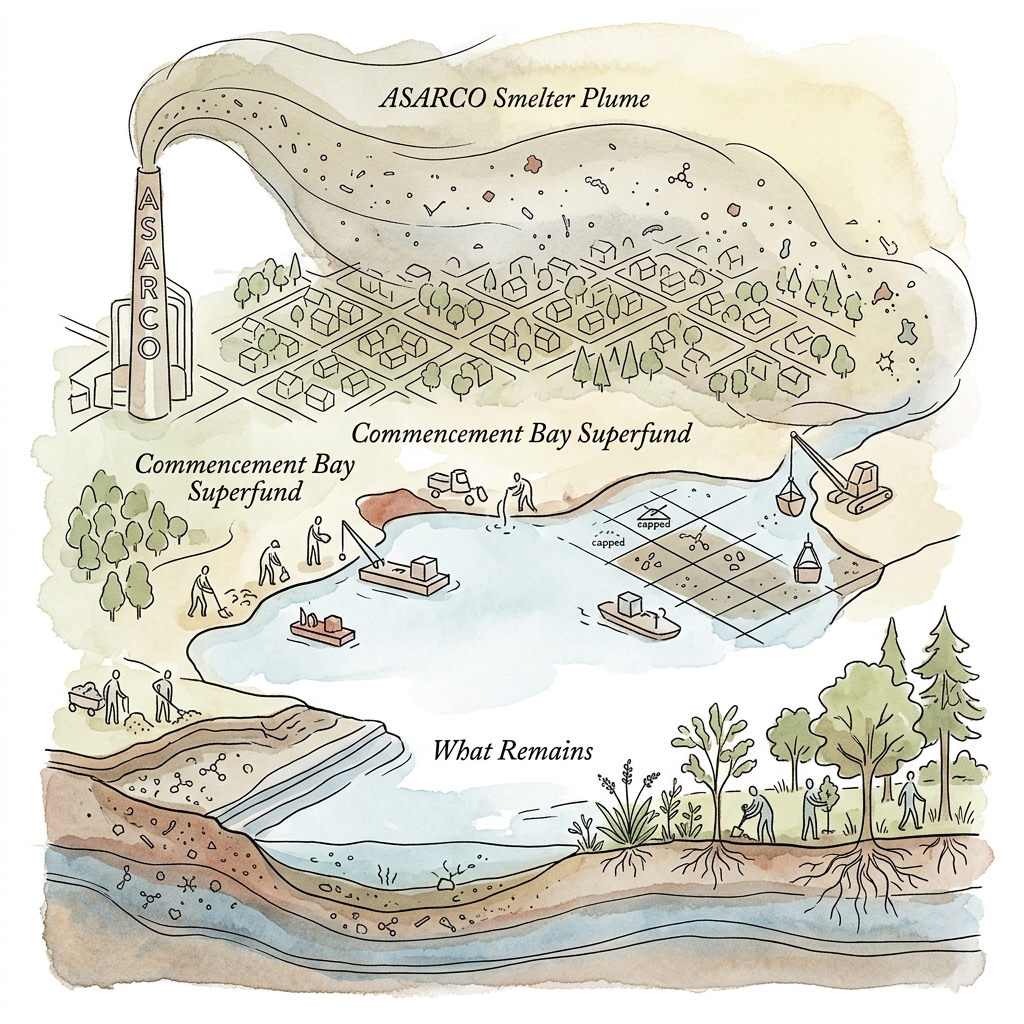
The American Smelting and Refining Company (ASARCO) operated a copper smelter on the Ruston waterfront (north Tacoma, adjacent to Point Defiance) from 1890 to 1985. During that 95-year period, the smelter processed copper ore and emitted arsenic, lead, and other heavy metals through its 562-foot smokestack — at the time one of the tallest structures in the Pacific Northwest.
The emissions deposited arsenic and lead across an approximately 1,000-square-mile area downwind of the smelter, covering much of central Puget Sound. Within Tacoma and north Pierce County, soil contamination levels are highest — this is the “Tacoma Smelter Plume” study area managed by the Washington Department of Ecology.
The Tacoma Smelter Plume: Current Status
The Tacoma Smelter Plume is not a Superfund site (that’s Commencement Bay, covered below) — it’s a state-managed cleanup under the Model Toxics Control Act. The plume affects residential soil across thousands of properties in Tacoma, Ruston, University Place, and surrounding areas.
What this means practically: soil in many Tacoma residential yards contains arsenic and/or lead above cleanup levels established by Ecology. The contamination is in the top 6-12 inches of soil — the layer children are most likely to contact during outdoor play.
The Department of Ecology’s Soil Safety Program offers free soil testing for residential properties in the affected area. If contamination exceeds action levels, Ecology funds remediation — typically removing and replacing contaminated topsoil in yards and play areas. The program has cleaned thousands of properties since its inception but thousands more remain untested or awaiting cleanup.
For property buyers: Real estate disclosure requirements in Washington State mean sellers must disclose known contamination. However, untested properties may have contamination that hasn’t been documented. Ecology recommends buyers in the plume area request soil testing as part of due diligence. The contamination does not typically affect property values in a dramatic way — it’s so widespread that the market has largely priced it in — but it’s information buyers should have.
Commencement Bay Superfund Site
The Commencement Bay Nearshore/Tideflats Superfund site was listed on the National Priorities List in 1983. It covers approximately 12 square miles of waterfront, including the industrial tideflats, waterway sediments, and nearshore marine areas of Commencement Bay.
The contamination sources were multiple: industrial discharges from decades of waterfront manufacturing (chemicals, metals, petroleum), the ASARCO smelter’s waterside operations, municipal wastewater discharge, and stormwater runoff carrying contaminants from the industrial areas into the Bay.
The cleanup has been ongoing for 40+ years and involves dozens of individual remediation actions (called “operable units”) addressing different portions of the site. Some areas have been fully remediated and delisted. Others remain under institutional controls (restrictions on use) or active monitoring.
What’s Been Cleaned
Point Ruston (former ASARCO smelter site): The actual smelter location has been remediated and redeveloped into Point Ruston — a $1.2 billion mixed-use community with condos, retail, restaurants, and the Copperline hotel. The stack was demolished, contaminated soil was removed or capped, and the site received regulatory clearance for residential use. This is arguably the single most dramatic environmental-to-development transformation in Washington State history.
Multiple waterway segments: Several Commencement Bay waterways have completed sediment remediation — dredging contaminated sediment, capping remaining contamination, and monitoring recovery. The Hylebos Waterway, Sitcum Waterway, and portions of the Thea Foss Waterway have all undergone significant cleanup work.
Thea Foss Waterway: Formerly one of the most contaminated urban waterways in the Pacific Northwest, the Thea Foss (which runs through downtown Tacoma’s waterfront) has been substantially remediated. The Museum of Glass, the Foss Waterway Seaport, and residential development along its banks reflect the post-cleanup revitalization.
What Remains
The smelter plume soil contamination: Still present across thousands of untested or unremediated residential properties. The cleanup program continues but at a pace that will take decades to complete at current funding levels.
Portions of Commencement Bay: Some sediment areas remain under institutional controls. Fish consumption advisories exist for certain species caught in Commencement Bay — the Washington Department of Health fish advisory lists specific species and areas where consumption should be limited.
Ongoing monitoring: Many remediated areas require long-term monitoring to verify that cleanup actions remain effective and natural recovery is occurring. This monitoring will continue for decades.
What Current Residents Should Know
The environmental legacy is real but manageable with awareness. Practical guidance:
Get your soil tested if you live in the plume area (essentially anywhere in central or north Tacoma). It’s free through Ecology’s program and gives you actual data rather than assumptions.
Follow fish consumption advisories for Commencement Bay catches. The contamination is real and bioaccumulates — particularly in bottom-dwelling species.
The air quality issues from the smelter ended in 1985. Current Tacoma air quality is normal for Puget Sound (seasonal wildfire smoke being the primary modern concern, unrelated to the smelter legacy).
The remediated sites (Point Ruston, Thea Foss) are genuinely cleaned and safe for their current uses. The regulatory process for delisting these sites is rigorous.
Frequently Asked Questions
Is Tacoma’s soil contaminated?
Many residential properties in the Tacoma Smelter Plume area contain arsenic and/or lead above cleanup levels in the top 6-12 inches of soil. The contamination comes from 95 years of ASARCO smelter emissions. Free soil testing is available through the Washington Department of Ecology’s Soil Safety Program.
Is Point Ruston safe to live in?
Yes. The former ASARCO smelter site underwent extensive EPA-supervised remediation before being cleared for residential development. Contaminated soil was removed or capped, and the site received regulatory approval for residential use. Point Ruston is now a $1.2 billion mixed-use community.
Can you eat fish caught in Commencement Bay?
With caution. The Washington Department of Health maintains fish consumption advisories for certain species caught in Commencement Bay due to legacy contamination in sediments. Check the current advisory before consuming bottom-dwelling species. Open-water species are generally lower risk.
What is the Tacoma Smelter Plume?
An approximately 1,000-square-mile area of soil contaminated by arsenic and lead emissions from the ASARCO copper smelter that operated in Ruston from 1890-1985. Managed by the Washington Department of Ecology (not EPA Superfund). Affects residential yards across Tacoma and surrounding areas.
Does soil contamination affect property values in Tacoma?
Minimally in most cases. The contamination is so widespread across the city that the market has largely normalized it. Properties with documented contamination and completed cleanup may actually be more attractive (known clean) than untested properties (unknown status). Buyers should request soil testing as due diligence.