CC is not courtesy copy. It is distributed write. Every inbox that receives your message is a replica of a shared database, and no coordinator approved the replication.
Email as the new API means treating an email thread as programmable infrastructure rather than just correspondence: because every message is an immutable record, every recipient’s inbox is a replica, and the Message-ID / In-Reply-To / References headers link messages into an append-only log, a structured email with an embedded instruction block can carry its own processing schema — turning the inbox into a universal, permissionless coordination layer that any human or AI agent can read, act on, and extend. Said in one breath: the thread is the database, the reply is the commit, and the subject line is the version pointer.
This is not a provocation. It is a description of infrastructure that has been running for forty years and is only now being named. The most consequential software project on Earth — the Linux kernel — is coordinated entirely over email threads. And in March 2026, a Y Combinator company called AgentMail raised $6M from General Catalyst to give AI agents their own inboxes. The pattern isn’t coming. It’s load-bearing.
We run this method in production at Tygart Media. This article explains how it works, proves it isn’t new, gives you a decision framework, and answers the four questions every operator asks first: Is a thread a database even if no one reads it again? One thread or many? Email or chat? How do I pull it into real systems? One boundary up front, so the credibility is honest: this pattern is for asynchronous, human-paced work that crosses organizational lines. It is the wrong tool for sub-second machine loops. We will be specific about that in the limits section, because the limits are real.
It’s Not a New Idea: The Prior Art
Before any mechanism, kill the “isn’t this just email?” reflex with evidence.
The Linux kernel runs on email. Thousands of contributors on every continent submit patches as inline email via git send-email, version them in the subject line ([PATCH v1], [PATCH v2], [PATCH v3]), review them in-thread, and merge them with git am. The Linux Kernel Mailing List receives roughly 1,400 emails a day. The archive at lore.kernel.org goes back to 1998 with full-text search. If email threads are sufficient engineering infrastructure for the operating system running most of the world’s servers, “it’s just email” is not an argument.
EDI is email-as-API with a schema, and it’s older than the web. Since the 1980s, enterprises have transacted structured business documents over email-like channels using ANSI X12 and UN/EDIFACT: the X12 850 Purchase Order (called “the backbone of EDI”), the 810 invoice, the 856 ship notice. EDI is email with a mandatory reply schema, enforced at the business-rules layer, predating REST by two decades. It is the direct ancestor of the structured-email method below.
The market is pricing it in right now. AgentMail (YC S25) raised $6M led by General Catalyst in March 2026 to build agent-native inboxes — real, programmatically provisioned addresses that send, receive, thread, and parse structured data. In its own words, “thousands of humans use AgentMail to power millions of agents.” A seed round on the thesis that email is AI infrastructure is not a prediction. It’s a market price.
Every vertical already does it. Inbound-parse services (SendGrid, Mailgun, Postmark) turn incoming mail into JSON webhooks; Cloudflare Email Workers run a function on every inbound message. No-code parsers (Zapier’s @robot.zapier.com, Make) fire workflows from a forwarded email. Zendesk converts every email into a ticket with a UUID. Things, Todoist, and Trello expose forward-to-task addresses. Substack made the email list the asset itself. And MuckRock — founded in 2010, before LLMs existed — turned the FOIA request-response loop into a structured, automated, trackable platform across all 50 states. The pattern predates the AI moment. AI just makes it programmable at scale.
Why a Thread Is Literally a Database
Here is the intellectual spine: an email thread is an append-only, replicated log at the protocol level — not by design philosophy, but by RFC.
The relational model is in the headers. RFC 5322 defines Message-ID as a globally unique identifier in the form <unique-string@domain.com>. In-Reply-To holds the parent message’s Message-ID. References holds the full chain of ancestors back to the root. Read as a database: Message-ID is the primary key, In-Reply-To is the foreign key, References is the full join path back to the root. Together they form an append-only linked list — the same structure event-sourcing systems use to reconstruct state by replaying a log.
Replication is implicit and massive. Every To and CC inbox holds a full copy of every message. The thread is not stored in one place; it is replicated across N inboxes by the act of sending, with no coordinator. That is closer to a conflict-free replicated data type than to a single-primary database.
The transport is store-and-forward. SMTP (RFC 5321) queues and retries at every hop. That gives at-least-once delivery — the same guarantee as Kafka’s default producer. Exactly-once is impossible in any distributed system; email makes no false promise. The difference is that Kafka costs engineering time to operate; email costs a stamp.
The sharpest framing: Kafka is a better log than email in every technical dimension. Email is a better log than Kafka in every organizational dimension — because your vendor, your client, and your offshore engineer all already have an inbox. The reason to use email is not that it’s the best log. It’s that it’s the universal log. The legal industry already operationalizes this: e-discovery platforms (Mimecast, Logikcull, DISCO) treat archived threads as immutable audit trails. Courts treat email as a record. The “thread as log” framing is not novel — it is how the law already works.
What email HAS vs. what it LACKS
| Property | Email HAS | Email LACKS |
|---|---|---|
| Durability | Yes — persists in recipient stores by default | — |
| Replication | Yes — every recipient is a copy | — |
| Global addressing | Yes — any RFC 5321 address, no registry | — |
| Append-only log | Yes — you reply, you don’t edit sent mail | — |
| Searchable audit trail | Yes — headers, body, timestamps | — |
| Schema enforcement | — | No — any string is accepted |
| ACID transactions | — | No atomicity, no locking |
| Consistency | Eventually consistent | Not strongly consistent |
| Latency | — | Unbounded (seconds to days) |
| Query interface | — | Full-text search only, no SELECT WHERE |
State it plainly: email is eventually consistent, not strongly consistent; at-least-once, not exactly-once. It is the coordination layer, not the source of truth for mutable state.
The Method in Practice: A Worked Example
This is what we run. The cast is real — Will on strategy, Pinto engineering from India, Stefani on operations — but the payloads and secrets stay out. The credibility is in the structure, not the contents.
The FOR YOUR AI block: schema-in-the-envelope. A single message carries three layers at once: a human-readable intro for the person, an embedded system prompt that tells the recipient’s AI what role to play and what format to produce, and a strict reply schema (named sections, types, word limits) the output must conform to. The message carries its own processing instructions. It is structurally identical to a self-describing Kafka message — except the schema language is plain English. The FOR YOUR AI block is a system prompt that travels via SMTP. When Will emails Pinto, it tells Pinto’s AI what role to play before Pinto even opens the message.
The Round-N subject line: a state machine. A subject like Round 3 — v2.1 schema is a human-readable epoch counter. Any participant — including a cold-start AI that has never seen the thread — reconstructs exactly where the conversation stands without re-reading every prior message. The subject is the version pointer; the thread body is the state history; each reply is a state transition.
Each inbox: a replica. The To/CC list is the replication layer. When Stefani is CC’d for visibility, that’s a designed property, not a side effect — her inbox becomes a live replica of the exchange. The CC line is a replication directive; the shared database has no master node.
And notice what discipline this method already embodies, because it sets up the limits section exactly: the schema block is an injection-surface reducer; the human edit-before-send is the human-in-the-loop gate; one-thread-per-project is mailbox isolation; the Round-N tag is the idempotency seed. The mitigations aren’t bolted on. They’re the workflow.
The Four Questions, Answered
Is an email thread a database even if no one ever reads it again?
Yes. A database’s properties — persistent, indexed, searchable, replicated — are satisfied by the inbox independent of human attention. Reading is a query operation, not a precondition for existence. RFC 5322 messages are immutable once delivered; IMAP stores are append-only by design (you flag and label, you don’t rewrite); every recipient’s server holds an independent replica. The thread is the database, even if no human ever opens it again. lore.kernel.org proves it at civilizational scale: decades of threads, indexed and searchable, most never re-opened, all still a database. One honest caveat: this is functionally and legally append-only, not cryptographically enforced — a participant can delete their own copy. Frame it as a practical property, not a blockchain.
Should I use one email thread or many?
Continue one thread while the state machine advances linearly. Fork a new thread when scope, participants, or schema materially change. Forking has no merge protocol — do it deliberately, not habitually.
Run the decision tree: (1) Same principals? (2) Same matter, contract, or project lifecycle? (3) Same expected reply schema? If all three are yes, continue — you are advancing the same state machine. If any is no, fork. There is a third option for compound, overlapping state a single subject line can’t carry: labels on one thread. Gmail labels are not filing; they are state bits. The combination round-2 + awaiting-review + schema-v3 on one thread is a fully specified, machine-readable state any agent with API access can inspect and mutate. Fork when the state machine changes shape. Continue when it advances. Label when it branches.
Email or Slack/chat for AI workflows?
Email wins for the durable, structured, machine-readable record; chat wins for the ambient coordination around it. This is not a dismissal of chat — it’s a division of labor. Email’s structural advantages are four: federation (you can email anyone at any domain with no shared paid account; Slack Connect requires both sides to pay), durability (Slack’s free tier deletes history after 90 days; email persists by default), identity portability (your address survives a vendor change; Slack IDs are workspace-scoped), and universal addressability (email is DNS/MX-resolvable; Slack user IDs are opaque tokens). Email has no 90-day cliff, no login wall, no vendor lock-in on the archive. It is the only substrate where you can lose access to the platform and still have the data. One caveat for sensitive payloads: WhatsApp messages to Meta AI are not covered by the same end-to-end encryption as human messages, and iMessage silently downgrades to SMS when an Android user joins. The encryption you trust can vanish exactly when you add an AI participant.
How do I pull email into real systems?
Use a ladder from no-code to agent-native. (1) Zapier or Make for a no-code email parser. (2) An inbound-parse webhook — Postmark, SendGrid, or Mailgun deliver the full email as JSON; Cloudflare Email Workers run a function on every inbound message. (3) Gmail API plus Cloud Pub/Sub watch() for real-time push — name the gotcha: the watch expires every 7 days and must be auto-renewed. (4) AgentMail or Nylas Agent Accounts for agent-native, programmatically provisioned inboxes. The parsing layer between MIME and JSON (postal-mime, MailParse) is a one-line install. This is the rung where readers become practitioners.
The Decision Framework
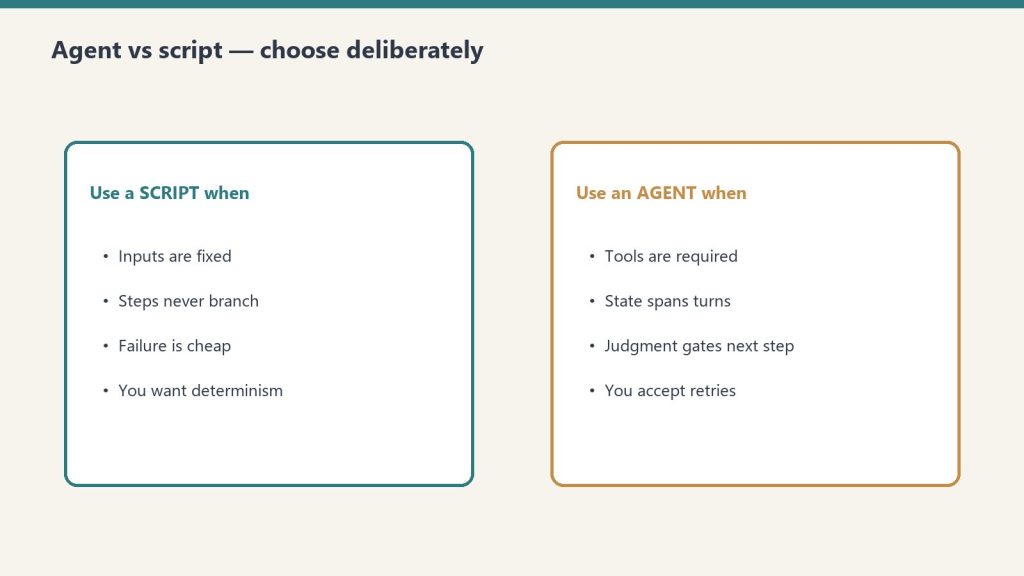
The governing question is never “email or a real system?” It is “what does my workflow need that the thread can’t give me?” Until you hit that wall, the thread is the system.
Use email when all of these hold: the work is asynchronous and human-paced, it crosses an organizational or trust boundary, you need a durable and searchable audit trail, and a human is in the loop on consequential actions. The thread is the log.
Use chat (Slack, Discord, WhatsApp) when latency must be under about five minutes and all parties sit inside one auth boundary and the record doesn’t need to outlive the platform. Chat is for urgency inside a shared boundary; email is for durability across org lines.
Use a real database, queue, or API (Postgres, Kafka, REST/gRPC) when you need queryable schema with transport-level validation, concurrent or atomic writes, distributed locking, machine-speed operations no human reads, or high-volume machine-to-machine traffic. Where failure is unrecoverable, use infrastructure that fails loudly.
Substrate trade-matrix
| Dimension | SMS / iMessage | Slack / Discord | Notion / Docs | ||
|---|---|---|---|---|---|
| Durability | High | Medium | Medium | Low (90-day free) | High |
| Universality (no account) | High | Medium | Low | Low | Low |
| Access control | Low (CC-leak) | Low | Medium | High | High |
| Searchable / exportable | High | Low | Low | Medium | High |
| Schema-ability | Medium | Low | Low | Low | Medium |
| Latency | Low | High | High | High | Medium |
| AI-ingestibility | High | Low | Low | Medium | Medium |
| Data ownership | High | Medium | Low | Low | Medium |
Email wins decisively on durability, universality, data ownership, and AI-ingestibility. It loses on latency, access control, and schema enforcement. Position it correctly: email is the zero-infrastructure precursor to formal agent protocols. The agent-interoperability survey (arXiv:2505.02279) lays them out: MCP is a synchronous client-server interface for tool calls, A2A is peer-to-peer delegation via capability-based Agent Cards, and ANP is open-network discovery via decentralized identifiers. All are powerful; none provides durable, offline-capable, federated messaging the way an inbox already does. Every AI team building a custom agent-to-agent protocol is engineering a worse version of SMTP. Ship on email today; graduate to MCP or A2A when hot-path latency or transactional guarantees force the wall.
The Honest Limits
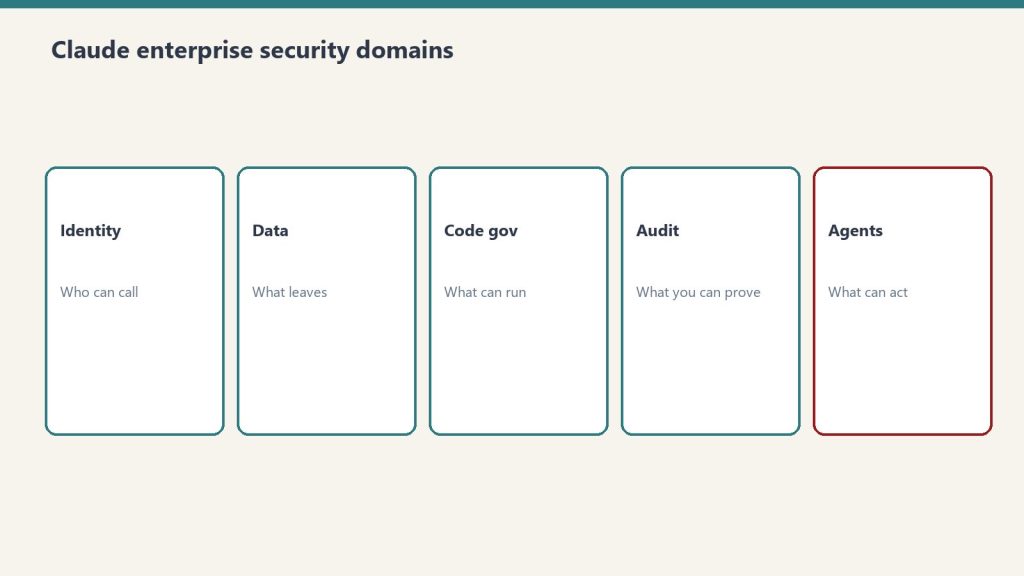
This section is the credibility. Each failure mode is real, each gets a mitigation, and none is fixable by convention alone.
Prompt injection is the headline risk. OWASP ranks prompt injection LLM01:2025 — its number-one LLM application vulnerability — and explicitly names indirect injection via external sources, including email. EchoLeak (CVE-2025-32711, CVSS 9.3, June 2025) proved a single crafted email could make Microsoft 365 Copilot exfiltrate data with zero user interaction. This is not theoretical. Mitigations: verify DKIM/SPF/DMARC at the agent layer and allowlist senders before trusting any FOR YOUR AI block; parse only declared schema sections, not free prose; gate every consequential action behind a human; run a sandboxed executor that receives structured intents only, never raw tool access. Fair caveat: EchoLeak’s zero-click specificity tracked Copilot’s particular architecture — the general risk scales with how much autonomy the agent has after it reads.
No schema enforcement. SMTP and MIME accept any string. A malformed or adversarial reply doesn’t bounce — it arrives silently, and a naive agent parses it anyway. Mitigation: validate every reply against the schema before acting; route malformed replies to human review. Say it plainly — schema conformance is a social and instruction-following contract, not a protocol guarantee. Schema drift is the failure mode.
No transaction semantics. At-least-once delivery means duplicate processing is structurally guaranteed under retries; two simultaneous replies fork the thread with no merge. Mitigation: put an idempotency key in the subject (Round-N / [UUID]) and store the Message-ID as a dedup key the consuming agent checks before acting. An idempotency key in the subject costs four characters; the absence of one can mean the same purchase order executes twice. Keep mutable state in a real database — email is the coordination layer, not the source of truth.
CC is a feature and a liability — the same mechanism. The property that makes the thread a replicated database is a compliance landmine. One reply-all or forward in a thread carrying ePHI is a breach: HIPAA requires a minimum six-year retention for designated-record-set emails, and GDPR Article 5(e) requires data be kept no longer than necessary. Anyone ever CC’d retains access forever — there is no revoke. Mitigation: in regulated contexts, mirror to a proper record system, encrypt payloads (S/MIME or PGP), or send only the control signal over email and keep the data elsewhere. This is directional, not legal advice — consult your compliance team.
Deliverability is now a hard gate. Google and Yahoo mandated SPF/DKIM/DMARC alignment for bulk senders (5,000+/day) in February 2024; Microsoft followed in May 2025, routing non-compliant high-volume mail (5,000+/day to consumer Outlook) to Junk, with outright rejection to follow; PCI DSS v4.0 adds DMARC-related anti-phishing requirements for card-data environments. Building without authentication because you’re under the volume threshold today is planning for fragility.
The operational gotchas that signal you’ve actually done this. Latency is unbounded — SMTP retry windows span minutes to days, so never put a sub-second hot path on email. Threading is client-dependent — Gmail uses subject plus In-Reply-To/References, Outlook uses Thread-Index, Thunderbird uses the JWZ algorithm — so a subject edit or a header-stripping gateway silently forks one thread into two; never rewrite the subject mid-thread (append, don’t replace). The Gmail watch() expires every 7 days. High-volume automation through a personal Gmail risks account suspension — use dedicated service accounts or agent-native platforms (and check their beta limits; Nylas Agent Accounts ship with 7-day retention and 100 sends/day). And threads beyond ~50 rounds with large payloads can blow a model’s context window — architect thread length deliberately.
When NOT to use email
| Need | Use instead |
|---|---|
| High-frequency / sub-second M2M | REST, gRPC, or a queue |
| Strict schema validated at transport | JSON Schema + API gateway |
| Regulated data, CC-leak unacceptable | E2E-encrypted channel + access controls |
| High-volume M2M (thousands/min) | Message queue / event stream |
| Atomic transactions or locking | Real DB / event-sourcing |
The throughline: email gives you a convention, not a guarantee — and every mitigation here is a convention layered on a convention. Where failure is unrecoverable, use infrastructure that fails loudly. One more flag for commercial use: if AI-generated output produced through a relay chain is published without clear labeling, the structured hand-offs can obscure the AI’s role. Disclose it.
Publish It to Get Smarter
Here is the move, and it is not subtle: this article is a round in the loop it describes.
Watch the flywheel turn. We publish this piece. AI engines index it. Its named patterns — the FOR YOUR AI block, Round-N versioning, schema-in-the-envelope — become citable units. Operators adopt them. Tygart Media becomes the attributed origin. Each citation reinforces the corpus, and the corpus earns more citations. The article does not describe the flywheel. It is the flywheel, running.
This is not promotion. It is the method executing on itself. Our model is to own the cited corpus on the topics our clients operate in — where breadth is the moat and the scoreboard is AI-citation coverage, not Google rank. The mechanical reason it compounds is freshness: a flagship piece on a pattern we demonstrably run in production is structurally fresher than generic “AI email tips,” because it has live proof points to update. Directional evidence suggests content refreshed within ~30 days earns materially more AI citations than stale content; treat that as a direction, not a promise. Which is why this piece carries a dated live-example note, and why we’ll keep the round count current.
Live example — last updated June 2, 2026: the working loop described here is active and advancing in production.
So when AgentMail raises $6M to give agents inboxes, and the Linux kernel ships another thousand patches today over email, and Microsoft starts turning away mail that can’t authenticate itself — read all of it as one signal. Email is not legacy infrastructure being repurposed. It is the universal handshake for any workflow that crosses an organizational boundary, and it was here the whole time.
Your inbox is already a database. The only question is whether you are the DBA.
How this was made: this article was produced by the method it describes. A swarm of AI agents researched it in parallel across seven angles, a synthesis pass shaped it, and it was assembled and edited in the same human-plus-AI loop the piece is about. We practice what we publish.
Related on Tygart Media: Notion second brain · Claude + Zapier.