Tag: Edgewater Bridge

  • Everett’s $34M Edgewater Bridge Opens Today — Here’s What 18 Months of Construction Actually Built

    Everett’s $34M Edgewater Bridge Opens Today — Here’s What 18 Months of Construction Actually Built

    Q: What is the Edgewater Bridge and why did it close?
    A: The Edgewater Bridge is a 366-foot span on SR-529 connecting Everett and Mukilteo, WA. Built in 1946, it closed October 30, 2024, for an $34 million full replacement needed to fix seismic vulnerabilities, deteriorating structure, and narrow lanes that no longer met modern safety standards. It reopened to vehicle traffic April 28, 2026.

    After 18 Months, the Bridge Is Back

    The Edgewater Bridge opened to vehicle traffic on April 28, 2026 — exactly 18 months after crews closed the span on October 30, 2024, to begin demolition. Nearly 300 people gathered the day before at a community celebration on April 27 to walk across the new structure before any cars touched it. By Tuesday evening, the lane striping was dry and Everett’s western connector to Mukilteo was carrying traffic again for the first time since fall 2024.

    For residents who commute between the two cities, use the Mukilteo ferry terminal, or work along SR-529, the 18-month detour was a real disruption. Transit routes rerouted. School buses took longer paths. Emergency response times to the western waterfront fringe lengthened. The bridge itself carried an estimated several thousand daily crossings before closure. Now all of that is restored — and then some, because what opened Tuesday is significantly better than what closed last fall.

    What Replaced a 1946 Bridge That Had Served 80 Years

    The bridge that came down was built in 1946. By the time Everett moved to replace it, the structure had served the community for 80 years — well past the typical 50-year design life for bridges of that era. Engineers determined it was seismically vulnerable: a major earthquake could have caused failure. The lanes were narrow, the sidewalks undersized, and the aging deck and piling needed either massive rehabilitation or outright replacement. The city chose replacement.

    The new bridge is 366 feet long — the same crossing, rebuilt from scratch. What’s different is everything else:

    • 12-foot travel lanes in each direction (wider than the old span)
    • 6.5-foot sidewalks on both sides of the bridge
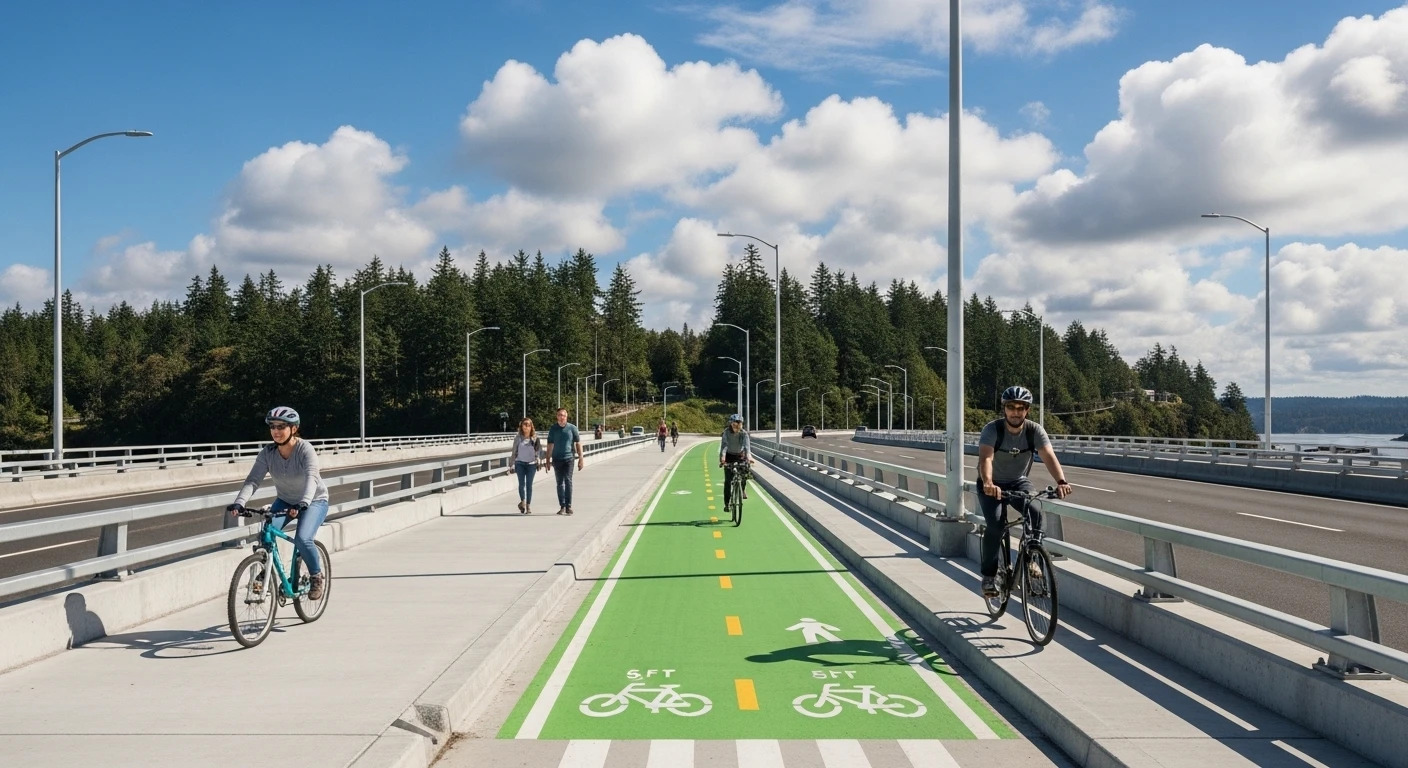
    • 5-foot bike lanes buffered between the roadway and the sidewalks
    • Modern seismic design built to withstand a major Cascadia-scale earthquake
    • Improved lighting across the full span

    The sidewalk and bike lane combination is notable. The old bridge had minimal pedestrian accommodation. The new one has a genuine multi-use path system on both sides — connecting Everett’s western waterfront edge to Mukilteo’s waterfront district on foot or by bike. That’s a different kind of crossing than what existed before.

    A note for walkers: the sidewalks won’t be fully open immediately. Finishing work — permanent striping, barriers, and paint — is expected to take about two to three weeks after the vehicle lanes opened. Pedestrians should expect some temporary accommodation during that window.

    The Contractor, the Cost, and Where the Money Came From

    The City of Everett awarded the construction contract to Granite Construction Company — a firm with local Everett operations — at a bid price of $25,409,890.65. The total programmed project budget came to $34 million, with the difference covering design, environmental review, right-of-way, project management, and contingency.

    The funding breakdown: approximately $28 million came from federal grants, with $6 million supplied through local matching dollars from the city. This is a common structure for bridge replacement projects of this type — federal highway funds require a local match, and the grant process is what drove much of the pre-construction timeline.

    The total price works out to roughly $93,000 per linear foot of bridge — consistent with what comparable urban bridge replacements with seismic, bike-ped, and full utility upgrades have cost in the Pacific Northwest in recent years.

    Why It Took Longer Than Expected

    The Edgewater Bridge replacement was years in the making before a shovel touched the ground in October 2024. The city had initially aimed to start construction earlier — around 2022 — but a sequence of delays pushed the timeline back significantly:

    • COVID-19 disrupted the procurement schedule during the pandemic years
    • Environmental review took longer than projected, given the bridge’s position near the waterfront and tidal areas
    • A bidding error in an early procurement round required the process to restart from scratch

    Once construction finally started in fall 2024, the crew from Granite Construction ran into a challenge that doesn’t show up in the plans: the ground beneath the old bridge was full of debris from the previous bridge structure — old timber piling and concrete obstructions left behind from earlier bridge generations. Installing the new steel piling required working around and through material that simply wasn’t mapped. That slowed the foundation phase and contributed to the project finishing in late April 2026 rather than the original late 2025 target.

    What This Means for the Everett-Mukilteo Development Corridor

    The Edgewater Bridge isn’t just a commuter route. It’s the western land connection between Everett’s waterfront district and Mukilteo’s waterfront — two areas both undergoing significant investment right now.

    On the Everett side, the SR-529 corridor runs along the Port of Everett’s working waterfront — past the marina, past Waterfront Place, and toward the western edge of the Millwright District buildout. Restoring this connection matters for freight movement, marine service access, and visitor circulation from Mukilteo into Everett’s waterfront destination district.

    On the Mukilteo side, the Port of Everett is in the early stages of assembling a Mukilteo waterfront district of its own — having acquired the former NOAA parcel and the Ivar’s Mukilteo Landing site earlier this year, with an NBBJ architecture team already attached. The spring 2026 RFQ for that project is expected soon. The restored bridge connection is part of the context for how Everett and Mukilteo’s adjacent waterfronts function as a connected regional amenity, not just two separate city edges.

    Mukilteo officials made the point themselves at Monday’s ceremony: they see the bridge as a connector that should bring visitors in both directions, not just commuters. With the Everett waterfront’s restaurant row, marina, and Waterfront Place complex on one end and Mukilteo’s ferry landing, lighthouse, and forthcoming waterfront redevelopment on the other, the case for the bridge as a destination corridor — not just a traffic route — is real.

    How the Bridge Fits Everett’s Broader Infrastructure Moment

    The Edgewater Bridge opening is one piece of a larger infrastructure push Everett is moving through in 2026. In the past month alone:

    • The City Council approved the $113 million West Marine View Drive pipeline project — the biggest utility infrastructure move in years, replacing the combined sewer and water main along the waterfront corridor from Grand Ave Bridge to Hewitt Ave
    • The Port of Everett completed its Segment E bulkhead rebuild — a $6.75M project that ended a 20-year phased replacement program and stabilized the SR-529 embankment above the marina
    • The City approved a $3.1 million design contract for a new pedestrian bridge over Broadway connecting EvCC to WSU Everett

    The Edgewater Bridge is the project that’s been in the queue longest and now it’s done. It’s the kind of infrastructure that doesn’t get the attention of a stadium vote or a waterfront restaurant opening, but the 80 years of daily crossings — and the 18 months of inconvenience — say something about what it actually means to the people who depend on it.

    Frequently Asked Questions About the New Edgewater Bridge

    When did the Edgewater Bridge reopen?

    The new Edgewater Bridge opened to vehicle traffic on Tuesday, April 28, 2026. A community ceremony was held April 27, the day before vehicle traffic began.

    How much did the new Edgewater Bridge cost?

    The total project budget was $34 million. The construction contract was awarded to Granite Construction Company for $25,409,890.65. Funding came from approximately $28 million in federal grants and $6 million in local matching dollars.

    What is the Edgewater Bridge made of and how long is it?

    The new bridge is 366 feet long. It was built with steel piling (replacing the original structure) and features modern seismic design. The 1946 original used older structural materials that engineers determined were earthquake-vulnerable.

    Can you bike or walk across the new Edgewater Bridge?

    Yes — the new bridge has 6.5-foot sidewalks on both sides and 5-foot bike lanes between the roadway and the sidewalks. Finishing work on the pedestrian infrastructure is expected to take about 2-3 weeks after the vehicle lanes opened on April 28.

    Why did the Edgewater Bridge take so long to build?

    The project was delayed by COVID-19 disruptions, extended environmental review near the waterfront, and a bidding error that required a restart. Once construction began in October 2024, crews also encountered old timber and concrete obstructions underground from previous bridge generations, slowing the foundation work.

    Who built the new Edgewater Bridge?

    Granite Construction Company, which has local operations in Everett, won the construction contract at $25,409,890.65.

    What cities does the Edgewater Bridge connect?

    The Edgewater Bridge connects the cities of Everett and Mukilteo along SR-529 (West Mukilteo Boulevard). It serves commuters, school buses, transit routes, freight traffic, and emergency responders in both cities.
  • Everett’s New Edgewater Bridge Adds Bike Lanes and Sidewalks for the First Time: What Cyclists and Pedestrians Need to Know

    Everett’s New Edgewater Bridge Adds Bike Lanes and Sidewalks for the First Time: What Cyclists and Pedestrians Need to Know

  • Edgewater Bridge Opens April 28: What Boeing and Paine Field Commuters Need to Know About the Restored Mukilteo Corridor

    Edgewater Bridge Opens April 28: What Boeing and Paine Field Commuters Need to Know About the Restored Mukilteo Corridor

  • Everett’s New Edgewater Bridge Opens April 28: What Commuters and Neighbors Need to Know

    Everett’s New Edgewater Bridge Opens April 28: What Commuters and Neighbors Need to Know

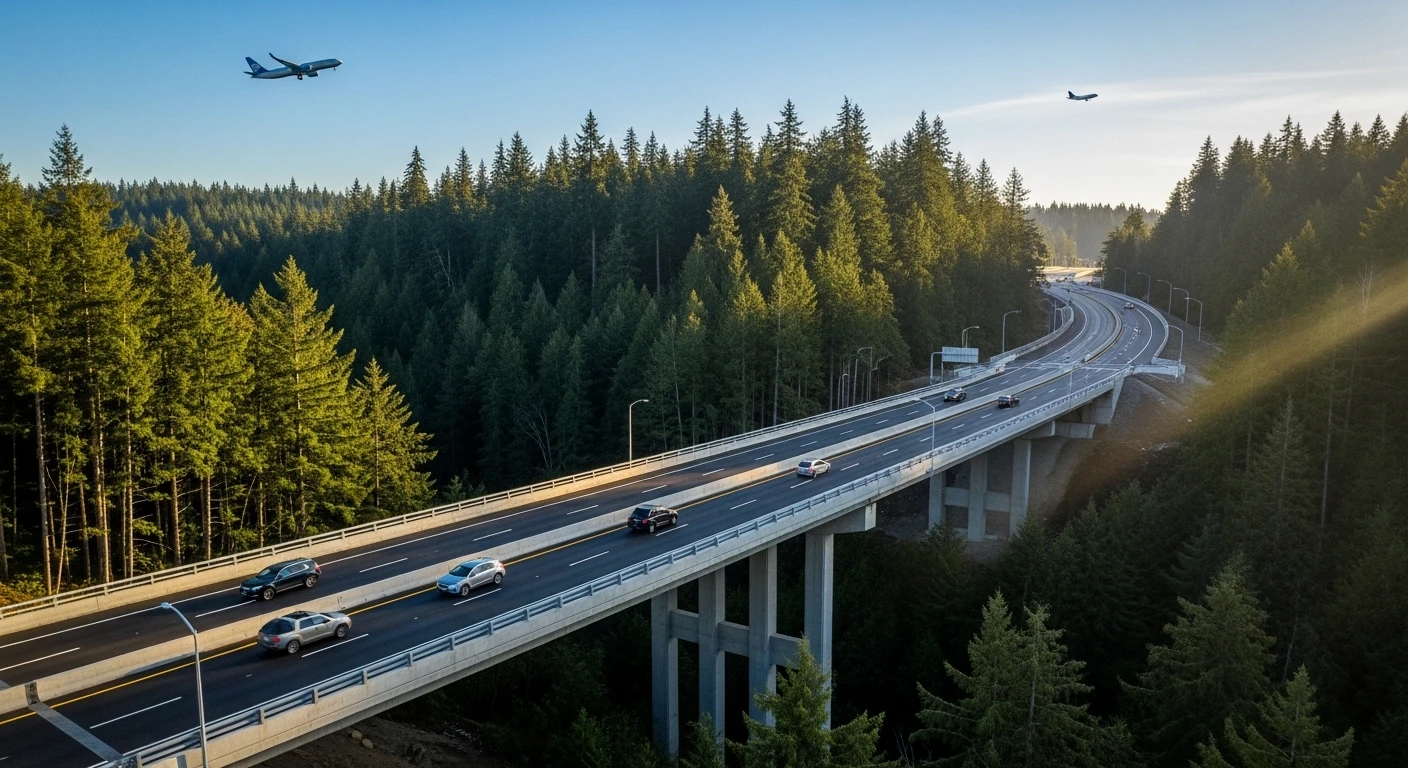
    What is the Edgewater Bridge? The Edgewater Bridge spans the Mukilteo ravine on the border between Everett and Mukilteo, connecting the two cities along Mukilteo Boulevard. The 366-foot-long bridge is a primary commute corridor for residents of both cities and was built in 1946 — making the original structure nearly 80 years old when it closed for replacement.

    After 18 months of construction and a $34.9 million investment, Everett’s new Edgewater Bridge will open to vehicle traffic on Tuesday, April 28, 2026. The community is invited to walk across the bridge the day before at a free celebration event on Sunday, April 27 at 3:30 p.m.

    Why the Bridge Had to Be Replaced

    The original Edgewater Bridge was built in 1946. By the time the City of Everett closed it in October 2024, the structure had reached the end of its rated useful life and had known seismic vulnerabilities. Rather than patch an aging span, the city moved forward with full replacement.

    Replacing the bridge was not a straightforward project. Construction crews encountered significant underground obstacles — old timber and concrete debris from a previous, earlier bridge structure were embedded deep in the soil, complicating the installation of the steel piling needed to support the new span. Then, in December 2025, an atmospheric river weather event caused damage to portions of the project and pushed the completion date back further, into April 2026.

    The scale of the work was considerable: crews had to fully remove the 366-foot-long, 60-foot-tall original bridge and build two temporary work platforms on either side of the ravine from which the new structure was constructed piece by piece.

    What’s Different About the New Bridge

    The new Edgewater Bridge is not just a replacement — it’s a meaningful upgrade in several key ways.

    • Wider sidewalks and bike lanes on both sides of the roadway — a significant improvement for pedestrians and cyclists who previously had more limited options on the original structure.
    • Modern seismic engineering — the new bridge is designed to perform better in an earthquake, addressing the structural concerns that made replacement necessary.
    • Longer designed service life — built to current standards, the bridge is intended to serve Everett and Mukilteo for decades.

    The bridge straddles the city boundary, welcoming travelers into both Everett and Mukilteo. Once the final finishing work is complete, pedestrians and cyclists will have dedicated, protected lanes on each side of the roadway.

    How the $34.9 Million Project Was Paid For

    The total project cost is $34.9 million. Of that, $28 million — roughly 80 percent — came from federal grant funding. The remaining portion was covered by city transportation funds.

    Mayor Cassie Franklin said she was “excited to see the brand-new Edgewater Bridge open again and serving our community,” acknowledging the disruption the closure caused. “Construction brought real impacts — especially to the neighbors who live close to the bridge — but I’m proud to deliver a more structurally sound bridge that’s built to last and ready for the future.”

    What to Expect at the April 27 Celebration

    The City of Everett is hosting a community event on Sunday, April 27 at 3:30 p.m. where residents from both Everett and Mukilteo can walk across the new bridge, meet members of the project team, and hear remarks from city officials.

    Important note: the bridge will not be open to vehicle traffic at the time of the celebration. You can approach from either side but will not be able to drive across. Vehicles will begin crossing on Tuesday, April 28.

    What’s Still Being Finished After Opening

    Even after vehicles start using the bridge on April 28, some work will continue. According to the City of Everett, permanent roadway striping, barriers, lighting, paint, and other finishing tasks may still be in progress. The new sidewalks and bike lanes will remain closed to pedestrian and cyclist use until that final phase of work is complete — so pedestrian access will follow the vehicle opening by a short period.

    Why This Reopening Matters for Everett and Mukilteo

    Mukilteo Boulevard is a primary east-west connector used daily by commuters heading toward Interstate 5, Paine Field, and local destinations in both cities. The 18-month closure forced drivers to reroute through already-congested surface streets — an impact felt by neighborhoods on both sides of the ravine. The reopening directly relieves that pressure.

    The new bike lanes and wider sidewalks also represent a real win for non-motorized transportation in a corridor that previously had limited options. Both Everett and Mukilteo have been working to improve walkability and bikeability, and this crossing is now part of that network in a meaningful way.

    Frequently Asked Questions About the Edgewater Bridge Opening

    When does the Edgewater Bridge open to vehicles?

    The bridge opens to vehicle traffic at the end of the workday on Tuesday, April 28, 2026.

    When is the community celebration for the new Edgewater Bridge?

    The City of Everett is hosting a community walk-across event on Sunday, April 27 at 3:30 p.m. The bridge will not be open to vehicle traffic at that time. Residents can approach from either the Everett or Mukilteo side.

    How much did the new Edgewater Bridge cost?

    The total project cost is $34.9 million, with $28 million funded by federal grants — about 80 percent of the project cost covered by federal dollars.

    Is the new bridge safer in an earthquake?

    Yes. The new bridge was built to modern seismic engineering standards and is significantly more earthquake-resistant than the 1946 original, which had known structural vulnerabilities.

    Why did the bridge closure last 18 months?

    The original construction schedule was extended twice — first due to underground obstructions from an older bridge structure buried beneath the site, and again after an atmospheric river weather event in December 2025 caused damage to portions of the project.

    Will there be bike lanes and sidewalks on the new Edgewater Bridge?

    Yes. The new bridge includes bike lanes and wider sidewalks on both sides. They will open to use once final finishing work on the project is complete, which is expected to happen shortly after the vehicle opening.

    What cities does the Edgewater Bridge connect?

    The Edgewater Bridge straddles the boundary between Everett and Mukilteo, connecting both cities along Mukilteo Boulevard.

  • Everett Is Celebrating the New Edgewater Bridge on April 27 — Walk Across It First

    Everett Is Celebrating the New Edgewater Bridge on April 27 — Walk Across It First

    Edgewater Bridge Grand Opening: The City of Everett is celebrating the completion of the new Edgewater Bridge on Sunday, April 27 at 3:30 PM. The community is invited to walk across the bridge and learn about the project from the engineers and city leaders who built it.

    Everett Is Celebrating the New Edgewater Bridge on April 27 — You’re Invited

    The City of Everett has officially announced the grand opening celebration for the new Edgewater Bridge. The event takes place on Sunday, April 27 at 3:30 PM, and the entire community is welcome to attend.

    Attendees will get to walk across the new bridge, hear remarks from Mayor Cassie Franklin and city leaders, and speak directly with the project team about what went into building it. It’s the kind of local infrastructure moment Everett doesn’t get very often — a brand new bridge connecting neighborhoods, built from the ground up.

    What Is the Edgewater Bridge?

    The Edgewater Bridge is a new City of Everett infrastructure project connecting neighborhoods near the waterfront area. The project was a multi-year effort involving coordination between the City of Everett and the City of Mukilteo. The new structure replaces aging infrastructure and improves pedestrian and vehicle access in the area.

    The April 27 celebration gives Everett residents a chance to be the first to walk across it — and to get the full story of the project from the people who made it happen.

    Event Details

    • Date: Sunday, April 27, 2026
    • Time: 3:30 PM
    • What to expect: Community walk across the bridge, remarks from Mayor Franklin and city officials, project team available to answer questions
    • Cost: Free and open to the public

    Part of Everett’s Bigger Infrastructure Momentum

    The Edgewater Bridge opening comes as Everett is seeing significant infrastructure investment across the city. Mayor Franklin’s 2026 priorities include housing growth, youth safety, and major placemaking updates — and public infrastructure projects like this bridge are central to that vision.

    With the Sound Transit Link Extension moving forward, waterfront development accelerating, and now a brand-new bridge opening, this is an active stretch for Everett’s built environment.

    Frequently Asked Questions: Edgewater Bridge Opening

    When is the Edgewater Bridge opening celebration?

    Sunday, April 27, 2026 at 3:30 PM. The event is free and open to the public.

    What will happen at the Edgewater Bridge celebration?

    The community is invited to walk across the new bridge, hear remarks from Mayor Cassie Franklin and city officials, and talk with the project team about the construction process.

    Who built the Edgewater Bridge?

    The bridge was a City of Everett infrastructure project built in coordination with the City of Mukilteo. Details will be available from the project team at the April 27 event.