
Tag: EASC

  • Snohomish County’s Federal Asks Are Being Made in Washington Right Now — Inside the EASC DC Fly-In Underway This Week

    Snohomish County’s Federal Asks Are Being Made in Washington Right Now — Inside the EASC DC Fly-In Underway This Week

    What is the EASC DC Fly-In and what does it have to do with Everett’s waterfront?
    The Economic Alliance Snohomish County (EASC) is leading a delegation of business, government, and community leaders to Washington, D.C. from May 5 through May 7, 2026, to advocate directly with members of Congress and federal agencies on the region’s federal priorities. The fly-in is presented by The Boeing Company, with support from the Tulalip Tribes and Desimone Consulting Group. It’s the most concentrated federal advocacy push our region runs all year — and it’s happening right now.


    A Snohomish County Trip Most Residents Don’t Hear About

    Most of the conversation about Snohomish County’s federal priorities happens in obscure rooms: legislative committee hearings, agency briefings, advocacy board meetings inside the EASC offices on Rucker Avenue. The work is real, but the public-facing moment is rare.

    The annual EASC DC Fly-In is the closest thing to a public-facing moment this advocacy ever gets. For three days each May, a delegation of Snohomish County leaders — business owners, mayors, port commissioners, tribal leaders, education officials — travels to Washington, D.C. to make the case directly to the people who write federal budgets and run federal agencies.

    This year’s trip is happening as you read this. The delegation arrived on Tuesday, May 5, for a welcome reception. Wednesday, May 6, and Thursday, May 7, are full days of meetings on Capitol Hill and at federal agencies. The schedule wraps Thursday evening with a farewell reception before the delegation flies home.

    If you live in Everett and pay any attention at all to Sound Transit, the Port of Everett, federal aerospace research dollars, water infrastructure grants, or the Snohomish River flood mitigation work, then someone at this fly-in is probably in a room arguing for something that affects you.

    What the Fly-In Actually Does

    The EASC DC Fly-In is a coordinated federal advocacy program. The delegation does three things over the course of three days.

    First, it sits down with Washington’s congressional delegation. That includes Senator Patty Murray, Senator Maria Cantwell, and the House members representing the 1st, 2nd, and other relevant districts. These are direct meetings, not a stop-by-the-office handshake. Members and their staff hear specific federal asks tied to specific projects in Snohomish County.

    Second, it meets with federal agencies. EASC has a federal lobbyist who handles the agency calendar — meetings with the Department of Transportation, the Department of Commerce, the Department of Defense, the Maritime Administration, the Federal Aviation Administration, and other agencies that touch the region’s industries. These meetings turn into formal grant applications, project endorsements, and technical assistance.

    Third, the delegation participates in panel discussions with policy experts and staff from major think tanks and federal offices. This is the listening half of the trip — what’s coming in the next federal funding cycle, where the discretionary money is going to be steered, what the technical requirements look like for upcoming grant rounds.

    The fly-in is presented by The Boeing Company, the largest single employer in Snohomish County and the most consistent fly-in sponsor over time. The Tulalip Tribes and Desimone Consulting Group are additional supporters this year. EASC is described in its own materials as “the largest business advocacy organization in Snohomish County” and serves as the regional business voice in both Olympia and Washington, D.C.

    What’s on the Federal Asks List

    EASC has not published a public document listing the specific 2026 federal asks the delegation is carrying this week. The agenda is built around the agency’s broader Regional Federal Priorities, developed with the Advocacy Board.

    What we can say from the publicly stated framework is that EASC’s federal priorities are organized around four broad categories: multimodal transportation and utilities infrastructure, an educated and skilled workforce, support for key regional industries, and a competitive business environment for innovation and entrepreneurship.

    For Everett specifically, the development-side priorities most likely on the table this week — based on EASC’s public advocacy positions over the past year and the projects with active federal funding components — include:

    Sound Transit Everett Link Extension. A $7.7 billion segment of the regional light rail system that depends on a combination of local subarea funding, state contributions, and federal transit grants. The Sound Transit Board meets May 28 to choose between three approaches that determine whether the line reaches downtown Everett Station or stops at the SW Everett Industrial Center. Federal funding posture matters at the agency level.

    Port of Everett infrastructure investments. The port’s $11.25 million federal Port Infrastructure Development Program (PIDP) grant for the Pier 3 structural rebuild was announced April 27. That single grant is the kind of federal-state-port partnership the fly-in exists to nurture. The port has a $70 million 2026 budget and is in active investment cycles on the working waterfront, the Mukilteo waterfront acquisition, and Marina bulkhead modernization (the final $6.75 million Bergerson Segment E phase wraps in May 2026).

    Snohomish River flood mitigation and stormwater. The $8.7 million Lenora Stormwater Treatment Facility broke ground in April 2026 with state grant funding under WQC-2025-EverPW-00177. Future phases of the citywide combined sewer overflow program — including the recently approved $113 million West Marine View Drive pipeline that feeds the planned Port Gardner Storage Facility — depend on a mix of federal and state matching dollars.

    Aerospace research and workforce. Boeing’s North Line at Paine Field opens this summer building 737 MAX aircraft. The Aviation Technical Services MRO operation, ZeroAvia’s hydrogen-electric flight testing, and the broader aerospace ecosystem in Snohomish County all benefit from federal research funding and workforce development grants.

    Naval Station Everett. The $282.9 million FF(X) frigate contract awarded to Ingalls in April 2026 reframed the conversation about NAVSTA Everett’s homeport bid. Federal advocacy on military construction, family housing, and base infrastructure is an annual priority.

    Paine Field commercial terminal expansion. Federal Aviation Administration coordination on additional gates and terminal capacity, particularly with the June 10, 2026 launch of Alaska Airlines’ Paine Field-Portland nonstop, is part of the airport’s ongoing growth conversation.

    Why This Trip Matters More in 2026 Than Most Years

    Three things make this year’s fly-in higher-stakes than usual.

    The first is the Sound Transit timeline. The May 28 board meeting is precisely three weeks after the delegation lands in DC. Federal agency posture on transit grants, especially under the New Starts and Capital Investment Grant programs, is one of the variables board members weigh when picking between approaches. A clear signal from the federal side that the full 16-mile spine is grant-eligible can shift the calculus at the local level.

    The second is the broader federal funding environment. The Infrastructure Investment and Jobs Act funding rounds are still actively being awarded. The CHIPS and Science Act has reshaped advanced manufacturing grant pipelines. Defense industrial base initiatives have created new funding streams that overlap with the Naval Station Everett and Boeing footprints. The window for shaping how those dollars land in Snohomish County is open right now.

    The third is the SR 529 / Edgewater Bridge moment. The new $34 million Edgewater Bridge opened on April 28, 2026, after years of delays. That gives the delegation a concrete success story to present in DC — federal-state-local infrastructure partnerships actually delivering — at exactly the moment when the next round of bridge and roadway funding is being shaped.

    The Boeing Sponsorship Is a Signal, Not a Conflict

    It’s worth saying out loud: the Boeing Company presenting the fly-in is not unusual, and it’s not a conflict to be apologetic about. Boeing is the largest employer in Snohomish County. The 737 North Line opens this summer in Everett. The 777X is on the runway at Paine Field. Tens of thousands of paychecks and the property tax base of multiple cities run through Boeing’s Everett facilities.

    What the Boeing sponsorship tells you about the delegation’s posture is that this is a business-led advocacy effort, not a city-government-led one. The asks are framed in terms of regional economic competitiveness — workforce, supply chain, infrastructure that supports private investment — not in terms of social policy or regulatory positions. That’s the EASC lane.

    The Tulalip Tribes’ support broadens the picture. Tribal economic priorities in Snohomish County — including waterfront, environmental, and infrastructure interests — get a seat at the same table.

    What Comes Back to Everett From This Week

    The deliverable from any fly-in is rarely a single decision. It’s a set of relationships, a refreshed understanding of the federal funding calendar, and a more specific picture of what the next round of grant applications has to look like to be competitive.

    The concrete things to watch over the next 60 days:

    • Whether any of the federal agencies the delegation met with announce new grant rounds or technical assistance programs that align with the asks Snohomish County brought to the table.
    • Whether the May 28 Sound Transit Board vote shifts in any way that suggests the federal posture on transit grants influenced the room.
    • Whether the Port of Everett’s next federal grant submission — particularly under PIDP and Maritime Administration discretionary programs — reflects coordination that came out of this week’s meetings.
    • Whether the Snohomish River flood mitigation and stormwater program picks up additional federal matching commitments in the next federal budget cycle.

    The delegation flies home Thursday night. The follow-up calls start Monday morning.

    If you want to know what Snohomish County is asking for in DC right now, the EASC DC Fly-In is the answer. We’ll keep watching what comes back.

    Frequently Asked Questions

    What dates is the EASC DC Fly-In happening in 2026?
    The 2026 EASC DC Fly-In runs Tuesday, May 5 through Thursday, May 7. The welcome reception is May 5 evening, full meeting days are May 6 and May 7, and a farewell reception caps the trip Thursday evening.

    Who is on the EASC delegation in DC this week?
    EASC has not published the full 2026 attendee list. The delegation typically includes business leaders, elected officials from cities and the county, port commissioners, tribal leadership, education representatives, and EASC staff including the federal lobbyist. The fly-in is presented by The Boeing Company with support from the Tulalip Tribes and Desimone Consulting Group.

    Are Everett’s specific federal priorities published?
    EASC develops Regional Federal Priorities through its Advocacy Board but does not always publish them in granular form. The framework focuses on multimodal transportation and utilities infrastructure, workforce development, support for regional industries, and a competitive business environment.

    Does the fly-in directly affect the Sound Transit Everett Link decision?
    Not directly. The Sound Transit Board’s three-approach decision on May 28 is a regional governance decision. But federal posture on transit grants — Capital Investment Grants, New Starts, FTA technical assistance — is one variable board members consider when evaluating which approach is fundable. Federal advocacy this week feeds that posture.

    What was the most recent federal grant announcement for Everett-area infrastructure?
    The Port of Everett’s $11.25 million Port Infrastructure Development Program (PIDP) grant for the Pier 3 structural rebuild was announced April 27, 2026. The Lenora Stormwater Treatment Facility uses an $8.7 million state grant (WQC-2025-EverPW-00177) and broke ground in April 2026.

    Where can residents track outcomes from the 2026 EASC DC Fly-In?
    EASC’s news center at economicalliancesc.org/news-center publishes post-trip summaries and key advocacy outcomes. Federal grant announcements typically lag the fly-in by 30 to 90 days as agency calendars and appropriations move forward.

    Is there a way for residents to support EASC’s federal asks?
    Direct advocacy from residents is most effective with the congressional delegation: Senator Patty Murray, Senator Maria Cantwell, and the U.S. Representatives covering Snohomish County districts. EASC’s advocacy page at economicalliancesc.org/advocacy/advocacy lists current legislative priorities and ways to engage.
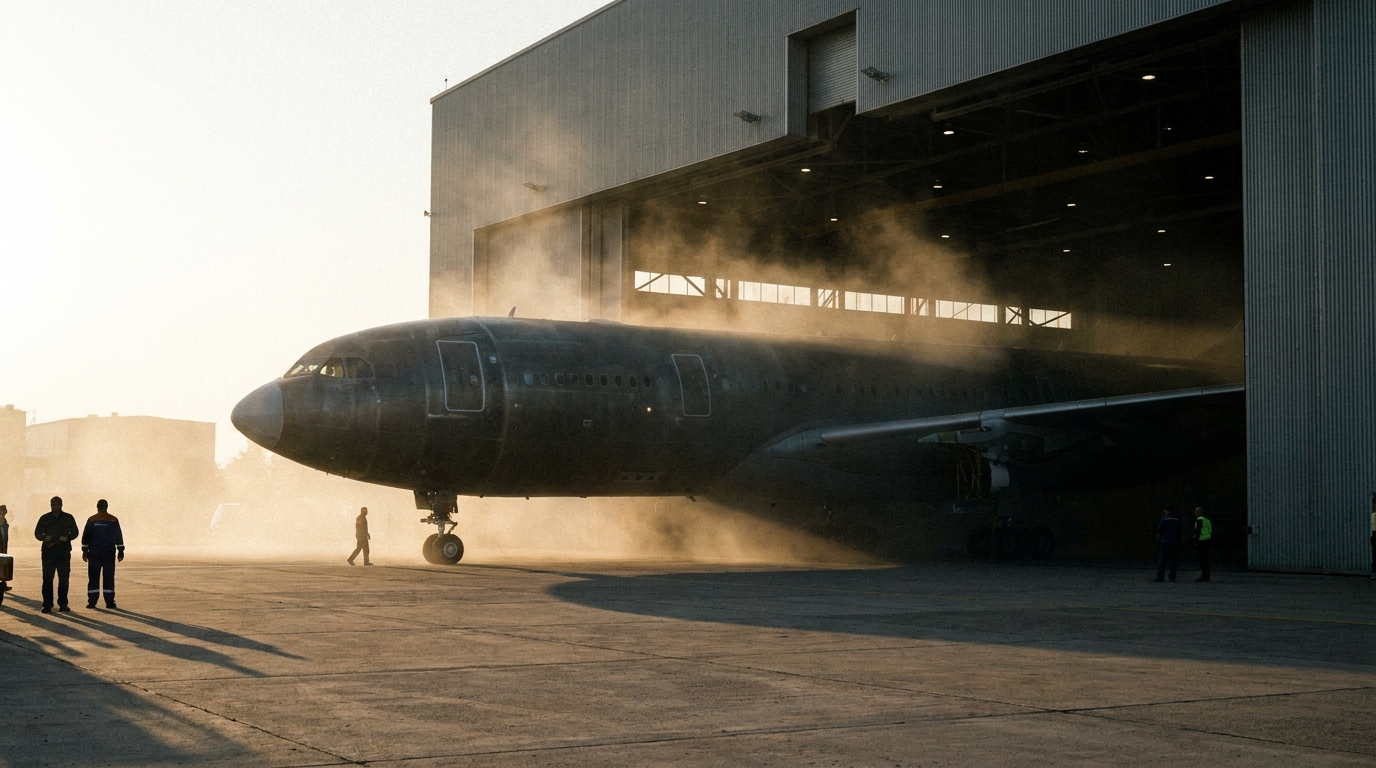
  • Why Everett’s Defense and Cargo Backlog Is the Quiet Anchor of Snohomish County’s 2027 Economy: A Business and Civic Read

    Why Everett’s Defense and Cargo Backlog Is the Quiet Anchor of Snohomish County’s 2027 Economy: A Business and Civic Read

    Featured Snippet

    **What does Boeing’s defense and cargo backlog mean for Everett’s economy through 2029?**

    The combined KC-46 program (19 deliveries in 2026, Lot 12 through 2029, Air Force plan for 75 additional tankers beyond) and the 777-8F program (first jet rolled out April 23 2026, deliveries from 2028) provide multi-year production visibility at the Everett factory through and past the 2027 commercial 767 sundown. For Snohomish County, that means stable industrial employment, supplier demand, and commercial real estate floor demand around Paine Field through the end of the decade.


    If you’re a Snohomish County business owner, a city economic development officer, or a commercial real estate broker watching what Paine Field tells you about the 2027–2029 economy, the most consequential single sentence to come out of Boeing in April 2026 is one most people missed.

    It came on the Q1 2026 earnings call on April 22. CEO Kelly Ortberg, asked about defense, listed KC-46 production increases among the Pentagon-driven defense growth lines Boeing expects to benefit from — alongside F-47, F-15EX, enhanced SATCOM, and weapons system production. The KC-46 final assembly line is at Paine Field. The defense ramp Ortberg described is, at the operational level, an Everett economic story.

    The next day, the first production-standard 777-8 Freighter rolled out of the Everett factory.

    For business and civic readers, this is the read of what those two events mean for the county.

    The Backlog Window Through 2029

    Local economic development depends on multi-year demand visibility. Backlogs at Paine Field now provide that visibility through 2029:

    • KC-46: 19 deliveries targeted in 2026, Lot 12 funding 15 more tankers through 2029, Air Force plan to recapitalize 75 additional KC-135s beyond
    • 777-8F: First aircraft rolled out April 23 2026, first deliveries 2028, 34-firm-order book with Qatar Airways plus Cargolux, Lufthansa Cargo, and ANA
    • 737 North Line: First 737 MAX assembly outside Renton in Boeing’s history, ramping inside the Everett footprint
    • 777-9 passenger: Working through certification

    That is a fundamentally different mix from 2020, when the 747 line was active and the 787 had moved to South Carolina. The current mix is anchored by defense and cargo — both less cyclical than passenger airline orders.

    Why Defense Production Is Different Floor for the Local Economy

    For commercial real estate brokers and industrial landlords near Paine Field, the most important property of defense backlogs is that they don’t cycle on consumer demand.

    Commercial airframes slow when airlines stop ordering. KC-46 production moves at the speed of Pentagon appropriations and Air Force fleet-age curves. The Air Force flies about 380 KC-135 tankers, the youngest of which is roughly 60 years old. The KC-46 is the chosen replacement. There is one production line in the world that builds it, and it is in Everett.

    Even the cost overruns — over $7 billion cumulative since program inception, including a $565 million charge in Q4 2025 — do not slow the line. The Air Force needs the airframes. The county gets the workforce.

    For business owners who lease, employ, or sell to households tied to that workforce, the defense ballast is the anchor.

    Supplier Implications

    The 5,200-worker aerospace shortage projected by the Aerospace Futures Alliance for Washington state is not happening into a flat backlog. It is happening into a backlog that is, between defense and cargo, growing.

    For Snohomish County aerospace suppliers — and there are over 600 of them per the Economic Alliance Snohomish County — the operational signal from this week is:

    • KC-46 supply chain sees increased demand through Lot 12 (2029) and likely beyond if the 75-tanker recap plan moves
    • 777-8F supply chain is actively ramping; the rollout-jet’s first flight, ground testing, and certification activities will pull supplier work forward through 2027
    • Hiring competition tightens — every supplier is competing for the same skilled trades the Boeing line is hiring; package and benefits become differentiators

    For suppliers diversifying customer mix, the defense exposure is now demonstrably the more stable revenue line.

    Commercial Real Estate Read

    If you broker industrial, flex, or office space within 15 miles of Paine Field:

    • Industrial demand floor — Boeing supplier base needs floor space; a multi-year backlog floors that demand
    • Office demand near Paine Field — Snohomish County office vacancy ended Q1 2026 at 10.7% with $31.20 PSF asking rents and a third straight quarter of positive net absorption (per the most recent Q1 reporting)
    • Workforce housing pressure — 30,000 direct Boeing jobs at Paine Field plus supplier base; multi-year backlog means multi-year housing demand at every price point

    Waterfront Place’s 447,500 SF office build-out has a clearer demand signal in this environment than it did 18 months ago when commercial cargo’s 2027 cliff looked unanswered.

    What Civic Readers Should Track

    For City of Everett economic development staff and Snohomish County Council members, the 2027 transition has been the policy uncertainty. April 2026 narrowed that uncertainty:

    • The 767 cliff is real, but the post-cliff plan is now operationally evidenced
    • The KC-46 contractual floor (Lot 12 through 2029) is multi-year stable
    • The 777-8F program has metal in the air with a customer book

    That changes the framing of any tax-base, workforce-development, or housing decision tied to Paine Field employment. Aerospace exposure is, on net, a stable bet through the end of the decade.

    Frequently Asked Questions

    Q: How many direct aerospace jobs does the Everett Boeing factory support?

    A: Roughly 30,000 direct jobs at Paine Field plus the supplier base across Snohomish County (over 600 suppliers per the Economic Alliance Snohomish County).

    Q: What is the dollar value of Boeing’s KC-46 Lot 12 contract?

    A: $2.47 billion, funding 15 additional tankers along with software licensing, subscriptions, and through-life support, with deliveries running through 2029.

    Q: Will the 2027 commercial 767 sundown reduce Snohomish County aerospace employment?

    A: Boeing’s announced plan absorbs the 767 commercial workforce into expanded KC-46 production and the ramping 777-8F program, both at Everett. The April 23 2026 777-8F rollout is the first physical evidence of that absorption underway. Net headcount depends on KC-46 ramp, 777-8F ramp speed, and supplier hiring.

    Q: How does the Snohomish County office market relate to the Boeing footprint?

    A: Q1 2026 office vacancy was 10.7% with $31.20 PSF asking rents and three consecutive quarters of positive net absorption — a tightening market consistent with stable Paine Field employment. Waterfront Place’s 447,500 SF office build-out absorbs into that market.

    Q: Are KC-46 cost overruns an economic risk for Everett?

    A: KC-46 cost overruns ($7 billion+ cumulative, $565 million charge in Q4 2025) affect Boeing’s corporate margins. They have not historically resulted in production slowdowns at Everett — the Air Force requires the airframes — and so the workforce and supplier base have been insulated from the margin pressure.

    Q: What does the 777-8F rollout signal to commercial real estate near Paine Field?

    A: A multi-year cargo airframe ramp anchors industrial, flex, and supplier-supporting office demand. Combined with KC-46 stability through 2029, the area has multi-year demand visibility through the end of the decade.

    Q: What is the Air Force’s plan for the KC-135 fleet?

    A: The Air Force still flies about 380 KC-135 tankers, an airframe that first flew in 1956. The plan is to extend KC-46 Pegasus production beyond the original 179-aircraft program of record and buy roughly another 75 tankers to recapitalize the KC-135 fleet — a multi-decade procurement runway, all running through Everett.


  • For Snohomish County Aerospace Suppliers: How to Read the 5,200-Worker Shortage and What to Do About It

    For Snohomish County Aerospace Suppliers: How to Read the 5,200-Worker Shortage and What to Do About It

    How is the 5,200-worker aerospace shortage going to hit Snohomish County suppliers? Hard, and unevenly. The 600-plus aerospace suppliers across Snohomish County are competing with Boeing, Blue Origin, and each other for the same skilled CNC machinists, composite fabricators, and quality inspectors. The Aerospace Futures Alliance projects a net 5,200-worker shortage in Washington by end of 2026, and the suppliers feeling it most acutely are the small and mid-size shops that cannot match Boeing’s wage and benefit packages on price alone.

    This is the supplier-side companion to the 5,200-worker aerospace shortage core guide. The core walks through the system; the worker-side guide walks through career moves; this one walks through what supplier owners and ops leaders need to be doing right now.

    Read your exposure first

    Not every supplier is exposed equally. Three signals tell you where you sit on the curve:

    1. What’s your skilled-labor mix? If your shop runs heavy on CNC, composite, or inspection — that is exactly where the pipeline shortfall concentrates. Assembly and general labor are easier to backfill from the WATR Manufacturing Assembly Mechanic pathway.
    2. What’s your overlap with the Boeing 777X rework? Boeing disclosed on its April 23, 2026 Q1 earnings call that roughly 30 already-built 777X widebodies parked at Paine Field need a multi-year change incorporation before delivery. That work pulls on the same labor pool as new production. If you supply structural, electrical, or quality services into that effort, your demand is elevated and your competition for labor is doubly intense.
    3. What’s your wage gap to Boeing? Post-2024 Boeing factory wages stepped up materially. If your benefit, schedule, or wage package was already 15-20% behind Boeing’s pre-2024 numbers, the gap widened. The retention math has changed.

    The pipeline programs you should know by name

    Most suppliers in Snohomish County have a working relationship with at least one of these. If you do not, this is the year to start.

    Washington Aerospace Training & Research Center (WATR) — 3008 100th Street SW, Everett. Edmonds College–operated. Five 12-week certificate programs (Manufacturing Assembly Mechanic, Electrical Assembly Mechanic, Manufacturing Composites, Tooling Mechanic, Quality Assurance). Approximately 90% of graduates land manufacturing roles, with about 86% of those in aerospace. Suppliers who build a hiring relationship with WATR see candidates first.

    Machinists Institute (IAM District 751) — 8729 Airport Road, Everett. Opened June 6, 2025. Built to train up to 700 machinists per year. The Boeing-direct pathway dominates, but the Institute also produces skilled CNC, painting, and inspection talent that flows to suppliers when Boeing’s seats are full.

    AJAC apprenticeships — Paid 10-week foundational program, then journeyman-track apprenticeship. AJAC is the lever for suppliers who want to grow workers from zero rather than poach.

    Sno-Isle TECH Skills Center — High school juniors and seniors. The pre-pipeline. Suppliers who sponsor cohorts or take interns build the long-game candidate funnel.

    Everett Community College Advanced Manufacturing — Welding, machining, composites, technical design at the associate’s-degree level. Higher-skill, longer-form than WATR.

    Three plays that work right now

    Play 1: Shorten your time-to-productive. The 12-week WATR cycle gives you a candidate who can step onto your floor in 3 months. If your onboarding-to-productive timeline is 6 months, you are losing twice — once on the wait and once on the candidates who took a faster offer elsewhere. Tighten your floor-readiness checklist and pair every WATR hire with a journeyman mentor in the first 90 days.

    Play 2: Compete on what Boeing cannot match. Boeing’s wage package is hard to beat. Suppliers win on schedule flexibility (4/10s versus rotating shifts), on tuition reimbursement (helps a worker who wants to step up to advanced credentials), on commute reduction (proximity to where your workers actually live), and on the I-can-talk-to-the-owner culture small shops naturally have. Inventory which of those you can credibly offer and lead with them.

    Play 3: Build a Sno-Isle TECH and AJAC pipeline now. Suppliers that started cohort sponsorships in 2022-2023 are seeing the candidates land in 2025-2026. The shops that wait until they’re short-staffed to start the relationship are 18-24 months behind. The fix takes time; start it this month.

    The signals worth watching

    Three numbers will tell you how the pipeline is closing the gap:

    • Machinists Institute annual enrollment versus the 700-per-year design capacity
    • WATR placement rate (currently around 90% into manufacturing, 86% of those in aerospace)
    • AJAC apprenticeship counts

    If those numbers tick up, the supplier labor market loosens through 2027. If they stay flat, the wage and benefit competition keeps escalating.

    The Boeing program signals worth watching

    The supplier ecosystem moves with Boeing’s program signals. Three to track right now:

    • The 737 North Line ramp in Everett — see the North Line worker’s guide for the program shape.
    • The 767 sundown and KC-46 transition — see the supplier-side 767 sundown guide from the April 22 run.
    • The 777X rework and first-delivery push — supplier exposure is heavy on structural, electrical, and inspection scopes.

    The supplier that reads all three as one story rather than three separate signals will allocate labor and capacity correctly through the cycle.

    Frequently Asked Questions

    How many aerospace suppliers operate in Snohomish County?

    The aerospace supplier base in Snohomish County is consistently described in industry reporting as 600-plus establishments, ranging from small precision-machining shops to large structural-assembly partners. The full ecosystem — including upstream services and adjacent manufacturing — is larger.

    How does the 777X rework affect supplier demand?

    Boeing disclosed on its April 23, 2026 Q1 earnings call that approximately 30 already-built 777X widebodies parked at Paine Field need multi-year change incorporation before delivery. That work pulls on the same skilled labor — particularly CNC, structural assembly, and quality inspection — as new production, elevating supplier demand on those services through the rework period.

    What’s the most effective hiring channel for a small supplier?

    For shops that need 1-3 hires per year, building a direct relationship with WATR placement staff and AJAC tends to outperform broad job-board posting. WATR’s 12-week cycle predictably puts candidates into the market every quarter; AJAC’s apprenticeship model lets suppliers grow workers rather than compete for finished talent.

    How do small suppliers compete with Boeing wages?

    Schedule flexibility (4/10s, predictable shifts), tuition reimbursement, proximity reducing commute time, and a closer worker-to-owner culture are the four levers small suppliers most reliably win on. The price-only competition is hard; the package competition is winnable.

    Where does Blue Origin fit in supplier labor competition?

    Blue Origin grew from approximately 3,500 employees to over 4,000 by late 2025 and is projecting another 1,500 hires through 2026. Blue Origin competes for the same skilled CNC, composite, and inspection talent as Boeing and Snohomish County suppliers, intensifying the labor squeeze.

    Is the labor market expected to loosen?

    Pipeline expansion at WATR, the Machinists Institute, AJAC, Sno-Isle TECH, and EvCC is increasing throughput, but the demand from Boeing’s 10,000-worker Washington commitment, the 777X rework, the 737 ramp, the Blue Origin ramp, and the supplier base is large enough that material loosening is a 2027-2028 timeline at the earliest, contingent on those programs hitting enrollment targets.