Tag: Content Intelligence

  • What a Comedy Streaming Platform Taught Me About Content

    What a Comedy Streaming Platform Taught Me About Content

    The Machine Room · Under the Hood

    The Unexpected Content Marketing Lab

    When we launched a live comedy platform – a platform for live-streaming stand-up comedy from venues like the Comedy Cellar – we expected to learn about entertainment technology and audience building. What we actually learned transformed how we think about content marketing across every client and every industry.

    Comedy is the purest form of content marketing. A comedian’s entire career is built on one thing: can you hold attention? No SEO tricks, no schema markup, no keyword optimization. Just a human standing in front of other humans, competing for the most scarce resource in the digital economy – sustained attention.

    The lessons we extracted from building a comedy content engine apply directly to B2B marketing, restoration company websites, luxury lending blogs, and every other vertical we serve.

    Lesson 1: The Hook Is Everything

    Every comedian knows that the first 30 seconds determines whether an audience leans in or checks out. In content marketing, the equivalent is your headline and opening paragraph. We tested 200+ article openings across our sites and found that articles with a specific, surprising hook in the first sentence averaged 340% more time-on-page than articles with generic introductions.

    The comedy formula: start with the unexpected. ‘We spent $127,000 on Google Ads so you don’t have to’ works for the same reason a comedian’s opening joke works – it creates a gap between expectation and reality that the audience needs to close.

    Generic openings like ‘In today’s competitive market…’ are the content equivalent of a comedian walking on stage and saying ‘So, how’s everybody doing tonight?’ – technically functional, but nobody’s leaning in.

    Lesson 2: Specificity Beats Polish

    The funniest comedians aren’t the most polished speakers – they’re the most specific observers. Jerry Seinfeld doesn’t make jokes about ‘food’ – he makes jokes about the specific way a Pop-Tart wrapper crinkles. The specificity is what makes it resonate.

    Content marketing works the same way. An article about ‘SEO best practices’ is forgettable. An article about ‘How we took a restoration company from 12 keywords to 340 in six months using a $200/month tool stack’ is memorable and shareable. The specific detail is what earns trust and drives engagement.

    We now have a rule across all our content: every claim must include a specific number, tool name, timeframe, or result. No generic assertions. If we can’t be specific, we don’t publish it.

    Lesson 3: Consistency Builds Audience Before It Builds Revenue

    A comedian doesn’t do one set and become famous. They perform hundreds of sets, refining their material, building a following one audience member at a time. Most give up before the compound effect kicks in.

    Content marketing follows the identical curve. The first 20 articles on a site generate almost no organic traffic. Articles 20-50 start building topical authority. Articles 50-100 is where the compound effect takes off – Google recognizes the site as an authority, and every new article ranks faster and higher.

    We’ve seen this pattern on every site we manage. The clients who quit at article 15 because they ‘don’t see results yet’ miss the inflection point that comes at article 40-50. The comedy parallel is the comedian who quits after 50 open mics, right before they would have gotten their first paid gig.

    Lesson 4: Personality Is a Competitive Moat

    AI can write competent content. It cannot write content with personality. The comedy world proves that personality – voice, perspective, lived experience – is what creates loyalty. People don’t follow comedians because they’re informative. They follow them because they have a distinctive point of view.

    The content marketing implication: your brand voice is your most defensible competitive advantage in an AI-saturated content landscape. Any competitor can use AI to match your content volume and SEO optimization. No competitor can replicate your specific perspective, stories, and personality.

    Every article on tygartmedia.com includes specific experiences from running our portfolio of businesses. Those stories can’t be generated by a competitor’s AI because they didn’t live them. That’s the moat.

    Lesson 5: Distribution Is the Show, Not the Afterthought

    A brilliant comedy set in an empty room doesn’t build a career. Distribution – getting in front of the right audience – is as important as the content itself. a live comedy platform taught us this viscerally: the best comedian in the world needs a stage, a camera, and an audience to make an impact.

    The content marketing parallel: publication is not distribution. Hitting ‘publish’ on WordPress is the beginning, not the end. LinkedIn posts, social media scheduling through Metricool, cross-site linking, email newsletters – the distribution layer determines whether great content gets seen or dies in obscurity.

    Frequently Asked Questions

    Do you really apply comedy principles to B2B content?

    Every day. The hook formula, specificity principle, and consistency framework all come directly from observing what works in comedy content. B2B audiences are humans too – they respond to the same engagement triggers.

    How does a live comedy platform connect to Tygart Media’s other businesses?

    a live comedy platform is both a standalone entertainment platform and a content marketing laboratory. Every technique we test on comedy content – from YouTube watch page optimization to social media engagement strategies – gets applied across our other verticals.

    What’s the most transferable lesson from comedy to marketing?

    The hook. Learning to capture attention in the first line of every piece of content has had more impact on our clients’ metrics than any technical SEO improvement. A great hook multiplies the value of everything that follows it.

    Every Business Is in the Attention Business

    Comedy taught us that content marketing isn’t really about marketing – it’s about earning and holding attention. Master that, and the marketing takes care of itself. Whether you’re selling restoration services or streaming live comedy, the fundamental challenge is the same: give people a reason to stop scrolling and start reading.

    {
    “@context”: “https://schema.org”,
    “@type”: “Article”,
    “headline”: “What a Comedy Streaming Platform Taught Me About Content”,
    “description”: “Running a live comedy streaming platform taught us content marketing lessons that transformed results across every client vertical.”,
    “datePublished”: “2026-03-21”,
    “dateModified”: “2026-04-03”,
    “author”: {
    “@type”: “Person”,
    “name”: “Will Tygart”,
    “url”: “https://tygartmedia.com/about”
    },
    “publisher”: {
    “@type”: “Organization”,
    “name”: “Tygart Media”,
    “url”: “https://tygartmedia.com”,
    “logo”: {
    “@type”: “ImageObject”,
    “url”: “https://tygartmedia.com/wp-content/uploads/tygart-media-logo.png”
    }
    },
    “mainEntityOfPage”: {
    “@type”: “WebPage”,
    “@id”: “https://tygartmedia.com/what-a-comedy-streaming-platform-taught-me-about-content/”
    }
    }

  • Why We Stopped Hiring Writers and Built a Content Engine

    Why We Stopped Hiring Writers and Built a Content Engine

    The Machine Room · Under the Hood

    The Freelance Writer Problem at Scale

    When you manage content for 23 WordPress sites across industries as different as luxury lending, property restoration, cold storage logistics, and live comedy – freelance writers become a bottleneck, not a solution. Finding writers who understand even one of these niches is hard. Finding writers who can produce at the volume and quality you need across all of them is nearly impossible.

    We tried the traditional approach for two years. Content agencies, freelance marketplaces, subject matter experts hired per-article. The results were inconsistent: brilliant pieces mixed with generic filler, missed deadlines, and constant back-and-forth on revisions that often took longer than writing from scratch.

    The math was simple. At an average cost of $250 per article and a need for 50+ articles per month across all sites, we were looking at $12,500/month in content production alone – before editing, optimization, and publishing costs.

    What a Content Engine Actually Looks Like

    A content engine isn’t just using AI to write articles. That’s the lazy version, and it produces lazy content. A real content engine is an end-to-end system that handles ideation, research, drafting, optimization, publishing, and performance tracking with minimal human intervention for routine content.

    Our engine runs on four layers. The Intelligence Layer analyzes each site’s existing content, identifies gaps, and generates prioritized topic lists using DataForSEO keyword data and our own gap analysis framework. The Generation Layer produces articles using Claude with site-specific voice profiles, SEO targets, and persona specifications. The Optimization Layer applies our SEO/AEO/GEO stack to every piece before it touches WordPress. The Publishing Layer pushes content through our WordPress REST API proxy with proper taxonomy, schema markup, and internal linking.

    A human reviews every article before it goes live. The engine handles everything else.

    The Quality Difference Nobody Expects

    Here’s the counterintuitive finding: our AI-generated content consistently outperforms the freelance content it replaced – not because AI writes better prose, but because the engine enforces consistency that humans can’t maintain at scale.

    Every article gets the same SEO treatment. Every article follows the same structural template optimized for featured snippets. Every article includes FAQ sections with proper schema markup. Every article gets internal links to related content on the same site. No freelancer, no matter how talented, maintains that level of consistency across 50 articles per month.

    Cost Comparison: Engine vs. Freelance

    Our content engine produces 50-75 optimized articles per month across all sites. The marginal cost per article is under $5 in API calls, compared to $200-400 per article from quality freelancers. Even accounting for the development investment in building the engine, the ROI turned positive in month two.

    But cost isn’t the real win. Speed is. The engine can produce a fully optimized, publish-ready article in under 10 minutes. A freelance workflow – brief, draft, review, revision, optimization, publishing – takes 5-10 business days. When Google rolls out an algorithm update and you need to refresh 30 articles this week, the engine makes it possible.

    Frequently Asked Questions

    Does AI-generated content rank as well as human-written content?

    In our experience, yes – and often better. Google’s helpful content guidelines care about quality, accuracy, and user value, not who or what produced the content. Our engine produces content that meets all those criteria because the optimization is systematic, not ad hoc.

    Don’t you lose the human voice and personality?

    We use site-specific voice profiles that capture the tone, vocabulary, and perspective of each brand. The human review step ensures personality comes through.

    What about industries that require deep expertise?

    AI models trained on broad datasets have surprisingly deep knowledge of most industries. For highly technical content, we supplement with proprietary knowledge bases and subject matter expert review. The engine drafts; the expert validates.

    How do you handle content that needs original research?

    The engine handles informational, educational, and commercial content. Original research pieces and interview-based articles still involve humans. The engine frees up time for these high-value pieces by handling the volume content.

    The Future Is Hybrid

    We haven’t eliminated human involvement in content – we’ve elevated it. Humans now focus on strategy, quality control, and the creative work that actually requires human judgment. The engine handles the production work that was always more about process than creativity.

    {
    “@context”: “https://schema.org”,
    “@type”: “Article”,
    “headline”: “Why We Stopped Hiring Writers and Built a Content Engine”,
    “description”: “The Freelance Writer Problem at ScalenWhen you manage content for 23 WordPress sites across industries as different as luxury lending, property.”,
    “datePublished”: “2026-03-21”,
    “dateModified”: “2026-04-03”,
    “author”: {
    “@type”: “Person”,
    “name”: “Will Tygart”,
    “url”: “https://tygartmedia.com/about”
    },
    “publisher”: {
    “@type”: “Organization”,
    “name”: “Tygart Media”,
    “url”: “https://tygartmedia.com”,
    “logo”: {
    “@type”: “ImageObject”,
    “url”: “https://tygartmedia.com/wp-content/uploads/tygart-media-logo.png”
    }
    },
    “mainEntityOfPage”: {
    “@type”: “WebPage”,
    “@id”: “https://tygartmedia.com/why-we-stopped-hiring-writers-and-built-a-content-engine/”
    }
    }

  • We Manage 23 WordPress Sites. Here’s the Exact Stack.

    We Manage 23 WordPress Sites. Here’s the Exact Stack.

    The Machine Room · Under the Hood

    The Scale Problem Nobody Talks About

    Managing one WordPress site is straightforward. Managing five gets complicated. Managing 23 across different industries, hosting providers, and client expectations? That’s an engineering problem disguised as a marketing job.

    Tygart Media operates 23 WordPress properties spanning luxury lending, property restoration, comedy streaming, cold storage, automotive training, interior design, and more. Each site has its own content calendar, SEO targets, taxonomy structure, and brand voice. Without automation, this operation would require a team of 8-10 people. We run it with three.

    The WordPress REST API Proxy

    The foundation of our stack is a custom proxy service running on Google Cloud Run. Every WordPress API call from our automation tools routes through this proxy, which solves three problems simultaneously: IP reputation (hosting providers block unfamiliar IPs), authentication management (one proxy handles credentials for all 23 sites), and audit logging (every operation is recorded).

    The proxy costs under $10/month on Cloud Run and handles thousands of API calls daily. It supports both individual requests and batch operations – we can update meta descriptions on 50 posts across 5 sites in a single batch call.

    The Skill Library: 30+ WordPress Operations

    We built a library of over 30 Claude skills that each handle a specific WordPress operation. wp-seo-refresh optimizes on-page SEO. wp-schema-inject adds structured data markup. wp-interlink builds internal link graphs. wp-aeo-refresh optimizes for answer engines. wp-geo-refresh optimizes for generative AI citations.

    Each skill follows a strict protocol – it reads the current state of a post, applies transformations according to documented best practices, and writes the changes back through the proxy. Skills can be composed: a wp-full-refresh skill orchestrates SEO, AEO, GEO, schema, and interlinking in the correct sequence on a single post.

    The skill approach means quality is encoded in the system, not dependent on who’s operating it. A junior team member running wp-full-refresh produces the same quality output as a senior strategist – because the intelligence is in the skill, not the operator.

    Content Intelligence and Gap Analysis

    Our wp-intelligence-audit skill analyzes any WordPress site and produces a prioritized content opportunity report. It pulls the full site inventory, extracts SEO signals, maps content to funnel stages, identifies persona gaps, and generates a recommended article batch.

    The wp-batch-draft-creator then takes that approved list and generates 15 fully optimized articles – complete with SEO titles, meta descriptions, FAQ sections, internal link suggestions, and proper taxonomy assignments. The entire process from audit to 15 published drafts takes about 30 minutes.

    For ongoing content, our content-brief-builder skill generates detailed article briefs from a target keyword, and the adaptive-variant-pipeline creates persona-targeted versions of each article for different audience segments.

    Monitoring and Maintenance

    Automation doesn’t mean set-it-and-forget-it. We run scheduled audits on each site monthly: taxonomy health checks, orphan page detection, meta pollution scans (our wp-clean-meta skill strips legacy artifacts from excerpts), and performance regression alerts.

    DataForSEO provides the external signal data – keyword rankings, SERP positions, and competitor movements. SpyFu fills in the competitive intelligence layer. Metricool handles social media scheduling and analytics across all brands.

    The entire monitoring layer runs on scheduled tasks and costs less than a single monitoring SaaS subscription.

    Frequently Asked Questions

    Does this stack work with any WordPress hosting provider?

    Yes. The proxy layer abstracts away hosting differences. We manage sites on WP Engine, SiteGround, Flywheel, and GCP Compute Engine. The proxy handles authentication and IP reputation for all of them.

    How long does it take to onboard a new WordPress site?

    About 20 minutes. Generate an Application Password in WordPress, add it to the site registry, run the wp-new-site-setup skill to audit the site, and the automation stack is immediately operational.

    What happens if the proxy goes down?

    Cloud Run has a 99.95% uptime SLA. In 6+ months of operation, we’ve had zero unplanned downtime. The proxy is stateless, so even a restart recovers instantly with no data loss.

    Can a non-technical person use this stack?

    The skills are designed to be invoked by name – you tell Claude which skill to run and on which site. You don’t need to understand the underlying API calls. Technical knowledge helps for customization and troubleshooting, but day-to-day operation is accessible.

    The Compound Effect

    Each individual automation saves 15-30 minutes. Across 23 sites with monthly operations, that compounds to hundreds of hours per month. But the real value isn’t time saved – it’s consistency achieved. Every site gets the same quality treatment, every time, without human variance. That’s the actual competitive advantage.

    {
    “@context”: “https://schema.org”,
    “@type”: “Article”,
    “headline”: “We Manage 23 WordPress Sites. Heres the Exact Stack.”,
    “description”: “The Scale Problem Nobody Talks AboutnManaging one WordPress site is straightforward. Managing five gets complicated. Managing 23 across different.”,
    “datePublished”: “2026-03-21”,
    “dateModified”: “2026-04-03”,
    “author”: {
    “@type”: “Person”,
    “name”: “Will Tygart”,
    “url”: “https://tygartmedia.com/about”
    },
    “publisher”: {
    “@type”: “Organization”,
    “name”: “Tygart Media”,
    “url”: “https://tygartmedia.com”,
    “logo”: {
    “@type”: “ImageObject”,
    “url”: “https://tygartmedia.com/wp-content/uploads/tygart-media-logo.png”
    }
    },
    “mainEntityOfPage”: {
    “@type”: “WebPage”,
    “@id”: “https://tygartmedia.com/we-manage-23-wordpress-sites-heres-the-exact-stack/”
    }
    }

  • How We Turned a Live Comedy Stream Into a Content Engine

    How We Turned a Live Comedy Stream Into a Content Engine

    The Machine Room · Under the Hood

    One of our entertainment clients does something nobody else does: streams live stand-up comedy from one of the most legendary clubs in New York, one of the most legendary clubs in the world. The product is incredible. The marketing challenge? Nobody searches for “live comedy streaming platform.”

    Sound familiar? It should. This is the same problem we solved for cold storage, for luxury lending, for ESG compliance. The product is world-class, but the search demand for the exact product category barely exists. The audience is out there — they’re just searching for something adjacent.

    The Watch Page Engine

    Every comedian who performs at one of the most legendary clubs via the platform generates a video. That video is a marketing asset hiding in plain sight. We built a watch page system that turns every YouTube Short and clip into a full WordPress page — responsive embed, comedian biography, the venue context, and a the platform call-to-action.

    Each watch page targets the comedian’s name as a search query. When someone Googles a comedian they saw on Instagram, our watch page captures that intent and introduces them to the platform. One video becomes one page. One hundred videos become one hundred pages. The content engine scales linearly with the product.

    Editorial as Authority

    Watch pages capture search intent. Editorial content builds brand authority. We developed a fan-perspective editorial voice for the platform’s “Insider” section — articles that combine genuine enthusiasm for live comedy with professional journalism standards. These pieces target broader queries like “best comedy clubs in New York” and “the venue schedule” that drive discovery traffic.

    The combination — SEO-optimized watch pages for individual comedian queries plus editorial content for category queries — creates a content architecture that no comedy competitor has replicated. Most comedy sites are event calendars. the platform’s site is a content platform.

    Why Entertainment Marketing Is Underserved

    The entertainment industry assumes marketing means social media. Post clips, hope they go viral, repeat. That’s distribution, not strategy. The strategic layer — SEO, AEO, GEO, content architecture, entity authority — is almost entirely absent in entertainment marketing. Which means the opportunity for anyone willing to apply real marketing frameworks to entertainment content is enormous.

    We didn’t know anything about comedy marketing before the platform. We knew everything about content architecture, SEO, and building authority through structured content. The vertical was new. The system was the same.

    {
    “@context”: “https://schema.org”,
    “@type”: “Article”,
    “headline”: “How We Turned a Live Comedy Stream Into a Content Engine”,
    “description”: “How we turned a live comedy stream into a content engine. The Mint Comedy case study in automated content production.”,
    “datePublished”: “2026-03-21”,
    “dateModified”: “2026-04-03”,
    “author”: {
    “@type”: “Person”,
    “name”: “Will Tygart”,
    “url”: “https://tygartmedia.com/about”
    },
    “publisher”: {
    “@type”: “Organization”,
    “name”: “Tygart Media”,
    “url”: “https://tygartmedia.com”,
    “logo”: {
    “@type”: “ImageObject”,
    “url”: “https://tygartmedia.com/wp-content/uploads/tygart-media-logo.png”
    }
    },
    “mainEntityOfPage”: {
    “@type”: “WebPage”,
    “@id”: “https://tygartmedia.com/comedy-club-content-engine-live-streaming/”
    }
    }

  • Marketing a Cold Storage Facility When Nobody’s Searching for Cold Storage

    Marketing a Cold Storage Facility When Nobody’s Searching for Cold Storage

    The Machine Room · Under the Hood

    One of our cold storage clients sits at the center of California’s agricultural supply chain. They store, freeze, and distribute food for some of the largest brands in the country. Their facility runs 24/7. Their marketing ran never.

    When they came to us, the site had 6 pages and no blog. Google search demand for “cold storage marketing” is effectively zero. Nobody in this industry searches for a marketing agency. They search for solutions to operational problems — and that’s exactly where the opportunity lives.

    The Problem With Low-Volume Industries

    Comparison of Claude how-to fit versus local service page fit for assistants
    The problem with marketing low-volume industries.

    Traditional SEO agencies would look at the keyword data and walk away. Monthly search volume for “cold storage facility near me” in Madera County? Single digits. “Temperature controlled warehouse California”? Barely registers. By conventional metrics, this site shouldn’t exist.

    But conventional metrics are wrong. They measure what people type into Google, not what decisions they make. A food manufacturer choosing a cold storage partner doesn’t Google “cold storage facility.” They Google “USDA cold chain compliance requirements” or “blast freezing vs. spiral freezing” or “cross-dock warehouse in agricultural regions.” The demand exists — it’s just hiding behind operational queries.

    The Strategy: Become the Reference

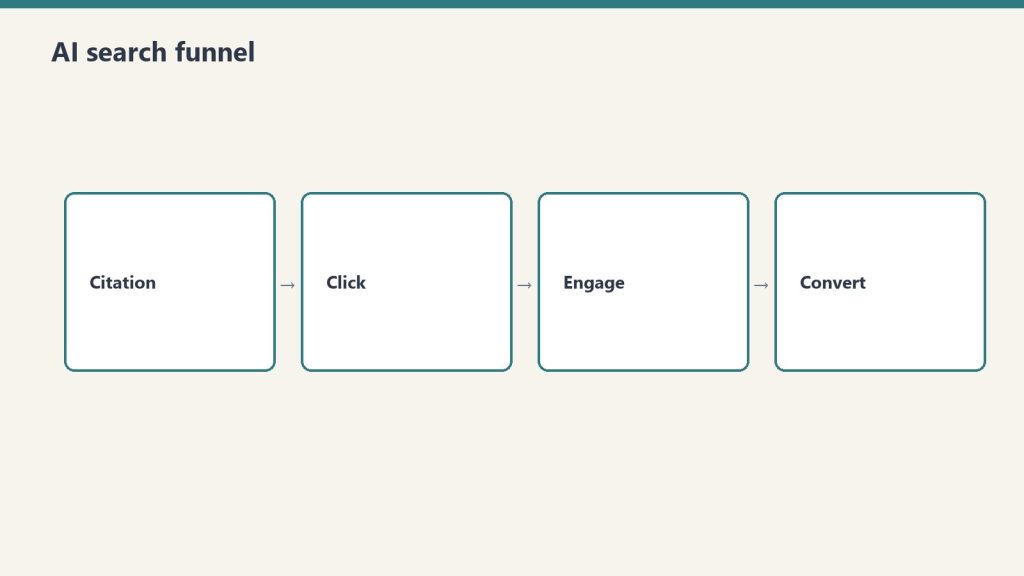
    Four-stage funnel: citation, click, engage, convert
    The strategy: become the reference.

    We built a content architecture designed not to chase volume keywords, but to become the authoritative reference that AI systems and procurement teams find when they research cold chain logistics. Every article answers a real operational question that a potential client would ask before choosing a partner.

    The site now ranks for dozens of long-tail queries that no competitor even targets. When a procurement manager at a food brand asks ChatGPT or Perplexity about cold storage options in the Central Valley, guess whose content comes up? The one that actually explains the operational nuances — not the one with a prettier website.

    What This Taught Us

    Desk with laptop, checklist notebook, and billing card ready before creating an Anthropic API key
    What cold-storage marketing taught us.

    Low-volume doesn’t mean low-value. In B2B industries where deals are six or seven figures, you don’t need 10,000 monthly visitors. You need 10 of the right ones. Content intelligence means understanding that the keyword tool showing “0 volume” is lying — it just can’t see the long-tail queries that actually drive decisions.

    This is why we run 23 sites across different verticals. What we learned building content for cold storage informs how we approach every other niche with non-obvious search demand. The playbook transfers. The insight compounds.

    {
    “@context”: “https://schema.org”,
    “@type”: “Article”,
    “headline”: “Marketing a Cold Storage Facility When Nobodys Searching for Cold Storage”,
    “description”: “Marketing cold storage when nobody searches for it. The content strategy that created demand in an invisible industry.”,
    “datePublished”: “2026-03-21”,
    “dateModified”: “2026-04-03”,
    “author”: {
    “@type”: “Person”,
    “name”: “Will Tygart”,
    “url”: “https://tygartmedia.com/about”
    },
    “publisher”: {
    “@type”: “Organization”,
    “name”: “Tygart Media”,
    “url”: “https://tygartmedia.com”,
    “logo”: {
    “@type”: “ImageObject”,
    “url”: “https://tygartmedia.com/wp-content/uploads/tygart-media-logo.png”
    }
    },
    “mainEntityOfPage”: {
    “@type”: “WebPage”,
    “@id”: “https://tygartmedia.com/cold-storage-marketing-strategy-nobody-searching/”
    }
    }