If you own a skilled-industry business, or you buy them, the most valuable asset on your balance sheet is not on your balance sheet at all. It is the tacit knowledge sitting inside the heads of your senior operators — the judgment patterns, the relationship maps, the failure-mode instincts, the customer-handling moves that took thirty years to develop and have never been written down. That asset is about to be repriced sharply upward, and most owners and buyers have not adjusted their thinking yet.
This article is for the people who control capital in skilled industries. The owners, the operators, the private-equity buyers, the acquirers, the strategic investors. The thesis is simple. The AI shift is making the procedural floor of every industry cheap. The ceiling — the tacit knowledge that defines the great operators — is becoming the only durable competitive moat. If you do not have a deliberate strategy for valuing, protecting, and acquiring that asset, you are leaving the most important variable in your business unmanaged.
What Has Changed in the Economics of Expertise
For most of the last forty years, the economic narrative around skilled industries was that experienced operators were a cost center. Senior labor was expensive. The instinct of professionalized management was to push experience toward retirement, replace it with cheaper junior labor backed by software, and capture the difference as margin. That playbook worked in an era when the documented, procedural knowledge of an industry was the bulk of what made a company functional.
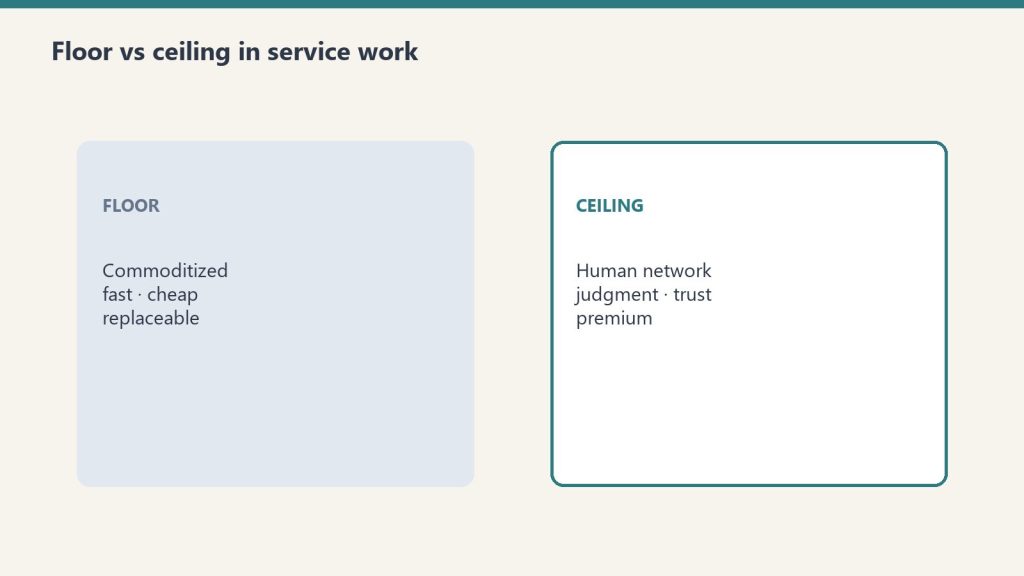
That era ended sometime in the last twenty-four months. The arrival of capable AI systems collapsed the cost of doing the procedural floor work. AI raises the floor of every industry, but it cannot touch the ceiling. The procedural work that used to consume hours of each senior operator’s day — scoping, documentation, communication, reporting — can now be done by software in a fraction of the time. What is left of the senior operator’s role is the part that cannot be automated. The judgment. The relationships. The pattern recognition. The tacit knowledge.
That residual is now the entire game. And it lives inside heads, not inside systems. The companies that built defensible positions on the back of senior expertise are sitting on the most undervalued asset in their balance sheet. The companies that pushed senior expertise out the door to optimize margin have just discovered that the operators they replaced cannot actually be replaced.
How to Recognize the Asset in Your Business
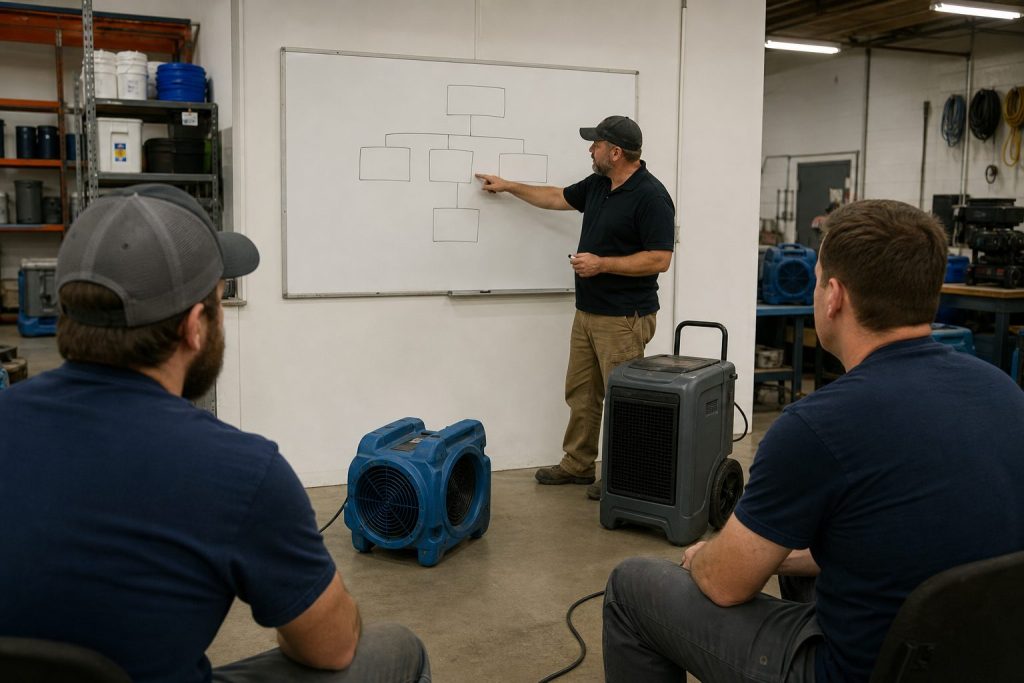
Most owners do not have a clear picture of where the tacit knowledge in their company actually lives. Here is how to find it.
Look at who gets called when something goes sideways. Every company has a small number of operators who are the de facto resolution layer for unusual problems. The job that confuses the project manager. The customer who is about to fire you. The technical situation the team has never seen. The senior people who handle those situations are sitting on the institutional judgment. Most of them have been at the company a long time. Most of them are underleveraged in formal management hierarchies because their value does not show up on a traditional org chart.
Look at who customers ask for by name. The senior operators who get specifically requested by repeat customers are carrying brand equity that does not belong to the company. It belongs to them personally. If they leave, that customer revenue is at meaningful risk. Most companies do not track this. They should.
Look at who the younger employees informally consult. In every skilled-industry business, there is a shadow advisory structure underneath the formal one. Junior employees know which senior operators actually understand the work and quietly route their hardest questions to those people. Identify those informal advisors. They are the carriers of the company’s real expertise.
Look at who solves problems that the documentation does not solve. The procedure manual covers the common cases. The unusual cases get solved by senior operators using judgment that is not in any document. The people who solve those cases are the ones whose departure would create the largest knowledge gap.
Once you have identified the carriers, you have identified the asset. The next question is how much it is worth.
What Tacit Knowledge Is Actually Worth
The economic value of tacit knowledge in a skilled-industry business is most easily measured by what happens when it walks out the door. Specifically — what does it cost to replace a senior operator who carries deep institutional judgment, and how long does the replacement take?
In most skilled industries the answer is genuinely surprising. Replacing a senior operator with thirty years of experience usually takes between two and five years of ramp time before the replacement reaches comparable judgment capacity, and often the replacement never fully gets there. During that ramp period, the business carries elevated error rates, lower margins on complex jobs, and customer-relationship risk that is invisible until something goes wrong.
A rough way to value a senior operator who carries tacit knowledge — multiply their fully loaded annual cost by the number of years of ramp time their replacement would require, then add the contribution margin on the complex work that only they can currently handle. That number is the floor on the asset value sitting in their head. In many cases it is meaningfully larger than the asset value of any piece of equipment the company owns.
For acquirers, this calculus changes how due diligence should be done. The standard due diligence checklist focuses on equipment, contracts, customer concentration, and financials. The most important variable — the bench strength of senior operators who carry institutional judgment — is rarely scrutinized with the same rigor. That is the variable that determines whether the acquired business is actually durable post-close, or whether the value evaporates the moment the founder or senior operators walk.
The Acquisition Playbook for Tacit Knowledge

If you are buying a skilled-industry business, the deal structure has to reflect where the actual value lives. Here is the modern playbook.
Structure earnouts around senior operator retention, not just revenue. The traditional earnout ties contingent payment to revenue or EBITDA milestones. The modern earnout should also tie payment to keeping specifically named senior operators in place and engaged for a minimum number of years. If the senior operator walks, the earnout drops, because the asset you actually bought walked with them. This protects you. It also signals to the seller that you understand what you are buying.
Negotiate explicit knowledge transfer requirements. The acquisition agreement should require structured knowledge transfer from senior operators to identified successors over a defined window. This is not a soft commitment. It is a specific, scheduled, documented apprenticeship program built into the deal terms. The seller has incentive to comply because their earnout depends on it. The buyer has protection because the institutional knowledge is being captured in transferable form.
Identify and lock in the carriers before close. In the diligence phase, identify the specific senior operators who carry the most institutional judgment. Then build retention packages for them, contingent on the deal closing. Communicate to them directly that they are recognized as critical to the business and that the acquirer values their role. The most common failure mode in skilled-industry acquisitions is that the carriers feel undervalued post-close, get a better offer from a competitor six months later, and walk. The business value goes with them.
Run a Human Distillery process on the founder. If the founder is a senior operator with decades of experience, run a deliberate, structured extraction of their tacit knowledge before they exit the business. This is a specific methodology — a series of long-form, structured conversations that surface the judgment patterns underneath their work and convert them into operator-ready playbooks and AI-ready training data. The output is a durable knowledge asset the company owns even after the founder departs.
Price the deal accordingly. A business whose senior operators are committed to staying and whose tacit knowledge has been extracted into transferable form is worth materially more than a business with identical financials but no knowledge-transfer infrastructure. Acquirers who understand this can pay premium multiples to sellers who have done the work, and still capture more value than buyers who pay lower multiples for undurable assets.
The Owner Playbook If You Are Not Selling
If you own a skilled-industry business and you are not planning to sell, the strategic implications are different but equally important.
Identify your carriers and treat them as the highest-leverage asset in your company. The senior operators who carry institutional judgment should be the highest-paid, most-respected, longest-retained employees in your business, regardless of where they sit on a formal org chart. If your compensation system rewards management layers and underrewards senior operator depth, your compensation system is misaligned with the actual economics of your industry.
Build apprenticeship structures around them. Pair each senior operator with one or two younger employees in a deliberate apprenticeship model. The younger employees work alongside the senior on real jobs, absorbing the judgment patterns in context. This is not training in the classroom sense. It is the traditional craft model, applied deliberately to capture knowledge that would otherwise leave with retirement. The career path this creates for younger employees is a meaningful retention tool in its own right.
Document the patterns that can be documented. Some tacit knowledge cannot be written down, but a meaningful fraction of it can be surfaced through structured conversation. Have someone — internal or external — sit with each senior operator and run them through their judgment patterns systematically. The output is an internal playbook. It does not replace the senior operator. It captures enough of their judgment to accelerate the next generation and to maintain consistency if the senior departs unexpectedly.
Plan retirement transitions over years, not months. The traditional retirement model assumed senior labor was overhead. The modern model recognizes senior operators as carriers of institutional capital. Plan their transitions over three to five years, with reduced hours and explicit advisory roles, so the knowledge has time to transfer. Most senior operators will accept a reduced-hours advisory arrangement for years longer than they would accept the traditional retirement schedule.
The Strategic Window
This shift is happening now. The owners and acquirers who recognize it in the next twenty-four months are going to capture significant economic value. The ones who continue operating on the assumption that senior labor is a cost center are going to find themselves losing the carriers, losing the institutional capability, and competing on a commoditized floor against everyone else.
The window is open right now because most of the industry has not yet adjusted to the new economics. Senior operators are still being valued at pre-AI rates. Acquisition multiples are still being calculated on pre-AI frameworks. The companies that move quickly can build moats their competitors will not understand for years.
The asset is sitting in their heads. The market is in the process of figuring out what it is worth. The operators who control the asset are about to be the most valuable people in their industries. The owners and buyers who understand this first are going to control the next decade of skilled-industry consolidation.
Frequently Asked Questions
How do you put a dollar value on tacit knowledge?
Calculate the fully loaded annual cost of replacing a senior operator who carries deep institutional judgment, multiply by the number of years of ramp time the replacement would require to reach comparable judgment, then add the contribution margin on the complex work only that operator can currently handle. The result is a floor on the asset value, which in many cases is larger than the value of equipment the company owns.
What is a Human Distillery and why does it matter to an acquirer?
The Human Distillery is a structured methodology for extracting tacit knowledge from senior operators through long-form, deliberate conversations, converting their judgment patterns into operator-ready playbooks and AI-ready training data. For acquirers, it converts institutional knowledge from an at-risk asset into a durable, company-owned asset that survives the founder’s exit.
Should earnouts be tied to senior operator retention?
Yes. In a skilled-industry acquisition where the value is concentrated in senior operator judgment, traditional revenue-based earnouts under-protect the buyer. Tying earnout payments to keeping specifically named senior operators in place for a defined period aligns the seller’s incentive with the actual value being transferred and protects the acquirer from the most common post-close failure mode.
How do I identify the carriers of tacit knowledge in my business?
Look for the operators who get called when things go sideways, who customers ask for by name, who younger employees informally consult, and who solve problems the documentation does not cover. These are the carriers. They are usually long-tenured and often underleveraged in formal hierarchies because their value does not show up on a traditional org chart.
What if a senior operator refuses to transfer their knowledge?
The most common reason senior operators withhold knowledge transfer is that they correctly perceive themselves as being treated as a cost rather than an asset. The fix is to reposition them as the highest-leverage asset in the business, compensate them accordingly, and make the apprenticeship of younger operators a recognized and rewarded part of their role. Most resistance evaporates when the underlying respect dynamic changes.
How does this affect acquisition multiples in skilled industries?
Businesses with strong senior operator bench strength, deliberate knowledge-transfer infrastructure, and documented institutional playbooks should command meaningfully higher multiples than businesses with identical financials but undocumented tacit knowledge concentrated in at-risk individuals. The market is still in the process of pricing this differential, which means there is a window for sophisticated buyers and sellers to capture asymmetric value.
The Bottom Line
The most valuable asset in a skilled-industry business is no longer the equipment, the contracts, or the territory. It is the tacit knowledge in the heads of senior operators. AI is making everything else commoditized. The carriers of that knowledge are about to be the most valuable people in their industries, and the businesses that have deliberately captured and protected their tacit knowledge are about to be the most valuable companies.
If you are an owner, treat your senior operators as the highest-leverage asset on the balance sheet. Build apprenticeship structures around them. Run a Human Distillery process to convert what is in their heads into durable, company-owned intellectual property. If you are an acquirer, restructure your diligence and deal terms around senior operator retention and knowledge transfer. The standard playbook is out of date.
The asset is real. It is large. It is sitting inside heads that have, on average, ten or fifteen good working years left in them. The owners and buyers who move now will be the ones who control the next decade of every skilled industry. The ones who do not will be left wondering why their AI investments did not generate the moat they expected. The moat was never the AI. It was always the knowledge that lived in the people the AI cannot replicate.