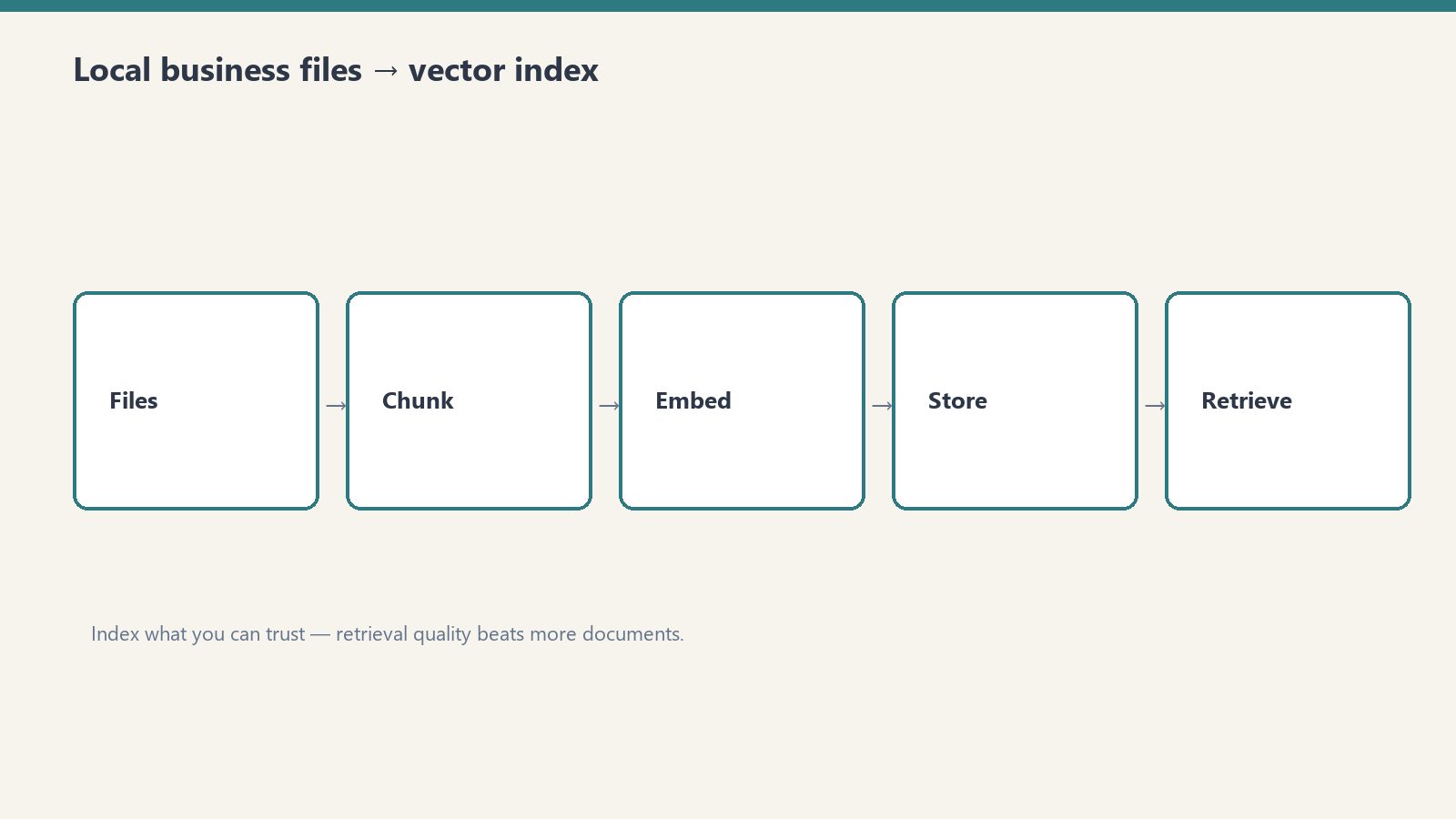
Most “which managed search?” articles compare feature checklists from the vendor docs. We did something more useful: we indexed the same media property’s content into both Azure AI Search and Vertex AI Search, on the free tiers, and watched what each one did with it.
Short answer: for a content site that wants to be found and cited by AI assistants, Azure AI Search is the pick — not because the relevance is dramatically better, but because it’s the retrieval lineage that sits behind Bing and Copilot, and ~84% of our organic traffic comes from Bing. Vertex AI Search is the stronger turnkey RAG product and grounds beautifully into Gemini. Which one wins depends entirely on whose AI you’re trying to get in front of.
This is the desk-by-desk breakdown — free-tier ceilings, setup friction, relevance, and ecosystem grounding — from the running lab on tygart.media.
The free-tier ceilings
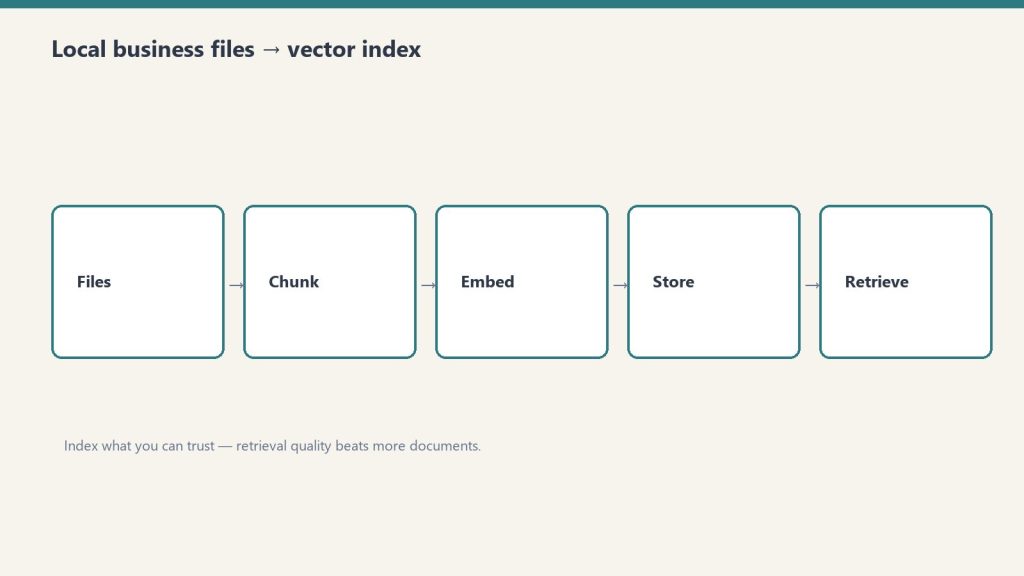
The first thing that matters at our scale is what each gives you for $0, perpetually.
How we do it
| Azure | Google Cloud | Verdict | |
|---|---|---|---|
| Service | Azure AI Search (Free tier) | Vertex AI Search | — |
| Storage | 50 MB | Generous indexing quota, but query/extraction billed | Azure — true perpetual free |
| Indexes | 3 indexes | Multiple data stores | Toss-up |
| Documents | ~10,000 hosted docs | Effectively higher, but pay-as-you-go | Azure for “always free” certainty |
| Cost model | Always free, no card pressure | Free trial credits, then per-query/extraction | Azure — Vertex bills as you scale |
| Semantic ranking | Available (limited on free) | Built in, very strong | Google on raw quality |
The honest read: Azure’s 50 MB / 3-index / ~10,000-document free tier is small but genuinely perpetual — it never starts billing at our volume. Vertex AI Search is more capable out of the box but its free posture is trial credits, after which queries and extractive answers meter. For a small content site, Azure’s ceiling is the one you can forget about.
Setup friction
How we do it
| Job | Azure | Google Cloud | Verdict |
|---|---|---|---|
| Get to first results | Create service → index → import data source | Create app → data store → point at site/GCS | Google — faster to “it works” |
| Crawl a website directly | Indexer add-on, more wiring | Website data store crawls URLs natively | Google, clearly |
| Schema control | Fine-grained fields, analyzers, scoring profiles | More opinionated, less to tune | Azure for control; Google for speed |
| Vector / hybrid search | Native vector + hybrid (keyword+vector) | Native, with built-in embeddings | Toss-up; both strong |
Vertex AI Search gets you to a working search box faster — point it at a sitemap or a Cloud Storage bucket and it crawls and chunks for you. Azure AI Search makes you assemble the indexer, but in exchange you get scoring profiles, custom analyzers, and field-level control that pay off once you care about why a result ranks.
Relevance and semantic ranking
On raw relevance for a handful of queries against the same corpus, Vertex was slightly better out of the box — its semantic ranking and extractive answers are tuned and ready. Azure matched it once we turned on semantic ranking and tuned a scoring profile, but that’s manual work Vertex does for free.
The asymmetry: Vertex is better at answering, Azure is better at being controllable. If you want a search box that produces clean extractive answers with zero tuning, Vertex wins. If you want to deliberately shape what ranks (and you’re optimizing content anyway), Azure rewards the effort.
The grounding angle — whose AI is reading you
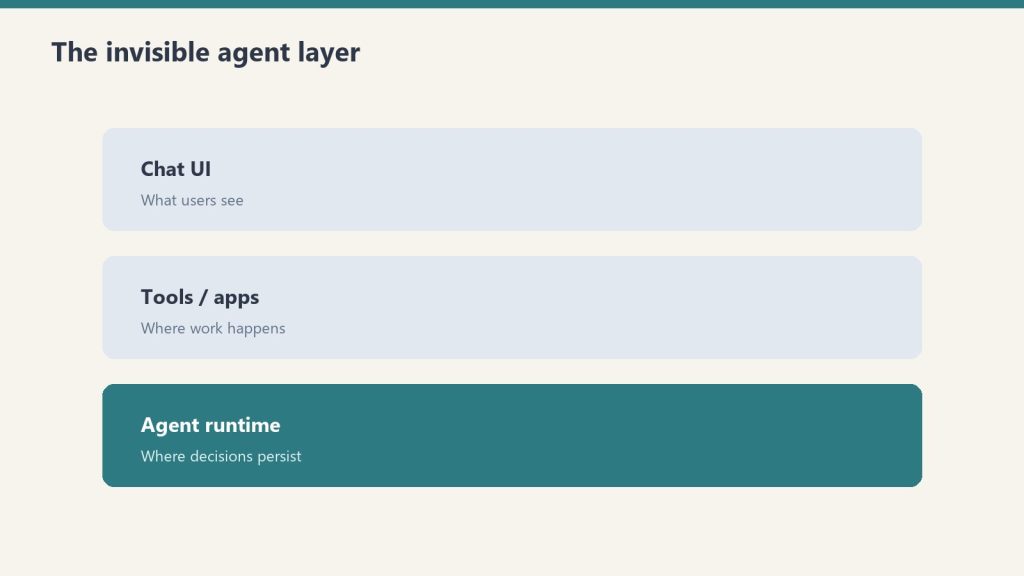
This is the line that actually decides it for us.
Neither Azure AI Search nor Vertex AI Search “submits your site to Bing or Gemini.” But the retrieval architecture you build on signals which ecosystem you’re fluent in. Azure AI Search is the same managed-retrieval lineage Microsoft uses to ground Copilot, and it’s the natural backend for “Bring your own data” grounding into Azure OpenAI / Copilot Studio. Vertex AI Search is the canonical retrieval layer for grounding Gemini — it’s literally the “ground with your own data” path in Google’s stack.
So the question isn’t “which search is better.” It’s: which AI assistant do you most need to recognize and cite your content? For us, with Bing driving the overwhelming majority of organic traffic, building our retrieval inside Microsoft’s lineage and exposing structured, Copilot-groundable content is the higher-leverage bet.
What surprised us

- Azure’s 50 MB is smaller than it sounds — and bigger than it needs to be. Pure text content compresses; 10,000 documents of article body is more than a mid-size site has. The ceiling we’d hit first is index count (3), not storage.
- Vertex’s “free” is the easy thing to misjudge. The trial experience is so smooth you forget it’s metered. Set a budget alert before you point it at a large crawl.
- Hybrid (keyword + vector) search is now table stakes on both. A year ago this was Azure’s differentiator; Vertex has fully caught up.
- Vertex crawls websites natively; Azure wants a data source. If your content lives in a bucket or a DB, Azure’s indexer is fine. If you just want to crawl
tygart.mediaand search it, Vertex is less wiring.
The takeaway
These are both excellent managed search engines, and at small scale both can run at $0 — Azure perpetually, Vertex on credits. The decision isn’t about relevance deltas measured in single queries.
Pick Azure AI Search if your strategic goal is to be retrievable and citable inside the Microsoft / Bing / Copilot ecosystem, you want a truly perpetual free tier, and you’re willing to tune scoring profiles for control. That’s us.
Pick Vertex AI Search if you want the fastest path to a high-quality answering search box, you’re grounding into Gemini, or your content already lives in Google Cloud Storage and you want native crawl-and-chunk with zero schema work.
If most of your readers arrive through Bing, building your retrieval layer only inside Google’s lineage is the same blind spot as watching only Google Search Console. We build on both — and lean Azure for the citation angle.
This is part of our “Two Clouds, One Site” series — we run the same media property on both Azure and Google Cloud, on the free tiers, and report what watching both ecosystems actually teaches us. The lab lives on tygart.media; the findings publish here.
Related on Tygart Media: AI Language vs NL · $0 cloud stack · GEO tactics.
Frequently asked questions
Is Azure AI Search really free? Yes — the Free tier is perpetual, not a trial. It includes 50 MB of storage, 3 indexes, and roughly 10,000 hosted documents, and it does not start billing as long as you stay inside those limits. For a small content site that’s enough to run real site search at $0.
What’s the difference between Azure AI Search and Vertex AI Search? Azure AI Search is a managed retrieval engine you assemble (index, indexer, scoring profiles) and the lineage behind Microsoft’s Copilot grounding. Vertex AI Search is Google’s more turnkey managed search and RAG product that crawls and chunks for you and grounds natively into Gemini. Azure favors control and a perpetual free tier; Vertex favors speed-to-answer and pay-as-you-go scaling.
Which is better for getting cited by AI assistants? It depends on which assistant matters to you. Azure AI Search aligns with Bing and Copilot grounding; Vertex AI Search aligns with Gemini grounding. If most of your traffic and target citations come from Bing, building retrieval inside Microsoft’s lineage is the stronger bet.
Does Vertex AI Search have a free tier? Vertex AI Search runs on Google Cloud free trial credits rather than a perpetual always-free tier, and after that, queries and extractive answers are billed per use. It’s easy to start for free, but set a budget alert before pointing it at a large website crawl, because metering starts once credits run out.
Can I use Azure AI Search to ground my own AI chatbot? Yes. Azure AI Search is the standard “bring your own data” retrieval backend for Azure OpenAI and Copilot Studio, supporting keyword, vector, and hybrid search. You index your content, then have the model retrieve and ground its answers against your index, which keeps responses tied to your source material.