
Tag: app integrations

  • Is Zapier Building the Everything App? The Connector That Became an Orchestrator

    Is Zapier Building the Everything App? The Connector That Became an Orchestrator

    What Is Zapier?
    Zapier is a no-code automation platform founded in 2011 that connects over 8,000 apps through a unified workflow engine. Originally built around simple “if this, then that” triggers, Zapier has transformed in 2025–2026 into an AI orchestration platform—adding autonomous agents, multi-model AI routing, natural language workflow building, and an MCP server that exposes its entire integration library to external AI models including Claude.

    Every company in this series has come at the everything app from a position of strength. Microsoft from enterprise software. Google from search. OpenAI from the frontier model. Mistral from sovereignty and open source. But none of them started where Zapier started: already inside your workflows, connected to every tool you use, trusted with the actual operations of your business.

    That’s the sleeper advantage in this race. While everyone else is building toward the everything app from the outside in, Zapier has been inside the everything app since the day you first connected your Gmail to your CRM.

    The question is whether a 13-year-old automation company can evolve fast enough to own the AI orchestration layer—or whether it becomes the platform that makes everyone else’s AI more powerful.

    📚 Everything App Series

    This is article 9 in our ongoing series examining which AI companies are building the everything app:

    The Transformation: From Connector to Orchestrator

    For most of its first decade, Zapier’s value proposition was simple: connect two apps without writing code. You set a trigger (“when I get a new email in Gmail”), define an action (“add a row to my Google Sheet”), and Zapier ran the automation in the background. Powerful, but fundamentally passive. Zapier did what you told it to do.

    In 2025, that changed fundamentally. Zapier relaunched its positioning as an AI Orchestration Platform and shipped three products that move it from passive connector to active AI layer:

    Zapier Copilot lets you describe a workflow in plain language and watch Zapier build it. Instead of manually connecting triggers and actions, you say “whenever a new lead comes in from our website form, research them on LinkedIn, score them, and add the qualified ones to our CRM with a draft follow-up email.” Copilot builds the multi-step Zap. This collapses the skill barrier that kept many users on simpler workflows.

    Zapier Agents, launched in January 2025 and reaching general availability in December 2025, are autonomous AI teammates. Unlike Zaps (which follow a fixed sequence), Agents decide how to accomplish a goal. You give an Agent a role—”you are our inbound lead coordinator”—a set of tools from Zapier’s app library, and a goal. The Agent reasons through the task, calls the appropriate tools in whatever order makes sense, handles exceptions, and reports back. In August 2025, Zapier added agent-to-agent orchestration, letting Agents delegate subtasks to specialist Agents—the first multi-agent architecture available to non-developers at scale.

    Zapier Canvas is the visual command center that maps how all of this fits together: your Zaps, Tables, Interfaces, Chatbots, and Agents displayed as a connected system. Canvas makes the invisible visible—you can finally see the full automation architecture of your business and edit it from a single surface.

    The 8,000-App Moat

    Here’s the number that matters more than any AI feature: 8,000 connected apps.

    Building an AI integration with a single app is straightforward. Building reliable, maintained, authenticated integrations with 8,000 apps—including niche tools that serve specific industries, legacy enterprise software, and the long tail of SaaS that most AI companies ignore—is a 13-year infrastructure investment that no new entrant can replicate quickly.

    Every AI model that wants to take actions in the real world faces the same problem: getting access to the apps where work actually happens. OpenAI is building these integrations one by one. Google has its own ecosystem but a limited integration library beyond Workspace. Microsoft covers the Office stack but leaves everything else to third parties.

    Zapier already has the connectors. That means Zapier Agents can operate across your full stack on day one—not the curated stack of apps a closed AI platform supports, but the actual combination of tools your business uses, however idiosyncratic.

    Zapier MCP: The Move That Changes the Competitive Map
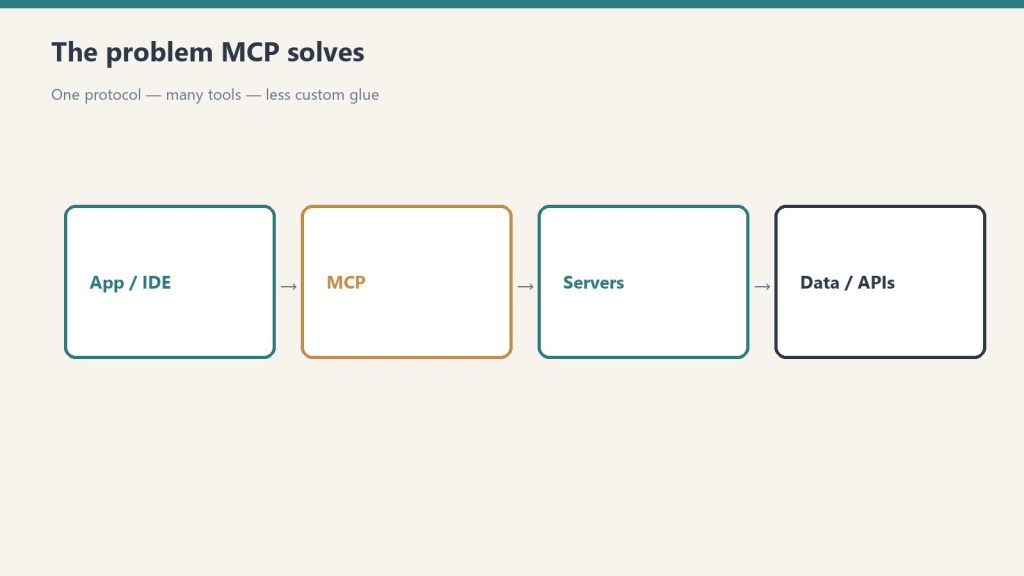
    The most strategically significant product Zapier shipped in 2025 wasn’t Agents. It was Zapier MCP.

    Model Context Protocol (MCP) is the emerging standard that lets AI models call external tools. Zapier built an MCP server that exposes its entire integration library—all 8,000+ apps, tens of thousands of actions—to any AI model that speaks MCP. Claude can use it. GPT-4o can use it. Any MCP-compatible AI can use it.

    This is Zapier making a platform bet rather than a product bet. Instead of trying to be the AI model that users talk to, Zapier is becoming the action layer that every AI model reaches into when it needs to do something in the real world. The developer and coding agents plug in through the SDK. The AI assistants plug in through MCP. IT administrators see everything through unified audit logs and governance controls.

    Zapier is an official Anthropic integration partner. When Claude users need their AI to actually send an email, update a CRM record, add a calendar event, or post to Slack—Zapier is the infrastructure doing that work. That’s not a small bet. That’s positioning as the execution layer for the entire AI industry.

    The Financial Position: Profitable, Independent, Patient

    One underappreciated aspect of Zapier’s strategic position is its financial independence. Unlike most AI companies burning through venture capital at extraordinary rates, Zapier has been profitable for years. It has raised minimal external funding—approximately $1.4 million in a 2012 seed round and nothing significant since—and generates its own growth from revenue.

    Revenue reached $310 million in 2024 and is projected to approach $400 million in 2025. The company serves over 100,000 business customers. Its valuation is estimated around $5 billion—modest relative to OpenAI, Anthropic, or Mistral’s recent rounds, but built on actual cash flow rather than projected futures.

    This matters for the everything app question because Zapier is not under pressure to show explosive AI growth to justify a valuation. It can evolve its platform deliberately, double down on enterprise reliability, and build the trust that enterprise automation requires—without the distraction of a fundraising cycle or the fear of running out of runway.

    Zapier’s Approach to Enterprise AI Governance
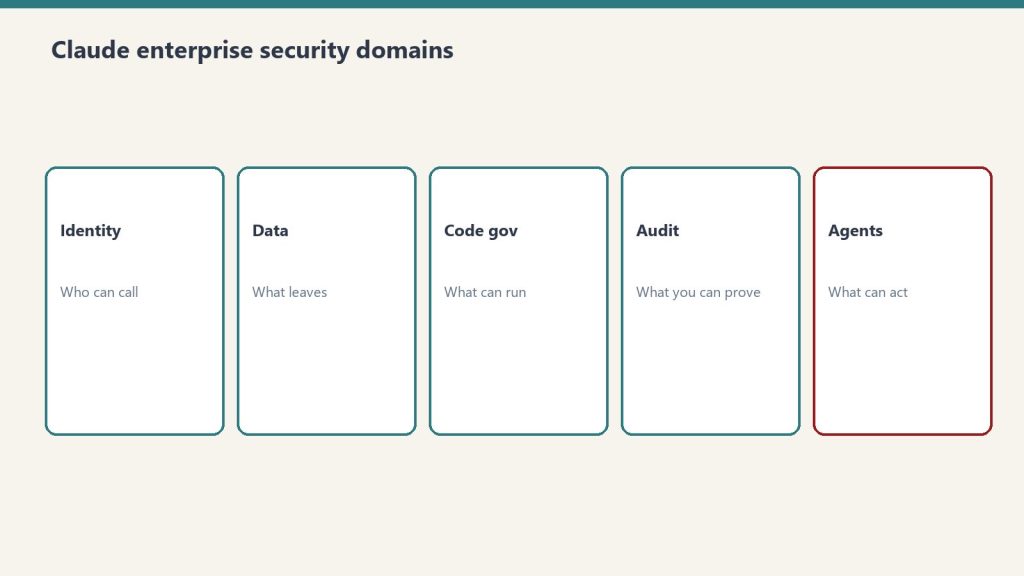
    One of the signal differences between Zapier’s AI platform and its competitors is the emphasis on controls alongside capability. The February 2026 product updates focused specifically on AI guardrails and governance: who can create agents, what apps agents can access, what actions require human approval, and full audit logs of everything that ran.

    This is the unsexy but critical work of making AI deployable in regulated environments. An autonomous agent that can send emails, update databases, and call external APIs is a significant liability risk without proper governance. Zapier’s enterprise controls—managed credentials, admin dashboards, approval workflows for high-risk actions, comprehensive audit trails—represent years of enterprise trust-building that AI-first startups are only beginning to think about.

    The AI guardrails feature allows administrators to set boundaries on what Agents can do autonomously versus what requires a human in the loop. This isn’t a limitation on Zapier’s AI ambitions—it’s the feature that gets Zapier past the enterprise security review that blocks most AI tools from production deployment.

    The Notion Everything Database Connection

    If you’re using Notion as an everything database—as we explored earlier in this series—Zapier is one of the most powerful connectors in your stack. Zapier’s Notion integration supports triggers on database property changes, creating and updating pages, querying databases, and more. Zapier Agents can use these Notion actions as tools, meaning an Agent can reason about your Notion data, make decisions, and update records—all without you touching a line of code.

    The practical architecture looks like this: your Notion everything database stores structured business context. A Zapier Agent monitors specific triggers (a new record appears, a property changes, a status updates). The Agent pulls relevant context from Notion, reasons over it using its AI model, takes actions across your other connected apps, and writes results back to Notion. The entire workflow runs in the background, governed by your Zapier admin controls, with full audit logs.

    For teams building on the Notion everything database model, Zapier isn’t competing with that architecture—it’s the automation and agent layer that makes it operational. You design the data model in Notion; Zapier handles the movement and the intelligence on top of it.

    Where Zapier Falls Short

    Zapier’s everything app candidacy has real limits, and they’re worth naming plainly.

    First, Zapier is a B2B tool that has never built meaningful consumer presence. Everything apps in the historical sense—WeChat, Line, Grab, Gojek—succeed by capturing daily personal habits: messaging, payments, food delivery. Zapier operates in the workflow automation category, which is powerful for businesses but invisible to consumers. There is no path from Zapier’s current position to consumer everything app.

    Second, Zapier depends on the apps in its library. If OpenAI, Google, or Microsoft decides to deprecate their public APIs or make integration prohibitively expensive, Zapier’s connectors break. The 8,000-app moat is only as strong as those 8,000 companies’ continued willingness to maintain open APIs. As AI platforms consolidate, that willingness may erode.

    Third, Zapier’s AI layer is not a frontier model. Zapier Agents use third-party models (primarily OpenAI’s GPT-4o and related) for their reasoning capabilities. This means Zapier’s AI quality ceiling is set by someone else. When OpenAI ships a better model, Zapier agents get smarter—but so does every OpenAI customer. Zapier cannot differentiate on model quality the way Mistral or OpenAI can.

    Finally, the no-code positioning that made Zapier accessible also limits its ceiling. Complex enterprise workflows—the kind that justify serious AI investment—often require the custom logic, error handling, and integration depth that Zapier’s visual interface makes difficult. Competitors like n8n (open-source), Make (formerly Integromat), and enterprise-focused platforms like MuleSoft are taking direct aim at the workflows Zapier can’t handle.

    The Verdict: The Action Layer, Not the Interface Layer

    Is Zapier building the everything app? Not in the way the term is usually understood. Zapier is not trying to be the app you open every morning, the one that knows your identity, your preferences, and your social graph. It has no interest in capturing your attention or your feed.

    Zapier is building something that might matter more for AI’s actual impact on work: the universal action layer. The layer that every AI model reaches into when it needs to do something that matters. The layer that connects AI reasoning to business reality across the entire software ecosystem—not the 50 apps in one company’s walled garden, but the 8,000 apps that businesses actually use.

    In a world where every AI platform is competing to be your interface, Zapier is quietly becoming the infrastructure that makes any interface actually work. That’s not the everything app thesis. It’s the everything execution thesis. And given that 13 years of profitable growth and 100,000 enterprise customers are backing it, it may be the most durable bet in this entire series.

    Key Takeaway

    Zapier is not competing to be the everything app. It’s becoming the action layer that makes every everything app actually functional—the 8,000-integration infrastructure that AI models plug into when they need to do real work in real systems.

    What’s Next in This Series

    This article closes the core competitive series on everything app contenders. But the conversation isn’t finished. Two threads we’ve opened in this series deserve their own deep dives: the xAI infrastructure pivot story—whether Elon Musk is quietly turning Colossus and X into the “everything app ability” rather than the everything app itself—and a Track 2 series on how to actually connect each of these platforms to a Notion everything database as your operational backbone.

    If you’ve been following this series from the beginning, you’ve seen the landscape of AI consolidation from nine different angles. The conclusion that keeps emerging: the everything app isn’t a product. It’s a position. And the race to own that position is just getting started.

    Frequently Asked Questions About Zapier and the Everything App

    What is Zapier’s current AI platform called?

    Zapier relaunched in 2025 as an AI Orchestration Platform. The platform includes Zapier Agents (autonomous AI teammates), Zapier Copilot (natural language workflow builder), Zapier Canvas (visual system map), Zapier Tables, Zapier Interfaces, Zapier Chatbots, and Zapier MCP (an integration server for external AI models). The foundational Zaps automation engine remains the core, with these AI products layered on top.

    What is Zapier MCP and why does it matter?

    Zapier MCP is a Model Context Protocol server that exposes Zapier’s entire integration library to external AI models. Any MCP-compatible AI—including Claude, GPT-4o, and others—can use Zapier MCP to take actions across the 8,000+ apps Zapier connects. This makes Zapier the action execution layer for AI systems built by other companies, not just for Zapier’s own agents. Zapier is an official Anthropic integration partner through this mechanism.

    How many apps does Zapier connect?

    As of 2026, Zapier connects over 8,000 apps. This integration library has been built and maintained over 13 years and represents Zapier’s primary competitive moat. No AI-first entrant has built a comparable breadth of authenticated, maintained app integrations.

    What are Zapier Agents?

    Zapier Agents are autonomous AI teammates that reason about goals rather than following fixed if-then sequences. Launched in January 2025 and reaching general availability in December 2025, Agents can browse the web, read data sources, update CRMs, draft communications, and delegate to other specialist agents through multi-agent orchestration. They’re configured with a role, a set of tool permissions, and a goal—then run autonomously within governance guardrails set by administrators.

    How does Zapier integrate with Notion?

    Zapier’s Notion integration supports database triggers, page creation and updates, and database queries. Zapier Agents can use these as tools in their reasoning loops, enabling autonomous workflows that read from and write to Notion databases. For teams using Notion as an everything database, Zapier provides the automation and agent execution layer that makes that data architecture operational across connected business apps.

    Is Zapier profitable?

    Yes. Zapier has been profitable for years and has raised minimal external funding since a $1.4 million seed round in 2012. Revenue reached $310 million in 2024 with projections near $400 million for 2025. This financial independence distinguishes Zapier from most AI platform companies and gives it patience to evolve its platform without fundraising pressure.

    What are Zapier’s AI governance features?

    Zapier offers enterprise AI governance through managed credentials, admin controls on which users and teams can create or deploy agents, approval workflows for high-risk actions, AI guardrails that bound what agents can do autonomously, and comprehensive audit logs of all agent activity. These controls were prominently featured in the February 2026 product update and represent Zapier’s push to make AI deployment safe for regulated enterprise environments.

    How does Zapier compare to Make (Integromat) and n8n?

    Make and n8n are Zapier’s primary competitors in workflow automation. Make offers more complex branching logic at competitive pricing. n8n is open-source and self-hostable, appealing to developers and privacy-conscious enterprises. Zapier differentiates on breadth of integrations, ease of use for non-technical users, and its newer AI layer (Agents, Copilot, MCP). For enterprises prioritizing AI orchestration with governance controls, Zapier’s platform depth currently leads. For developers wanting maximum flexibility or self-hosting, n8n is the primary alternative.
  • Why SaaS Companies That Name Their Integrations Rank Higher (Integration Entity SEO)

    Why SaaS Companies That Name Their Integrations Rank Higher (Integration Entity SEO)


    Tygart Media — SaaS Content Strategy

    Why SaaS Companies That Name Their Integrations Rank Higher (Integration Entity SEO)

    By Tygart Media Updated: April 12, 2026
    Integration entity SEO: In B2B SaaS, named integration partners — Salesforce, HubSpot, Slack, Zapier, Workday, Microsoft Teams, AWS — are the most specific category-signaling entities available. A blog post that says “our platform integrates with your existing tools” has no entity anchors. A blog post that says “native integration with Salesforce Sales Cloud, HubSpot CRM, Slack, and Zapier” has four named entities that signal category expertise to both Google’s quality evaluators and AI systems evaluating which SaaS content to cite. Integration entity injection is the fastest single SEO improvement available to most SaaS WordPress blogs.

    Why Integration Names Matter More Than Category Keywords

    B2B buyers during software evaluation search for integration compatibility more than almost any other feature. “Does [product] integrate with Salesforce?” “What [category] tools work with HubSpot?” “Best [software type] with Zapier integration.” According to NextUp Solutions’ 2026 B2B SaaS SEO analysis, keyword clusters around buyer intent and competitive gaps — not raw search volume — determine which SaaS blog content actually influences purchase decisions.

    Integration queries are predominantly consideration-stage. A buyer asking about Salesforce integration compatibility has already identified the problem, knows solutions exist, and is now evaluating fit. This is the highest-conversion search intent available to SaaS companies — and most SaaS blog content doesn’t explicitly name the integrations that would capture it.

    Why do integration names improve SaaS blog SEO and AI citation?
    Named integration entities — Salesforce, HubSpot, Slack, Zapier, Microsoft Teams, Workday, AWS — improve SaaS blog SEO by creating specific entity anchors that Google and AI systems use to classify content as relevant to consideration-stage buyer queries. A post about workflow automation that names “native Salesforce Sales Cloud integration, bidirectional HubSpot sync, and Zapier automation support” signals category expertise and integration ecosystem positioning that generic “works with your existing tools” language does not. AI systems evaluating SaaS content for citation specifically look for named integration references when answering buyer questions about software compatibility.

    The Integration Entity Tier: Which Names Carry the Most SEO Signal

    Tier 1: Category-Defining Integrations

    These are the integrations that define category membership. For most B2B SaaS: Salesforce, HubSpot, Microsoft 365, Google Workspace, Slack, AWS. Naming these integrations in blog content signals that your product operates in the established enterprise software ecosystem — which is a strong trust signal for both Google’s E-E-A-T evaluation and AI citation systems. These names should appear in every relevant blog post, naturally and contextually.

    Tier 2: Workflow Integration Names

    Zapier, Make (formerly Integromat), Workato, and similar automation platforms signal that the product fits into a buyer’s existing automation workflow. These are especially important for mid-market and SMB SaaS because buyers in those segments rely heavily on no-code automation. Naming these integrations in content that discusses “how to automate [workflow]” captures consideration-stage queries from buyers who are evaluating operational fit.

    Tier 3: Industry-Specific Integrations

    For vertical SaaS, industry-specific integration names are the highest-signal entities. A healthcare SaaS naming Epic, Cerner, or HL7 FHIR compatibility. A fintech SaaS naming Plaid, Stripe, or QuickBooks Online integration. A construction SaaS naming Procore, Autodesk, or Sage 300 CRE compatibility. These named integrations are category-defining for vertical buyers and almost always missing from SaaS blog content.

    Implementing Integration Entities: The Three Injection Points

    1. The definition box: When defining what your product does, include specific integration names in the definition — “a workflow automation platform that connects natively with Salesforce, HubSpot, Slack, and Zapier.”
    2. The FAQ section: Add FAQ questions targeting integration compatibility: “Does [product category] integrate with Salesforce?” “Is [product] compatible with HubSpot?” These are People Also Ask targets for consideration-stage buyers.
    3. The speakable block: Structure one speakable block specifically for integration compatibility: “What integrations does [category of software] typically support?” followed by a direct answer naming your ecosystem tier specifically.
    Integration entity injection — naming Salesforce, HubSpot, Slack, Zapier, and vertical-specific ecosystem partners in your existing blog content — is part of the GEO optimization layer in WordPress content optimization for B2B SaaS companies through SiteBoost.

    Frequently Asked Questions

    Should SaaS companies name competitor integrations in their content?

    Yes, carefully. Acknowledging that your product exists in the same ecosystem as competitor tools — “unlike [competitor], which requires a paid Zapier plan for third-party integration, [your product] includes native Zapier automation” — is legitimate competitive differentiation. This type of comparative integration content targets decision-stage buyers who are actively comparing vendors and earns high commercial-intent traffic. ABA Model Rules don’t apply to SaaS marketing, but accuracy is important — only name integrations that are genuine and currently functional.

    How do integration entities help with AI search for SaaS?

    When a buyer asks ChatGPT or Perplexity “what [software category] tools integrate natively with Salesforce?” the AI retrieves content that explicitly names Salesforce as a named entity in the context of the software category. Generic content that says “integrates with popular CRMs” provides no verifiable entity anchor — the AI cannot confirm or cite it specifically. Content that says “native bidirectional Salesforce Sales Cloud integration” is machine-verifiable against known Salesforce integration data and earns citation in AI responses about CRM-compatible software.

    How many integration names should appear in a single SaaS blog post?

    Three to seven named integrations per post, appearing naturally in context, is the optimal range. Fewer than three provides limited entity signal. More than seven starts to feel like a feature list rather than useful content. The key is that each integration name appears in a context that explains why it matters to the reader — not as a bullet list of logos. “Our Salesforce integration syncs opportunity data bidirectionally so your sales team never switches tools” is an entity signal. “We integrate with Salesforce” is a marketing claim with minimal SEO value.

    Sources: NextUp Solutions, “Best SEO Tools for B2B SaaS Companies in 2026”; SeoProfy, “B2B SaaS SEO: Comprehensive Guide for 2026”; ALM Corp, “SaaS SEO Strategy Guide” (2026); Gravitate Design, “B2B SaaS SEO Strategies for Growth in 2026”
  • The Last Software Subscription You’ll Ever Need to Sell

    The Last Software Subscription You’ll Ever Need to Sell

    Restoration contractors are paying for Encircle. And PSA. And DASH. And a CRM. And a project management tool. And a call tracking service. And a reputation management platform. And an estimating integration. By the time you add it all up, a mid-size restoration company might be running eight separate software subscriptions, each with its own login, its own invoice, its own support line, and its own way of storing data that doesn’t talk to anything else.

    I’ve been watching this stack accumulate for years. And I’ve been thinking about a question I haven’t seen anyone ask out loud:

    Who owns the data when the job is done?

    The Last Software Subscription — Vault of Owned Data
    The data your business generates is the most valuable thing you produce. The question is who holds the keys.

    What Software Companies Are Actually Selling

    Encircle is a genuinely good product. So is PSA. So is DASH. I’m not writing this to trash them. They solved real problems — structured photo documentation that insurance carriers accept, drying logs that meet IICRC standards, scope writing that integrates with Xactimate. These things are hard to build from scratch and they matter in a claims-dependent business.

    But here’s what all of them are also selling, whether they say it or not: a structured way to store your business’s data. Customer records. Job histories. Equipment logs. Photo sets. Communication trails. Every one of those platforms is capturing the operational intelligence of your company and holding it in their database, in their format, accessible through their interface.

    The subscription isn’t just for the software. It’s for continued access to your own data.

    That arrangement made sense when there was no alternative. You needed the structure, and the only way to get the structure was to accept the terms. The software vendor provided the architecture. You provided the data. The architecture stayed with them.

    That’s the deal. It’s been the deal for twenty years. And it’s changing.

    The Last Software Subscription — Many Locks One Door
    Eight subscriptions. Eight logins. Eight vendors. Nobody owns the whole picture — except the vendors.

    What’s Actually Different Now

    The thing that changed isn’t AI, exactly. It’s the integration layer.

    For most of the software era, building custom business tools required engineering teams, expensive infrastructure, and months of development time. That’s why SaaS won — you couldn’t build it yourself, so you rented it from someone who could. The subscription model was the price of access to capability that was otherwise out of reach.

    What’s different now: a single developer — or an operator who knows how to use modern AI tools — can assemble custom business infrastructure in days that would have taken a team months in 2019. A Google Cloud VM costs $60/month. A CRM custom-built on WordPress with webhooks firing into CTM, Slack, and a Firestore job log costs fractions of what PSA charges. An AI intake agent that handles emergency calls, qualifies the job, creates the customer record, and pings the on-call crew — built on Twilio and Claude on Vertex AI — costs less per month than most restoration companies spend on coffee.

    The capability gap that justified the subscription is closing. Not for every business — not yet — but for businesses that have someone close enough to understand what they need and how to build it. And critically: when you build it, you own it. The data lives on infrastructure you control. It doesn’t leave when you cancel a subscription because there’s no subscription to cancel.

    The Last Software Subscription — Consolidation
    Dozens of disconnected tools, or one integrated system you own. The math is changing.

    What Encircle Still Does That Matters

    I said I wasn’t writing this to trash these companies and I meant it. So let me be specific about what they do that’s genuinely hard to replicate.

    The compliance layer. Insurance carriers have specific documentation requirements. IICRC has drying log standards. Xactimate has a particular way of handling scope line items. Encircle has spent years building integrations with those systems, getting their formats accepted by carriers, making their documentation hold up in adjuster reviews and litigation. That institutional trust is not a feature you can code in a weekend. It’s accumulated credibility that took years to build and is worth real money to contractors whose revenue depends on claims getting approved.

    The field mobile experience. Technicians in the field need something fast, offline-capable, and purpose-built for how they actually work — photos, moisture readings, equipment logs, job updates — all from a phone in a flooded basement. Generic platforms aren’t optimized for that workflow. Encircle is.

    So no — the Company OS doesn’t make Encircle irrelevant for everything. What it makes irrelevant is the parts of Encircle — and PSA, and DASH, and the CRM, and the project management tool — that are really just coordination and data structure. The scheduling, the customer records, the communication trails, the job status tracking, the lead attribution, the revenue reporting. All of that can live in a system you own, wired together through APIs, with your data staying on your infrastructure.

    You keep Encircle for what Encircle is uniquely good at. You stop paying for the eight other subscriptions that are just doing coordination work you could own.

    The Model That Makes This Work

    The reason most restoration contractors won’t build this themselves isn’t that they can’t afford it. It’s that they don’t have the time or expertise to architect it — and even if they did, they’d have to manage it forever. That’s not a restoration contractor’s job. Their job is running jobs.

    The Company OS model I’ve been developing solves this by flipping the arrangement entirely. Instead of the contractor buying software subscriptions and managing a fragmented stack, I build and host the entire infrastructure — VM, CRM, call tracking, AI intake, content engine, ad management — and take a percentage of revenue I can prove I drove through the system. The contractor pays nothing upfront and nothing ongoing for the infrastructure. They pay on verified results.

    The difference from the SaaS model: the data architecture belongs to the system I built, which is operated in the contractor’s interest and accessible to them. The attribution data, the customer history, the job records, the communication logs — all of it lives in a structure we both can see, verified by Call Track Metrics, not locked behind a vendor’s dashboard.

    That’s not a software product. That’s an infrastructure partnership. And it produces a fundamentally different answer to the question of who owns the data when the job is done.

    The Last Software Subscription — Who Owns the Data
    The data your business generates should be yours — organized, accessible, and not held hostage by a subscription renewal.

    The Question Worth Sitting With

    I want to be careful here about the scope of what I’m claiming. The vertical software companies — Encircle, Xactimate, PSA — aren’t going away. The contractors who need carrier-compliant documentation and field mobile tools will keep paying for them. The compliance layer is real and the field experience is real and those are genuinely hard problems.

    What I think is ending — or at least what I think deserves to end — is the part of the software subscription economy built on the coordination tax. The $200/month CRM that stores your customer records in someone else’s database. The project management tool that knows your job pipeline better than you do. The reporting dashboard that shows you your own business through someone else’s lens. That category of software exists because the integration layer didn’t. Now it does.

    So here’s the question I’d ask any restoration contractor right now: for every subscription you’re paying, do you own the data when you stop paying? Do you know exactly where your customer records live, who controls the schema, what happens if the vendor raises prices or shuts down?

    Most contractors have never asked this because they’ve never had to. The subscription was the only option.


    It isn’t anymore.

    The question isn’t whether your software does the job. The question is who owns the data when the job is done.