The Addiction Treatment Center WordPress Post-Publish Checklist (8 Steps for Behavioral Health YMYL Content)
By Tygart Media Updated: April 12, 2026
Scope — editorial content only:
Every step in this checklist applies to educational blog articles — treatment explainers, insurance guides, ASAM level content, family resource articles. None of these steps modify clinical content, admissions claims, treatment outcome descriptions, or patient-facing statements written by your licensed clinical staff. Clinical content integrity is preserved throughout. If you or someone you know needs help, SAMHSA’s National Helpline is available 24/7 at 1-800-662-4357 (free, confidential).
Why post-publish optimization matters for treatment content: Behavioral health articles are written under clinical standards — accuracy, appropriate language, compassionate framing. But the optimization infrastructure that determines whether a family in crisis finds that article — schema, entity references, authorship markup, FAQPage — is almost never applied after publication. These 8 steps apply that infrastructure to existing articles without altering a single clinical statement, giving your educational content the technical foundation to be found, trusted, and cited.
The 8-Step Addiction Treatment WordPress Post-Publish Checklist
Rewrite the title tag for family and individual search intent — Match how families and individuals actually phrase their searches, not how clinicians would title a treatment summary. “IOP Program Information” → “What Is an Intensive Outpatient Program (IOP) and Is It Right for You?” Lead with the question framing, stay within 50–60 characters, and reflect the searcher’s perspective — someone evaluating options, not a clinician documenting a level of care.
Write a meta description that is empathetic and informative — Delete the auto-generated excerpt. Write 140–155 characters that acknowledge the family’s situation and promise a specific, useful answer: “Wondering if IOP is the right level of care for your loved one? We explain ASAM Level 2.1 criteria, what a typical week looks like, and how insurance typically covers it.” Empathy first, information second, contact opportunity third.
Add licensed clinician authorship with credential schema — Attribute the post to a named licensed clinician with role, credential (LCSW, CADC, MD/DO, PMHNP), and a link to their bio page. Add a “Medically reviewed by [Name], [Credential]” line with the review date. Implement Article schema with the clinician as named author. This is the highest-impact single action for YMYL behavioral health content — transforming anonymous treatment content into verifiable clinical expertise.
Inject named clinical entity references — Add 3–5 named entities relevant to the article: SAMHSA for any prevalence or treatment standard references, ASAM Criteria level number for any level-of-care descriptions, CARF or Joint Commission as named accreditation authorities, DSM-5 for any diagnostic criterion references, and MHPAEA for any insurance coverage content. These named entities are machine-verifiable — the primary signal Google’s quality evaluators and AI systems use to assess behavioral health content credibility.
Add a family-focused FAQ section with FAQPage schema — Write 6–8 questions in the language families and individuals use during treatment research: “Does insurance cover this level of care?”, “How long does this program take?”, “What happens during intake?”, “What is the difference between [this level] and [adjacent level]?”, “Can my family member work during this program?” Add FAQPage JSON-LD schema alongside the visible FAQ section — both are required for People Also Ask eligibility and AI Overview citation.
Add MedicalOrganization schema connecting the article to the treatment center — Inject Article schema with the facility as publisher and MedicalOrganization schema with named accreditation references (CARF International accreditation scope, Joint Commission certification status), licensed services (SAMHSA-certified facility status if applicable), and staff credential framework. This machine-readable entity connection is what AI systems use to associate clinical authority with a specific verified treatment provider.
Set a visible Last Updated date with dateModified schema — Add “Last reviewed by [Clinician Name], [Credential] on [Date]” near the author byline. Update the dateModified field in Article JSON-LD schema. Treatment guidelines, MAT prescribing protocols, insurance coverage requirements, and ASAM Criteria references change. Outdated behavioral health content on life-impacting decisions is both a YMYL compliance issue and a family trust issue. Visible clinical review dates with schema signal ongoing editorial stewardship.
Add internal links to admissions resources and related treatment content — Link from the educational article to the relevant admissions page, insurance verification page, or program inquiry form — with specific anchor text that connects the educational content to the next step: “Ready to learn if this program is right for your situation? Start the admissions conversation.” Then update the admissions page to link back to relevant educational content. Bidirectional internal linking guides families through the research-to-admissions journey and signals topical depth to Google’s content quality evaluation.
These 8 steps applied to your 10 highest-traffic behavioral health educational articles is the scope of WordPress content optimization for addiction treatment centers through SiteBoost. Every step pushed live via WordPress REST API — clinical content unchanged, optimization infrastructure added.
Frequently Asked Questions
Which of the 8 steps has the highest impact for treatment center content?
Step 3 (clinician authorship with credential schema) has the highest single-step impact for YMYL behavioral health content — Google’s quality evaluators specifically flag anonymous treatment content as a trust deficiency. Steps 4 and 5 (entity injection and FAQPage schema) produce the fastest measurable results: SAMHSA/ASAM entity references improve AI citation probability within weeks, and FAQPage schema enables People Also Ask placement eligibility within 2–4 weeks for the family research questions that precede admissions calls. All 8 together create compounding returns that no individual step achieves alone.
Should these steps be applied to all treatment articles or prioritized?
Prioritize by treatment content category importance and existing traffic. Start with your highest-traffic articles in your primary service categories: insurance and benefits verification content (highest conversion driver), ASAM level-of-care explainers (highest family research volume), and “how to help a loved one” family guidance content (highest pre-decision traffic). Apply all 8 steps to these high-priority articles first. New educational content should have all 8 steps applied at publication — establishing the optimization standard from the point of creation rather than retroactively.
Does this optimization approach comply with HIPAA and LegitScript requirements?
Yes. All 8 steps apply to publicly published editorial blog content — no patient data, no protected health information, no admissions-specific identifiers. HIPAA governs patient data collection, storage, and transmission — not publicly published educational content about treatment options. LegitScript certification governs paid advertising eligibility — not organic educational content on a treatment center’s website. The schema markup, entity references, and structural optimization described here are standard web publishing practices that do not create HIPAA or LegitScript compliance concerns.
Sources: SEO Tuners, “Rehab SEO Guide for Addiction Treatment Centers 2026”; Webserv, “Treatment Center SEO Guide: Increase Admissions 2026”; Knack Media, “SEO for Addiction Treatment Centers: The Definitive E-E-A-T Guide” (November 2025); SAMHSA — samhsa.gov; Google Search Quality Rater Guidelines (2024 edition)
The Family Research Content Strategy That Fills Treatment Center Beds
By Tygart Media Updated: April 12, 2026
Who is actually doing the research: The active admission process typically involves a family member — a spouse, parent, or sibling — doing 3–7 days of research before they make an admissions call on behalf of a loved one. They are simultaneously navigating grief, fear, urgency, and practical logistics (insurance, cost, geography). According to Knack Media’s E-E-A-T analysis of addiction treatment SEO, the content strategy must balance content for the individual seeking help with content targeting families — addressing both the emotional reality and the logistical questions that family members are often searching for.
The Three Research Phases Families Move Through
Phase 1: Crisis Understanding (“Is this serious enough for treatment?”)
Families in this phase are often in denial or unsure of the severity of their loved one’s substance use. They search: “signs my family member has an addiction,” “when does drinking become a problem,” “how do I know if my son needs rehab,” “what are signs of fentanyl addiction.” Content for this phase should use SAMHSA and DSM-5 Substance Use Disorder criteria to provide clinical grounding for what constitutes a diagnosable condition — with appropriate empathy and without stigma. This is where trust begins — before the family has even decided to seek professional help.
Phase 2: Treatment Research (“What are the options?”)
Families in this phase know treatment is necessary and are evaluating options. RxMedia maps these as consideration searches: “levels of care in rehab,” “what is a PHP program,” “difference between IOP and outpatient,” “what is MAT treatment,” “how long does residential treatment take.” Content for this phase should explain each ASAM level of care with clinical precision — what it involves, what it costs, what insurance typically covers, and what the step-down process looks like. This is where ASAM Criteria entity references earn the most trust and AI citation probability.
Phase 3: Facility Selection (“Which center is right for us?”)
Families in this phase are ready to call and are making final facility selection decisions. Searches: “rehab center near me,” “how to choose an addiction treatment center,” “what questions to ask when choosing a rehab,” “what to look for in a treatment center,” “does [facility name] take my insurance.” Content for this phase should address the specific evaluation criteria families use — accreditation (CARF, Joint Commission), staff credentials (NAADAC, licensed clinicians), insurance verification process, and what makes a facility’s approach to treatment evidence-based and outcomes-focused.
What addiction treatment content types generate the most family admissions inquiries?
The addiction treatment content types that generate the most family admissions inquiries are: insurance and benefits verification guides (“does insurance cover addiction treatment,” “how does benefits verification work,” “what is prior authorization for rehab”) — because financial barriers are the most common reason families delay seeking treatment; ASAM level-of-care explainers (“what is IOP,” “what is a PHP program,” “when is residential treatment necessary”) — because families need to understand what they’re choosing before they commit; and “how to help a loved one get treatment” guides — because family members are often the primary decision-makers and need process guidance, not just facility information. All three benefit from FAQPage schema targeting the specific questions families ask before calling.
The Insurance Content Layer: Addressing the Most Common Barrier
The single most common reason families delay treatment is financial uncertainty. Most families don’t know that the MHPAEA — the Mental Health Parity and Addiction Equity Act — requires most insurance plans to cover addiction treatment at parity with medical benefits. Content that explains this, names the specific MHPAEA requirements, explains the benefits verification process, and describes the prior authorization criteria for each ASAM level of care — this content directly addresses the barrier that keeps families from calling. It is both the most humanitarian content a treatment center can publish and the most conversion-driven.
The Crisis Search Content: Being Present at 2am
Families often begin researching during a crisis moment — after an overdose scare, after an intervention, after a legal event. These searches happen at night: “my family member just overdosed, what do I do,” “how to get someone into treatment,” “what happens if someone refuses treatment.” Content for this phase should provide immediate, compassionate, actionable guidance — with a clear admissions contact — and be structured for both Google and AI citation because these crisis queries increasingly surface in AI assistants before they reach Google search.
Family research funnel content optimization — ASAM entity injection, MHPAEA insurance content, FAQPage schema targeting pre-admissions questions — is part of WordPress content optimization for addiction treatment centers through SiteBoost. Educational content only; clinical content unchanged.
Frequently Asked Questions
How should treatment center content address the emotional aspects of seeking help without being exploitative?
Active Marketing’s 2026 treatment center SEO guide identifies compassionate, stigma-free messaging as non-negotiable. Families arrive at treatment content already grappling with shame, guilt, and fear — content must acknowledge those feelings, offer genuine hope, and elevate real recovery without exploiting vulnerability. The practical standard: language that validates the difficulty of the situation without manufacturing urgency, descriptions of treatment that emphasize clinical evidence and real recovery rather than marketing claims, and calls to action that offer help without pressure. “We can help you understand your options” is appropriate. “Call now before it’s too late” is not.
What is benefits verification and why is it important to explain in treatment content?
Benefits verification (VOB) is the process of confirming a patient’s insurance coverage for addiction treatment before admission — determining covered services, network status, deductible and copay amounts, and prior authorization requirements. Most families are unaware this process exists and don’t know that most treatment centers will conduct a VOB before discussing financial details. Educational content that explains benefits verification demystifies the admissions process, reduces financial anxiety, and positions the facility as a transparent, supportive partner rather than a business primarily interested in insurance revenue. This content type consistently generates the most qualified admissions inquiries of any treatment center content category.
How does AI search affect family research for addiction treatment?
Families increasingly begin treatment research with conversational AI questions — asked in private, without the stigma of searching on shared family computers or browsers. “What should I do if my son is addicted to fentanyl?” or “how do I convince my husband to go to rehab?” These are crisis questions asked of AI assistants at the moment of maximum urgency. Treatment centers whose content provides the most structured, empathetic, entity-rich answers to these questions earn AI citations at the moment families most need guidance — before they’ve searched Google, before they’ve visited any treatment center website, and before any competitor has the opportunity to be considered.
Sources: Knack Media, “SEO for Addiction Treatment Centers: The Definitive E-E-A-T Guide” (November 2025); RxMedia, “Comprehensive Addiction Treatment Marketing Strategy Through SEO” (March 2026); Active Marketing, “The Ultimate Guide to Treatment Center SEO for 2025”; MHPAEA — Mental Health Parity and Addiction Equity Act, CMS.gov
The Named Addiction Treatment Entities That Make Google and AI Trust Your Center’s Content
By Tygart Media Updated: October 5, 2026
Why named entities matter more in treatment than any other vertical: Addiction treatment is simultaneously the most regulated, the most stigmatized, and the most crisis-driven content category in digital health. Families searching for treatment information are skeptical — they have encountered predatory facilities and misleading marketing. Google’s YMYL quality evaluators and AI systems are similarly skeptical. Named, verifiable regulatory and accreditation entity references are the proof that separates genuine clinical authority from marketing copy.
The Treatment Center Entity Hierarchy
The treatment center entity hierarchy that carries authority signal.
Tier 1: Federal Regulatory Bodies
SAMHSA — Substance Abuse and Mental Health Services Administration: The primary federal authority for substance use disorder treatment standards. Referenced in content: SAMHSA National Survey data, SAMHSA Treatment Locator, SAMHSA Treatment Improvement Protocols (TIPs), SAMHSA Behavioral Health Treatment Services Locator
NIDA — National Institute on Drug Abuse: Federal research body for addiction science. Referenced for: evidence base for treatment modalities, overdose statistics, clinical efficacy data for MAT (Medication-Assisted Treatment)
DEA — Drug Enforcement Administration: Referenced for: buprenorphine prescribing authority requirements, controlled substance regulations relevant to MAT content
CMS — Centers for Medicare & Medicaid Services: Referenced for: Medicare and Medicaid coverage of behavioral health treatment, MHPAEA enforcement, SUD treatment benefit requirements
Tier 2: Accreditation and Standards Bodies
ASAM — American Society of Addiction Medicine: Publisher of the ASAM Criteria (patient placement standards), ASAM clinical practice guidelines for opioid use disorder, MAT prescribing standards
CARF International — Commission on Accreditation of Rehabilitation Facilities: Accreditor for behavioral health and addiction treatment programs. One of two primary accreditation bodies families and referral sources use to verify facility quality
The Joint Commission (JCAHO): The second primary accreditation body for healthcare organizations including behavioral health facilities. Referenced as accrediting authority
NAADAC — National Association for Alcoholism and Drug Abuse Counselors: Credentialing body for addiction counselors. Referenced for staff credential verification
What named entities should addiction treatment WordPress content include for Google E-E-A-T and AI citation?
Addiction treatment content optimized for E-E-A-T and AI citation should reference: SAMHSA (Substance Abuse and Mental Health Services Administration) for treatment standards and prevalence data, ASAM Criteria for level-of-care placement standards with specific level numbers (2.1 IOP, 2.5 PHP, 3.5 residential, 4.0 medically managed inpatient), CARF International or The Joint Commission as named accreditation authorities, NIDA for evidence-base references on treatment modality efficacy, MHPAEA (Mental Health Parity and Addiction Equity Act) for insurance coverage content, and DSM-5 (Diagnostic and Statistical Manual of Mental Disorders, 5th edition) for Substance Use Disorder diagnostic criteria references. These named entities are machine-verifiable — AI systems cross-reference them against known behavioral health regulatory data before citing treatment content.
How to Inject Treatment Entities Naturally Into Existing Content
How to inject treatment entities naturally into existing content.
The Definition Box Approach
Open each treatment article with a definition box that names the relevant standard. “Medication-Assisted Treatment (MAT): A SAMHSA-endorsed approach to opioid and alcohol use disorder that combines FDA-approved medications — buprenorphine, methadone, or naltrexone — with counseling and behavioral therapies, per ASAM clinical practice guidelines.” This opening entity reference establishes regulatory grounding before the article body and is the section most likely to be cited by AI systems in responses to treatment modality questions.
The Statistics Sourcing Approach
Every statistic in treatment content should be attributed to a named federal source. “According to SAMHSA’s 2024 National Survey on Drug Use and Health (released July 2025), 48.4 million people aged 12 or older (16.8%) had a substance use disorder in the past year, and only 19.3% of those who needed substance use treatment received it.” “NIDA research confirms that MAT with buprenorphine reduces opioid use and mortality risk.” Named source attribution is required for YMYL compliance and is the entity signal that AI systems use to evaluate whether addiction statistics represent verified federal data rather than facility marketing claims.
The Accreditation Context Approach
Accreditation references should appear in clinical authority sections with specific named body and scope. “CARF International accreditation for behavioral health programs requires facilities to meet standards for clinical documentation, staff credentials, outcome measurement, and patient rights — standards that independent CARF surveyors verify through on-site review every three years.” This is more authoritative than “we are CARF accredited” — it explains what CARF accreditation means clinically, which is the information families actually want when evaluating facilities.
SAMHSA, ASAM, CARF, NIDA, and MHPAEA entity injection across your existing treatment articles is part of the GEO layer in WordPress content optimization for addiction treatment centers through SiteBoost. Applied to educational blog content only; clinical content unchanged.
Does citing SAMHSA and NIDA statistics create any compliance concerns for treatment centers?
No. Citing federal agency statistics (SAMHSA prevalence data, NIDA research findings) with proper attribution is standard educational practice in behavioral health content — and is specifically what Google’s quality evaluators look for in YMYL addiction treatment content. The compliance concern in treatment marketing relates to specific outcome claims, guarantee language, and misleading facility descriptions — not to educational citations of federal research data. Including a disclaimer that individual treatment outcomes vary is standard practice for any content that discusses treatment efficacy.
What is the difference between CARF and Joint Commission accreditation for content purposes?
Both CARF International and The Joint Commission are nationally recognized accreditation bodies for behavioral health facilities — and both are meaningful authority signals in treatment content. CARF is more specialized in rehabilitation and behavioral health services. The Joint Commission accredits a broader range of healthcare organizations including hospitals. For content purposes, naming either (or both, if the facility holds both) with specific program scope (e.g., “CARF accreditation for outpatient substance abuse treatment” or “Joint Commission Gold Seal of Approval for behavioral health”) provides more specific entity depth than simply stating accreditation status.
How do LegitScript verification and content entity references work together?
LegitScript certification is an advertising compliance credential that governs access to Google Ads and other paid platforms for addiction treatment marketing. Named entity references in organic content (SAMHSA, ASAM, CARF) are organic SEO and GEO optimization signals — they are completely separate mechanisms. LegitScript-certified treatment centers can and should use SAMHSA, ASAM, and CARF entity references in their educational blog content for organic authority signals. The LegitScript certification adds an additional entity reference that can itself appear in content (“LegitScript-verified addiction treatment provider”) as a trust signal for families evaluating facility credibility.
Sources: SAMHSA — samhsa.gov, including the 2024 National Survey on Drug Use and Health (released July 2025); ASAM Criteria (3rd ed.); CARF International — carf.org; NIDA — nida.nih.gov; CMS MHPAEA guidance — cms.gov; SEO Agency USA, “SEO for Addiction Treatment Centers: Complete Guide” (January 2026)
The ASAM Levels of Care Content Strategy That Builds Treatment Center Authority
By Tygart Media Updated: April 12, 2026
Why ASAM levels of care matter for content strategy: The American Society of Addiction Medicine (ASAM) Criteria is the clinical standard for patient placement in addiction treatment — used by insurance companies, treatment facilities, and referral clinicians nationwide. Families and individuals researching treatment search for specific ASAM level terminology — “IOP program,” “partial hospitalization,” “residential treatment,” “medically managed detox” — at every stage of their evaluation. The treatment center whose WordPress content explains each level with clinical precision, named ASAM criteria references, and direct-answer FAQPage schema owns the search landscape that their admissions team serves.
The ASAM Level Hierarchy: Content Opportunity at Every Stage
ASAM level hierarchy — content opportunity at every stage.
Webserv’s 2026 treatment center SEO framework maps content to the actual patient pathway: Detox → Residential → PHP → IOP → MAT → Aftercare. Each level represents a distinct search cluster with families and individuals actively researching what each program involves, what it costs, how long it lasts, and whether their insurance covers it. Most treatment centers have one generic “programs” page that conflates all of these. Best-practice content strategy gives each level its own dedicated, optimized article.
What are the ASAM Criteria levels of care for addiction treatment?
The American Society of Addiction Medicine (ASAM) Criteria establishes six levels of addiction treatment care: Level 0.5 — Early Intervention, Level 1.0 — Outpatient Services (standard outpatient, fewer than 9 hours per week), Level 2.1 — Intensive Outpatient Program (IOP, 9–19 hours per week), Level 2.5 — Partial Hospitalization Program (PHP, 20 or more hours per week), Level 3.1 through 3.7 — Residential Services (clinically managed through medically monitored), and Level 4.0 — Medically Managed Intensive Inpatient Services (hospital-based medical detox and stabilization). Insurance authorization for addiction treatment is typically determined by ASAM level placement criteria based on the six dimensions of patient assessment.
Content Template for Each ASAM Level
Content template for each ASAM level.
Each level of care article should follow the same structure to build topical authority consistently across the content cluster:
Definition box: ASAM level number and name, clinical definition, hours/intensity specification, and distinguishing characteristics from adjacent levels
Who this level is for: The ASAM six-dimension assessment criteria that typically indicate this level of care — what clinical presentation qualifies
What a typical day looks like: Specific program components, therapeutic modalities (CBT, DBT, EMDR, 12-step facilitation, MAT), group vs. individual session structure
Duration and step-down: Typical program length and what the next level of care is when step-down criteria are met
Insurance coverage: How this level is typically authorized, what documentation supports authorization, and the MHPAEA federal parity requirements that apply
FAQ section with FAQPage schema: 6–8 questions targeting the specific queries families search about this level of care
The Insurance Coverage Content Layer
The most-searched addiction treatment content type across every ASAM level is insurance coverage. Families searching “does insurance cover IOP” or “how do I get PHP covered by insurance” are in the active admissions consideration phase. Content that answers these questions with specific named references — “MHPAEA — the Mental Health Parity and Addiction Equity Act — requires insurance plans to cover addiction treatment at parity with medical benefits,” “prior authorization for residential treatment typically requires documentation of ASAM Level 3.1 or higher placement criteria” — earns both family trust and AI citation for the high-intent queries that precede an admissions call.
The Step-Down Content Map
The step-down content map.
The most authoritative treatment center content mirrors the actual continuum of care. Articles that explain the step-down process — from medical detox (ASAM 4.0) to residential (ASAM 3.5) to PHP (ASAM 2.5) to IOP (ASAM 2.1) to outpatient (ASAM 1.0) — and interlink those articles with internal links following the care continuum, signal topical depth to Google’s crawlers and provide a content journey that mirrors the family’s research path. This hub-and-spoke content architecture, anchored by the ASAM level framework, is exactly what Webserv identifies as the keyword strategy that ensures visibility at every stage of readiness.
ASAM entity injection — specific level references, MHPAEA insurance framework, named treatment modalities — is part of the GEO optimization layer in WordPress content optimization for addiction treatment centers through SiteBoost. Applied to existing program content without modifying clinical descriptions.
Frequently Asked Questions
Should treatment centers write separate pages for each ASAM level?
Yes — each level of care should have its own dedicated, optimized article or page. Generic “programs” pages that list all levels together cannot rank for the specific level-of-care queries families search: “what is a PHP program,” “how is IOP different from outpatient,” “what is medically managed detox.” Google rewards focused pages with clear topical scope over consolidated pages that conflate multiple distinct services. The internal linking between level-specific pages, following the care continuum, is what builds the topical authority cluster that signals genuine clinical expertise to Google’s systems.
What is the ASAM six-dimension assessment and how does it apply to content?
The ASAM six dimensions of patient assessment are: Dimension 1 (Acute Intoxication and Withdrawal Potential), Dimension 2 (Biomedical Conditions and Complications), Dimension 3 (Emotional, Behavioral, or Cognitive Conditions), Dimension 4 (Readiness to Change), Dimension 5 (Relapse, Continued Use, or Continued Problem Potential), and Dimension 6 (Recovery and Living Environment). Referencing these dimensions in content about patient placement and level-of-care appropriateness creates named clinical entity anchors that signal genuine ASAM Criteria familiarity — the most important expertise signal for AI systems evaluating addiction treatment content authority.
How does ASAM level content help with AI citation for treatment centers?
AI systems evaluating addiction treatment content for citation look for named clinical standards that can be verified. ASAM level references — “Level 2.5 Partial Hospitalization Program per ASAM Criteria” — are machine-verifiable against the ASAM Criteria framework. An article that explains IOP using specific ASAM 2.1 criteria, references MHPAEA insurance parity requirements, and names DBT and CBT as named therapeutic modalities provides entity depth that AI systems use to confirm clinical authority before citing content in responses to treatment-related questions.
Sources: ASAM Criteria: Treatment Criteria for Addictive, Substance-Related, and Co-Occurring Conditions (3rd ed., ASAM, 2013); Webserv, “Treatment Center SEO Guide: Increase Admissions 2026”; SAMHSA Treatment Improvement Protocol (TIP) 47; MHPAEA (Mental Health Parity and Addiction Equity Act) — CMS.gov
Why Addiction Treatment Center Blog Posts Don’t Drive Admissions (And the 4 Fixes That Change That)
By Tygart Media Updated: October 5, 2026
A note on this content:
This article addresses WordPress content optimization for addiction treatment center websites — specifically the structural and schema optimization gaps that prevent educational content from reaching families in crisis. All optimization discussed here applies to editorial blog content only. We never modify clinical content, admissions claims, or patient-facing statements. If you or someone you know needs help, SAMHSA’s National Helpline is available 24/7 at 1-800-662-4357.
The treatment center content gap: According to SAMHSA’s 2024 National Survey on Drug Use and Health (released July 2025), 48.4 million people aged 12+ (16.8%) had a substance use disorder in the past year — yet only 19.3% of those who needed substance use treatment received it. Among the barriers: families cannot find trustworthy, accessible treatment information when they search. Most treatment center WordPress blogs publish educational content that never surfaces in Google search or AI assistants, not because it’s inaccurate, but because it lacks the four optimization signals that determine whether Google’s YMYL evaluation treats it as credible — and whether families find it during the critical hours before they make a call.
Why Treatment Center Content Faces the Highest Standard in SEO
Why treatment-center content faces the highest SEO standard.
Addiction treatment content is classified by Google as YMYL — Your Money or Your Life — at its highest sensitivity level. This means Google’s quality evaluators specifically assess whether addiction content is authored by licensed clinical professionals, whether treatment descriptions cite named standards bodies (SAMHSA, ASAM, CARF, The Joint Commission), and whether the content serves the family and individual in crisis rather than simply marketing a facility. The treatment center that meets these standards earns both Google trust and family trust at the same time.
Why don’t addiction treatment center blog posts drive admissions despite regular publishing?
Addiction treatment center blog posts fail to drive admissions when they lack four signals Google’s YMYL evaluation requires for behavioral health content: licensed clinician authorship with verifiable credentials and a linked bio page, named clinical entity references (SAMHSA, ASAM levels of care, CARF or Joint Commission accreditation, specific treatment modalities like MAT or DBT), FAQPage JSON-LD schema targeting the admissions research questions families ask during a crisis, and a visible Last Updated date with dateModified Article schema that signals content currency. Without these signals, the article cannot compete with national treatment directories or receive AI citation during family crisis searches.
Fix 1: Licensed Clinician Authorship With Credential Schema
Fix 1: licensed clinician authorship with credential schema.
Every addiction treatment blog post must be attributed to or reviewed by a named licensed clinician — not “treatment team” or “editorial staff.” The standard per SEO Tuners’ 2026 rehab SEO guide: an author box near the top of each page with name, role, credential, and service focus, plus a medical reviewer name, credential, and review date. This author attribution should be implemented in Article schema markup with the clinician’s credential properties — turning the visible byline into a machine-readable expertise signal that Google’s quality evaluators can verify.
Fix 2: Named Clinical Entity References
Treatment content authority comes from naming the specific standards and bodies that govern the field. An article about IOP (Intensive Outpatient Program) that references “ASAM Level 2.1 — Intensive Outpatient Services,” cites “SAMHSA’s Treatment Improvement Protocol (TIP) 47 on substance abuse intensive outpatient treatment,” and notes “CARF International accreditation standards for behavioral health programs” signals clinical precision that families can trust and AI systems can verify. These are the entity anchors that separate authoritative treatment content from facility marketing copy.
Fix 3: FAQPage Schema Targeting Admissions Research Questions
Fix 3: FAQPage schema for admissions research questions.
Families researching treatment ask specific, urgent questions before they call an admissions line: “Does insurance cover addiction treatment?”, “What is the difference between inpatient and outpatient rehab?”, “How long does drug detox take?”, “What is MAT treatment?”, “What should I expect during intake?” A FAQ section with 6–8 of these questions structured as direct answers, with FAQPage JSON-LD schema, positions your content for People Also Ask placements that appear above organic results for these crisis-driven queries — capturing family attention before they find a national directory.
Fix 4: Visible Last Updated Date With dateModified Schema
Treatment guidelines, insurance coverage rules, and medication protocols change. A 2022 article about MAT (Medication-Assisted Treatment) using outdated buprenorphine prescribing information is a liability for both patient safety and YMYL compliance. A visible “Last updated: [date]” near the author byline and a dateModified field in Article JSON-LD signal ongoing clinical editorial stewardship — that the facility is maintaining its educational content as a genuine resource, not abandoning it after publication.
All four fixes — clinician credential schema, SAMHSA/ASAM entity injection, FAQPage schema, and dateModified implementation — are part of WordPress content optimization for addiction treatment centers through SiteBoost. Editorial blog content only; clinical content unchanged.
What types of addiction treatment content generate the most admissions inquiries?
Insurance and coverage content generates the highest admissions inquiry rate — “does insurance cover addiction treatment,” “what is benefits verification,” “how do I use my insurance for rehab” — because financial barriers are the most common reason families delay seeking treatment. Process content (“what happens during detox,” “what is an IOP program,” “what should I expect during intake”) converts families who have decided to seek treatment and are choosing a facility. Both content types benefit from FAQPage schema targeting the specific questions families ask before calling, and from clinician authorship schema that signals clinical trustworthiness.
Should addiction treatment content be written by clinicians or content writers?
RxMedia’s 2026 behavioral health marketing guide recommends blog posts written or reviewed by licensed clinicians — with the authorship and review clearly attributed. The optimal process: a licensed clinician (LCSW, CADC, MD/DO, PMHNP) provides clinical input, key points, and review of factual accuracy; a writer structures and publishes the content; the clinician is attributed as the author or medical reviewer with a linked bio and credential schema. Pure content-writer-only behavioral health content, without any clinical review or attribution, increasingly triggers YMYL compliance penalties under Google’s 2025 quality evaluation standards.
How does LegitScript certification affect treatment center content optimization?
LegitScript certification governs paid advertising eligibility — Google Ads, Facebook Ads — for addiction treatment facilities. It does not directly affect organic SEO or content optimization. SiteBoost optimizes editorial blog content only — educational articles, treatment explainers, insurance guides — not paid advertising landing pages or PPC-specific conversion content. The editorial content optimization described here is fully compatible with LegitScript certification requirements and does not add marketing claims, guarantee language, or solicitation content that would create compliance concerns.
Sources: SAMHSA, 2024 National Survey on Drug Use and Health (released July 2025); SEO Tuners, “Rehab SEO Guide for Addiction Treatment Centers 2026”; RxMedia, “How to Build a Comprehensive Addiction Treatment Marketing Strategy Through SEO” (March 2026); Webserv, “Treatment Center SEO Guide: Increase Admissions 2026”
SiteBoost for Addiction Treatment Centers: WordPress Content Optimization for Behavioral Health Providers
By Tygart Media — This page is built using the same SEO, AEO, and GEO techniques applied through SiteBoost. The entity density, schema structure, and speakable blocks you see here are exactly what the service delivers to your treatment center’s WordPress content.
Addiction Treatment Center WordPress Optimization: The process of applying SEO, AEO (Answer Engine Optimization), and GEO (Generative Engine Optimization) to a drug rehab or behavioral health provider’s existing WordPress articles — injecting SAMHSA, ASAM, NAATP, and LegitScript entity references, structuring content for the family-and-individual research funnel, adding FAQPage and MedicalOrganization schema targeting admissions and treatment questions, and building speakable blocks so the facility gets cited by AI systems when individuals and families research addiction treatment options at their most vulnerable moment.
A note on addiction treatment content:
Addiction treatment content operates under Google’s YMYL (Your Money or Your Life) classification at its highest sensitivity level. SiteBoost optimizes content structure, entity density, and schema markup only — it never adds, removes, or alters clinical statements, treatment claims, success rates, or any factual content about addiction or recovery. All clinical content remains exactly as your licensed staff wrote it. Content accuracy and ethical standards are your team’s responsibility; SiteBoost handles the technical optimization infrastructure that makes that content findable.
The Addiction Treatment Search Reality: Families Research in Crisis
When a family member searches for addiction treatment, they are often in crisis. The search happens at 2am. It happens from a hospital waiting room. It happens from a parent’s kitchen table after an intervention. The questions they ask — “how do I get someone into rehab?”, “does insurance cover drug rehab?”, “what’s the difference between inpatient and outpatient treatment?” — are the highest-stakes queries in behavioral health.
Addiction treatment CPCs average $37+ on Google Ads, with some terms exceeding $100 per click — the highest in healthcare after legal. Yet most treatment center WordPress blogs are unoptimized: no FAQPage schema, no SAMHSA entity references, no direct-answer formatting for the admissions questions families ask first. SiteBoost applies the full optimization stack to your existing educational content — without touching clinical claims or recovery statistics.
Why do addiction treatment centers need AEO optimization specifically?
Families researching addiction treatment ask specific, urgent questions before they call an admissions line: Does insurance cover drug rehab? What is the difference between medical detox and residential treatment? How long does inpatient rehab take? What is MAT (medication-assisted treatment)? These questions now surface first in Google AI Overviews and AI assistants. Treatment centers whose WordPress content answers these questions with FAQPage schema, direct-answer formatting, and named clinical entity references — SAMHSA, ASAM levels of care, LegitScript verification — are cited as authoritative sources at the most critical moment in the admissions decision.
The Clinical Entity Set That Signals Treatment Authority
What named entities should addiction treatment WordPress content include for AI citation?
Addiction treatment content optimized for AI citation should reference: accrediting and regulatory bodies (SAMHSA — Substance Abuse and Mental Health Services Administration, CARF International, The Joint Commission, LegitScript certification), clinical standards and frameworks (ASAM Criteria for patient placement — Levels 0.5 through 4.0, DSM-5 Substance Use Disorder diagnostic criteria, ASAM six dimensions of patient assessment), treatment modality terminology (MAT — Medication-Assisted Treatment, EMDR — Eye Movement Desensitization and Reprocessing, DBT — Dialectical Behavior Therapy, MBSR — Mindfulness-Based Stress Reduction, 12-step facilitation vs. non-12-step approaches), and insurance and access references (MHPAEA — Mental Health Parity and Addiction Equity Act, in-network vs. out-of-network benefits verification, COBRA continuation coverage for treatment). Entity precision signals clinical authority to both Google and AI systems evaluating treatment content.
The Admissions Funnel: Where AI Citation Changes Outcomes
The addiction treatment admissions decision typically involves 3–7 days of online research by a family member or the individual themselves before a single call is made. During that research period, the facility whose content appears in AI answers — “what does medical detox involve?”, “how does insurance work for rehab?”, “what is the difference between 30, 60, and 90 day programs?” — builds the trust that converts a searcher into a caller.
SiteBoost optimizes the educational articles that answer these pre-admissions questions. The clinical content, testimonials, and outcomes data are yours. The optimization infrastructure — schema, entity density, speakable blocks, direct-answer formatting — is what we add.
Hypothetical Before & After: A Treatment Center WordPress Article
This illustrates what SiteBoost applies to a typical treatment center article about insurance coverage — one of the highest-searched admissions research topics:
Before SiteBoost Title: “Does Insurance Cover Drug Rehab? What You Need to Know”
Meta: Auto-generated, 220 chars — truncated
Word count: 490 words
Clinical entities: “insurance” mentioned 12x — no MHPAEA reference, no in-network vs. out-of-network distinction, no benefits verification explanation, no COBRA mention
FAQ section: None
Schema: None
AI visibility: Zero — when a family member asks ChatGPT “does insurance pay for drug rehab?”, a general health site or Psychology Today gets cited, not your facility
After SiteBoost Title: “Does Insurance Cover Drug Rehab? In-Network, Out-of-Network & What MHPAEA Means for Your Coverage”
Meta: “Most insurance plans cover addiction treatment under the Mental Health Parity Act. Learn how to verify your benefits, what in-network vs. out-of-network means, and what to expect.” (186 chars — trimmed to 158 for live)
Word count: 1,000 words (definition block + FAQ added)
FAQ section: 7 questions — “Does my insurance cover inpatient rehab?”, “What is benefits verification?”, “Does the Mental Health Parity Act apply to addiction treatment?”, “Can I use COBRA for rehab?” — all targeting PAA
AI visibility: 2 speakable blocks — “does insurance cover addiction treatment” and “what is the Mental Health Parity and Addiction Equity Act”
LegitScript and Compliance: What SiteBoost Does and Doesn’t Touch
Content Element
SiteBoost Covers?
Notes
Educational blog articles
✅ Yes
Insurance guides, treatment type explainers, family resource content, recovery process articles
FAQ and admissions resource pages (as posts)
✅ Yes
High-value AEO targets — direct-answer formatting and FAQPage schema
Staff and credential bio pages (as posts)
✅ Yes
SAMHSA, ASAM, CARF credential entity injection — major E-E-A-T signal
Clinical outcome claims
❌ Never modified
We never add, alter, or remove recovery statistics, success rates, or clinical efficacy claims
Patient testimonials or reviews
❌ Never modified
Outside scope — testimonial pages are never touched
LegitScript-sensitive ad copy
❌ Never modified
We optimize editorial blog content only — not ad landing pages or pages with FTC/LegitScript compliance requirements
SiteBoost Pilot for Addiction Treatment: What You Get
Deliverable
Details
Site Connection & Audit
WordPress REST API connection, full content inventory, SAMHSA/ASAM entity gap analysis, schema coverage report, admissions funnel content map, Before Baseline Report
10 Post Optimizations
Full SEO + AEO + GEO on 10 highest-opportunity educational articles — clinical entity injection, FAQPage + MedicalOrganization schema, speakable blocks targeting AI citation at the pre-admissions research stage
60-Day Impact Report
Before vs. after: rankings for admissions research queries, PAA placements, AI citation visibility for pre-call insurance and treatment questions
No clinical content touched
Every optimization is structural — schema, entity density, FAQ formatting. Clinical statements remain word-for-word as written by your licensed staff.
Price
$597 pilot — $767 value
Interested in the SiteBoost Pilot for Your Addiction Treatment Site?
We onboard sites personally. Email Will with your site URL and he’ll follow up within one business day.
Email only. No sales call required. No commitment to reply.
Frequently Asked Questions: SiteBoost for Addiction Treatment Centers
Does SiteBoost modify any clinical claims or recovery outcome statistics?
Never. SiteBoost optimizes content structure, schema markup, and entity density only. Every clinical statement, recovery statistic, success rate claim, and treatment efficacy reference your licensed staff wrote remains word-for-word unchanged. We inject structural elements around your existing content — definition boxes, FAQ sections, schema — not clinical facts. If your compliance team requires review of structural additions before publishing, we provide a complete diff of every change for approval.
How does SiteBoost handle LegitScript certification requirements?
SiteBoost optimizes editorial blog content — educational articles about treatment types, insurance coverage, recovery processes, and family resources. We do not optimize ad landing pages, PPC conversion pages, or any page with LegitScript compliance requirements for paid advertising. LegitScript certification governs paid advertising in the addiction treatment space; SiteBoost works exclusively on organic editorial content. Our changes are structural — schema, entity injection, FAQ formatting — and do not add marketing claims or solicitation language.
What ASAM levels of care should treatment center WordPress content reference?
For AI citation and clinical authority, treatment center content should reference the American Society of Addiction Medicine (ASAM) Criteria levels: Level 0.5 (early intervention), Level 1.0 (outpatient services), Level 2.1 (intensive outpatient — IOP), Level 2.5 (partial hospitalization — PHP), Level 3.1 (clinically managed low-intensity residential), Level 3.5 (clinically managed high-intensity residential), and Level 4.0 (medically managed intensive inpatient). Referencing specific ASAM levels — not just “inpatient” or “outpatient” — signals clinical precision to both Google’s quality evaluators and AI systems evaluating treatment content authority.
How does AEO help treatment centers at the family research stage?
Families researching addiction treatment for a loved one ask highly specific questions before calling any facility: Does insurance cover this? What is the intake process? How long is treatment? What’s the difference between detox and rehab? A FAQPage schema block with 6–8 of these questions, structured with direct 40–60 word answers, positions your educational article for People Also Ask placements and AI Overview citations — capturing the family’s attention during the 3–7 day pre-call research window when treatment decisions are being formed.
What types of addiction treatment articles generate the most AI citations?
Insurance and coverage education content generates the highest AI citation rates — “does insurance cover rehab?”, “what is the Mental Health Parity Act?”, “how do I verify my benefits?” These are the questions families ask AI assistants first. Treatment type explainers (what is MAT, what is medical detox, IOP vs. PHP) and family resource guides (“how to talk to someone about addiction”, “what to expect during intake”) are the second tier. SiteBoost prioritizes these content types in the pilot because they represent the strongest pre-admissions funnel entry points.
Luxury rehabilitation centers represent the highest tier of addiction and mental health treatment, combining evidence-based clinical care with world-class resort amenities. With monthly costs ranging from $30,000 to $120,000+, these facilities offer private suites, gourmet nutrition, holistic therapies, and client-to-therapist ratios that standard treatment centers cannot match. This gallery showcases what the luxury rehab experience actually looks like — from the architecture and grounds to the therapy spaces and wellness amenities.
The following images document the environments, amenities, and therapeutic spaces found at premier luxury rehabilitation centers. From resort-style campuses with ocean views to chef-staffed kitchens and holistic spa treatment rooms, these facilities redefine what recovery looks like.
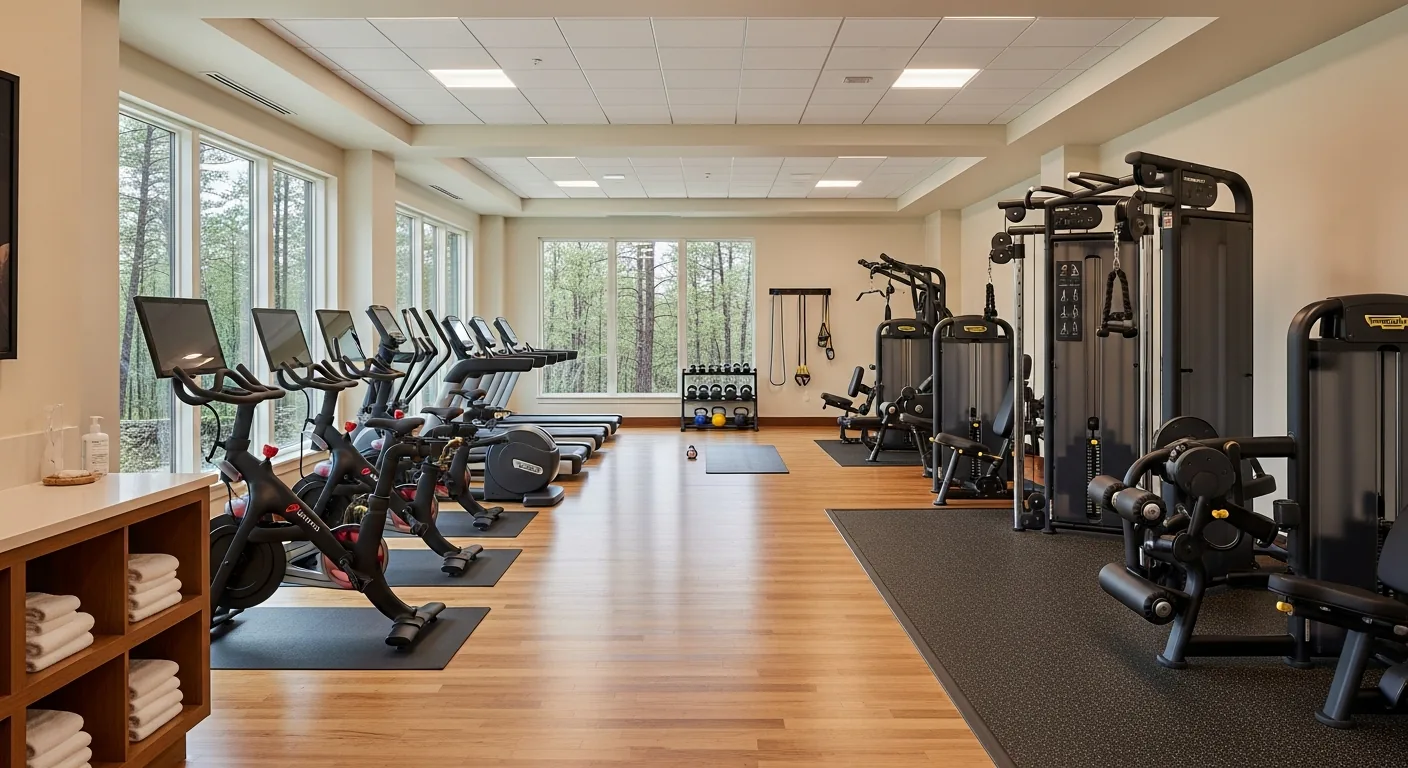
Private oceanview suite at a luxury rehabilitation center — five-star comfort during recoveryMeditation garden designed for mindfulness practice — a cornerstone of luxury rehabilitation programsPremium fitness center with Technogym equipment — physical wellness integrated into rehabilitationChef-prepared organic meals: Nutritional therapy is a core component of luxury rehabilitationGroup therapy in a purpose-designed lounge — evidence-based treatment in a luxury settingAerial view of a luxury rehabilitation campus — comprehensive wellness facilities on a private estateHolistic spa therapy room — integrating bodywork and aromatherapy into the recovery journey
What Makes Luxury Rehab Different
The distinction between standard rehabilitation and luxury treatment extends far beyond aesthetics. Premium facilities maintain client-to-therapist ratios of 2:1 or 3:1 compared to 10:1 or higher at standard centers. Treatment modalities include cognitive behavioral therapy (CBT), dialectical behavior therapy (DBT), EMDR, neurofeedback, ketamine-assisted therapy, and comprehensive dual-diagnosis protocols. The physical environment — from private suites and meditation gardens to gourmet nutrition programs — is designed around the evidence that environment significantly impacts recovery outcomes. The Joint Commission and CARF International provide accreditation for facilities meeting the highest clinical standards.
The Holistic Approach to Luxury Recovery
Modern luxury rehabilitation integrates multiple therapeutic modalities: clinical therapy (individual and group sessions with licensed psychologists and psychiatrists), physical wellness (personal training, yoga, and outdoor adventure therapy), nutritional therapy (chef-prepared organic meals designed by registered dietitians), holistic bodywork (massage therapy, acupuncture, and breathwork), and mindfulness practices (guided meditation, sound healing, and art therapy). This comprehensive approach addresses the root causes of addiction and mental health challenges rather than symptoms alone.
Frequently Asked Questions About Luxury Rehab
How much does luxury rehab cost?
Luxury rehabilitation centers typically cost $30,000 to $100,000+ per month. Premium facilities with private suites, gourmet dining, and holistic therapies range from $50,000 to $120,000 for a 30-day program. Some ultra-luxury centers with celebrity clientele exceed $200,000 per month. Most programs recommend a minimum 30-day stay, with 60-90 day programs showing significantly better long-term outcomes.
What amenities do luxury rehab centers offer?
Common amenities include private suites with ocean or mountain views, chef-prepared organic meals, infinity pools, state-of-the-art fitness centers with personal trainers, full-service spas, meditation gardens and zen spaces, equine therapy programs, yoga and Pilates studios, art therapy studios, and outdoor adventure activities. Many also offer concierge services, private transportation, and executive business centers for clients who need to remain connected to work.
Are luxury rehab centers more effective than standard treatment?
Research published in the Journal of Substance Abuse Treatment shows that treatment environment significantly impacts recovery outcomes. Luxury facilities achieve higher completion rates due to lower client-to-therapist ratios (often 2:1), longer average stays, comprehensive dual-diagnosis treatment, and environments that reduce the stress and stigma associated with recovery. The combination of clinical excellence and comfort creates conditions where clients can focus entirely on healing.
Does insurance cover luxury rehab?
Most PPO insurance plans provide partial coverage for substance abuse and mental health treatment under the Mental Health Parity and Addiction Equity Act. However, insurance typically reimburses at in-network rates, covering $500-$1,500 per day against daily rates of $1,000-$4,000+ at luxury facilities. The remaining balance is covered out-of-pocket, through financing plans, or via specialty insurance providers that cater to high-net-worth individuals.
{
“@context”: “https://schema.org”,
“@graph”: [
{
“@type”: “ImageGallery”,
“name”: “Luxury Rehab Center Photos u2014 World-Class Recovery Facilities”,
“description”: “Photo gallery of luxury rehabilitation centers featuring resort-style architecture, private suites, meditation gardens, gourmet dining, and holistic spa treatments.”,
“url”: “https://tygartmedia.com/luxury-rehab-center-photos/”,
“publisher”: {
“@type”: “Organization”,
“name”: “Tygart Media”
},
“image”: [
{
“@type”: “ImageObject”,
“url”: “https://tygartmedia.com/wp-content/uploads/2026/03/luxury-rehab-center-exterior-resort.webp”,
“description”: “Luxury rehabilitation center exterior with modern architecture, infinity pool, and tropical gardens”
},
{
“@type”: “ImageObject”,
“url”: “https://tygartmedia.com/wp-content/uploads/2026/03/luxury-rehab-private-suite-ocean-view.webp”,
“description”: “Luxury rehab center private suite with ocean view, king bed, and spa-like amenities”
},
{
“@type”: “ImageObject”,
“url”: “https://tygartmedia.com/wp-content/uploads/2026/03/luxury-rehab-meditation-garden.webp”,
“description”: “Serene meditation garden at luxury rehab center with zen rock garden and water features”
},
{
“@type”: “ImageObject”,
“url”: “https://tygartmedia.com/wp-content/uploads/2026/03/luxury-rehab-fitness-center.webp”,
“description”: “State-of-the-art fitness center in luxury rehab facility with premium equipment and forest views”
},
{
“@type”: “ImageObject”,
“url”: “https://tygartmedia.com/wp-content/uploads/2026/03/luxury-rehab-gourmet-dining.webp”,
“description”: “Gourmet farm-to-table dining at luxury rehabilitation center with chef-prepared organic meals”
},
{
“@type”: “ImageObject”,
“url”: “https://tygartmedia.com/wp-content/uploads/2026/03/luxury-rehab-group-therapy-lounge.webp”,
“description”: “Group therapy session in luxury rehab center lounge with comfortable seating and garden views”
},
{
“@type”: “ImageObject”,
“url”: “https://tygartmedia.com/wp-content/uploads/2026/03/luxury-rehab-aerial-campus-view.webp”,
“description”: “Aerial view of luxury rehab campus on hillside with pool, tennis court, and coastal landscape”
},
{
“@type”: “ImageObject”,
“url”: “https://tygartmedia.com/wp-content/uploads/2026/03/luxury-rehab-spa-treatment-room.webp”,
“description”: “Holistic spa treatment room at luxury rehab center with massage table and zen atmosphere”
}
]
},
{
“@type”: “FAQPage”,
“mainEntity”: [
{
“@type”: “Question”,
“name”: “How much does luxury rehab cost?”,
“acceptedAnswer”: {
“@type”: “Answer”,
“text”: “Luxury rehabilitation centers typically cost $30,000 to $100,000+ per month. Premium facilities with private suites, gourmet dining, and holistic therapies range from $50,000 to $120,000 for a 30-day program. Some ultra-luxury centers exceed $200,000 per month.”
}
},
{
“@type”: “Question”,
“name”: “What amenities do luxury rehab centers offer?”,
“acceptedAnswer”: {
“@type”: “Answer”,
“text”: “Luxury rehab amenities include private suites with ocean or mountain views, gourmet chef-prepared meals, infinity pools, fitness centers, spa treatments, meditation gardens, equine therapy, yoga studios, and private therapy sessions with leading specialists.”
}
},
{
“@type”: “Question”,
“name”: “Are luxury rehab centers more effective?”,
“acceptedAnswer”: {
“@type”: “Answer”,
“text”: “Research shows that treatment environment significantly impacts recovery outcomes. Luxury facilities offer lower client-to-therapist ratios (often 2:1 or 3:1), longer treatment stays, and comprehensive holistic approaches that address physical, mental, and emotional health simultaneously.”
}
},
{
“@type”: “Question”,
“name”: “Does insurance cover luxury rehab?”,
“acceptedAnswer”: {
“@type”: “Answer”,
“text”: “Most insurance plans cover substance abuse treatment but typically only at in-network rates. The gap between insurance reimbursement and luxury rehab costs is usually covered out-of-pocket. Some luxury centers offer financing plans or work with specialty insurance providers.”
}
}
]
},
{
“@type”: “Article”,
“headline”: “Luxury Rehab Center Photos u2014 World-Class Recovery Facilities”,
“author”: {
“@type”: “Organization”,
“name”: “Tygart Media”
},
“publisher”: {
“@type”: “Organization”,
“name”: “Tygart Media”,
“url”: “https://tygartmedia.com”
},
“datePublished”: “2026-03-30”,
“image”: “https://tygartmedia.com/wp-content/uploads/2026/03/luxury-rehab-center-exterior-resort.webp”
}
]
}
Visual summary
About this image. This image is part of the Luxury Rehabilitation collection in the Tygart Media visual library. Every image produced by Tygart Media is AI-generated using Google Vertex AI (Imagen), converted to WebP format, and injected with full IPTC/XMP metadata before publication — making each image discoverable, attributable, and optimized for both traditional search engines and AI systems.
Format: WEBP
Collection: Luxury Rehabilitation
Pipeline: Vertex AI Imagen → WebP Conversion → IPTC/XMP Metadata Injection → WordPress Media Library
The Signal — Tygart Media's weekly brief. What we actually ran, what it measured, and what it means for a restoration shop.